Lumo And Hull Trains Launch New Report On Rail’s Impact On Social Mobility
The title of this post, is the same as that of this article on Rail Advent.
This is the sub-heading.
Open access train operators Lumo and Hull Trains held an event at Parliament to celebrate how rail connectivity can boost opportunity, growth and social mobility
These two paragraphs add some detail.
Communities, charities, cultural organisations and businesses from across the two operators’ networks came together at a special parliamentary reception hosted by Labour MP Dr Scott Arthur. The event marked the launch of a new Social Mobility Impact Report from Lumo and Hull Trains.
Organisations represented at the event included Pride in Hull, North East Pride, Hull Freedom Festival, Edinburgh Science Festival, Hull Truck Theatre, Hull Maritime Museum, North East Museums, Newcastle Eagles, Doncaster Belles FC, Percy Hedley Foundation, Daft as a Brush, Visit Hull & East Yorkshire, Life Science Centre Newcastle and Humber Street Sesh.
This is the conclusion.
The operators believe that this demonstrates that strong rail connections support a wide range of communities, businesses, charities and cultural organisations.
I hope the Office of Rail and Road don’t shoot the messenger.
ORR Rejects WSMR And Lumo WCML Bids
The title of this post, is the same as that of this article on Modern Railways.
These two paragraphs add more details.
Aspirations by Wrexham, Shropshire & Midlands Railway Company (WSMR) and Lumo to run more open access services on the West Coast main line have been rejected by the Office of Rail and Road.
WSMR hoped to run four Wrexham-London Euston return services, and Lumo up to four return trains between Rochdale and Euston. The ORR also rejected Avanti West Coast’s bid for extra Blackpool-Euston trains.
I feel by its rejection of the two open access bids from WSMR and Lumo, the ORR is showing its obedience to its socialist masters and following a policy of no trains, must be run by private enterprise.
But its rejection of more services to Blackpool, is surely an error of the highest order.
- Blackpool needs more express trains.
- Blackpool North station now has a well-designed interchange between the trains to Preston, Manchester, Liverpool, London and the South and the Blackpool tramway.
- Blackpool North and Euston is a fully-electrified route.
- There is scope to add extra services to the Blackpool tramway.
- Avanti West Coast will be run by the state from the 7th March 2027.
Surely, similar rules can apply independently of the owner?
But obviously not in Burnham’s Bankrupt Britain.
Glasgow Queen Street Station To London King’s Cross Station For £52.40
My plan this morning, was to come home via Hartlepool, so that I could take pictures of the nuclear power station there.
I intended to take a train from Glasgow Queen Street station to Newcastle and then take local train to Hartlepool and back to Newcastle, from where I’d buy a ticket and take a train to London King’s Cross.
Things went well until I left Edinburgh on my train for Newcastle.
- I’d bought a ticket from Glasgow Queen Street station to Newcastle for £21.20 with a Senior Railcard, with a change to LNER at Edinburgh.
- I even had a reserved seat after Edinburgh.
- I found a good unreserved seat on the 13:00 Glasgow Queen Street to Edinburgh train, which left on time.
- It arrived in Edinburgh a minute late.
- As Marks & Spencer was by the platform of my Newcastle train, I was able to buy a lunch before I got on the train.
It was then that I noticed that my train took over three hours to travel to Newcastle, when I know they normally take under ninety minutes.
As the train left Edinburgh, it passed through Haymarket station, which confirmed we were going for a Grand Tour of the Southern Uplands of Scotland.







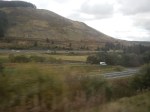

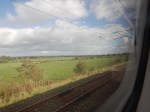


Note.
- The train took the fully-electrified line from Haymarket to Carstairs junction, where it joined the West Coast Main Line.
- I amused myself by taking pictires of the large number of wind turbines along the route and motorways and arterial roads, that share the route.
- It is certainly a route where the hills are alive with spinning wind turbines.
Eventually we arrived in Carlisle, where I took more pictures.






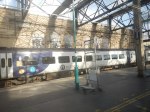
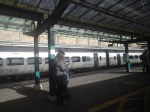
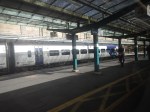
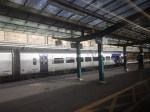
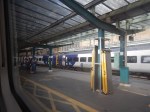
Note.
- The train waited at Carlisle for about 10 minutes.
- It looks like Northern Trains might have been running a pair of Class 158 trains on the Settle and Carlisle Line to add capacity. Real Time Trains confirm that they were.
- The last picture has an LNER train going North in the background.
- Some passengers joined the train at Carlisle.
By the time we left Carlisle, we taken an hour and twenty-eight minutes from Edinburgh.
Our train, then took the Tyne Valley Line to Newcastle, where I took these pictures.

























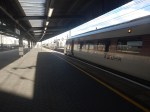
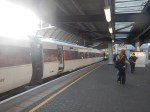
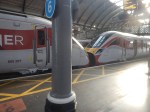
Note.
- It’s not called the Tyne Valley Line for nothing.
- I didn’t see a wind farm between Carlisle and Newcastle.
- The Tyne Valley Line can handle a pair of five-car Class 800 trains.
- The train was powered for 61.4 miles on diesel.
By the time we arrived in Newcastle, we had taken a minute over three hours from Edinburgh.
I decided that I didn’t have enough time to go to Hartlepool.
- I decided to buy a ticket for London King’s Cross.
- I paid £31.20, with my Senior Railcard, for a ticket on the 16:55 Lumo.
- Two hours and 49 minutes we arrived in King’s Cross.
- We were seven minutes late.
But it was an average speed of 95.4 mph.
I have a few thoughts on the journey.
The Ambience Of The Journey Would Have been Improved By Battery-Electric Trains
The only section of the journey between Edinburgh and Newcastle, that was not electrified was the section between Carlisle and Newcastle, which is 61.4 miles.
The journey would have been a lot quieter, if the Class 800 trains had been fitted with enough batteries, to run the route on battery-power.
Should Number 10 North Have Good Rail Connections To London?
The answer to this question must be Yes! But it must also have good rail connections to the rest of the UK.Heron House
The current Number 10 North is at Heron House, which is shown on this OpenRailwayMap.
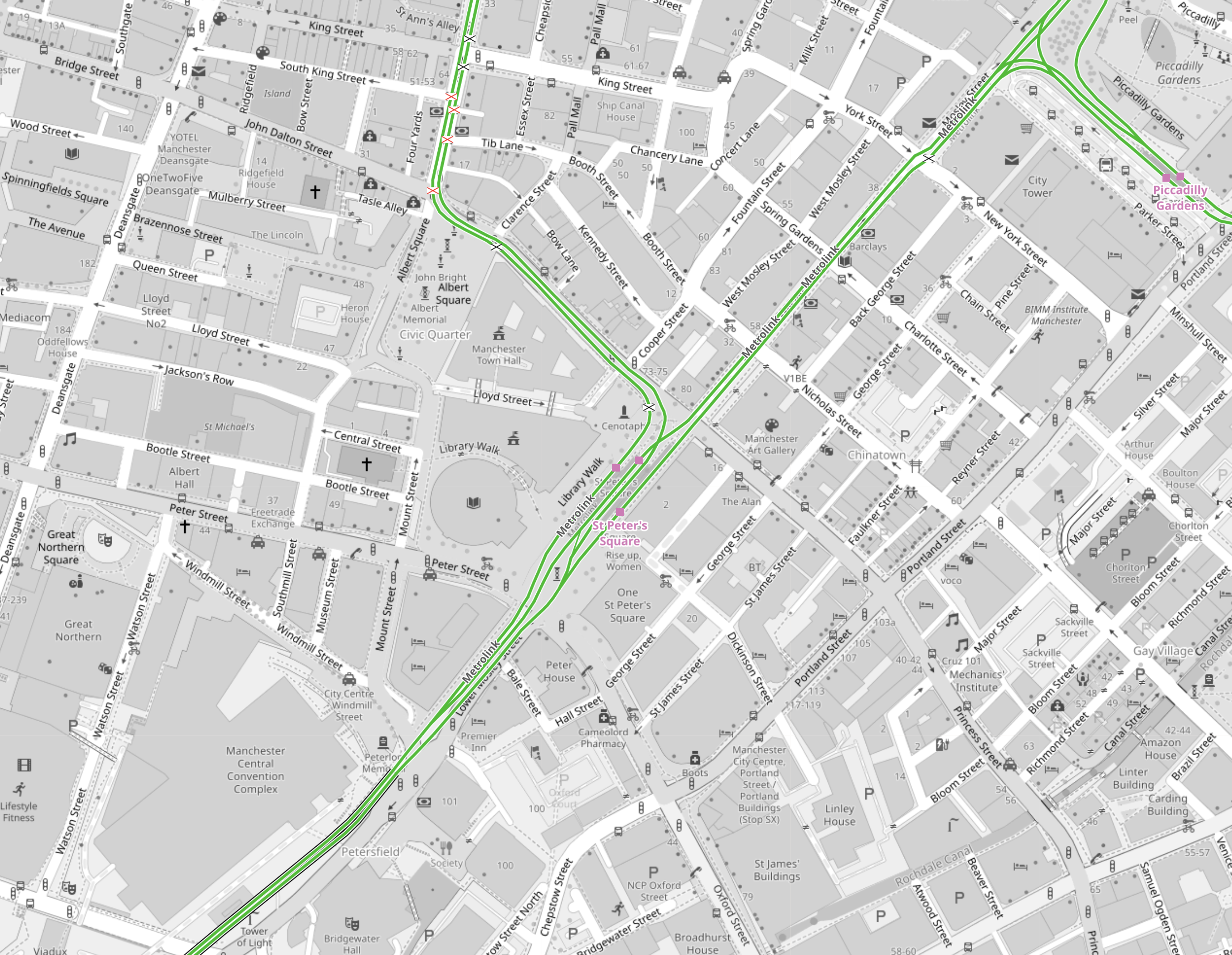
Note.
- The green lines are Manchester’s Metrolink.
- Piccadilly Gardens with its tram stop is in the North-East corner of the map.
- The tram lines going South-East from Piccadilly Gardens go to Manchester Piccadilly station.
- The tram lines going North-East from Piccadilly Gardens go to Manchester Victoria station.
- In the middle of the map, there is St. Peter’s Square tram stop, which are within a five-minute walk to the circular Manchester Central Library and the triangular Manchester Town Hall.
- Heron House is on the opposite side of Albert Square to Manchester Town Hall.
Andy Burnham has obviously chosen a location he knows well from his nine years as the Mayor of Greater Manchester.
Long-term there are plans to move Number 10 North to the Manchester Digital Campus in Great Ancoats Street, Ancoats, Manchester, when construction is completed around 2032.
This Google Map shows the location of Great Ancoats Street with respect to Manchester City Centre.
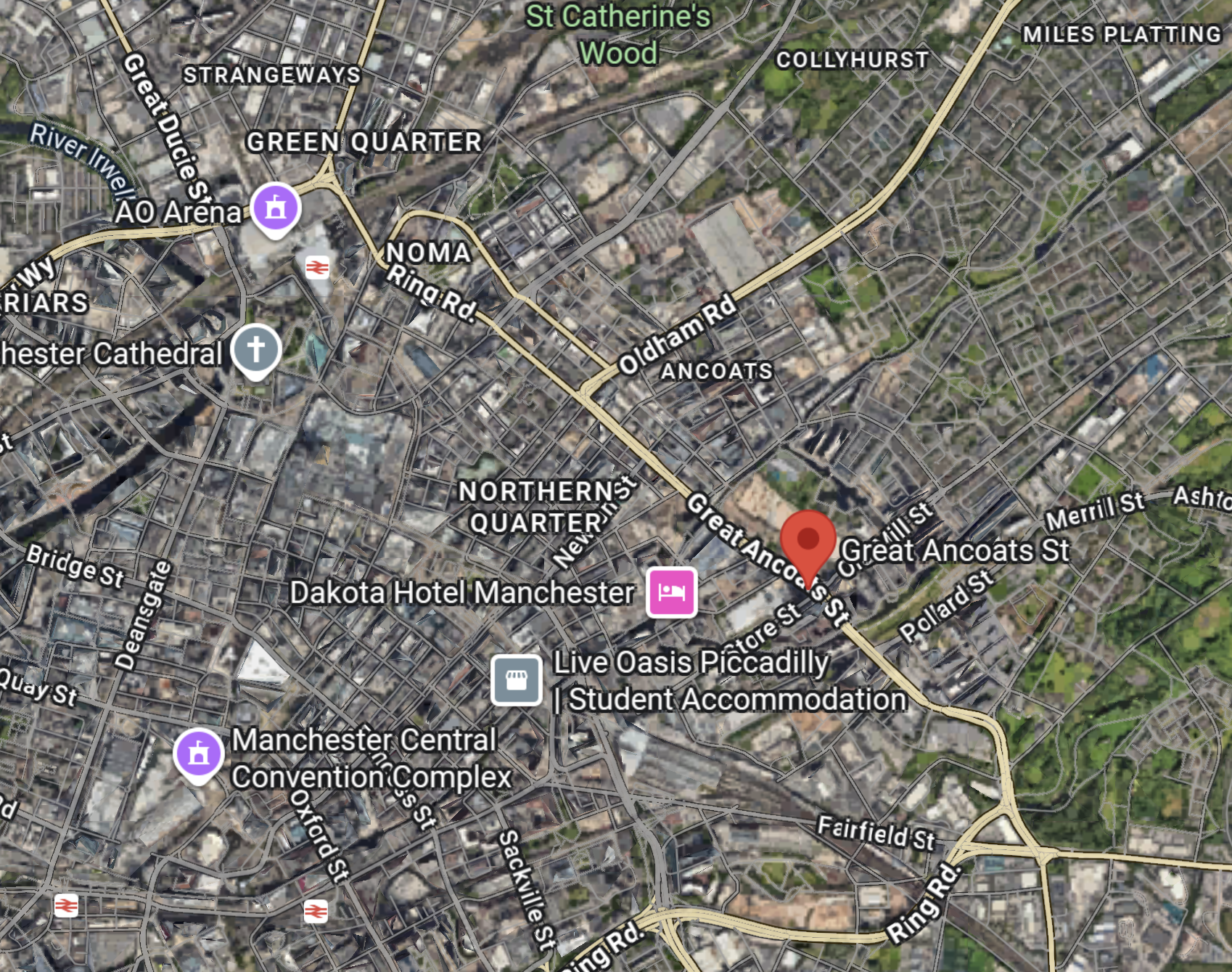
Note.
- Great Ancoat’s Street appears to be part of Manchester’s Inner Ring Road.
- Google placed the red arrow, but I suspect Number 10 North could be somewhere near the arrow.
- Manchester Piccadilly station is not marked on the map, but is about a 0.8 mile South-West of the red arrow, at the end of the rail line going South-East from the map.
- Number 10 North should be about a 5 to 10 minute walk from Manchester Piccadilly station.
- Currently, there is no tram running in this direction.
- The two stations in the South-West corner of the map are Deansgate in the West and Manchester Oxford Road in the East.
- The fourth station in Manchester City Centre is Manchester Victoria in the North-West corner of the map, by the AO Arena and Manchester Cathedral.
- Located between Deansgate, Oxford Road and Victoria stations is a white triangle, which is Manchester Town Hall, with the current location of Number 10 North at Heron House to its West.
- There don’t appear to be any trams on Great Ancoat’s Street, but there are buses between Manchester Victoria and Great Ancoat’s Street, which take about 11-20 minutes.
- As an alternative between Manchester Victoria and Great Ancoat’s Street, you can take a tram to New Islington and walk.
This brief look seems to indicate, that to get to Great Ancoat’s Street, you either walk from Manchester Piccadilly or take trams or buses and a short walk from Manchester Victoria.
This OpenRailwayMap shows Manchester Piccadilly, Manchester Victoria and New Islington.
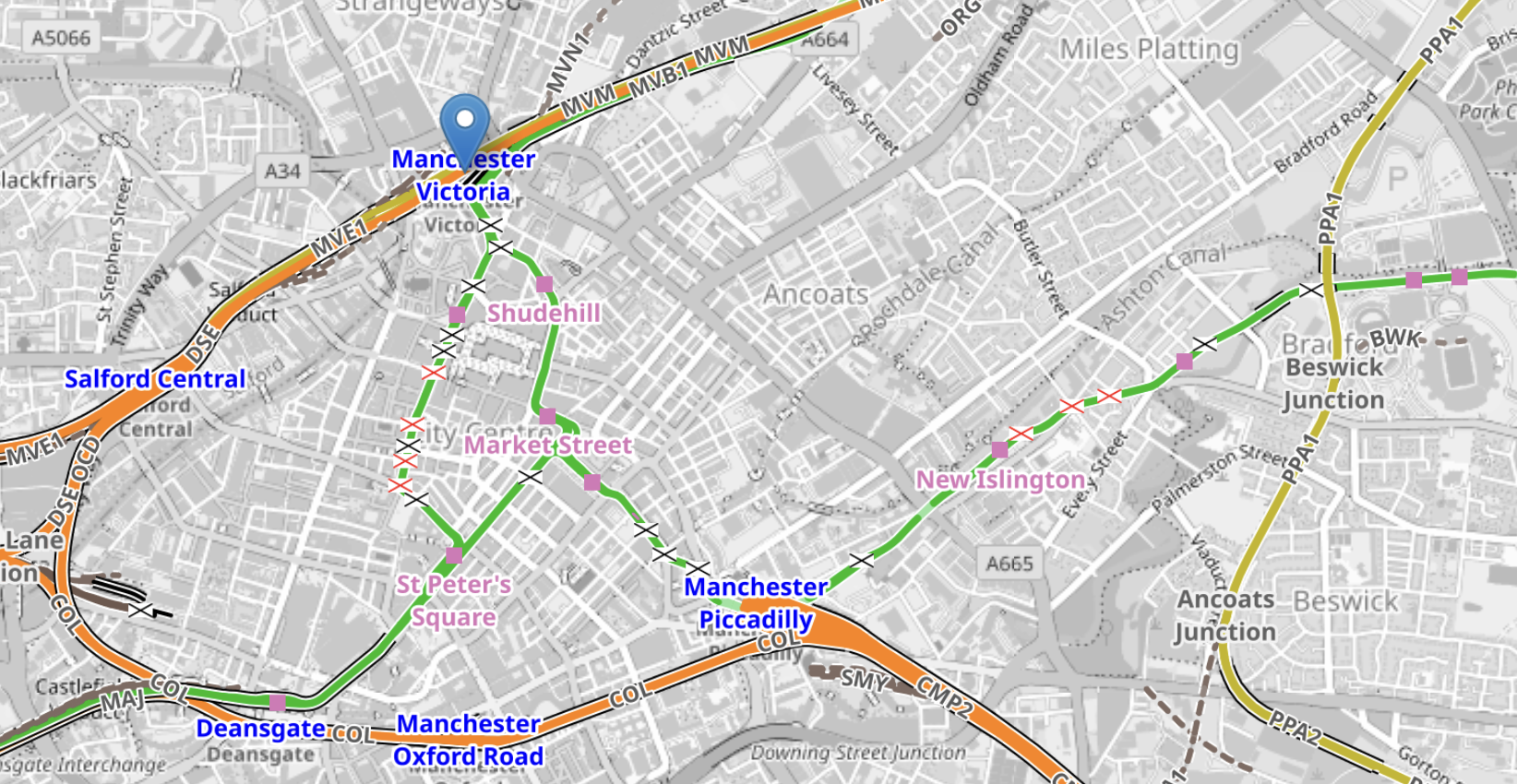
Note.
- Manchester Victoria station is indicated by a blue arrow.
- Manchester Piccadilly station is towards the bottom of the map.
- New Islington tram stop is North-West of Manchester Piccadilly on the green tram line to the Etihad Stadium and Ashton-Under-Lyme tram stops.
- The Etihad Stadium can be seen three tram stops on from New Islington at the Eastern edge of the map.
- Passengers going between Manchester Victoria and New Islington would change trams at Picadilly Gardens tram stop.
I believe that the Future Number 10 North will be within easy walking distance of the New Islington tram stop.
Current London And Manchester Services
Avanti West Cost currently run three hourly trains between Euston and Manchester Piccadilly.
- 1 train per hour (tph) stops at Milton Keynes Central, Rugby, Stoke-on-Trent, Macclesfield, Stockport
- 1 tph stops at Nuneaton, Stoke-on-Trent, Stockport
- 1 tph stops atStafford, Crewe, Wilmslow, Stockport
I don’t think this gives a wide enough coverage of stations.
Lumo’s Proposed London And Manchester Services
Lumo want to run six daily trains between between Euston and Rochdale.
These will stop at Warrington Bank Quay, Newton-le-Willows, Eccles and Manchester Victoria.
Note.
- This could be a fast service, as it is proposed to be non-stop between Euston and Warrington Bank Quay.
- It will probably be only five-cars, which would give no problems terminating at Euston and Rochdale stations.
- Eccles and Rochdale are in Greater Manchester.
- Currently, Warrington Bank Quay, Newton-le-Willows, Eccles and Manchester Victoria don’t have direct trains to London.
- I can see this service appealing to thrifty Yorkshire folk, as Rochdale has 3 tph to Hebden Bridge and Leeds, 2 tph to Halifax and Bradford Interchange, and 1 tph to Brighouse and Dewsbury.
- It could be a low-cost service.
I can see it being successful.
We tried Lumo’s New Train Offering Direct Route From London To A historic UK City For Less Than £30
The title of this post, is the same as that of this article on GB News.
This is the sub-heading.
GB News boarded Lumo’s brand-new route between London Euston and Stirling
These are the first two paragraphs.
Lumo’s new direct service between London Euston and Stirling launched just months ago, and it is already regularly selling out services.
We stepped on board one of the recently refurbished trains to see what the six-hour journey to the historic Scottish city was like.
Three things surprised me about the review.
- It is very upbeat, which surprised me, as GB News is often very critical.
- It didn’t mention Lumo’s misbehaving toilets.
- But it did say that the trolley came around regularly for anyone getting on at a later stop or needing a second coffee.
It also said, that the route is already proving incredibly popular.
But you’d hope that would be the case, if they’d chosen the route with care.
I have some thoughts about the route.
Stirling Station Is Well Connected
The Wikipedia entry for Stirling station lists these services.
Trains operate north to Dunblane (three trains per hour), to Perth, Dundee and Aberdeen (hourly), Inverness (four trains per day), south west to Glasgow Queen Street (three trains per hour), and east to Edinburgh Waverley (half-hourly). The service to Alloa and Dunfermline was withdrawn in October 1968, but the reopening of the Stirling-Alloa-Kincardine rail link partially restored that service with an hourly service from Glasgow to Alloa as an extension of the Croy Line services. This utilises the existing DMU from Glasgow, which previously spent considerable time in one of the bay platforms at Stirling with engines idling, but now utilises the layover time to make the return trip to & from Alloa.
It makes the city a good base for exploring Scotland.
Stirling Station Is Surrounded By Hotels
This Google Map shows the station and a few hotels.
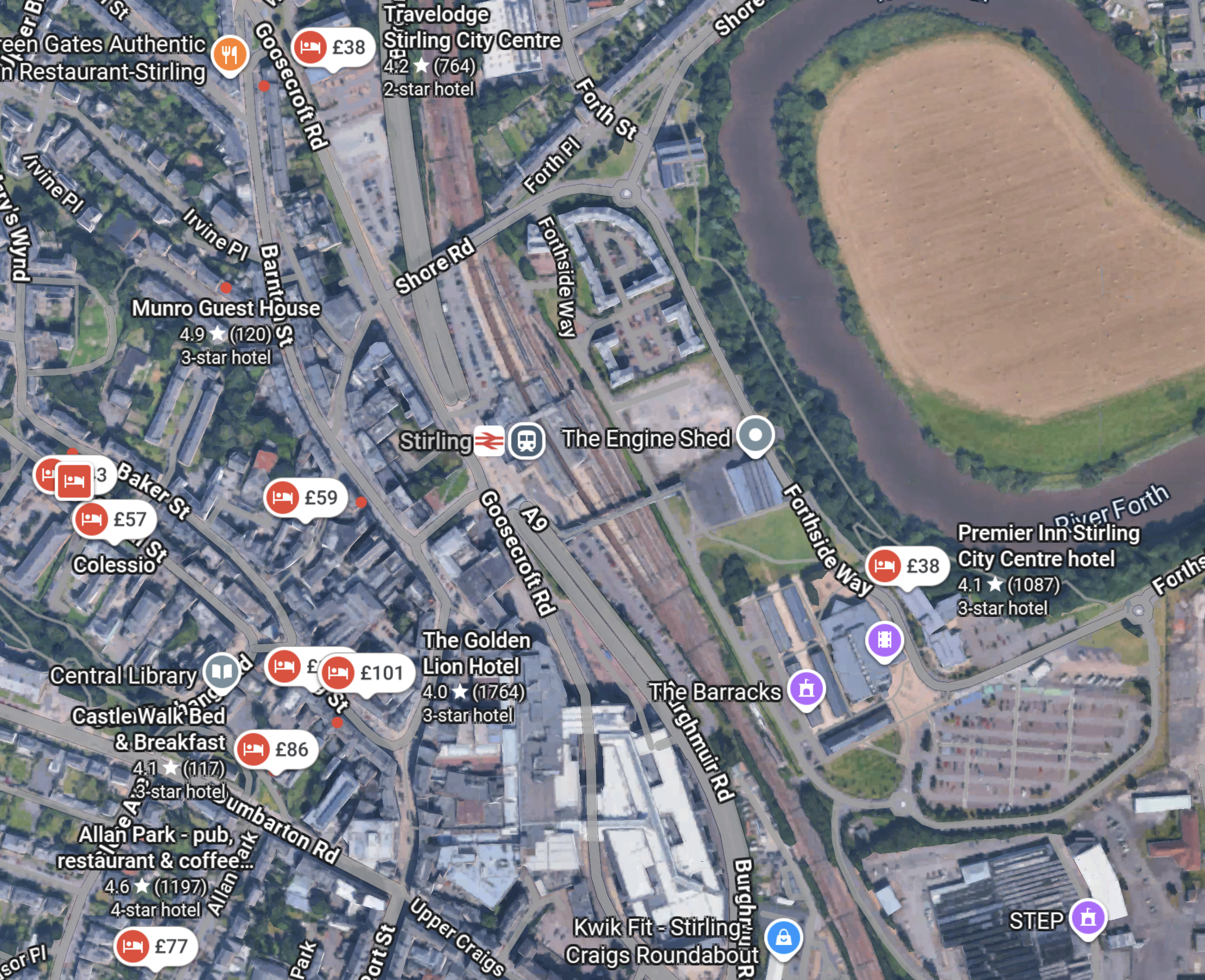
Note.
- There are nine hotels on this map.
- There is a Premier Inn and a Travelodge for £38 per night.
- There is also a Vue cinema.
It reinforces, what I said earlier about the city being a good base for exploring Scotland.
Lumo Has Increased The Number of Direct Services To London From One To Five!
Prior to Lumo commencing services a few weeks ago, Stirling only had one train per day (tpd) to and from London.
Now there are five!
That surely can only have positive effects for Stirling.
Will Lumo Have Any Impact On The Economy Of Stirling?
I asked Google AI, the question in the title of this section and received this reply.
Lumo’s direct, low-cost rail service connecting Stirling to London Euston, which launched on May 25, 2026, is boosting the local economy by increasing tourism, encouraging business investment, and offering four daily return trips with fares starting at £29.90.
Economic Benefits
Tourism Growth: Affordable ticket prices from Lumo make it easier and cheaper for visitors from England to travel directly to historical sites like Stirling Castle.
Business and Investment: Four daily return trains improve connectivity for local companies, supporting inward investment and commercial links with London.
Job Creation: The route expansion has added around 100 new roles within the rail and supply chain sectors.
Sustainable Travel: Providing a budget-friendly rail alternative helps shift travelers away from higher-emission car and air journeys.
It looks like Lumo will be good for Stirling.
Larbert, Greenfaulds And Whifflet Get Direct Services To London And England
These three stations to the East of Glasgow will get four directtpd to and from London and intermediate stations.
These services will be the first direct services to the capital for these three stations.
Motherwell and Lockerbie Get Four Extra Direct Services To London And England
Motherwell has eleven tpd to London, but Lockerbie has only two, with one on Sundays.
Lumo’s extra four tpd will probably more important at Lockerbie, than Motherwell.
Calls At English Stations
These are the number of calls at English stations.
- Carlisle – 4 tpd
- Preston – 4 tpd
- Crewe – 2 tpd, 4 tpd on Saturday
- Nuneaton – 4 tpd
- Milton Keynes Central – 4 tpd
Note.
- Effectively, 4 tpd seem to stop at all stations, with two not stopping at Crewe.
- As 4 tpd stop at all Scottish stations, this could be a useful direct service for many.
- When the unions sort out their differences, Milton Keynes Central could be a useful interchange to the East-West Rail for Oxford, Universal Studios Bedford, Bedford and Cambridge.
- Nuneaton could be a useful interchange for CrossCountry for Birmingham, Leicester, Peterborough, Ely, Cambridge and Stansted Airport.
- Crewe and Preston could be a useful interchanges for Liverpool, Manchester and Blackpool.
- Carlisle could be a useful interchange for the Northernmost parts of England.
It is a very well connected service.
Could There Be Better Transport Connections Between Leeds/Bradford and Glasgow/Edinburgh?
I shall start this post with eleven questions, that I will ask Google AI.
How Many People Live In the Greater Leeds/Bradford Area?
I received this answer from Google AI.
The greater Leeds-Bradford urban and larger urban zone has an estimated population of about 1.65 million to 2.4 million people. The core combined Leeds-Bradford continuous built-up area holds roughly 1.66 million people, while the wider Leeds City Region and Larger Urban Zone reaches approximately 2.4 million.
How Many People Live In the Greater Glasgow Area?
I received this answer from Google AI.
The Greater Glasgow urban area has an estimated population of over 1 million people. Depending on how the boundaries are drawn, the wider NHS health board region contains about 1.2 million, and the broader Glasgow City Region counts roughly 1.8 million residents.
How Many People Live In the Greater Edinburgh Area?
I received this answer from Google AI.
The greater Edinburgh metropolitan or wider city region has an estimated population of approximately 912,000 to 1.35 million, depending on the regional boundary used. The City of Edinburgh council area itself holds 531,370 residents.
How Many Sheduled Air Services Are There Between Leeds/Bradford and Glasgow Airports?
I received this answer from Google AI.
There are currently zero direct, scheduled non-stop air services operating between Leeds Bradford Airport (LBA) and Glasgow Airport (GLA).
How Many Scheduled Air Services Are There Between Leeds/Bradford and Edinburgh Airports?
I received this answer from Google AI.
There are currently zero direct, scheduled non-stop air services operating between Leeds Bradford Airport (LBA) and Edinburgh Airport (EDI).
How Many Scheduled Direct Rail Services Are There Between Leeds or Bradford and Glasgow?
I received this answer from Google AI.
There is typically only 1 scheduled direct train service per day in each direction between Leeds and Glasgow (operated via CrossCountry), and n0 direct scheduled services between Bradford and Glasgow.
How Many Sheduled Direct Rail Services Are There Between Leeds or Bradford and Edinburgh?
I received this answer from Google AI.
There are typically only 1 to 2 scheduled direct train services per day running from Leeds to Edinburgh (usually operated by CrossCountry or via select extensions), taking roughly 3 hours. Bradford has zero regular scheduled direct rail services to Edinburgh; journeys from Bradford require at least one change (commonly transferring at Leeds).
How Long Does It Take To Drive Between Leeds And Glasgow?
I received this answer from Google AI.
Driving between Leeds and Glasgow takes about 3 hours and 50 minutes to 4 hours and 15 minutes under normal conditions, covering a distance of roughly 210 to 222 miles via the A1(M) and M74.
How Long Does It Take To Drive Between Leeds And Edinburgh?
I received this answer from Google AI.
Driving between Bradford and Glasgow takes about 3.5 to 4 hours under normal conditions. The total distance is roughly 200 miles (322 km), mostly following the A1(M) or M6 motorways depending on your chosen route.
How Long Does It Take To Drive Between Bradford And Glasgow?
I received this answer from Google AI.
Driving between Leeds and Glasgow takes about 3 hours and 50 minutes to 4 hours and 15 minutes under normal conditions, covering a distance of roughly 210 to 222 miles via the A1(M) and M74.
How Long Does It Take To Drive Between Bradford And Edinburgh?
I received this answer from Google AI.
Driving between Bradford and Edinburgh takes about 4 hours to 4.5 hours under normal traffic conditions. The total driving distance is roughly 196 to 202 miles, primarily heading north via the A1(M) or M1 and A69/M74 routes.
But I do think that Northern England and Scotland could be getting closer together in the next few years.
Consider.
- LNER stopped running between King’s Cross and Glasgow a couple of years ago.
- No airlines fly between Leeds/Bradford and Glasgow or Edinburgh Airports.
- TransPennine Express run direct rail services between both Liverpool and Manchester, and Glasgow.
- There are only occasional direct rail services between Leeds or Bradford, and Glasgow or Edinburgh.
- Driving is not an easy or quick option.
- Lumo run a few limited rail services between Glasgow and Stirling, and London.
There is a big gap in rail and air services between the 1.5 million people in Leeds/Bradford and nearly 2 million in Central Scotland.
But.
- Between Bradford and Carlisle is the Settle and Carlisle Line.
- The Settle and Carlisle is one of the most scenic lines in Europe, if not the world.
- The Settle and Carlisle is not electrified.
- Until 1974, it was used by the Thames-Clyde Express between London St. Pancras and Glasgow.
- Avanti have used the route for engineering diversions, using their new five-car Class 805 trains in pairs.
- Bradford Forster Square station has been updated so that ten-car trains on the route can call at both Leeds and Bradford Forster Square stations
- I believe that in a couple of years, LNER will have CAF tri-mode trains and Hitachi battery-electric trains, that will be able to bridge the gap in the electrification between Skipton and Carlisle.
Selected Kings Cross and Bradford Forster Square services could be extended to Skipton, Settle, Carlisle, Dumfries, Kilmarnock and Glasgow.
There will be three major benefits.
- Several towns and cities will gain a London service.
- The extra services will help to take on the airlines between London and Glasgow.
- Leeds and Bradford will be connected to Glasgow.
No major infrastructure would need to be created.
I have other thoughts.
Can Ten-Car Trains Use The Settle And Carlisle?
This article on the BBC is entitled Rail Operator Crosses Picturesque Line.
There is a picture in the article of two Avanti five-car Class 805 trains crossing the Ribblehead Viaduct on the Settle and Carlisle Line.
If they can do it, I suspect that a new 10-car CAF Class 897 train can also run on the line.
Could High-Class Food Be Served Between London And Glasgow?
Google AI gives this history of Pullman Dining on current GWR services.
Great Western Railway (GWR) has been running Pullman Dining on its Intercity Express Trains (Class 800 and sister Class 802 units) for about seven years, since the new Hitachi-built fleets rolled out fine-dining menus around 2017 to 2018 to replace the legacy High Speed Train (HST) sets.
In On The 10:45 From Paddington, I describe one of the best simple meals I’ve ever had.
I’m sure there are a few Scottish chefs, who could create a Scottish-themed menu for services to Scotland via the Settle and Carlisle.
Passengers Would Have A Choice Between London And Glasgow
These would be the options.
- Fast – Ryanair and lose a lot of brownie points.
- All-Electric Semi-Fast – Avanti or Lumo.
- Slower, but enjoying the scenery and why not a meal – LNER via Settle and Carlisle.
Five trains per day each way would add 3,000 seats per day, which would be around 15 of Ryanair’s 737s per day.
Will Leeds/Bradford Airport Have A Glasgow Or Edinburgh Flight Some Time Soon?
Consider.
- Between Leeds-Bradford and Glasgow airports is 177.4 miles.
- Between Leeds-Bradford and Edinburgh airports is 159.5 miles.
- The all-electric Eviation Alice has a range of 250 miles with 10 passengers.
- The all-electric Heart Aviation ES-30 has a range of 220 miles with 30 passengers.
Google AI gives this view on when the Heart Aviation ES-30 will enter service.
The Heart Aerospace ES-30 hybrid-electric airplane is scheduled to enter commercial service in 2028, though some industry analysis and program updates suggest development adjustments could stretch the timeline closer to 2029 or 2031.
The Eviation Alice doesn’t give a date at present.
Given the option, I suspect some travellers would prefer to fly.
North-East-Based Turntide Receives Initial Battery Production Order From Hitachi Rail For Arriva’s Grand Central Intercity UK Battery Trains
The title of this post, is the same as that of this news item from Turntide Technologies.
This is the sub-heading.
New batteries to enable greener train operations to remove over 600 engines on existing trains, offering lower cost of operations, more range, and path to zero-emissions travel.
These are the initial three paragraphs, that add more detail.
Turntide Technologies (Turntide), a global leader in electrification and hybridisation solutions and a long-standing North East manufacturer, received its first order from Hitachi Rail to begin production of its next-generation modular battery system for the first U.K.-manufactured battery trains for Arriva’s Grand Central.
First announced on July 2, 2025, this partnership involved an R&D component and has officially moved into production with the potential to support either new battery trains or retrofitting over 600 engines on existing Hitachi Rail U.K. fleets.
This new battery system will allow for lower cost of operations, extended range, and a path to zero-emission travel, while reducing reliance on fossil fuels and improving air quality and noise pollution. Turntide’s bespoke batteries are designed to deliver even greater power density in the same footprint of a diesel engine. This battery production is an advanced manufacturing milestone for Arriva’s Grand Central new fleet, which is being built in Newton Aycliffe, County Durham by Hitachi Rail.
In Are Hitachi’s Tri-Mode Trains Exceeding Expectations?, I said this.
I asked Google AI, the question in the title of this post and received this answer.
Yes, Hitachi’s tri-mode (battery-hybrid) trains are exceeding expectations, particularly following successful trials in the UK in late 2024. Trials of the battery-equipped Class 802/2 demonstrated superior performance to initial forecasts, leading to a £300 million order for a new fleet to be delivered in 2028.
Key findings from trials and operational expectations:
Performance Exceeded: The trial, conducted with TransPennine Express and Angel Trains, showed fuel cost savings of 35%–50%, surpassing initial predictions of up to 30%.
Operational Capability: The battery technology enabled trains to reach speeds greater than 75 mph and provided enough range for zero-emission, silent running in and out of stations, significantly reducing noise and improving air quality.
Energy Efficiency: The battery matched the weight of a diesel engine, meaning no extra track degradation.
Future Impact: The success of the trial led to an order from Arriva Group for a new fleet for Grand Central services, which will increase seating capacity by 20% and are expected to significantly reduce carbon emissions.
These trains, designed to run on electric, battery, or diesel power, are part of a push to modernize rail services, with the technology allowing for the gradual elimination of diesel-only operation on certain routes.
In The Data Sheet For Hitachi Battery Electric Trains, I came to these conclusions.
- The battery pack has a capacity of 750 kWh.
- A five-car train needs three battery-packs to travel 100 miles.
- A nine-car train needs five battery-packs to travel 100 miles.
- The maximum range of a five-car train with three batteries is 117 miles.
- The maximum range of a nine-car train with five batteries is 121 miles.
Hitachi have seen my figures and told me they’re not far out.
As battery technology gets better, these distances will increase
What Battery Range Do Arriva Grand Central Trains Need?
Arriva Grand Central Trains currently run services to Bradford Interchange and Sunderland and hope of adding services to Cleethorpes.
All services would go between Doncaster and Kings Cross, with some stopping additionally at Peterborough.
The lengths of unelectrified track on each route is as follows.
- Bradford Interchange – Shaftholme junction and Bradford Interchange is not electrified – 47.8 miles
- Cleethorpes – Doncaster and Cleethorpes is not electrified – 52.1 miles
- Sunderland – Northallerton and Sunderland is not electrified – 47.4 miles
Note.
- Bradford Interchange station is on a tightly hemmed-in site and putting charging infrastructure in the station might be difficult.
- All Bradford Interchange services will soon be passing electrification at Mirfield station, so there may be scope for a quick charge and continue.
- Cleethorpes station is an open-air station with four platforms.
- I believe it is likely, that Cleethorpes station will also be a destination station for other battery-electric trains from LNER, Northern Trains and TransPennine, so I would suspect that charging facilities will be installed.
- Cleethorpes station could be an ideal location for one of Siemens’ Rail Charging Converters.
- Sunderland station is underground and has a unique layout where both platforms are electrified for the Metro. It is all explained in the Wikipedia entry for the station.
- The Wikipedia entry shows an open-air siding without electrification. One possibility would be for the Class 820 trains to park there and use their on-board diesel to top-up the batteries, so they could reach Northallerton.
- It appears that Grand Central visit Ryhope Grange Sidings between arriving and leaving for King’s Cross. The trains could have their batteries topped up there if needed.
It does look like a five-car train with a battery range of at least 105 miles would be able to handle these three routes.
The Arriva Grand Central Trains Fleet Are Now Class 820 trains
They have a Wikipedia entry.
The order was for nine trains of five cars.
- Wikipedia describes them as tri-mode trains.
- I believe they will have three battery packs and one diesel generator.
- Three battery packs should give a range of 117 miles.
- Google AI says that on one diesel generator, these trains can limp home at 60 miles per hour.
- Google AI says that the diesel generator will be able to charge the batteries at the destination station?
- From comments on the Internet, it appears that Hitachi have a very clever train control system, that ekes out the available power.
It looks to me that Hitachi have designed a train that can handle an unelectrified branch line of up to 60 miles or 120 miles if there are charging facilities at the destination station.
Did LNER And TransPennine Express Not Want To Be First With Battery-Electric Intercity Trains?
Consider.
- TransPennine and LNER are under government control.
- TransPennine provided the train for the testing, so they must know all the results and their drivers, who were probably involved certainly do.
- LNER must have the best initial route in King’s Cross and Lincoln, where only the last 16.6 miles, between Newark and Lincoln is not electrified.
- Surely, both companies should have been given at least one of the first batteries, so they could start training staff in how to use and service the batteries.
I have also totalled how many existing diesel power-packs are in existing Hitachi trains and it is 759.
This figure surprised me, as the sub-heading in the Turntide news item said the number of engines in existing trains was over 600. But then East Midlands Railway are still introducing their fleet of 33 x Class 810 trains, which have a total of 132 engines, and 627 could be described as over 600 engines.
How Much Would A Turntide Battery-Pack Cost?
Consider.
- This is a bespoke product for Hitachi.
- Hitachi have stated that the weight is the same as a diesel-pack, so that track-access rules and charges won’t change.
- As a Control Engineer, I wouldn’t be surprised, that the battery-pack is designed to tell the train control system, that it is a diesel power pack. So it acts just like one!
- In the 1960s, I was designing, building and installing transisterised control systems to replace electronic valve and relay equipment in a rolling mills. The two generations of control systems were interchangeable. Are diesel-packs and battery-packs the same?
- Why did Hitachi choose a small supplier in Gateshead, rather than one of a number of capable companies in Japan? You don’t go halfway around the world, if the quality is available locally.
- Deployment of these trains, will avoid the cost of scores of miles of overhead electrification.
- A lot of routes won’t even need chargers at the remote destination, as the range will be sufficient for an out and back journey from the current electrification.
- Fuel cost savings of 35%–50% were achieved in development testing.
- I have ridden in three battery-electric trains. All were mouse quiet. Will that increase ridership?
I believe these batteries are no ordinary batteries. So they won’t come cheap!
I wouldn’t be surprised that the cost of each battery-pack between a half-a-million pounds and a million pounds, with support.
Will These Trains Create Growth In The Economy?
I have ridden in all current variants of the Hitachi Intercity Express Trains, with the possible exception of the Class 805 train and as each version has been introduced, they are no worse, but often better than previous versions.
I have had two or maybe three return trips to Nottingham and Sheffield in the latest variant, which is East Midlands Railway’s Class 810 train.
This is without doubt the pick of the bunch.
I therefor believe that if this continuous improvement carries on, that the new Class 820 train, that has been ordered by Grand Central will be even better.
- My experience of battery-electric trains, says it will be quieter.
- The environment of stations will be improved.
- Train fuel costs will be reduced.
- I believe that ridership will be increased, as people will be intrigued by a 125 mph train running on batteries.
- The trains will have the ability to divert via Lincoln using the GNGE Diversion on the East Coast Main Line during engineering works.
- Because of their regenerative braking, the trains should be able to do very quick extra stops at intermediate stations.
- New routes will be developed.
- Less ugly electrification will be erected on scenic routes like Settle and Carlisle, and across the Highlands of Scotland.
I believe strongly, that at the end of the day, that battery-electric trains will increase the profits of operators and Network Rail, and reduce the cost to the taxpayers of the railways.
Grand Central’s New Trains Will Improve Services
All these stations will be served by the new Class 820 trains.
- Barnetby
- Bradford Interchange
- Brighouse
- Cleethorpes
- Doncaster
- Eaglescliffe
- Grimsby
- Habrough
- Halifax
- Hartlepool
- Low Moor
- Mirfield
- Northallerton
- Peterborough
- Pontefract Monkhill
- Scunthorpe
- Seaham
- Sunderland
- Thirsk
- Wakefield Kirkgate
- York
Passengers should notice the following from the new Grand Central trains.
- A quieter ride.
- Less vibration.
- Slightly faster services due to faster stops at stations.
- No diesel smoke and much less noise from trains in stations.
Note.
- Cross Country, Hull Trains, LNER, Lumo, TransPennine Express and other operators will come under pressure to follow suit.
- Batteries, will not have the power for freight trains, so will we see a new generation of hydrogen freight locomotives?
But will the improved services bring that exclusive growth to the economy?
Only time will tell!
Private And Public Operators
In the UK, we have.
- Private open access operators like Grand Central, Hull Trains and Lumo, who can buy trains on a loan from a leasing company.
- Public operators like LNER and TransPennine Express, who probably have to get sign off from the Treasury.
- Several companies like Great Western Railways and East Midlands Railway, who are soon to be taken over by Great British Railways, who are stuck in a sort of limbo.
My late friend ; David, who rose to the highest level in banking in the UK, would have come up with a solution.
He would probably have said, that there’s is very little difference between the groups of operators.
- The train services they offer vary only on destinations and prices.
- The ticketing system is now unified, so if you turn up at the last minute and want to go to Newcastle and Lumo and LNER both have tickets, you are offered a choice and you can pick the one that’s best for you.
- All services will soon be running similar battery-electric trains, fprobably from the same Hitachi factory in Newton Aycliffe.
- Food and beverage service is not competitive and could be improved.
- Staff are probably on similar employment agreements.
So why shouldn’t Great British Railways be able to lease trains and even battery packs from companies like Angel Trains, who are funding the trains for Grand Central?
It might get more battery trains running on tracks all over Great Britain sooner than it appears they will now!
Lumo Doubles Capacity On Trip From Edinburgh To London
The title of this post is the same as that of this article on the Northern Echo.
This is the sub-heading.
A rail operator Lumo has set a new benchmark for greener intercity rail travel after operating the highest capacity domestic intercity train in the UK and filling every seat
This first paragraph adds more details.
This one-off 10-coach electric service, which ran on July 4 and carried 772 passengers in each direction between Edinburgh, Newcastle and London, saw more than 1,540 people onboard the record-breaking return service.
If you look at the original article, there is a lot more text and two spectacular pictures of the 10-coach train crossing rivers.
Ten-Car Hull Trains
Hull Trains, who are a sister company of Lumo, have been running ten-car trains for some time.
I wrote about them in April 2023 in Ten-Car Hull Trains.
An Extreme Day Out – Bedlington And Northumberland Park Stations
This OpenRailwayMap shows the Northumberland Line and the Eastern part of the Newcastle Metro.
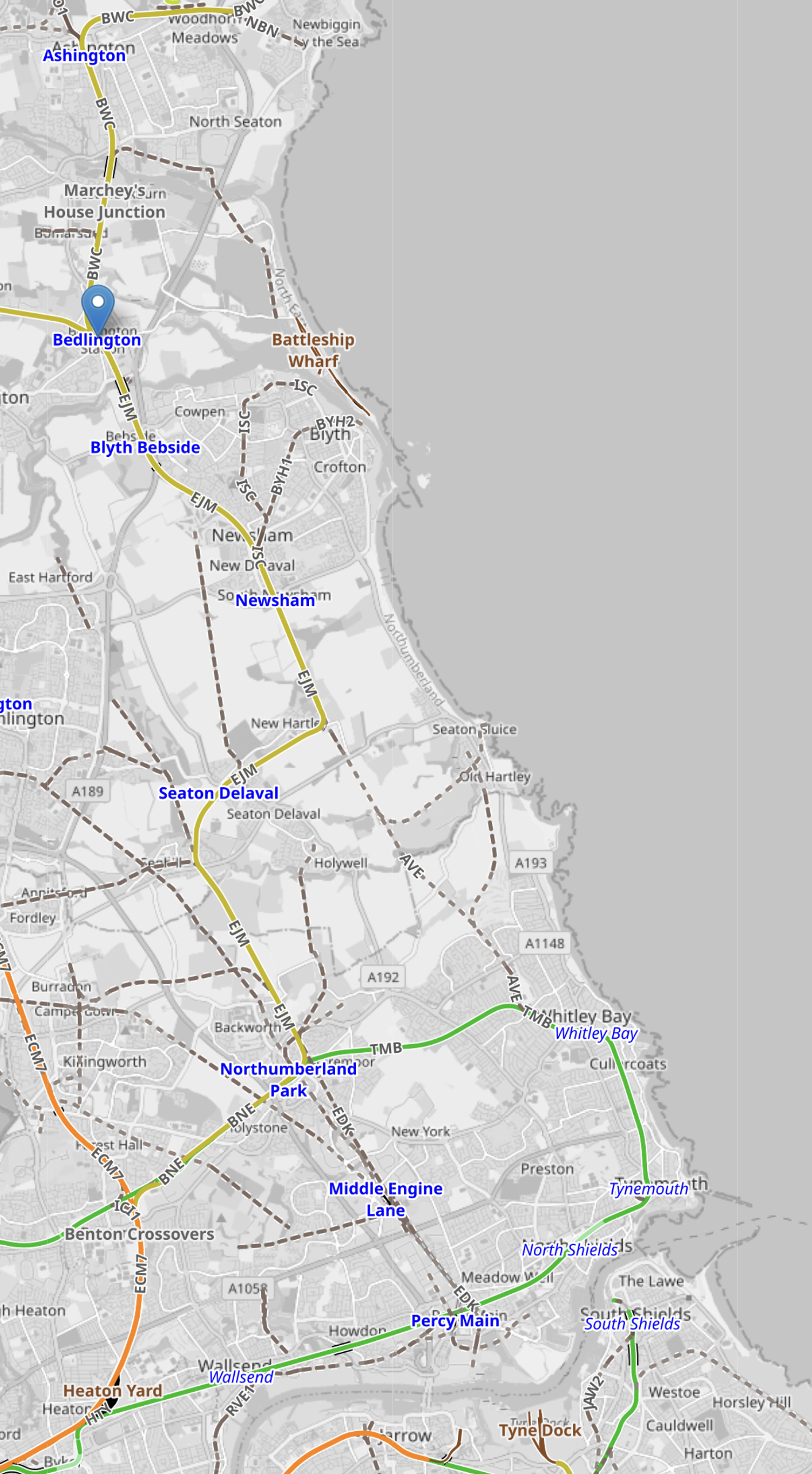
Note.
- The yellow track is the Northumberland Line.
- It terminates in the North at Ashington in the top-left corner of the map.
- Bebington station is indicated by the blue arrow.
- It terminates in the South at Newcastle station.
- The green track is the Newcastle Metro.
- There is now an interchange between the two lines at Northumberland Park station.
In the following sections, I’ll describe my trip.
King’s Cross And Newcastle Return For £66.35
I bought my two long distance tickets on a walk-up basis at King’s Cross and Newcastle stations from the machines.
- I traveled North on a Lumo service to Glasgow for £27.20.
- I did indulge myself with a tea for £2.60.
- I traveled South on an LNER service for £36.55.
- One of the reasons, I buy tickets on a walk-up basis, is that with my uncomplicated pancolonic diverticular disease, I might decide to cancel at the last minute, so it avoids the hassle of getting refunds.
Both services were within a few minutes of the timetable, although LNER had said they would be late, due to signalling problems.
My Route In Northumberland For £2.60
I bought a return ticket at Newcastle station for Ashington, which is the current terminus of the Northumberland Line.
- I actually didn’t go past Bedlington station, where I turned round and had a drink.
- As there are two trains per hour on the Northumberland Line, waits are not generally not too long.
- I only came back as far as Northumberland Park, where I swapped to the Metro for Newcastle station.
If I had had more time, I would have stopped at Seaton Delaval station to have a gluten-free dinner, which I wrote about in Seaton Delaval Station – 30th March 2025.
From Newcastle to Bedlington Station
I took these pictures going to Bedlington station.
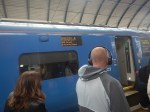
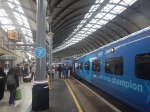
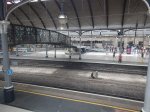



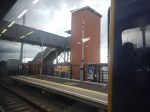
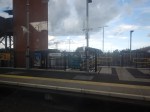

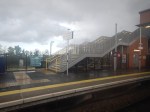
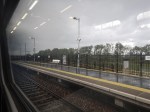
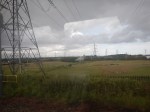
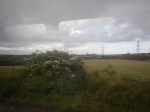


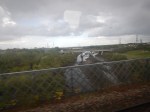
I would have taken more pictures, but the train was rather full.
Bedlington Station And Bedlington
I took these pictures at and around Bedlington station.
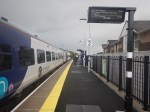
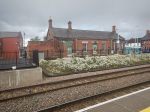
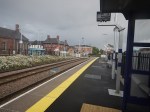
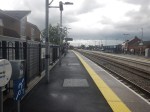
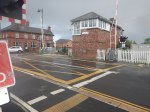
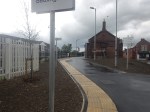


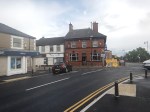

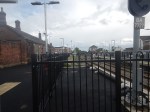
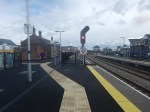
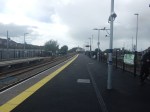
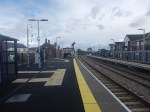
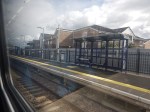
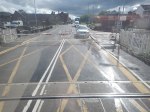
Note.
- Although it is a completely rebuilt station, it has a level crossing.
- But is the signal box keeping a watchful eye over trains and the road?
- Bedlington station appears to be step-free using ramps and the level crossing.
- Just to the North of the station, the tracks split to Ashington and Morpeth.
In my forty minutes or so in Bedlington, I didn’t see a terrier.
Are Any Bedlington Terriers Still Bred At Or Near Bedlington?
I had to ask Google AI, this question and I received this reply.
Yes, Bedlington Terriers are still bred in and around their namesake town in Northumberland, UK. While they are a relatively rare breed overall, the historic North East region remains one of the primary strongholds for these distinct “lamb-like” dogs.
Northumberland Park Station
I took these pictures at Northumberland Park station.
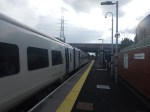
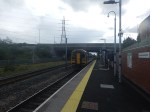
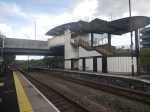
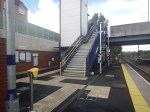
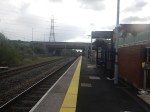
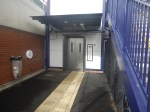
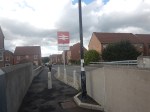
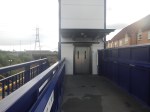
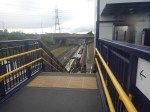
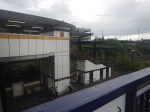

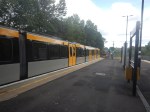
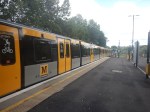
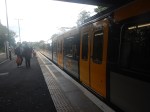
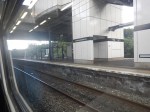
Note.
- The Northumberland Line uses a single bi-directional platform on the North side of the station.
- The Newcastle Metro uses an island platform on the South side of the station.
- Both platforms have steps and lifts.
- There are around 400 parking spaces and a Sainsbury’s Superstore at the station.
At 78, after a stroke, I didn’t find the change between the two lines difficult. But I did use the lifts!
What Are The Future Plans For The Northumberland Line?
I couldn’t resist asking Google AI this question and I received this answer.
With the Bedlington and Northumberland Park stations fully operational, the core phase of the Northumberland Line connecting Ashington to Newcastle is complete. Future plans now focus on route extensions, additional stops, and increasing capacity to handle high passenger demand.
Key Future Plans
Extension to the Coast: The North East Combined Authority is actively funding the development of an extension to Newbiggin-by-the-Sea, utilizing existing freight tracks. Planning submissions for this expansion are targeted for 2028.
New Station Proposals: Proposals are being explored to build an additional stop serving the Wansbeck General Hospital and to replace the long-closed Choppington station.
Increased Capacity: Operator Northern Rail is in ongoing discussions with transport partners to lengthen train services (which are currently constrained to two to four coaches) to help accommodate massive patronage on the line.
Integrated Ticketing: The Northumberland County Council is exploring integrated ticketing with the Tyne and Wear Metro to allow for seamless travel between the two networks at stations like Northumberland Park.
From my observations on the line over the last few years, I would go along with Google AI’s recommendations.
These are some specific thoughts.
Extension To Newbiggin-by-the-Sea
This OpenRailwayMap shows the tracks that used to exist between Ashington and Newbiggin-by-the-Sea.
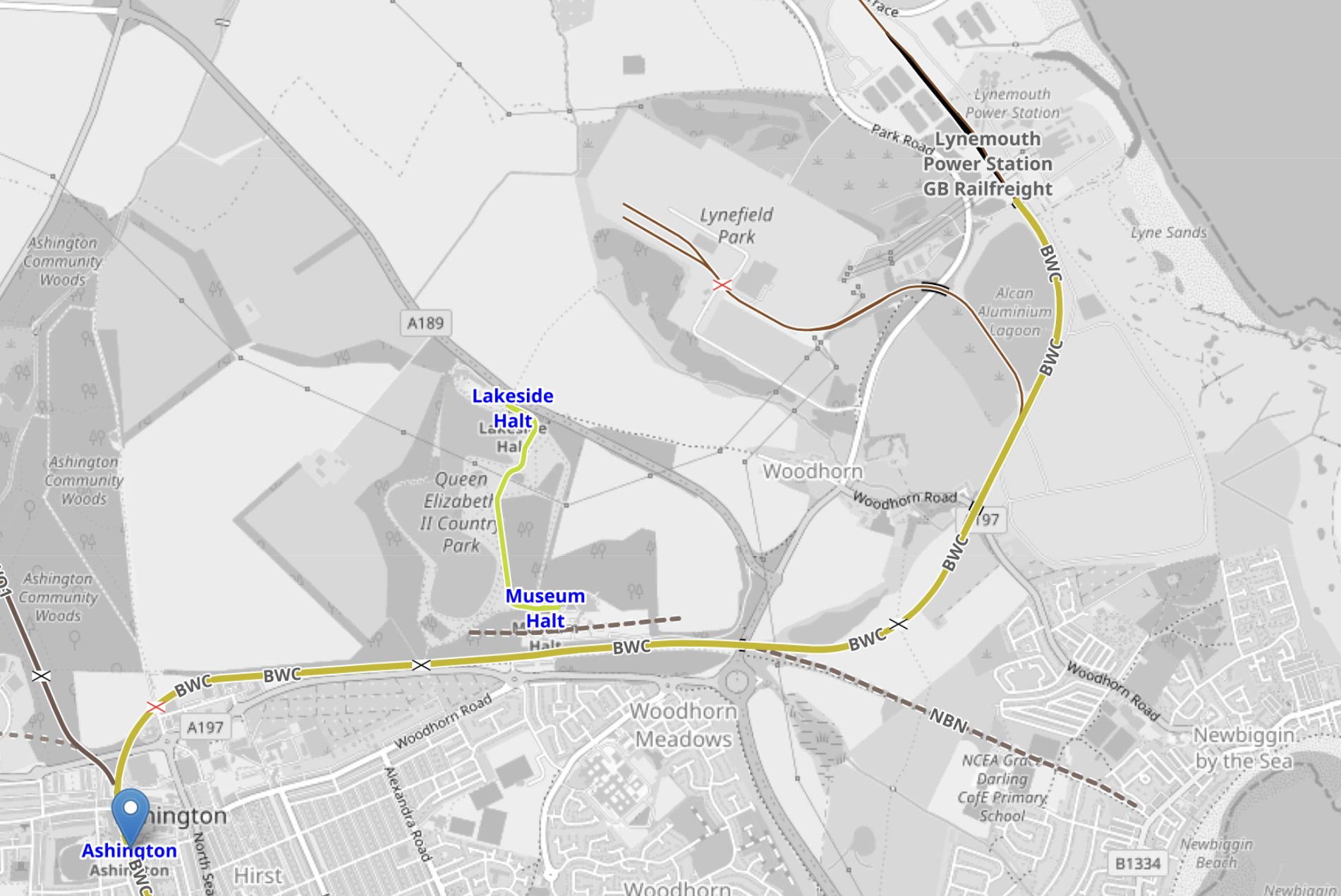
Note.
- Ashington station is in the South-West corner of the map.
- A freight line exists, which is shown in yellow, all the way to Lynemouth power station, which is a 420 MW biomass power station.
- Lynemouth powerstation was originally built to power an aluminium smelter.
- Running South-East from the Northumberland Line, is a disused railway alignment labelled NBN, which leads into Newbiggin-by-the-Sea.
This Wikipedia section describes the history of railway connection of the town.
Situated on the west side of Front Street (now the B1334), the station opened on 1 March 1872 as a terminus of the Blyth and Tyne Railway (now known as the Northumberland Line). The station had a long island platform onto which the station building faced. There were sidings on both sides of the station which handled goods traffic, controlled by a signal box. The station closed to both passengers and goods traffic on 2 November 1964. With the reopening of the Northumberland Line, Provisions have been made, especially at Ashington so that the line could be extended to Newbiggin. As of the end of 2025, there were calls to extend the railway by 1.6km (1 mile) into the centre of Newbiggin-by-the-Sea. This will require new track and is all subject to a feasibility study. A formal bid was launched in December 2025 for this.
In Formal Bid To Extend Railway Line, I wrote about the latest progress in January 2026, based on a BBC article.
The Northumberland Line Needs A Focus Other Than Commuting
Several of the stations have large car-parks, which is good for commuting, but the railway needs to serve more places for leisure and other activities.
- Seaton Delaval Hall is Grade 1 Listed and is just 10 minutes in a bus from the station with the same name.
- If the Northumberland Line is connected to Newbiggin-by-the-Sea, that could bring in those, wanting a day by the sea.
- The extended Northumberland Line would also connect to Woodhorn, which is a museum, described in this Wikipedia entry.
QTS are also developing an AI data centre at Cambois, which surely will generate commuter traffic from all over the North East.
This OpenRailwayMap shows the location of the QTS AI Data Centre.
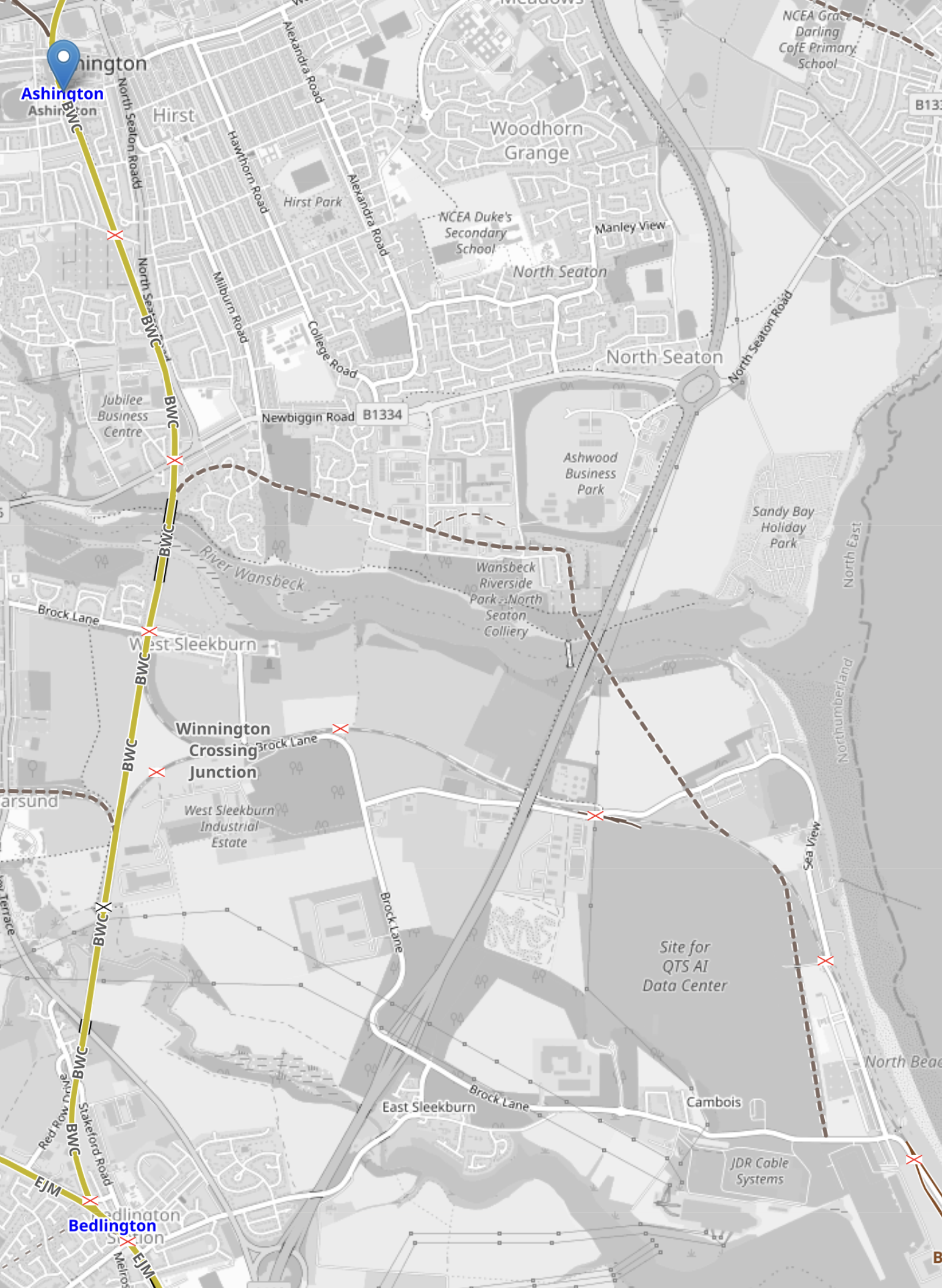
Note.
- Ashington station is indicated by a blue arrow.
- The yellow track is the Northumberland Line, which now terminates at Ashington station.
- Bedlington station is in the South-West corner of the map.
- The trapezoidal grey box to the East of Bedlington is labelled as Site for QTS AI Data Centre.
- As the site, was that of Blyth coal-fired power station, before QTS acquired it, there is a disused railway line that connects the site to the Northumberland Line.
I suspect there are powerful economic arguments about whether or not, the Northumberland Line is extended to the QTS AI Data Centre site.
How Much Power Will QTS Cambois Data Centre Need?
I couldn’t resist asking Google AI this question and I received this answer.
The proposed QTS Cambois data centre in Northumberland is expected to require between 620MW and 720MW of critical IT power capacity, with an initial proposal capacity of up to 1.1GW.
Details on the planned power infrastructure include:
Power Capacity: The facility will support up to 720MW of critical IT capacity across ten planned buildings, though some council estimates cite an expected total power capacity of 620MW.
Backup Power: To guarantee uptime and handle power outages, the campus will rely on nearly 600 diesel-powered generators, requiring up to 58 generators per data hall.
Site Details: Located on the former Blyth Power Station site in Cambois, the £10 billion development will span 540,000 square metres.
My views on this are.
- There is the 1.4 GW North Sea Link from Blyth to Norway, that I wrote about in UK To Norway Sub-Sea Green Power Cable Operational.
- The 4.1 GW Berwick Bank wind farm is planned to send 1.8 GW to Blyth.
- To help if QTS need more power, there is the 1.4 GW Sofia wind farm.
- So 1.1 GW should be manageable, as Blyth is blessed with more power than Niagra Falls.
I also believe that Centrica and Delta have a much better backup solution, that I described in Delta And Centrica Launch Scalable Off-Grid Fuel Cell Power Solution. Hydrogen could come by pipeline or rail.
How Would The Northumberland Line Connect To Wansbeck Hospital?
This Google Map, shows the location of Wansbeck General Hospital with respect to Ashington station.
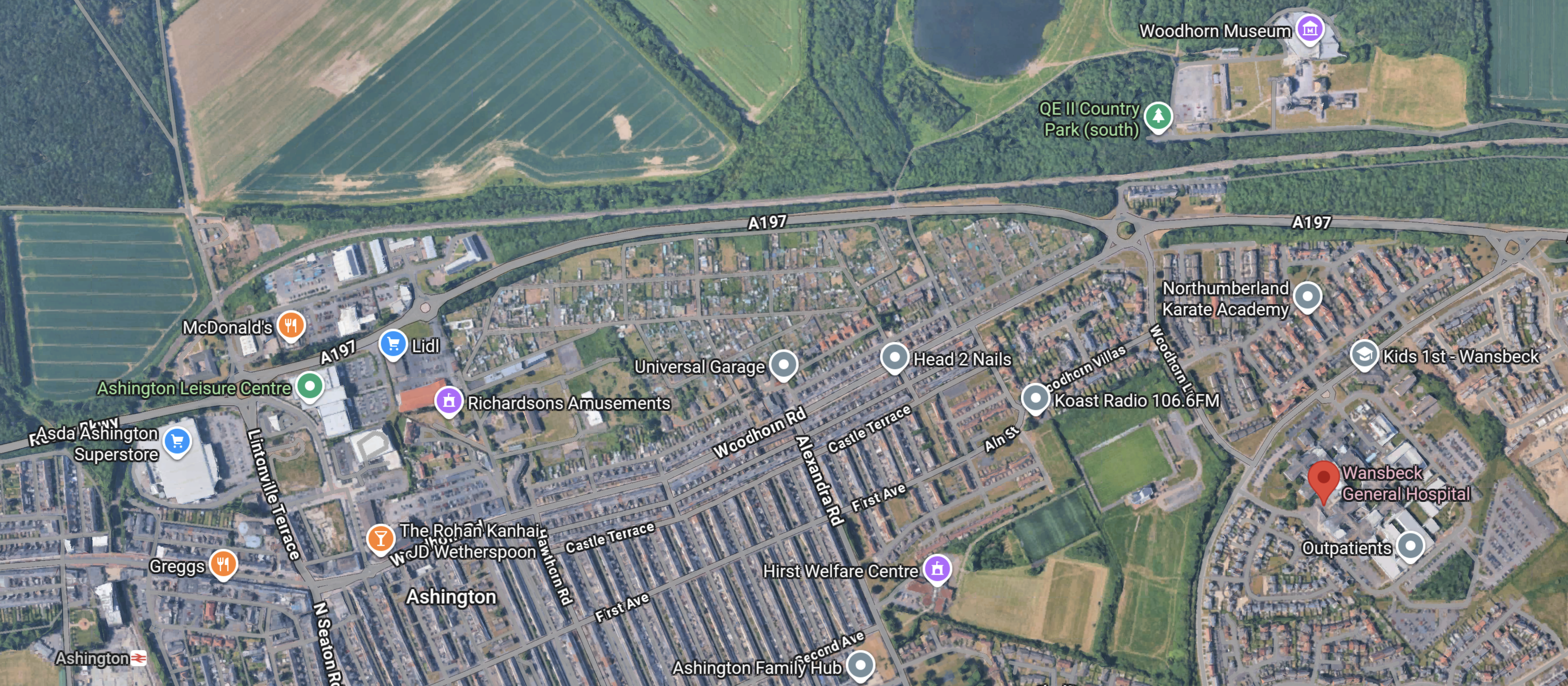
Note.
- Ashington station in the South-West corner.
- Woodhorn museum is in the North-East corner.
- Wansbeck General Hospital is indicated by a red arrow.
- The Northumberland Line runs East-West to the South of the museum and then curves round to reach the station.
Perhaps the station could go between the museum and the hospital and an innovative shuttle would connect all three locations.
How Would The Northumberland Line Connect To Choppington?
This Google Map, shows the location of Choppington, with respect to Morpeth and Bedlington stations.
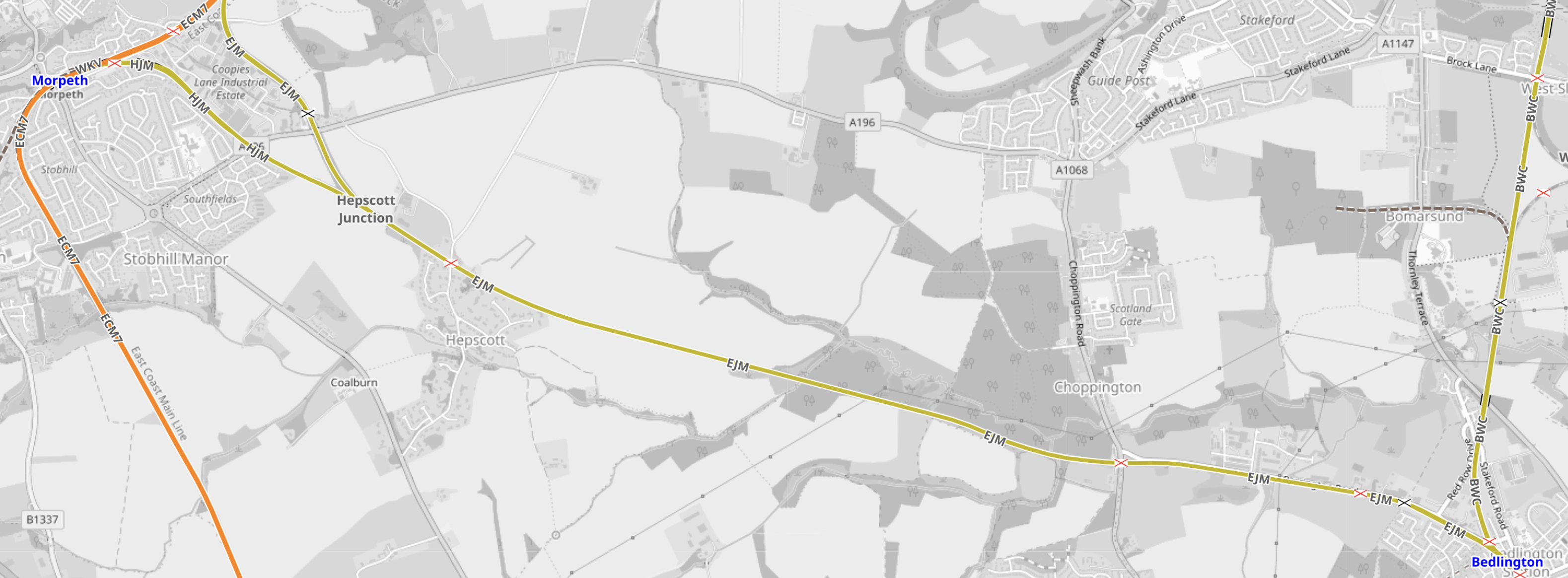
Note.
- The orange track on the West side of the map is the East Coast Main Line.
- Morpeth station is in the North-West corner of the map.
- Bedlington station is in the South-East corner of the map.
The Eastern end of the Bedlington and Morpeth Line can be seen in this picture to the left of Bedlington North signal box at the Northern ends of the the platforms.
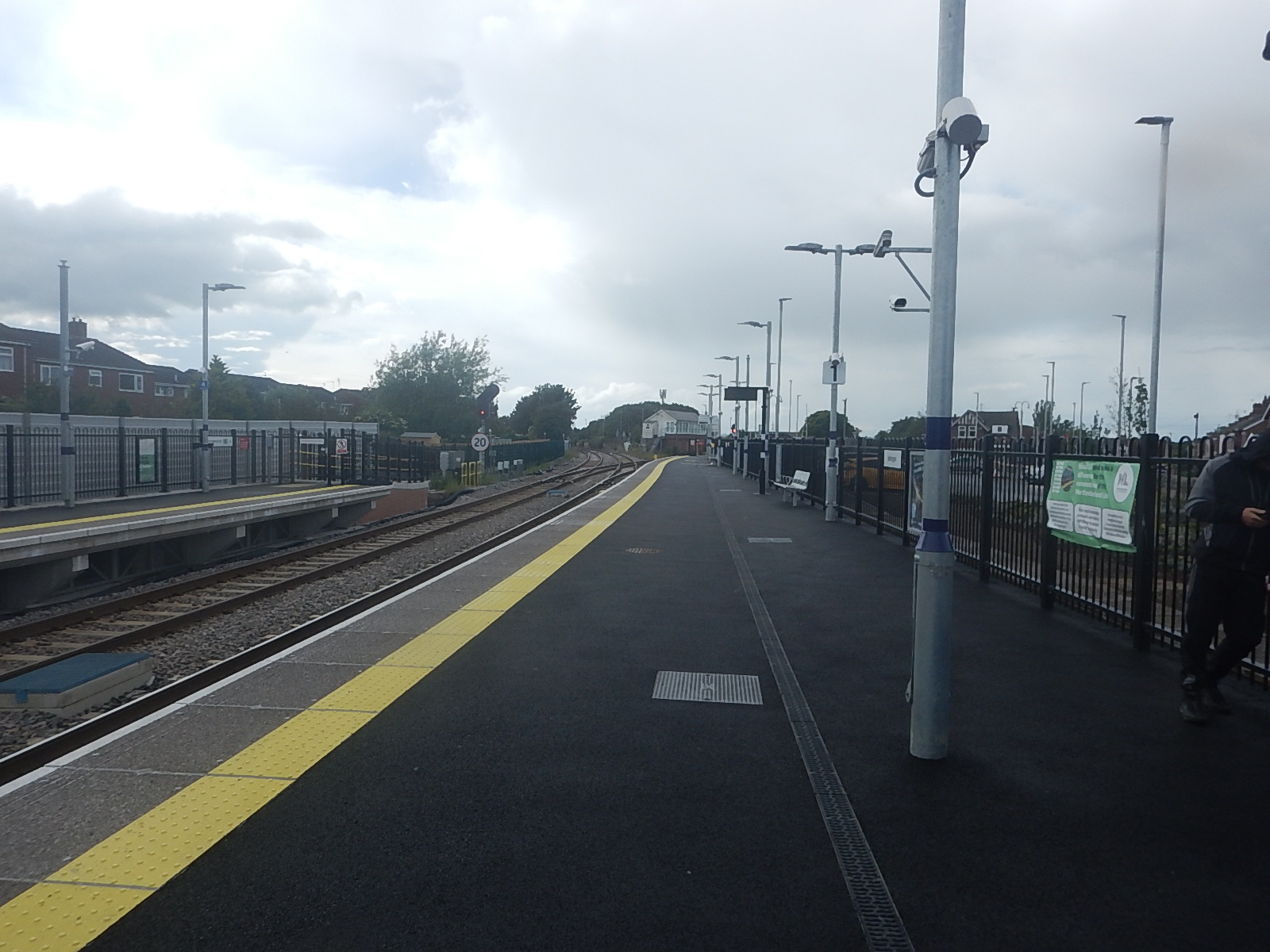
Note.
- Bedlington North signal box has a communication mast behind it.
- The track to the left of the box goes to Morpeth.
- The track to the right of the box goes to Ashington.
This OpenRailwayMap shows Choppington Road, which crosses the Bedlington and Morpeth Line at the only level crossing between Bedlington station and Hepscott junction.
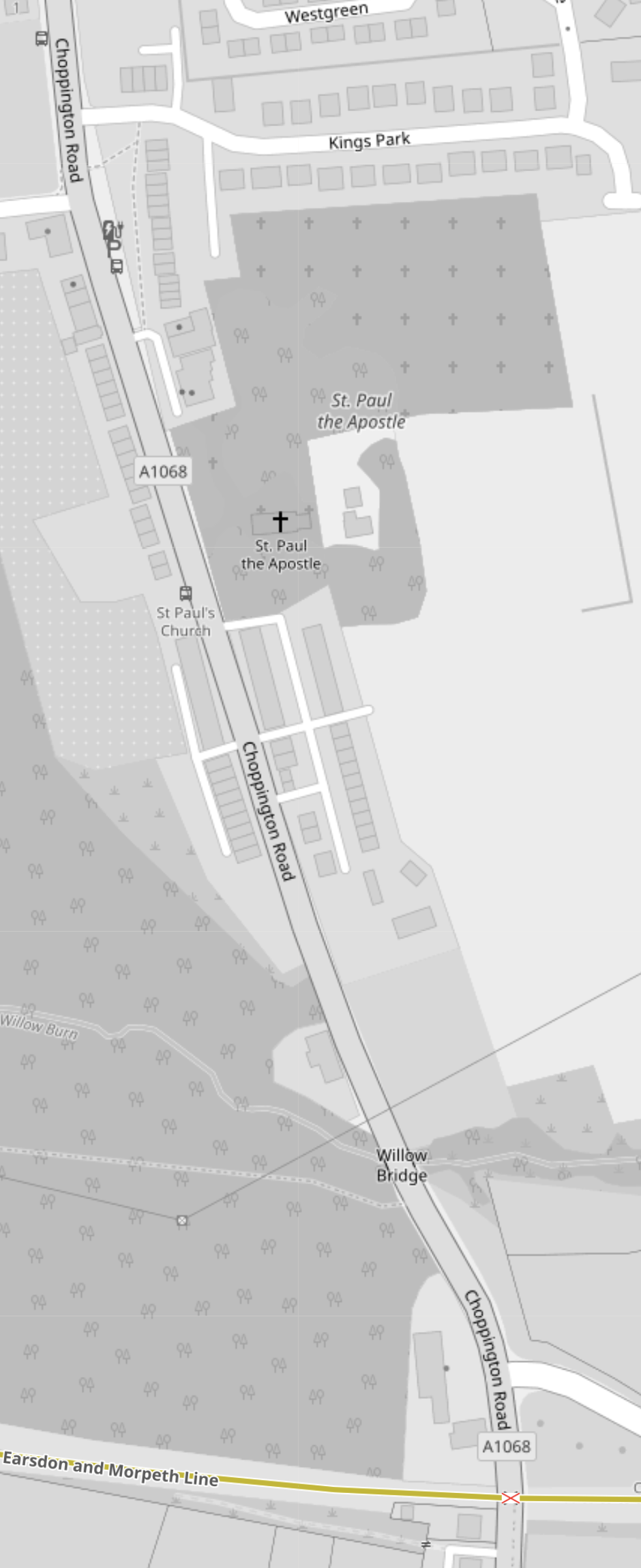
Note.
- Choppington Road, which runs North-South on the map.
- The yellow tracks are the Morpeth and Bedlington Line, which runs East-West across the map.
- Where they cross, a red cross indicates a level crossing.
- The Wikipedia entry of Choppington station shows a level crossing.
As the level crossing on the map is the only one shown, this must be the location of Choppington station.
Creating More Capacity At King’s Cross Station
I took these pictures as I walked through King’s Cross station today.


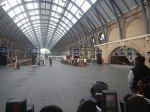
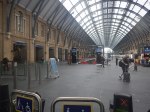
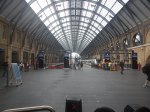
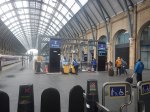
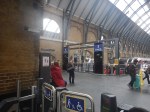
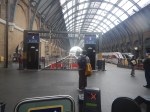
Note.
- Each of the eight platforms in the main train shed, has been formally divided into a and b sections.
- In the first picture, a sign to the right of the clock, showing 0a and 0b, indicates that Platform 0 has been similarly divided.
- I would assume, that any services run by 10-car trains would use both the a and b platforms.
- Services run by 5-car trains, can use any free ‘a’ or ‘b’ platform.
It would appear to me, that 18 x 5-car platforms must be able to handle more trains than 9 x 10-car platforms.
This information screen, which is one of several, explains what has been done.
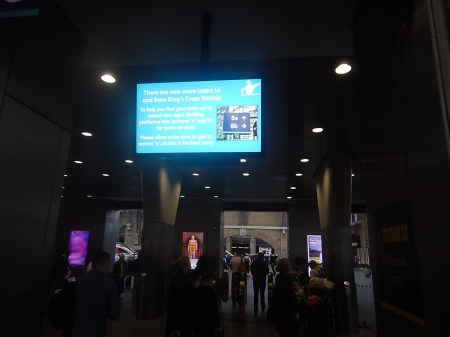
This is the message on the screen, which is only visible about once every ten minutes.
- There are now more trains to and from King’s Cross station.
- To help you find your train we’ve added new signs dividing platforms into sections ‘a’ and ‘b’ for some services.
- Please allow extra time to get to section ‘a’, as this is furthest away.
It’s not a good way to present information.
It is one of the worst examples of mushroom management, I’ve seen in a long time.
I suspect, that experienced travellers will understand it, but will the less experienced?
Will It Increase The Capacity?
I believe it is a well-known rule, that you get more bricks in a box, if they are all the same size and they are a fraction of the size of the box.
So by having five- and ten-car trains and platforms, Network Rail are minimising wasted space in the station, which is increasing the capacity.
The new digital signaling gives precise control of the trains and theoretically, would obtain the maximum number of trains in the station.
But all trains, that will use the station must follow these rules.
- Five- or ten-cars long.
- Trains must have a digital-signalling capability.
- Be able to cruise at 125 mph, so they can keep up with other trains.
Terminal stations on the East Coast Main Line, like Aberdeen, Bradford Forster Square, Edinburgh, Harrogate, Hull, Inverness, Leeds and others must also be capable of handling five- or ten-car trains.

