Uttoxeter Station – 14th October 2026
Becuse Uttoxeter station could be on a possible open access service between St. Pancras and Manchester Piccadilly stations, I went and had a look.
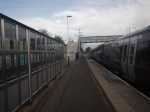
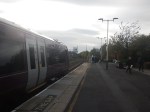
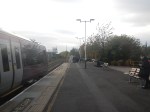
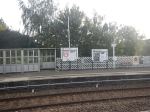
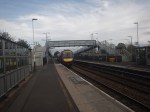
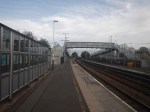
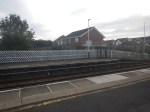

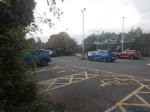
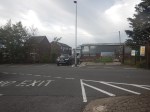


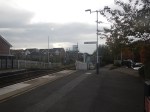
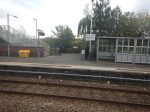
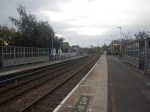

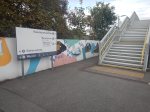
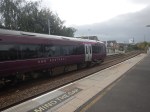
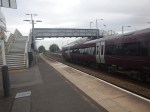
My father would have made a comment about Molotov as regards this station.
Molotov had this reputation for always saying no.
This station is rather short in its list of facilities.
- It has no lifts for the footbridge.
- It has no staff.
- There was no obvious information about local transport.
- I saw no details of how to get a taxi.
- There were no litter bins on Platform 1.
- Poor early and late trains.
I believe this station needs a lot of improvement.
These are my thoughts.
Are Any Improvements Planned At Uttoxeter Station?
I thought I had better ask this question of Google AI first, so I didn’t repeat myself.
Google AI gave me this answer to the question.
Several service and timetable improvements are planned for Uttoxeter station:
Sunday Train Timetable Changes: Starting in December 2026, Sunday train services through Uttoxeter and Tutbury will be expanded to run from 9:30 AM onward, removing the previous restriction where trains did not start until after 3:00 PM.
Local Campaign for Increased Frequency: Local campaigns and discussions with East Midlands Railway (EMR) and Network Rail are underway to assess adding more frequent local train services and extra carriages on the Derby-to-Crewe line, including through Uttoxeter.
Proposed Open Access Services: Grand Central Trains has submitted an application for a new open access train service connecting Manchester Piccadilly and London St. Pancras that would call at Uttoxeter (proposing five trains per day).
Regional Infrastructure Upgrades: Network Rail has conducted ongoing infrastructure and track-renewal works across Derbyshire and Staffordshire (such as recent upgrades near Wychnor Viaduct and Clay Mills level crossing) to improve overall line reliability for services passing through Uttoxeter.
Note.
- When I visited the station, a guy complained to me about train times.
- I took one train to Uttoxeter and one from the station. Both were crowded.
- I believe Grand Central Trains service between London St. Pancras and Manchester Piccadilly will be a winner.
- Good to see that a level crossing has been removed.
Nothing seems to be planned, except for the better timetable.
Would Adding The Open Access Service Be Welcomed?
The open access service could have these effects.
- Five more trains in each direction would add more capacity.
- Trains could be timetabled to run in busy times.
- Early and late trains, would benefit shift workers.
- Running to London St. Pancras would connect to Continental services in the same station.
- Running to stations like Derby, Leicester, Stoke-on-Trent, Stockport and Manchester Piccadilly would widen the employee catchment area for employers in Uttoxeter.
- Alton Towers, JCB and Uttoxeter racecourse would probably all benefit from a direct train service to London St. Pancras, Derby, Stockport and Manchester.
Andy Burnham says he wants growth. Surely these five trains in each direction would inject growth into Uttoxeter and the surrounding area.
A Decent Bus Service To Local Attraction Would Be Needed
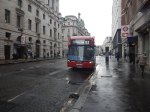
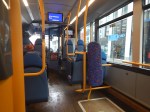
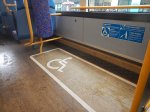
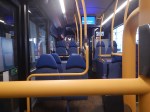
I took these pictures today of a small bus in London.
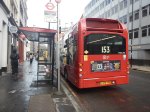
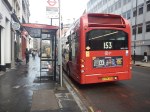
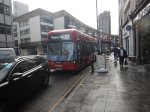
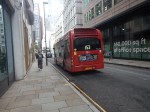
Note.
- It is a Wrightbus GB Kite electric bus.
- It was built in Northern Ireland.
- Wrightbus is owned by Lord Bamford’s son.
- Lord Bamford’s family own JCB.
I’m sure the family can agree on a deal to make Uttoxeter a must-visit place.
Sheffield Station – 14th October 2026
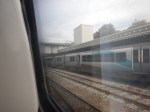
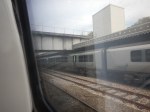
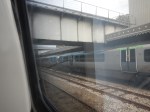
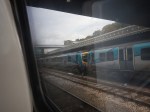
I went to Sheffield station and took these pictures.
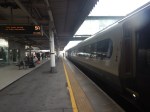
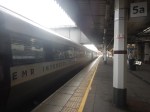
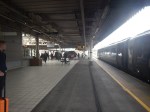
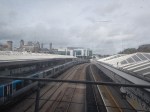
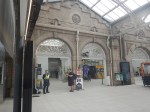
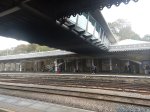
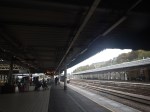
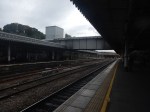
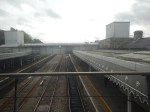
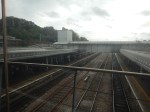
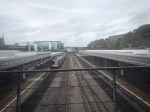
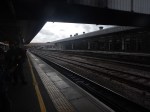
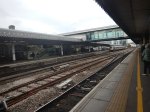
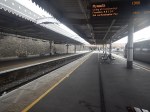
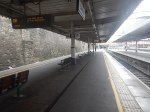
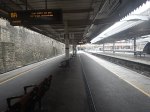
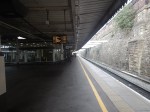
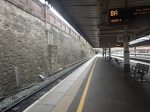
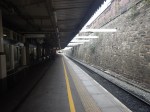
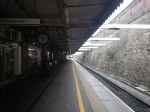
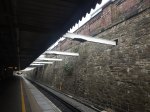
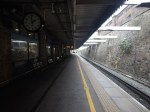
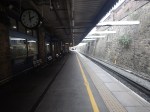
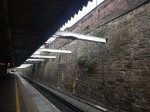
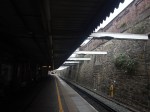
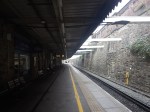
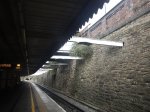
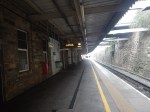
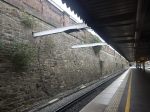
Note.
- The tram electrification clearly shows, where the Sheffield Supertram runs above the railway.
- My Class 222 trains arrived in Platform 5 from London.
- A five-car Class 810 train is 120 metres long.
- Platform 8 is a 378 metre through platform.
- What is the purpose of the white iron beams over the track, in the pictures of Platform 8?
- The beams are fairly substantial
- Platform 7 is a 135 metre bay platform.
- There are also similar shorter beams over the bay Platform 7.
- The platforms are well-provided with lifts.
- In the past, I have used Platform 7 to take a train to Manchester Piccadilly station along the Hope Valley Line. This could be an ideal route for battery-electric trains, as it is scenic and only 42.1 miles long.
If these beams are to hold overhead electrification cables to charge battery-electric trains, then the bay Platform 7 could charge a single train and Platform 8 could charge a pair of trains.
I have some thoughts and questions.
Could Sheffield Station With A Charger In Platform 8, Return a Class 810 Battery-Electric Train To London?
In Electrification Project’s Major Milestone Delivered On Time And Under Budget, I had a section, which was entitled Battery-Electric Trains Between St. Pancras And Sheffield Stations, where I said this.
Real Time Trains reveal the following about current St. Pancras and Sheffield services, that are run by the new Class 810 trains.
- Trains switch between electric and diesel power at Kilby Bridge junction.
- Between Kilby Bridge junction and St. Pancras station, overhead electrication provides train power.
- Between Kilby Bridge junction and Sheffield station diesel generators provide train power.
- Kilby Bridge junction and Sheffield station are 71.4 miles apart.
This would mean.
- For a one-way journey a battery range of 71.4 miles would be needed.
- For a return journey a battery range of 142.8 miles would be needed.
- Leicester, Loughborough, East Midlands Parkway, Long Eaton, Derby and Chesterfield stations would be served on battery power.
I suspect charging could be installed if required at Sheffield station.
This charging would need to put enough electricity in the batteries to get back to Kilby Bridge junction.
It certainly looks like.
- Platform 7 is long enough to charge a five-car train.
- Platform 8 is long enough to charge a ten-car train.
I don’t think the world’s first battery-electric 125 mph battery-express train is far away.
Could Two Trains Be Charged At The Same Time?
I don’t see why not, if the electrification has enough capacity.
Could Rigid Overhead Conductor Rails As At St. Pancras Thameslink Station Be Used?
These pictures show those rails.
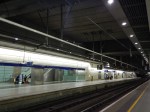
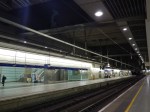
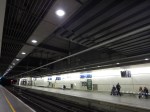
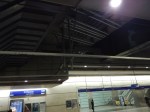
I don’t see why not.
How Long Will Trains Take Between London St. Pancras And Sheffield?
I asked Google AI, how long the current trains take and received this reply.
East Midlands Railway (EMR) trains between London St Pancras International and Sheffield Station take an average of 2 hours and 12 minutes to 2 hours and 15 minutes, with the fastest direct services completing the journey in 1 hour and 57 minutes to 2 hours 1 minute.
I suspect that for marketing reasons, all services will be a minute or so, less than two hours.
Will The Trains Be Five- Or Ten-Cars?
As it appears, that trains of both lengths can be charged at both ends of the route, East Midlands Trains can run the trains, so that they maximise the numbers of passengers.
But I suspect, it will be a two trains per hour, guaranteed two hour service between London St. Pancras and Sheffield.
Could Trains Between London St. Pancras And Sheffield Be Extended To Leeds?
Consider.
- According to Google AI, historically, there have been trains that have run between between London St. Pancras and Leeds via Sheffield and the Midland Main Line.
- Trains would use Platform 8 at Sheffield, as it is an electrified through platform.
- The route between Sheffield and Leeds would be something like Meadowhall, Rotherham Central, Swinton, Bolton-on-Dearne, Moorthorpe, Fitzwilliam, Westfield Westgate and Outwood.
- Trains could also charge their batteries at Leeds, if required.
- Sheffield and Leeds is only 39 miles
Note.
All the intermediate stations between Sheffield and Leeds, would get direct services to Chesterfield, Derby, Long Eaton, East Midlands Parkway, Loughborough, Leicester and London St. Pancras.
- Trains would not leave Sheffield until the batteries were full.
- As my pictures show that Sheffield will have two platforms capable of fully-charging trains for London St. Pancras, I suspect that Sheffield will still have two trains per hour to London St. Pancras.
- As Platform 8 at Sheffield can handle ten-car trains, five- and 10-car trains can be run between London St. Pancras and Leeds.
Could Manchester And Sheffield Trains Along The Hope Valley Be Run By Battery-Electric Trains?
Consider.
- The Hope Valley Line between Manchester Piccadilly and Sheffield is only 42.1 miles.
- The service is currently hourly.
- The Hope Valley Line has recently been upgraded.
- Could the upgrade allow two trains per hour?
- Some trains between Manchester Piccadilly and Sheffield already use Platform 7 in Sheffield station.
Note.
- The Hope Valley Line is a scenic route.
- The service would use Platform 7 at Sheffield station.
- All platforms at Manchester Piccadilly station are electrified, so could top up the battery-electric trains.
- A two trains per service would have a cross-platform interchange with London trains in Platform 8.
- I’m sure that Hitachi could create a battery-electric version of their Class 185 train.
- I also suspect that CAF would be able to provide a battery-electric version of their Class 332 train, that Northern uses.
I believe that travellers using the Hope Valley Line would welcome an improved service.
Could A Battery-Electric Train With A Range Of 70 Miles Run A London And Nottingham Service?
In Electrification Project’s Major Milestone Delivered On Time And Under Budget, I had a section, which was entitled Battery-Electric Trains Between St. Pancras And Nottingham Stations, where I said this.
Real Time Trains reveal the following about current St. Pancras and Nottingham services, that are run by the new Class 810 trains.
- Trains switch between electric and diesel power at Kilby Bridge junction.
- Between Kilby Bridge junction and St. Pancras station, overhead electrication provides train power.
- Between Kilby Bridge junction and Nottingham station diesel generators provide train power.
- Kilby Bridge junction and Nottingham station are 33.1 miles apart.
This would mean.
- For a one-way journey a battery range of 33.1 miles would be needed.
- For a return journey a battery range of 66.2 miles would be needed.
- Leicester, Loughborough, East Midlands Parkway and Beeston stations would be served on battery power.
I suspect charging could be installed if required at Nottingham station.
But would it be needed, as the battery range for for Sheffield is more than that needed for a return journey to Nottingham?
Will JCB And Alton Towers Like The New Manchester Piccadilly And St. Pancras Rail Service At Uttoxeter Station?
Grand Central Trains have applied for an open access service between Manchester Piccadilly and St. Pancras stations.
- This service will call at Stockport, Macclesfield, Congleton, Stoke-on-Trent, Uttoxeter, Derby, Loughborough, Leicester, Wellingborough and Luton Airport Parkway.
- Grand Central Trains are asking for five trains per day.
- JCB and Alton Towers are the two largest employers in the area and employ more than a few thousand between them.
- The JCB headquarters and factory are 5.6 miles from Uttoxeter station.
- Alton Towers is 10 miles from Uttoxeter station.
- Alton Towers have given the new train service their backing.
- The current local train service through Uttoxeter is only an hourly diesel service between Crewe and Lincoln, with additional calls at Stoke-on-Trent, Derby and Nottingham.
- Trains seem to call at Uttoxeter between 07:00 and 22:00.
I suspect that this train service may not be enough.
I have some questions and thoughts.
What Trains Will Be Used For The Manchester Piccadilly And St. Pancras Rail Service?
Initially, it is likely, that hand-me-down Class 180 trains will be used.
- They are five-car diesel trains.
- As they are only 116.52 metres long, they are less than 120 metre, so they will fit the platforms at St. Pancras.
- They are 125 mph trains.
I have problems with their air-conditioning.
I am sure, that JCB, Alton Towers and all their employees and visitors would prefer a mouse-quiet zero-carbon train and Grand Central Trains have some Class 820 trains on order from Hitachi.
- They are five-car tri-mode trains.
- They will have to have 24 metre cars, so they will fit the platforms at St. Pancras.
- They are 125 mph trains.
They will use battery power between Kilby Bridge junction and Stoke-on-Trent station, which is about 71 miles.
How Long Will St. Pancras And Uttoxeter Take?
Consider.
- The fastest time between St. Pancras and Derby stations takes 87 minutes
- A Class 170 train takes 26 minutes between Derby and Uttoxeter.
I believe that with a few minutes for the driver to change ends at Derby, that St. Pancras and Uttoxeter stations will be under two hours.
I asked Google AI, how long it would take to drive and received this reply.
Driving between Uttoxeter and London takes approximately 2 hours and 44 minutes to 3 hours and 4 minutes, depending on the route you choose.
That is an impressive saving.
Do Alton Towers And JCB Have Difficulty Getting Local Employees?
I asked this question of Google AI and received this answer.
Yes, Alton Towers and JCB face persistent and unique challenges when it comes to recruiting and retaining local employees. Both companies are the dominant, marquee employers in the rural area of Staffordshire Moorlands, but their location and operational models create distinct logistical and competitive hurdles.
The two primary factors causing recruitment and retention difficulties include:
- Inaccessible Rural Locations & Public Transport Barriers
According to local planning and infrastructure assessments published by Staffordshire Authorities, both Alton Towers and JCB operate vast facilities in highly rural pockets of the county.
The Public Transport Gap: Local public transport options are heavily limited and typically do not run late enough or early enough to match the shift patterns of either employer.
The Commute Burden: Reviews from local workers on platforms like SimplyHired note that non-driving local staff face highly stressful or prolonged commutes (sometimes taking up to two hours via limited staff shuttle buses), which quickly makes entry-level or minimum-wage roles financially non-viable.
2. Wage and Poaching Competition Between the Two
Because they pull from the exact same local labor pool in neighboring towns like Cheadle and Uttoxeter, they often find themselves in direct competition for workers, creating a localized hiring tug-of-war.
The Pay Disparity: Users on Reddit’s AltonTowers forum point out that Alton Towers struggles heavily to retain staff in certain operational positions because nearby JCB acts as a “better payer,” poaching local talent away with higher industrial wages.
Seasonal vs. Year-Round Stability: Alton Towers’ recruitment model relies heavily on hiring roughly 1,500 to 2,500 seasonal workers annually who are let go between November and March. Local school-leavers and workers frequently jump from Alton Towers to JCB when looking for permanent, year-round manufacturing contracts.
There are some obvious things, that could be done to ease getting to Alton Towers and JCB.
Do Alton Towers And JCB Have Visitors From London And The Nearby Continent?
I asked this question of Google AI and received this answer.
Yes, both Alton Towers and JCB attract significant numbers of visitors from London and mainland Europe. Because both attractions are located close to each other in Staffordshire, England, they draw heavily from the capital city as well as international tourists through well-established transportation links.
Alton Towers Resort
As the UK’s largest theme park, Alton Towers welcomes over 2.5 million visitors annually.
Visitors from London: Londoners make up a large segment of the park’s domestic traffic. Travelers frequently make the trip from London Euston to Stoke-on-Trent via Avanti West Coast trains, which takes approximately 1 hour and 40 minutes before a short connecting taxi ride to the gates. Numerous direct coach excursions also depart regularly from London neighborhoods like Wembley and East Ham.
Visitors from the Continent: European theme park enthusiasts routinely include Alton Towers in UK vacation packages to experience its world-renowned “white-knuckle” rollercoasters (like The Smiler or Nemesis Reborn). International tourists commonly fly into nearby hubs like Manchester Airport (MAN) or travel up via the Eurostar and London rail connections.
JCB World Headquarters & Factory Tours
Located in Rocester, the JCB World Headquarters operates a highly popular VIP Visitor Centre and public factory tour experience.
Visitors from London: Industrial tourism and corporate groups frequently travel from London for the 2.5-hour “Story of JCB” manufacturing walkthrough. The company heavily markets to the London crowd, recently launching major public showcases directly outside London’s King’s Cross Station to celebrate its milestones.
Visitors from the Continent: Because JCB is a global powerhouse in construction and agriculture, its Staffordshire headquarters is a major destination for European dealership delegations, commercial buyers, and equipment enthusiasts from France, Germany, and the Netherlands.
On this cursory look, it would appear that for both attractions, a direct train service from Uttoxeter station could make travel easier.
Would Early And Late Trains Between Say Leicester And Stockport Via Derby Help Alton Towers’s And JCB’s Recruitment?
Yes, introducing early and late train services between Leicester and Stockport via Derby would significantly boost recruitment for both Alton Towers and JCB. Both major employers are located in semi-rural Staffordshire, and their primary staffing constraint is the severe lack of viable public transport matching their unsociable shift patterns.
A rail service connecting Leicester and Stockport via the Crewe-Derby line passes directly through Uttoxeter, which serves as the main transit gateway for both companies.
Alleviating the Alton Towers Commute Crisis
Alton Towers relies on thousands of seasonal workers, ride hosts, and hospitality staff who are often younger and do not drive due to high insurance costs. On platforms like Reddit, staff agree that the limited existing employee bus schedules result in grueling 16-hour days due to poorly timed drop-offs and pick-ups.
Late-Night Events: Key seasonal periods like Scarefest require staff to work late cleaning and hospitality shifts ending past 11:00 PM.
Urban Talent Pools: Early and late trains would allow workers living in major urban hubs like Derby, Stoke-on-Trent, and the surrounding regions to commute reliably without needing to rely on expensive taxis or restricted private buses.
Unlocking Shift Coverage for JCB
JCB’s main manufacturing and logistics clusters are centered around Rocester and Uttoxeter. A major portion of their workforce operates on rigid shift patterns (such as 6:00 AM starts or late evening finishes).
Apprentice Mobility: JCB runs joint mechatronics apprenticeships where students spend their first 22 months training at Toyota in Derby before transitioning to the Uttoxeter sites. Better early/late rail links between Derby and Uttoxeter would directly ease this cross-county relocation friction.
Widening the Demographic: Reviews from recruitment groups on Facebook emphasize that confirming shift logistics is the hardest part of securing employment at JCB for younger workers. Reliable, early-morning transit expands their hiring radius to encompass South Manchester (Stockport) and the East Midlands (Derby/Leicester).
It certainly looks like early and late trains would be valuable to both attractions.
But it doesn’t have to be a full London Manchester service with an expensive train. I’m sure Alstom at Derby could build a four-car Adessia battery-electric train, that could handle the route, which would also be suitable for the local Crewe and Lincoln service.
Should Number 10 North Have Good Rail Connections To London?
The answer to this question must be Yes! But it must also have good rail connections to the rest of the UK.Heron House
The current Number 10 North is at Heron House, which is shown on this OpenRailwayMap.
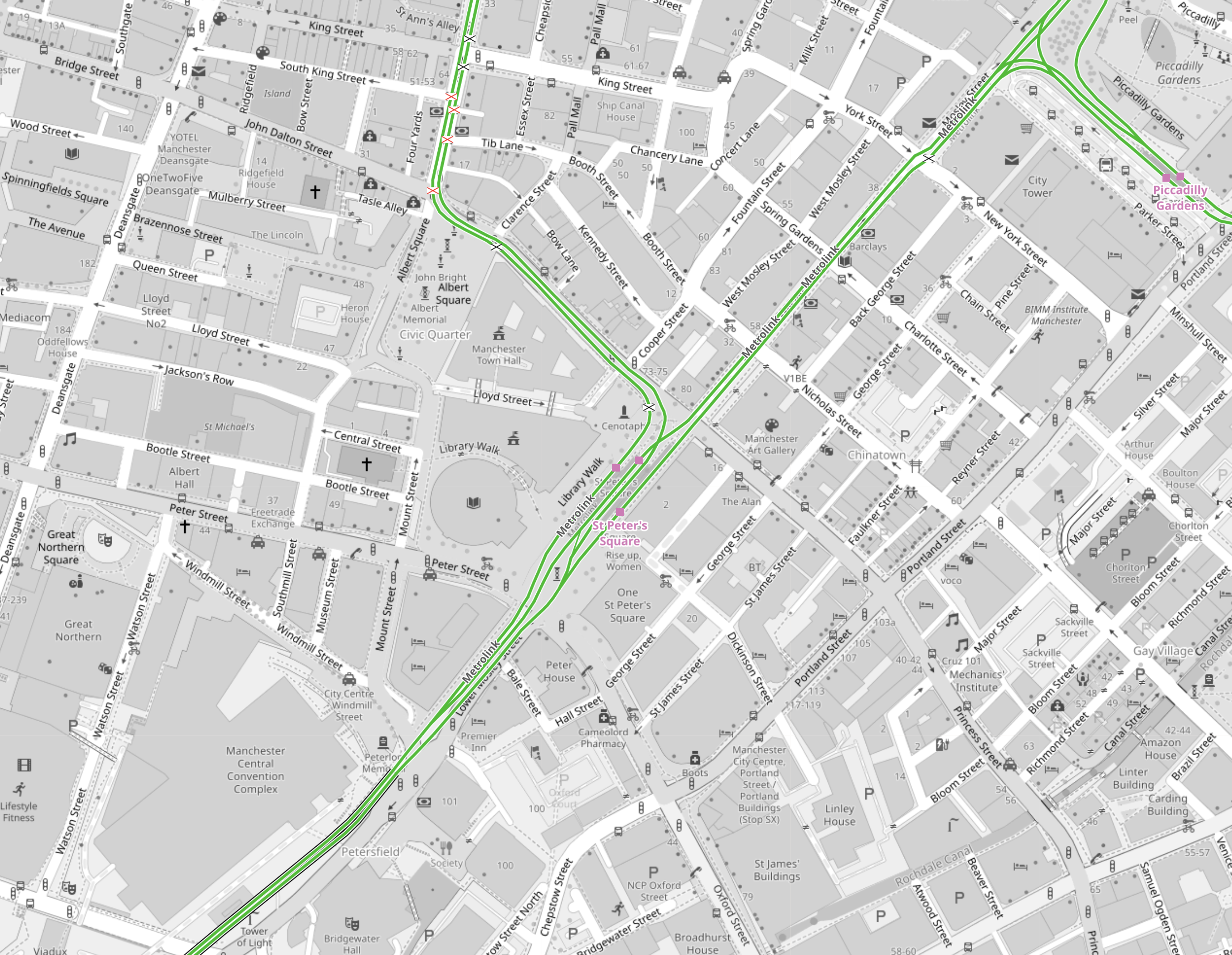
Note.
- The green lines are Manchester’s Metrolink.
- Piccadilly Gardens with its tram stop is in the North-East corner of the map.
- The tram lines going South-East from Piccadilly Gardens go to Manchester Piccadilly station.
- The tram lines going North-East from Piccadilly Gardens go to Manchester Victoria station.
- In the middle of the map, there is St. Peter’s Square tram stop, which are within a five-minute walk to the circular Manchester Central Library and the triangular Manchester Town Hall.
- Heron House is on the opposite side of Albert Square to Manchester Town Hall.
Andy Burnham has obviously chosen a location he knows well from his nine years as the Mayor of Greater Manchester.
Long-term there are plans to move Number 10 North to the Manchester Digital Campus in Great Ancoats Street, Ancoats, Manchester, when construction is completed around 2032.
This Google Map shows the location of Great Ancoats Street with respect to Manchester City Centre.
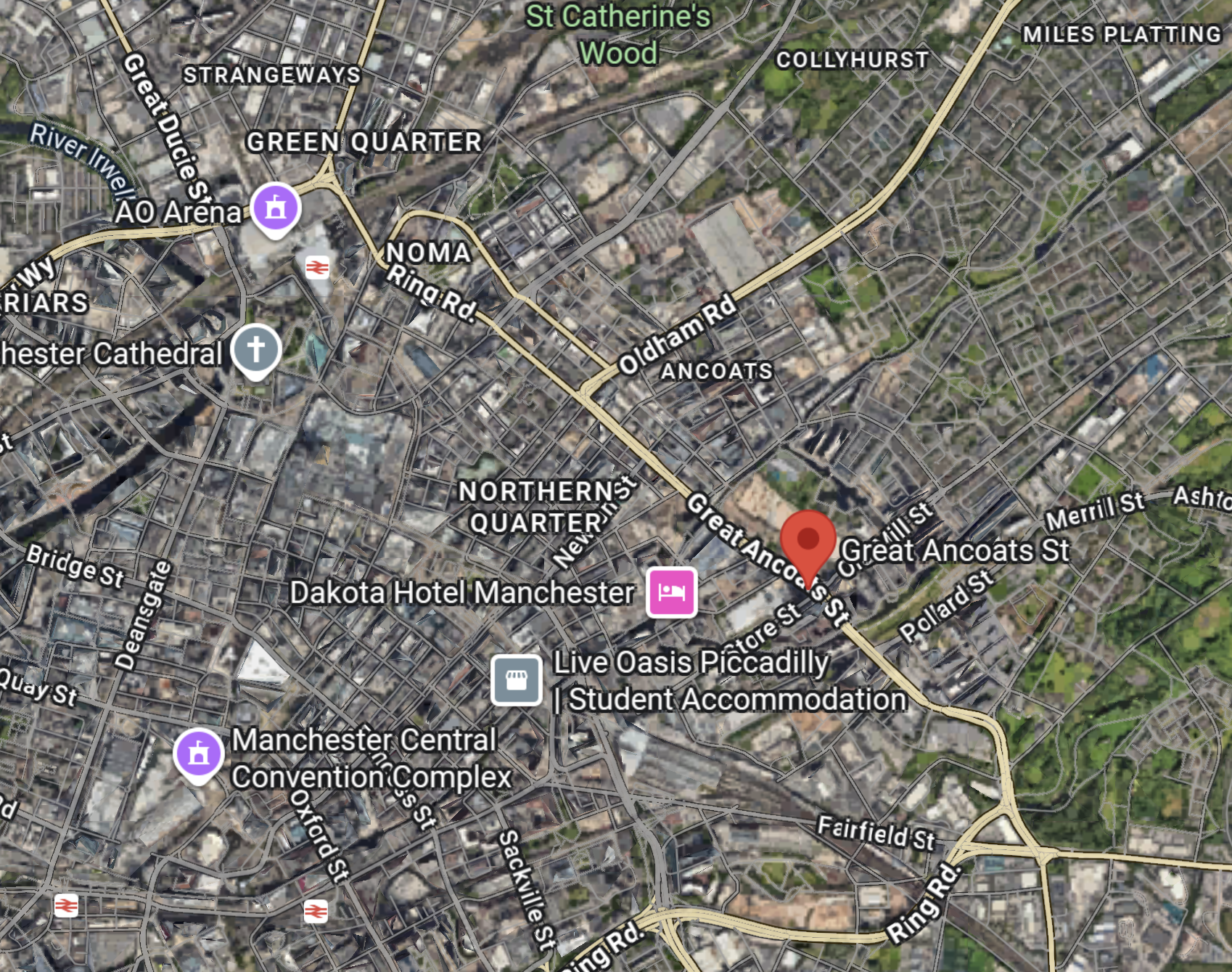
Note.
- Great Ancoat’s Street appears to be part of Manchester’s Inner Ring Road.
- Google placed the red arrow, but I suspect Number 10 North could be somewhere near the arrow.
- Manchester Piccadilly station is not marked on the map, but is about a 0.8 mile South-West of the red arrow, at the end of the rail line going South-East from the map.
- Number 10 North should be about a 5 to 10 minute walk from Manchester Piccadilly station.
- Currently, there is no tram running in this direction.
- The two stations in the South-West corner of the map are Deansgate in the West and Manchester Oxford Road in the East.
- The fourth station in Manchester City Centre is Manchester Victoria in the North-West corner of the map, by the AO Arena and Manchester Cathedral.
- Located between Deansgate, Oxford Road and Victoria stations is a white triangle, which is Manchester Town Hall, with the current location of Number 10 North at Heron House to its West.
- There don’t appear to be any trams on Great Ancoat’s Street, but there are buses between Manchester Victoria and Great Ancoat’s Street, which take about 11-20 minutes.
- As an alternative between Manchester Victoria and Great Ancoat’s Street, you can take a tram to New Islington and walk.
This brief look seems to indicate, that to get to Great Ancoat’s Street, you either walk from Manchester Piccadilly or take trams or buses and a short walk from Manchester Victoria.
This OpenRailwayMap shows Manchester Piccadilly, Manchester Victoria and New Islington.
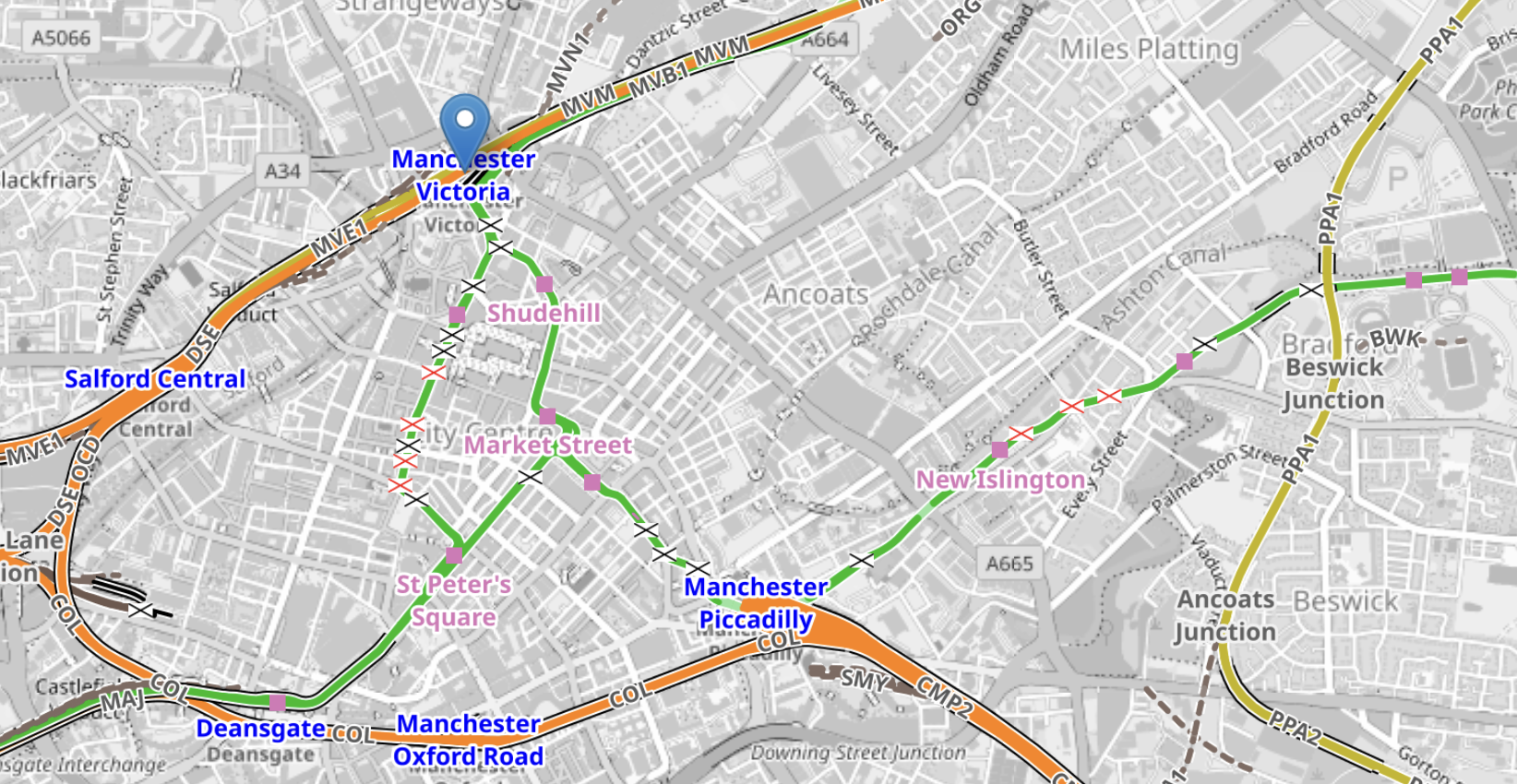
Note.
- Manchester Victoria station is indicated by a blue arrow.
- Manchester Piccadilly station is towards the bottom of the map.
- New Islington tram stop is North-West of Manchester Piccadilly on the green tram line to the Etihad Stadium and Ashton-Under-Lyme tram stops.
- The Etihad Stadium can be seen three tram stops on from New Islington at the Eastern edge of the map.
- Passengers going between Manchester Victoria and New Islington would change trams at Picadilly Gardens tram stop.
I believe that the Future Number 10 North will be within easy walking distance of the New Islington tram stop.
Current London And Manchester Services
Avanti West Cost currently run three hourly trains between Euston and Manchester Piccadilly.
- 1 train per hour (tph) stops at Milton Keynes Central, Rugby, Stoke-on-Trent, Macclesfield, Stockport
- 1 tph stops at Nuneaton, Stoke-on-Trent, Stockport
- 1 tph stops atStafford, Crewe, Wilmslow, Stockport
I don’t think this gives a wide enough coverage of stations.
Lumo’s Proposed London And Manchester Services
Lumo want to run six daily trains between between Euston and Rochdale.
These will stop at Warrington Bank Quay, Newton-le-Willows, Eccles and Manchester Victoria.
Note.
- This could be a fast service, as it is proposed to be non-stop between Euston and Warrington Bank Quay.
- It will probably be only five-cars, which would give no problems terminating at Euston and Rochdale stations.
- Eccles and Rochdale are in Greater Manchester.
- Currently, Warrington Bank Quay, Newton-le-Willows, Eccles and Manchester Victoria don’t have direct trains to London.
- I can see this service appealing to thrifty Yorkshire folk, as Rochdale has 3 tph to Hebden Bridge and Leeds, 2 tph to Halifax and Bradford Interchange, and 1 tph to Brighouse and Dewsbury.
- It could be a low-cost service.
I can see it being successful.
GC Applies For Manchester Paths
The title of this post, is the same as that of a short news item in the August 2026 Edition of Modern Railways.
This is the body of the news item.
Open Access Operator Grand Central has applied to operate five trains per day between St. Pancras International and Manchester Piccadilly from December 2029. These would operate via the Midland Main Line using GC’s five-car Class 180 DMU fleet currently employed on its East Coast Main Line operations. These are due to be replaced by a fleet of tri-mode Class 820s being constructed by Hitachi Rail, which were ordered last year and are being financed by Angel Trains.
Meanwhile, GC is also bidding to operate trains between London Waterloo and Bristol Temple Meads, running via the South West Main Line and Salisbury. The operator says that under these proposals, trains would begin operating from December 2027 with seven trains per day running using stock currently off lease.
These are my thoughts on the St. Pancras International and Manchester Piccadilly service.
The Route Between The Midland Main Line And Manchester Piccadilly
This OpenRailwayMap shows Dore Junction, where the Midland Main Line meets the Hope Valley Line between Chesterfield and Sheffield stations.
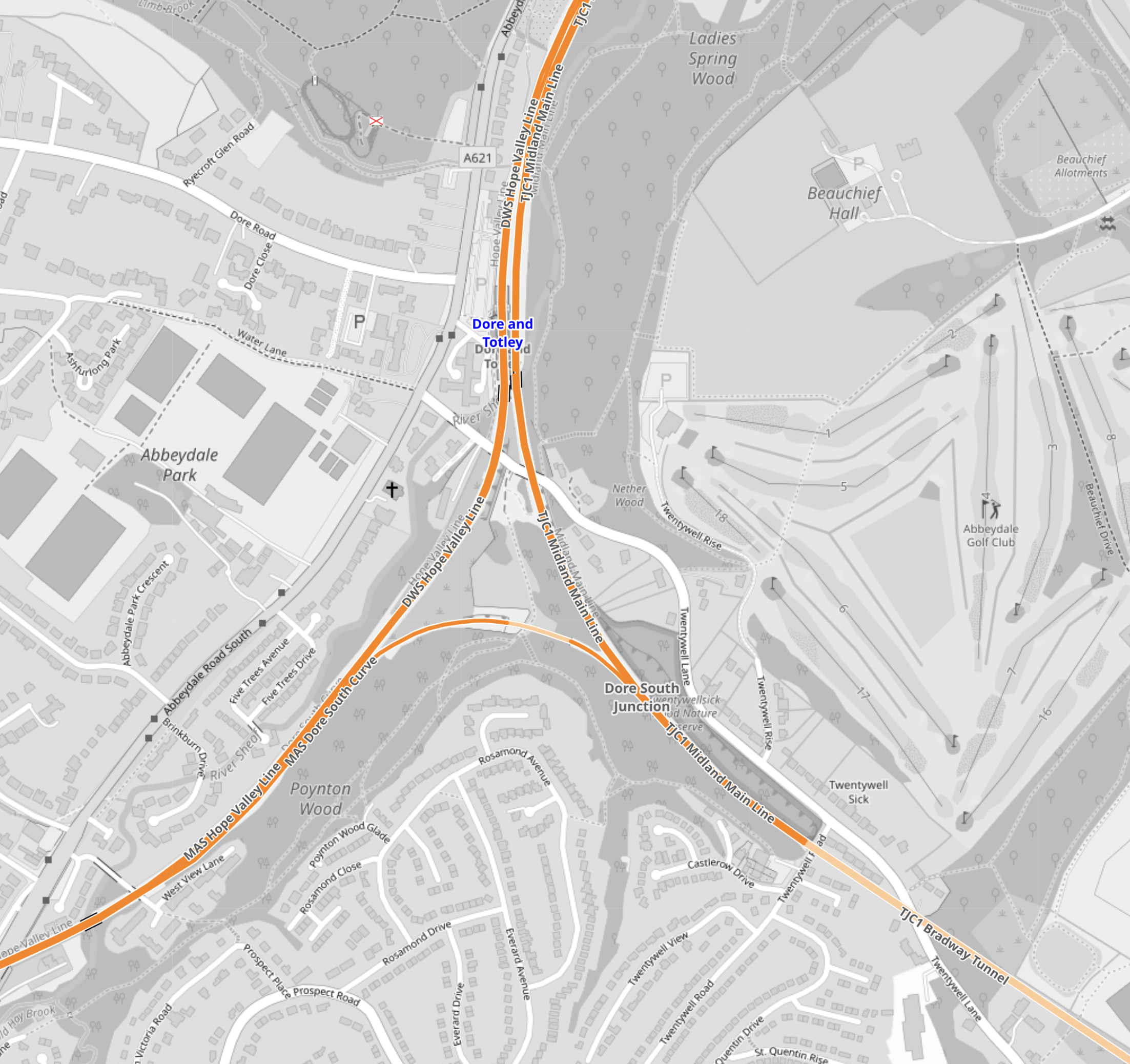
Note.
- Dore Junction is a triangular junction in the middle of the map.
- Dore and Totley station is on the North point of the junction, which leads to Sheffield station.
- Dore & Totley Station – 1st April 2025 shows the station before and after its rebuilding.
- The South-East point of the junction leads to Chesterfield station.
- The South-West point of the junction leads to the Hope Valley Line and eventually to Manchester Piccadilly station.
There are three routes that trains can take between the Midland Main Line at Chesterfield station and the Hope Valley Line.
- They can take the Dore South Curve shown in the map.
- They can go directly into Sheffield station and reverse.
- They can go via Barrow Hill and enter Sheffield station from the East.
Note.
- The first route doesn’t call at Sheffield.
- The second route is taken by trains between Liverpool and Norwich.
- I wrote about the third route in Reinstatement Of The Barrow Hill Line Between Sheffield And Chesterfield.
The reinstatement of the Barrow Hill Line may ease operations in Sheffield and allow a new station or two.
The Current Hope Valley Service Between Manchester Piccadilly And Sheffield
There are two passenger services between Manchester Piccadilly and Sheffield stations.
- A Northern Trains local train that stops everywhere.
- An East Midlands Railway faster train, that only stops at Stockport.
Both trains are hourly.
The Northern End Of Grand Central’s St. Pancras International And Manchester Piccadilly Service
I would feel that the ideal route for Grand Central’s new service would call at Chesterfield, Sheffield, Stockport and Manchester Piccadilly.
Hopefully, it could use the Barrow Hill Line to avoid a reverse at Sheffield.
Where Would Grand Central’s St. Pancras International And Manchester Piccadilly Service Call On The Midland Main Line?
East Midlands Railway services to Sheffield call at Leicester, Loughborough, East Midlands Parkway, Long Eaton, Derby and Chesterfield.
I would expect Grand Central’s service would only call at a selection of those stations.
Would St. Pancras International Be Able To Handle The Extra Trains?
East Midlands Railway run the following services from St. Pancras International.
- Nottingham
- Sheffield
- Corby
Note.
- All services are two trains per hour (tph)
- Nottingham and Sheffield services can be five- or ten-car trains.
- Corby services can be four- or eight-car trains.
- There are only four East Midlands Railway platforms at St. Pancras International, but they are 260 metres long.
- 260 metre platforms will take a pair of five-car Class 800/801/802 Hitachi trains, which have the standard Hitachi car length of 26 metres. The architects got that right,
- Each platform can take one ten-car train or two five-car trains.
- East Midlands Railway’s Class 810 trains are 120 metres long.
- East Midlands Railway’s Class 360 trains are 80 metres long.
- Grand Central Trains’s Class 180 trains are 116.52 metres long.
- The train length of Grand Central Trains’s Class 820 trains has not been disclosed, but if they had the standard Hitachi car length of 26 metres, they’d be 130 metres long.
I am fairly certain, that St. Pancras International can handle two Hitachi trains in the same platform.
This leads me to believe that Grand Central Trains Class 180 and Class 820 trains could also share a platform with an East Midlands Railway Class 810 train.
The Route And Electrification Between Manchester Piccadilly And Hazel Grove
This OpenRailwayMap shows the Manchester Piccadilly end of the route.
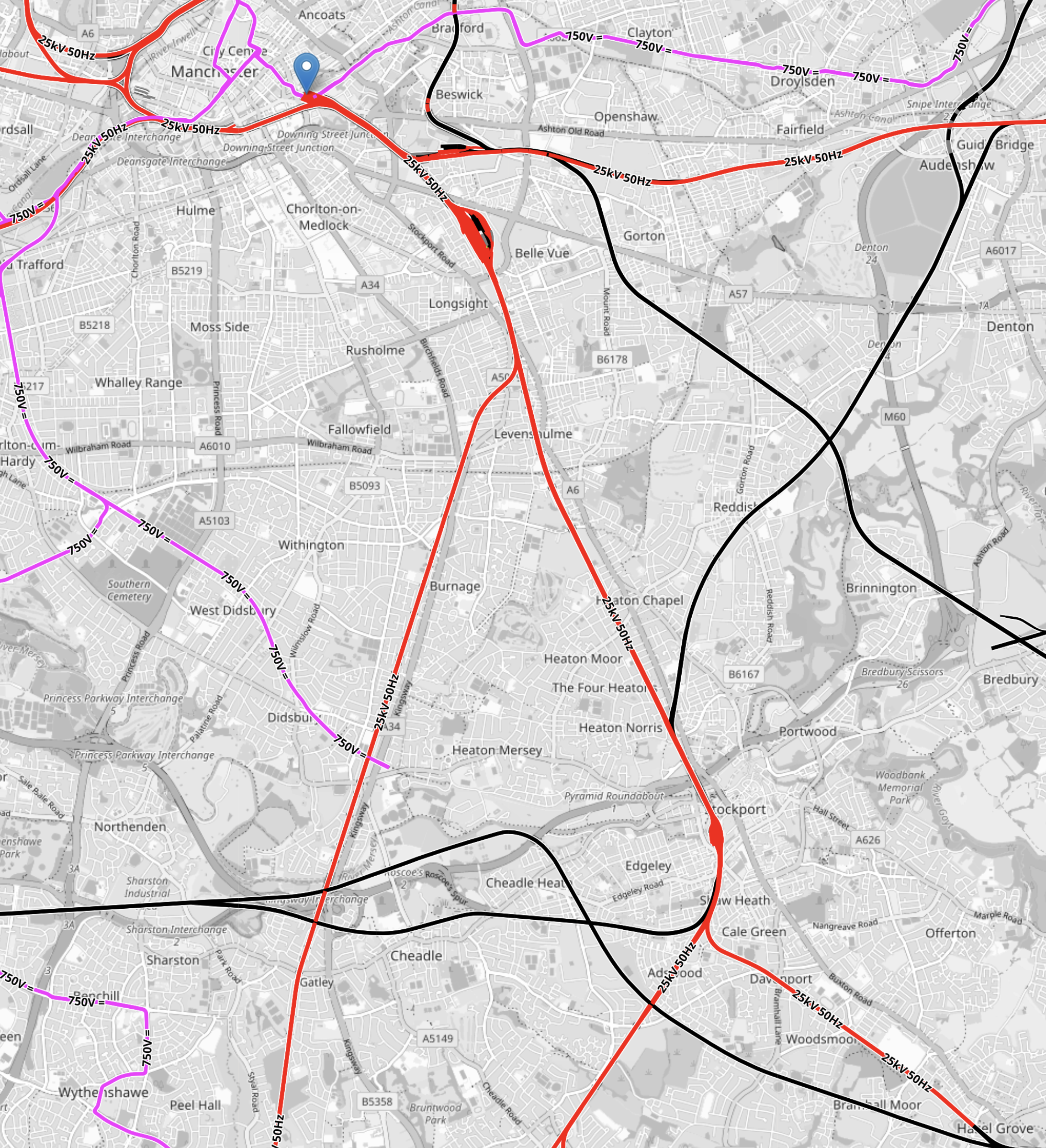
Note.
- Tracks shown in black are not electrified.
- Tracks shown in red are electrified with 25 KVAC overhead.
- Tracks shown in mauve are the Manchester Metrolink.
- Manchester Piccadilly station is indicated by the blue arrow.
- Hazel Grove station is in the South-East corner of the map.
- Between Manchester Piccadilly and Hazel Grove stations is fully-electrified.
- The red knot of electrified tracks close to Manchester Piccadilly station is Longsight depot.
- The Southern red knot of electrified tracks is Stockport station.
- Manchester Piccadilly and Hazel Grove stations are 8.7 miles apart and local trains take about 15 minutes.
The Route And Electrification Between Hazel Grove And Sheffield
This OpenRailwayMap shows the route between Hazel Grove and Sheffield.
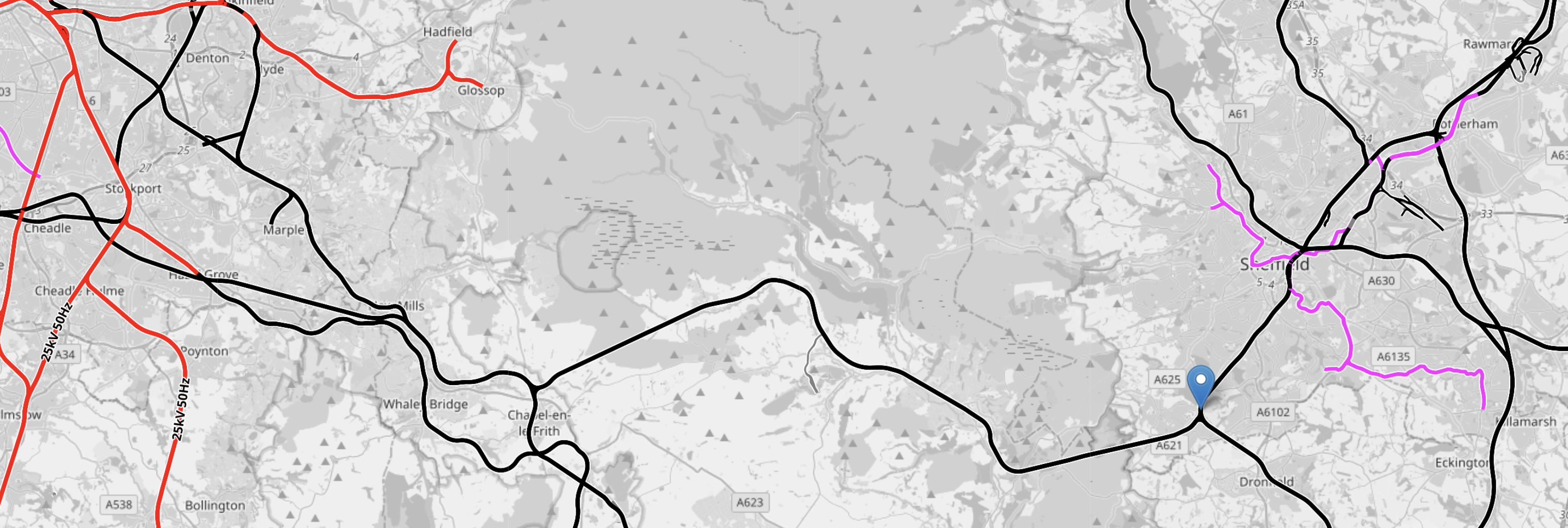
Note.
- Tracks shown in black are not electrified.
- Tracks shown in red are electrified with 25 KVAC overhead.
- Tracks shown in mauve are the Manchester Metrolink and Sheffield Supertram.
- Stockport and Hazel Grove can be picked out on the electrified tracks in the North-East corner of the map
- Dore and Totley station is indicated by the blue arrow.
- Sheffield station is to the North-East of Dore and Totley station.
- The mauve tracks are the Sheffield Supertram.
- Leading West from Dore and Totley station is the Hope Valley Line which connects Sheffield and Hazel Grove stations.
- Dore and Totley and Hazel Grove stations are 29.7 miles apart.
- Leading South-East from Dore and Totley station is the Midland Main Line to Chesterfield, Derby and the South.
- The electrification from St. Pancras International finishes just North of Market Harborough station.
Dore and Totley and Market Harborough stations are 67.1 miles apart.
Will Tri-Mode Trains We Able To Go Between St. Pancras International And Manchester Piccadilly Stations
It would appear that the gap in the electrification between Market Harborough and Hazel Grove is a few miles under a hundred miles.
Both Hitachi Rail and CAF have said that their five-car trains should be able to handle up to 122 miles.
So there should be enough range to go via Barrow Hill, which would remove the reversal at Sheffield station.
These are my thoughts on the London Waterloo and Bristol Temple Meads service.
The Route Between Bristol Temple Meads And Salisbury
Currently, there are two Great Western Railway services between Bristol Temple Meads and Salisbury.
- One calls at Bath Spa, Bradford-on-Avon, Trowbridge, Westbury, Dilton Marsh and Warminster.
- One calls at Keynsham, Oldfield Park, Bath Spa, Freshford, Avoncliff, Bradford-on-Avon, Trowbridge, Westbury and Warminster.
Note.
- Both services call at Bath Spa, Bradford-on-Avon, Trowbridge, Westbury and Warminster.
- Only Bath Spa and Westbury have a frequent service to London.
- There are five other stations, that are called at occasionally by Bristol Temple Meads and Salisbury services.
I do feel that Grand Central Trains have a lot of scope to create a very passenger-friendly timetable.
UK’s Iconic Jodrell Bank Telescope Faces Axe In Science Cuts
The title of this post, is the same as that of this article on the BBC.
This is the sub-heading.
The Jodrell Bank Observatory, which has housed the UK’s largest telescope for nearly 70 years, has lost its funding and could now close, the BBC understands.
These two paragraphs add more details.
The observatory and its network of telescopes have been pivotal to the country’s study of distant galaxies and training future astronomers. Scientists have described the decision as “heartbreaking” and “scientifically misguided”.
All scientific observations at Jodrell are expected to cease on the 1 April 2028 unless alternative funding can be found.
I consider the government decision to be vandalism of the highest order.
This Google Map shows the Jodrell Bank site.
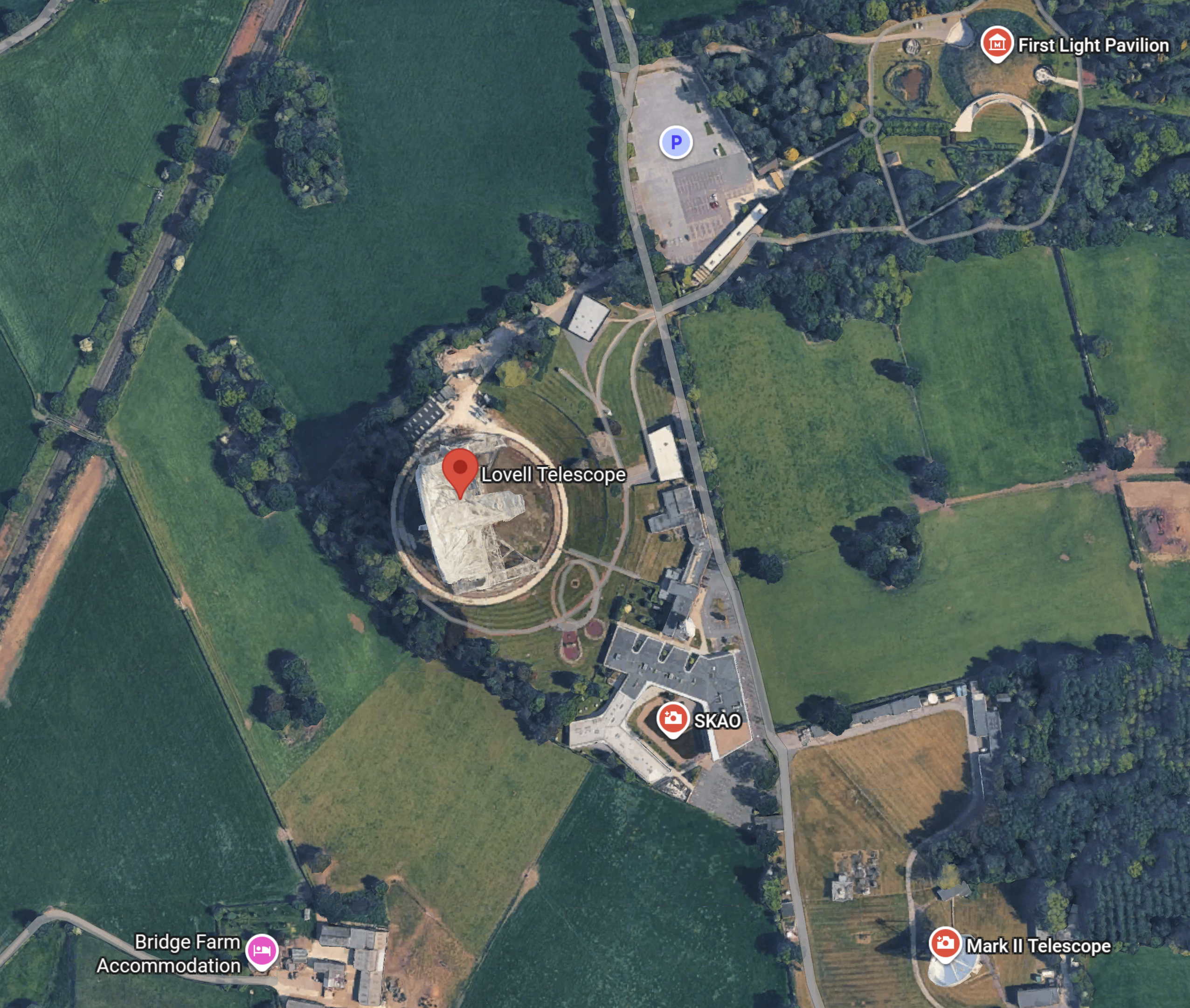
Note.
- The radio telescope is indicated by a red arrow.
- Going across the North-West corner of the map is the West Coast Main Line between London and Manchester Piccadilly.
- The red dot, which is labelled SKAO indicates the SKA Observatory, which has this web site.
This is on the home page.
Building the two largest telescope arrays in the world, located in South Africa and Australia, made possible through a global collaboration.
Jodrell Bank is a UNESCO World Heritage Site.
I have some thoughts.
I Was A Keen Amateur Astronomer At School
I went to Minchenden Grammar School in North London, where the school had Prince Albert’s six-inch refracting telescope for observations.
I can also remember a smaller reflecting telescope being setup outside the cricket pavilion to observe a partial eclipse of the sun.
Google AI lists three partial solar eclipses in London in the 1960s.
February 15, 1961: A deep partial dawn eclipse showing 92% to 95% coverage of the Sun in Southern England. It featured early television coverage and coincided with the exact day the movie Barabbas filmed its crucifixion scene during totality in Southern Europe.
September 22, 1968: A daytime partial eclipse where about one-third of the Sun was blocked. Skies over London cleared after 11:00 a.m., prompting the Junior Astronomical Society to set up projection telescopes in St. James’s Park.
May 20, 1966: Another visible partial solar event tracked across the UK, though with lighter public observation in the capital.
As the eclipse wasn’t 92 % to 95 % coverage and I would have been in Liverpool in 1968, I suspect it was the eclipse of May 20, 1966.
I Was Of The Generation That Grew Up With Jodrell Bank
The iconic Jodrell Bank Radio Telescope opened in 1957, which would be about the time, I started Minchenden Grammar School and was able to have access to their optical telescope.
So I grew up with Jodrell Bank Radio Telescope, although I’ve never visited.
I Feel Very Strongly That Jodrell Bank Needs A Convenient Rail Connection
This page on the Jodrell Bank web site, gives these instructions on how to get there by rail.
The most convenient station is at Macclesfield, which is on the West Coast Mainline from London Euston to Manchester. On arrival at Macclesfield you will then need to take a 20-minute taxi ride to the Jodrell Bank. The taxi rank is directly outside the main exit from Macclesfield station.
There is also a station in the nearby village of Goostrey, on the line between Manchester and Crewe. It is a 2.5 mile walk from there along narrow country lanes and so we advise booking a taxi for this part of the journey. Note, you’ll need to do this in advance as there is no taxi rank at the station.
The Wikipedia entry for Goostrey station says this about the train service at the station.
There is an hourly service between Manchester Piccadilly, Stockport and Crewe on Monday – Saturday, which is every two hours on Sunday.
I don’t know much about scheduling buses, but I don’t think it would be too difficult to have an electric shuttle bus, ferry visitors between Goostrey station and the telescope site.
If the rail route to the telescope proved popular, it might even be possible to arrange that the occasional express stopped at Goostrey station.
Could Jodrell Bank Be Developed Into An Astronomy Experience For The North?
Real Time Trains reveals that to and from Goostrey station, you can reach a range of stations including.
- Birmingham New Street
- Bournemouth
- Cardiff Central
- Crewe
- London Euston
- Manchester Airport
- Manchester Piccadilly
- Milford Haven
- Reading
- Shrewsbury
- Swansea
The hourly services to Manchester Piccadilly and Crewe add a lot more destinations with a single change.
I Suspect Jodrell Bank Creates Work For SMEs In The Area
It is my experience that universities, research organisations and scientific establishments create networks of SMEs around their location, to do specialist jobs, they feel are best done by specialist contractors.
Jodrell Bank is close to the three large cities of Liverpool, Manchester and Sheffield and I suspect, that most sub-contracts can be handled in the area.
Conclusion
I believe that with input from the Mayors and University Vice-Chancellors of the North, Jodrell Bank could be developed into an engine of growth for the North of England.
Has Andy Burnham Made Any Comments About The Picc-Vic Tunnel?
This is the introductory paragraph for the Wikipedia entry for the Picc-Vic Tunnel.
Picc-Vic was a proposed, and later cancelled, underground railway designed in the early 1970s with the purpose of connecting two major mainline railway termini in Manchester city centre, England. The name Picc-Vic was a contraction of the two key station names, Manchester Piccadilly and Manchester Victoria. The proposal envisaged the construction of an underground rail tunnel across Manchester city centre. The scheme was abandoned in 1977 during its proposal stages. The view was that the scheme still retained two large and expensive-to-maintain terminal stations in Manchester while other similarly sized cities had reduced their terminals to one.
Note.
- British Rail had a plan to improve the rail system in the North of England, by building rail tunnels under Liverpool, Manchester and Newcastle.
- Liverpool’s and Newcastle’s tunnels were built and are used by Merseyrail and the Newcastle Metro.
- Harold Wilson cancelled the Picc-Vic Tunnel, the TSR2, the Channel Tunnel and Maplin Airport, as he’d run out of taxpayer’s money.
I asked Google-AI, the question in the title of this post, and received this answer.
Greater Manchester Mayor Andy Burnham has made extensive comments about the Picc-Vic tunnel, effectively resurrecting the concept of an underground railway for the city.
Key details of his statements include:
The Vision: Burnham has tasked Transport for Greater Manchester (TfGM) with designing a conceptual underground system—which has been likened to a “Crossrail for Manchester”. He envisions two lines (North-South and East-West) intersecting at a new subterranean station at Manchester Piccadilly.
Rebranding the Concept: Acknowledging the original 1970s Picc-Vic plan that was ultimately shelved, Burnham views the new tunnel as an absolute necessity to cope with the city’s growth, stating “it is essential to the future economic prosperity of the city-region”.
Piccadilly Station: He is adamant that Manchester Piccadilly Station should be the “Kings Cross of the North”. He has pushed heavily against “cut-price” infrastructure, demanding an entirely underground railway option rather than sprawling over-ground train lines.
Next Steps: He has instructed officials to prepare detailed plans and cost estimates for the multi-billion pound project, with initial discussions on funding mechanisms already underway with the government.
You can read more about his 10-year strategy announcement on the BBC News report or follow local discourse on the Reddit Manchester threads.
Conclusion
If Andy Burnham is going to do all this for his beloved Manchester, can the rest of the country, afford him to be Prime Minister?
Making The Most Of What Is Left Of High Speed Two
High Speed Two is in a bit of a mess.
In the original design for HS2, this was the service pattern.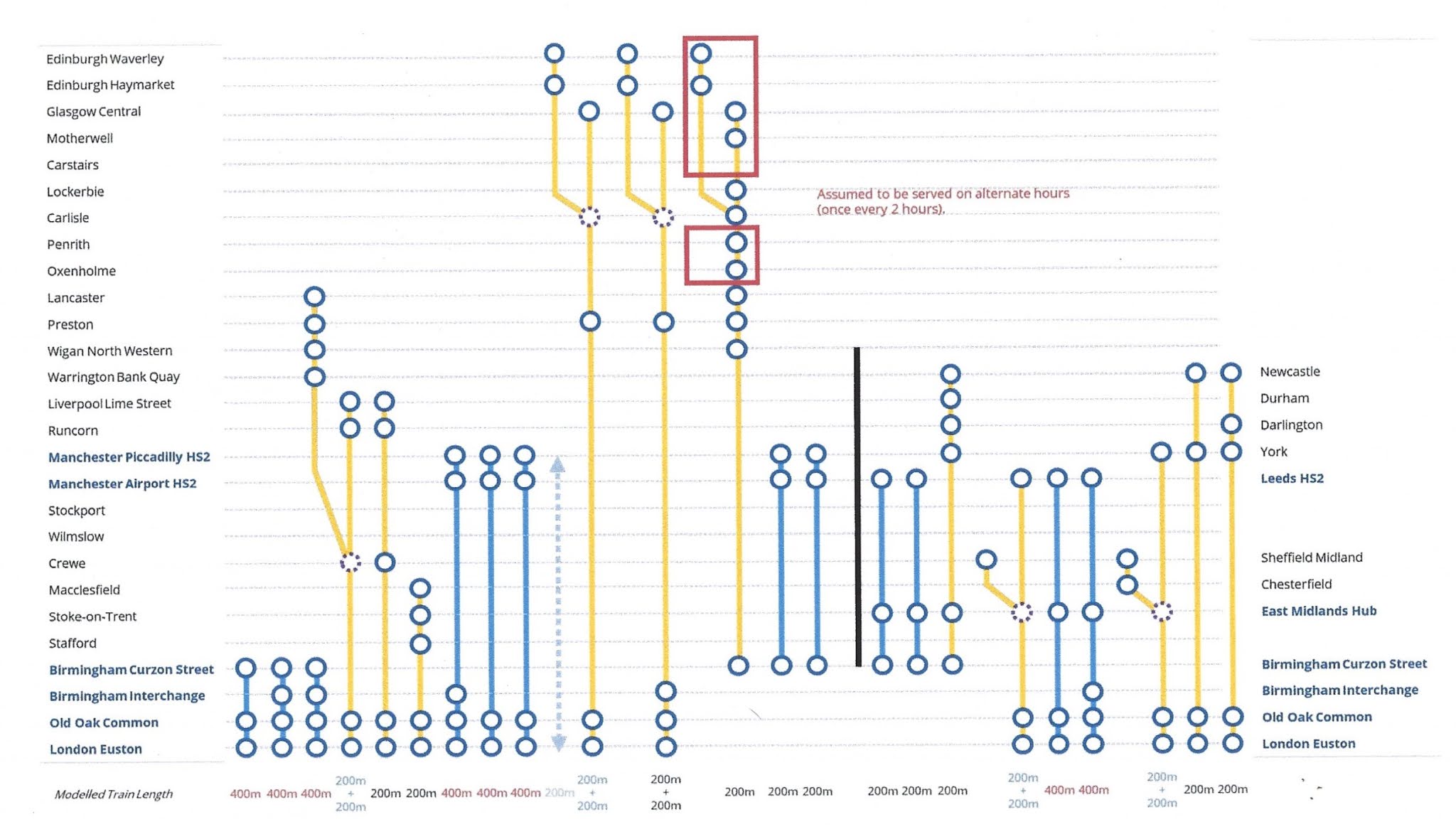
Note.
- Trains to the left of the vertical black line are Phase 1 and those to the right are Phase 2.
- Full-Size trains are shown in blue.
- Classic-Compatible trains are shown in yellow.
- The dotted circles are stations, where trains split and join.
- In the red boxes routes alternate every hour.
Click on the diagram to enlarge it.
The Eastern Leg Has Been Cancelled
This means that these trains have been cancelled.
- Train 15 – 200 m HS2 FS – Birmingham Curzon Street and Leeds via East Midlands Hub
- Train 16 – 200 m HS2 FS – Birmingham Curzon Street and Leeds via East Midlands Hub
- Train 17 – 200 m HS2 CC – Birmingham Curzon Street and Newcastle via East Midlands Hub, York, Darlington and Durham
- Train 18a – 200 m HS2 CC – London Euston and Sheffield via Old Oak Common, East Midlands Hub
- Train 18b – 200 m HS2 CC – London Euston and Leeds via Old Oak Common and East Midlands Hub
- Train 19 – 400 m HS2 FS – London Euston and Leeds via Old Oak Common and East Midlands Hub
- Train 20 – 400 m HS2 FS – London Euston and Leeds via Old Oak Common, Birmingham Interchange and East Midlands Hub
- Train 21a – 200 m HS2 CC – London Euston and Sheffield via Old Oak Common, East Midlands Hub and Chesterfield
- Train 21b – 200 m HS2 CC – London Euston and York via Old Oak Common and East Midlands Hub
- Train 22 – 200 m HS2 CC – London Euston and Newcastle via Old Oak Common and York
- Train 23 – 200 m HS2 CC – London Euston and Newcastle via Old Oak Common, York, Darlington and Durham
Note.
- All trains are one train per hour (tph)
- Train 18 splits and joins at East Midlands Hub, so runs as a 400 m train between London Euston and East Midlands Hub.
- Train 21 splits and joins at East Midlands Hub, so runs as a 400 m train between London Euston and East Midlands Hub.
- There are now no Birmingham and Leeds services.
- There are six spare HS2 paths between London Euston and Birmingham.
In my opinion, the big losers are travelers between Leeds and Birmingham, as travelers between London and Leeds can use the East Coast Main Line, which caters for several destinations in Yorkshire and the North-East.
Services Between London Euston and Birmingham
Services between London Euston and the Birmingham area are as follows.
- Train 1 – 400 m HS2 FS – London Euston and Birmingham Curzon Street via Old Oak Common
- Train 2 – 400 m HS2 FS – London Euston and Birmingham Curzon Street via Old Oak Common and Birmingham Interchange
- Train 3 – 400 m HS2 FS – London Euston and Birmingham Curzon Street via Old Oak Common and Birmingham Interchange
- Train 7 – 400 m HS2 FS – London Euston and Manchester Piccadilly via Old Oak Common, Birmingham Interchange and Manchester Airport
- Train 11a – 200 m HS2 CC – London Euston and Edinburgh Waverley via Old Oak Common, Birmingham Interchange , Preston, Carlisle and Edinburgh Haymarket
- Train 11b – 200 m HS2 CC – London Euston and Glasgow Central via Old Oak Common, Birmingham Interchange , Preston and Carlisle
- Train 12 – 200 m HS2 CC – Birmingham Curzon Street and Edinburgh Waverley/Glasgow Central via Wigan North Western, Preston, Lancaster, Oxenholme, Penrith, Carlisle, Lockerbie, Carstairs and Edinburgh Haymarket/Motherwell
Note.
- All trains are one train per hour (tph)
- Train 11 splits and joins at Carlisle, so runs as a 400 m train on the Trent Valley Line.
- Train 12 runs alternatively to Edinburgh Haymarket and Edinburgh Waverley/Motherwell and Glasgow Central.
- All these services will join the Trent Valley Line at Handsacre junction.
There are 5 x 400 metre trains and 1 x 200 metre train.
Services Between London Euston and Manchester
Services between London Euston and the Manchester area are as follows.
- Train 6 – 200 m. HS2 CC – London Euston and Macclesfield via Old Oak Common, Stafford and Stoke-on-Trent
- Train 7 – 400 m HS2 FS – London Euston and Manchester Piccadilly via Old Oak Common, Birmingham Interchange and Manchester Airport
- Train 8 – 400 m HS2 FS – London Euston and Manchester Piccadilly via Old Oak Common and Manchester Airport
- Train 9 – 400 m HS2 FS – London Euston and Manchester Piccadilly via Old Oak Common and Manchester Airport
- Train 13 – 200 m HS2 FS – Birmingham Curzon Street and Manchester Piccadilly via Manchester Airport
- Train 14 – 200 m HS2 FS – Birmingham Curzon Street and Manchester Piccadilly via Manchester Airport
Note.
- All trains are one train per hour (tph)
- Macclesfield should be able to handle one 200 m. HS2 Classic-Compatible train per hour, as it is shorter and has less passengers than an 11-car Pendolino.
- All Manchester Piccadilly services call at Manchester Airport.
- All these services will join the Trent Valley Line at Handsacre junction.
There are 3 x 400 metre trains and 3 x 200 metre train.
Services Between London Euston and Liverpool, Lancaster and Scotland
Services between London Euston and Liverpool, Lancaster and Scotland are as follows.
- Train 4a – 200 m. HS2 CC – London Euston and Lancaster via Old Oak Common, Crewe, Warrington Bank Quay, Wigan North Western and Preston
- Train 4b – 200 m. HS2 CC – London Euston and Liverpool via Old Oak Common, Crewe and Runcorn
- Train 5 – 200 m. HS2 CC – London Euston and Liverpool via Old Oak Common, Crewe and Runcorn
- Train 10a – 200 m HS2 CC – London Euston and Edinburgh Waverley via Old Oak Common, Preston, Carlisle and Edinburgh Haymarket
- Train 10b – 200 m HS2 CC – London Euston and Glasgow Central via Old Oak Common, Preston and Carlisle
- Train 11a – 200 m HS2 CC – London Euston and Edinburgh Waverley via Old Oak Common, Birmingham Interchange , Preston, Carlisle and Edinburgh Haymarket
- Train 11b – 200 m HS2 CC – London Euston and Glasgow Central via Old Oak Common, Birmingham Interchange , Preston and Carlisle
- Train 12 – 200 m HS2 CC – Birmingham Curzon Street and Edinburgh Waverley/Glasgow Central via Wigan North Western, Preston, Lancaster, Oxenholme, Penrith, Carlisle, Lockerbie, Carstairs and Edinburgh Haymarket/Motherwell
Note.
- All trains are one train per hour (tph)
- Train 4 splits and joins at Crewe, so runs as a 400 m train on the Trent Valley Line.
- Train 10 splits and joins at Carlisle, so runs as a 400 m train on the Trent Valley Line.
- Train 11 splits and joins at Carlisle, so runs as a 400 m train on the Trent Valley Line.
- Train 12 runs alternatively to Edinburgh Haymarket and Edinburgh Waverley/Motherwell and Glasgow Central.
- All these services will join the Trent Valley Line at Handsacre junction.
There are 3 x 400 metre trains and 2 x 200 metre train.
How Many Services Ran Between London And Lancashire, Liverpool and Manchester In The Proposed Timetable?
- Train 4a – 200 m. HS2 CC – London Euston and Lancaster
- Train 4b – 200 m. HS2 CC – London Euston and Liverpool
- Train 5 – 200 m. HS2 CC – London Euston and Liverpool
- Train 6 – 200 m. HS2 CC – London Euston and Macclesfield
- Train 7 – 400 m HS2 FS – London Euston and Manchester Piccadilly
- Train 8 – 400 m HS2 FS – London Euston and Manchester Piccadilly
- Train 9 – 400 m HS2 FS – London Euston and Manchester Piccadilly
Note.
Macclesfield may be in Cheshire, but for my purposes in this calculation, it’s also in South Manchester.
There are 4 x 400 metre trains and 2 x 200 metre train.
But as I stated in Manchester Piccadilly Station Platform Layout, until the track and the tunnel to Manchester Airport and Manchester Piccadilly is built, 400 m HS2 Full-Size will have to be replaced by 200 m HS2 Classic Compatible trains, as no other train will fit the existing Manchester Piccadilly station.
This would mean that 6 x 200 m HS2 Classic Compatible trains will run.
I can turn these two schedules into seats per hour.
Consider.
- The current service is 3 x 11-car Pendolinos per hour, which is 607 seats per train or a total of 1821 seats per hour.
- A 200 metre HS2 Full-Size and a 200 metre HS2 Classic Compatible train, both have 504 seats.
This means that the proposed timetable has 5040 seats, but only 3528 seats, if HS2 FS trains can’t be used and have to be replaced by 200 metre HS2 Classic Compatible train.
I can build this table.
- Current – Pendolinos – 1821 seats per hour.
- Interim – Using 200 metre HS2 Classic Compatible trains – 3528 seats per hour – This is a 94 % increase over the current figure.
- Full – Using 200 metre HS2 Full Size trains in tunnels to Manchester Piccadilly – 5040 seats per hour – This is a 177 % increase over the current figure.
Note.
In Manchester Piccadilly Station Platform Layout, I stated that it is my belief, that an Interim timetable can be achieved by replacing all 11-car Pendolinos by 200 metre HS2 Classic Compatible trains.
Could More Capacity Be Added By Adding A Blackpool Service?
In Blackpool North Station Platform Layout, I looked at the possibilities of adding a Blackpool service to HS2.
This was my conclusion.
I believe Blackpool North station could handle as least one pair of 200 metre HS2 Classic-Compatible Trains to and from London Euston every hour.
It might be able to handle two such trains in every hour.
Adding two pairs of 200 metre HS2 Classic-Compatible Trains between London Euston and Blackpool every hour, would add 1008 seats.
If it is possible to add two pairs of 200 metre HS2 Classic-Compatible Trains, my table would be as follows.
- Current – Pendolinos – 1821 seats per hour.
- Interim – Using 200 metre HS2 Classic Compatible trains – 5544 seats per hour – This is a 204 % increase over the current figure.
- Full – Using 200 metre HS2 Full Size trains in tunnels – 7056 seats per hour – This is a 287 % increase over the current figure.
I must admit, the percentage increases have surprised me, but I have checked and checked them.
Is The Interim Solution Plus Two Trains Between London Euston And Blackpool North The Solution?
Consider.
- Crewe, Warrington Bank Quay, Wigan North Western and Preston, get two extra services to London Euston, Old Oak Common and Birmingham Interchange.
- All trains will be 200 metre HS2 Classic Compatible trains.
- Crewe, Warrington Bank Quay, Wigan North Western and Preston, Manchester Piccadilly will not need major upgrades.
- Manchester Airport would not be served initially, but a tunnel connecting Crewe, Manchester Airport and Manchester Piccadilly could be added later.
- There is no connection between Birmingham and Leeds and the East Midlands.
Could HS2 Serve Holyhead?
In Could HS2 Trains Continue To Wales?, I show that if Crewe And Chester Is Electrified, then a HS2 Classic Compatible train fitted with batteries should be able to go between London Euston and Holyhead in a couple of minutes under three hours.
It could be a good start!
Manchester Piccadilly Station Platform Layout
In this post, I will look at the current platform layout at Manchester Piccadilly station and see if it could be updated for High Speed Two.
This OpenRailwayMap shows the current platform layout at the station.
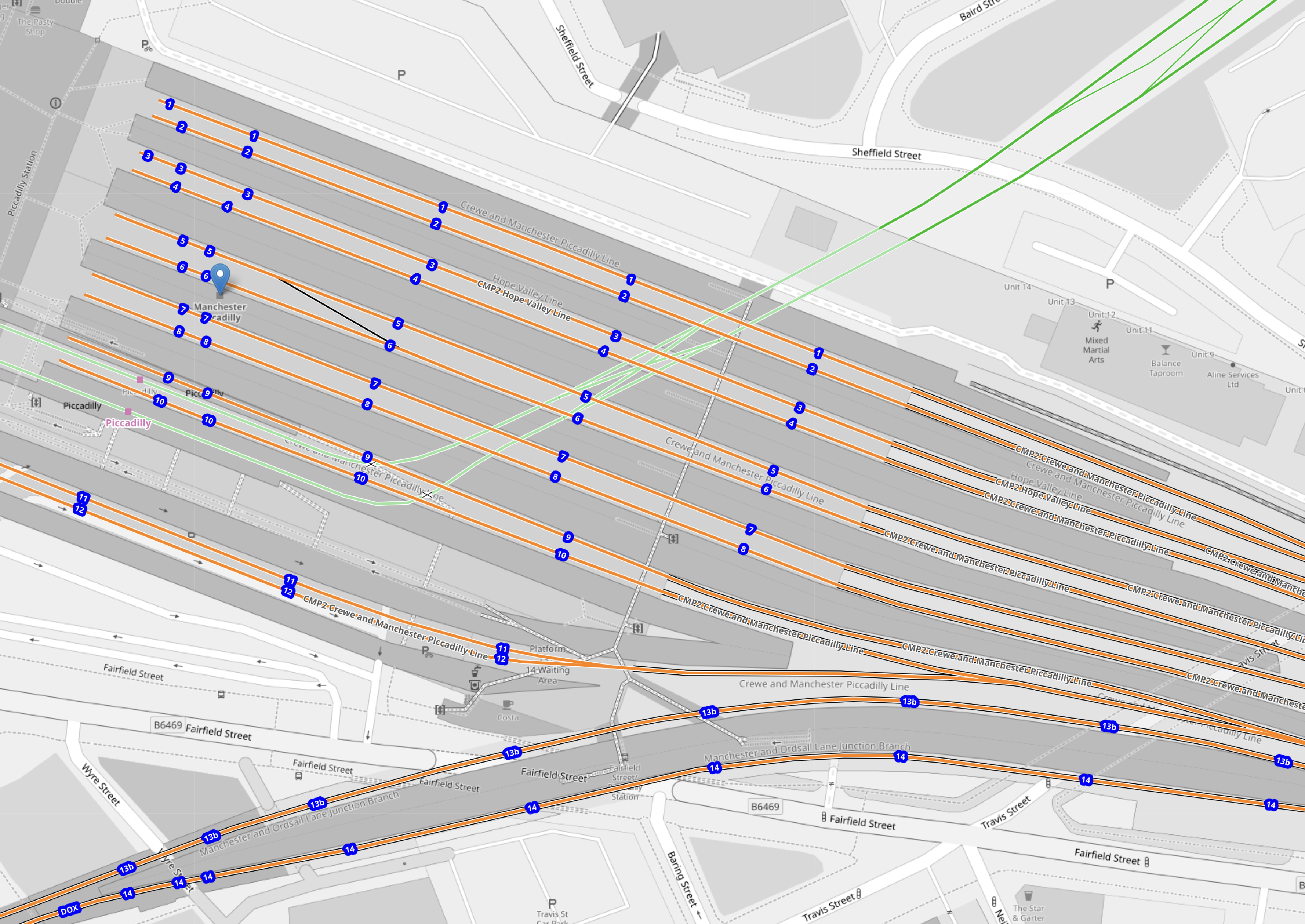
Note.
- There are twelve platforms in the main station, which are numbered 1 to 12 from North to South.
- There are also two platforms to the South of the main station, which are on the Castlefield Corridor and numbered 13 and 14.
- The current Avanti West Coast services use Platforms 5 to 8.
- Platforms 1 to 8 seem well-spaced.
- The Internet gives the length of Platform 1 as 238 metres, so it can be used as a ruler on all the platforms.
- The green tracks are for the Manchester Metrolink, which runs under the station.
I will now take a detailed look at the four platforms used by Avanti West Coast services, which are 5 to 8.
- The platforms are 340, 277, 277 and 340 metres long respectively.
- All four platforms can handle 11-car Pendolino Class 390 trains, which are 265.3 metres long.
- All four platforms will also handle 8-car HS2 Classic-Compatible trains, which will be 200 metres long.
- The platforms also seem to have a straight run-in to the buffers, which is about 260 metres long.
- This straight section is long enough to accommodate an 11-car Pendolino or an 8-car HS2 Classic-Compatible train.
I would think it reasonable that an 8-car HS2 Classic-Compatible train could take over the service of an 11-car Pendolino, but running on HS2 infrastructure, where it exists.
The current Avanti West Coast service to Manchester Piccadilly is as follows.
- 1 tph – 9-car or 11-car – London Euston and Manchester Piccadilly via Milton Keynes Central, Rugby, Stoke-on-Trent, Macclesfield and Stockport
- 1 tph – 9-car or 11-car – London Euston and Manchester Piccadilly via Nuneaton, Stoke-on-Trent and Stockport
- 1 tph – 9-car or 11-car – London Euston and Manchester Piccadilly via Stafford, Crewe, Wilmslow and Stockport
In the original design for HS2, this was the service pattern.
Note.
- Trains to the left of the vertical black line are Phase 1 and those to the right are Phase 2.
- Full-Size trains are shown in blue.
- Classic-Compatible trains are shown in yellow.
- The dotted circles are where trains split and join.
- In the red boxes routes alternate every hour.
Click on the diagram to enlarge it.
Services to Manchester Piccadilly and the Manchester area are as follows.
- Train 6 – 200 m. HS2 CC – London Euston and Macclesfield via Old Oak Common, Stafford and Stoke-on-Trent
- Train 7 – 400 m HS2 FS – London Euston and Manchester Piccadilly via Old Oak Common, Birmingham Interchange and Manchester Airport
- Train 8 – 400 m HS2 FS – London Euston and Manchester Piccadilly via Old Oak Common and Manchester Airport
- Train 9 – 400 m HS2 FS – London Euston and Manchester Piccadilly via Old Oak Common and Manchester Airport
- Train 13 – 200 m HS2 FS – Birmingham Curzon Street and Manchester Piccadilly via Manchester Airport
- Train 14 – 200 m HS2 FS – Birmingham Curzon Street and Manchester Piccadilly via Manchester Airport
Note.
- All trains are one train per hour (tph)
- Macclesfield should be able to handle one 200 m. HS2 Classic-Compatible train per hour, as it is shorter and has less passengers than an 11-car Pendolino.
- All Manchester Piccadilly services call at Manchester Airport.
I believe this allows two possible solutions.
- A largely tunneled solution, that gives access to enough 400 m platforms underneath or alongside Manchester Piccadilly station.
- An interim solution, that replaces 11-car Pendolinos with 200 m. HS2 Classic-Compatible trains.
I will answer this question first.
Will HS2 Use A Tunnel Between Manchester Airport And Manchester Piccadilly Station?
I asked Google AI and received this answer.
Yes, in the original HS2 proposals, a 7.5-mile twin-bore tunnel was planned to run between Manchester Airport and the Ardwick area, surfacing near Manchester Piccadilly. This tunnel was designed to carry the high-speed line underneath the built-up areas of south Manchester and into the terminal station.
Key Details of the Proposed Tunnel:
Purpose: To connect the new Manchester Airport High Speed Station with Manchester Piccadilly station.
Structure: A 7.5-mile (approx. 12km) twin tunnel.
Route: Following the airport, the line would enter the tunnel, traveling towards Piccadilly station.
Location: The tunnel handles the approach to Manchester city centre, allowing the high-speed tracks to bypass surface-level congestion in the south Manchester suburbs.
Note: While this was the planned route for Phase 2b, the future of the northern leg of HS2 has been subject to change and government reviews, which may impact these designs
The Full Solution
This will entail the following.
- A two-platform underground station at Manchester Airport, that is capable of handling 400 m. HS2 Full-Size trains.
- A large enough extension to Manchester Piccadilly station that is capable of terminating enough 400 m. HS2 Full-Size trains.
- The extension to Manchester Piccadilly station could be underneath or alongside, the current station.
- A 7.5 mile twin-bore tunnel between the two stations.
I also believe the full solution will need the completion of the high speed line between Handsacre junction and Crewe.
That would be an expensive and difficult solution, so we will need an interim solution.
The Interim Solution
This will entail the following.
- All HS2 services into Manchester Piccadilly will be run by 8-car 200 m. HS2 Classic-Compatible trains.
- They will use Platforms 5 to 8 in Manchester Piccadilly station, which are 340, 277, 277 and 340 metres long respectively.
- The Manchester Piccadilly services will not call at Manchester Airport.
- The Macclesfield service will run to serve Stafford and Stoke-on-Trent.
- I also believe the interim solution will not need the completion of the high speed line between Handsacre junction and Crewe.
My project management experience leads me to believe, that after HS2 is completed to Handsacre junction, Manchester Piccadilly station could be served by 8-car 200 m. HS2 Classic-Compatible trains.
How Many Trains Will The Interim Solution Run Through The Trent Valley Line?
If the interim solution is to work, then HS2 trains for North of Handsacre Junction will have to take their chances on the Trent Valley Line.
This OpenRailwayMap shows the route of the Trent Valley Line between Handsacre Junction and Crewe.
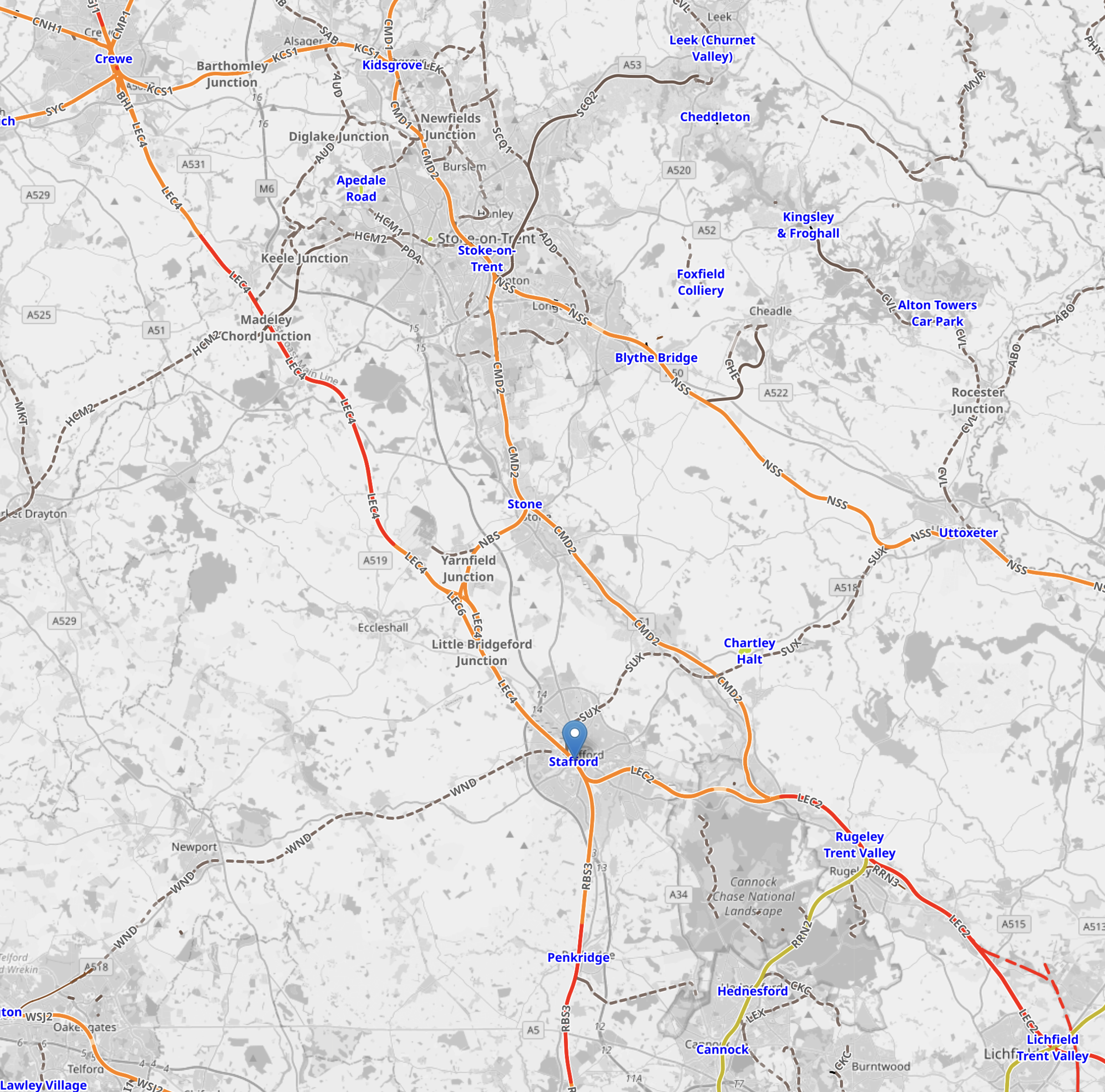
Note.
- Stafford station is marked with a blue arrow.
- Crewe station is in the North-West corner of the map.
- Lichfield Trent Valley station is in the South-East corner of the map.
- The Northern end of HS2 is should dotted around Lichfield Trent Valley station
- Rugeley Trent Valley station is to the North-West of Lichfield Trent Valley station.
- Crewe, Stafford, Rugeley Trent Valley and Lichfield Trent Valley stations are all on the Trent Valley Line, which runs North-West and South-East across the map.
- Handsacre junction is to the North of Lichfield Trent Valley station and links the North end of HS2 to the the Trent Valley Line.
This second OpenRailwayMap shows Handsacre junction in more detail.
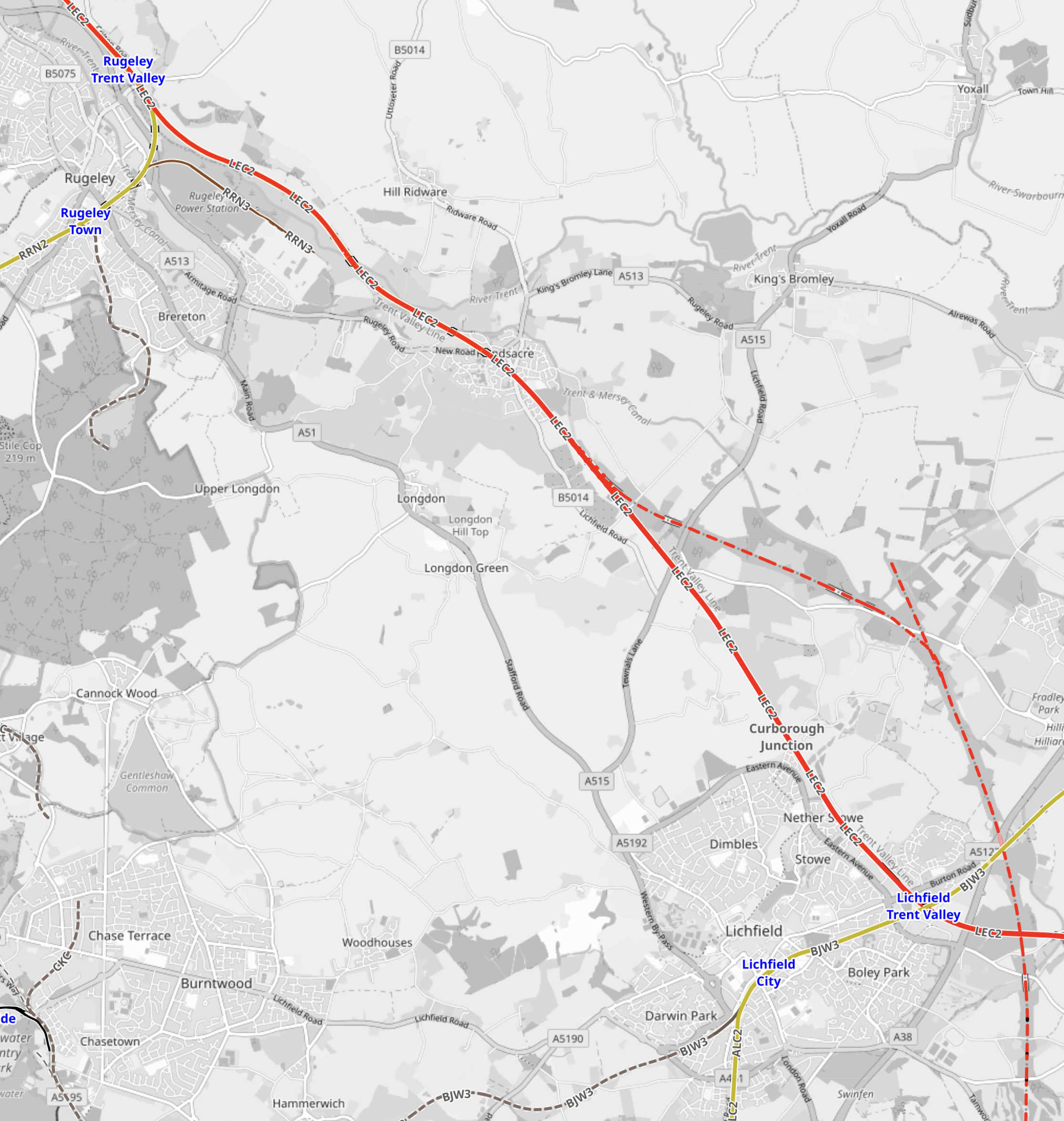
Note.
- Rugeley Trent Valley station is in the North-West corner of the map.
- Lichfield Trent Valley station is in the South-East corner of the map.
- The Trent Valley Line runs diagonally across the map between the two stations.
- The route of HS2 is shown as a dotted red line in the South-East corner of the map.
- HS2 and the Trent Valley Line will join at Handsacre junction.
The stub of HS2 in the North-East corner of the map, will eventually link to Crewe.
The following services will join the Trent Valley Line at Handsacre junction.
- Train 4a – 200 m. HS2 CC – London Euston and Lancaster via Old Oak Common, Crewe, Warrington Bank Quay, Wigan North Western and Preston
- Train 4b – 200 m. HS2 CC – London Euston and Liverpool via Old Oak Common, Crewe and Runcorn
- Train 5 – 200 m. HS2 CC – London Euston and Liverpool via Old Oak Common, Crewe and Runcorn
- Train 6 – 200 m. HS2 CC – London Euston and Macclesfield via Old Oak Common, Stafford and Stoke-on-Trent
- Train 7 – 200 m HS2 CC – London Euston and Manchester Piccadilly via Old Oak Common and Birmingham Interchange
- Train 8 – 200 m HS2 CC – London Euston and Manchester Piccadilly via Old Oak Common
- Train 9 – 200 m HS2 CC – London Euston and Manchester Piccadilly via Old Oak Common
- Train 10a – 200 m HS2 CC – London Euston and Edinburgh Waverley via Old Oak Common, Preston, Carlisle and Edinburgh Haymarket
- Train 10b – 200 m HS2 CC – London Euston and Glasgow Central via Old Oak Common, Preston and Carlisle
- Train 11a – 200 m HS2 CC – London Euston and Edinburgh Waverley via Old Oak Common, Birmingham International, Preston, Carlisle and Edinburgh Haymarket
- Train 11b – 200 m HS2 CC – London Euston and Glasgow Central via Old Oak Common, Birmingham International, Preston and Carlisle
- Train 12 – 200 m HS2 CC – Birmingham Curzon Street and Edinburgh Waverley/Glasgow Central via Wigan North Western, Preston, Lancaster, Oxenholme, Penrith, Carlisle, Lockerbie, Carstairs and Edinburgh Haymarket/Motherwell
- Train 13 – 200 m HS2 CC – Birmingham Curzon Street and Manchester Piccadilly
- Train 14 – 200 m HS2 CC – Birmingham Curzon Street and Manchester Piccadilly
Note.
- All trains are one train per hour (tph)
- Train 4 splits and joins at Crewe, so runs as a 400 m train on the Trent Valley Line.
- Train 10 splits and joins at Carlisle, so runs as a 400 m train on the Trent Valley Line.
- Train 11 splits and joins at Carlisle, so runs as a 400 m train on the Trent Valley Line.
- Train 12 runs alternatively to Edinburgh Haymarket and Edinburgh Waverley/Motherwell and Glasgow Central.
In any hour, it looks like eight single trains and three pairs will run along the Trent Valley Line.
How Close In Minutes Can Trains Run On The Trent Valley Line?
I asked Google AI and received this answer.
On the modernised Trent Valley Line (part of the West Coast Main Line), trains can run at high frequencies, often with fast, long-distance services operating with headway (spacing) of approximately 3 to 5 minutes, though typically, a 2-4 train per hour per direction service pattern is standard, equating to 15–30 minute intervals between similar services.
Capacity: The line is a four-track railway between Rugby and Stafford, allowing fast, long-distance express trains (up to 125 mph) to overtake slower, local, and freight trains.
Service Frequency: High-frequency, high-speed travel is standard.
Constraints: While the infrastructure supports close spacing, schedules are constrained by capacity at major bottlenecks and the requirement for consistent track maintenance.
It’s probably tight, but not impossibly so. Especially, as Train 6 to Macclesfield cuts off through Stoke-on-Tent after Stafford.
What Is The Capacity Of Each Train Timetable Between London Euston And Manchester Piccadilly/Macclesfield?
Consider.
- An 11-car Pendolino has 607 seats.
- I’m assuming all Pendolinos are 11-car trains.
- An 8-car HS2 Classic-Compatible train has 504 seats.
- I’m assuming that HS2 Full Size trains have the same capacity as the Classic Compatible trains.
These are figures for each timetable.
Current Timetable
3 x 11-car Pendolino = 1,821 seats. per hour
Interim Timetable
4 x 8-car 200 m. HS2 Classic-Compatible trains = 2,016 seats per hour, which is a 10.7 % increase over today.
Full Timetable
7 x 8-car 200 m. HS2 Classic-Compatible trains = 3,538 seats per hour, which is a 93.7 % increase over today.
How Many Trains Run On Each Section Of HS2?
Current Timetable
None
Interim Timetable
These are my estimates of trains per hour on each section.
- London Euston and Birmingham – 11 tph
- Birmingham and Stafford – 11 tph
- Stafford and Crewe – 10 tph
- Stafford and Macclesfield – 1 tph
- Crewe and Liverpool – 2 tph
- Crewe and Manchester Piccadilly – 5 tph
- Crewe and Preston – 4 tph
- Preston and Lancaster – 4 tph
- Lancaster and Carlisle – 3 tph
- Carlisle and Edinburgh Waverley – 2.5 tph
- Carlisle and Glasgow Central – 2.5 tph
There would appear to be spare capacity for up to six trains per hour, South of Crewe.
Full Timetable
These are my estimates of trains per hour on each section.
- London Euston and Birmingham – 11 tph
- Birmingham and Stafford – 11 tph
- Stafford and Crewe – 10 tph
- Stafford and Macclesfield – 1 tph
- Crewe and Liverpool – 2 tph
- Crewe and Manchester Airport- 5 tph
- Manchester Airport and Manchester Piccadilly – 5 tph
- Crewe and Preston – 4 tph
- Preston and Lancaster – 4 tph
- Lancaster and Carlisle – 3 tph
- Carlisle and Edinburgh Waverley – 2.5 tph
- Carlisle and Glasgow Central – 2.5 tph
There would still appear to be spare capacity for up to six trains per hour, South of Crewe.
Conclusions
Theses are my conclusions.
- There Are At Least Six Free Train Paths In Every Hour Between London And Crewe
This is partly because the Eastern leg was cancelled. But it does seem silly to waste them.
I believe Blackpool would be a good place to serve and I said so in Could High Speed Two Serve Blackpool North?
Other possible places would be Chester, Holyhead and Scotland.
2. There Will Need To Be A Tunnel To Connect Manchester Piccadilly And Manchester Airport
This is because you can’t knock all the houses down to build the link.
The Channel Tunnel Rail Link is tunnelled under Dalston in East London for the same reason.
3. Manchester Piccadilly and Manchester Airport services will be five Trains Per Hour
Two of these five trains will go to Birmingham Curzon Street and three to London Euston.
I would expect that the Manchester Tunnel will be an important project for the finances of Manchester Airport.
4. When The Manchester Tunnel Is Built, This Will Double Seat Capacity Between London And Manchester Piccadilly
This is because it will allow 400 metre trains between London Euston and Manchester Piccadilly.
5. HS2 Can Run To Manchester Without Building The Manchester Tunnel Or A High Speed Line Between Crewe And Birmingham
This surprised me at first, but it appears, that it’s because HS2 Classic-Compatible trains are shorter than 11-car Pendolinos.
6. HS2 Can’t Run To Manchester Airport Without Building the Manchester Tunnel.
It’s all because of the houses in between.
7. Single 200 m. HS2 Classic Compatible trains, Can Use The Unmodified Manchester Piccadilly.
This is because they are shorter than 11-car Pendolinos. But pairs can’t, as they are too long!
8. Stockport Gets A Raw Deal From HS2
Currently, Stockport, gets three 11-car Pendolino services between London Euston and Manchester Piccadilly.
Under the Interim Solution, these services will continue as HS2 Classic-Compatible trains are shorter than 11-car Pendolinos.
But under the Full Solution, HS2 trains will be in the Manchester Tunnel between Manchester Airport and Manchester Piccadilly.
9. The Interim Solution Will Work
I am more and more convinced, that a proposed solution which entails the following will work.
- A new service from London Euston to Macclesfield via Old Oak Common, Stafford and Stoke-on-Trent is introduced.
- 11-car Pendolinos are replaced by 8-car HS2 Classic-Compatible trains, which are shorter.
- The Trent Valley Line is updated, so that it can handle 11 trains per hour, that will eventually be transferred to the new HS2 line between Handsacre junction and Crewe.
- London Euston and Manchester Piccadilly will get three trains per hour via HS2 to Handsacre junction the Trent Valley Line.
- There will be no major work to be done at Manchester Piccadilly.
- Three trains per hour between London Euston and Manchester Piccadilly could still call at Stockport.
I also believe that this solution can be easily built, as it is mainly improving the existing route between Handsacre junction and Manchester Piccadilly via Crewe and Stockport.
Peaks And Dales Line Feasibility Study Identifies £2-£8 Billion Potential
The title of this post, is the same as that of this article on RailUK.
The first two paragraphs add some detail.
The full Feasibility Study for the proposed Peaks and Dales Line – a reinstated rail corridor linking the North West and East Midlands between Manchester and Derby, via Chinley, Buxton, Bakewell, and Matlock – has now been formally submitted to the Department for Transport for review through the Better Value Rail Working Group, comprising the DfT, Network Rail, and the Office of Rail and Road.
The submission marks a significant milestone for the project and confirms that no prohibitive technical, environmental, planning or delivery barriers have been identified at feasibility stage that would prevent the corridor progressing to the next phase of development, a Strategic Outline Business Case (SOBC).
But it is probably best to read the full report.
The full study identifies that reinstating the Peaks and Dales Line could:
- Generate £2-£8 billion in additional Gross Value Added (GVA) by 2040.
- Remove approximately 1.0-4.3 million car ‘trips’ per year from the road network (from visitor travel alone).
- Deliver carbon savings of around 15,000-60,000 tonnes of CO₂e per year.
- Provide a viable sustainable travel option for the 13-26 million people who visit the Peak District annually, around 85% of whom currently arrive by car.
- Improve access for the 3.16 million people across the connected regions who do not own or have access to a car.
- Support sustainable access to approximately 17,870 previously identified potential new homes, all located on brownfield land outside the National Park.
- Enable £447-£804 million in potential voluntary Land Value Capture contributions, reducing reliance on public funding.
These are large claims and yet more reasons to believe that Harold Wilson was one of our worst Prime Ministers, as Beeching’s most heinous crimes, were performed under his watch.
This paragraph sums up the work to be done.
The study also confirms that only around 11.5 miles of reinstated railway would be required to reconnect a corridor of nearly 50 route miles, representing a highly efficient reuse of historic rail infrastructure. Various upgrade options are being considered across the remainder of the route.
I wonder, if it might be best to go for a single-track railway, that could be upgraded to full double-track later.
This image from a Stadler press release shows their prototype RS ZERO.
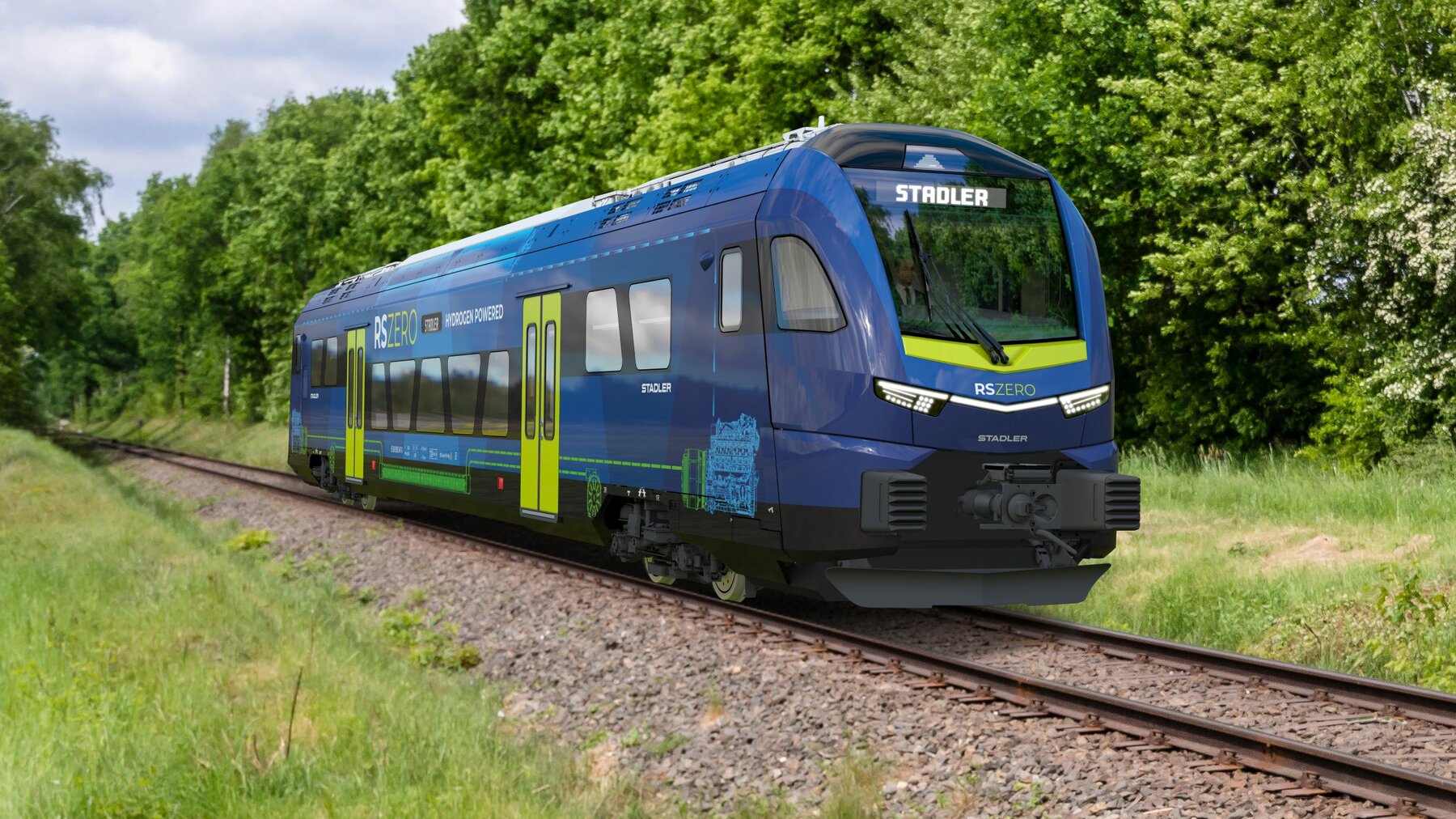
As these trains can run on hydrogen, this could create a zero-carbon railway through the Peaks and Dales.
Using this approach could see the railway running before the next election.

