Running Battery Electric Trains Between London Marylebone And Aylesbury
This post was suggested by Fenline Scouser in a comment to Vivarail Targets Overseas Markets, where they said.
I have long thought that one UK application that would make sense is the Marylebone – Aylesbury via Harrow on the Hill service, the intermediate electrified section lending itself to full recharge on each trip. ? stabling facility at Aylesbury with overnight charging.
It does look to be an idea worth pursuing.
Current And Future Services
Currently, the services between London Marylebone and Aylesbury are as follows.
- London Marylebone and Aylesbury via High Wycombe
- London Marylebone and Aylesbury via Amersham
- London Marylebone and Aylesbury Vale Parkway via Amersham
All services are one train per hour (tph)
In the future, it is planned to extend the Aylesbury Vale Parkway service to Milton Keynes, according to information I found on the East West Rail web site.
- It looks like the service will go via High Wycombe, Saunderton, Princes Risborough, Monks Risborough, Little Kimble, Aylesbury, Aylesbury Vale Parkway, Winslow and Bletchley.
- The service will have a frequency of 1 tph.
- Time between Milton Keynes and Aylesbury is quoted as 33 minutes.
- Time between High Wycombe and Milton Keynes is quoted as 63 minutes.
Will this leave the Marylebone and Aylesbury are as follows?
- 1 tph – London Marylebone and Aylesbury via High Wycombe.
- 2 tph – London Marylebone and Aylesbury via Amersham
Passengers between London Marylebone and Aylesbury would have the same service.
Distances
These are a few distances, of which some have been estimated.
- London Marylebone and Harrow-on-the-Hill – 9.18 miles.chains
- Amersham and Harrow-on-the-Hill – 14.27 miles.chains – Electrified
- Aylesbury and Amersham – 15.23 miles.chains
- London Marylebone and High Wycombe – 28.11 miles.chains
- Aylesbury and High Wycombe – 15.28 miles.chains
- Aylesbury and Aylesbury Vale Parkway – 2.25 miles.chains
- Aylesbury Vale Parkway and Calvert – 8.19 miles.chains
- Aylesbury and Milton Keynes – 16.40 miles.chains – Estimated
Note that there are eighty chains to the mile.
Hitachi’s Regional Battery Train
Hitachi’s Regional Battery Train, is the only battery electric train intended for the UK network for which a detailed specification has been released.
This infographic from Hitachi gives the specification.

Note that ninety kilometres is fifty-six miles.
I would suspect that battery trains from other manufacturers, like Bombardier, CAF and Stadler, will have a similar specification.
Battery Electric Trains Between London Marylebone And Aylesbury
I’ll take each possible route in turn.
London Marylebone And Aylesbury Via Amersham
The three sections of the route are as follows.
- London Marylebone and Harrow-on-the-Hill – 9.23 miles – Not Electrified
- Harrow-on-the-Hill and Amersham – 14.34 – Electrified
- Amersham and Aylesbury – 15.29 miles – Not Electrified
Note.
- The total distance is 38.85 miles
- A typical service takes just under twenty minutes to travel between Harrow-on-the-Hill and Amersham. This should be enough to fully charge the batteries.
- A train going South from Harrow-on-the-Hill could reach London Marylebone and return.
- A train going North from Amersham could reach Aylesbury and return.
I am fairly confident, that a battery electric train, with the range of a Hitachi Regional Battery Train could work this route.
London Marylebone And Aylesbury Vale Parkway Via Amersham
The four sections of the route are as follows.
- London Marylebone and Harrow-on-the-Hill – 9.23 miles – Not Electrified
- Harrow-on-the-Hill and Amersham – 14.34 – Electrified
- Amersham and Aylesbury – 15.29 miles – Not Electrified
- Aylesbury and Aylesbury Vale Parkway – 2.31 miles – Not Electrified
Note.
- The total distance is 41.16 miles
- A typical service takes just under twenty minutes to travel between Harrow-on-the-Hill and Amersham. This should be enough to fully charge the batteries.
- A train going South from Harrow-on-the-Hill could reach London Marylebone and return.
- A train going North from Amersham could reach Aylesbury Vale Parkway and return.
I am fairly confident, that a battery electric train, with the range of a Hitachi Regional Battery Train could work this route.
London Marylebone And Aylesbury Via High Wycombe
The two sections of the route are as follows.
- London Marylebone and High Wycombe- 28.14 miles – Not Electrified
- High Wycombe and Aylesbury – 15.35 miles – Not Electrified
Note.
- The total distance is 43.50 miles
- There is no electrification to charge the trains.
A battery electric train, with the range of a Hitachi Regional Battery Train will need charging to work this route.
However, with charging at both ends, this would be a route for a battery electric train.
At the London Marylebone end, there are two possible solutions.
- Electrify the station traditionally, together with perhaps the tracks as far as Neasden, where the routes split. Either 750 VDC third-rail or 25 KVAC overhead electrification could be used.
- Fit fast charging systems into all the platforms at the station.
Note.
- Turnround times in Marylebone station are typically nine minutes or more, so using a charging system should be possible.
- Power for the electrification should not be a problem, as the station is close to one of London’s central electricity hubs at Lisson Grove by the Regent’s Canal.
The final decision at Marylebone, would be one for the engineers and accountants.
At the Aylesbury end, it should be noted that much of the under twenty miles of track between Princes Risborough and Aylesbury and on to Aylesbury Vale Parkway and Calvert us single-track.
So why not electrify from Princes Risborough and Calvert, where the route joins the East West Railway?
The electrification in Aylesbury station could also be used to top-up trains going to London via Amersham.
I would use 25 KVAC overhead electrification, using lightweight gantries like these, which use laminated wood for the overhead structure.
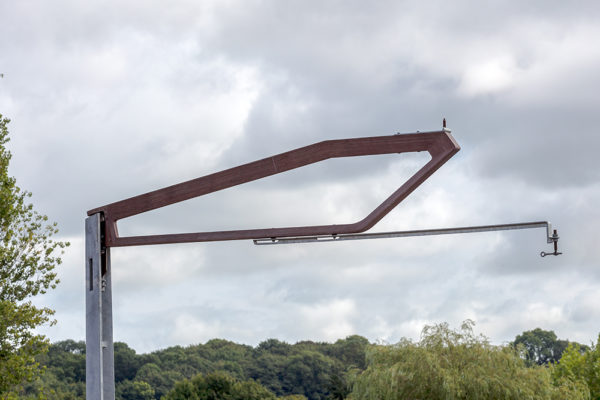
There is also a video.
Electrification doesn’t have to be ugly and out-of-character with the surroundings.
London Marylebone And Milton Keynes Via High Wycombe, Aylesbury and Aylesbury Vale Parkway
The three sections of the route are as follows.
- London Marylebone and High Wycombe- 28.14 miles – Not Electrified
- High Wycombe and Aylesbury – 15.35 miles – Not Electrified
- Aylesbury and Milton Keynes – 16.50 miles – Partially Electrified
Note.
- The total distance is sixty miles
- There is some electrification to charge the trains between Bletchley and Milton Keynes.
A battery electric train, with the range of a Hitachi Regional Battery Train should be able to work this route, if they can work London Marylebone and Aylesbury, with charging at Aylesbury.
Milton Keynes Central is a fully-electrified station.
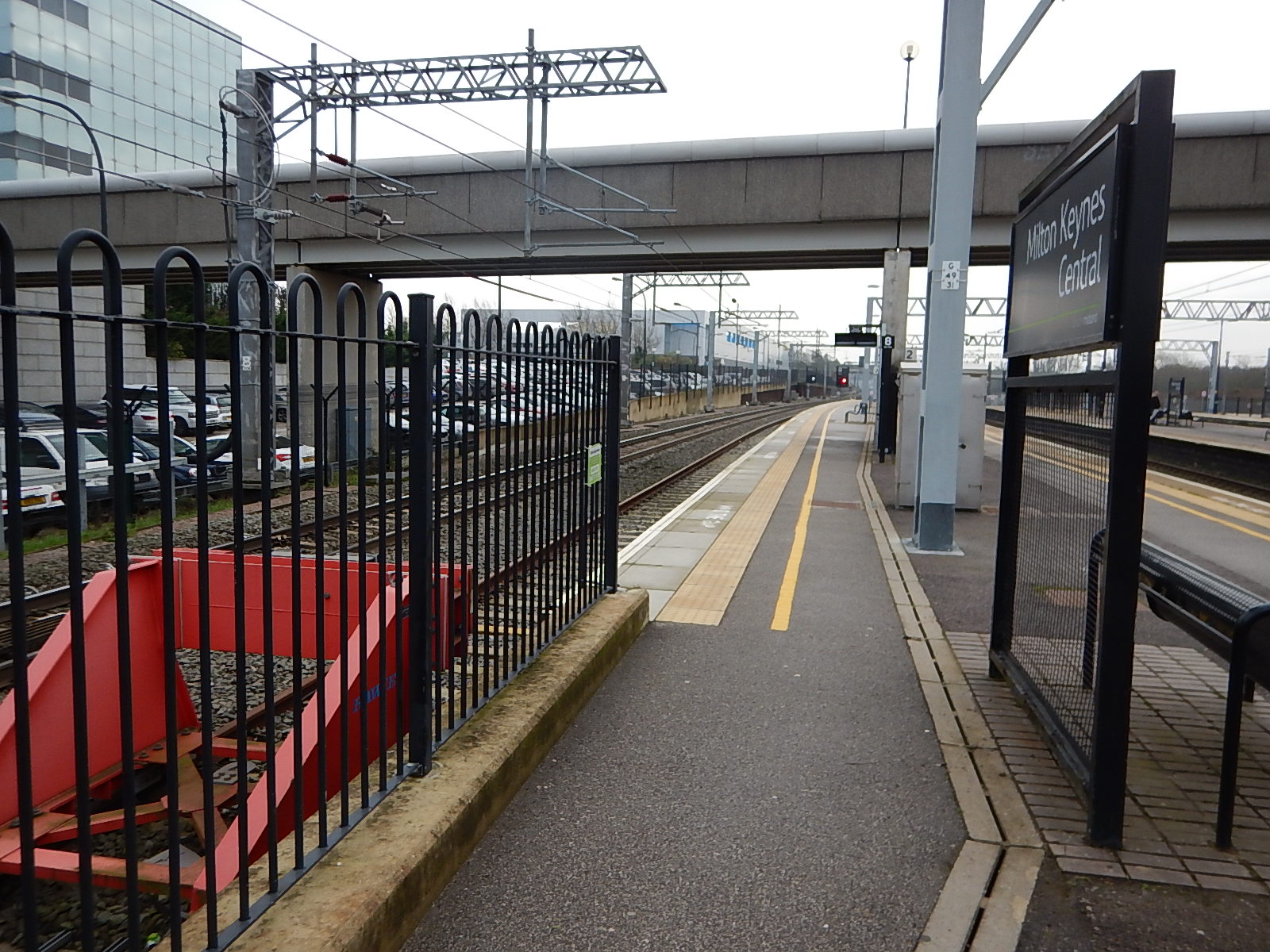
The picture shows Platform 2A, which is South-facing electrified, five-car platform, which could be used by the Chiltern service.
Train Specification
Consider.
- Chiltern Railway’s workhorse is a Class 168 train, which is a diesel multiple unit of up to four cars, with a 100 mph operating speed.
- The longest leg without electrification could be London Marylebone and Aylesbury via High Wycombe, which is 43.5 miles.
- Hitachi’s Regional Battery Train has a range of fifty-six miles.
- As there is a need to work with London Underground electrification, a dual-voltage train will be needed.
So a battery electric train with this specification would probably be ideal.
- Four cars
- Ability to work with both 750 VDC third-rail and 25 KVAC overhead electrification.
- 100 mph operating speed.
- Battery range of perhaps 55 miles.
Could the specification fit a battery-equipped Class 385 train, which will probably be built for Scotland?
Conclusion
I am convinced that battery electric trains can run between London Marylebone and Aylesbury, Aylesbury Vale Parkway and Milton Keynes stations.
The following would be needed.
- A battery electric range of perhaps fifty-five miles.
- Some form of charging at Marylebone and Aylesbury stations.
I would electrify, the single-track route between Princes Risborough and Aylesbury Vale Parkway.
A London Overground Replacement For Southern’s East Croydon And Milton Keynes Service
In July 2017, I discussed this suggestion by Chris Gibb in Gibb Report – East Croydon – Milton Keynes Route Should Be Transferred To London Overground.
In an article, in the July 2019 Edition of Modern Railways, , which was entitled ‘710s’ Debut On Goblin, this was this last paragraph.
On the West London Line, TfL is curremtly working with the Department for Transport on options for the devolution of services originally suggested in Chris Gibb’s report on the Govia Thameslink Railway franchise, which could lead to ‘710s’ being deployed here.
It made me think, that further investigation was called for.
An Apology
I apologise, if you think I’m repeating myself.
What The Gibb Report Says
The Gibb Report, says this about the current service between East Croydon and Milton Keynes Central stations.
I believe there is an option to transfer the East Croydon – Milton Keynes operation to TfL and it’s London Overground concession in 2018.
TfL may decide to change the service, for example by not running it north of Watford Junction, or running it to an alternative southern destination other than East Croydon. They could also develop the combined West London line service to better match available capacity to demand.
They would have a number of crewing and rolling stock options, but should be able to operate the service more efficiently than GTR in the longer term, without the involvement of Selhurst.
Selhurst TMD is the depot in South London, where the current Class 377 trains are based.
A few of my thoughts.
The Trains
Using Class 710 trains as suggested in the Modern Railways article, would surely offer a suitable crewing and rolling stock option for the route, if they were based at the convenient Willesden TMD, where the fleet of up to twenty-five dual-voltage Class 710/2 trains are stabled.
The Northern Terminus
Chris Gibb suggested the service might not go past Watford Junction.
I think that could be difficult.
- The longitudinal seating of the Class 710 train, is probably not suitable for outer suburban services North of Watford.
- East Croydon to Watford Junction takes 69 minutes, which is not a good journey time to create an efficient service.
It would also appear to be tricky for a train to transfer between the West London Line and the Watford DC Line.
This map from carto.metro.free.fr shows the complicated track layout in the Willesden Junction area.
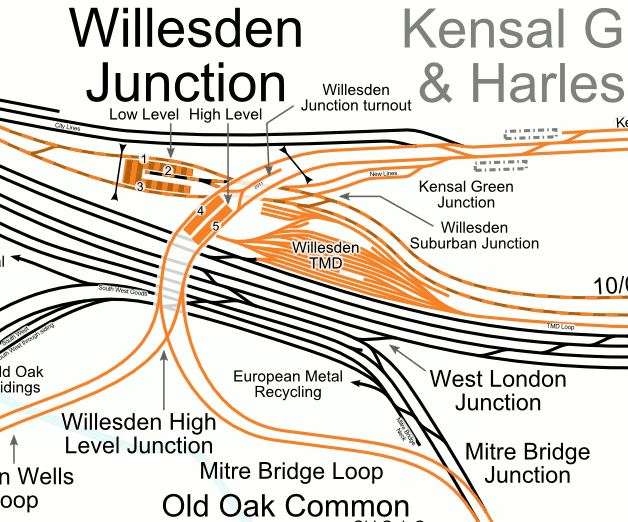
Note.
- The two Willesden Junction stations, labelled High Level and Low Level.
- The Watford DC Line, which is shown in black and orange, passing to the North of Willesden TMD. and through the Low Level station.
- The four tracks shown in black are the West Coast Main Line, with Watford to the West and Euston to the East.
- The North London Line to Richmond and the West London Line to Clapham Junction splitting at Wilesden High Level Junction.
The current service between East Croydon and Milton Keynes, is only one train per hour (tph) and uses a succession of flat junctions to take the slow lines to and from Watford.
This is not a good operational procedure and I suspect Network Rail and various train operators, would like to see it discontinued.
So if trains in a new London Overground version of the service, don’t go up the Watford DC Line or the West Coast Main Line, where do they turn back?
Note the siding to the East of the High Level platforms, which is labelled Willesden Junction Turnout.
This is regularly used to turnback London Overground services on the West London Line.
I feel that London Overground will be turning their replacement service in Willesden Junction High Level station.
Current train services at the station include.
- For passengers, who want to go further North, there is a good connection to the Watford DC Line for Wembley Central, Harrow & Wealdstone and Watford Junction stations.
- The Watford DC Line can also take you to Euston.
- The Bakerloo Line between Stonebridge Park and Elephant & Castle via Central London.
- Frequent North London Line services between Stratford and Richmond.
The station has kiosks, coffee stalls, toilets and waiting rooms.
There are certainly worse places to change trains.
The Southern Terminus
Obviously, existing travellers on the route would like to see as few changes as possible.
East Croydon station must be a possibility for the Southern terminus, as it is the currently used.
But East Croydon is a busy station and perhaps it is not a convenient station for trains to wait in the platform.
On the other hand, West Croydon station offers some advantages.
- The station has a long bay platform, which might be long enough for nine or ten cars.
- There is a separate turnback siding.
- It has space to add another bay platform, but this may have been sold to a developer.
- It already has a four tph London Overground service to Highbury & Islington station.
- Using West Croydon avoids the crowded lines to the North of East Croydon station.
It is also managed by London Overground, so the landlord would be co-operative.
How Many Trains Would Be Needed For A West Croydon And Willesden Junction Service?
West Croydon station has two possible routes, that trains could take to Willesden Junction.
- Via Norwood Junction and Clapham Junction in 55 minutes.
- Via Selhust and Clapham Junction in 45 minutes.
These times mean that a two-hour round trip between West Croydon and Willesden Junction should be possible.
Trains required for various frequencies would be as follows.
- One tph – Two trains.
- Two tph = Four trains.
- Four tph – Eight trains.
They would need to be dual voltage Class 710/2 trains, as are now running on the Gospel Oak to Barking Line.
Compare the figures with those for the current East Croydon and Milton Keynes service, which needs four pairs of four-car trains for an hourly service.
What Would Be The Frequency?
I think one, two and four tph are all possibilities!
One tph
One tph would be a direct replacement for the current service. But is it enough?
Services at West Croydon could probably share the bay platform with the existing Highbury & Islington station service.
Two tph
Two tph could be a compromise frequency.
Two tph could probably still share the current bay platform with the Highbury & Islington service.
Four tph
Four tph would be a full Turn-Up-And-Go service,
- It would probably be London Overground’s preference.
- It would give a very passenger-friendly eight tph between Willesden Junction and Clapham Junction stations.
- The two services would call at opposite sides of Clapham Junction station.
- It would give a four tph link between Croydon and High Speed Two.
- Westfield wouldn’t mind all the extra shoppers at Shepherds Bush!
But there could be downsides.
- The service could need an extra bay platform at West Croydon.
- Would it be possible to turn four tph at Willesden Junction?
- Will the train paths be available through South London.
But four tph would probably would be London Overground’s preference.
It will be interesting to see the reasons, why Transport for London choose a particular frequency.
A Trip Between Imperial Wharf And East Croydon Stations
Today, I took a trip between Imperial Wharf and East Croydon stations at around 11:30.
- The train was two four-car Class 377 trains working as an eight-car train.
- After Clapham Junction it wasn’t very busy.
- I was in the last car, which was empty, except for myself.
I came to the conclusion, that an eight-car train was too much capacity for the Southern section of the journey.
I suspect that Transport for London have detailed passenger estimates for this route, so they should be able to determine the frequency and length of replacement trains required.
The Upgraded Norwood Junction Station
In Major Upgrade Planned For Norwood Junction Railway Station, I talked about a plan to upgrade Norwood Junction station.
The idea behind the upgrade is to improve connectivity and capacity in the crowded Croydon area.
If the West Croydon and Willesden Junction service, was routed via Norwood Junction station, the upgraded station would give easy access to both East and West Croydon stations.
Conclusion
I’ve always liked Chris Gibb’s suggestion of the transfer of the service between East Croydon and Milton Keynes stations to the London Overground and I can now start to see flesh on the bones!
At the present time and until better data is available, I think the replacement service should be as follows.
- The Northern terminus should be Willesden Junction.
- The Southern terminus should be West Croydon station, where there are good tram and train connections.
- The route would be via Shepherds Bush, Kensington Olympia, West Brompton, Imperial Wharf, Clapham Junction, Wandsworth Common, Balham, Streatham Hill, West Norwood, Gipsy Hill, Crystal Palace and Norwood Junction.
- Going via Gipsy Hill, rather than the current route via Selhurst, would give access to the connectivity at Norwood Junction.
- The frequency should be four tph.
- Trains will be four- or five-car Class 710 trains.
The benefits would be as follows.
- The rail hubs of Clapham Junction, Norwood Junction, West Croydon and Willesden Junction would be connected together by a Turn-Up-And-Go service.
- The proposed four tph service would need eight Class 710 trains, whereas the current one tph service needs eight Class 377 trains. Would this be better value?
In the future with a connection to High Speed Two in the Old Oak Common area, the benefits would increase.
- There would be a simple interchange with High Speed Two.
- South London from Clapham to Croydon, would get a direct service to High Speed Two.
- There would also be a better connection to Heathrow Airport and other rail services through Old Oak Common.
I think that the connection to High Speed Two trumps everything else.
Gibb Report – East Croydon – Milton Keynes Route Should Be Transferred To London Overground
The Gibb Report, says that the East Croydon – Milton Keynes route should be transferred to the London Overground.
By 2020 London will have two high-capacity and two medium-capacity cross-London heavy rail routes, backed up by several cross-London Underground Lines.
- Central Line – 30+ trains per hour (tph)
- District Line – 20+ tph
- Crossrail – 24 tph
- East London Line – 20 tph
- Jubilee Line – 30+ tph
- Metropolitan Line – 20+ tph
- Northern Line – 30+ tph
- North London Line – 16+ tph
- Piccadilly Line – 30+ tph
- Thameslink – 24 tph
- Victoria Line – 30+ tph
One line is missing from this list; the West London Line, which has a rather pathetic four tph between Clapham Junction and Willesden Junction stations.
Until Southern got embroiled in their Driver Only Operation dispute, there used to be a very useful one tph service between East Croydon and Milton Keynes Central stations.
The Gibb Report says this about the service.
I believe there is an option to transfer the East Croydon – Milton Keynes operation to TfL and it’s London Overground concession in 2018.
TfL may decide to change the service, for example by not running it north of Watford Junction, or running it to an alternative southern destination other than East Croydon. They could also develop the combined West London line service to better match available capacity to demand.
They would have a number of crewing and rolling stock options, but should be able to operate the service more efficiently than GTR in the longer term, without the involvement of Selhurst.
Selhurst TMD is the depot in South London, where the current Class 377 trains are based.
I think that this is a good proposal for the following reasons.
- As was seen on the Chingford Branch Line, London Overground have a reputation for making a good fist of taking over services that need improvement.
- As the Gibbs Report says, the combined West London Line service could be developed.
- I have net quite a few people, who use this West London Line route to get to and from events at Wembley stadium.
- The service could call at Old Oak Common station to connect to Crossrail and HS2.
- A variant of London Overground’s new Class 710 trains, could probably work the shortened route, as either four or eight-car trains.
- The Class 710 trains could be based at the convenient Willesden TMD, along with the rest of the fleet.
Being practical, a service of just two tph would give a train every ten minutes on the West London Line.
The Current Service
The current service is supposed to stop at the following stations.
- Bletchley
- Leighton Buzzard
- Tring, Berkhamsted
- Hemel Hempstead
- Watford Junction
- Harrow & Wealdstone
- Wembley Central
- Shepherd’s Bush
- Kensington (Olympia)
- West Brompton
- Imperial Wharf
- Clapham Junction
- Wandsworth Common
- Balham
- Streatham Common
- Norbury
- Thornton Heath
- Selhurst
Note.
- Stations between Watford Junction and Clapham Junction, already have a substantial Overground presence.
- London Overground already run three tph on the Watford DC Line between Euston and Watford Junction stations.
But would this be the ideal route?
The Northern Terminal
The West Coast Main Line is very busy and stations between Watford Junction and Milton Keynes are well-served by London Midland and Virgin Trains.
So would it be sensible to continue a slower local service North of Watford Junction?
It should also be remembered, that Southern introduced the original service to give better access to Gatwick Airport. Surely, this need is now satisfied by services from Clapham Junction and East Croydon.
As Watford Junction station probably has platform capacity, surely Watford Junction should be the Northern terminal
Could The Service Use The Watford DC Line?
If this were possible, this must surely give advantages, especially if Watford Junctio is the Northern terminal.
- Dual-voltage Class 710 trains could work the route.
- The service level on the Watford DC Line would be increased.
- There would be no problem accessing the bay platforms at Watford Junction station.
- There would be no requirement for any paths on the West Coast Main Line.
I think the answer to whether the Watford DC Line could be used at the present time is that trains going from the West London Line to Watford Junction must use the West Coast Main Line.
This map from carto.metro.free.fr shows the lines around Willesden Junction..
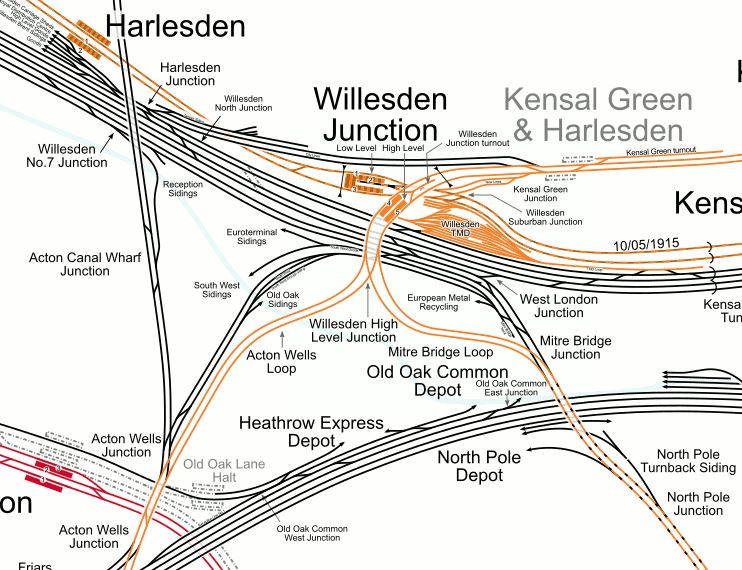
As it is all railway land, I suspect that the connection can be created.
The one problem, is that some of the Watford DC Line is shared with the Bakerloo Line.
But as the Bakerloo Line is being extended to the South and the Northern end will probably be improved, then surely creating an optimal solution to the Watford DC line, the Bakerloo Line and Overground services to Watford, makes a lot of sense.
The Southern Terminal
Various stations have merits and problems to be used as the Southern terminal for the service.
Clapham Junction
Clapham Junction would appear to have a strong case, but London Overground had enough problems squeezing in their current services.
As the station is now substantially step-free and has typically three tph to Gatwick Airport, Clapham Junction offers a good route to the airport.
Balham
Balham has been used as a terminal in the past and connects to the Northern Line. If redeveloped for Crossrail 2, it could be a possibility.
Steatham Common
Streatham Common could be developed as a major interchange and if this happens, then surely is is a possibility.
East Croydon
East Croydon would have a strong case, as it is a busy and well connected station, but there probably isn’t a suitable platform.
I think that any station South of East Croydon is probably too far.
My money would be on the new interchange station at Streatham Common, with Balham as an alternative.
Schedules And Trains
I estimate that a train doing a return journey between Watford Junction and Streatham Common would take under three hours, using the Watford DC Line. This would mean that three trains would be needed for an hourly service and six trains for a half-hourly service.
Conclusion
Transferring the East Croydon – Milton Keynes route to the London Overground looks feasible.
Platform Space At Milton Keynes Central
In Future Rail Developments At Milton Keynes, I said that there with all the new services, there would have to be some extra platform space.
So I went to Milton Keynes Central station and took these pictures.
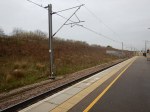
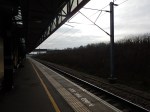

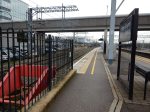
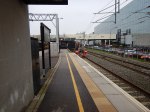
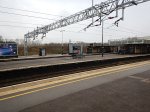
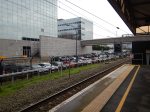
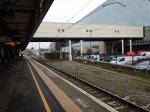
At a quick look there does appear to be more space, than is normal in stations of this size. But then it was only built in 1982.
Platform 2A
The Platforms and Layout section of the Wikipedia entry for the station, says this about the length of Platform 2A.
Platform 2A is a five-car south-facing bay platform.
I would assume, that the car length is the standard British Rail length of twenty metres.
The pictures clearly show that the platform is electrified.
Future Rail Developments At Milton Keynes
The Milton Keynes area and its stations at Bletchley, Bow Brickhill, Fenny Stratford, Milton Keynes Central and Wolverton, are in for a lot of development in the next few years.
The East West Rail Link
This map shows the East West Rail Link.

East West Rail Link
Note how it crosses the West Coast Main Line at Bletchley and has a connection to Milton Keynes Central.
The Wikipedia entry for Bletchley station has a section called Future. This is said.
The Marston Vale Line is the passenger carrying remnant of the Varsity Line. As of 2014, the line beyond Bletchley through Winslow to Bicester Town is closed to passenger traffic, with goods traffic going only as far as Newton Longville sidings for the waste disposal site there. The high level crossing (officially named the “The Bletchley Flyover” – built in 1959 as part of the Modernisation Plan, with 7 x 56 ft (17 m) spans and then expected to be used by 80 trains a day) over the WCML at Bletchley remains in place and in occasional use. There is a funded plan to re-open the line to passenger traffic via Bicester to Oxford by 2019 and an unfunded desire to rebuild it from Oxford right through to Cambridge. A key element of the plan is to build a Bletchley high level station so that passengers may transfer between the lines. (Note that there is no corresponding east to north route).
It is obviously, a bit out of date, as the East West Rail Link is now planned and funded to Bedford.
This Google Map shows the track layout at Bletchley with the Marston Vale Line joining from the East and Fenny Stratford station.

Bletchley Station And The East West Rail Link
Note.
- Stadium MK at the top of the map.
- The East West Rail Link can be seen curving to the west to the south of Bletchley station.
- The flyover over Bletchley station.
- Fenny Stratford station is to the south west of the large building at the east.
- The next station to the East is Bow Brickhill.
Bletchley will become a more important station.
East West Rail Link Services From Milton Keynes Central
The Wikipedia entry for Milton Keynes Central has a section called East West Rail. This is said.
From 2019, services are planned to operate (over a rebuilt East West Rail Link) to Oxford via Bletchley, Winslow and Bicester Town; and also to London Marylebone via Aylesbury and High Wycombe. Extension of the Oxford service to Reading has been mooted.
This will definitely need some more platforms at Milton Keynes Central, other than the single one 2A built for the still-born extended Marston Wale service to Milton Keynes.
I published some pictures in Platform Space At Milton Keynes Central, which show that there is some space.
Implications For Bletchley
I have now written The The Bletchley Flyover to cover the implications for Bletchley.
Great North Western To Blackpool
The Wikipedia entry for Milton Keynes Central has a section called Great North Western. This is said.
Great North Western Railway has been given permission to run 6 trains a day from London to Blackpool North from 2018, with conditional permission for a stop at Milton Keynes Central dependent upon future capacity after infrastructural work.
This will probably be very much a development, that will only affect Milton Keynes Central station.
Crossrail To Milton Keynes Central
The Wikipedia entry for Milton Keynes Central has a section called Crossrail. This is said.
Network Rail’s July 2011 London & South East Route Utilisation Strategy (RUS) recommended diverting West Coast Main Line (WCML) services from stations between London and Milton Keynes Central away from Euston, to Crossrail via Old Oak Common, to free up capacity at Euston for High Speed 2. Doing so would provide a direct service from the WCML to the Shenfield, Canary Wharf and Abbey Wood, release London Underground capacity at Euston, make better use of Crossrail’s capacity west of Paddington, and improve access to Heathrow Airport from the north. Under this scheme, all Crossrail trains would continue west of Paddington, instead of some of them terminating there. They would serve Heathrow Airport (10 tph), stations to Maidenhead and Reading (6 tph), and stations to Milton Keynes Central (8 tph).
In August 2014, a statement by the transport secretary Patrick McLoughlin indicated that the government was actively evaluating the extension of Crossrail as far as Tring and Milton Keynes Central, with potential Crossrail stops at Wembley Central, Harrow & Wealdstone, Bushey, Watford Junction, Kings Langley, Apsley, Hemel Hempstead, Berkhamsted, Tring, Cheddington, Leighton Buzzard and Bletchley. The extension would relieve some pressure from London Underground and London Euston station while also increasing connectivity. Conditions to the extension are that any extra services would not affect the planned service pattern for confirmed routes, as well as affordability.
Extending Crossrail to Milton Keynes would seem to be a sensible idea.
It would increase the capacity and frequency of services between Milton Keynes and London and open up several more direct destinations.
The quote from Wikipedia talks of increasing connectivity to Crossrail.
- The Watford DC Line is joined is joined at Wembley Central, Harrow & Wealdstone, Bushey and Watford Junction
- The Bakerloo Line is joined at Wembley Central and Harrow & Wealdstone
- The Metropolitan Line will be joined at Watford Junction.
This connectivity is in addition to that created by an Old Oak Common station.
As with the East West Rail Link, it will probably need extra platforms at Milton Keynes Central. But there is at least some space to create them.
Conclusion
Milton Keynes Central will be a lot bigger and busier than it is now.
But it will join that elite group of stations that are Crossrail’s and Thameslink’s super-hubs.
 The Anonymous Widower