The Museums On The Bygdøy Peninsular
There are several museums on the Bygdøy Peninsular.
I took a ferry to see two of them; the Viking Ship Museum and the Fram Museum.


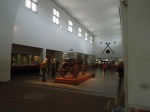
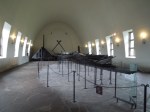



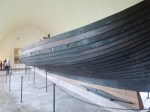




I would have gone to the other two; the Kon-Tiki Museum and the Norwegian Maritime Museum, but the weather had turned and I was suffering a bit from the cold.
There is a lot to see on the peninsular and I wish I’d been able to devote more time to it. I think it would be easier, if on the peninsular, there was better signposts and maps and perhaps a bus on a route past all the attractions. An inclusive ticket for all the attractions on the peninsular would save time too!
Letterpress Rules OK
This is an older post, that I have re-dated and brought up to date.
My father was a printer. And he was all letterpress. He would have used machines like this Original Heidelberg, although his two were probably older.
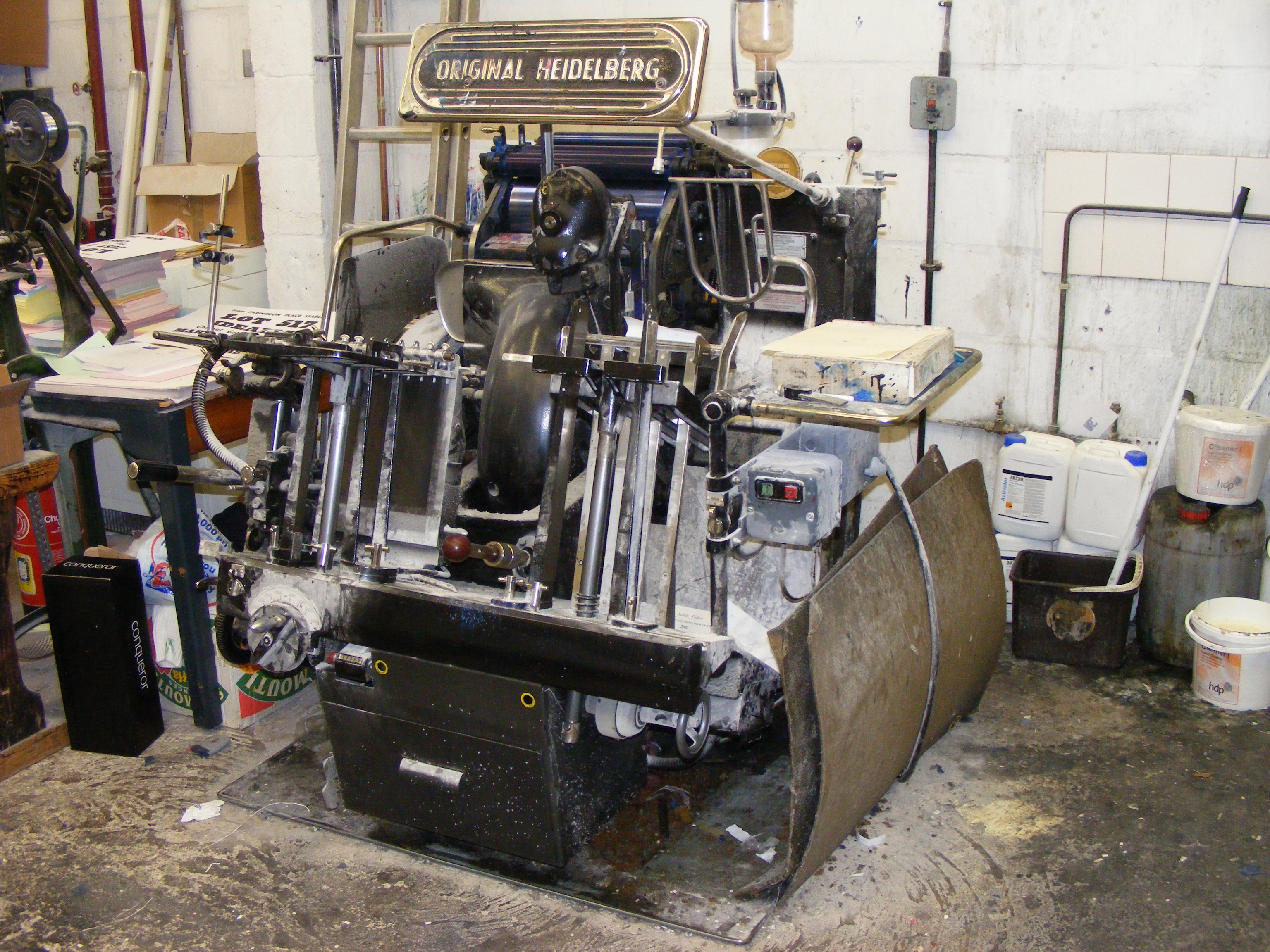
Original Heidelberg
Letterpress printing with movable type is one of the classic technologies that was invented in the Middle Ages by Johannes Gutenberg.
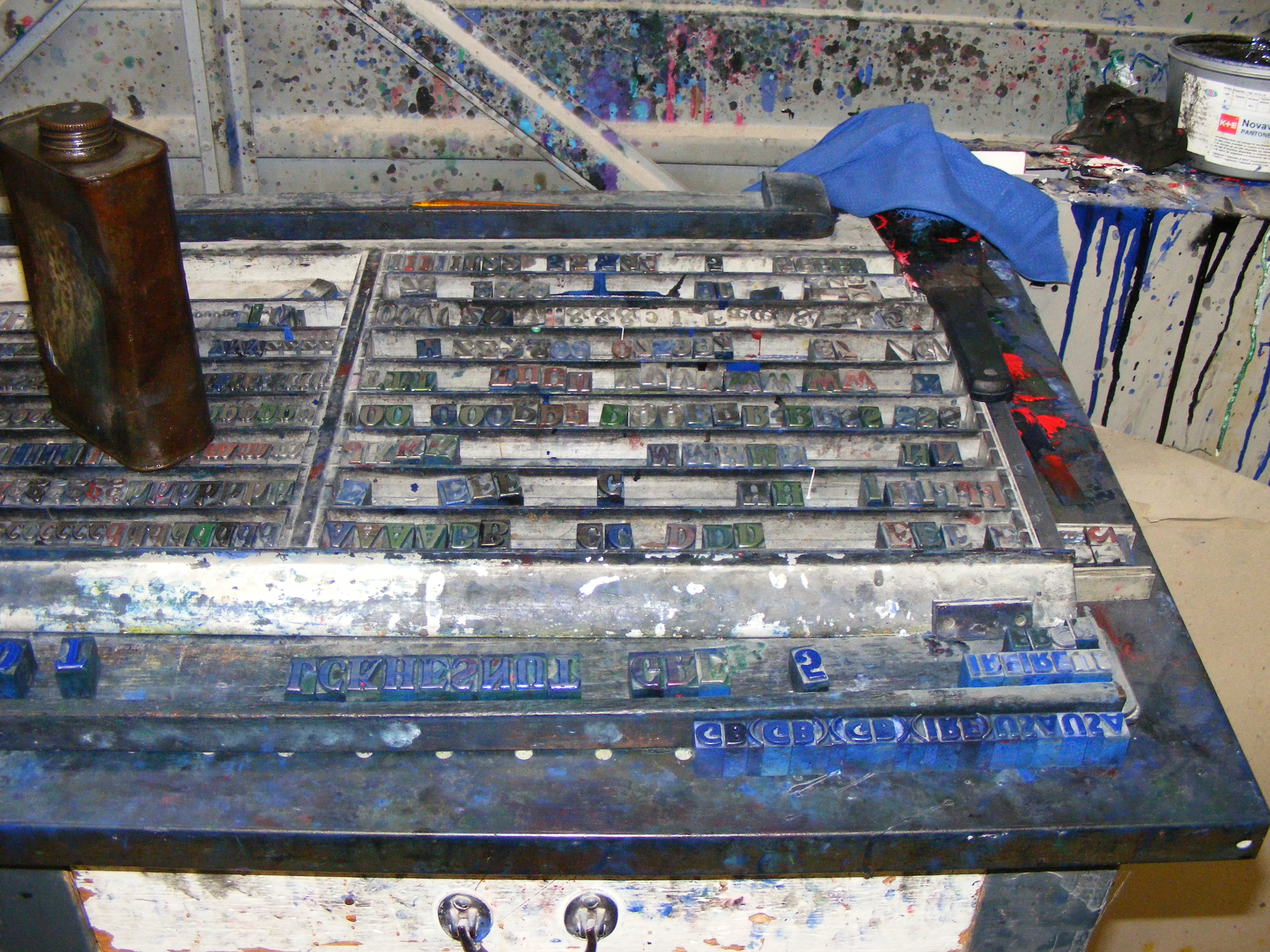
Movable Type
I spent most of my childhood in that printing works in Wood Green. I used to set the type for all sorts of letterheads, posters and brochures, but perhaps my biggest claim to fame, is that I used to do all of the handbills for the Dunlop tennis tournaments, that were held all over the UK in the 1950s and early 1960s.
Sadly, I do not have one of those handbills. If anybody has one, I’d love a photocopy. I’ve searched for years for one, but none exist. Even the archivist, who wrote the history of Dunlop, knows nothing about the tournaments and couldn’t find any reference to them.
I also learned to read and write with poster letters. These are of course backwards and you’d think that it would have caused me to have some sort of reading and writing problem. I suppose it may be one of the reasons for my atrocious handwriting in that I learned that printing, computers or typing is much better from an early age, but it did give me a strong mental alacrity in turning images through 180 degrees.
This involvement in letterpress also left me with some habits and pedantic actions.
For instance, I always refer to exclamation marks as shrieks, which I have inherited from my father.
I’m also very pedantic about spelling and some aspect of structure like apostrophes and plurals. I spell words with the proper use of ae and oe for instance. I spell archaeology with the diphthong and not as archeology. The difference is explained here.
The one thing I don’t seem to have inherited is my father’s good handwriting.
My father also had one of the oldest proofing presses, I’ve ever seen, but sadly there are no images of it. Mpst old ones you see tend to be Columbias made in the UNited States.
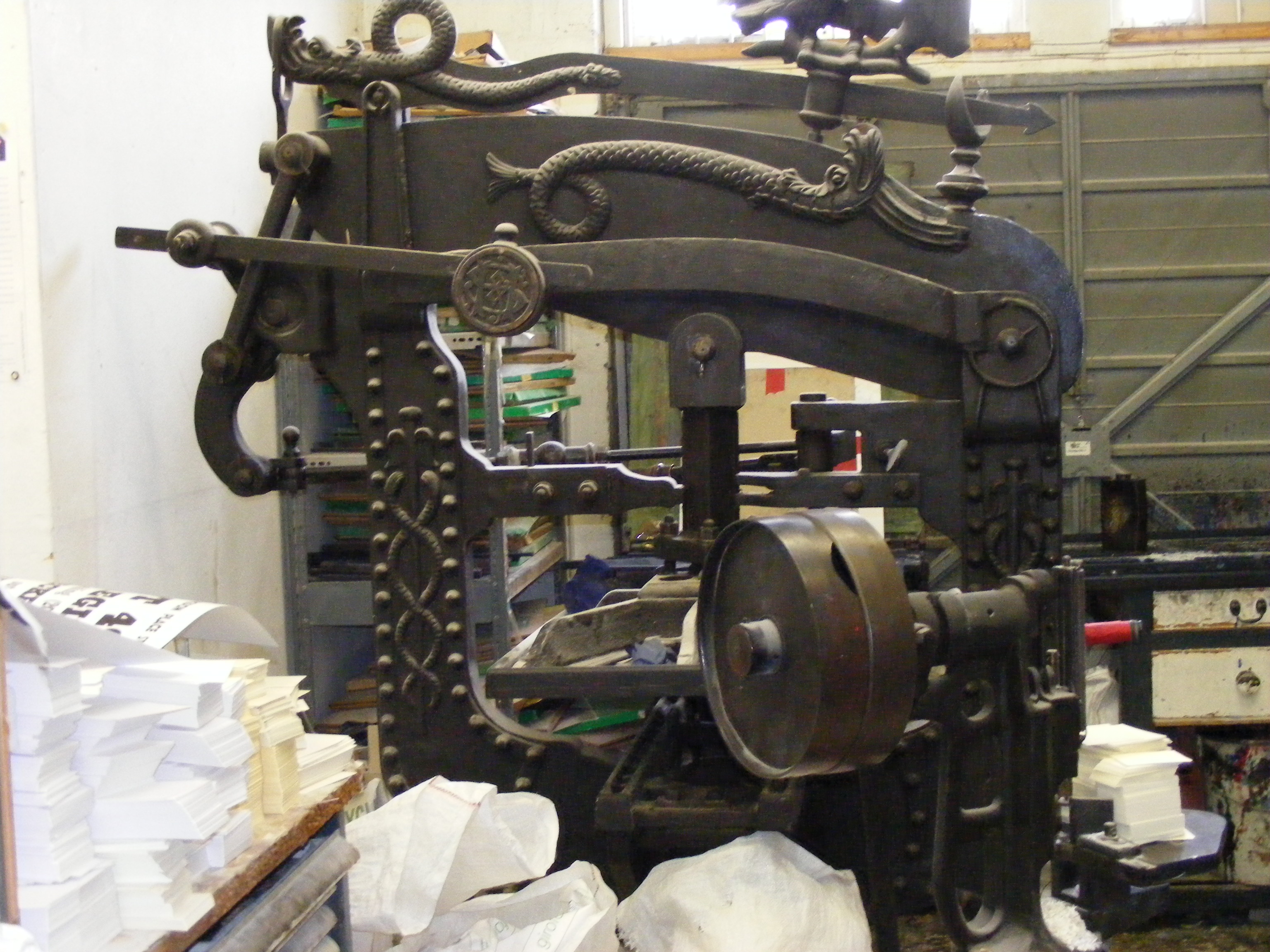
Proofing Press
This one is from about 1850 and was at least fifty years younger than my father’s. His probably ended up in a scrapyard, when a museum would have been a better bet. Printing museums are rather thin on the ground and there isn’t even one in Heidelberg! Although I did find a whole section in a museum in Belarus.
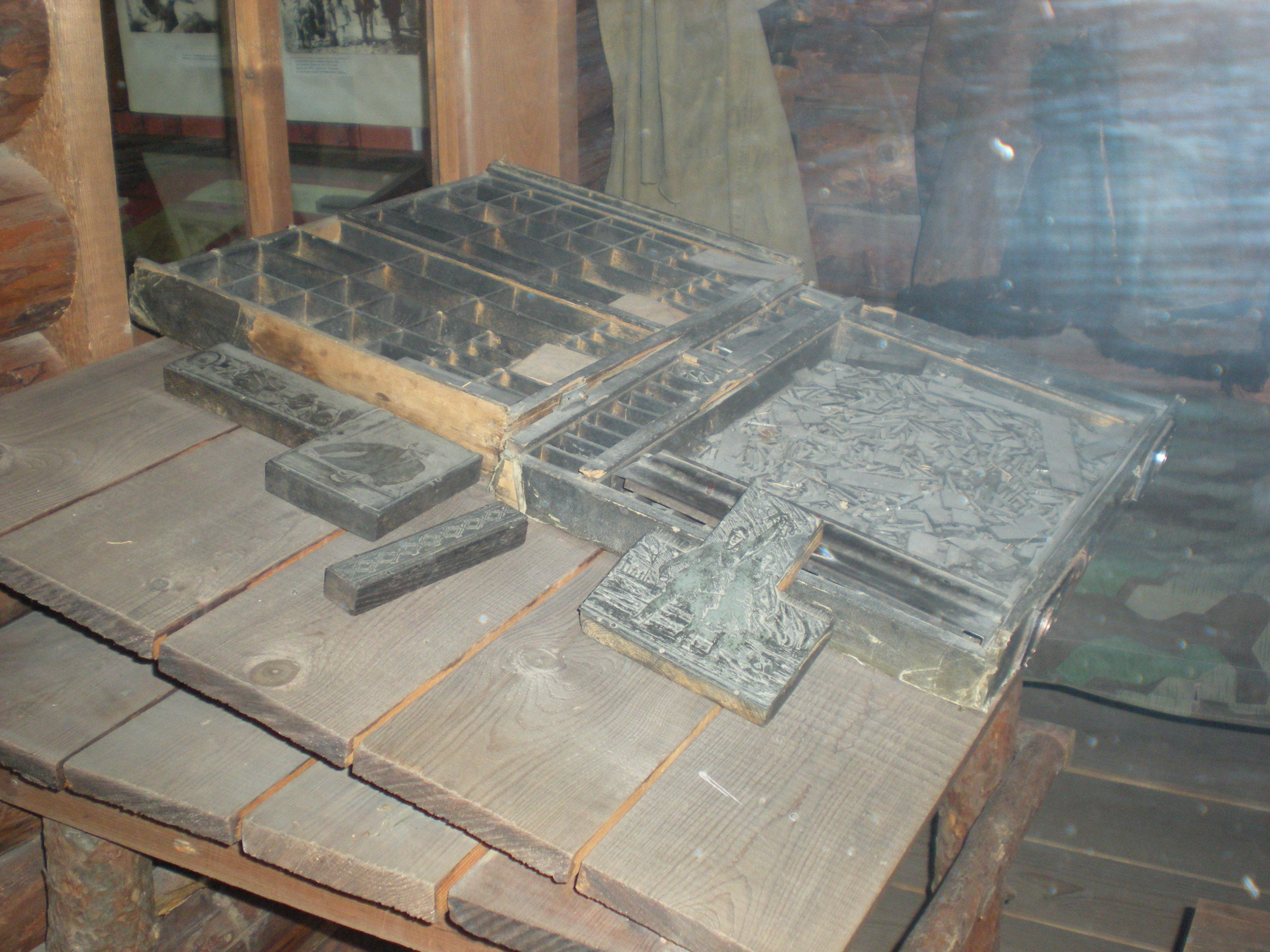
Wartime Printing in Belarus
My father’s letterpress business died.
Offset litho technology was coming in and because of the bizarre purchase tax system in operation in the 1950s and 1960s, it was cheaper for companies to do their own printing. Tax on plain paper was zero, but if it was printed it was 66%, so work it out for yourself. VAT would have solved the problem.
But now letterpress is coming back and like the printer who provided the pictures in this note, it is doing well.
There is nothing like the feel of a properly printed card or letterhead! And you can do so many clever things with a proper printing machine, like score, number, decolate and perforate.
A few years ago, I met one of people my father used to deal with at Enfield Rolling Mills. He explained how my father would use his skills to create production control documents and cards, to smooth the flow of work through the factory. That was the pinnacle of production control and workflow of its times.
It is a strange irony, that I made my money by writing software for project management. Is it in the genes?
If Wet In The Great Court
I went to a Members Party at the British Museum this evening.


It was an absolute joy to wander around some of the galleries, virtually by yourself.
The experience more than justified the cost of being a member.
Cash Flow Problems
In the last week, I’ve joined a few organisations like the Tate, the British Museum etc., where I pay my subscription by direct debit. Some have turned up in my bank account, but most haven’t!
I know it’s the holiday season, but surely speed is of the essence.
Is it the organisations or is it the banks? In two cases, everything was typed into the computer as I stood there, so surely that must be in the system by now!
The Bold Millennium Bridge
The Millennium Bridge was not without controversy and many still call it the wobbly bridge.
But my walk shows how good the concept is and it was right to build a bridge there in the first place.
If you’re going to the Tate Modern, then in my view, it should be approached over the bridge.
It might be sensible too, to go back across using the new Blackfriars station, which is a bridge as well.
Or you could do as I did later and take the RV1 hydrogen-powered bus route to Covent Garden.
The Mary Rose And The Vasa Compared
In many ways comparing these two preserved ships is a bit like being asked to judge between two great actors, artists or musicians, who is the best.
In some ways to appreciate either, you must see the other one, as I have done in the last few weeks.
The Vasa is obviously more complete and in a better state, due to being a hundred or so years younger and being in the less destructive waters of the Baltic. Compare my pictures of the Vasa with those of the Mary Rose.
One big difference, is that when the Vasa sunk, it was almost an empty ship as it had not been fully victualled, whereas the Mary Rose was a ship full of supplies and artefacts, so it gives valuable insight into Tudor life. The two museums reflect this difference.
In some ways though it is best to almost consider the Vasa and the Mary Rose as two separate galleries in the same museum. Add in HMS Victory and HMS Warrior, with perhaps a visit to HMS Belfast and you have an almost complete living history of warship design.
In some ways though, those that work on both the Mary Rose and the Vasa are very close and a lot of the preservation techniques have been used on both vessels. If we ever find and raise another ancient wooden ship, we probably have the knowledge and competence to show it to everyone’s advantage.
The design and architecture of both museums may also find applications in other areas of archaeology, where we need to show delicate items.
The Mary Rose
One of the main reasons to go to Portsmouth was to see the Mary Rose.
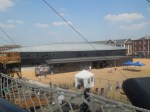
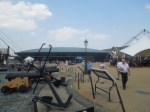

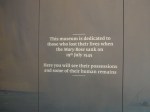

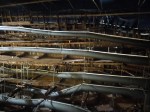


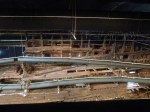

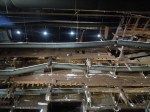


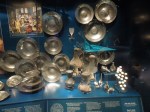
The building might look rather bland on the outside, but the Tudor warship and the way it is displayed surrounded by objects retrieved from the wreck is truly spectacular.
Some of these pictures were taken from a glass-walled lift that ascends at one end of the museum giving superb views of the ship.
It will become even more spectacular inhopefully 2016, when because the ship will be completed dried out and preserved, they will be able to fully open up the views of the ship.
HMS Victory
I hadn’t been over HMS Victory for many years.
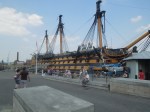
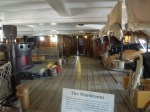

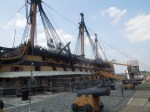
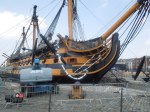
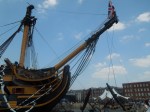
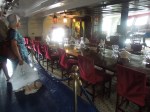
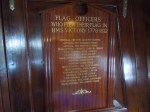
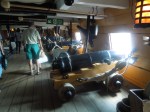
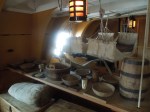
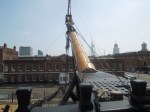
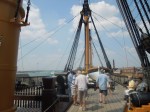
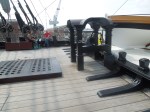
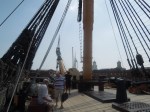
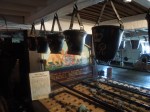
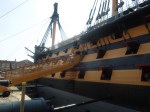
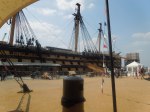
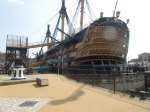
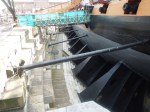
it is a bit stunted at the moment, as the masts have been taken away for some work, but they now give you free run right into the depths of the ship.
HMS Warrior
HMS Warrior was the first ship I visited.
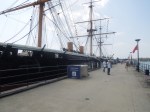
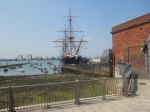
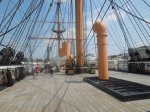
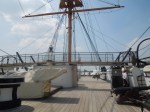
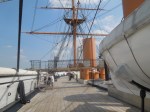
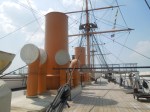
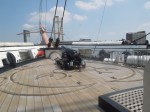
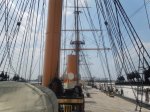
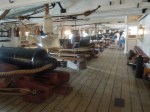
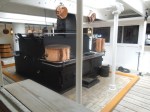
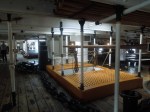
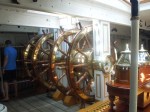
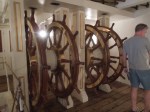
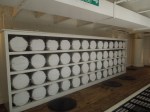
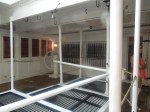
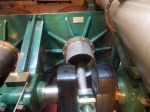
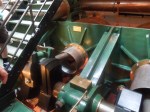
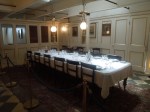
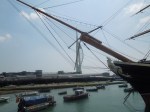
HMS Warrior was Britain’s first iron-hulled, armoured warship, when she was built in 1960 and she still floats in Portsmouth Harbour.
This site is her official web site.
Around Portsmouth Historic Dockyard
These pictures are a few general ones of Portsmouth Historic Dockyard.
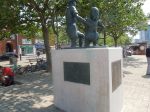


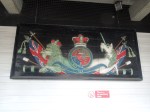



Note the cheese and ham toastie. It was a surprise in the Georgian Tea Rooms. They also had jacket potatoes.
 The Anonymous Widower