The Land Bank Scam
I first came across these land investment scams about three years ago, when my late son built a web site for a company that was selling small strips of land with the promise of future planning permission. They were targeting mainly Asian families and were pulling in a lot of punters.
I told him to stay clear of this type of company and on telling a respected estate agent, he said it was a big problem and no-one seemed to be doing anything about it.
So why has it taken so long to reach the headlines? I suppose NuLabor had other priorities, like clinging to power.
Even now, type “land banking” into Google and there are quite a few sites out there trying to sell you bits of worthless land. But now, there are also lots of warnings from respected financial commentators like the Guardian and agencies like the FSA. Read the latter items and ignore the sales pitches.
Needless to say, but my son was never paid for his work.
Nakd Bars
Good gluten-free snacks are hard to come by. But have the Welsh come up with something better than the ubiquitous banana?
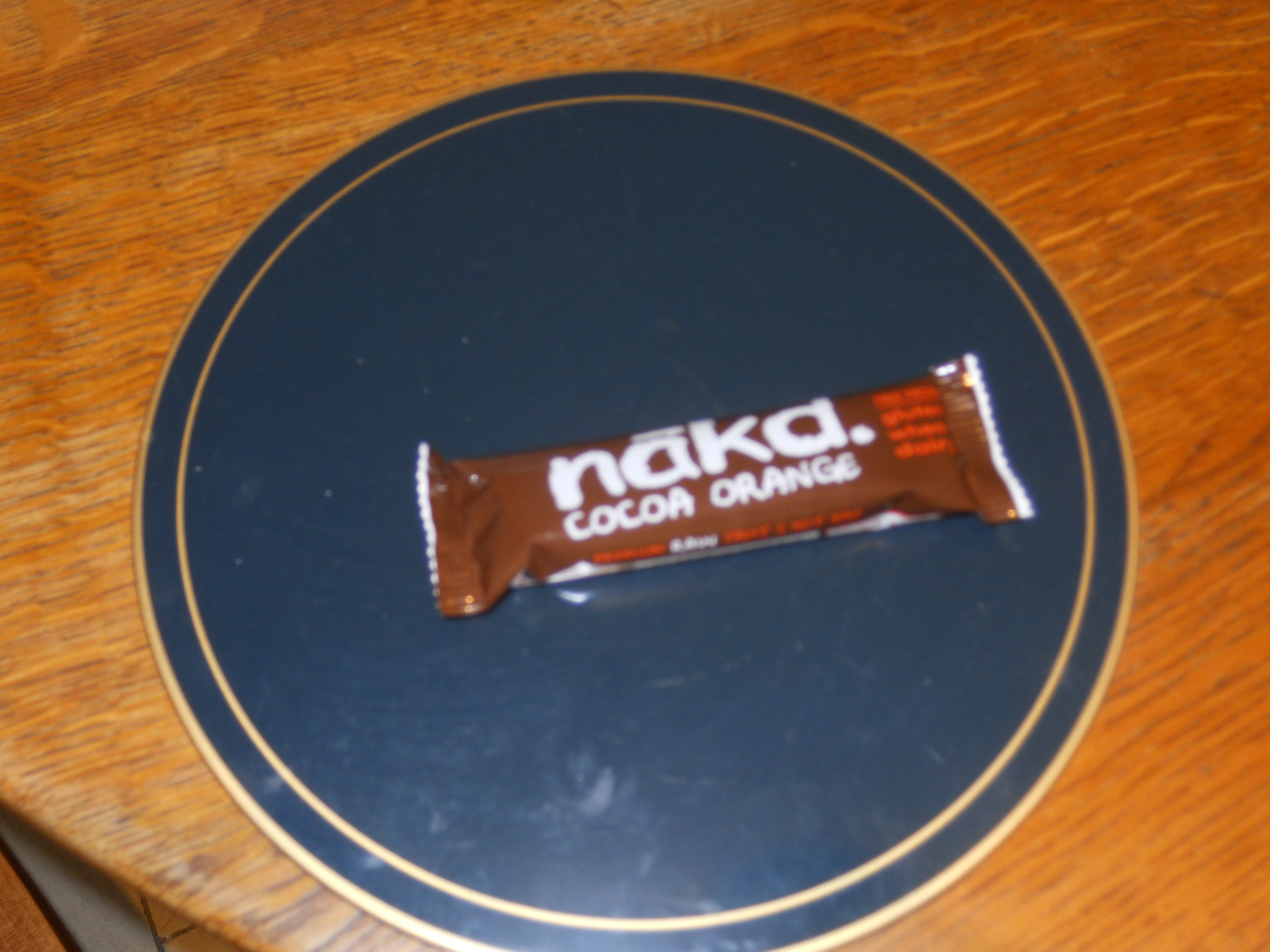
Nakd Cocoa and Orange Bar
They certainly taste nice. My only worry is that they seem to be a bit addictive. They do say on the packet that the bars are “Gleefully made in Wales”
Is this another case of a food company being innovative to expand and get us out of the recession?
They are also following a trend of trying to make the packaging funny and very much worth reading. Humour is the greatest weapon in life and we don’t use it enough in marketing and business.
Perhaps the reason we got into the recession was have we ever had such a humourless bunch of politicians as Gordon Brown and NuLabor?
The Train that Won’t Go Quietly!
There are very few engineering projects in the world, that last a long time, as the technology gets replaced. To me some of the best in the UK are :-
The New River – Built in 1613 to supply London with fresh water, It is still used in part for that purpose nearly four centuries later. Will there be a celebration in 2013?
The Thames Embankments and Bazalgette‘s Sewers in London – These transformed the city and also laid down the basic quality control standards for large construction projects. I seem to remember reading that only one person died in the construction of the sewers, which was a major achievement for the ninteenth century.
The Forth Bridge – Probably the best known bridge in the world. Opened in 1890, it still carries nearly 200 trains a day.
The Thames Tunnel – The first tunnel under a navigable river, that now carries the East London Line under the Thames.
St. Pancras Station – The head of SNCF described it as the finest station in the world. I’ll agree with him. It was originally opened in 1868 and a lot of the original design is still intact.
Welwyn Viaduct – An extraordinary structure in Hertfordshire, that still carries the East Coast Main Line over 150 years after it was built.
We may have structures that last for years but actual vehicles that last more than a four decades or so are rare indeed.
The Mersey Ferries have been around for centuries, but the current three boats are all over fifty years old. I remember them with affection from my days at Liverpool University in the mid-1960s.
The London Routemaster bus was launched in 1956 and although most were replaced by 2005, their are still two heritage routes in central London. I rode on one in September.
The Victoria Line in London has two distinctions. It is the oldest fully-automated railway in the world and it still has some trains dating from 1967. I have travelled on some quite recently and they are still in good condition. at 43 years old.
And then there is the Inter-City 125 or High Speed Train. It may not be as venerable as the other three examples, but then they don’t travel at 200 km/hr or 125 mph over routes that measure hundreds rather than tens of miles. It was also designed as a stop-gap design after the failure of British Railways to get the tilting APT to work.
Now over thirty five years since the trains were introduced, they are being refurbished, re-engined and are still in front-line service all over the country.
On my trip north from Edinburgh to Inverness in the cab of HST, 43313, talked about some of the problems with the trains and added to my knowledge.
The old rather smoky diesel engines have now been replaced in many power cars with modern units.
The rather draughty and noisy doors in the cab have now been replaced to make the working environment second-to-none.
But the slam doors of the Mark 3 coaches with their rather quaint traditional windows are a worry.
But that is now being addressed by sound engineering according to Modern Railways.
Who’s to say when we’ll see the last of the HSTs. I wouldn’t be surprised if some are still running in 2030 or even 2040, as they are classic Darwinian train, that evolves to beat every attempt to kill it off.
In the same magazine, it was also announced that one of the HSTs had run from Plymouth to Paddington non-stop in just two hours forty minutes. That is an average speed of 84.375 mph. London to Paris by Eurostar is 307 miles and takes two hours fifteen minutes at an average speed of 136.444 mph.
So Eurostar is quicker, but it runs on a line virtually without curves and it isn’t thirty five years old.
As Modern Railways said, the Plymouth to Paddington run wasn’t bad for a thirty-five year old, British Rail-era diesel train dismissed as obselete by Labour transport ministers almost a decade ago!
I could talk about pots and kettles, but in a way isn’t the HST a superb two-fingered salute to the bunch of NuLabor morons, who almost bankrupted this country, by their idiotic policies?
Austin Mitchell Prepares for AV
I found this piece in The Independent, as I travelled towards Leicester. A snippet in the main article was headlined “A1 Austin takes no chances” and it described Austin Mitchell’s preparations for alternative vote.
In Australia, they call it the donkey vote. Faced with a long list of candidates to be listed in order of preference under the AV system, voters start at the top and work down.
Next year, there will be a referendum on whether to introduce AV to British elections and it was noticeable that two members of Labour’s national executive whose names began with W lost this year, The Labour MP Austin Mitchell is taking no chances. “When the system comes in I will change my name to A1 Austin,” he told MPs this week.
I know Australians, who are very intelligent, but I can understand some of their thicker countrymen voting in that way, just as I can imagine some of my countrymen. Perhaps we should put symbols by each candidate to indicate their party!
We could perhaps use one of Mrs. T’s handbags for the Tories and perhaps two aircraft carriers for NuLabor.
Brown’s Aircraft Carrier Too Many
The Times really lays into Gordon Brown this morning about the purchase of a second aircraft carrier, which more than likely will never be used by any fixed wing aircraft.
This was what greeted Gordon Brown this morning from the front page of The Times.
Taxpayers will have to pick up the £2.6 billion bill for the controversial aircraft carrier that will never carry jets because Gordon Brown agreed an “unbreakable” contract designed to protect shipbuilding jobs in Scotland.
Under a 15-year agreement signed with BAE Systems, the Labour Government guaranteed work for the company’s shipyards on the River Clyde and in Portsmouth.
This included the £5.2 billion contract to build two new aircraft carriers for the Royal Navy, which David Cameron revealed this week that he was unable to cancel.
When the coalition looked at axing one of the carriers to save money, BAE responded that the Government would still have to pay shipworkers to do nothing for the remaining 12 years of the deal. However, at no point did Mr Cameron’s ministers seek to renegotiate the shipbuilding agreement with BAE, according to the company.
It looks like game, set and match to BAE!
As I said earlier, big contracts are too important for politicians to get involved.
What is also interesting is that despite all these bribes to his friends in heartland constituencies and trade unions, Brown still lost. So we’re all having to pay for the idiot’s bribes and mismanagement!
It’s about time, politicians were made liable for some of their disasterous decisions and purchases.
Why Politicians Should Keep Their Sticky Fingers Out of Government Projects
The aircraft-carrier fiasco is a classic project, where politicians have tried to be all things to all men and quite a few women as well.
Surely, if France can make do with just one carrier, the Charles de Gaulle, then why do we need two. And surely, we should have an Anglo-French aircraft manning both,as quite a few projects between the two countries work well.
But that more affordable option would have been bad for NuLabor in its Scottish heartland.
The Scots are good at many things, but over recent years they have shown that they are not very good at politics with an English dimension or one with a great amount of project mangement.
I’ve just read this piece from Robert Peston’s blog. The highlight for me was a comment from Wee Scamp, who as you see describes himself as a non-voting Scot.
As a non Labour voting Scot I am quite sure that Gordon Brown set up the carrier contract to ensure Scotland – and particularly Glasow – would vote Labour in the May election.
My logic for believing this is quite straightforward. Most importantly, the design of the new carrier is very badly flawed in that they’re not nuclear powered, do not have an angled flight deck and aren’t equipped with either a catapult or arrestor gear. In other words they are limited to using VSTOL and/or helicopters but couldn’t carry a conventional jet and will be limited in range due to their dependence on needing a refuelling tanker or access to dockside refuelling facilities.
In other words, if we really needed these carriers they would have been properly designed. In fact though they are just a job creation exercise and Brown couldn’t have really cared less what they were or weren’t capable of.
Indeed, politically the only error he made was ensuring the contracts can’t be broken. If they had been then both carriers would have been cancelled and the boost to Labour would have been huge. Not surprisingly though he couldn’t even get that right.
Yet again Prudence shows himself to be an even worse Prime Minister than Lord North.
Be Difficult and Stupid and You Get a Peerage!
The Times today is thinking that the leader of the awkward squad and Ed Milliband’s biggest financial backer is in line for a peerage.
So do your best to make life miserable for millions of people and get a reward! The fact that it is being discussed shows that Ed Millimind must have really thought the thing through!
It just shows that the remains of Nulabor don’t have the qualifications to run a whelk stall on Hastings Pier, which last time I saw pictures of it, was in a better state than the Labour Party.
Milliband’s Poisoned Chalice
The elections for the Shadow Cabinet have meant that both Yvett Cooper and her husband, Ed Balls, are both up for plum jobs.
If I were Ed Milliband, I’d have hoped that one wouldn’t have got elected, as there is nothing worse, than to have husband and wife in the same meeting arguing from different sides. Say you decide what should be done and agree it with the husband, as it’s his brief. But if the wife disagrees, she’ll use all her feminine charms to change her husband’s mind and you have to go through it all again. It would also work the other way round, if you’d agreed it with the wife and the husband reasserted his male instincts.
There are endless scenarios and you can understand why some companies don’t like employees to have relationships stronger than friendships! I also speak from personal experience, which probably meant that one of my projects wasn’t as good as it should have been!
A Sensible Approach To Health and Safety
It is reported today that Lord Young is close to delivering his report on the health and excessive culture in the UK.
Some of the stories I’ve read lately are so silly it’s not true.
I should say that I grew up in my father’s print works, with lots of printing machines, guillotines, paper drillers and noxious substances like printing ink, solvents and of course lead-based type. My father gave me a lot of guidance, but I suspect many of the things I did, would never be allowed now!
Did I have any accidents at the time?
Yes!
I was using a wood-turning lathe at school and got a splinter in my eye, which meant I had to go to Highlands hospital to have it removed. I should have been wearing goggles, but there weren’t any! That was typical of schools at the time! Nowadays, I would never do something like that without protective goggles.
But it was only when I worked in industry that I got any training. At Enfield Rolling Mills it was minimal and was basically a walk round the factory, pointing out what was dangerous. It may seem silly to say that you learned on the job, but then they expected you to observe what you saw and take appropriate precautions to avoid trouble.
At ICI in 1969, I went on a safety course, but the most valuable lesson, I had was a walk round a BCF plant with the foreman, Charlie Akers. To illustrate the dangers of HF dust, he took a speck and placed it on my thumb. It burned, so after that I made sure that I didn’t touch any. I still climb industrial staircases without putting my hands on the top, as that is where all the noxious substances are!
In my view Health and Safety training should begin in schools, as what you need to instill is a simple threat recognition and avoidance culture into children, that they will carry with them all of their lives. How many children have broken arms at five or six in simple situations like getting off a slide or a swing? A researcher into accidents once told me, that he felt there was now a common child accident, where kids were trained to get into their house quickly for their protection and had all sorts of problems, when the car wasn’t parked outside the house, so they ran across the road to get to safety. I once drove up from Cornwall and was suprised to see so many overloaded 4x4s in accidents, because their idiot drivers had not properly understood the problems of excess speed and weight. A proper health and safety education and a bit more practical understanding of Newton’s Laws would have alerted them to the problem before they set out.
The report on Lord Young makes some interesting points.
Launching the review in December, Mr Cameron cited cases of children being told to wear goggles to play conkers, restaurants being banned from handing out toothpicks and trainee hairdressers being banned from using scissors as examples of silly practice.
The Young report says local authorities, in future, should explain their decisions to ban events on health and safety grounds in writing.
The public should be able to refer decisions to an ombudsman and, if deemed to be unfair, they should be overturned within two weeks.
The idea of an ombudsman seems very sensible, especially, as they would affectively lay down good practice.
Lord Young also says flaws in existing legislation have fuelled the number of personal injury lawsuits and pushed up the fees charged by lawyers.
The growth of claims management firms – which are paid referral fees by solicitors to assess whether there are grounds for a claim – has led to a glut of advertising, he says, and resulted in a market in fees where claimants are directed to firms which pay the most not those which are most suitable.
“Many adverts entice potential claimants with promises of an instant cheque as a non-refundable bonus once their claim is accepted – a high pressure inducement to bring a claim if ever there was one,” his report argues.
A culture has developed in which businesses, the public sector and voluntary organisations “fear litigation for the smallest of accidents and manage risk in accordance with this fear,” he adds.
When I was in Middlesborough, there were adverts everywhere for solicitors, who would make a claim for you. In my view where there’s a greedy and unscrupulous lawyer, there’s a claim. I’d ban all forms of advertising by lawyers. You always get the best lawyers by talking to a good friend or someone who really knows what to do, not by phoning a company which then have a vested interest in your claim.
He also is suggesting a Good Samaritan law.
His report also suggests that a “good samaritan” law may be necessary to make it clear that people will not be sued for voluntary actions – such as clearing snow from a driveway – which may inadvertently contribute to accidents.
This is another good idea! But in the driveway example, we should remember good common sense, when we do things like that. In a related example, if we see a loose paving-slab outside our house, which we feel could be dangerous to some people, then coucils must have a reporting system that gets it fixed.
Health and Safety is just one area, where we must rescue our country from the barmy, scientifically-incorrect excesses of Nulabor.
Since my strokes, it is not stretching things to say that my Health and Safety training has been one of the things that has helped me get around and get my life back on track.
Reflections on My Journey to Scotland
In my Modern Railways for October, which I bought in Doncaster, there was an heretic article by Chris Stokes, asking if we really needed HS2 or the High Speed Line to the North, which would go to just Birmingham at first. He described it as a vanity project.
Twelve months ago, I was a sceptic on whether we needed a High Speed Line to the North, mainly because I didn’t think it would do anything for anybody in East Anglia where I lived. If I needed to get to the North, I wanted a fast line from somewhere I could drive to easily like Peterborough.
But when it was announced that the route would be to Birmingham in the last days of the disastrous NuLabor experiment, I warmed to it a bit, although I did think it needed to go via Heathrow. I also thought very much that it was a Nimby’s charter.
But Chris’s article has now turned me back to very much a sceptic. Competition being what it is, his argument, that unless you virtually close down the West Coast and Chiltern Birmingham services, no-one will pay a premium to go from London to the Midland’s premier city. My son incidentally always goes by Virgin and has never thought about using Chiltern, as Euston is on the same Underground Line as where he lives.
Chris also argues, that the amount of First Class traffic will decrease due to austerity, good housekeeping and modern technology removing the need to travel. Some years ago, I installed a Management Information System in a company, which was web-friendly and even allowed the computer-phobic CEO to find out how the company was doing from any computer in the world. But also, the modern traveller will become First Class smart and book it when and where they need it. So if you think there is a premium market that saves a few minutes, forget it!
Put simply, a lawyer say going to Birmingham from London for the day, will choose his route and class dependent on what is best for his needs. Hopefully, when I move to London, it will be in walking distance of Canonbury. Who’s to say that in 2015, someone isn’t running an express to say Milton Keynes, Coventry and Birmingham from Stratford and East London on the North London Line and possibly the Primrose Hill Tunnel?
So what will happen to lines to the North, if we don’t build HS2 on schedule? We’ll get the usual whining, we always get when the investment is cut, but let’s look at the reality of what will happen!
We now have two good and pretty reliable and fast train lines from London to the North of England and Scotland. I was told on my trip to to Inverness that it should be possible to be some minutes under four hours from Edinburgh to London. This compares with a fastest journey now of about four hours twenty minutes, although Operation Peppercorn is aiming for the magic four hours flat for the fastest trains with a stop at Newcastle. Glasgow to London by comparison is now about four hours and twenty minutes. Many of my Scottish friends say this is fast enough to mean they won’t bother to fly to London, as airport checks and delays are getting worse and they can use phones and laptops on the trains.
If there is a problem with the two stiles of a possible ladder reaching up the United Kingdom, is that some of the interfaces to other lines are poor. But the basics and some of the rungs of the ladder are already in place.
There are a succession of large stations on both lines, such as Peterborough, Crewe, Doncaster, York and Newcastle, which can be developed into easy change stations to other places. As I said earlier, Doncaster isn’t bad and I think Peterborough is going to be developed and hopefully linked to the nearby shopping centre, but a lot of work needs to be done.
As I rode out of Edinburgh towards Inverness, I was impressed to see that electrification has started to link Edinburgh and Glasgow. As it is trains now run every fifteen minutes and most take just fifty to link Scotland’s two capitals. I suspect that this will become a very important link between the two fast lines, not only because of level cross-platform interchange from the South to local trains, but also because full electrification would allow fast direct trains from Glasgow to York and Edinburgh to Liverpool. Taking the first journey, my road atlas estimates that at four hours ten minutes, which compares with about four hours by train now with two changes and two different companies. I estimate that something like a Pendelino could do this journey direct with perhaps just a stop at Newcastle in about three hours fofty-five minutes. Who would back against, Peppercorn 2, squeezing more minutes out of the East Coast Line.
A similar situation could exist between Newcastle, York and Doncaster in the East and Manchester, Liverpool and Preston in the West, by expanding and electrifying the TransPennine network. Edinburgh to Sheffield is a journey that uses either a direct diesel service or a change to TranPennine at Newcastle. If TransPennine was a level change at Newcastle from one fast electric to another, there would be a much better service.
London too has a strong link across, although as I said Euston is not a welcoming station, but when you’ve got three world-class stations in Kings Cross, St. Pancras and Euston, as you will have, an innovative transport solution along Euston Road could surely be achieved. For a start let’s have a proper walking route a hundred metres or so north of Euston Road, with cafes and shops. But I’m certain that people should be encouraged to take the Metropolitan Line rather than the Victoria or Northern. Perhaps we need a moving walkway! Euston is supposed to be being developed and also be a terminal for HS2. If the latter does happen, there will be a lot of grief and opposition in that area of London. That development, whether it incorporates HS2 or not, will divert rail passengers to other routes, such as Chiltern for Birmingham and East Coast for Scotland.
There is also another link that might be brought into use, especially if Euston has to be partially closed to traffic, whilst it is rebuilt. That is the link to Manchester out of St. Pancras, which was used reasonably successfully as Operation Rio during the West Coast Main Line upgrade. I’ve always argued that this should have stayed in place, as it interfaces well with the A14 at Wellingborough for those going from East Anglia to the North Midlands,Sheffield and ultimately Manchester.
So what’s missing?
As I found going to Scunthorpe, it’s not what’s missing in this case, but what’s still here; Pacers. All of these links to the two stiles of the ladder must be upgraded to the standard of the diesel trains, I used in Scotland. And where possible, they should link easily to the fast services. I think that this will happen, but in some ways it depends on a strong electrification program to release suitable diesel units.
The real problem though is the lack of a full East-West route between say Peterborough and Birmingham or perhaps Milton Keynes and Stevenage or Cambridge. The Peterborough to Nuneaton route is being upgraded for frieght and passenger trains between the two towns take seventy-five minutes. So it would look like that route could be another rung in the ladder. The other route is the possible Oxford-Cambridge Line, which could be built, if funds were made avaialable.
I believe strongly that the two route ladder offers advantages over just building a speculative line from South to North, which would cost several times the amount needed to build the two route ladder.
For example, as electrification progresses, subsidiary lines like Birmingham to Bristol could be further improved, so that more and more people had less than two hour access to the main network. More rungs could be opened up, by any company that feel there was a niche to be filled.
So should HS2 be built? I think that one day it might be built, so we must safeguard the route, so that at some future date it could be added as another part of the network.
If Beeching made one big mistake it was not in making sure that abandoned rail lines were able to be rebuilt. How many lines hastily abandoned in the 1960s are needed now? But perhaps it would mean knocking down a hundred or so houses and a Tesco’s!
 The Anonymous Widower