The Paddington Basin
I ended up at Paddington station and went to have a look at the Paddington Basin on the Regent’s Canal behind.
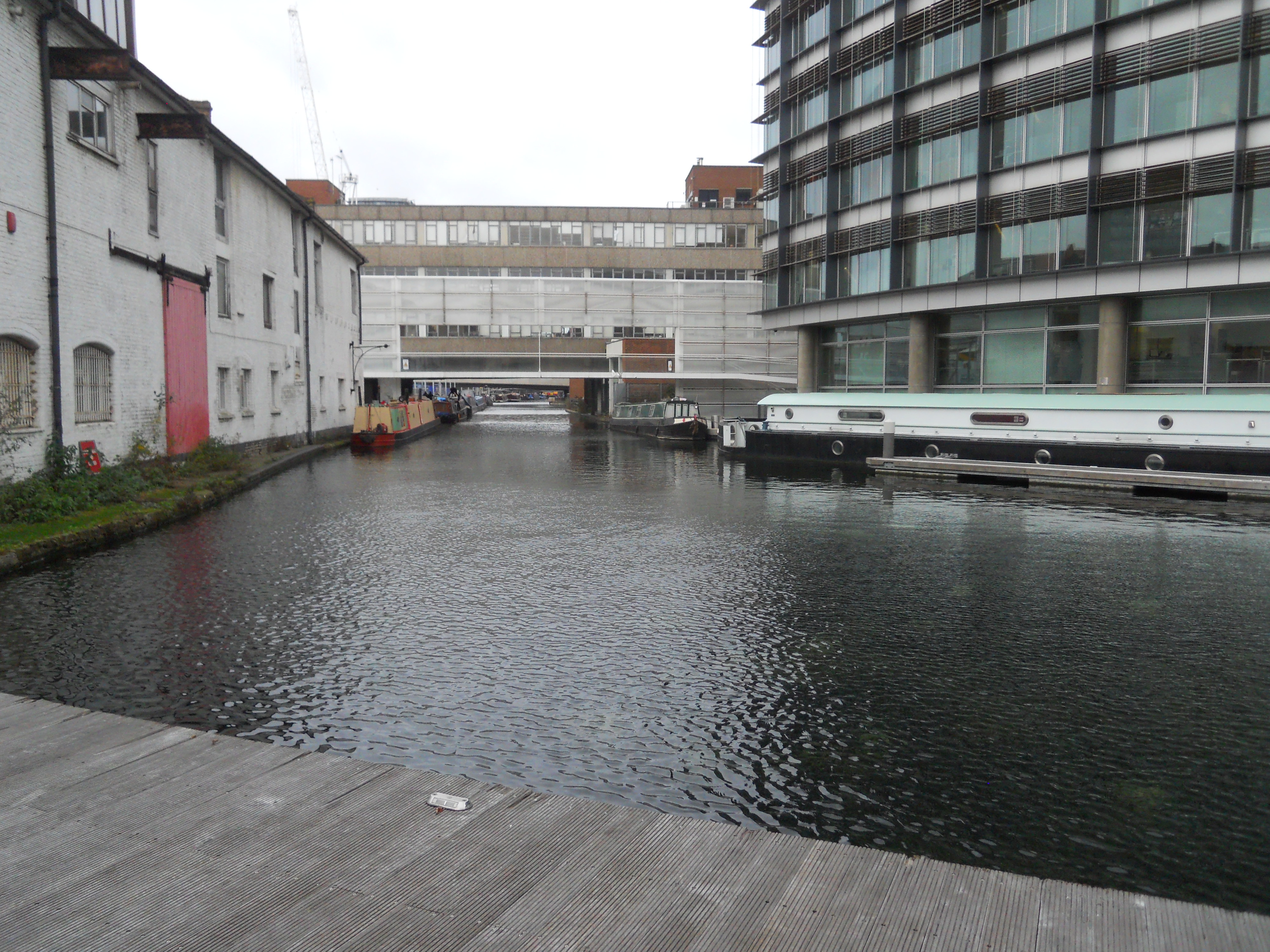
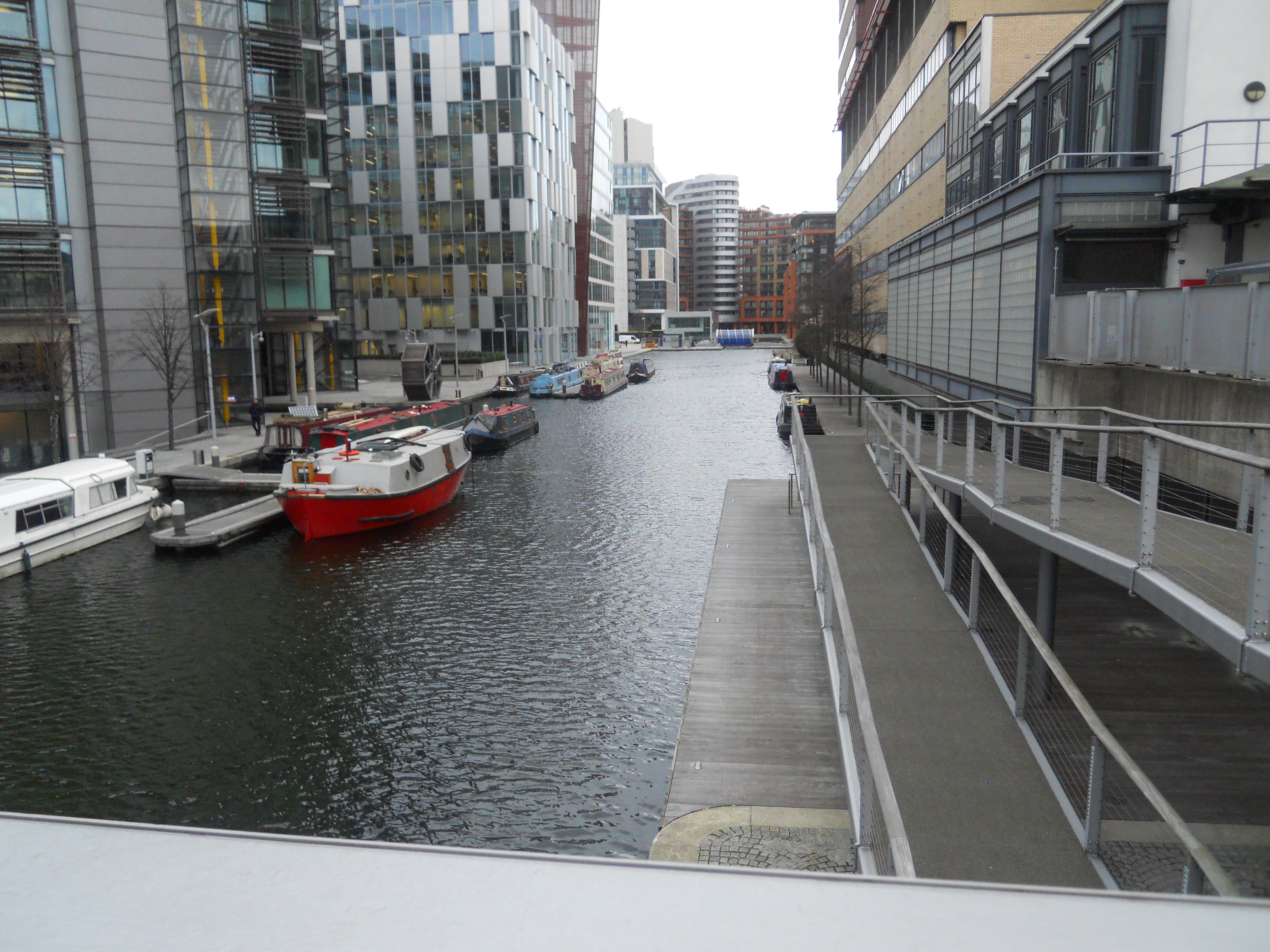
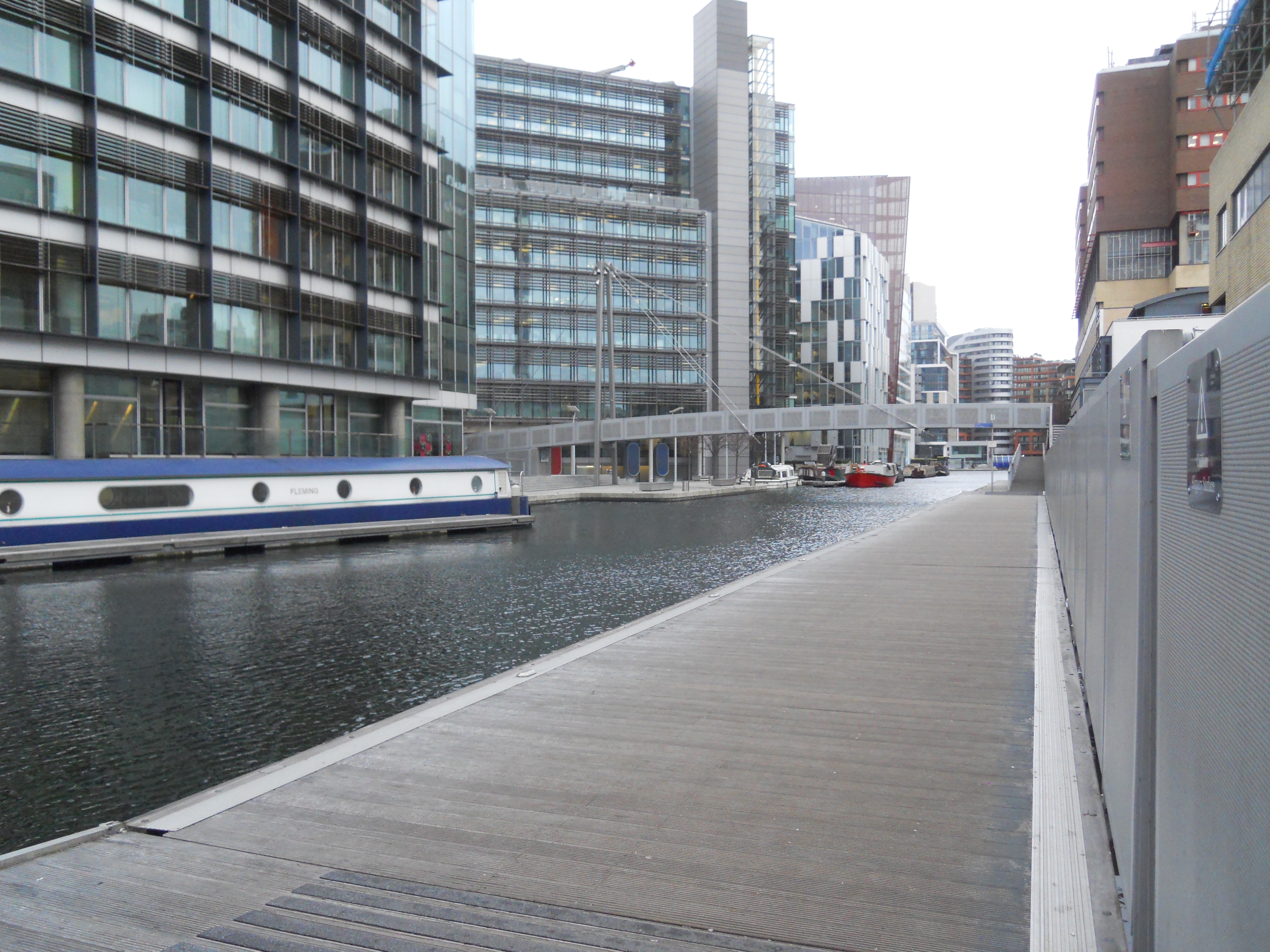
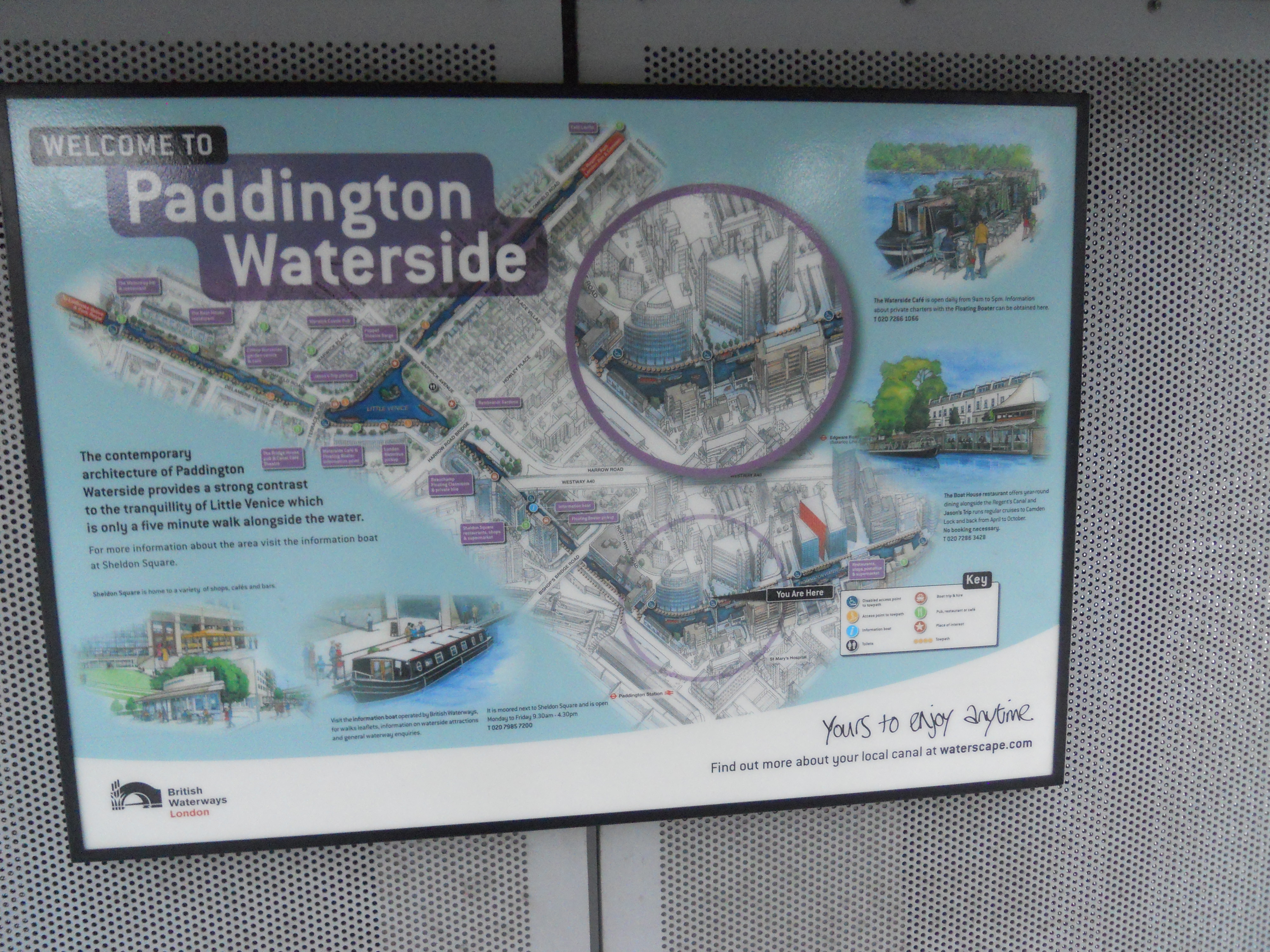
I was told that when the basin was drained to create the new developments, the police had a sweepstake on how many bodies, shopping trolleys etc. they would find. I was told they were rather surprised, but obviously pleased that none of the former were found.
What Do You Think Of It So Far, Isambard?
I was walking through Paddington station to the Hammersmith and City line, when I noticed that the High Speed Diesel Train named after Brunel was stationed under the newly-restored roof.
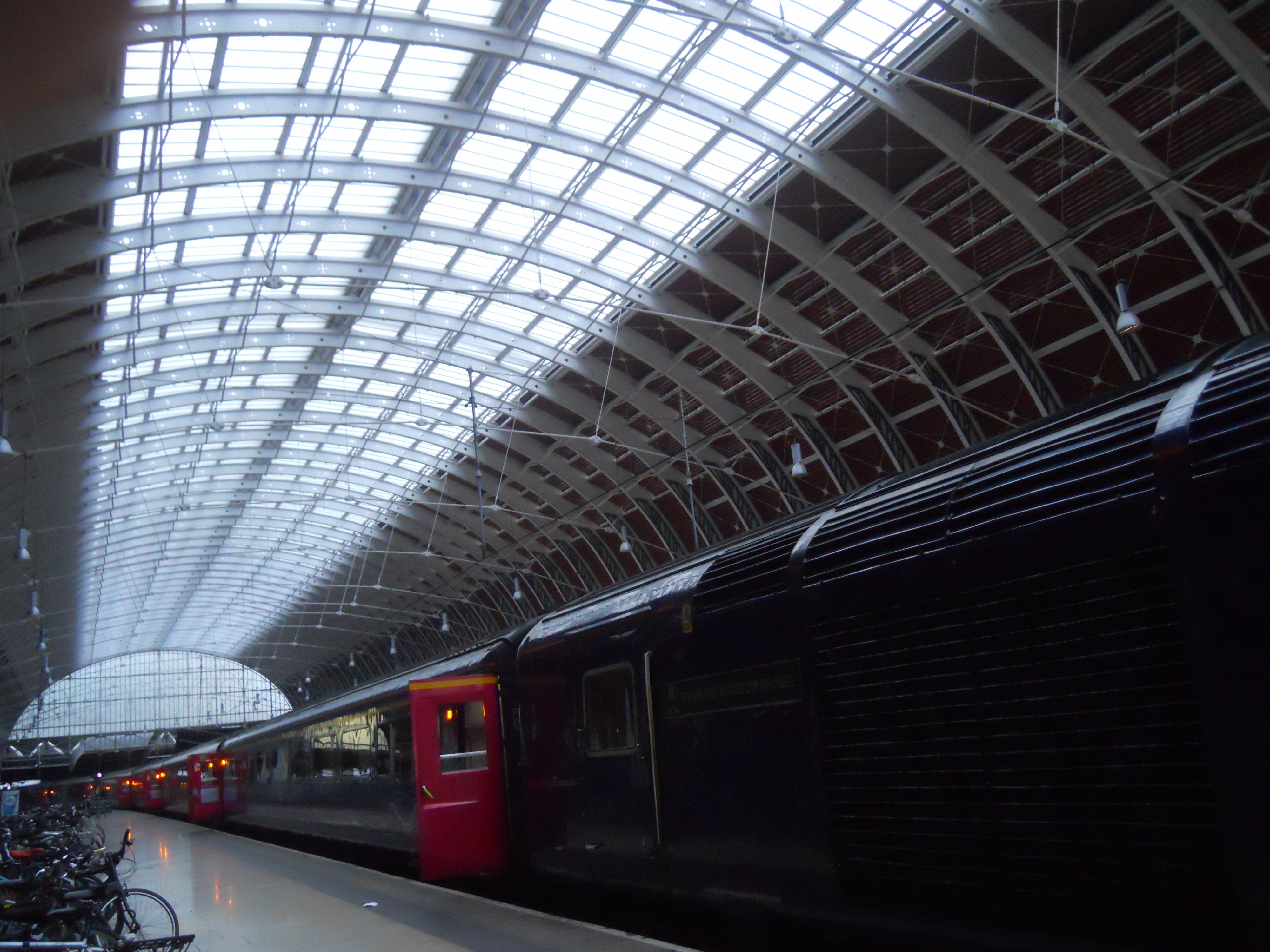
Isambard Kingdom Brunel at Paddington
I wonder what he would have thought of his restored London terminus.
He might have found the pink interior to the carriage doors a bit much, especially as the Great Western used chocolate and cream.
Anastasia the Ambassador at Paddington
First Great Western have been one of the better train companies on this journey. On my way to Hereford yesterday, I was accosted by, Anastasia, one of their Customer Ambassadors at Paddington, whilst waiting for the train.
I said how pleased I was with the company, adding that I hope it wouldn’t upset the journey I was about to do. It didn’t! We then got talking about Inter City 125’s and how she and the customers preferred them. She also said, that quite a few people booked so they travelled in one.
All those proponents of the IEP would not have warmed to the conversations.
THe Inter City 125s will be replaced on the main line, but they’ll outlive most of us!
Network Rail’s Pigeon Eradicator
This is not what you think it is on the platforms at London Paddington!
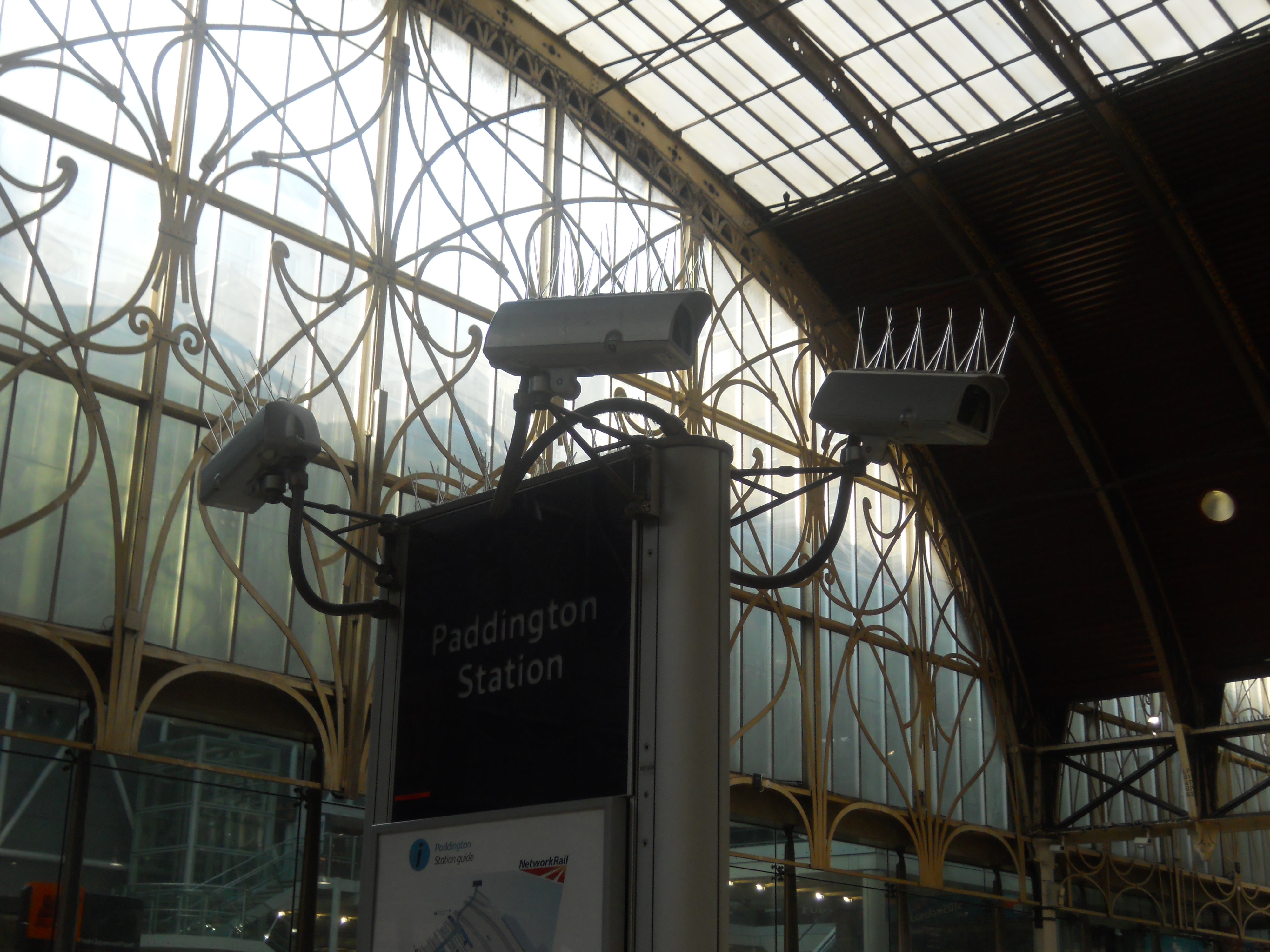
Network Rail's Pigeon Eradicator
It has shades of Hancock in The Radio Ham, where he was annoyed with pigeons on his aerials, so he gave them 1,000 volts and a very cheap thrill.
You may think it is to stop the pigeons sitting on the video cameras, but it is a fiendish device to kill them, by giving them a large electric shock. Note how one camera is angled so it can see the pigeons on the spikes. This allowed the charge to be accurately timed. The pigeons are then recycled in the meat pies on the trains from London.
By God’s Wonderful Railway to Bristol
To many, the Great Western Railway from Paddington to Bristol, Wales and the West is a cut above all of the other lines radiating from London.
As I was brought up close by the main line out of Kings Cross to the North and could hear tha A4 Pacifics and later the Deltic as they picked up speed through New Barnet, my affections are generally towards that route. One of my most memorable railway journeys happened on that line.
The Great Western Main Line differs from the other major lines in the UK as it was built on a grander scale and virtually straight for most of the way to Bristol. In other words, Brunel got his engineering right. In many ways it was the first high-speed line to be built anywhere in the world. (In fact as much of the line speed between London and Bristol is 125 mph., it meets the European definition of a high speed line.) Today the workhorses of the line are High Speed Diesel Trains, like the one where I rode in the cab from Edinburgh to Inverness.
But in some ways the line is showing its age.
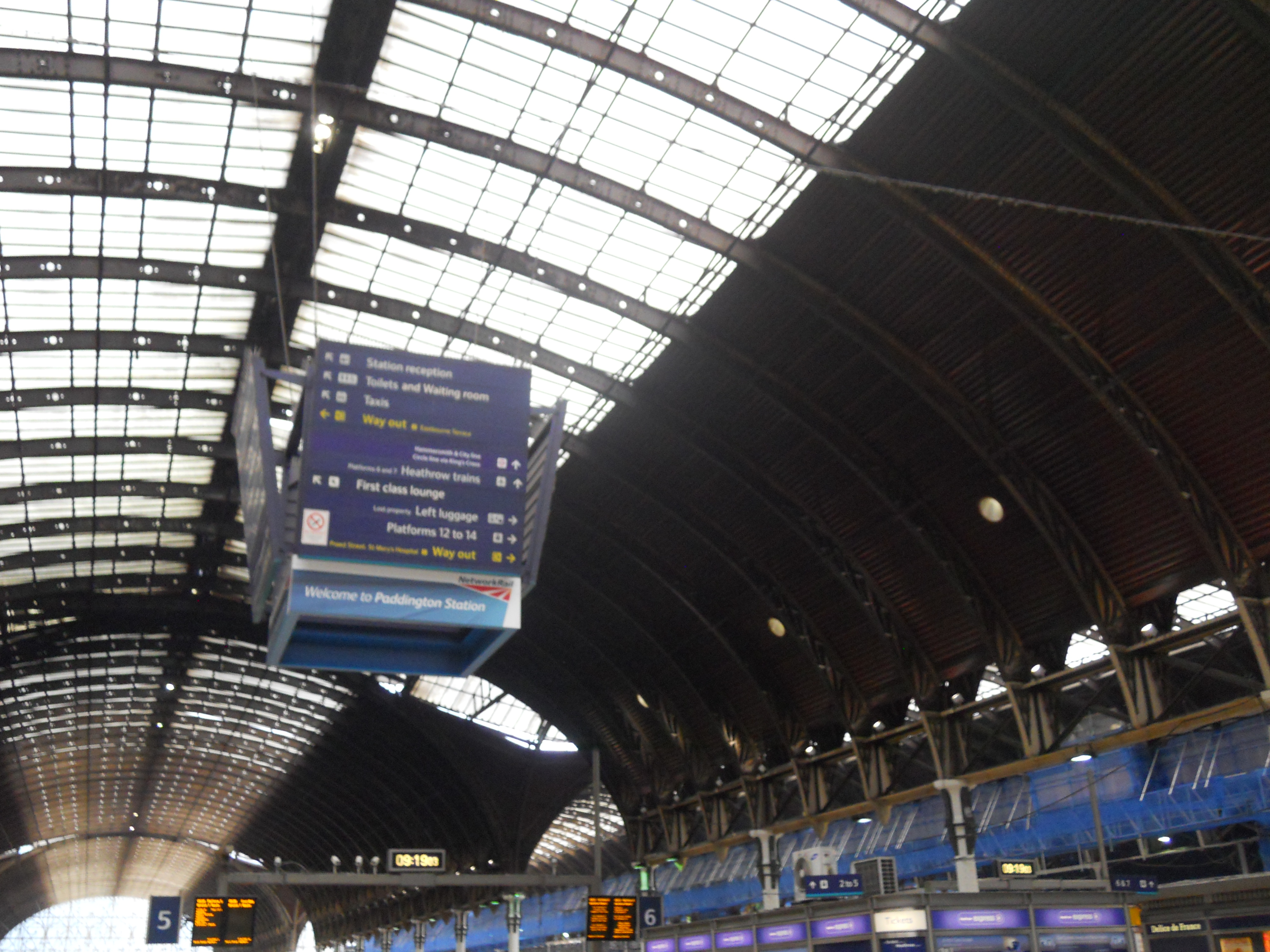
Renovating the Roof at Paddington
Finally, as the picture shows they are doing something with renovating Paddington. It is long overdue and it’s not much better now, than when I used the station to go to visit Plessey in the 1970s. It has also been announced that the line will be electrified as far as Cardiff. Why this wasn’t done years ago, I have never understood. Perhaps the reason it hasn’t been electrified is that the High Speed Diesel Trains have outperformed even the most optimistic expectations. But even then it took them so many years to name a power car after the man behind the project, Terry Miller, as good engineers are so undervalued by politicians.
Yesterday, I went with a friend to Bristol to see Ipswich play at Ashton Gate. We left on time at 10:00 from Paddington and just 99 minutes later we arrived in Bristol Temple Meads. The distance is 118.5 miles, so the average speed was a shade under 72 mph, including stops at Reading, Swindon, Chippenham and Bath. Not bad for a nearly forty year old train, but it did have the advantage of two men of vision; Brunel and Miller. I have a feeling that the last High Speed Train in regular service might be well in the second half of this century.
I Wouldn’t Like To Be These Thieves If the Commuters Get Them!
Thieves have stolen 90 metres of signalling cable from outside Paddington according to the BBC. It is causing major problems.
But at least the systems appear fail-safe and no-one has been hurt. It would be different of course, if the commuters got their hands on the thieves.
Years ago, I did some analysis for Railtrack and to stop signal cable thefts, they were replacing copper cable with fibre optic. The latter was cheaper and of coursehad no value if stolen, as who wants lots of glass thread? So the thieves just turned up with cutters and destroyed the fibre optic cables, in the vain hope that Railtrack would replace it with copper. They didn’t of course.
Perhaps though, those that get caught stealing cables, which control life-saving systems like signals or motorway signs, should be charged with something more serious like attempted manslaughter.
By Train to Oxford
When I went to Oxford on Saturday, I could have driven. But I parked at Blackhorse Road station on the Victoria Line and then took the tube to Paddington changing at Oxford Circus, as it is only a short walk between the platforms. From Paddington it was just an hour by train direct to Oxford.
The journey worked out well and I didn’t wait long in either direction and there were no delays. Taking the train also allowed me to do some shopping in Oxford Street and have coffee with an old friend on the way back.
Going it was just a typical Networker multiple-unit, but coming back it was a proper High-Speed Train.

High Speed Train at Paddington
The High Speed Train or HST was a stop-gap design that has been in service for over thirty years and it is still one of the fastest, if not the fastest, diesel train in the world. Like good wine they are getting better with age! Not bad for something designed in eighteen months.
What is not generally known about the HST is the name of the designer; Terry Miller. At least East Midlands Trains have now put his name on a power car of one of his outstanding trains.
They will soldier on for at least another decade until they are replaced by electric units. But will these be as reliable? And good?
Whilst at Paddington, I took this picture of Brunel’s roof.

The Roof at Paddington Station
It needs a proper St.Pancras treatment!
 The Anonymous Widower