Is Wigan North Western Station Ready For High Speed Two?
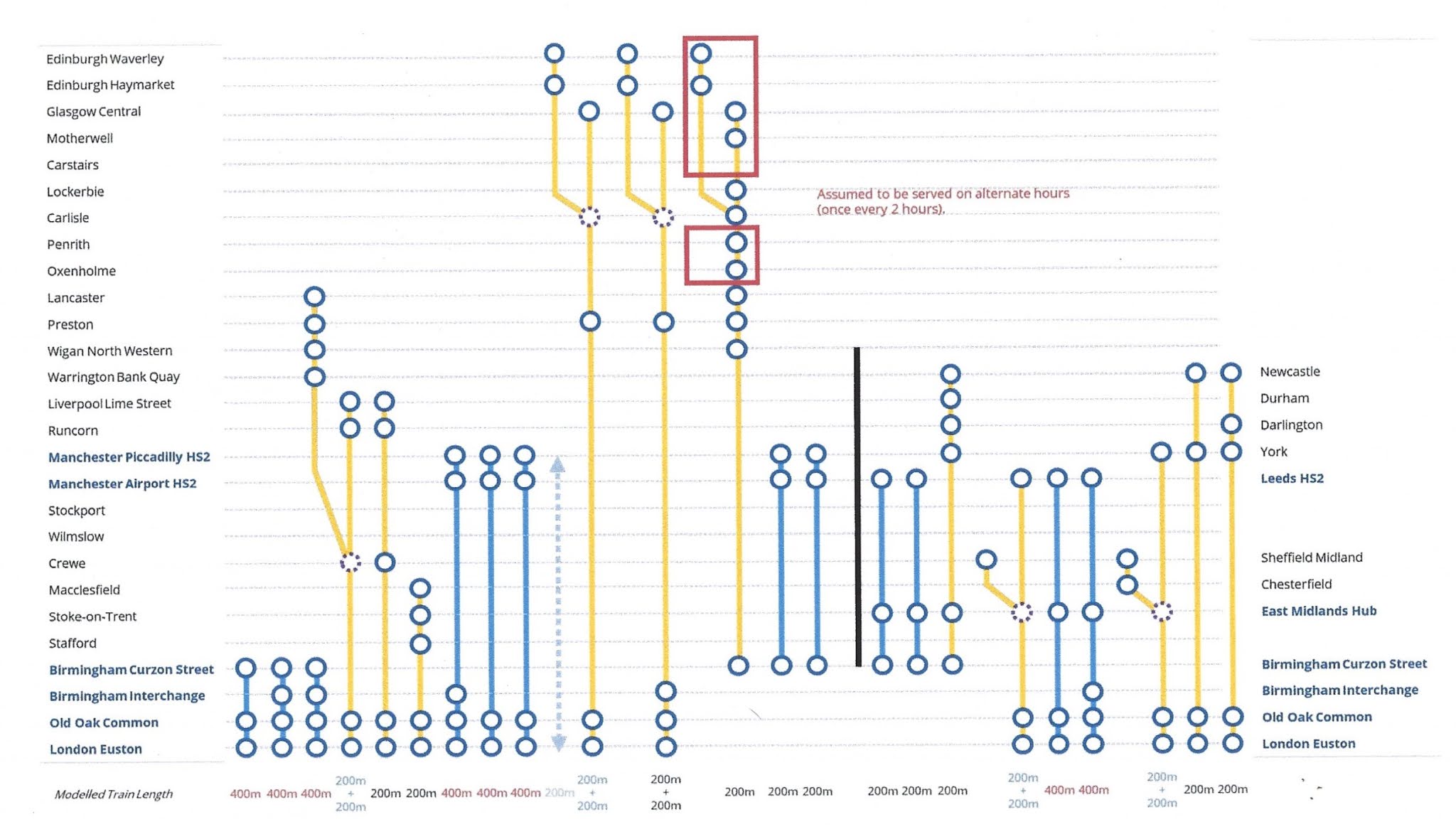
This diagram shows High Speed Two services, as they were originally envisaged before Phase 2 was discontinued.
Note.
- Trains to the left of the vertical black line are Phase 1 and those to the right are Phase 2.
- Full-Size trains are shown in blue.
- Classic-Compatible trains are shown in yellow.
- Blue circles are shown, where trains stop.
- The dotted circles are where trains split and join.
- In the red boxes routes alternate every hour.
- Was Lancaster chosen as it’s close to the new Eden Project Morecambe?
Click on the diagram to enlarge it.
It would appear if High Speed Two sticks to this original pattern of services, then the following trains will go through Wigan North Western station.
- 200 metre single train – London Euston and Lancaster, which stops at Old Oak Common, Crewe, Warrington Bank Quay, Wigan North Western and Preston.
- 400 metre pair of trains – London Euston and Edinburgh Haymarket/Edinburgh Waverley/Glasgow Central, which stops at Old Oak Common, Preston, Carlisle.
- 400 metre pair of trains – London Euston and Edinburgh Haymarket/Edinburgh Waverley/Glasgow Central, which stops at Old Oak Common, Birmingham Interchange, Preston, Carlisle.
- 200 metre single train – Birmingham Curzon Street and Edinburgh Haymarket/Edinburgh Waverley or Motherwell/Glasgow Central, which stops at Wigan North Western, Preston, Lancaster, Carlisle and Lockerby and every two hours at Oxenholme and Penrith.
Note.
- Only single High Speed Two classic-compatible trains, stop in Wigan North Western station and they are only two hundred metres long.
- One train per hour (tph) terminates at Lancaster and a second tph terminates alternatively at Edinburgh Haymarket/Edinburgh Waverley or Glasgow Central.
- Four hundred metre long pairs of trains go through North Western station without stopping.
Currently Wigan North Western has 14 trains per day (tpd) stopping at the station, eleven of which go to Scotland and three to Blackpool.
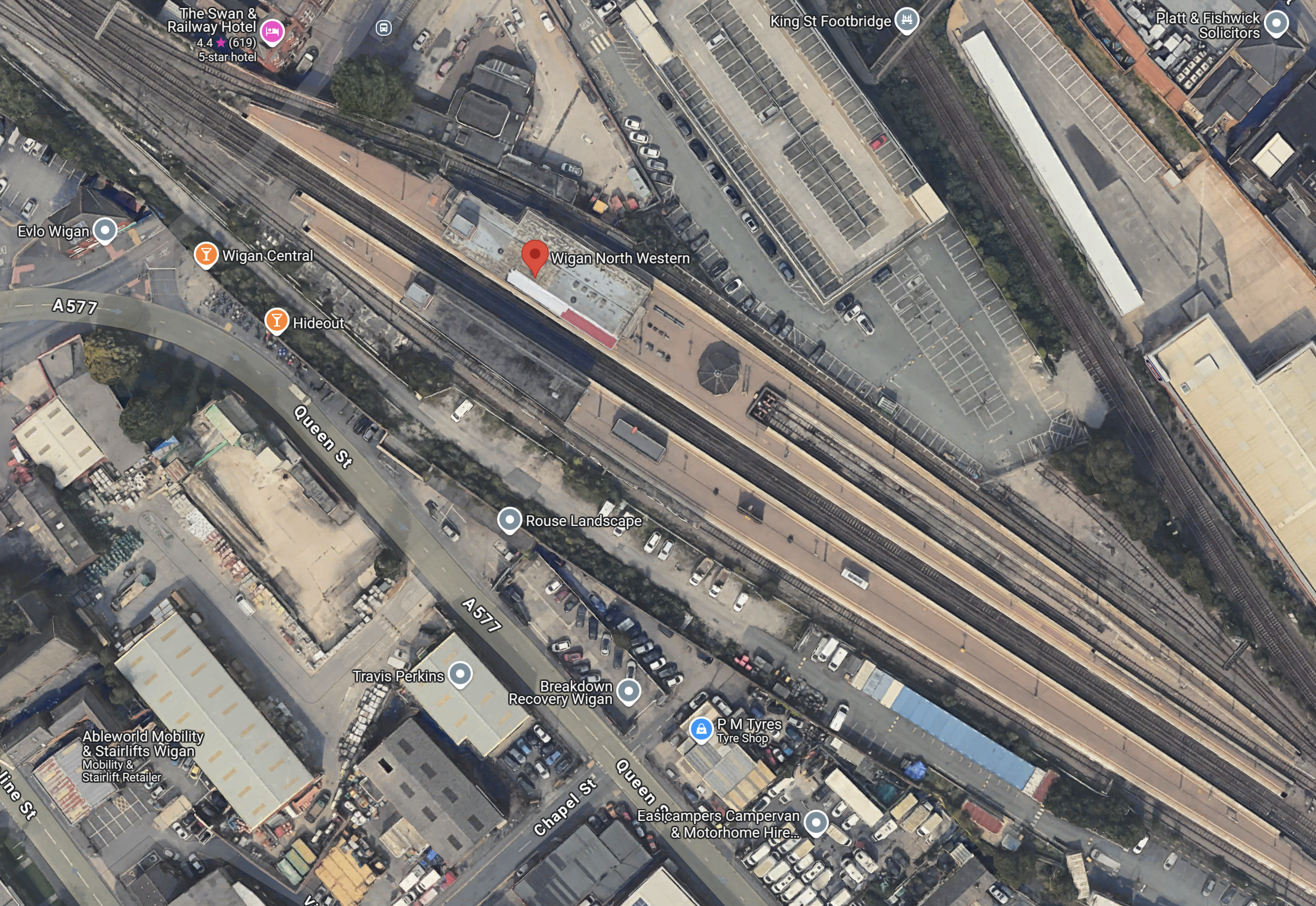
This Google Map shows Wigan North Western station.
Note.
- The two long platforms in the middle of the station, where the Avanti trains stop.
- A long platform on the Southern side of the station used by local services to and from Liverpool and Blackpool.
- Three bay platforms on the Northern side of the station, one of which is unused, that handle local services to Manchester and beyond.
As the 265.3 metre long Class 390 trains can use the central platforms, High Speed Two classic-compatible trains will be able to use these platforms.
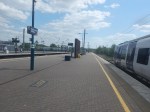
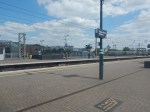
On my brief visit to the station yesterday, I took these pictures.
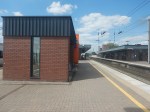
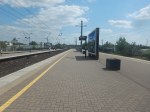
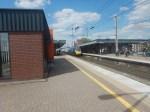
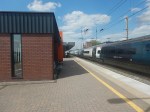
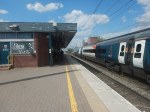
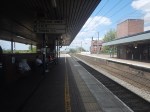
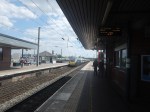
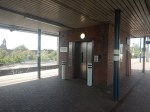
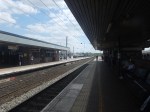
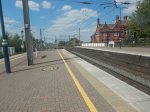
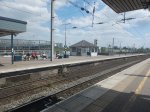
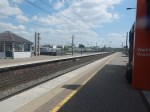
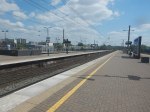
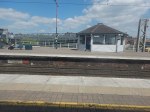
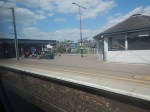
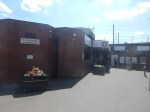

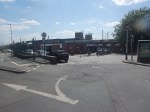
Note.
- All Class 390 trains are longer than High Speed Two classic-compatible trains, so the train in the pictures indicates that the High Speed Two trains will be able to stop at Wigan North Western station.
- The platforms are long and wide.
- The station is well-equipped with lifts, cafes, waiting rooms and some of the best toilets in a station in the North of England.
- Wigan Wallgate station is only a short walk away, with a selection of local services to Blackburn, Headbolt Lane, Manchester, Southport and a large proportion of Lancashire.
- The last two pictures were taken looking at the two stations from halfway.
- The shops between the two stations are a good selection and include a Morrisons Local.
I had been intending to go on to Preston, Lancaster and Morecambe, but a points failure at Preston meant that no trains were running.
Conclusion
The two Wigan stations and the buses that serve them, could be a good interchange for passengers to catch High Speed Two.
I feel that most of the work needed to be done at Wigan North Western to get the station ready for High Speed Two will mainly be cosmetic or technical upgrades like signalling. I can’t see any expensive or disruptive upgrades like platform lengthening being needed.
Beeching Reversal – To Reinstate The Keswick To Penrith Railway
September 10th – This Beeching Reversal project appears to have been rejected.
Thoughts On The Design Of The Route
Consider.
- Keswick and Penrith are around 17.3 miles apart by road.
- The rail distance should be less than 20 miles.
- There could be perhaps six intermediate stations.
- A battery electric train typically has a range of 55-65 miles.
- A quiet battery electric train would be ideal for this route.
I believe that a battery electric train could handle this route.
- Charging would be mainly in Penrith station, using the existing 25 KVAC overhead electrification in Platform 3.
- A charging station would be provided in Keswick station to be safe.
A battery electric train could go between the two stations, recharge the battery and be ready to return in under an hour.
The route would be single track, except for a short double track station in the middle to allow trains to pass.
The route would not be electrified.
All stations could be single track, except for the passing station.
Two trains would be needed to work an hourly service.
Four trains would be needed to work an two trains per hour (tph) service.
Could the track could be designed to these criteria?
- No level crossings.
- Gentle curves and gradients
- 80 mph operating speed.
I suspect modern computer technology, which was not available to the Victorians, would ease the design of an efficient track.
- If a highly-efficient track could be created, it might be possible for a train to do a round trip from Penrith to Keswick, within an hour.
- This would mean that one train could provide the hourly service.
- Charging would only be at Penrith, using existing electrification.
- The passing loop would not be built, but provision would be made to add it later, if the frequency were to be increased.
We could be seeing several of these highly-efficient branch lines run by 100 mph battery-electric trains, that are charged on existing electrified main lines.
The Effect Of High Speed Two
Consider.
- Currently, there is a roughly hourly service in both directions on the West Coast Main Line at Penrith station.
- High Speed Two will only provide an hourly service between Birmingham Curzon Street and Edinburgh or Glasgow via Wigan North Western, Preston, Lancaster and Carlisle.
- Carlisle will have three tph on High Speed Two, between England and Scotland.
- Carlisle will have scenic services to Edinburgh, Glasgow, Leeds and Newcastle.
- Services between Carlisle and Penrith take thirteen minutes.
But most importantly, High Speed Two could bring lots of extra tourists to the area.
So would it be better for the Keswick and Penrith service to terminate at Carlisle?
- Charging would now be on the West Coast Main Line.
- Trains would only make a typical two-minute stop in Penrith station.
This would probably mean that an hourly service could be provided with only one train on the branch at a time.
Conclusion
I feel the economics of this project could be transformed by using battery electric trains on this proposed route and terminating them at Carlisle.
 The Anonymous Widower