Should Tractors be Allowed on Trunk Roads?
I travel the A11, A!4, M11 and A12 quite a lot. One of the hazards is people driving slow-moving farm tractors, on these roads that really were designed for a higher minimum speed.
Yewsterday, a serious accident between a track and trailer and a lorry caused a lot of delays and nearly killed two people.
Isn’t it about time, that slow moving vehicles are banned on trunk roads?
Rolling Roadblock Practice
I have been unable to find any reference to it, but whilst driving down from Scotland at the weekend, I was listening to the traffic reports on BBC Radio 5. These are very reliable although sometimes they miss something.
But on Monday, they announced that in the middle of the evening rush hour, the Police on the M62 were practicing setting up rolling roadblocks.
How irresponsible!
And I wonder how many caught up in this pointless exercise will help the Police in future, when they really need help?
Left and Right, Up and Down
Of all the roads in England, few are as notorious for a good burn-up as the A68, that runs from the Scottish Border to Darlington. It’s up and over a blind summit, then fast left, fast right or possibly both. In places you can see the road stretching several kilometres in the distance.
Yesterday, as I returned from Scotland, the road was pretty empty except for a couple of wagons and a few cars, so it was great fun. And safe too, as if you drive the road properly in good visibility and fairly dry conditions, you have no problems unless you take some of the blind summits too fast.
As I said in the related post on Taking the High Road, it’s the sort of road for which Elans were built!
I have rather an affection for the A68 as several times I drove it on the way to see the first Metier customer, Ferranti, in Edinburgh. In those days though, it wasn’t in an Elan. But there weren’t any speed cameras!
An Unnecessary Sign?
This sign is displayed both ways at the English-Scottish border on the A68.
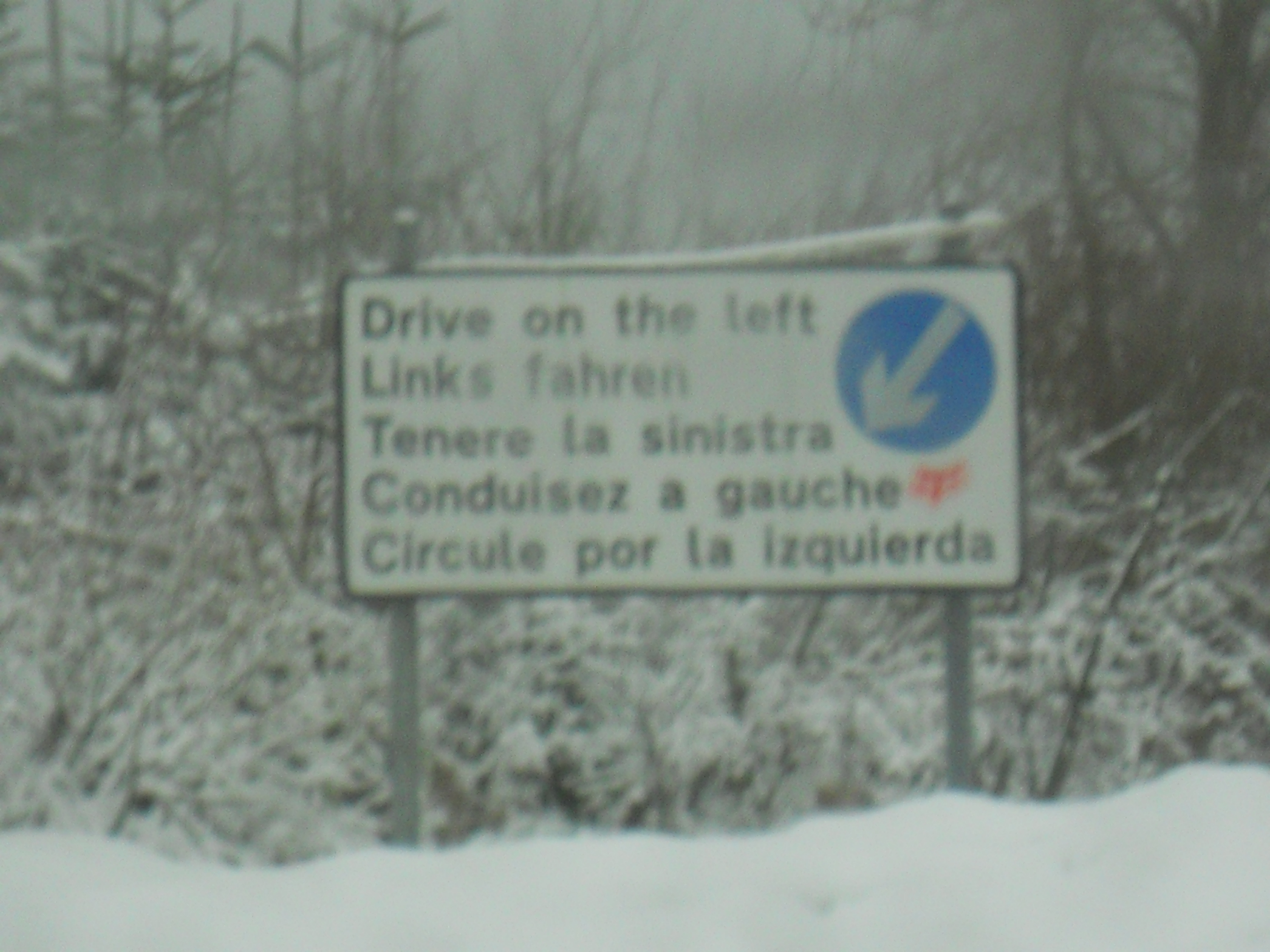
Keep Left - Unnecessary Sign
Do we really need it?
There are three reasons it might be there.
- It could be that it’s an EU regulation if you pass between countries. But then I pass between Belgium, France and Holland regularly and they don’t have the sign.
- Someone had a budget and needed to spent it.
- There was a commission from the sign manufacturers.
But the sign is still unnecessary.
Dartford Crossing
I had to travel to Dover today and took some photographs of the two major bridges en route. Here are some pictures taken at the Dartford Crossing. Those I took on the Medway Viaducts weren’t worth publishing.
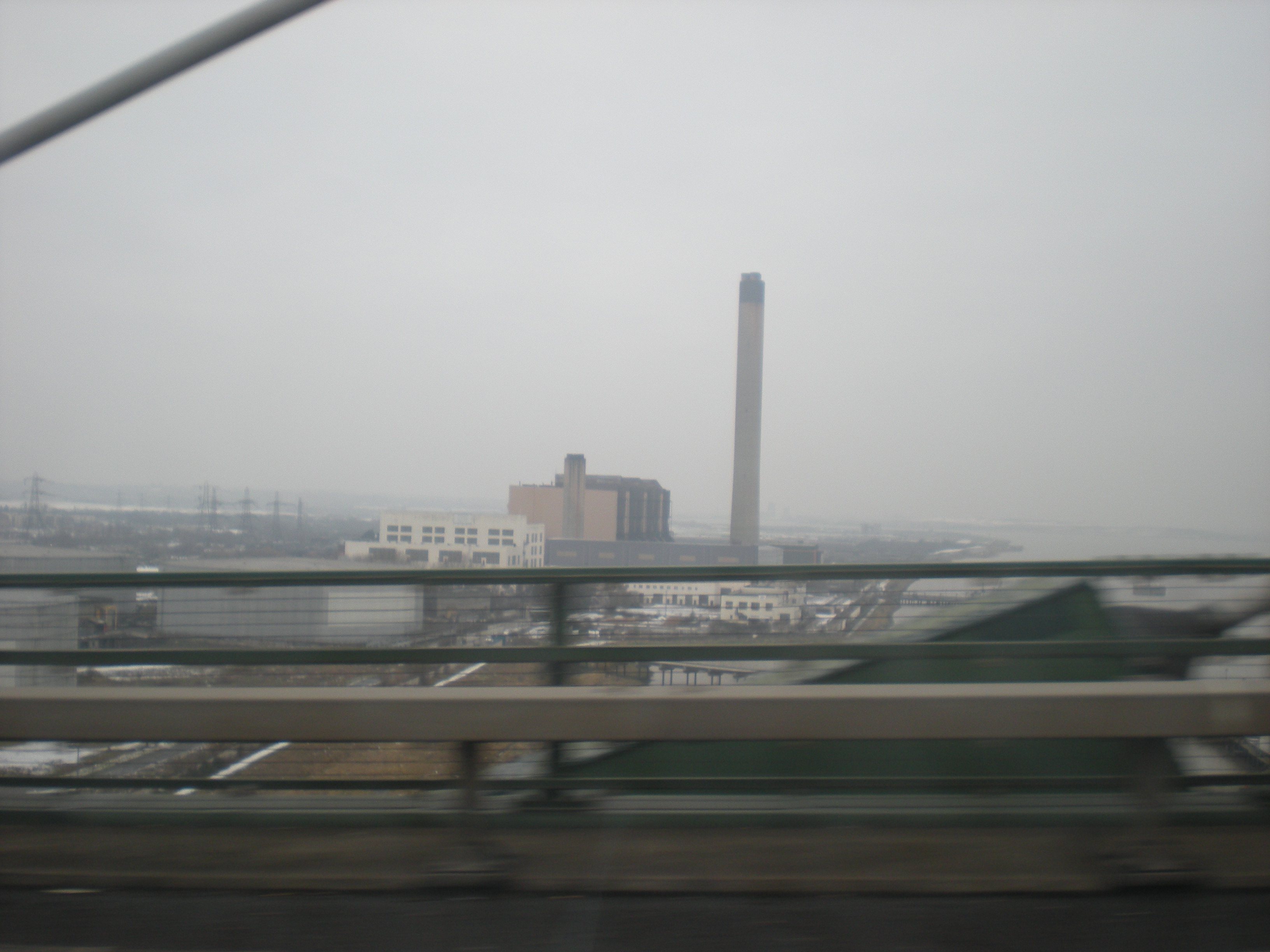
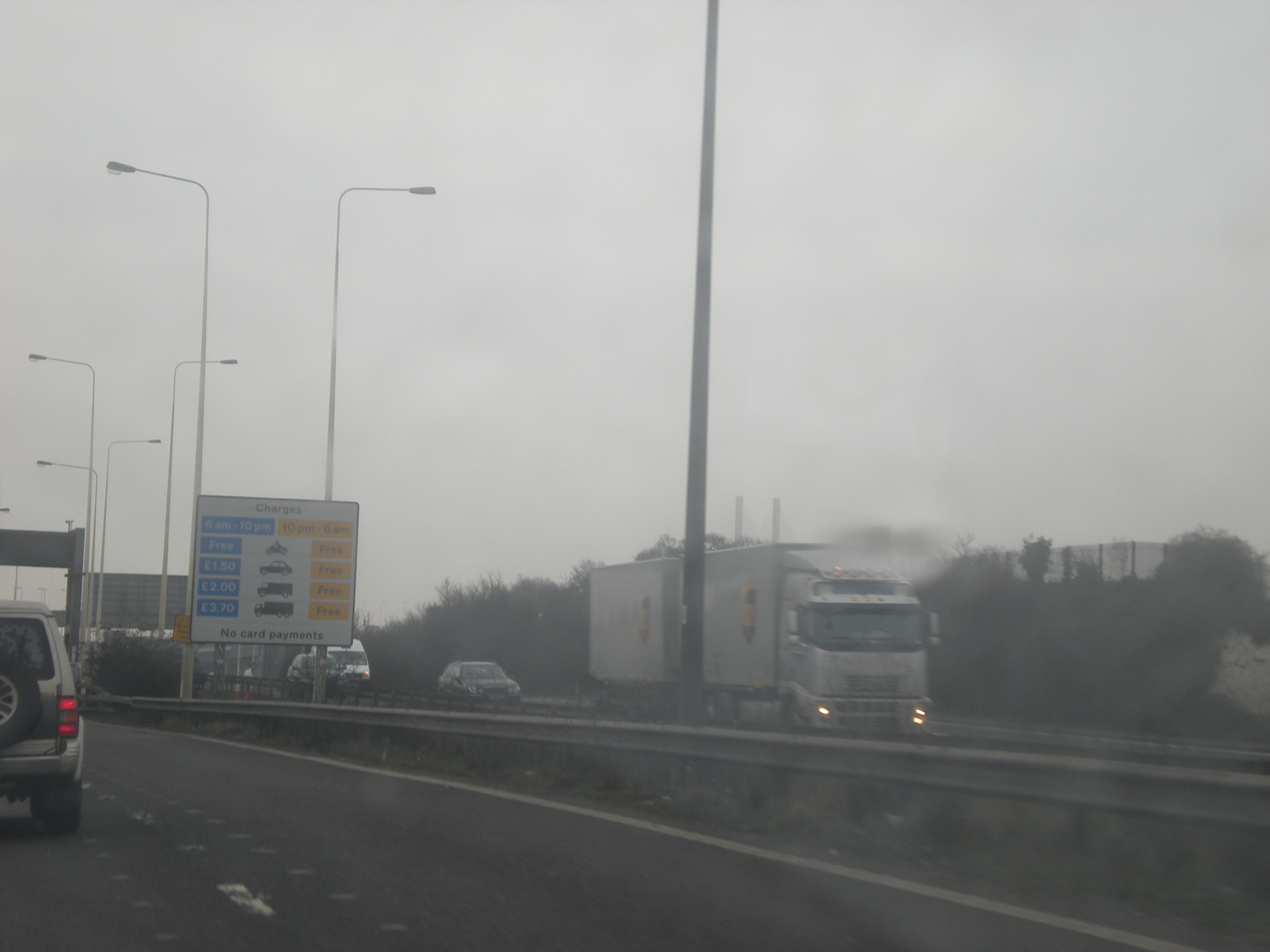
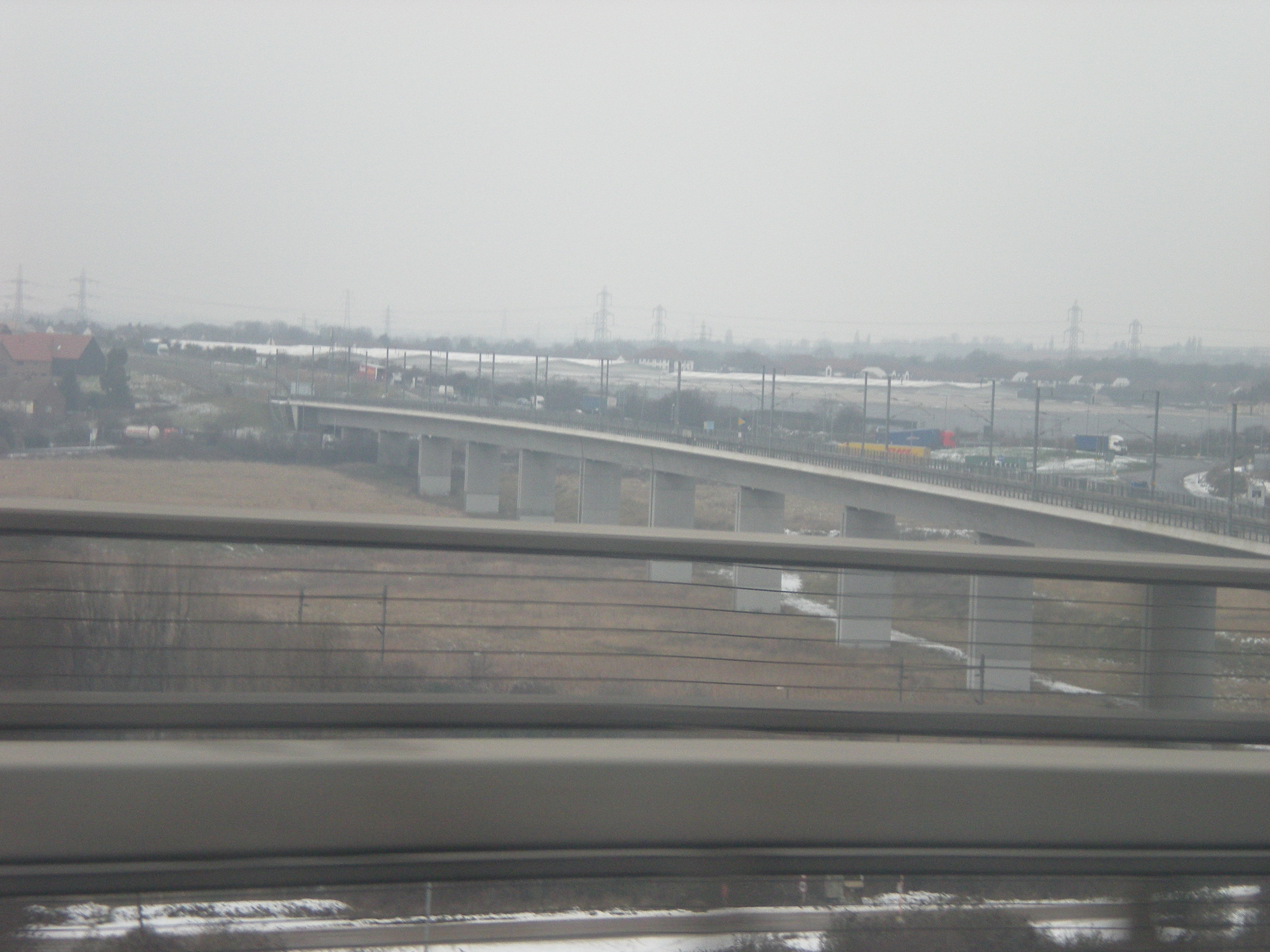
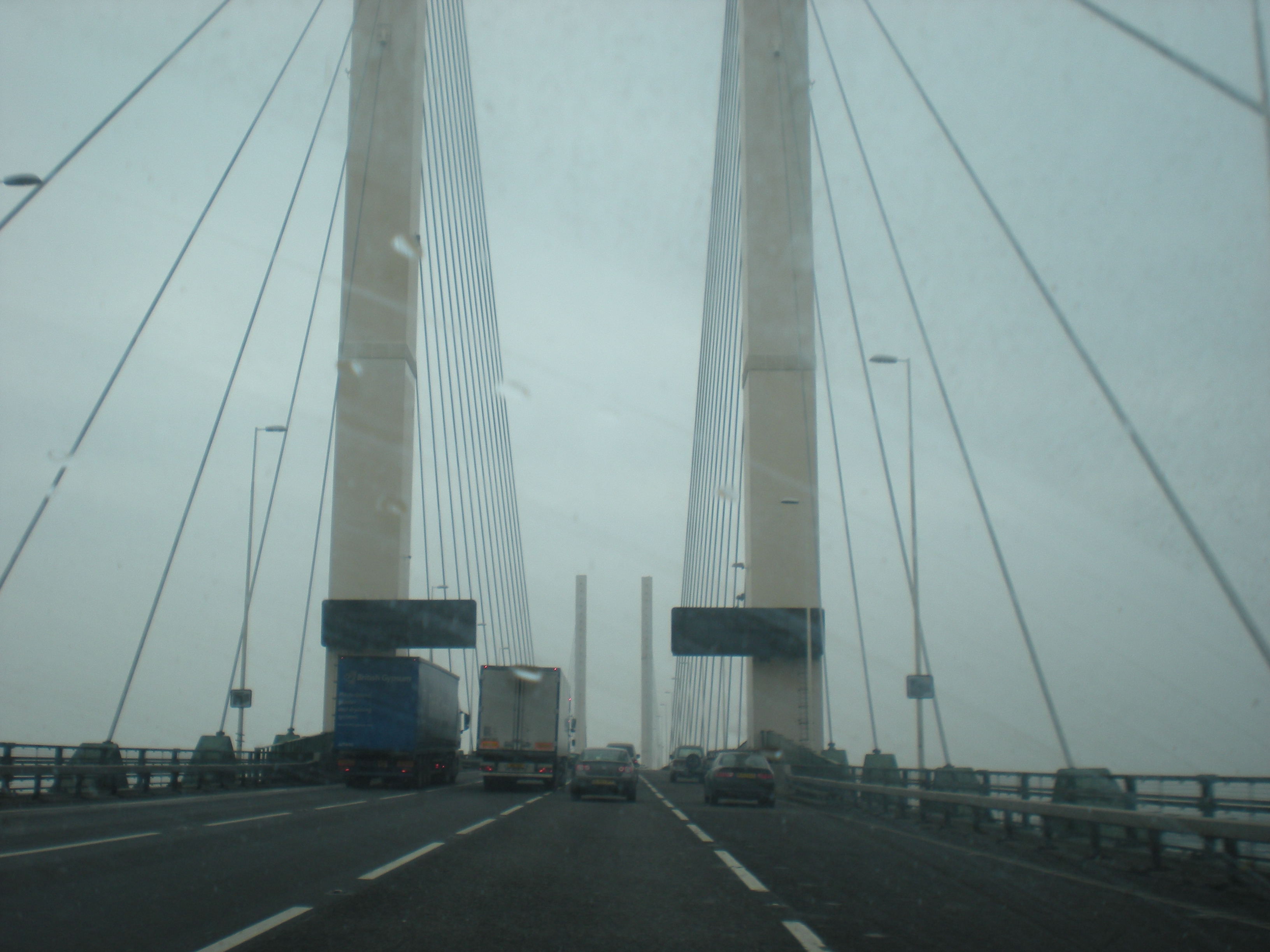
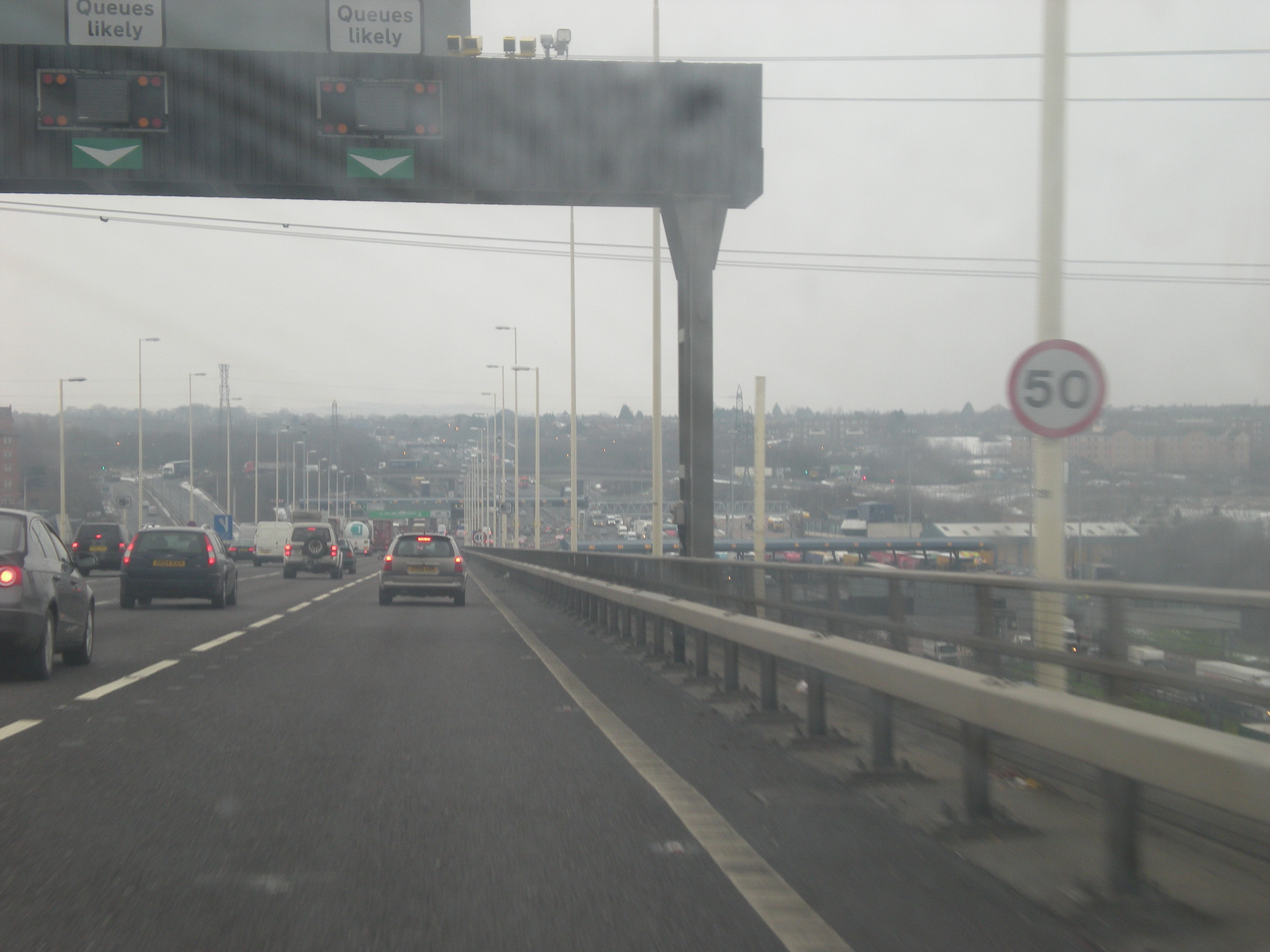
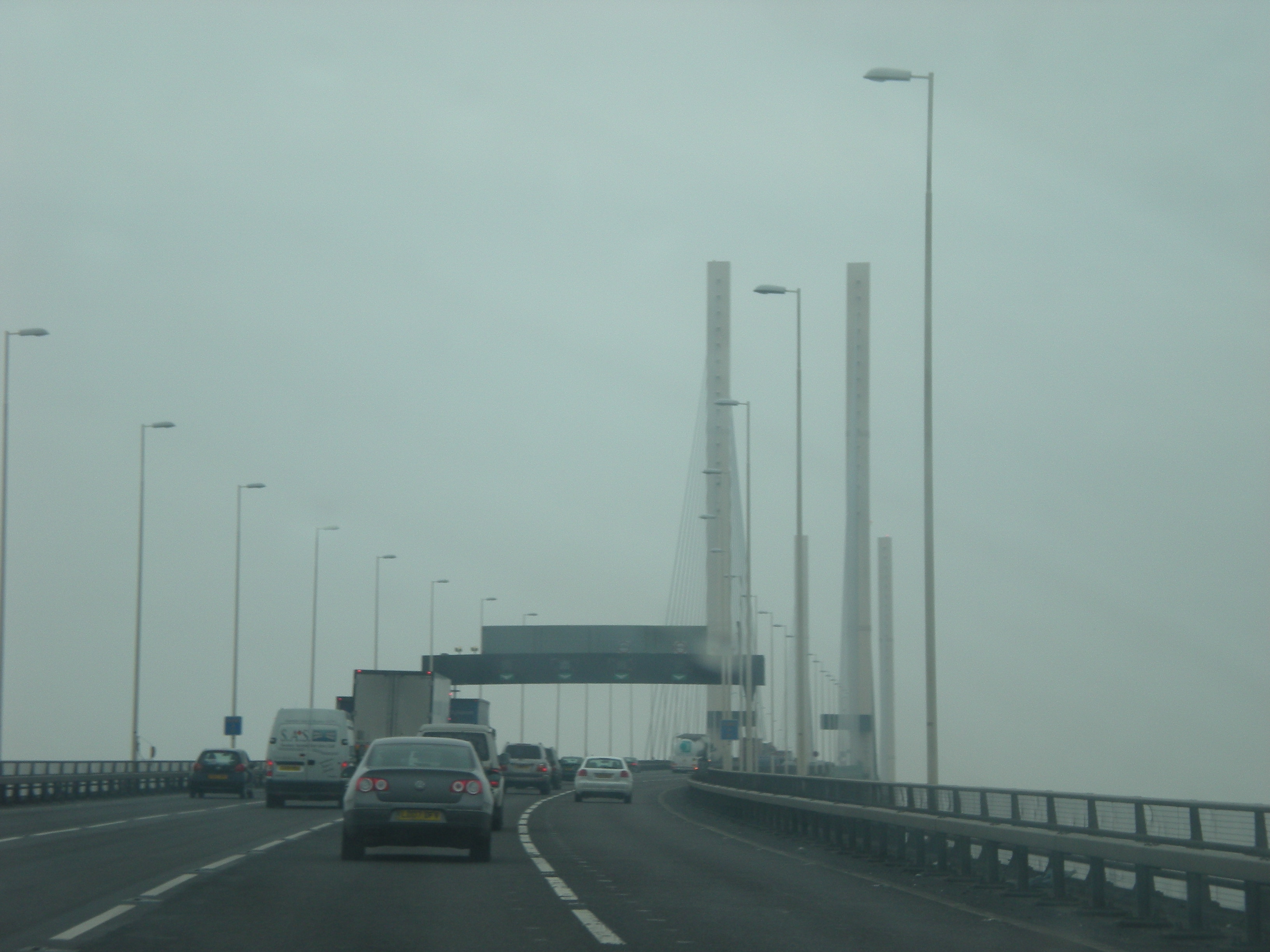
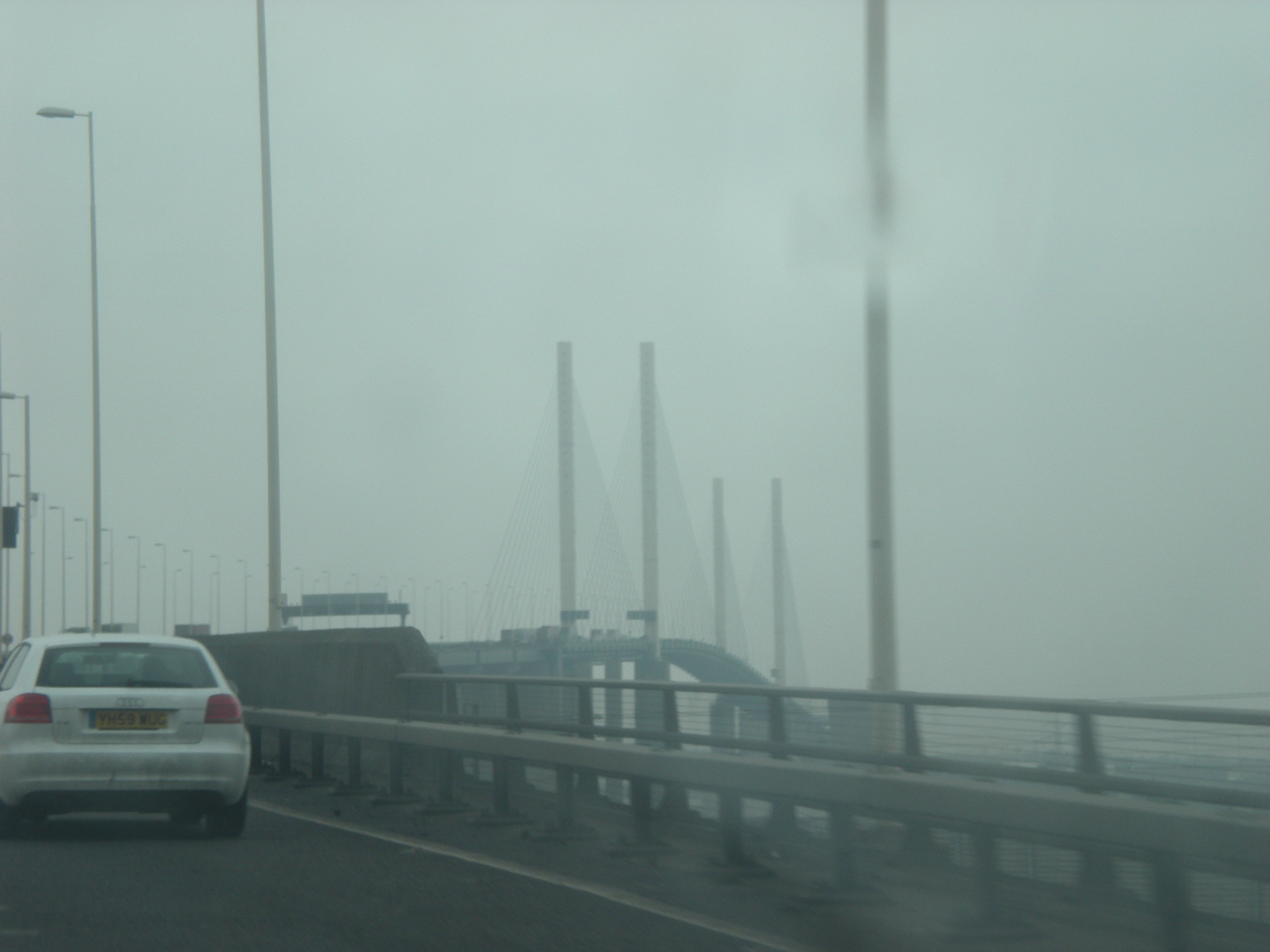
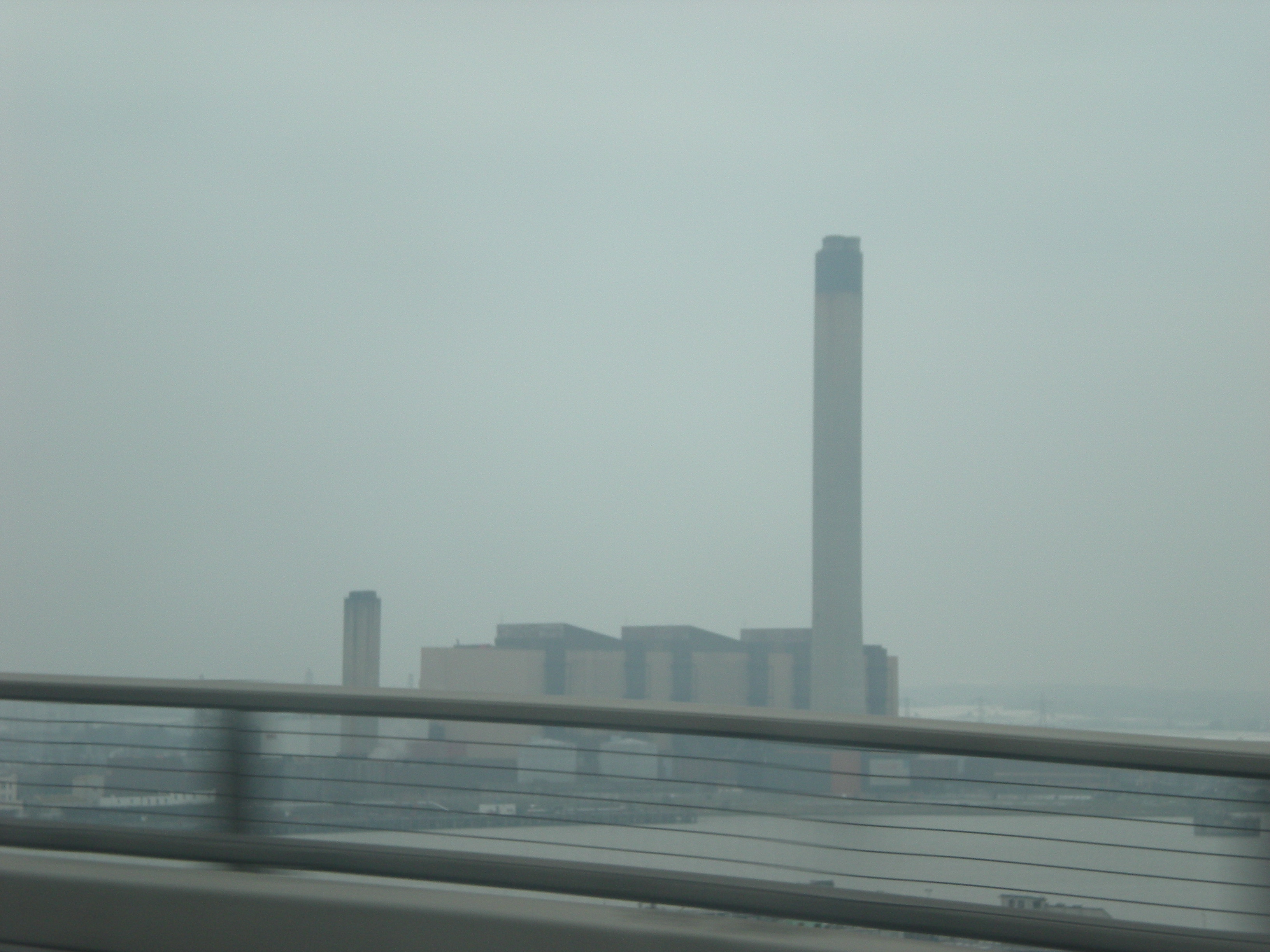
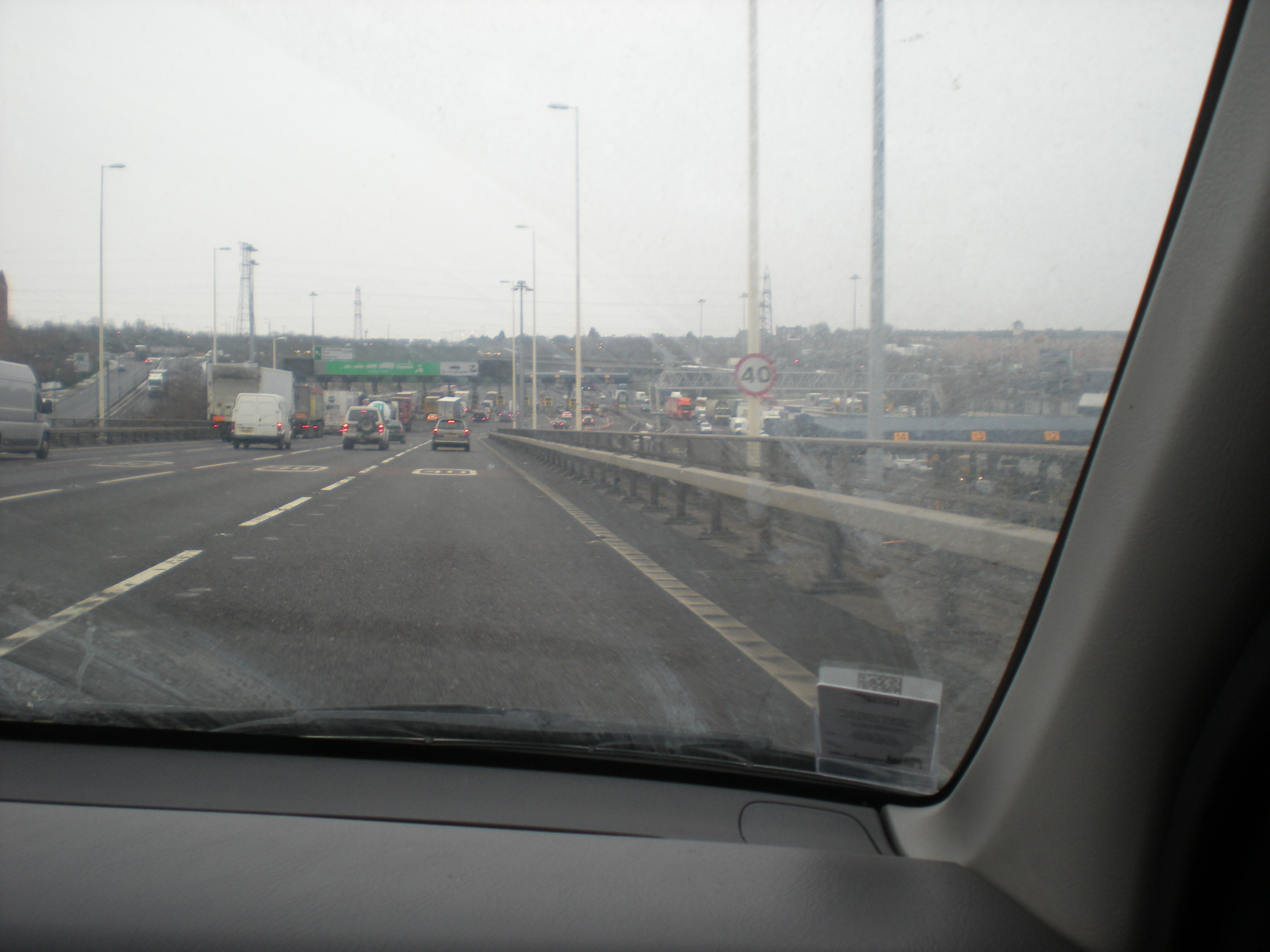
Note the Littlebrook power station. It is oil-fired and was opened in 1981. Perhaps, it should be gone now! It will be in its present form by 2015. But at the moment it is one of the few power stations with a black-start capability. That means it can be started without any external electricity supply.
If anybody thinks that I was taking these photographs whilst driving, then think again.
Does Anybody Get Caught by Average Speed Cameras?
This question was asked on Saturday, by someone who had never heard of anybody been fined.
Google found this interesting discussion on the BBC’s web site.
So perhaps they do and perhaps they don’t!
But!
The odd thing about average speed cameras is that they actually do get more traffic down a particular piece of road, as the road’s capacity at 50 is greater than it is at 70. Especially, when they are at a constant 50 and not jumping up and down between 60 and 80.
So perhaps we need more average speed cameras!
My Views on Abuse Reporting
In the previous post, I said that commercial pressures and the fact that most of the social networking and other companies are outside the jurisdiction of the UK and the EU, will make it very difficult to enforce any proper reporting of abuse.
But we can do something.
Take Sunday morning. I was driving out of Cambridge, when a guy in a very large 4×4 pulled out on me. He just didn’t look and if there had been anything coming the other way, I would had the choice of hitting his vehicle side-on or the other vehicle head-on. Luckily, there wasn’t any traffic and I passed easily.
I did shake my head at him and he took offence. So as I drove out of the city in a queue of traffic at the legal limit, he was about a couple of metres from my back bumper. This behaviour continued on the A14, until I was able to let him go.
We’ve all had things like this happen and they are just too trivial to report. For me life is too short and I have many more important things to do, than waiting in a Police Station to fill in endless forms, that will result in no action at all.
Now, this guy’s behaviour could have been caused by many things. He may have just got out of bed the wrong side, had a row with his girl-friend or more seriously he may have been severely hung over from the night before. One off’s are excusable, but supposing he’s a bad driver all the time and is always driving like this. If it’s the latter he needs to be informed that his behaviour is not acceptable.
I should say that I have a vested interest at this point. A few years before my wife died, she had breast cancer. The cancer appeared at exactly the same spot, as where she had got a bruise from a car air-bag in an accident. (Search various forums and you’ll find other women, who have got breast cancer by say being hit by a ball, whilst playing tennis or squash.) The cause of the accident had been a foreign truck driver. A few months later we believe that the same driver killed an innocent motorist because he was driving outside his hours.
How many near misses had the truck driver had in the UK between the accident with my wife and the killing of the other driver?
What is needed is a site, where driving misbehaviour can be reported? Not a site run by say the transport industry, which only reports compliments, but one run by the Police.
Obviously, the Police would not be able to follow-up every report, but software exists to analyse these reports to identify the worst offenders. (I’ve wrote systems like this so I know!) So if say a vehicle is always cutting up other drivers, then it can be identified. Probably in most cases a simple letter to the keeper of the vehicle would suffice.
But, one thing that has to be born in mind is the fact that often bad drivers, find it impossible to get any insurance and so how many of those reported would be drivers who shouldn’t be on the road for one reason or another. You may think that this a bad link, but the Police have shown that if they stop a driver without valid documents, there is a fifty percent chance a non-motoring offence is being committed.
The system would have to have safeguards, but just as it would identify bad and irresponsible drivers, it would also identify the vindictive, who perhaps constantly report someone for parking outside their house, when they have a perfect right to do so. I’ve heard policemen say that these are sometimes the worst disputes between neighbours.
Properly used such a database would be an asset to everyone, but if it was setup badly, it could be used as a means of abuse.
Over the last few days, we’ve had reports of cyberbullying and problems with social networking sights.
Let’s take the cyberbullying first and I’ll add to that all of the fraudulent scam e-mails that you get trying to extract money from your bank account. The problems may be different, but the solutions are the same.
The government should have a short text message number and a simple e-mail address, where any unwanted message can be sent. These could then be analysed and real abusers located. With say mobile phones, the abuser would just be told to desist and after a second strike their number would be cancelled. The same could be done with e-mail messages too, although here it would be more difficult to cancel addresses as many are outside the jurisdiction. But many of these e-mail scams use UK phone numbers, which can of course be cancelled immediately.
Some would argue that this might be a bit draconian, but I suspect, it would most abusers would quickly take the hind and desist. You won’t stop the foreign crooks and their scams, but hopefully the publicity would mean that there work was less productive.
There is always the point about who pays.
In fact, if done properly, these sort of systems would be self-financing, as there would be reductions in motoring offences, cyberbullying and e-mail fraud.
Unfortunately, Pete’s budget would have to be raided to pay for Paul’s. Governments never do that well!
Happy Birthday M1
Today marks the fiftieth birthday of the M1 motorway.
The first time I went on the motorway must have been soon after the road had opened in my father’s MG Magnette. This car would have been the equivalent to something like an Audi A4 these days. But it only had a 1.5 litre engine with twin SU carburetors.
I remember the road fondly as I drove or hitched from London to Liverpool in the mid-1960s, whilst I was at university. In one instance, I drove the whole way in my Morris Minor with a big-end gone.
Now I rarely use the motorway, as if I’m going north, it’s easier to use the A1. And when I go west, all I do is cross it.
Higher Eco-Taxes
I have always been an advocate of high environmental taxes on energy. I first wrote about this some years ago in a previous blog.
The main reason is that if the taxes are basically neutral and are balanced by a reduction in Income Tax, this measure probably would take a large number of people out of the tax system completely. This would give a greater incentive for people to work hard and cut large numbers of dead wood out of the tax collection system.
Obviously, if energy was expensive you would spend your extra money to save it, by putting insulation and energy-efficient heating systems into your house and getting a more efficient car. People would also work more from home and ideas would be developed to facilitate this. Perhaps pubs and post offices could become local business centres in both towns and the countryside.
The higher the taxes, the more innovative people will become.
Perhaps surprisingly, even if the measures were tax neutral, you would raise more money, because a lot of the worst gas-guzzlers seem to be owned by those with no visible means of support. i.e. higher eco-taxes would be a tax on the black economy.
So I was pleased to see the Green Fiscal Commission thinking my way.
They make one mistake thought, in that they feel there should be a high tax on new cars. That is wrong, as we want people to buy new cars that are fuel-efficient.
I think too, that we should encourage people to have a range of vehicles for different circumstances. For instance, you might use a very fuel-efficient runabout to go to work, but at weekends, you may use say a five or six seater to take your family and dogs to the coast. I would also replace Vehicle Excise Duty, with a small Registration Tax, that would be enforced very rigidly. You’d only pay the tax, when you bought the vehicle.
A Sign Gone Wrong
Some wag has altered this sign on the Newmarket-Cambridge road.
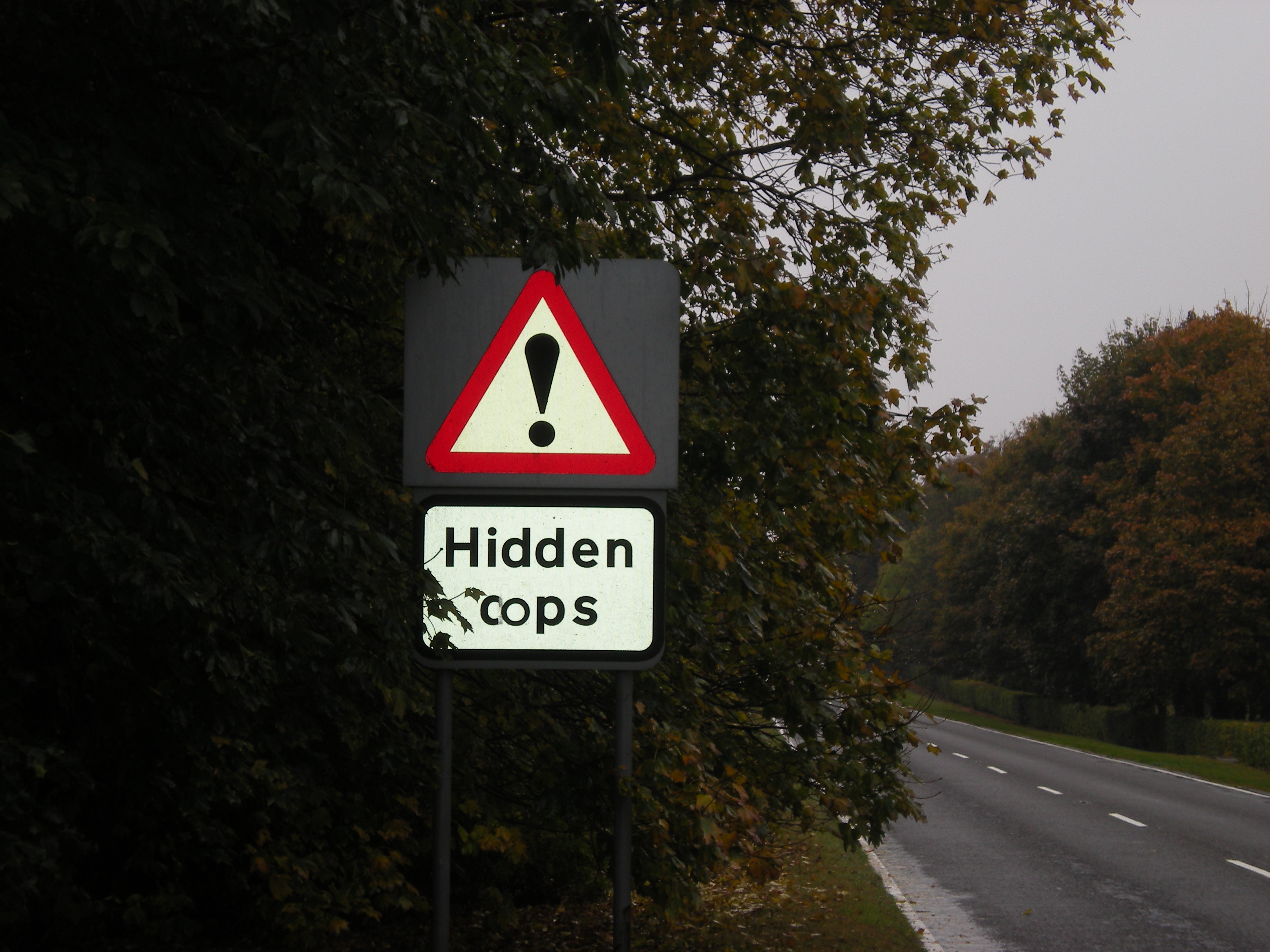
Altered Road Sign
It should say “Hidden Dips”, or at least the one the other way does.
 The Anonymous Widower