Nick Griffin on the Holocaust
He said last night that he couldn’t understand why he had denied the Holocaust in the past. He also said that EU law prevented him from explaining.
I need nobody like him to educate me about the Holocaust. I’ve read extensively and visited places such as Minsk and Prague, where only an idiot would deny what happened.
For a man who actually went to Cambridge University, he does seem rather stupid.
But then nearly all fascists and dictators are. The trouble is that their narrow philosophies don’t work, as to have a successful economy everybody needs to be brought into the thick of things to maximise the means of production and invention.
It could be argued that one of the reasons we succeeded in the Second World War, was that we mobilised everybody to build the planes, vehicles and other equipment we needed. All political parties were part of the Government.
So in fact Churchill, who Griffin claimed would sit happily in the BNP, was very much a man for all the talents.
The Kunstzaal Kleizkamp Raid
In the post on the Mosquito, I mentioned the raid on the Kunstzaal Kleizkamp Art Gallery in the Hague, which was being used to store the Dutch population records.
Whilst in Holland, I had some time to myself in The Hague so I tried to find out where it was. Using Google from my laptop, I found this Dutch article in Wikipedia. The reason I’d not been able to find this before was that the article is only in Dutch and Kleizkamp is spelt differently in that language, as Kleykamp. There does not appear to be any trace left of the gallery opposite the Peace Palace, which is one of The Hague’s most famous buildings.
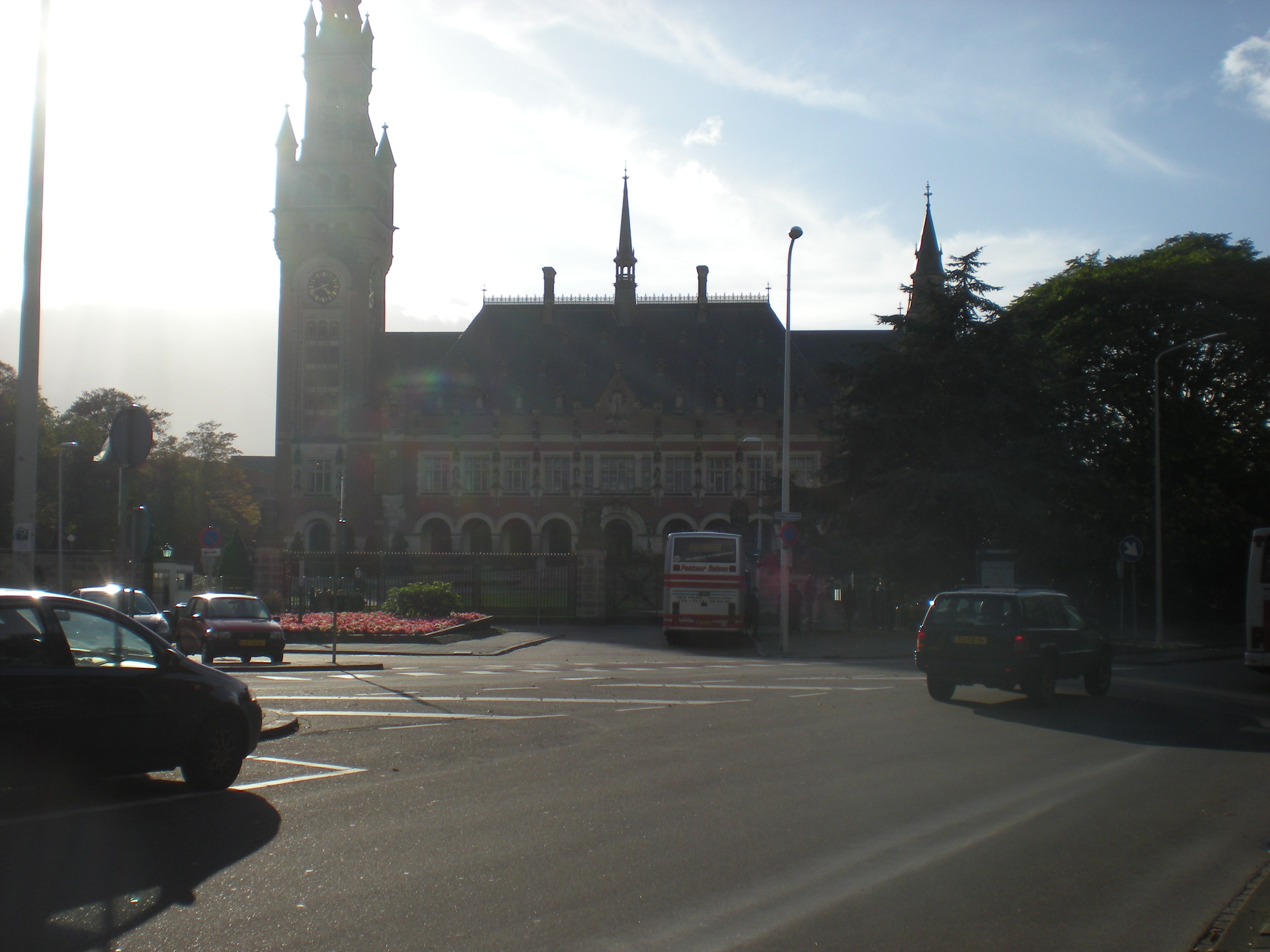
The Peace Palace, The Hague
The article says that the gallery was a white house opposite the palace.
All that is there now is an anonymous office block.
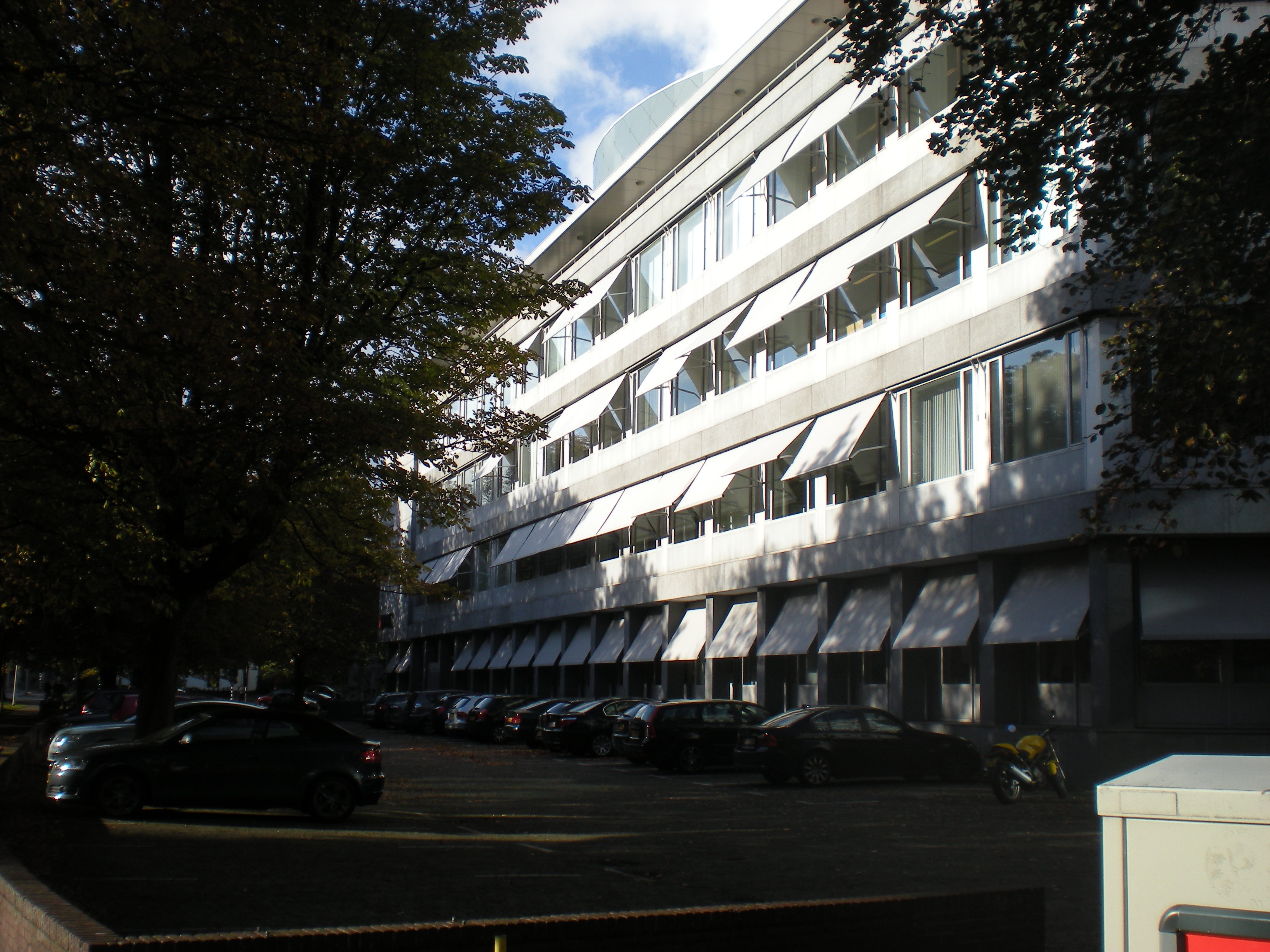
NICB Bank, The Hague
If you translate the Dutch articles, there was a certain amount of controversy about the raid. Some said it should be done earlier and around sixty, mainly women, died when the building was bombed. But it would appear that the RAF didn’t have the capability to do the raid before and that it was preferred to do the raid on a working day, when the filing cabinets were open.
Man’s Inhumanity to Man
I have just watched the story of the Blitzing of Coventry on BBC2. Looking back from nearly seventy years it is possible to say that good triumphed over evil and that it just stiffened our resolve to stand up to the Nazis.
I’ve stood twice in the grounds of the bombed cathedral and it is a place with a quiet significance that moves me deeply. And I’m not a religious person.
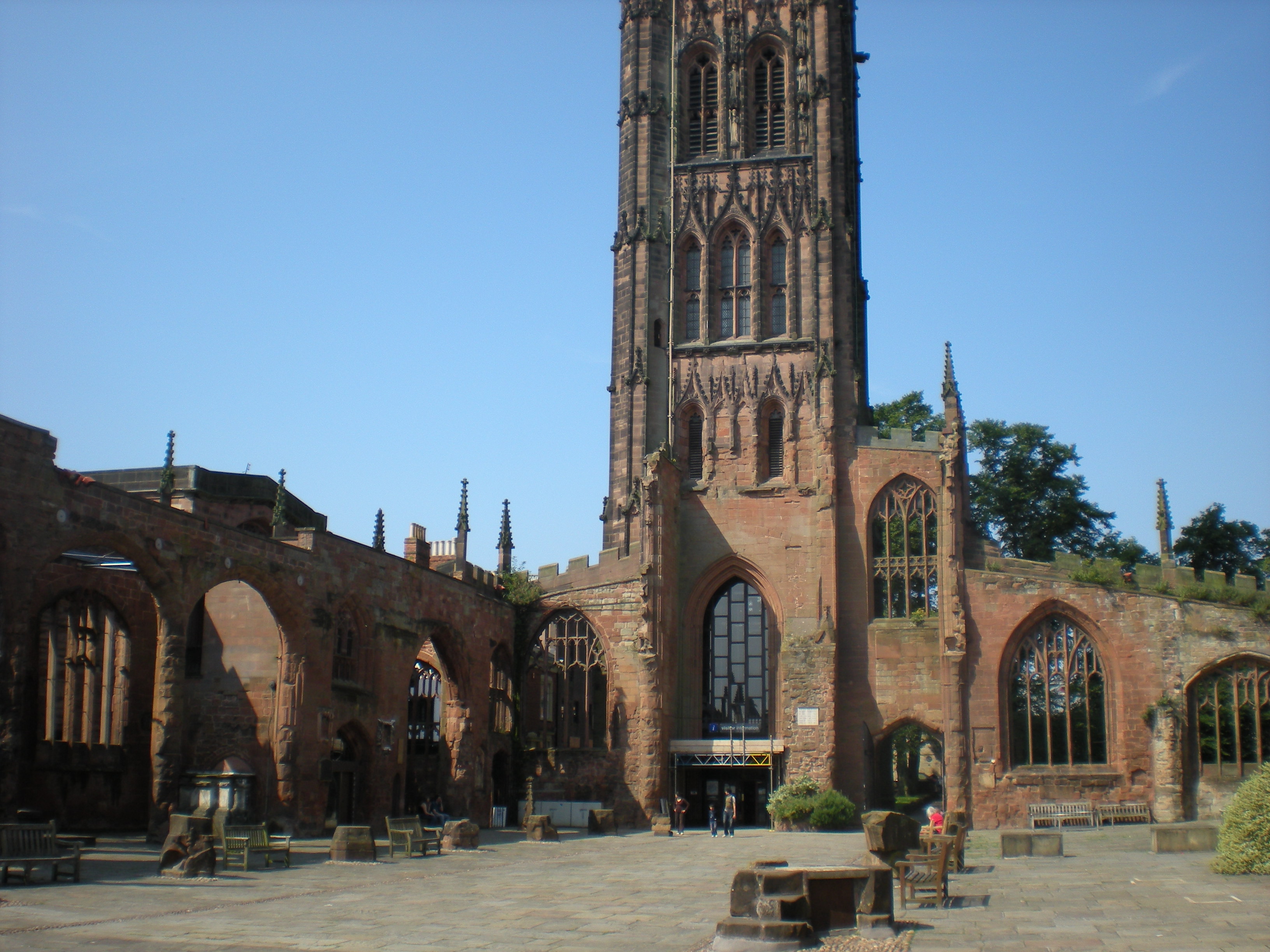
Coventry Cathedral
Compared to the later bombing of Hamburg and Dresden, the bombing of Coventry was not as severe. In the 1960s, I met a woman who had survived the inferno of Hamburg, and she told me that just as it did for those in Coventry, it just made them angry and wanting to fight more.
So was it worth it?
I would argue that it wasn’t on a strategic level, as to bomb important targets accurately has been shown to do more.
But we never learn!
We just tried to obliterate Iraq, when perhaps a more subtle, but more targeted and demoralising approach might have been better. In Iraq too, we virtually forgot all of the black propaganda methods that we were so good at in the Second World War. Surely with all the technology we now have from satellites to Hollywood, it could find a place to get messages across and cause chaos.
But then big explosions play better at home.
The Winton Train at Boreham
This short video shows the passage of the Winton Train through Boreham in Essex.
I’m afraid that the quality isn’t as good as I’d have liked. Partly this was because of the wind and the camera shake that it induced. And of course I can’t really ask the train to go back again so I could take a second shot.
I must admit that filming it and creating the short film clip did bring a tear to my eye. I have been through a lot in the last couple of years. I think now I understand what went on in Europe in the Second World War so much better.
Seventy Years Ago Today
It was seventy years ago today, when the Second World War was declared when Britain and France decided that enough was enough with the Nazis. The radio was lively this morning with some fascinating stories on Nicky Campbell’s phone-in on Radio 5. It is very good that some of these stories have now been preserved for our descendants.
Do I have any tales from my parents, family and friends?
Surprisingly few, as my parents didn’t really talk about it.
There was my great aunt Alice, who was a psychic. It was claimed that she knew where the bombs would fall, and a couple of times she turned up on friends or relatives and then found she had been bombed herself. Whether it was true or, I haven’t a clue.
My father wasn’t in the Armed Forces and I really don’t know what he did. He did tell tales about how he helped to organise factories so that they would be ready if the Germans landed and that he was an advisor in the Ministry of Aircraft Production. I think too, that he had been briefed by Churchill. But not much is known or remembered. But then he ended up in the latter part of the war working as a toolmaker in a factory in Cheltenham.
So perhaps he had annoyed someone.
Or it may have been he decided he needed a change after the break-up of his first marriage.
My family was also lucky, in that I don’t know of anyone on either side, who was killed, injured or spent some time in a prisoner of war camp.
It was just all rather boring really.
But as time goes on and I get older, I am drawn towards my ancestry, Jewish on my father’s side, albeit a long way back and Huguenot on my mother’s.
Today, I’ve been thinking of all those poor people who died in the Second World War and especially those German or East European Jewish relatives of mine who didn’t survive.
The Winton Train
The Winton Train has now reached Cologne and today it travels to the Hook of Holland.
The last leg tomorrow will take place as follows according to the article on Wikipedia.
On this final day the train is scheduled to depart Harwich International station at 09:12, and travelling via Colchester and Chelmsford, is scheduled to arrive at Liverpool Street station at 10:37 on Platform 10. Sir Nicholas, now 100 years old, was due to meet the train at Liverpool Street as guest of honour.
I shall find myself a sensible place, probably at Chelmsford, to take some pictures of this historic event.
Sir Nicholas Winton and the Kindertransport
Sir Nicholas is 100 and over seventy years ago, he organised the rescue of nearly seven hundred children from under the noses of the Nazis in Czechoslovakia. He was so modest about his role, that it didn’t come to light until 1988.
The BBC’s Robert Hall will be following the route of the Kindertransport over the next few days on Breakfast Time.
The Destroyed and the New
I went to the football at Coventry today and as I was a bit early, I went into the city centre to see the two cathedrals; the destroyed mediaeval one and the new building created in the late 1950s to replace it.
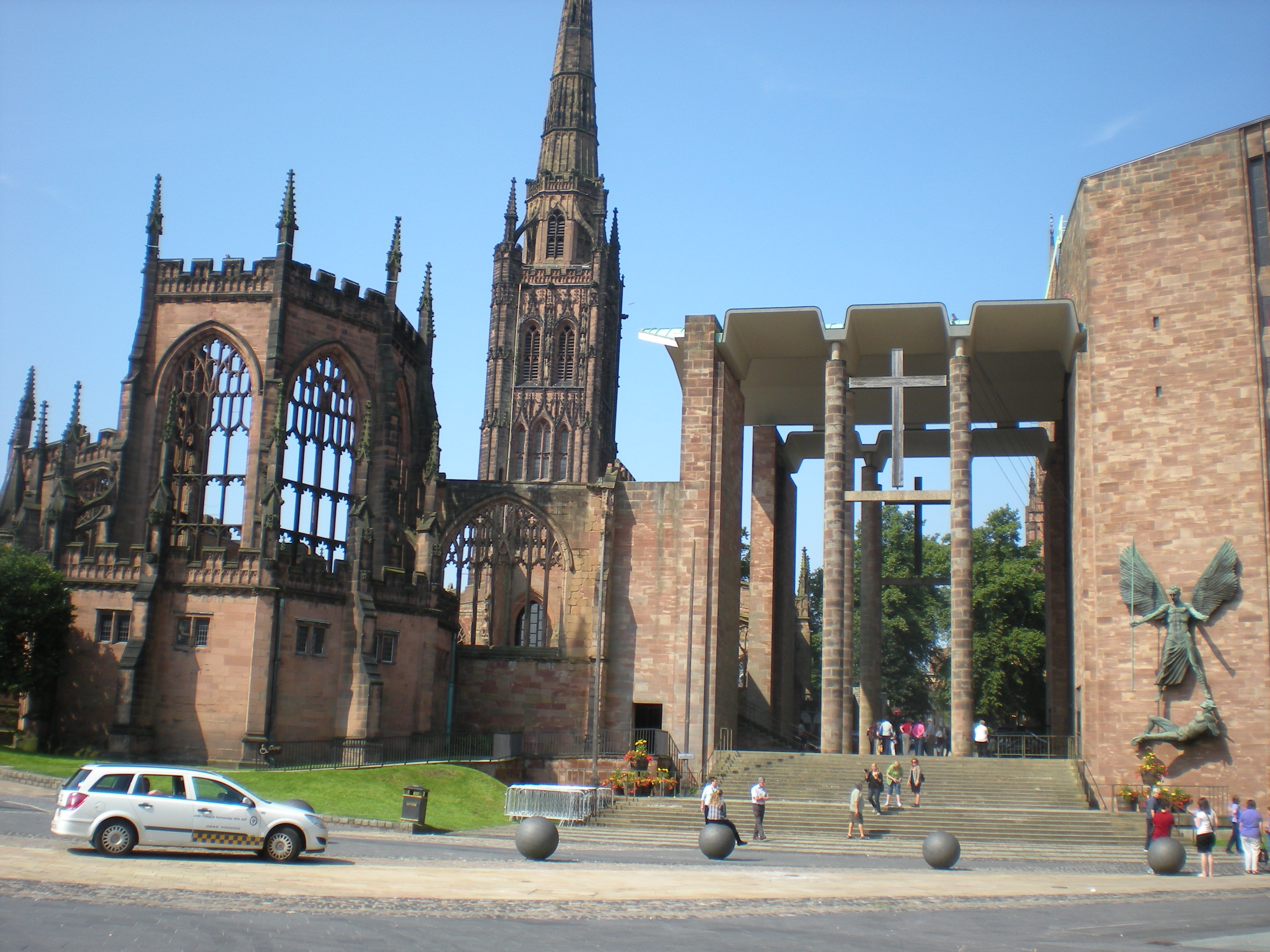
The Two Cathedrals
The new one was designed by Basil Spence and is unusual in that it is aligned north and south, so that it is at right-angles to the old cathedral.
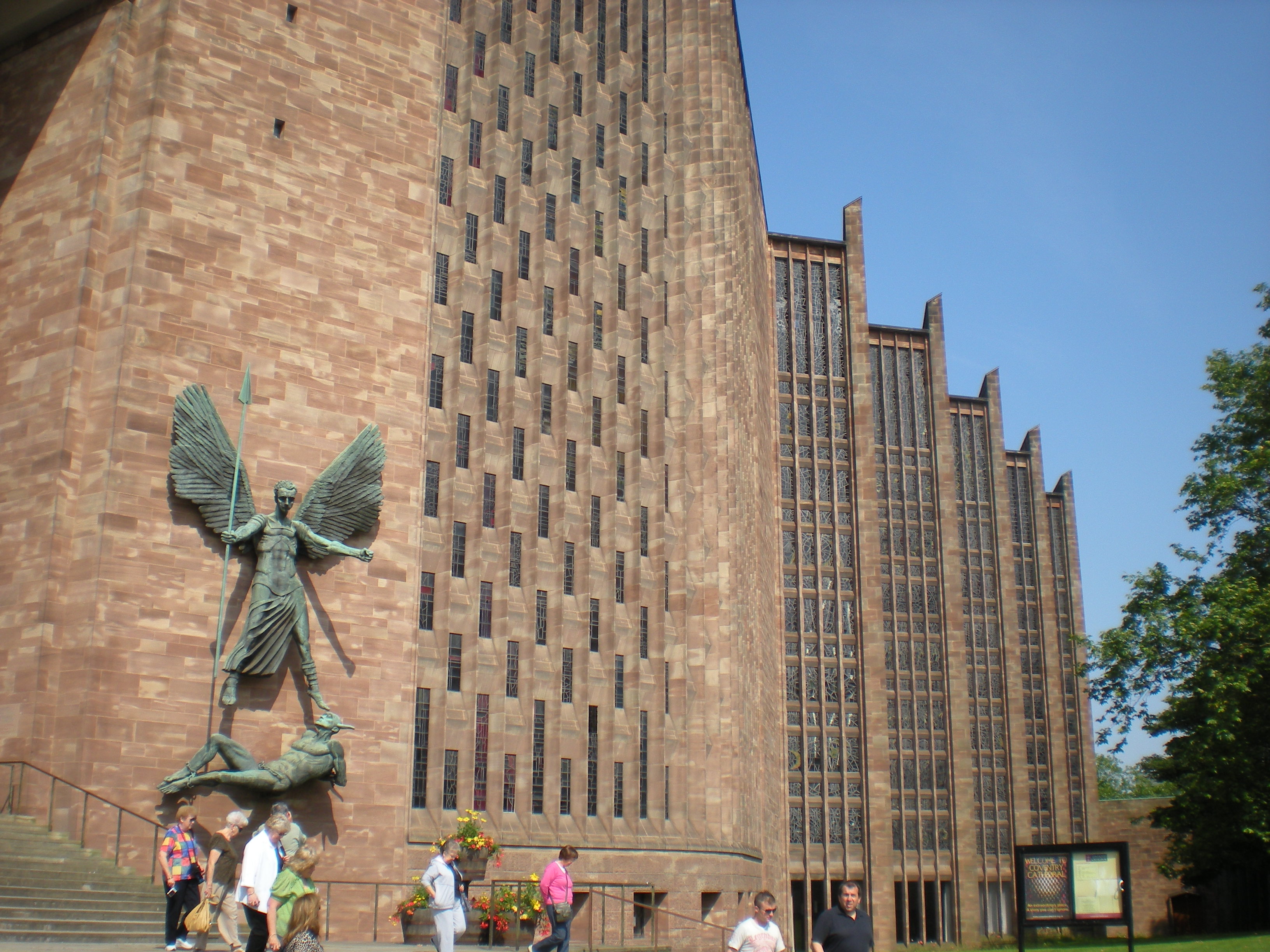
The New Coventry Cathedral
The sculpture is by Sir Jacob Epstein and portrays St. Michael’s victory over the devil.
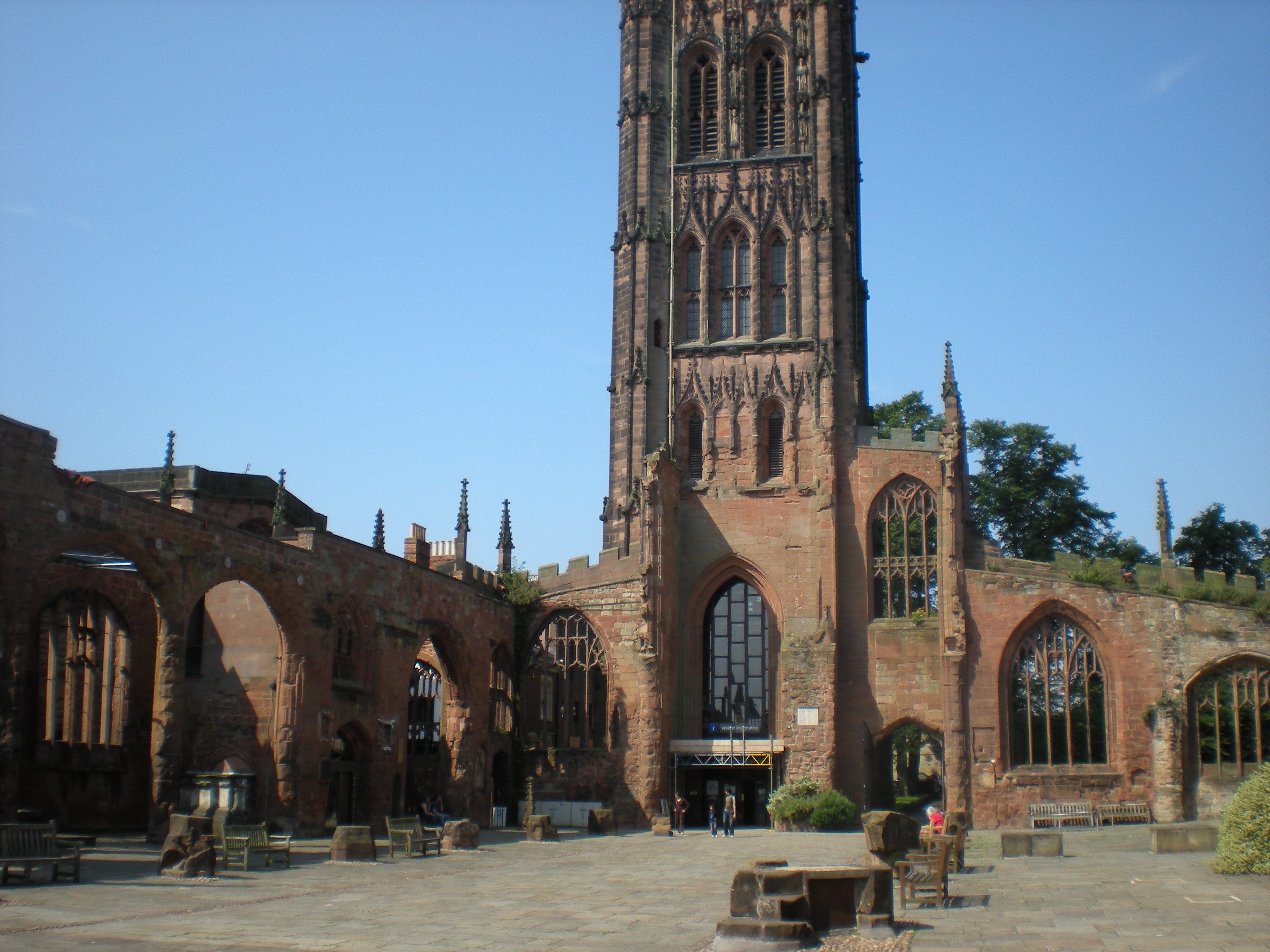
Inside the Old Coventry Cathedral
The tower still functions as a bell tower, but only it and the walls remain after bombing of the 14th November, 1940. One notice on the walls said that one of the reasons it all came down, was that the heat was so intense the iron supports put in to make it stronger, twisted and destroyed the roof. So perhaps ancient builders did know a lot more than we give them credit for.
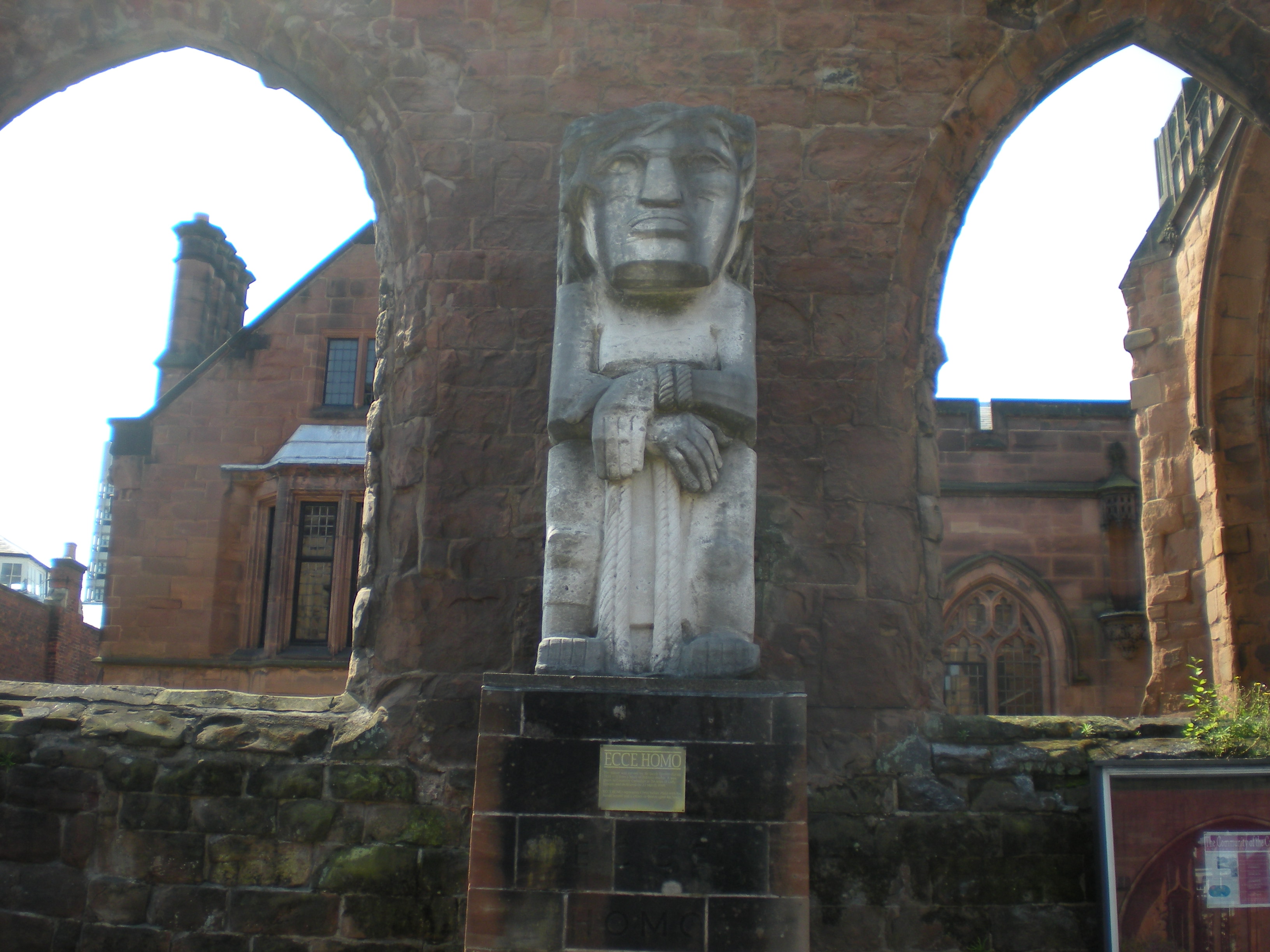
Ecce Homo - Sir Jacob Epstein
This is another piece of sculture by Sir Jacob Epstein. It is called Ecce Homo.

Reconciliation - Josefina de Vasconcellos
This is another of several pieces of sculture in the nave of the old cathedral. One poingnent piece was made by an 18 year old schoolbay, who lost his life in the war.
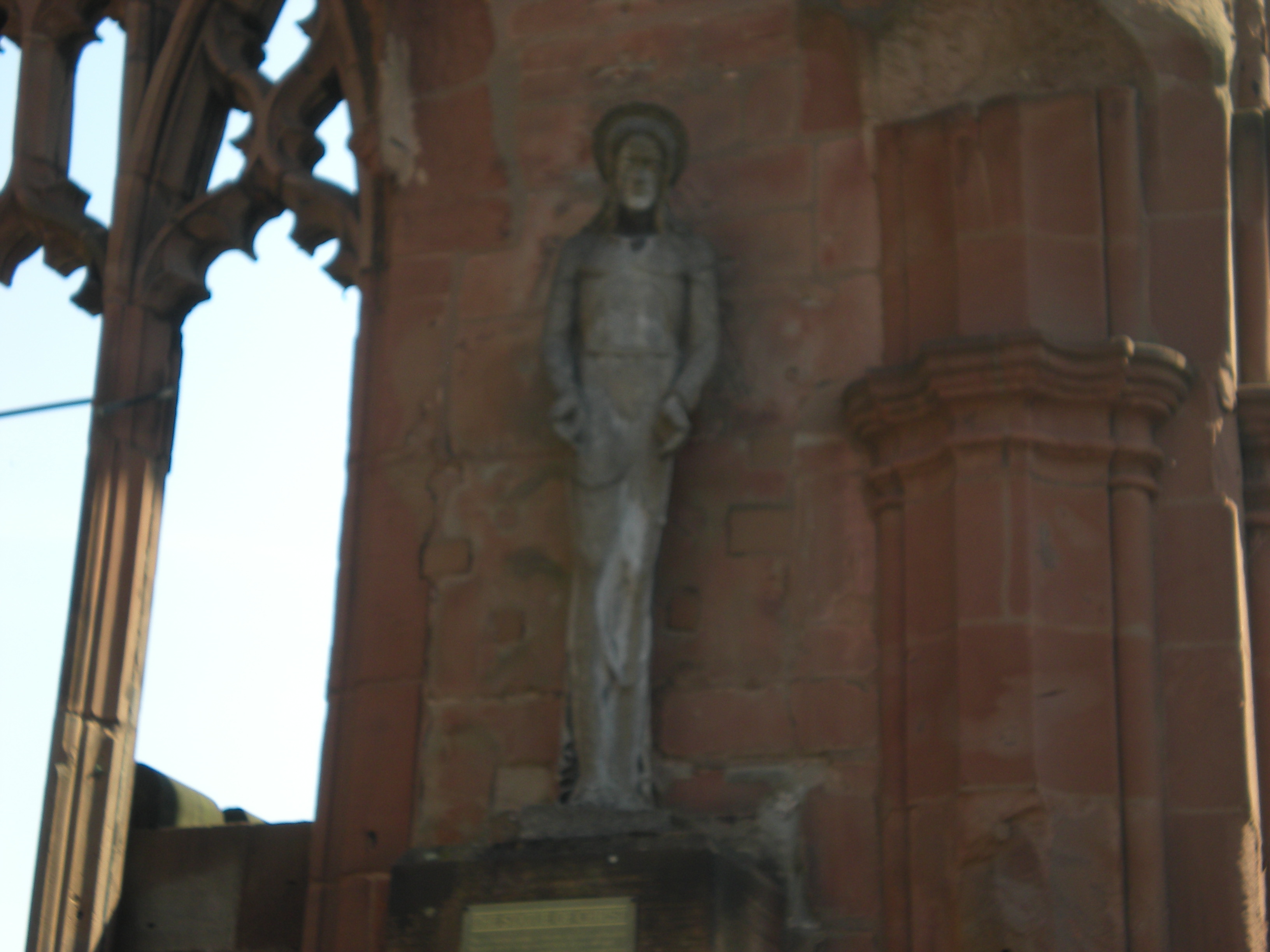
Alain John's Statue of Christ
The inscription under the statue reads.
This is a second casting, in concrete of a statue at Blundell’s School in Devon. It was created by an 18 year old pupil, Alain John. The Headmaster, Neville Corton, later became Bishop of Coventry and on the death of Alain John, an RAF navigator, in 1943 at the age of 23, the statue was recast for Coventry as a memorial to those who lost their lives in the war.

The Window Between the Two Cathedrals
As it was Sunday, I didn’t venture into the new cathedral, but I did take this shot of the window that effectively separates the new from the destroyed.
Let’s hope we do not see such destruction again. But I suspect we will!
The Mosquito
The Times today has the obituary of John Smith-Carington, who was a Mosquito pilot in the Second World War.
I think that unusually, The Times may have the account in the obituary about the raid on The Hague slightly wrong, as they mention releasing prisoners. Wikipedia, which again is not sometimes the best of sources says.
On 11 April 1944, after a request by Dutch resistance workers, six Mosquito FB VIs of No. 613 (City of Manchester) Squadron made a pinpoint daylight attack at rooftop height on the Kunstzaal Kleizkamp Art Gallery in The Hague, Netherlands, which was being used by the Gestapo to store the Dutch Central Population Registry. The first two aircraft dropped high explosive bombs, to “open up” the building, their bombs going in through the doors and windows. The other crews then dropped incendiary bombs, and the records were destroyed. Only persons in the building were killed – nearby civilians in a bread queue were unharmed.
This type of raid though was typical of the Mosquito.
One of my friends learned to fly on them just after the war and he said that getting them into the air was sometimes rather dangerous, but once they were at a safe height, they were a superb aeroplane. In the latter part of the war, they could strike with the precision of a surgeon’s scalpel.
The Mosquito was summed up by Goring.
The British, who can afford aluminium better than we can, knock together a beautiful wooden aircraft that every piano factory over there is building, and they give it a speed which they have now increased yet again. What do you make of that?
But the real tragedy of the Mosquito is that we never built enough of them. They were fast and could outrun every German fighter for most of the war and because of this, they could actually bomb Germany twice in one day. They also delivered over half the weight of bombs as a Liberator or Flying Fortess for just a crew of two, with a much higher safe return rate. Remember too, that the Allied Air Forces lost hundreds of thousands of aircrew bombing Europe with a rather dubious accuracy and a somewhat vengeful strategy.
Mosquitos could and should have very accurately bombed the places that really hurt the Nazis, day in and day out. But the powers that be, felt that you don’t go to war in an unarmed wooden bomber.
They were wrong!
At least it was realised after the way. Wikipedia again.
Despite an initially high loss rate, the Mosquito ended the war with the lowest losses of any aircraft in RAF Bomber Command service. Post war, the RAF found that when finally applied to bombing, in terms of useful damage done, the Mosquito had proved 4.95 times cheaper than the Lancaster; and they never specified a defensive gun on a bomber thereafter.
I have been to the de Havilland Museum just off the M25, where the prototype sits in splendour where it was built.
Go and see one of the finest aircraft ever built!
Dutch Water Line
The Water Line is a series of defensive forts, towns, castles and dikes, that was built to protect the Dutch heartland from invasion in the 17th century. It was upgraded for many years, but proved inadequate in the Second World War as it was just by-passed by the Nazis.
This is one of the impressive castles, Slot Loevestein.
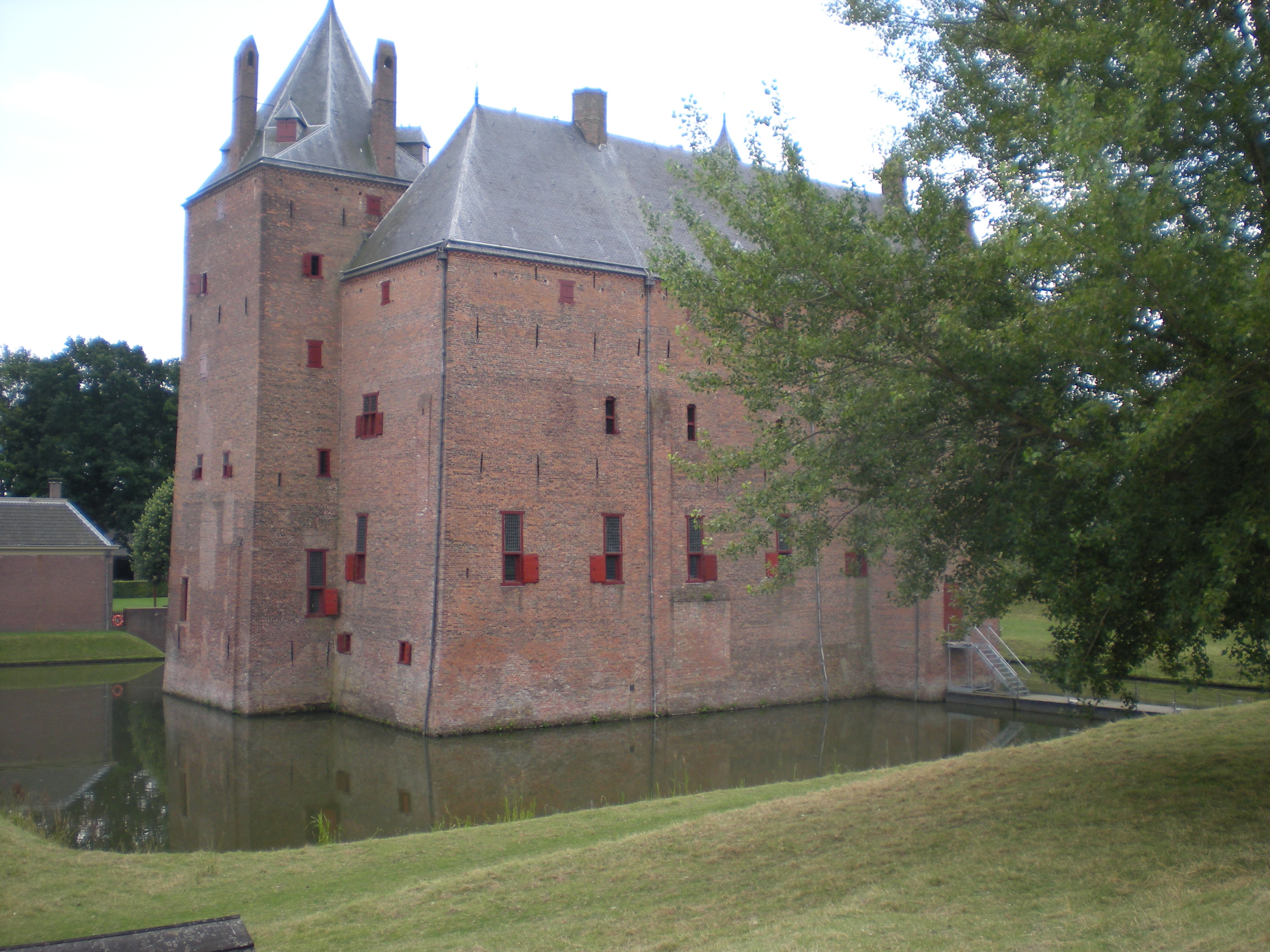
Slot Loevestein
The castle, and in fact the whole Water Line, is definitely worth a visit.
 The Anonymous Widower