Exploring The S-Bahn In Berlin
The Berlin S-Bahn is the ideal way to travel around the city centre getting a good view of everything. All these pictures were taken on the S-Bahn.
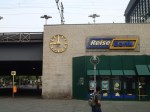



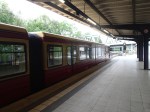



Note that some were taken from the mainline train I took to leave Berlin
Double-Headed Into Berlin
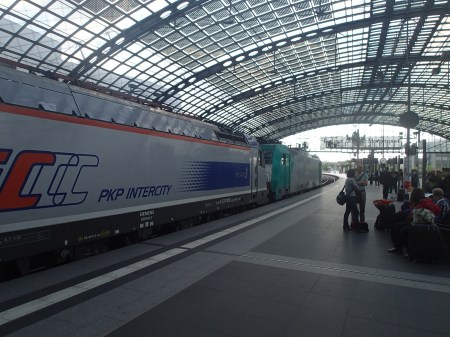
One thing that puzzled me about the train, was that our short six coach train, needed two powerful engines to pull it into Berlin at rather a pedestrian pace, as this picture shows.
Double-Headed Into Berlin
The locomotives are power Siemens Eurosprinters, which are rated at 6,400 kW each.
Compare this with the Class 90, that regularly take me to and from Ipswich, at a similar pace to that at which I crossed Poland. These haul nine coach trains with just 3730 kW.
I find all this very puzzling!
Arrival In Berlin
Berlin has a Hauptbahnhof , that was opened after C and I visited around 2004. I took these pictures on arrival.
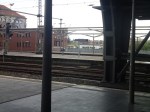
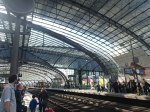


It is very much a station on several levels and finding where you need to go can be tricky for visitors. Especially, those with heavy cases!
As is typical with many stations on the Continent, staff were conspicuous by their absence, although the Tourist Office stays open until 22:00. Other cities could take note.
I had a complicated journey on the S-Bahn to get to my hotel, which meant two changes to get quite a short distance. But I managed it in the end. Berlin certainly needs to develop an easy-to-understand city train map, like say Munich.
Warsaw To Berlin By Train
I did well to have a good breakfast in Warsaw before I left, as the train journey took six hours and the only complimentary food was one cup of coffee. I did have a good supply of EatNakd bars, which because of the general availability of good gluten-free food, I hadn’t been using as food.
So Warsaw to Berlin could best be described as a two EatNakd bar journey.
I took these pictures en route.
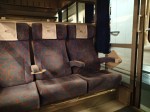
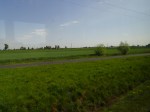
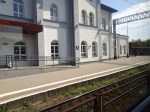
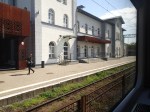
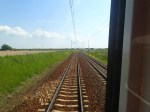
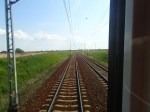

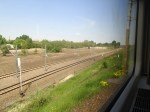
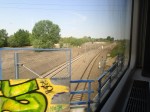
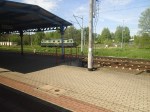
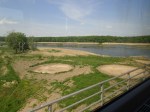
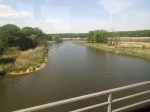
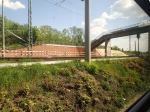
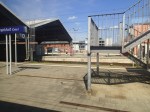
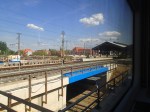
It is meaningful to compare the Berlin to Warsaw route with the line from Kings Cross to Edinburgh. The Polish route is 575 km long and makes the journey in 5 hr 24 mins at an average speed of 106 kph, as against 632 km in 4 hr 22 mins at 144 kph.
But the biggest difference is in capacity. The Polish route has four trains each way of just six coaches each day, whereas East Coast run upwards of twenty much larger trains.
Both lines are electrified and the Polish line appears to be a lot straighter, as it was generally built later than the East Coast Main Line.
Plans are afoot in Poland to improve the speed and service. This will improve the time from Warsaw to Berlin.
The cost of the ticket was €80 in First Class, which is probably probably more than you’d pay on East Coast with a prudent booking in the same class.
From Gdansk To Warsaw By Train
It should have been a five hour trip from Gdansk to Warsaw by train, with a change at Kutno.
It is not the most interesting of train rides, with this view being typical.

From Gdansk To Warsaw
But things didn’t quite work out as planned.
The train to Kutno was about half-an-hour late and I missed my connection to Warsaw, despite our train manager saying that they’d hold the Warsaw train.
So you’d think it would just be a matter of getting on the next train.
But it wasn’t, as I needed to get a new ticket issued.
So this delay nearly meant I missed the next train as well.
I should have done what logic said and waited in Gdansk for a few more hours to get the direct train.
As it was I think that I got that train on the last leg anyway.
I also ended up in the wrong statiuon in Warsaw and had to get a metro train for three stops to my hotel.
But still it was an enjoyable trip as I discussed Poland and the UK, using Google translate on my attractive companion’s laptop. Sadly, her battery ran out and there wasn’t a power point.
Next time, I’ll book the direct train.
Into Gdansk From Sodot
These pictures describe the journey into Gdansk from Sodot. There is a lot of information about this railway on the Wikipedia entry for Gdansk main station.


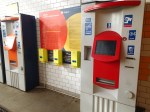
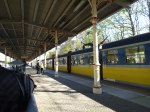
The fare was about a pound or so and the machines were easy to use and worked in English too!
After getting in, I searched out the Tourist Office in the underpass and got good information on how to use the trams that stop outside the station.
Burnley To Liverpool Airport On A Sunday
To get to Liverpool Airport from Burnley on a Sunday wasn’t easy.
I first got a train to Preston where I got a train to Ormskirk. There was this unusual end-to-end interchange between one of Northern Rail’s Class 153 scrapyard specials and one of Merseyrail’s smart Class 508s.
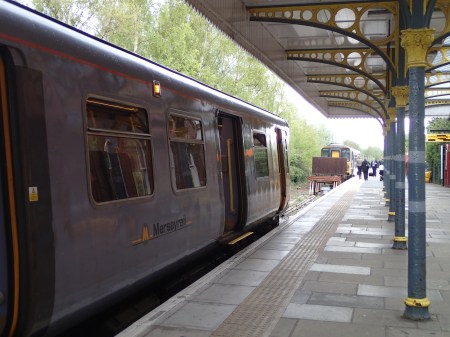
Changing Trains At Ormskirk
Merseyrail has been pushing to electrify all the way from Liverpool to Preston, which would remove this change of train. Wikipedia says this.
Electrification from Ormskirk to Preston has been considered in conjunction with the Burscough Curves reopening. It would re-establish the most direct Liverpool-Preston route and is one of Merseytravel’s long-term aspirations.
This whole corner of Lancashire seems either to be sprouting wires or growing third rails. Many of which lead to Liverpool or Manchester.
Once in Liverpool, I alighted at Moorfields station and walked a hundred yards or so to Carluccio’s, where I had a supper to prepare me for the journey.
I did search for a bus to Liverpool Airport, but even at the main bus station, there was no information or anybody to ask.
When will these people learn, that one of the way to get people to use buses is to provide information everywhere as London does.
So I reluctantly took a taxi!
Burnley’s Smart New Station
Burnley has a smart new station at Manchester Road, which should be opened later in the year.
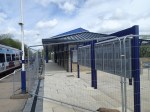
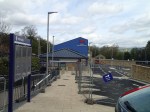
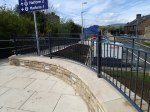




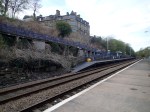
As Burnley are now in the Premier League, wouldn’t it be a good idea for a shuttle bus to Turf Moor on match days.
I wonder when and where the last station was built in the UK in quality stone.
This new station will be linked to Manchester Victoria by an hourly service, when a new curve is completed at Todmorden. There is more here on the Network Rail site. This is the key paragraph.
The new rail service between (Manchester) Todmorden and Blackburn will be supported by a partnership that includes Lancashire County Council and Burnley Borough Council. Initial plans are for an hourly service operating 7 days a week.
So hopefully two smart stations will be connected by a good service.
I do wonder whether in time, the Caldervale line from Blackpool and Preston to Leeds and the Manchester to Burnley lines will get electrified.
An Interesting Snippet
In talking about rolling stock in the latest edition of Modern Railways this is said.
Observers have recently seen an increasing focus on diesel-operated branches in otherwise electrified networks where small add-on projects could release much needed capacity for use elsewhere during the period of acute shortages (of diesel multiple units) from 2015.
I recently read in an article on the Rail Engineer website, that extending electrification off a fully-electrified main line, is an easier and more affordable project, as some of the expensive pieces of hardware like electrical connections and transformers, are already installed.
So if this became policy, what lines should be electrified?
Here’s a few that will or could be!
The Marshlink Line between Hastings and Ashford is an oddity in that it is lone diesel-operated line in the south east corner of England. Proposals are being worked on to electrify this line, so that Class 395 trains can run through to Hastings, Bexhill and Eastbourne. Currently, Brighton to Ashford is worked by ten Class 171 trains and some or all of these could be released, if electric trains could run all the way from Brighton to Ashford.
The Marston Vale Line is also scheduled to be electrified as part of the Electric Spine.
The Felixstowe Branch Line needs electrification for freight, but being able to piggy-back to the Great Eastern Main Line may make electrification worthwhile.
The Manchester to Southport Line is one that is being looked for possible electrification according to Wikipedia. They say this!
Additionally Network Rail has identified electrification of Wigan to Southport, together with Ormskirk to Preston Line and the Burscough Curves as a possible source of new services.
In fact the whole of this area of Lancashire northwards from Liverpool, Warrington and Manchester to Wigan, Preston and Blackpool could end up being electrified as extensions to the Northern Hub. Most of the branch lines already have an electric connection at one or both ends.
I wouldn’t bet against the electrification of Preston to Leeds, as a lot of money is being spent on stations on the line, so how about some nice refurbished electric trains for the route.
The Big Disadvantage Of The New Borders Railway
The Borders Railway which is Scotland’s new rail line from Edinburgh to the borders, is progressing well according to an article in Modern Railways.
Speaking of the new terminal station at Tweedbank, the article ends with this sentence.
It will have platforms of sufficient length to accommodate charter trains and thus give Borders tourism a welcome boost.
Do the locals really want more tourists from Edinburgh?
 The Anonymous Widower