A Tunnel Under Brixton
In the June 2016 Edition of Modern Railways in an article entitled Turning South London Orange.
One of the proposals is to create a tunnel under Brixton to cut out the need for fast Sutheastern services to cross Thameslink services on the level at Herne Hill.
The map from carto.metro.free.fr, shows the current lines between Battersea and Herne Hill.
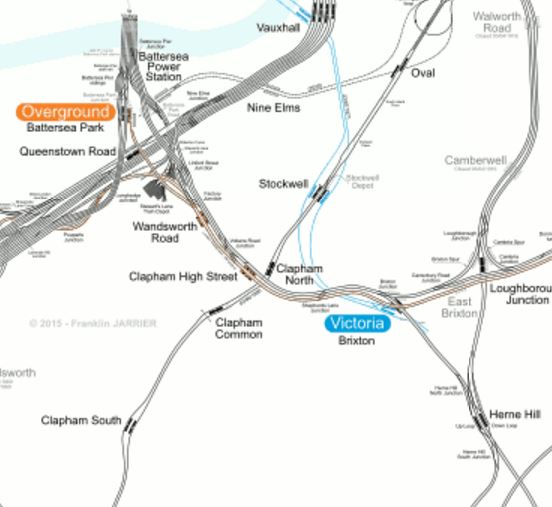
Battersea To Herne Hill
This crossing should surely have been sorted years ago, as it must be a severe bottleneck in the running of Thameslink services. It must be like having road-works controlled by traffic lights, where the M1 joins the M6. I wrote about the problems in Herne Hill Station.
Network Rail’s plan involved turning all Sutton Loop Line services at Blackfriars to ease the problem of getting the trains through the Thameslink tunnel efficiently, but politicians squashed that!
The Northern end of the tunnel would be in the Battersea railway lands North of Wandsworth Road station.
This Google Map shows the area.

North End Of Brixton Tunnel
The Southeastern lines come from Victoria and pass the Battersea Power station site on its Western side, before passing over the wide swath of lines going into Waterloo.
Fast services from Victoria to Kent would go straight into the tunnel, which would have its Northern portal somewhere between the power station and Wandsworth Road station.
Given there are proposals in the Centre for London report, for a new station at Battersea linked to the Northern Line Extension, it all seems to fit together fairly well.
A big winner could be the Battersea Bogs Home, as some of their space might be needed, but then organisations like that are much easier to deal with than irate home or business owners. I could see the charity ending up with some very good premises over the tunnel portal.
The Southern end of the tunnel would be between Herne Hill and West Dulwich stations.
This Google Map shows the area.

South End Of Brixton Tunnel
The Southern portal would be in the area, where the two railway lines cross to the North-West of the sports grounds.
It would seem with all the green space, that building the tunnel portal in the area would be easy.
But much of the land is owned by Dulwich College and they are not the most co-operative of neighbours according to various articles I’ve read.
So it would appear that the politics and public relations of a tunnel under Brixton could be much more difficult than the actual engineering.
The Centre for London report, doesn’t say much about the actual design of the tunnel, but it could be assumed that it would be a five-kilometre double-track tunnel, with or without low-level platforms beneath Herne Hill station. As none of the fast services currently stop at Herne Hill station, I would suspect that nothing more than provision for the platforms will be provided.
There will be various benefits of the tunnel.
- Eliminating the need for Thameslink services to cross the fast Southeastern services, must give benefit to both operators with respect to the robustness of services.
- Lengthening of platforms at Herne Hill will now be possible, which would allow longer trains on overcrowded services.
- Fast services would be removed from the lines through Wandsworth Road and Clapham High Street stations, allowing expansion of services on a reconfigured South London Line.
- Herne Hill station could get six ten-car trains per hour into Victoria calling at Brixton, Wandsworth Road, Clapham High Street and the new Battersea stations for the Northern Line.
It also has to be asked, if the tunnel, which would increase capacity on the Sutton Loop Line, might help with the problems of building Crossrail 2 through Wimbledon.
The other question that has to be asked is how does this all fit in with Transport for London’s possible plans to create a loop on the Victoria Line to serve Herne Hill station, which I wrote about in Will The Victoria Line Go To Herne Hill?
I think this proposal could be an idea, that could improve rail services substantially in this part of South London.
Proposed New Stations And Interchanges In South London
In the June 2016 Edition of Modern Railways in an article entitled Turning South London Orange.
In the article, there is a table of Station and Interchange Proposals. I will list them in order.
Battersea
Battersea station is proposed to have platforms on the Southeastern lines into Victoria, close to the Dogs’ Home, that will adjoin the new Battersea Power Station station on the Northern Line extension.
As this station appears to be crucial to a lot of the Centre for London reports proposals, I have given the new station its own post called A New Station For Battersea.
Beddington
Beddington station is proposed between Wallington and Waddon stations on the line between West Croydon and Sutton stations.
I don’t this area well, but here’s a Google Map between Wallington and Waddon stations.
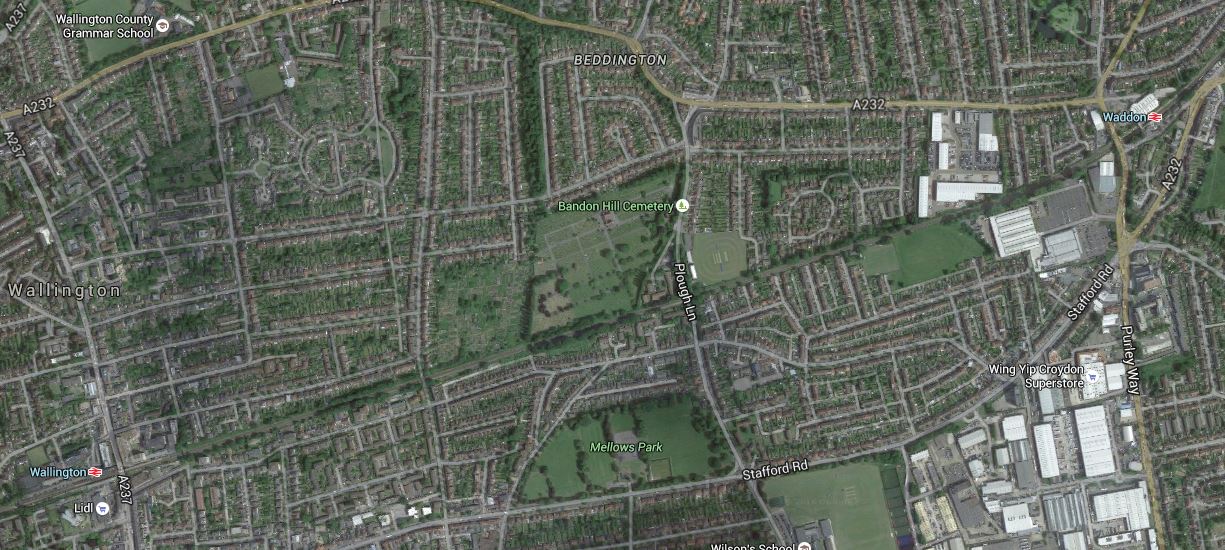
Proposed Beddington Station
According to the Centre for London report, there is a long gap between stations and there has been a loot of development in the area.
The rail line runs across the middle of the map and the station is proposed for Plough Lane, South of Bandon Hill Cemetery.
Brixton
One of the proposals in the article is to create an improved station at Brixton, by reopening disused platforms on the Northernmost tracks at the station.
I have written this a separate post at An Improved Station For Brixton
Brockley
The article proposes a new pair of platforms on the South London Line between Nunhead and Lewisham stations, providing interchange with the existing Brockley station.
I gave my views on Brockley station in A Report On The Bakerloo Line Extension, which I now repeat.
This Google Map shows Brockley station.
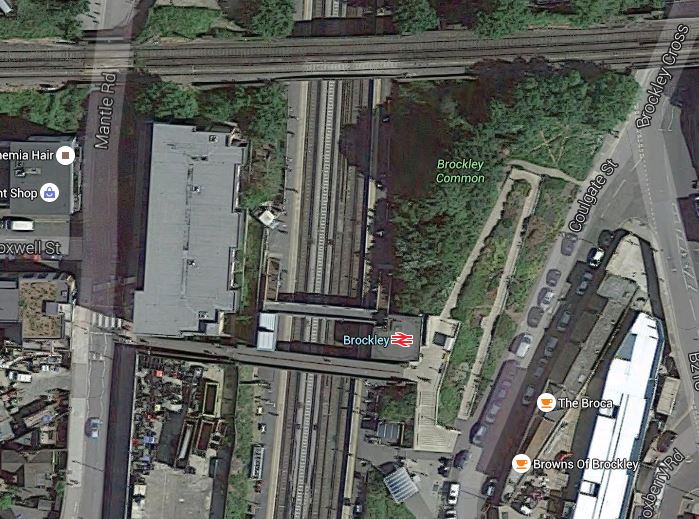
Brockley Station
The Bexleyheath Line between Nunhead and Lewisham stations crosses the East London Line and Brockley station at a high level.
I wrote A Four-Poster Station about connecting these two lines.
It would appear that Transport for London have advanced this project from one word in their 2050 Infrastructure Plan to a proposal.
This is the sort of connectivity, that us plebs in Dalston will like a lot. From 2018, as I wrote in Increased Frequencies on the East London Line, there will be ten services per hour between Dalston Junction and Brockley stations and one change at Brockley, will open up many transport opportunities.
Camberwell
Camberwell station is a new station on the Thameslink Line between Elephant and Castle and Loughborough Junction stations.
This Google Map shows the area around the disused Camberwell station.

Camberwell Station
Camberwell station used to be where Camberwell New Road crosses under the railway.
Wikipedia has a section about the re-opening of the station. This is said.
In March 2016 it was reported by Transport for London that proposals to re-open the station are being considered with other stakeholders, including the London Borough of Southwark. Initial feasibility indicates it would be possible to construct a modern station on the site if timetables could be modified to accommodate Camberwell as an additional stop. TfL will be working with Network Rail and the boroughs of Southwark and Lambeth to further develop the feasibility of this proposal.
I would also suspect that being able to open a new Camberwell station, at the same time as Thameslink, would be very easy to justify on a costs basis.
Clapham East
Clapham East station is proposed to be half a mile North-East of Clapham Junction station on the East London Line.
As this station is a new proposal and hasn’t come to my notice before, I have given the new station its own post called A New Station For Clapham East.
Clapham High Street And Wandsworth Road
The report suggests putting platforms at Clapham High Street and Wandsworth Road stations on the Southeastern tracks to enable a direct service to Victoria to be reinstated.
I have dealt with these two stations in Improvements To Clapham High Street And Wandsworth Road Stations.
Imperial Wharf
There is an interesting proposal to put a footpath over the Thames to give access to Imperial Wharf station from the South Bank.
This Google Map shows the station and the Thames.
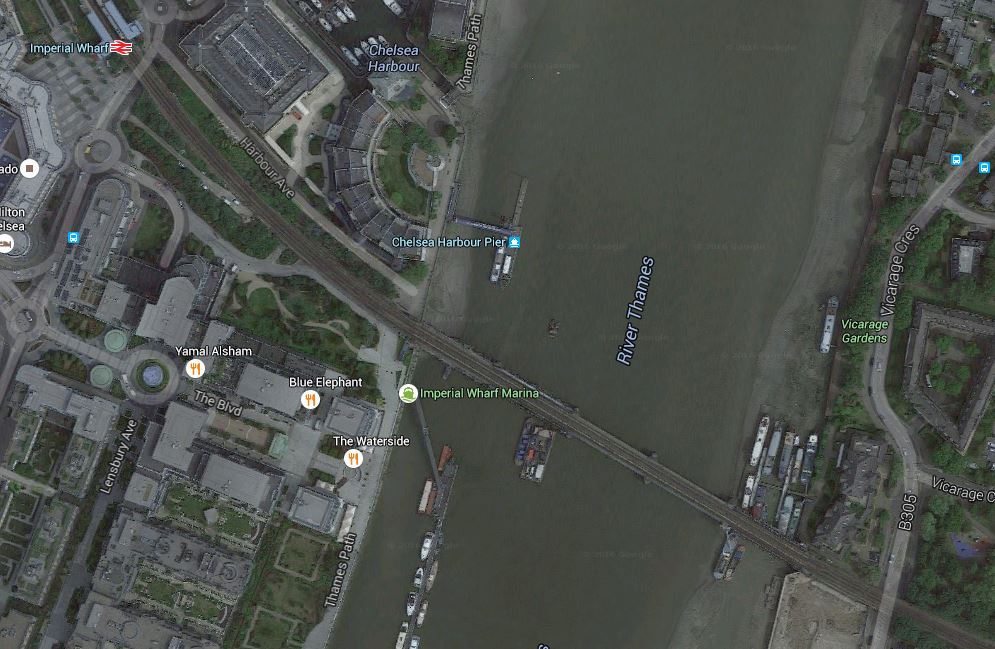
Why not build the footpath?
New Cross
New Cross station is just over five hundred metres from New Cross Gate station. This Google Map shows both stations.
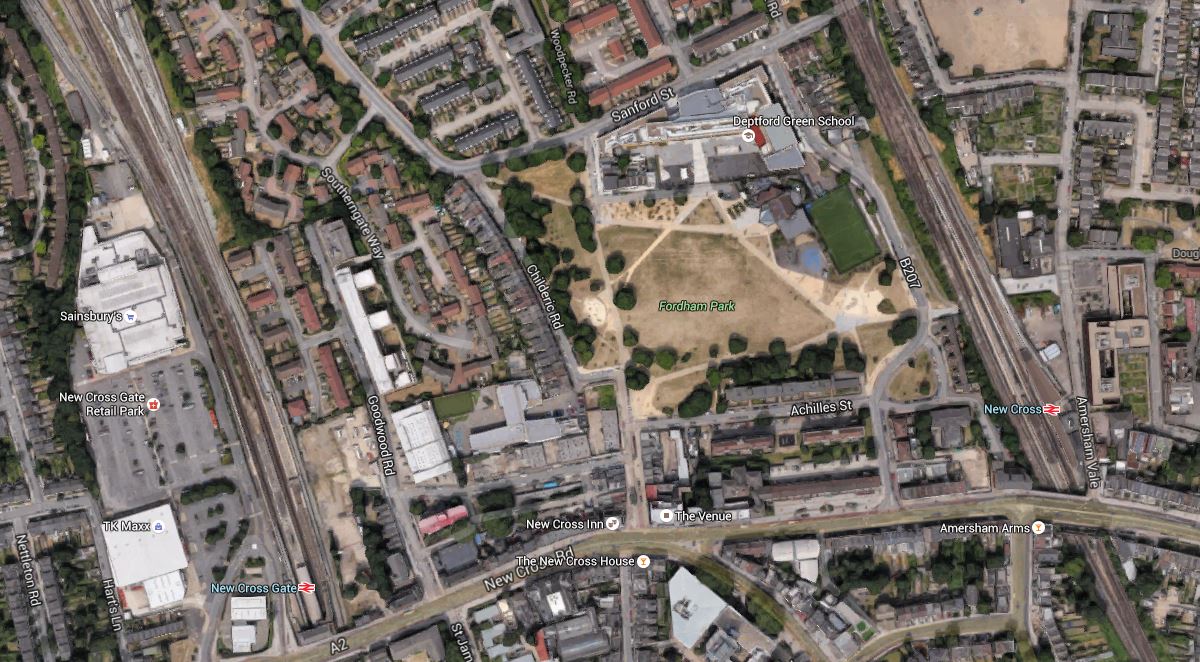
New Cross Gate And New Cross Stations
The Centre for London is proposing stopping East London Line services to New Cross, increasing service to New Cross Gate and building a travolator between the two stations. They say this in the report.
The proposal is to build an underground travolator between New Cross, Goldsmiths College and New Cross Gate interchange. At New Cross Gate a more frequent train service would be available on the ELL and existing Southern route. This would be a practical alternative linking the Southeastern and South Central networks, and it would also create Southeastern lines access via New Cross to the proposed Bakerloo station at New Cross Gate, for those trains which avoided Lewisham.
It is an interesting solution, that possibly could be used in many places.
Turning South London Orange
In the June 2016 Edition of Modern Railways in an article entitled Turning South London Orange.
It discusses a report by the Centre for London with the same name and a sub-title of Passenger Demand, Proposed Main Schemes And New Stations / Interchanges.
It is powerful stuff and these are posts I’ve written about their proposals.
An Improved South London Line Is Proposed
Proposed New Stations And Interchanges In South London
An Improved Station For Brixton
A New Station For Clapham East
Improvements To Clapham High Street And Wandsworth Road Stations
Plans For New Rolling Stock To Replace BR DMUs
This is the title of an article on the Rail Magazine. This is said.
Diesel multiple units built in the 1980s by British Rail could be replaced in the next decade, as the Department for Transport believes there are “likely to be significant opportunities” to replace them with modern diesels.
Outlined in the Rolling Stock Perspective: Moving Britain Ahead report published on May 18, this would mean that as well as the Pacers, potentially all Class 150s, ‘153s’, ‘155s’, ‘156s’, ‘158s’ and ‘159s’ could be withdrawn. That would be 1,033 vehicles if all were replaced like-for-like.
The article is based on a Department for Transport document entitled Rolling Stock Perspective. The document says this.
Are self-powered, where required, with such trains meeting the latest emission standards and being built by a range of suppliers. New diesels are being procured as part of the Northern franchise improvements and there are likely to be significant opportunities over the next decade to replace the last remaining diesel multiple units ordered in the BR era with modern diesels that offer much more for passengers, and are designed with manufacturers and TOCs working ever more closely with Network Rail, to reduce the amounts of money needed to be spent to introduce them into service and to allow them to operate reliably and safely.
The report also says.
Good, high quality refurbishment can deliver a passenger experience comparable with new rolling stock.
So is this a feasible plan to remove the 15x trains in their present form from the network?
I will start by summing them up from a passenger perspective.
Class 150
The Class 150 train probably suffers from being too small and inadequate for a lot of the routes it serves. This alone means that they should be replaced, probably with something of at least three cars, as many are on routes, where ambitious train operating companies are endeavouring to grow traffic.
There are only so many elephants you can get in a Mini!
In 2014, I went to St. Ives and wrote St. Erth Station And The St. Ives Branch, where an immaculate Class 150 trundles the few miles along the branch.
This use sums up the class well.
- The two-car train was totally inadequate for the route.
- They can be cleaned up to be adequate for some purposes in their present form.
- Step free and wheelchair access is not very good.
- There is not enough space for bicycles.
- Seats are not the most comfortable.
On short branch lines like the St. Ives Branch, two refurbished units coupled together, might provide the service needed, but would it be better to spend more money on either a refurbished Class 165 train or even a new train?
In A Trip Around Wiltshire, I encountered a Class 150 train. As it was Glastonbury, it was loaded over capacity with heavy baggage. At least a five-car formation of say Class 165s was needed, not a two-car Class 150.
These days the Class 150 trains are mainly used in the North, Wales and the West Country, with some in the Midlands.
I would love to know the train operating companies attitude to these trains.
They may be cheap to lease. But!
- Running costs can’t be much less than say a three-car Class 165 train.
- The difficult train access must mean despair for the disabled and staff.
- Station stops are probably slower than needed, leading to late trains.
- Passengers will be turned away by the bad experience.
- They are not large enough for a lot of their routes.
Some like those in the North and Wales are planned for replacement and hopefully once GWR electrification is sorted and the Class 165 trains are replaced by electric ones, most of the Class 150 trains can go to appropriate retirement in the scrapyard.
Class 153
If anything sums up the cheapskate approach to the railways under successive governments it is the Class 153 train.
In my travels around Europe, I’ve never seen another single car train, excerpt on something like a mountain railway.
They may have a use, but it is certainly not running on the Nuneaton to Coventry Line.
On a lightly-used line they probably wouldn’t be as bad an experience as a Class 150 train, but they certainly wouldn’t be any good to generate traffic.
Class 156
There are 114 two-car Class 156 trains, which are certainly much better than the Class 150 and Class 153 trains.
I’ve certainly ridden some pretty comfortable Class 156 trains.
According to Wikipedia, some are being refurbished. This is said.
38 of the 114 Class 156 sets belong to leasing company Porterbrook, which announced in mid-2011 that they will be substantially refurbished at the time of their C6 overhauls. Seating layouts will be revised to provide priority seating and wheelchair spaces, and new universal toilets are to be installed, as also a passenger information system. Interior doors between vestibule and passenger saloon will be removed, and external door sounders fitted. The trains in question are as follows; 11 leased to East Midlands Trains, 9 toAbellio Greater Anglia and 18 to Northern.
I have a feeling that a lot of this class will be replaced by new or newer trains, simply because they run on the more important lines.
In the North and Scotland, electrification will directly replace some trains and others will be replaced by newer diesel multiple units cascaded from the newly electrified lines.
I believe that refurbishing these trains to a high standard could be possible, and these trains could be ideal for lightly used lines, either working singly or in a four-car formation.
But their top speed of only 75 mph probably means on some of the routes they serve, they cause problems for train operators.
Also, because they have a good range, they might well be a good train to have as cover to help solve the problems of breakdowns and extra capacity for events like Glastonbury.
Class 158 And Class 159
I am considering the Class 158 and Class 159 trains together, as it is rather a moveable feast as to which class the trains belong.
They are slightly younger than the other trains and on some routes like Waterloo to Salisbury and Exeter, they are certainly not a bad experience.
When the Government report said.
Good, high quality refurbishment can deliver a passenger experience comparable with new rolling stock.
They might have had these trains in mind.
I think though, they have qualities that make them suitable for longer routes that have to use diesel traction.
- They are a 90 mph train.
- They have a long range.
- They could have plenty of tables.
- They can accommodate a catering trolley.
- They could be a good route-development train.
- As they are Mark 3.5 coach based, they would certainly scrub up brilliantly.
I think the only problem could be that there are two hundred trains. But seeing the way traffic is developing in the UK, I’m sure that train operating companies could find a use for them.
I have travelled on Class 158 trains on the Settle to Carlisle Line and this is the sort of journey for which the trains are ideal. So what would happen, if routes like this were given a more frequent service with refurbished Class 158/159 trains, that perhaps had the following.
- Good catering.
- Lots of tables.
- Wi-fi
- Lots of luggage and cycle space.
- London Bus-style wheelchair access.
I don’t think the affect on traffic would be negative.
Summing Up The Current Situation
If I look at the numbers of each type of older diesel multiple units we get.
- Class 150 – 137 trains – 133 x two-car and 4 x three-car. – 278 coaches.
- Class 153 – 70 trains – 70 x one-car – 70 coaches.
- Class 156 – 114 trains – 114 x two-car – 228 coaches.
- Class 158/159 – 200 trains – 143 x two car and 57 x three-car – 343 coaches.
Which gives a total of 919 coaches.
On the other hand, I think we can assume the following.
- Great Western Electrification should release a mixture of thirty seven three car and twenty two-car Class 165/166 trains.
- The Class 150 and Class 153 trains could go to a more suitable place.
- The Class 156 trains could possibly be refurbished to a standard to make them a good Class 150 and Class 153 replacement for some routes.
- The Class 158/159 trains could probably be refurbished to the required high standard.
So we’re left with a deficit of about two hundred carriages, without counting good quality trains released from Scottish and Lancashire electrification.
How Could We Bridge The Gap?
At least though we have various trains and solutions available and some have been noted in the last couple of months.
The following sections detail the various solutions.
New Civity Diesel Multiple Units from CAF
Arriva Rail North surprised a lot of people with their order for a mixture of new Civity diesel and electric multiple units from CAF.
I wrote about the order in Arriva Rail North’s New Trains.
The Civity design is modular and this data sheet from CAF describes the Civity range.
Points to note.
- Diesel, electric and bi-mode versions are available.
- It has been designed for standard gauge.
- There is a UK version called Civity UK.
- Top speed is 160 kph, but 200 kph is available.
- The list of interior options is wide.
Reading the data sheet, I get the impression that operators get standard trains with the features they want.
I don’t know the answer, but I suspect that like the Class 378 trains of the London Overground, the Civity trains can be lengthened or shortened, by adding or removing trailer cars between the two driving cars. This concept has worked so well on the Overground, I doubt that a train manufacturer wouldn’t copy it.
Thus you could have four car DMUs on a route like the Calder Valley Line. If and when the line gets electrified, you do a bit of swapping and add two electric driving cars and get four-car EMUs and two-car DMUs.
I believe the flexibility of the design, means that we’ll see more Civity trains in the UK.
New Diesel Multiple Units from Other Manufacturers
I said earlier, that there could be a total need of about two hundred carriages, but this is probably not many, unless you have a proven product ready to be built.
Given that CAF have already sold ninety-eight assorted trains to Arriva Rail North and another twelve 200 kmh-capable trains to TransPennine Express, it would be hard to sell a new design of modern diesel multiple unit into the UK. More Class 172 and Class 185 trains are probably not an option.
Rakes Of Coaches From CAF
Rakes of coaches seem to be making a comeback, as I wrote in Are Train Coaches Making A Comeback In The UK?
Fitted with a suitable and available locomotive at one end and a driving cab at the other, these could be used in some of the difficult and perhaps scenic routes.
Again CAF seem to have got the proven product, which has been sold to Caledonian Sleeper and TransPennine Express.
Have the clever Spanish designed a driving cab with bags of style and panache, for the TPE rakes? It certainly won’t be a driving van trailer knocked up from the parts bin.
One of the advantages of coaches, is that there are a lot of suitable and acceptable locomotives available. Fleet details for the Class 68 locomotive, already show a new order for seven extra units for TransPennine Express.
Anybody, who doesn’t believe that Class 68s and coaches, are a viable option, should be forced to go to Birmingham from London on Chilton and see how good upgraded 1970s-built Mark 3 coaches hauled by a modern diesel locomotive can be.
Rakes Of Refurbished Mark 3 Coaches
If buying new coaches from CAF is a viable order, why didn’t TransPennine Express, do what Chiltern have done and refurbish some of the many Mark 3 coaches.
I think it comes down to these factors.
- Mark 3 coaches need a driving van trailer, so a five-car train is effectively seven units long if you count the locomotive and the DVT.
- Are Mark 3 coaches coming to the end of their lives?
- Is there a shortage of DVTs?
- If CAF build a stylish driving cab in the end coach, the train will have an enormous wow factor!
- The operator can get the interior layout they want.
- Could the cost be not much different between the new and refurbished trains?
In the end the CAF route gives the operator exactly what they want.
The only thing that might happen, is that somebody copies the CAF idea and creates a short rake of Mark 3 coaches, with a driving cab in the last coach. But that is probably a more expensive option.
Chiltern Railways
Chiltern Railways could have a valuable part of play in the replacement of older diesel multiple units.
They currently run some of their Chiltern Main Line services to Birmingham and Oxford using rakes of Mark 3 coaches and Class 68 locomotives.
They currently have the following stock for this.
- 8 Class 68 locomotives
- 31 Mark 3 coaches
- 6 Driving Van Trailers.
Is that enough, given that Oxford will be served later this year?
Probably not! So is Chiltern scratching around searching for coaches and DVTs to create some extra rakes of coaches?
I don’t know, but with the three stations of Bicester Village, Oxford Parkway and Oxford on the new branch, two and three-car multiple units will surely not be big enough.
I would certainly suspect that as Chiltern is an ambitious company, one of their aims is to have all services between London and Oxford and Birmingham, run by modern rakes of coaches hauled by Class 68 locomotives.
These could either be new rakes from CAF or refurbished ones of Mark 3 coaches.
The big side effect would be that Chiltern may be able;e to release some of their modern diesel multiple units.
This probably illustrates why Class 68 and other locomotives pulling rakes of coaches could be very important in improving the quality of diesel multiple units in the UK.
Playing The Joker
There is even a joker in the pack of available locomotives to pull and push the coaches.
The Class 73 locomotive dates from the 1960s, but it has some unique advantages.
- They were built to run all over the Southern Region, including the narrow tunnels of the Hastings Line.
- They can run on third-rail electric lines or on diesel power.
- They seem to be reliable.
- They are capable of 90 mph, which is the same speed as a Class 159 train.
- There are over thirty still available.
- Re-engineering with modern diesel engines is being undertaken, to create a Class 73/9 variant.
- To say they scrub up well is an understatement.
Their latest application is far from their original habitat in the South, as they are now hauling the Caledonian Sleeper trains all over the Highlands, where in some places, the loading gauge is restrictive.
I wouldn’t be surprised to see Class 73/9 locomotives hauling new coaches from Waterloo to Exeter.
- This would mean that new trains could serve Salisbury and Exeter from Waterloo, without extending the electrification from Basingstoke.
- The Class 73 locomotives would use the third-rail electrification at the London end of the route.
- The trains would have the same top speed as the current Class 159 trains.
- The Class 159 trains would be released for refurbishment and cascade to other routes and operators.
But the biggest advantage of this would be that South West Trains or its successor could offer a high-quality alternative service to Exeter and the wider West Country in competition with Great Western Railway’s new Class 802 bi-mode trains.
If anybody had suggested a few years ago, that you might replace a 1990s-built multiple unit with Spanish coaches hauled by a re-engineered 1960s-built locomotive, they’d have been taken away by men in white coats.
But then engineering is the science of the possible!
Battery Trains And IPEMUs
Clare Perry, who is the Rail Minister, says this in Rolling Stock Perspective about battery-powered trains and other similar developments.
Rail is already one of the most environmentally friendly forms of powered travel, but we need to go further. I want to see the industry develop and introduce uk-led innovative solutions such as battery-powered or hybrid trains which will make rail even better for the environment and reduce the industry’s operating costs.
I think we can say, that means that Government will look favourably on good innovative solutions for the replacement of diesel multiple units.
Bombardier are developing the Aventra train and trains will be wired to accept on-board energy storage, just like the demonstrator based on a Class 379 train, that I rode in January 2015.
These are now called IPEMUs or Independently Powered Electric Multiple Units. They would charge their batteries on an electrified main line, then use this power on a branch line or to perhaps bridge a section of line that was not electrified.
As a large number of diesel multiple units are used on branch lines from electrified main lines, IPEMUs could be a direct replacement without any new electrification. Some examples would be.
- Marks Tey to Sudbury
- Ipswich to Felixstowe
- Ipswich to Cambridge/Ely
- Cambridge to Norwich
- Norwich to Yarmouth
- Ely to Peterborough
- Liverpool to Preston via Ormskirk
- Oxted to Uckfield
- Ore to Ashford
Nothing has been said about the ordering and service entry of IPEMUs, but I don’t believe that the technology will be abandoned.
Conclusion
The elimination of the older diesel multiple units or their conversion into modern trains of the highest standard, is not an impossible dream.
But expect some surprises!
The Improved South Tottenham Station
South Tottenham station wasn’t one of the best! But just look at it now!
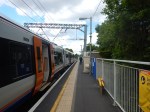
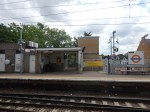


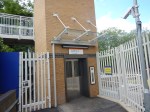
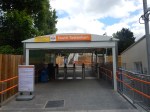
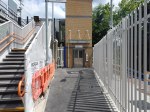
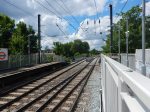
The lifts are now working and when the line to Barking closes in a week or so, it will make a passable terminus to turn trains back to Gospel Oak.
I was chatting to one of the station staff and they said that the platforms will be extended further to the west over the road.
As the bridge is new, if this is the case, it would have been built to accept the weight of the platforms.
The Class 700 Train Launch At Blackfriars Station
I took these pictures when Thameslink launched the new Class 700 train this morning, at Blackfriars station.
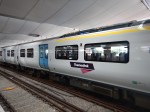
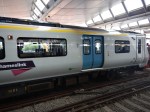

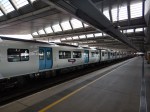
I’ll be very pleased, when I get to have a ride and take a look inside. I suspect six on a Sunday morning at St. Pancras Thameslink, will be a good place to start.
Boom In Cycle-Rail Journeys
The title of this post is the title of this article in Rail Magazine.
These two statistics are given.
- Cycle-rail journeys have increased by 40% since 2010.
- The number of journeys where a bike was parked at the station increased by 75% in the same period.
You certainly see a lot more bikes on trains.
I think in the next few years will see more restrictions on bike usage on trains. Sometimes, there are just too many bikes, pushchairs and enormous cases on trains and there’ll come a point, when train companies try to cut the numbers.
I was talking to one of the driver managers of a company introducing the new Class 800 trains. He felt that the designers had not incorporated enough cycle places.
We shall see if he’s right, when the trains are serving their first summer.
As passengers have the space in the locomotive at present, if they turn up with a bike in the future and are told there there is no room, it will be an unholy row!
Are Train Coaches Making A Comeback In The UK?
There were two stories yesterday, where new coaches to be built by Spanish company CAF.
- In TransPennine Express Buys Spanish Trains, I wrote about the new trains for TransPennine Express, which include thirteen five-car rakes of coaches pulled by Class 68 locomotives.
- In Expanding The Scottish Sleeper, I wrote about how new coaches could transform the Caledonian Sleeper.
Both sets of coaches probably use the same basic bodyshell, running gear and electrical and heating services, so once CAF designed the sleeper trains, they probably have developed a vehicle that could be used for any profitable purpose.
At present the Caledonian Sleeper uses two types of coach; a sleeping car and a lounge/seated sleeper car and these are being replaced with an identical number of coaches.
But little has been said about the design and make-up of the new coaches.
I suspect, that we will see lounge cars with large windows, so that the Scottish countryside can be enjoyed in style, if the weather permits.
The new coaches will be compared to British Rail’s legendary Mark 3 coach.
- I’m also sure that CAF have set out to design a coach, that rides better.
- The new coach must also be capable of running at 200 kph., as Mark 3s do every day in large numbers.
- Will the coaches pass the cement lorry test, as a Mark 3-derived multiple unit did at Oxshott?
The 1960s design of the Mark 3 has set a very high bar.
Even less has been said about the five car rakes of coaches for TransPennine Express.
But in common with the other rakes of coaches in mainline service in the UK on Chiltern and the East Coast Main Line, and in East Anglia, they would need some means of driving the train from the other end, which is currently done with a driving van trailer.
A DVT is very much a solution of the 1970s, although it does have advantages in that the empty space can be used for bicycles, surfboards and other large luggage. Hence, the van in the name.
If you look at CAF’s Civity train, it is very much a stylish modular design and I’m sure CAF, have the expertise to build a stylish driving cab into some of the new coaches they are building.
I therefore think we will be seeing these five-car rakes of coaches for TransPennine Express, with a driving cab at one end.
One of the big advantages of this approach is that trains can be pulled and pushed by any suitable and available locomotive.
- Class 68 diesel locomotives could provide reliable go-anywhere diesel power.
- Class 88 electro-diesel locomotives could provide electrical power from overhead lines and diesel power elsewhere.
- Class 73 electro-diesel locomotives could provide electrical power from third rail and diesel power elsewhere.
- Class 90 electric locomotives could be used with overhead lines
- A 200 kph-capable electric locomotive could be used on high-speed electrified lines.
Operators wouldn’t be tied to one particular power unit, so as more electrification is installed, they could change to something more suitable.
You also have the possibility of designing the coach with the driving cab as perhaps a buffet/observation car or using it for First Class, so that the other coaches are very much a standard interior.
The approach also has the advantage that if you need a longer train, you just couple another coach into the rake.
I’m sure that CAF have designed a rake of coaches that has impressed TransPennine Express, otherwise they wouldn’t have ordered the coaches.
Some people might think that going back to coaches is a retrograde step.
Consider.
- Chiltern run an excellent service with coaches.
- Deutsche Bahn still uses lots of rakes of coaches.
- Rakes of coaches are more flexible than fixed-length multiple units.
- The most appropriate locomotive can be used.
- Some passengers might think, that coaches give a better ride than multiple units.
But I suspect the biggest factor in the revival of coaches, is that a rake of stylish new coaches and a Class 68 locomotive are more affordable than a new Class 800 train. They are also available earlier.
Imagine going across the Pennines from Liverpool to York in the buffet/restaurant/observation/driving car of one of these new trains, enjoying a Great Western Pullman Dining experience, as the countryside goes by.
If it is done, it would set a high standard for other train operators.
Crossrail And The Flying Scotsman
I went to Royal Oak today to takr pictures of the Crossrail portal and the Flying Scotsman.


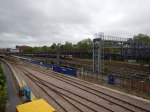
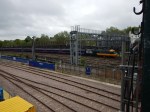
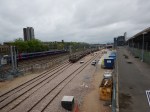
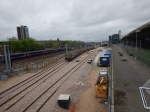
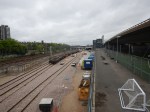


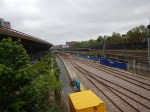
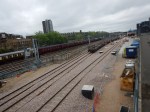


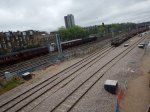
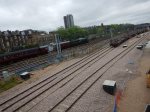
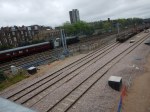
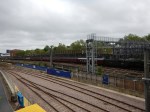
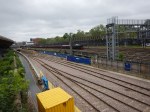
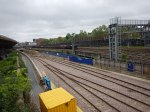
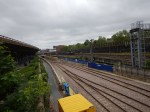
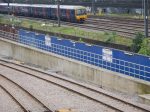
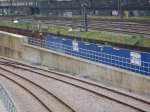
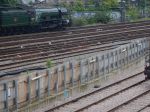
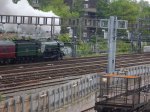
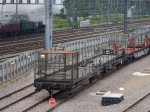
Note.
- Sir Kenneth Grange is an engine named after the HST designer to celebrate forty years service of the trains. There’s more in this article in Rail Magazine.
- The Flying Scotsman went in backwards to Paddington first.
- Crossrail will have reversing sidings to the west of the bridge, with an extension to Westbourne Park bus garage built over the top.
- The Crossrail portal at Royal Oak is probably the one with the best view of the tunnel entrance.
Due to my difficult position, the pictures of the train were rather bad.
Are Thameslink Doing Their Publicity Right?
In A Trip To Tattenham Corner, I wrote about the station and how when Thameslink is expanded, that it will have a two trains per hour service to Cambridge. I said this.
I do wonder if the team that decided that Cambridge would be the other end of the Thameslink service from Tattenham Corner were racing enthusiasts, but it will certainly come in handy for racing, as driving from Newmarket to Epsom is not that easy.
So it surprised me yesterday, that a friend, who lives near Tattenham Corner station, and has a cottage near Kings Lynn station, didn’t know about the upgrading of Thameslink.
He was rather pleased to learn that he could go between Tattenham Corner and Kings Lynn stations with the single change at Cambridge.
I suspect that Thameslink haven’t started publicising their new routes yet!
 The Anonymous Widower