Network Rail’s Problems In Oxford
Oxford is going to be a big rail hub with over the next few years the following projects being completed or at least underway.
1. Chiltern Railways from Oxford Parkway to Oxford station. Services to Oxford Parkway station will start on October 26th 2015, with services to Oxford city centre starting in spring 2016. I’ll believe the last part of that, when a Chiltern Railways train takes me to Oxford. When I visited in March 2015, little seemed to be happening at Oxford station in preparation for the arrival of this service.
2. Oxford station to be substantially upgraded with more platforms and possibly two island platforms for through trains. Again in March 2015, little seemed to be happening.
3. Chiltern Railways from Oxford station to the Science Park on the Cowley branch.
4. Electrification between Didcot and Oxford.
5. The creation of the East-West Rail Link
But according to the August 2015 of Modern Railways, they are having severe problems in the area North of the station, which I explored in a walk in March 2015. This is said.
On top of that, there is a hint of exasperation with the local authorities about the glacial pace of the planning process: it took two and a half years to get approval for a pedestrian crossing to replace a footbridge for Chiltern’s mew line to the city centre, because allotment holders used to wheeling barrows of compost across the line were complaining about the new up-and-down route they would have to take over the bridge. New railway staff accomodation in Oxford is mired in similar planning mud.
Cambridge have upgraded their railways in recent years, and although they have had delays on the new Cambridge North station, there doesn’t seem to have been the same planning mud.
The question has to be asked if the good burghers of Oxford would prefer that money was spent on improving transport infrastructure in more welcoming places. The writer obviously feels strongly as he goes on to say this.
While not wishing to stand in the way of democracy , Network Rail is pointing out that there is a window of opportunity for modernising the route to Oxford that could be lost unless local authorities embrace it wholeheatedly. With NR’s spending plans under pressure, there is a danger that Oxford will be put in the “too difficult” pigeonhole and the caravan will move on. Then it would really be back to the 1970s, with changing at Didcot becoming the best option to reach Paddington at some times of day.
I had a friend who lived in Oxford and he used to say that the Council liked to keep cars out of the City. Perhaps, it is more fundamental than that, and the Council would prefer to keep everybody out of the city, so they can continue to lead their cloistered lives, untroubled by the Twentieth Century, let alone the twenty-first.
Do the same people, who blame Network Rail for their well-documented problems, like these at Oxford and those at Manchester, fully support the improvements in the first place or do they really want money to be spent on their own pet projects?
We certainly need a planning system that allows people to air their views and protest, but also one that takes more account of the good of the majority after all contra-arguments have been rejected.
A Single Objector Holds Up The Ordsall Curve
This article from the Manchester Evening News entitled Ordsall Chord delay: Town hall chief blasts single objector holding up £85m Piccadilly-Victoria rail link, is a superb example of how external factors contribute to delays in not getting vital rail and road infrastructure built and increase the costs, when they do get built.
I will not judge this case one way or the other, but one of the reasons for bad economic progress in the North is poor and outdated rail infrastructure. So surely, it would have been better to have got this argument out of the way a couple of years ago.
I do wonder in this country, how many projects don’t ever get started because organisations like Network Rail feel it is better not to have a fight and leave the inadequate status quo alone.
The South London Workhorse
The 137 sets of Class 455 trains are the workhorses of the electric routes South of the Thames. These are some pictures of those run by South West Trains.


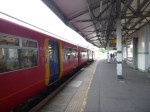
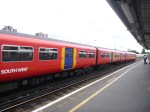
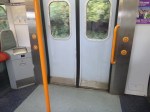
They may have been built in the 1980s, but they scrub up well. They are also built to withstand the heaviest accidents. Is there any other train in the world that can protect the occupants, if an idiot drops a twenty-four tonne cement mixer on top? The Class 455 and their sisters the Class 317 can, as this actually happened at Oxshott to a Class 455. No-one was killed and the train later returned to service a couple of years later.
Perhaps the greatest complement to these trains, is that South West Tains are fitting them with new traction motors, as is detailed in Wikipedia. Would you put a new engine in your 1980s-built car?
There’s an old phrase about horses – Handsome Is As Handsome Does
These Class 455 trains may not look the most beautiful and sexy trains from the outside, but they are the living proof of the phrase.
It is interesting to note, that South West Trains converted their Class 455 trains from 2+3 to 2+2 seating, as happened to many of the Class 317s in North London. However, Southern have kept the cramped 3+2 seating, as have Northern with their Class 319 trains.
Although, I’m only slim and don’t occupy much seat space, I do feel we should endeavour to make 2+2 seating the rule for Standard Class.
Whither Waterloo?
After looking at Waterloo International, I sat in a train before it left for Clapham Junction and it got me thinking about the future of Waterloo station.
It is busy as this extract from the Wikipedia entry shows.
With over 94 million passenger entries and exits between April 2011 and March 2012, Waterloo is Britain’s busiest railway station by passenger usage. The Waterloo complex is the 15th busiest passenger terminal in Europe, and the 91st busiest railway station in the world. It has more platforms and a greater floor area than any other station in the United Kingdom (though Clapham Junction, just under 4 miles (6 km) down the line, has the largest number of trains).
This Google Map shows how big and hemmed in on all sides, the station complex is.
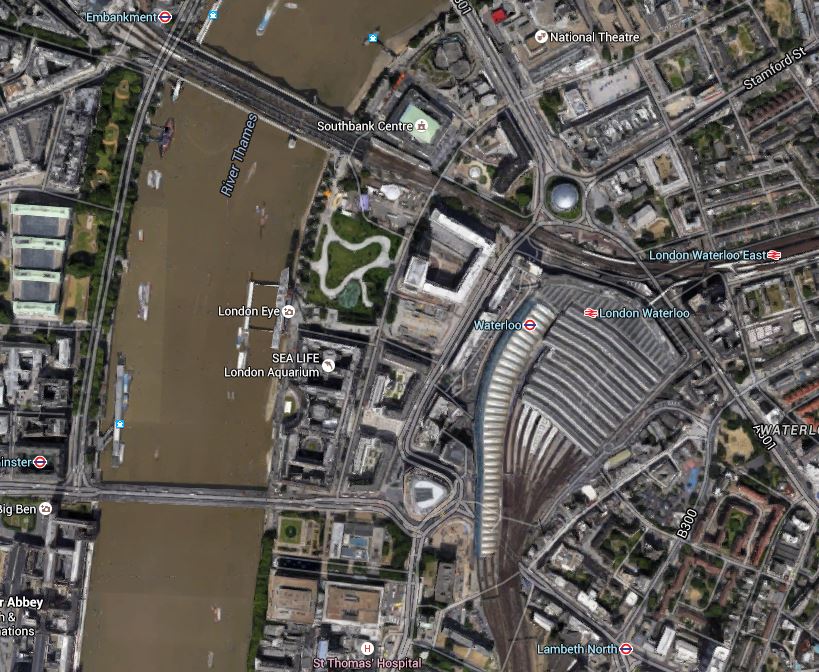
Waterloo Station
It certainly has its problems.
1. Waterloo Station Doesn’t Have Enough Capacity For Trains
South West Trains want to run ten-car trains and the platforms need to be lengthened. That project is in the pipeline, but little seems to be happening.
They also want to bring the other four Eurostar platforms into use. As these platforms were built for the very long Eurostar Class 373 ytrains, they are a complete mismatch for the typical trains that South West Trains typically run.
2. The Lines Into Waterloo Need Sorting
If you increase the trains using the station, you’ll need to increase the capacity on the lines leading into the station.
3. Waterloo Station Doesn’t Have Enough Passenger Facilities
$25million has been spent on creating a retail balcony with shops and restaurants.
But I think that even this is proving not to be sufficient at busy times!
4. The Underground And Waterloo And City Line Don’t Have Enough Capacity
Getting to Waterloo is not easy for people like me in East London and we’re not the only area of London, from where getting to Waterloo is difficult and often overcrowded.
There are two ways that Waterloo can go. Either you try and squeeze more and more trains and passengers into the existing sites or you reduce the number of both to fit the current facilities.
If Crossrail 2 is designed properly and built, it will have the following effects on Waterloo,
1. Reduce the number of trains needing to use Waterloo, by diverting trains and passengers into the tunnel at Wimbledon and then under Central London.
2. This will in turn, free up much-needed platform space and train paths.
3. As passengers will not be changing at Waterloo, but passing underneath on their way to Central London, the pressure will be taken off the station facilities.
If the Northern and Bakerloo Lines get some of proposed capacity increases, this will also take the pressure off Waterloo. But the one I’d improve would be the Waterloo and City Line and make it run 24/7.
There is also an unofficial proposal for Crossrail 3, which would link Waterloo and Euston via a tunnel.
Possibly! But let’s make full use of Thameslink, the East and West London Lines and Crossrail 2 first. I think that if we reorganise Old Oak Common and manage to get an extra track or two along the West London Line.
Waterloo’s Blue Elephant
Waterloo International station was built for Eurostar services at a cost of £120million. I needed to get out of Waterloo to Clapham Junction and I noticed that the first train was in Platform 20 in the old Waterloo International.
So I went and had a look inside for the first time since C and myself went to Paris for the weekend.
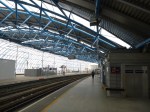
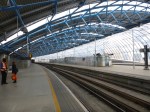
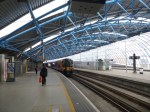
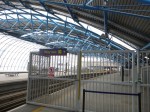
I could have thought of better ways to spent £120million on the railways.
Every Transport Minister in the UK, should have a photograph of this blue elephant subtitled Don’t Create Another Of These on his or her desk.
Architects might like the design, but I think that there are much better-designed stations in the UK. Manchester Victoria is my current favourite, which scores highly on design, quality of construction and affordability.
The biggest crime though for Waterloo International, is that it was designed and built and when it was found to be inadequate, a replacement station was started.
It definitely scored -2 out of 10 for overall planning.
It is interesting to note that the whole farce of the Channel Tunnel Rail Link was more politically-led, whereas Crossrail is much more led by what engineers and architects say is possible. From what I’ve found out about Crossrail 2, it would appear that it has gone further down that route.
Before Crossrail 2 – Tottenham Hale
In the near five years since, I moved back to London, Tottenham Hale station has changed for the better, with the addition of a lift to the Victoria Line platforms and the reorganisation of buses, taxis and other traffic around the station.
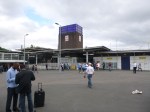


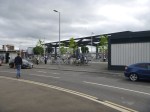
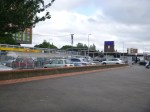
But over the next few years, we should be seeing a lot more changes as this Future section in the Wikipedia entry for the station. The significant section is about Crossrail 2.
In February 2013, the Crossrail task force of business group London First, chaired by former Secretary of State for Transport Andrew Adonis, published its recommendations on Crossrail 2, favouring a route almost identical to the regional option proposed by TfL in 2011. The report was endorsed by Network Rail.
This proposal will see four tracks restored through Tottenham Hale and direct links to South-West London.
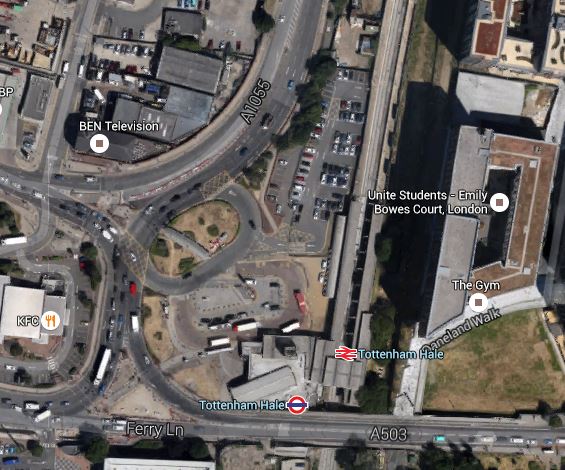
This Google Map shows the station and the surrounding area.
Tottenham Hale Station
This image appears to have been taken before the new Tottenham Hale Bus Station was created and the traffic system was changed.
With all the development going on, putting four tracks through the station will need a very narrow track and platform layout.
On this page of the Haringey web site are more details and an artist’s impression of the proposed station. This picture is shown in an article in the Tottenham Journal.

Proposed Tottenham Hale Station
I would suspect that a wide bridge would extend eastwards from this building over the tracks with lifts and escalators to the platforms. Looking at this image, it does strike me that the the architect has taken some of Charles Holden‘s stations as their inspiration.
Before Crossrail 2 – Northumberland Park
Northumberland Park station is another one with a level crossing, as this Google Map of the station and the area shows.
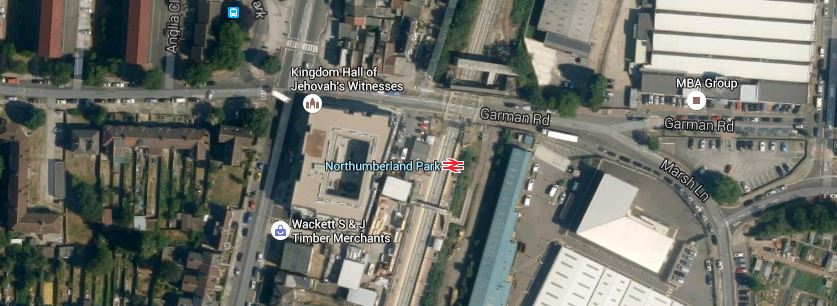
Northumberland Park Station
I went to the station on a 476 bus and took these pictures.

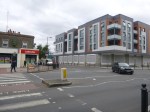
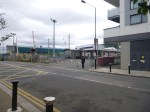
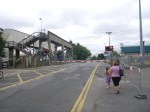
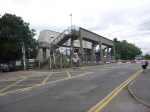

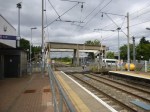
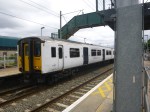

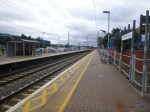
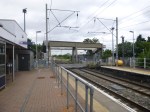
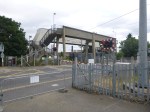
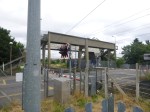
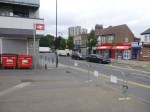
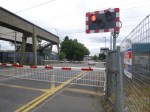
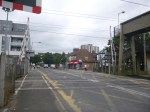
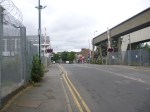
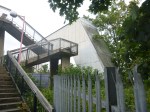


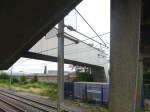
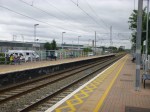

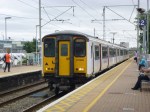
You get the impression, that despite the problems caused by the level crossing, no-one has ever had a decent holistic plan for this station.
Before Crossrail 2 – Capacity And Level Crossings From Tottenham Hale To Hertford East
It is being proposed that Crossrail 2 goes up the West Anglia Main Line just after it surfaces from the central tunnel and then it would take the Hertford East Branch to the terminus at Hertford East station.
There are some issues and problems on the West Anglia Main Line that have to be solved before Crossrail 2 can be fully developed.
1. Services At Lea Bridge Station
The service level at the new Lea Bridge Station must be settled before the full plans for Crossrail 2 can be drawn up.
Wikipedia says that it is intended to have three trains per hour stopping at the station in both directions. All Southbound trains would go to Stratford and two Northbound would go to Bishops Stortford and one to Angel Road.
I don’t think that this level of service will be provided, as Transport for London like to set a minimum of four trains per hour, which exists on many places on the Overground. Surely, if the large development at Meridian Water is to realise it’s full potential, Angel Road will need a frequent service to Stratford and Liverpool Street, in addition to the full Crossrail 2 service.
There is also the complication of possible services between the Chingford Branch and Stratford using the Hall Farm Curve.
Between the Hall Farm Curve and Stratford, there is probably enough capacity on the two track line to accommodate the extra services, but what about north of where Crossrail 2 emerges from its central tunnel probably in the area of Coppermill Junction?
2. The Service Level On Crossrail 2
The service level from Liverpool Street to Hertford East is currently two trains per hour, which would probably be doubled to four trains per hour, as this is Transport for London’s preferred minimum.
The question has to be asked if there will still be a service between Hertford East and Liverpool Street via Hackney Downs?
Train commuters tend to be a conservative bunch and they may not take kindly to being told that instead of going into Liverpool Street they’re going to Angel and Kings Cross.
So I suspect that just as when Thameslink is completed there will still be services on the Sutton Loop Line, I suspect they’ll still be two trains per hour between Hertford East and Liverpool Street.
3. Extra Termini
The South Western end of Crossrail 2 has quite a few branch lines that can be used to extend the system, but in the North East, there aren’t the obvious termini.
With a railway like Crossrail 2, it is important that the line is balanced as this makes it easier to operate. The East London Line has four terminal platforms at both ends and each platform operates a four trains per hour service to its paired platform, thus giving sixteen trains per hour through the core. I think Thaneslink and Crossrail will both use a similar operating principle.
To accomplish this, Crossrail has the ability to turnback trains short of the terminus of the line at stations like West Drayton and Chadwell Heath,
I suspect that to make it easier to balance the service through the core tunnel, there will be one or more stations on Crossrail 2 that can turn trains back. The three most important stations; Tottenham Hale, Cheshunt and Broxbourne might be provided with such a facility. These stations could also act as interchanges between Cambridge and Stansted services to Crossrail 2.
I do wonder if the planners of Crossrail 2 are looking at putting a facility at Angel Road, which will become an important station because of the Meridian Water development.
There is certainly more opportunities to create extra termini on the line, than would there would appear from a cursory look.
4. Capacity From Tottenham Hale To Broxbourne
There are a lot of possibilities for making more and better use of Crossrail 2 services up the Lea Valley, but all of them will add to the number of trains running between Tottenham Hale and Broxbourne.
In addition if the services through Lea Bridge are increased then we’ll see the following trains running up the line.
- Stansted Expresses – Liverpool Street-Stansted Airport – 4 tph
- Cambridge Expreses – Liverpool Street-Cambridge – 2 tph
- Liverpool Street-Bishops Stortford – 2 tph
- Stratford-Bishops Stortford – 4 tph
- Liverpool Street-Hertford East – 2 tph
- Crossrail 2-Hertford East – 4 tph
The frequencies are speculation, but when you add them up, they do illustrate how more capacity is needed on the line, especially when you take into account the fact that the Cambridge and Stansted services will want to travel much faster than the local stopping services.
The planners for the West Anglia Main Line are already planning an increase in the number of lines from two to four as this Future Developments section in Wikipedia says.
If Stansted Airport’s expansion is authorised it is planned that the line will see many further changes. Long term proposals include four-tracking between Coppermill Junction and Broxbourne junction; an additional tunnel and platform edge on the Stansted Airport branch; one additional train per hour serving Stansted and up to six further trains per hour at peak times, including four into Stratford as a terminus. More stations, such as Broxbourne, will also have platform extensions to accommodate 12-car trains.
It seems likely that two tracks will be built alongside the line to Cheshunt as part of Crossrail 2. Intermediate stations from Tottenham Hale will transfer to Crossrail 2 releasing capacity on the main line for additional trains
I think that the last paragraph could be saying that stations like Northumberland Park, Angel Road, Ponders End, Brimsdown, Enfield Lock and Waltham Cross will have two fast tracks without platforms and two slow Crossrail 2/local tracks with platforms.
Whatever it means, the four-tracking is one of those projects that is needed whether Crossrail 2 is built or not.
I would hope that Network Rail’s surveyors have shown that four-tracking is possible. It will certainly need a design of narrow station.
5. Level Crossings
Levels crossings are numerous on the West Anglia Main Line, with examples at Northumberland Park, Brimsdown and Enfield Lock, south of Waltham Cross. The post on Enfield Lock shows queues at the crossing. This Google Map shows queues at Northumberland Park.
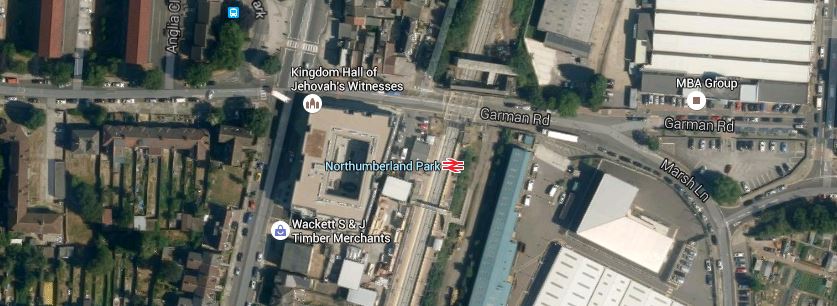
Northumberland Park Station
Removing this level crossing would look to be particularly difficult, but surely with the development of Meridian Water just to the North East, the time is now right to sort it once and for all.
Incidentally, when I worked at Enfield Rolling Mills in the 1960s, driving across the railway was a slow and tedious business, because of jams at the Brimsdown and Enfield Lock crossings.
In the 1980s the A1055 Meridian Way was built, which must have taken some pressure from these two level crossings.
I have found this page from Hansard in 1958, which mentions the Brimsdown level crossing and another which must have now been closed at Ponders End.
It’s now nearly sixty years!
I think any plan to four-track the West Anglia Main Line must include removal of these crossings.
6. Conclusion
I think it is essential that the West Anglia Main Line is four-tracked and the level crossings south of Broxbourne are removed before any other work on Crossrail 2 starts. I would also rebuild the Hall Farm Curve at the same time.
Before Crossrail 2 – Enfield Lock
After visiting the house where my mother was born, I took a bus to Enfield Lock station.

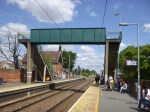
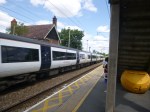
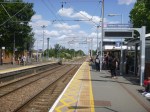

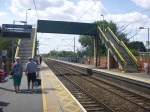
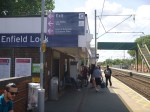
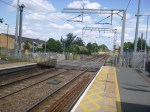
The footbridge must be one of the steepest I’ve seen. At least you can cross the line at the level crossing by the station.
This Google Map shows the station.
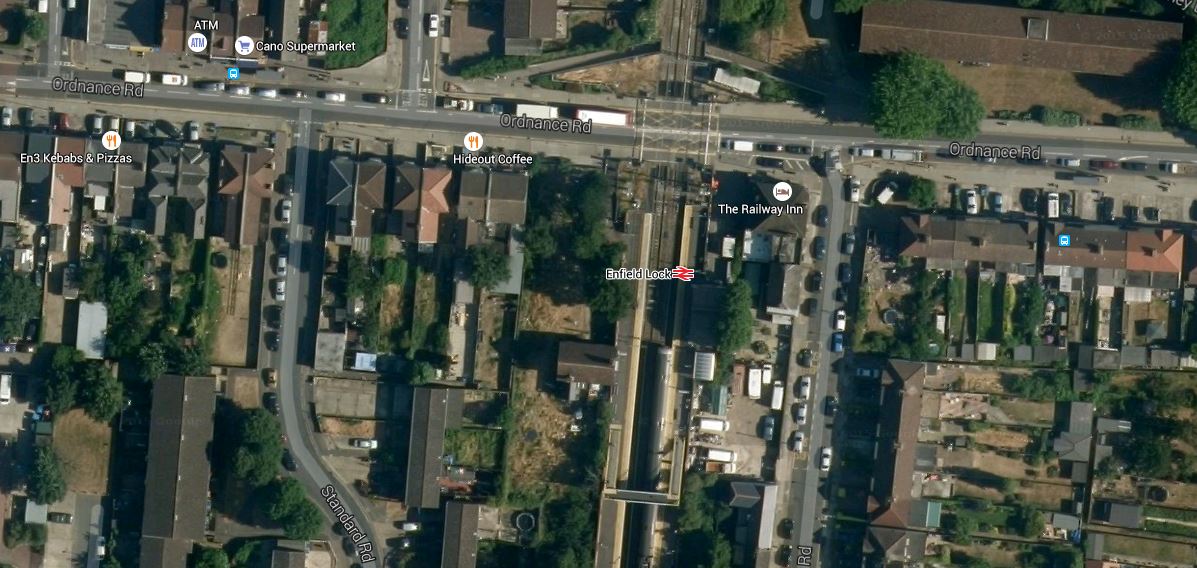
Enfield Lock Station
Note that there appears to be a pedestrian subway on the North side of the level crossing, which also seems to be holding up lots of traffic.
As there is another level crossing at Brimsdown station, when I worked at Enfield Rolling Mills in the 1960s, driving across the railway was a slow and tedious business.
In the 1980s the A1055 Meridian Way was built, which must take some pressure from these two level crossings and a third at Northumberland Park station.
T
Are Tracks And Platforms At Stratford Ready For Crossrail?
On my way back home, I came via Stratford from where I took a TfL Rail Shenfield Metro train into London.
I’d come from Pudding Mill Lane and was surprised I could walk directly on to the platform between the westbound Central and Shenfield Metro Lines. These are platform 3 and 5 respectively.
I took these pictures whilst waiting for the Class 315 train to arrive.
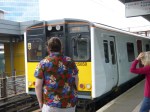


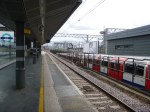

I was surprised, that the view had very much the air of tracks and platforms that were now ready for Crossrail. I suspect that signs and signals will need to be completed and tested.
I should say that on my way into Liverpool Street I got a good look at the lines that will probably be diverted into the tunnel. I don’t think it will be many months before they start track-laying here.
The original layout has been preserved, where the two westbound (Platforms 3 & 5) and two eastbound lines (Platforms 6 & 8) respectively share a platform, so that passengers can transfer across between trains. It’s a layout that should be used more often.

