Crossrail’s Tunnelling Site on the Limmo Peninsular
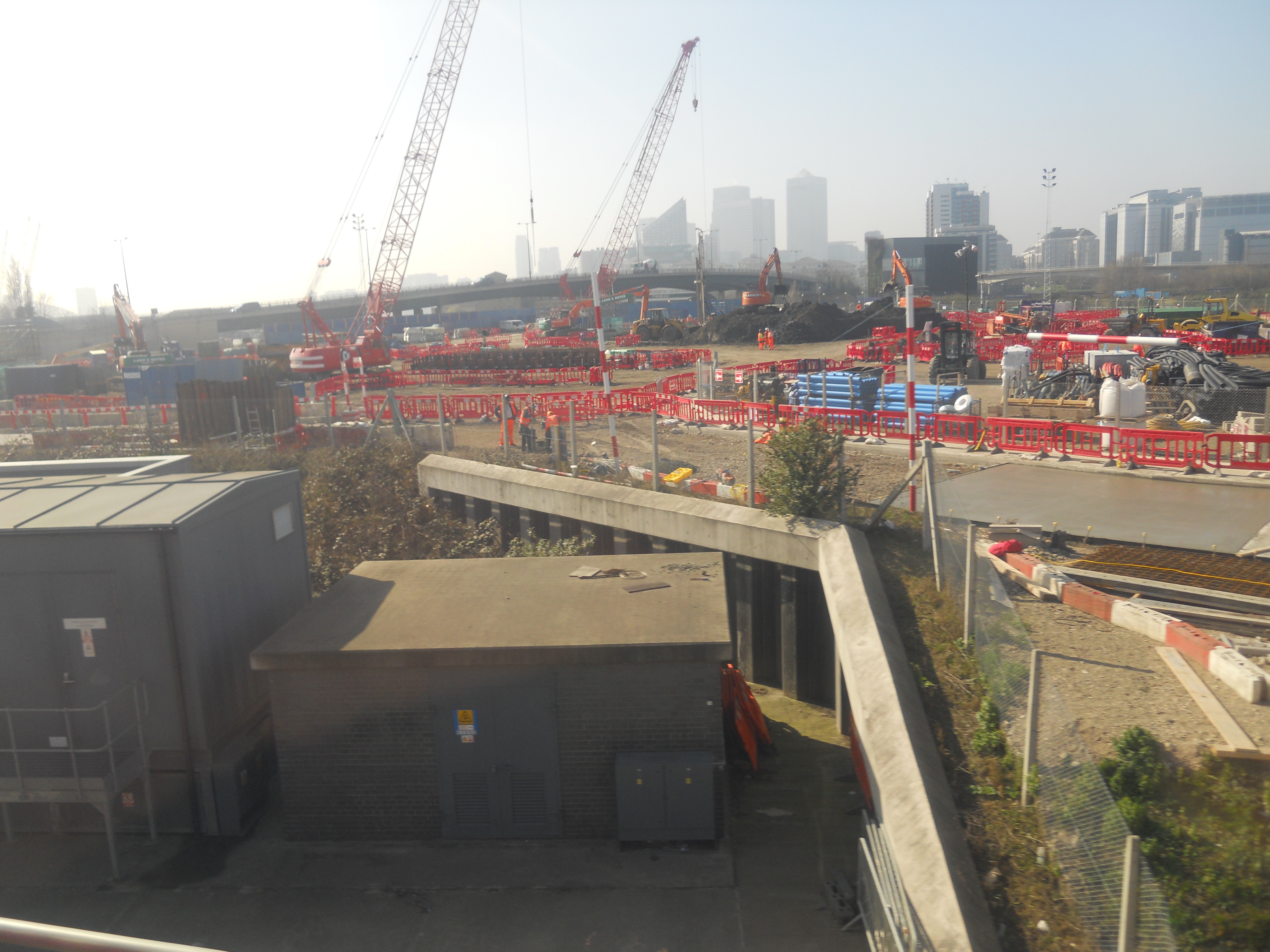
If you take the Docklands Light Railway from Poplar to Canning Town, the train takes a wide loop just after East India station. The enclosed area is the Limmo Peninsular and it sits in a loop of the River Lea as it travels towards the River Thames. In the distance there is an enclosure with several large cranes surrounded by blue fencing.

The Crossrail Site on the Limmo Peninsular
I would assume that this is tunnelling site for Crossrail. The picture was taken from the platform at Canning Town station.
A couple of days after I took the picture, I went back again and took a picture of the site from a train on the Docklands Light Railway going to Beckton.
The Crossrail Site at Limmo from the DLR
I also took another showing an impressive set of Portacabins.

Portakabins Galore!
You can just see the Crossrail logo on the buildings.
A Better Picture
In this post, I said I might be able to get a better picture of the TBMs from a main line train. So today, I tried again.
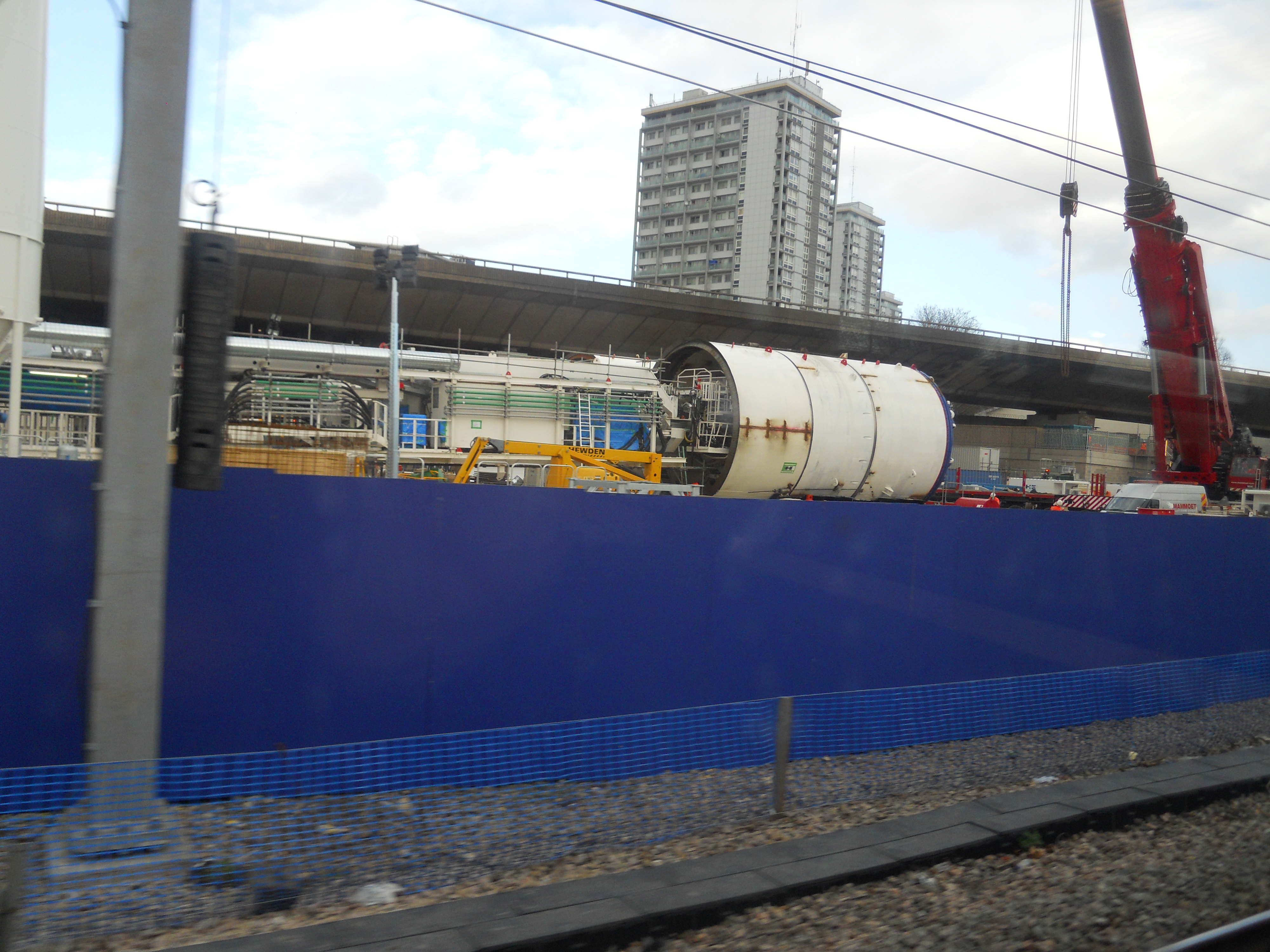
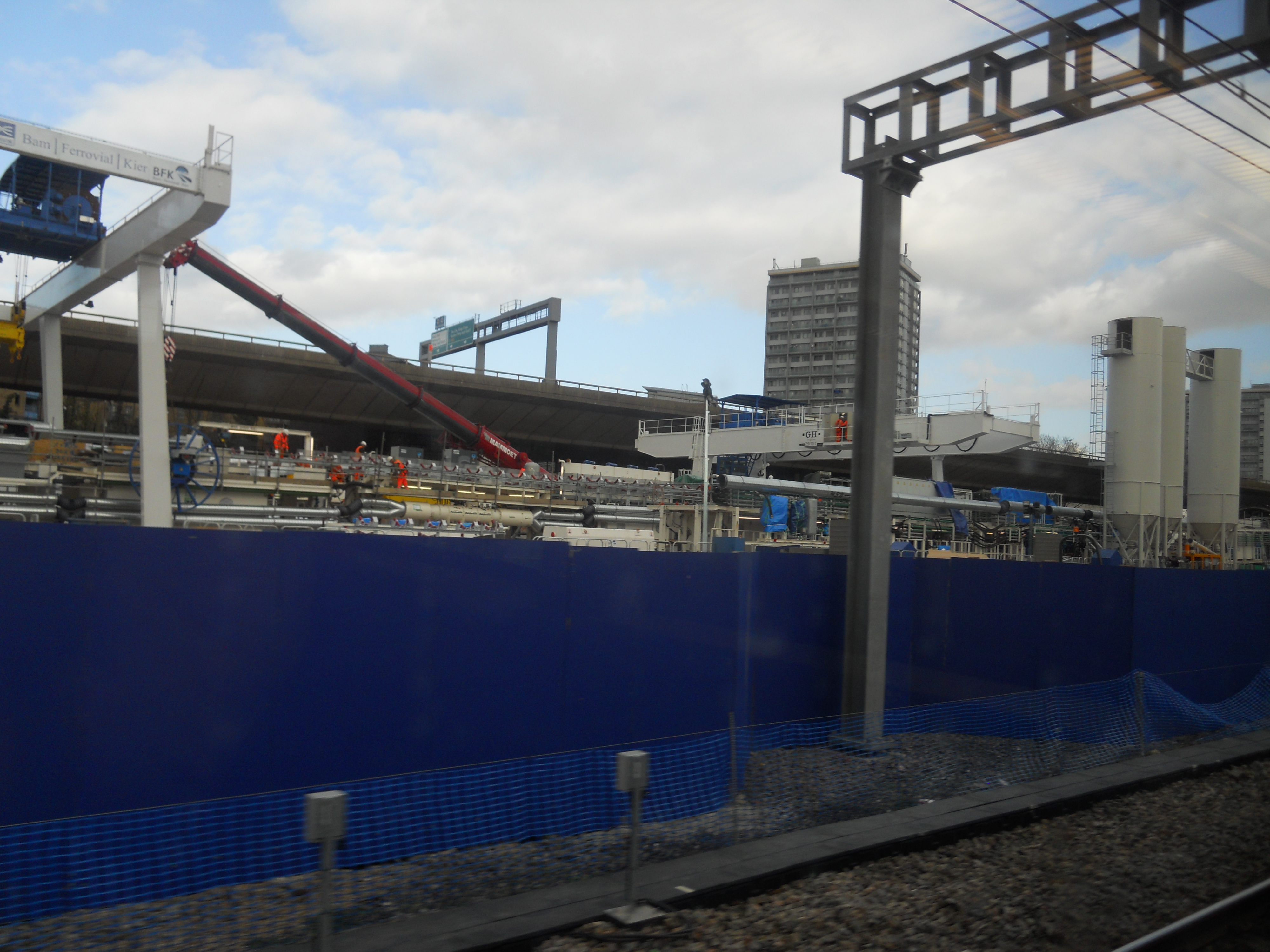
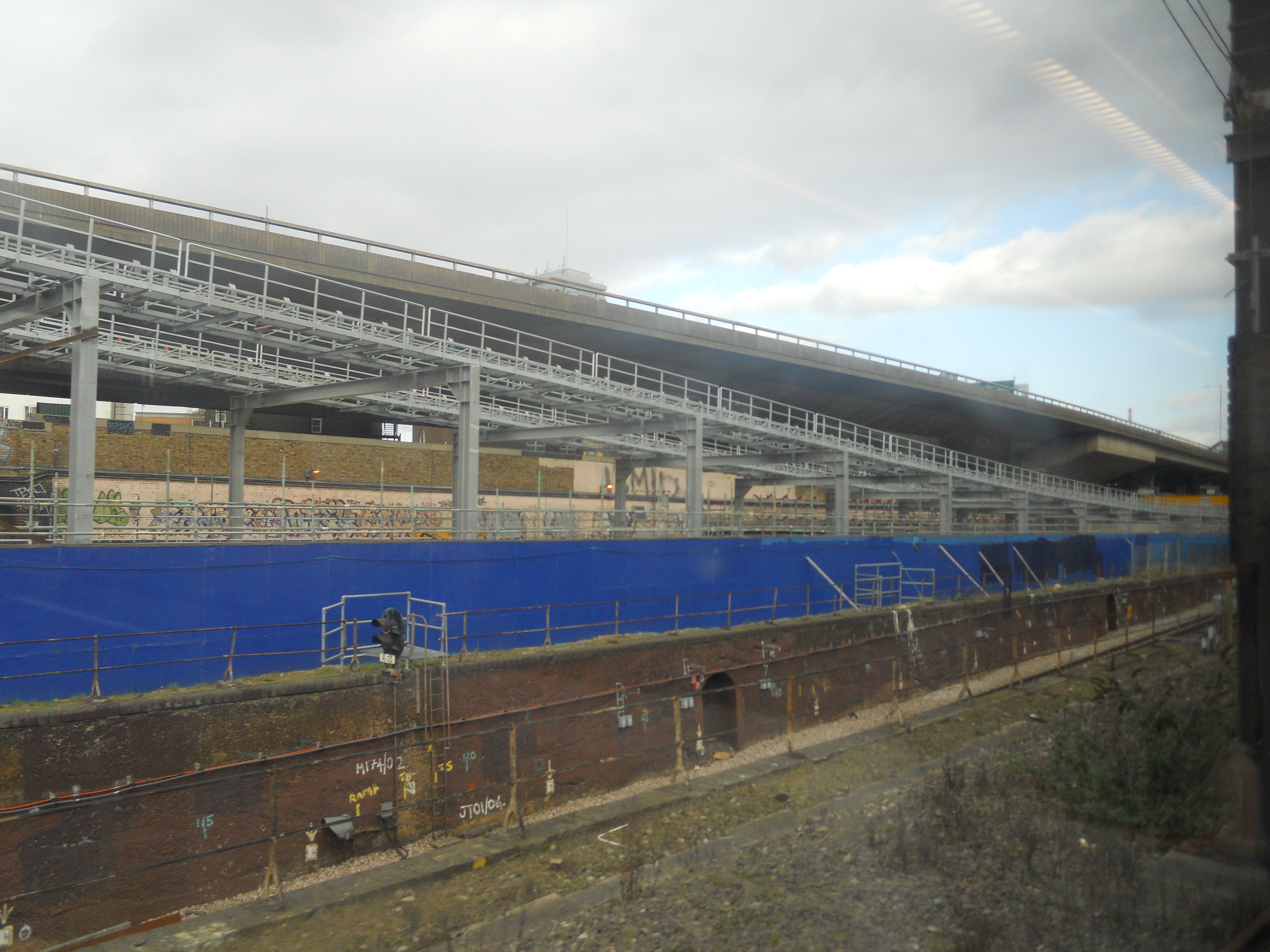
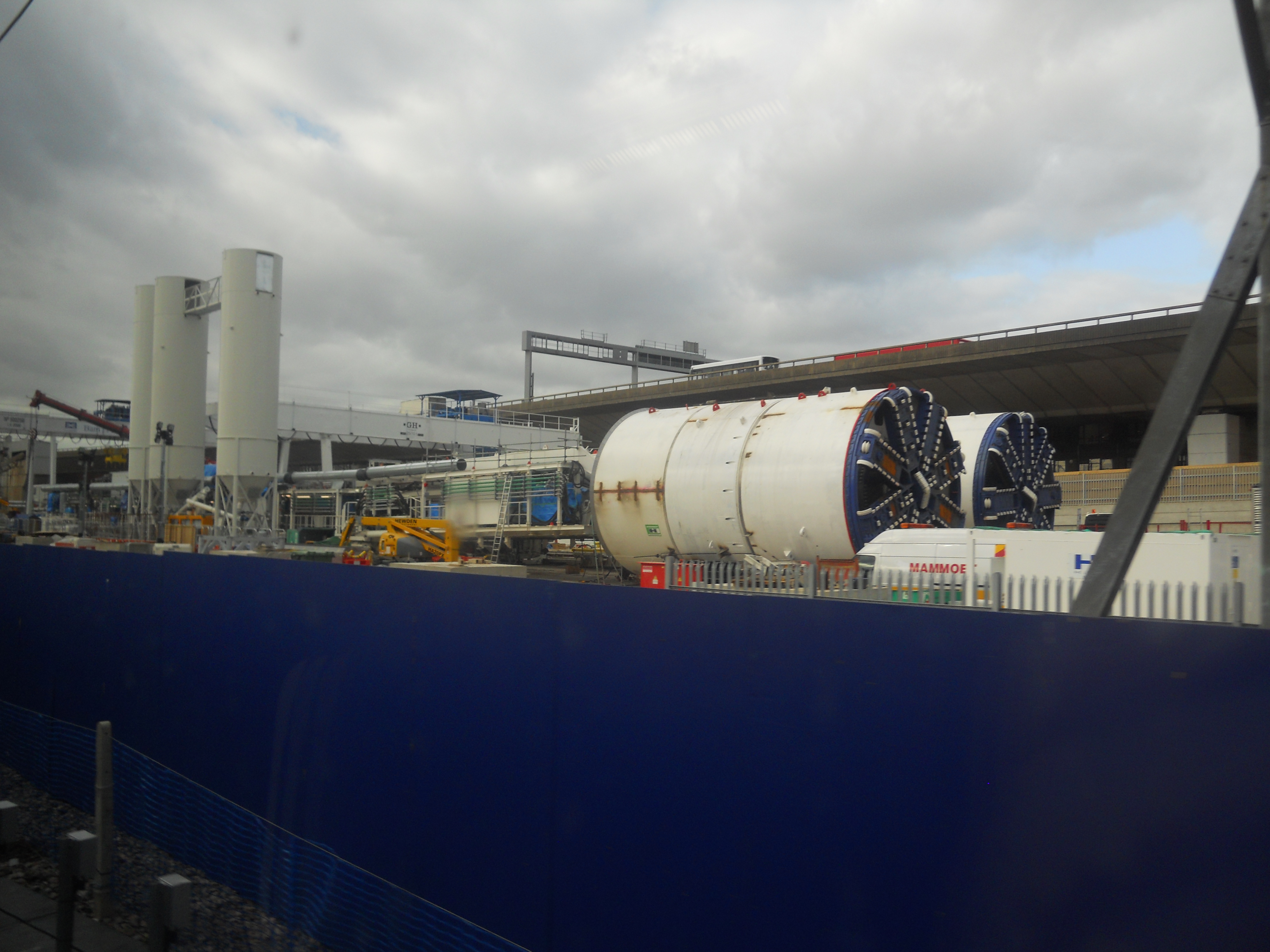
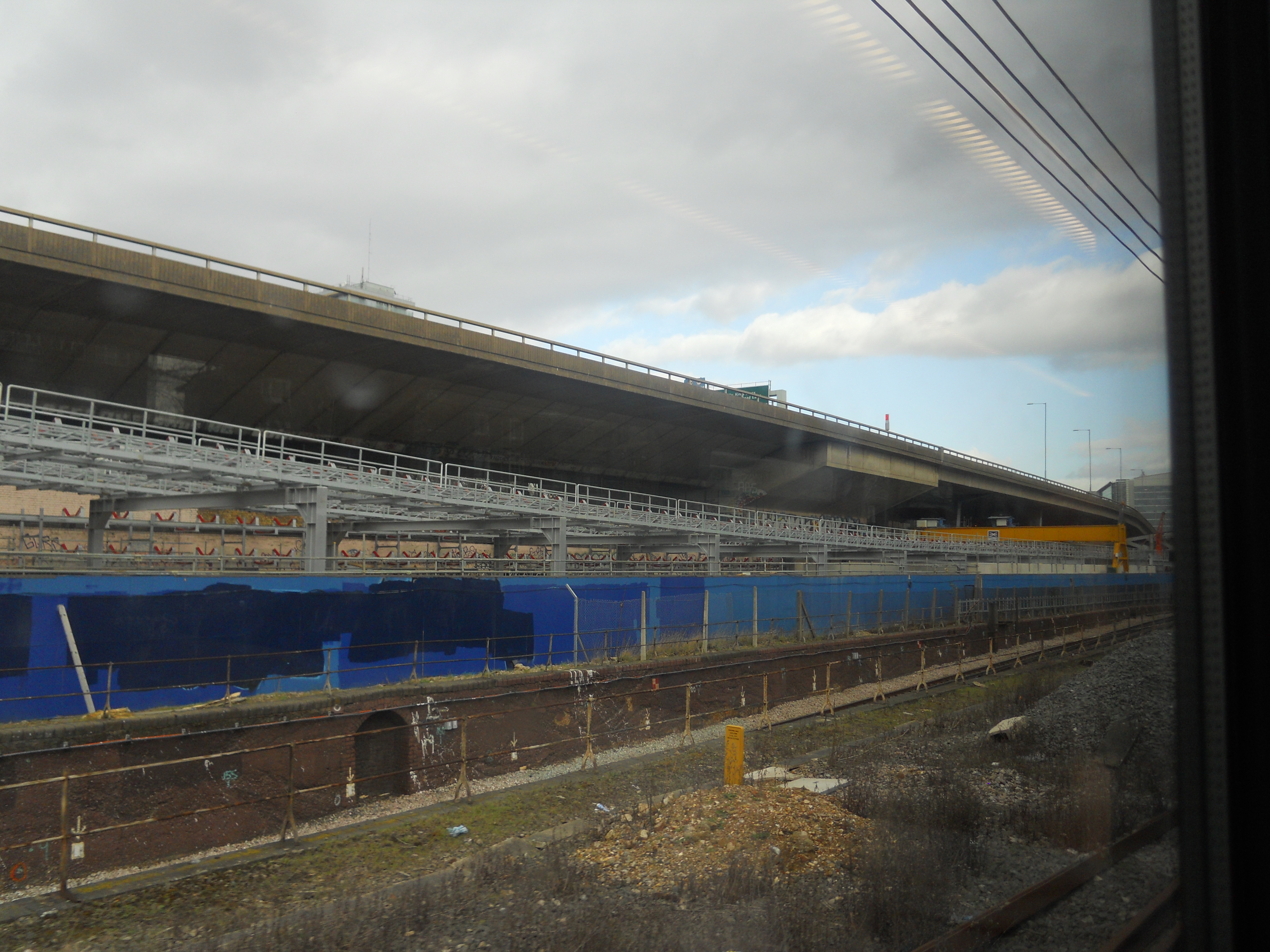
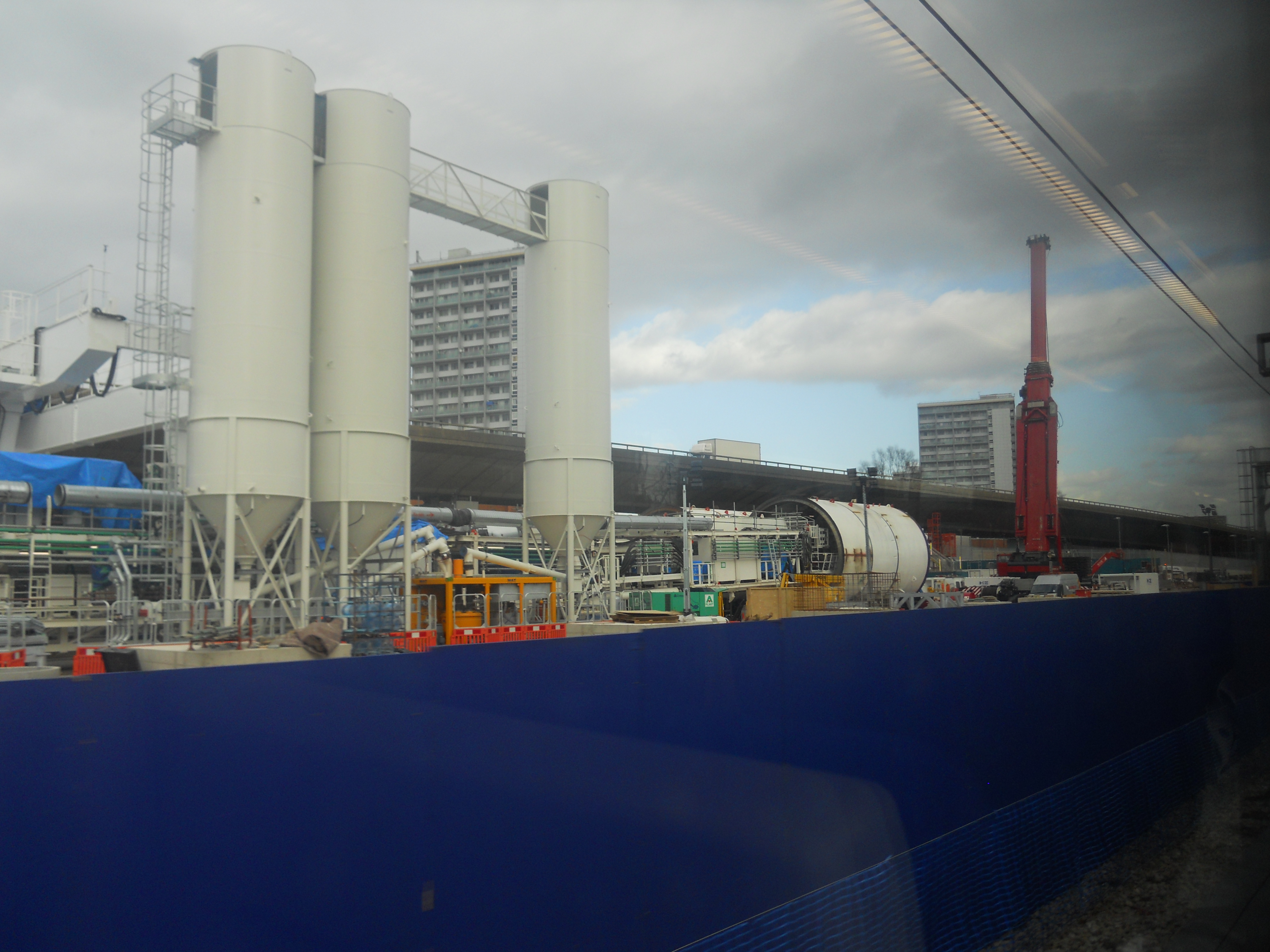
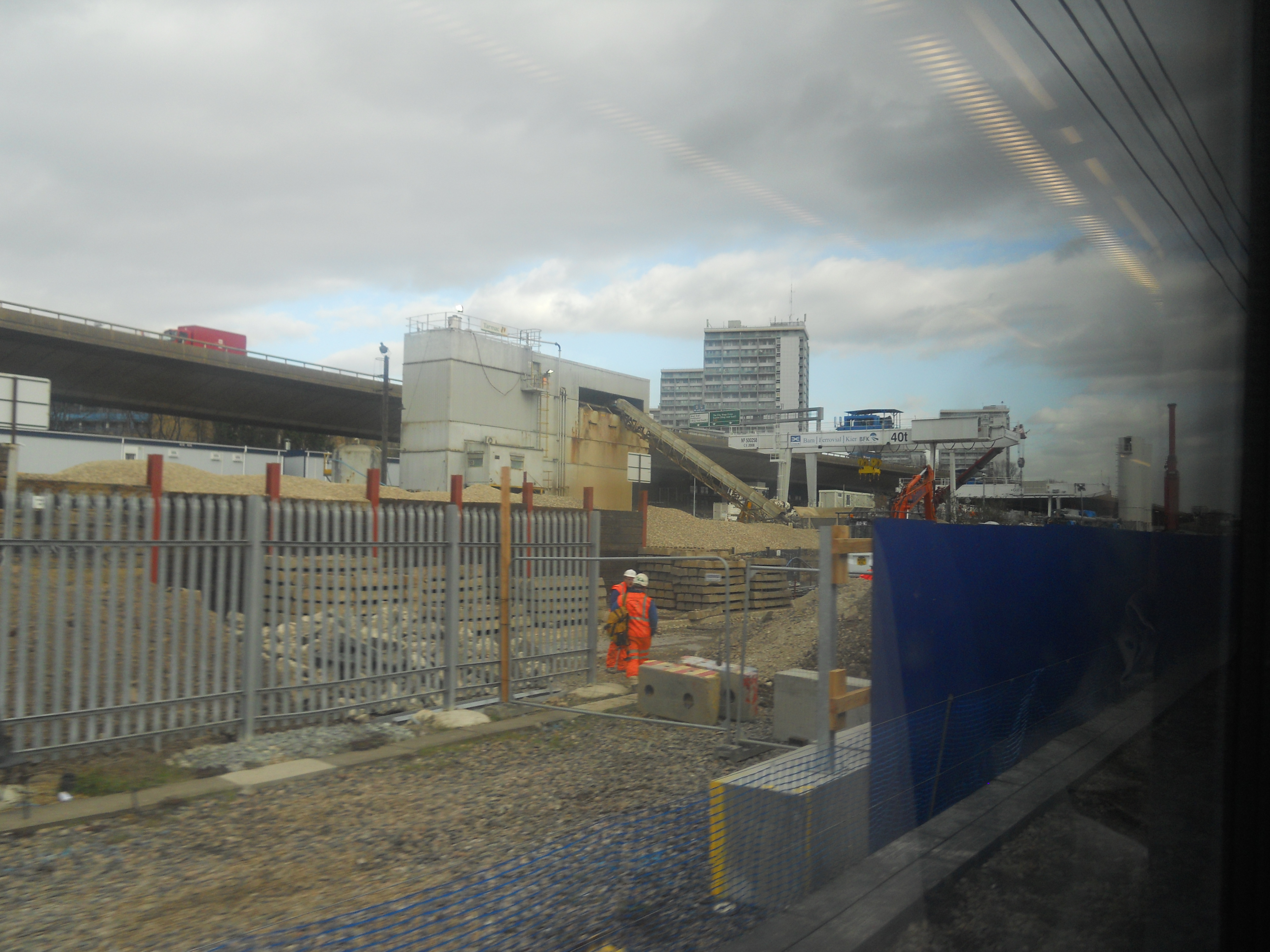
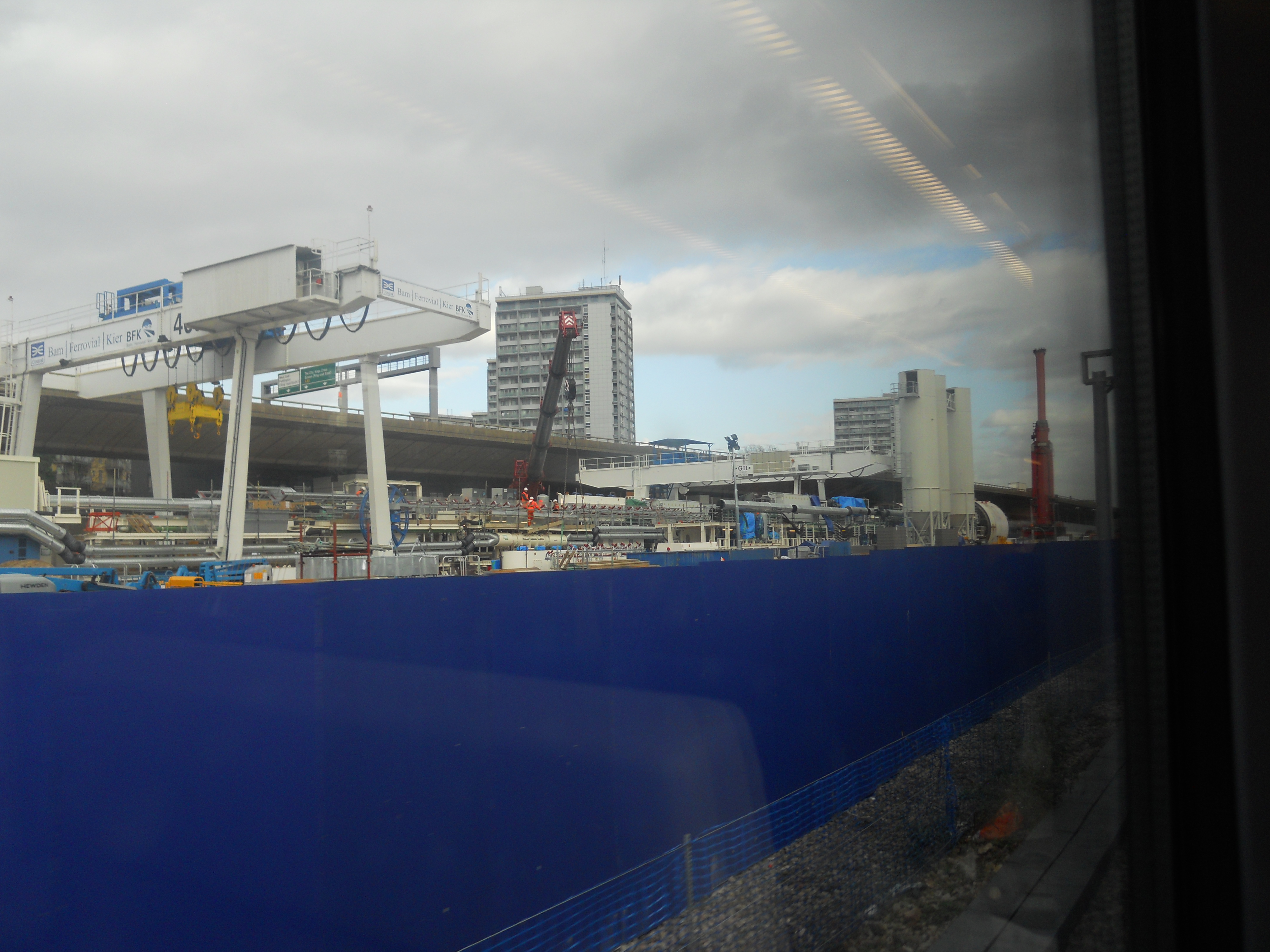
I took a train to Ealing Broadway station and back again. I actually think if you want to take pictures it might be best to actually go to Acton Main Line, as the Oxford train, I got on return, went past the tunnelling site rather fast.
Note that each of the two tunnel boring machines consist of a large cutting head, with all sorts of ancillaries trailing on behind, like some giant tadpole.
I think that the gantries will be used to lift the machines to the portal at Royal Oak and support the conveyors taking out all of the spoil.
Around Chambers Wharf
Chambers Wharf has made the news recently, as Thames Water want to make it one of the sites from where London’s Thames Super Sewer is to be built. So I went and had a look round this lunchtime.
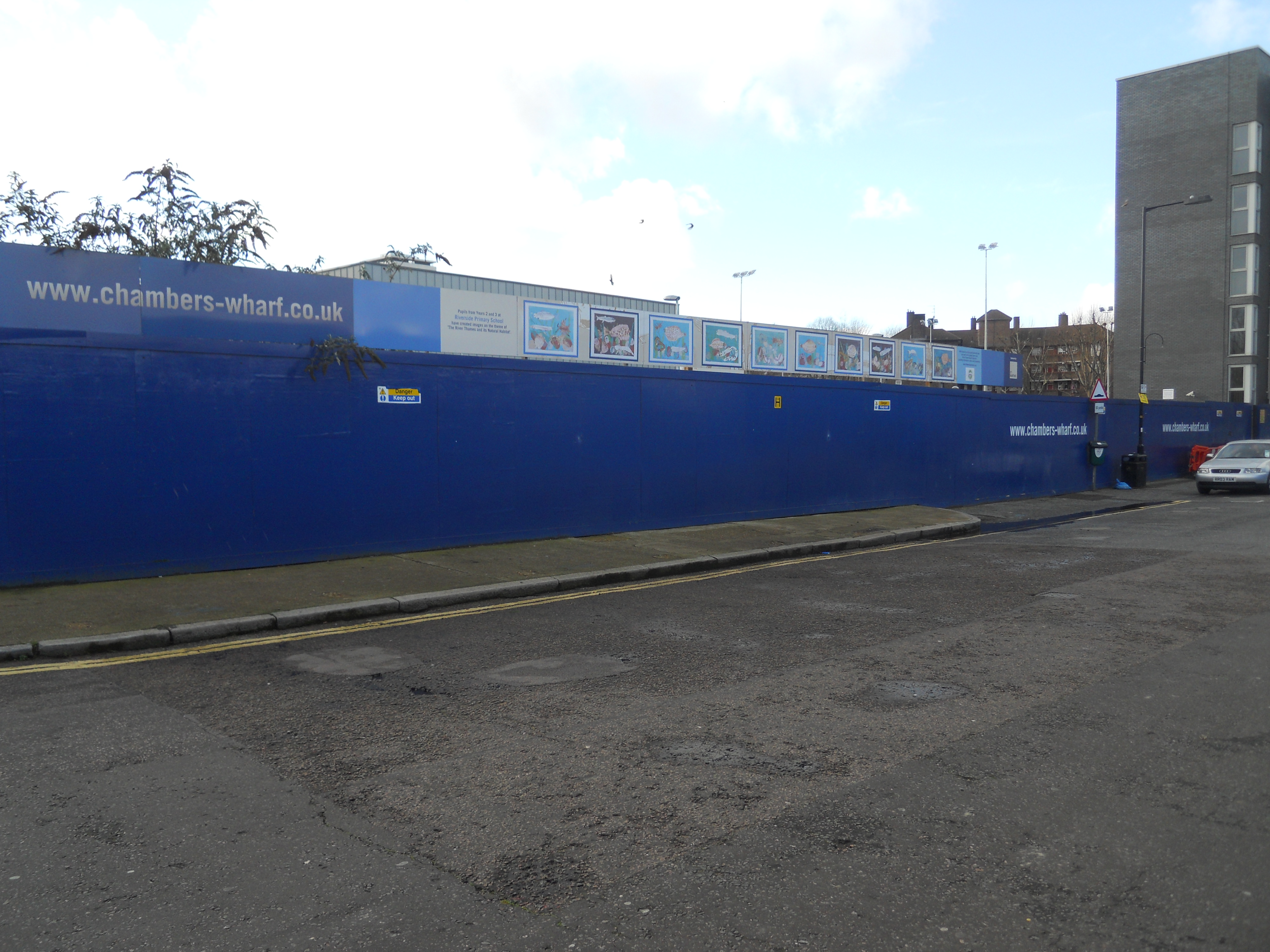
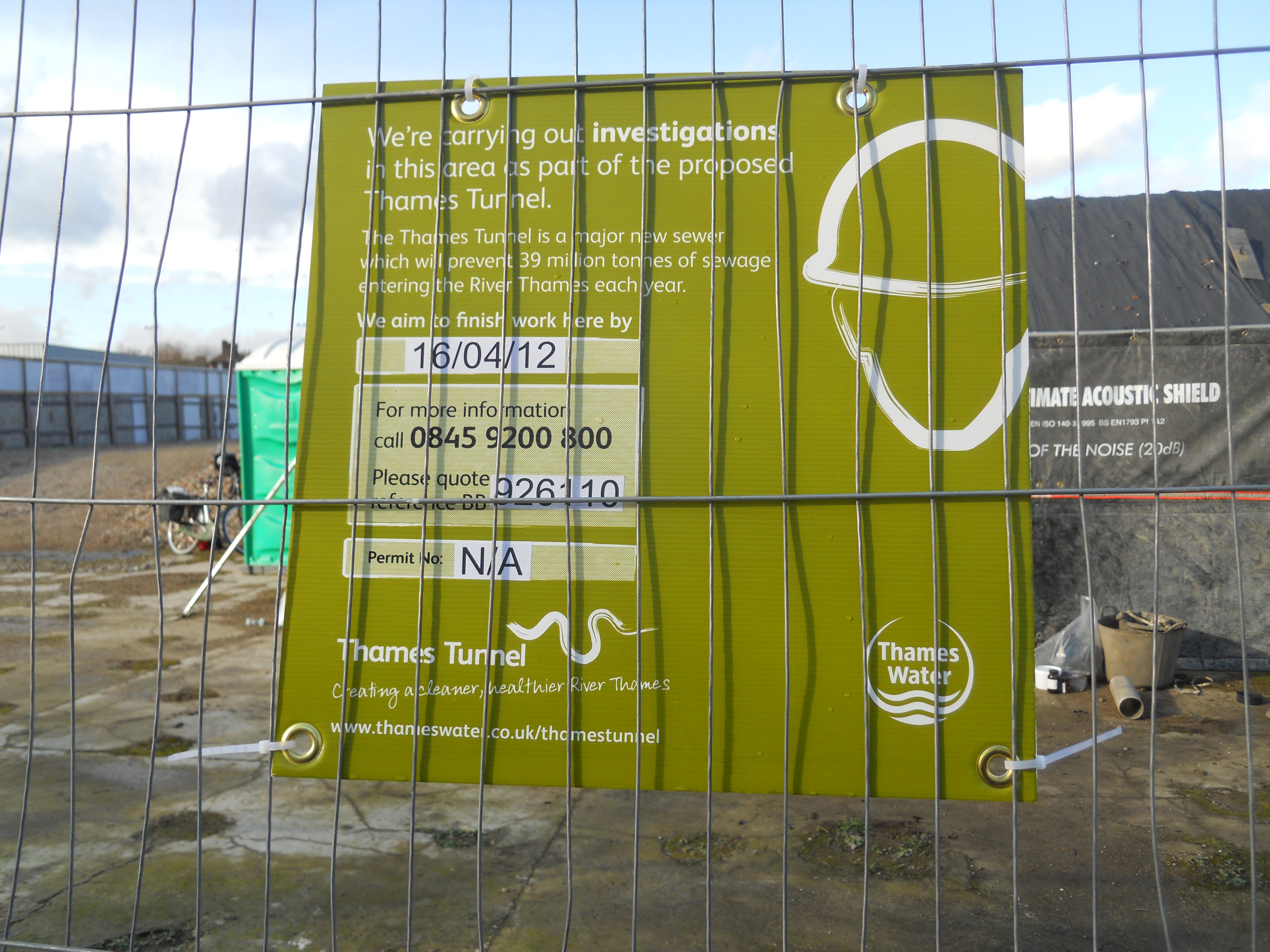
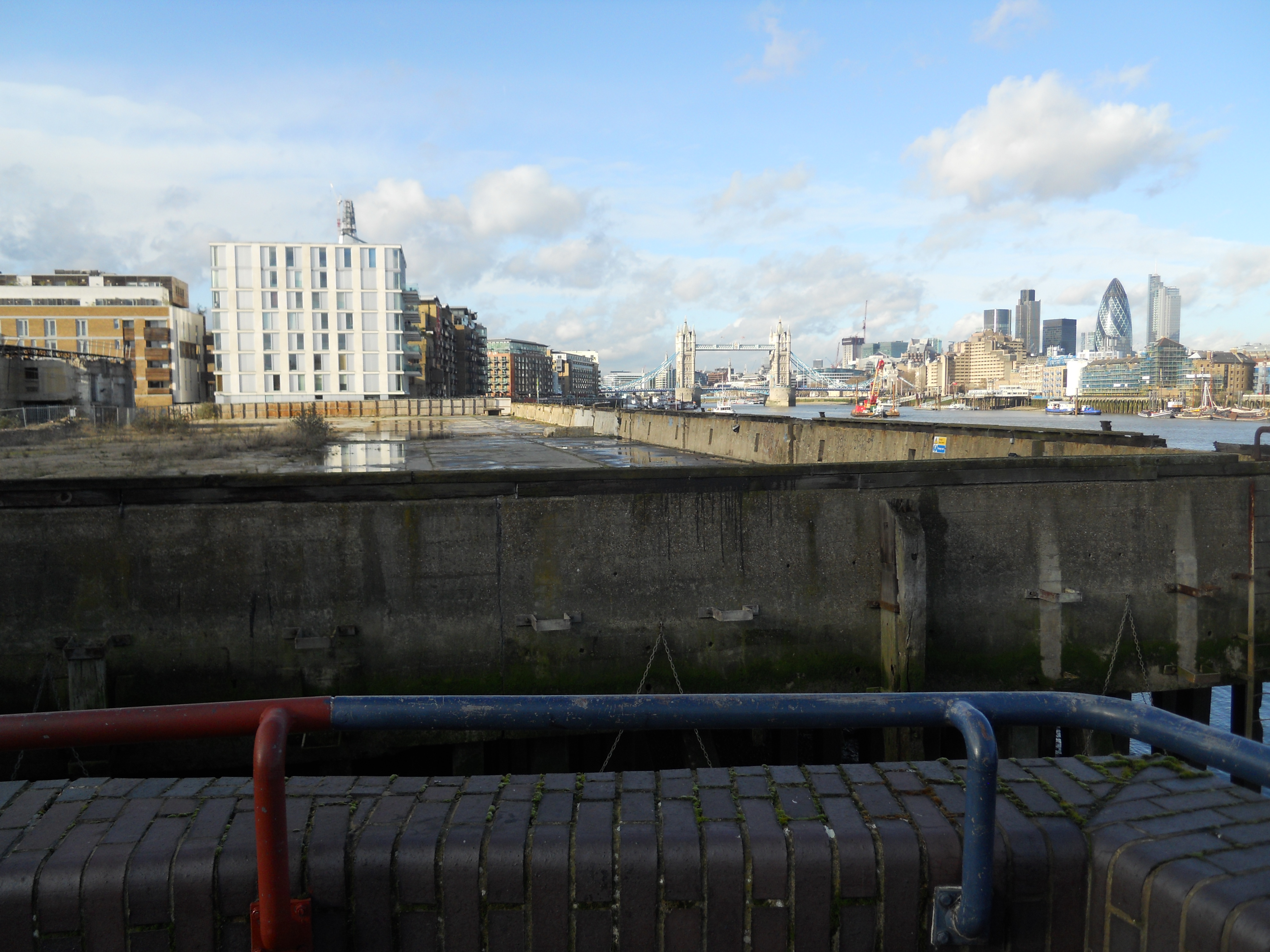
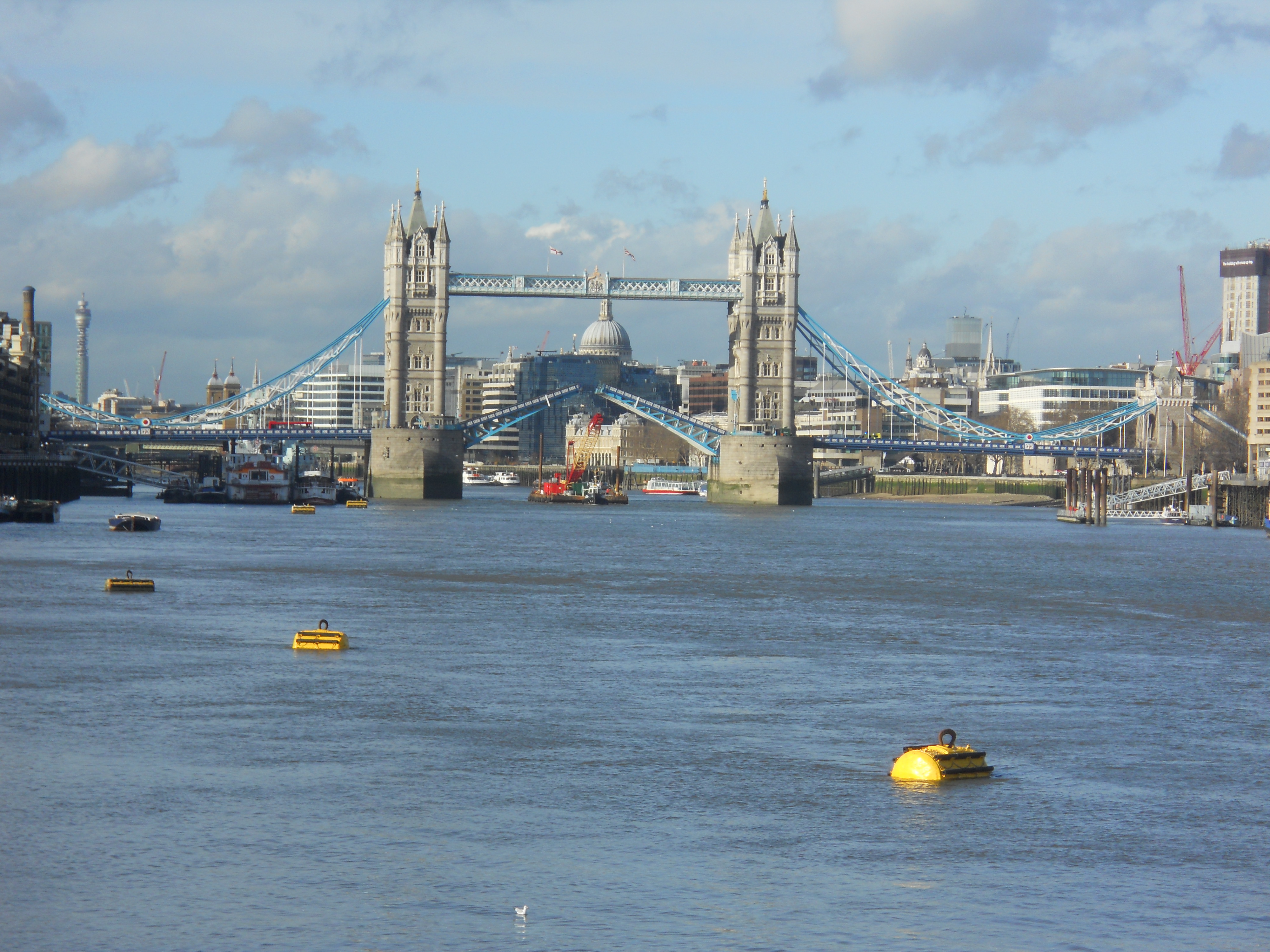
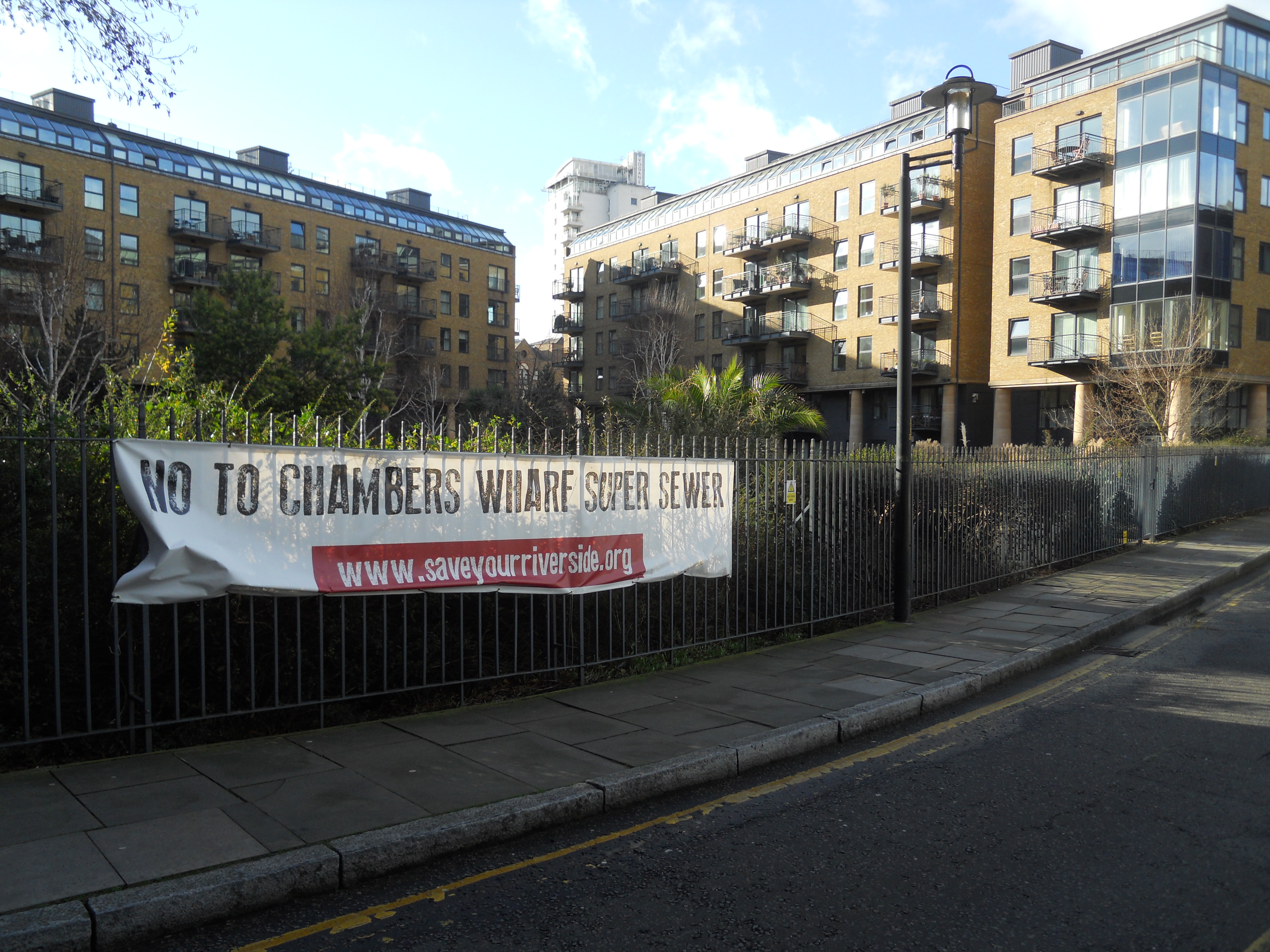
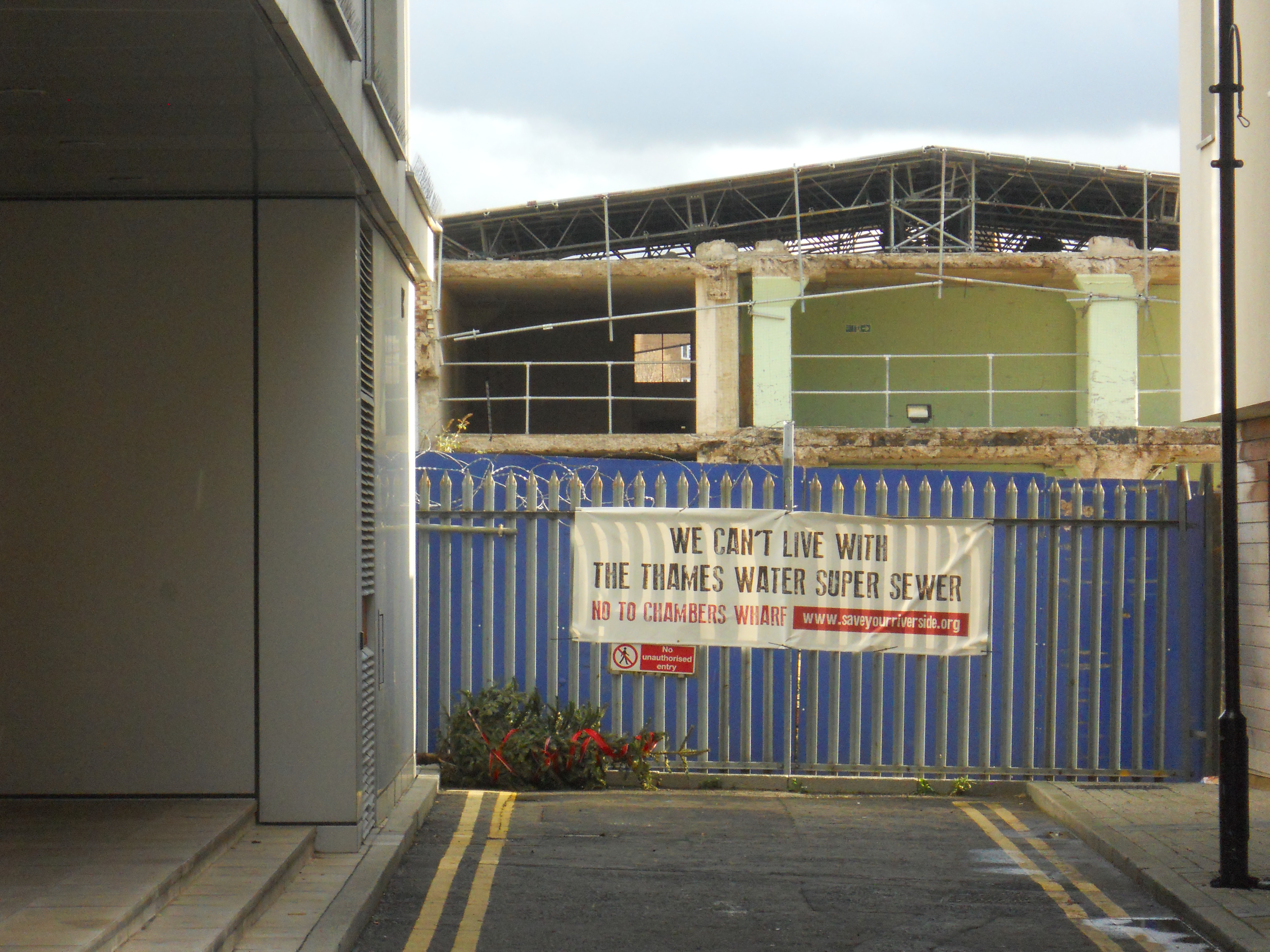

I couldn’t actually see much of the site as it is surrounded by blue fencing. But it strikes me that if they do any serious digging from here, that because the site is so close to the Thames, any serious engineer would take the spoil out that way. If Thames Water don’t do that it will probably cost them a lot more, as lorry journeys through a city like London are always delayed by traffic and only carry a few tonnes, whereas a proper barge can carry many times more. If we look at the Olympic site, a lot of materials like concrete and spoil were moved in and out by rail. Also go to Pudding Mill Lane and look at the portal for CrossRail, which is for two much larger tunnels, where the spoil will probably be removed by train. So opponents of the use of the Chambers Wharf site, who say there will be thousands of lorry journeys are not talking engineering sense. The site is also quite large and the hole is only going to be under thirty metres wide, so there should be quite a lot of space for machinery to move the spoil to the river.
I have no direct interest in whether the sewer is built, but I have a friend, who used to live in an area of London, that flooded badly every ten or so years. The sewer will hopefully stop all that.
Although I should say, that as someone who has spent a lot of time around project management and managers, I will say that what gets built in the end, will be quite unlike what was originally proposed. That’s what good project management is about. It makes a project better, cheaper and less disruptive. Hopefully, because of the sensitivity of this project, Thames Water will follow the example of Transport for London on the East London Line and hire the best people and contractors to build the sewer.
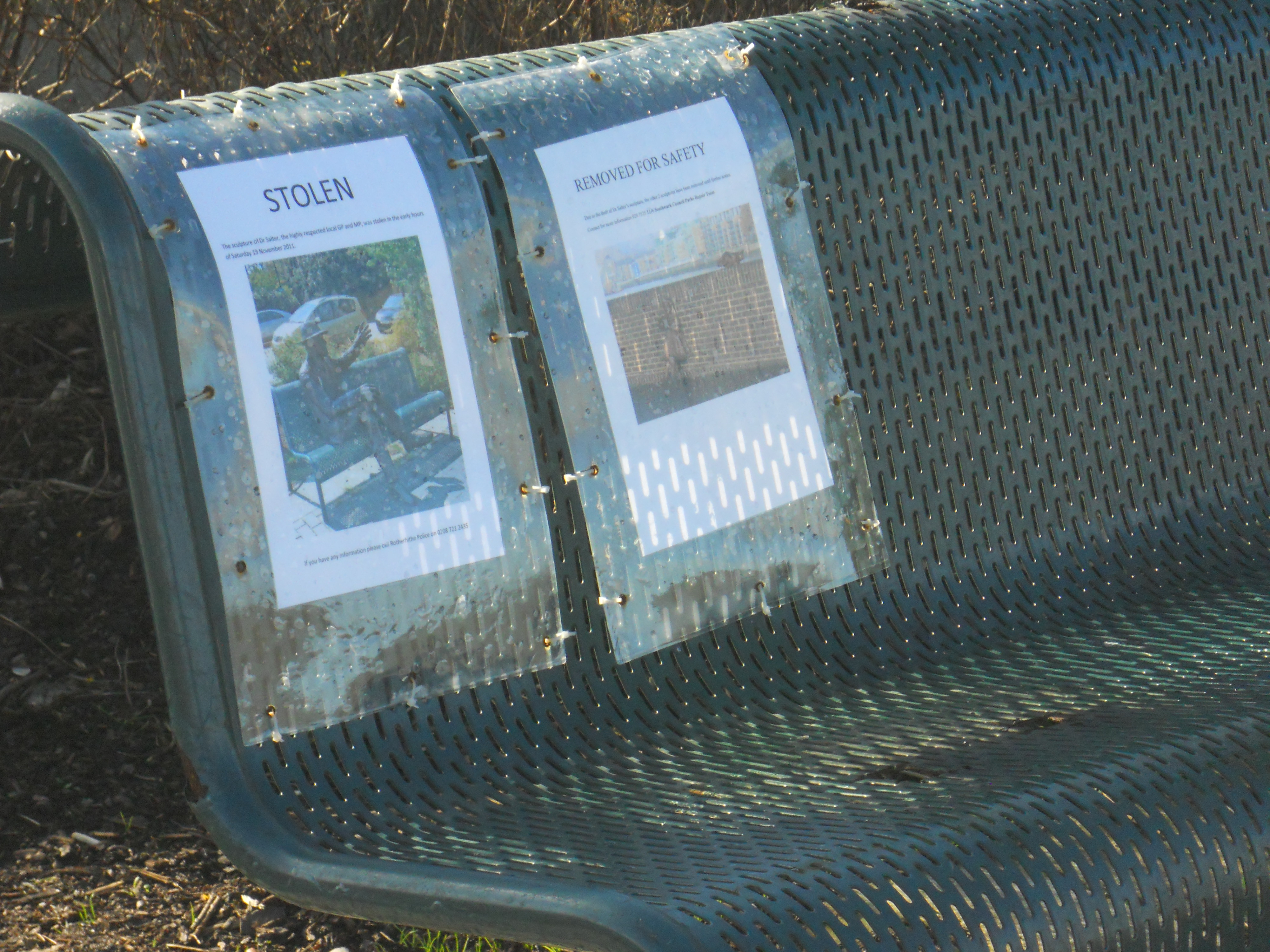
I was upset though to see the bench that had held Doctor Salter’s statue is now bare. A picture of it is in this set of pictures.
Another Crossrail Hole
I came across this boarded up site at the junction of Southampton Row and Fisher Street.
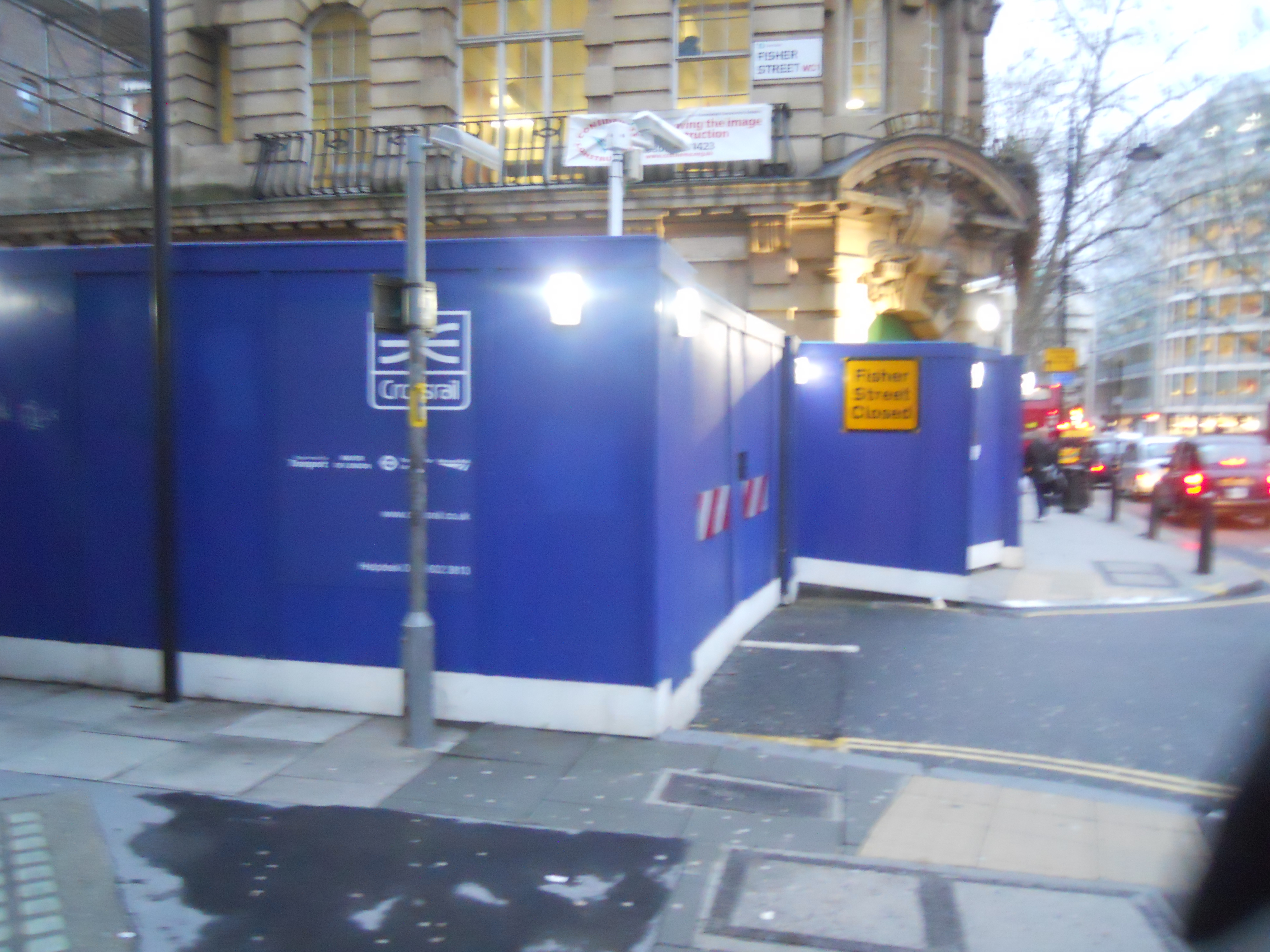
Another Crossrail Hole
You can find more about it here.
It’s just a ventilation and emergency access shaft for the railway.
Crossrail’s Tunneling Machines
The BBC has been showing a story with video about Crossrail‘s giant tunneling machines which will start work in the near future.
Crossrail has more on the boring of 42 km. of tunnels under London using eight tunnel boring machines here.
They also have more on the Tunneling and Underground Construction Academy, which will be a unique legacy of Crossrail and will continue to provide trained staff for tunnel projects all over the world.
We really are entering the Golden Age of Tunneling.
How To Recycle A Tunnel
Crossrail is Europe’s largest construction project and they are really upping their publicity this year, as the work begins in earnest.
I found this story with a video about the reusing of the Connaught Tunnel on the BBC’s web site. I wrote about this earlier.
It’s a fine piece of engineering and the associated project management.
Above The Connaught Tunnel
I mentioned that the old Connaught Tunnel in London’s Docklands is going to be reused as part of CrossRail.
I took these pictures above it today.
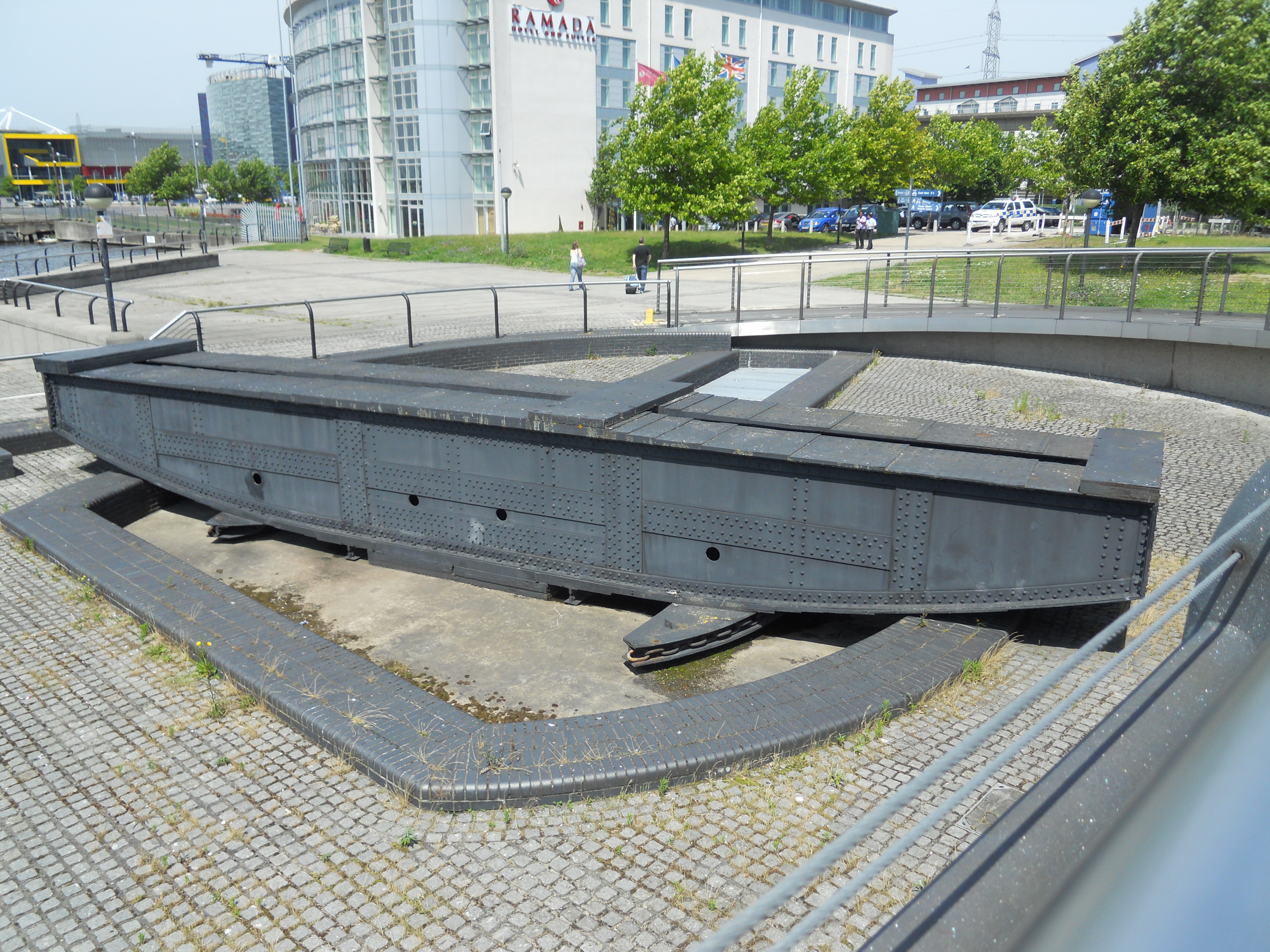
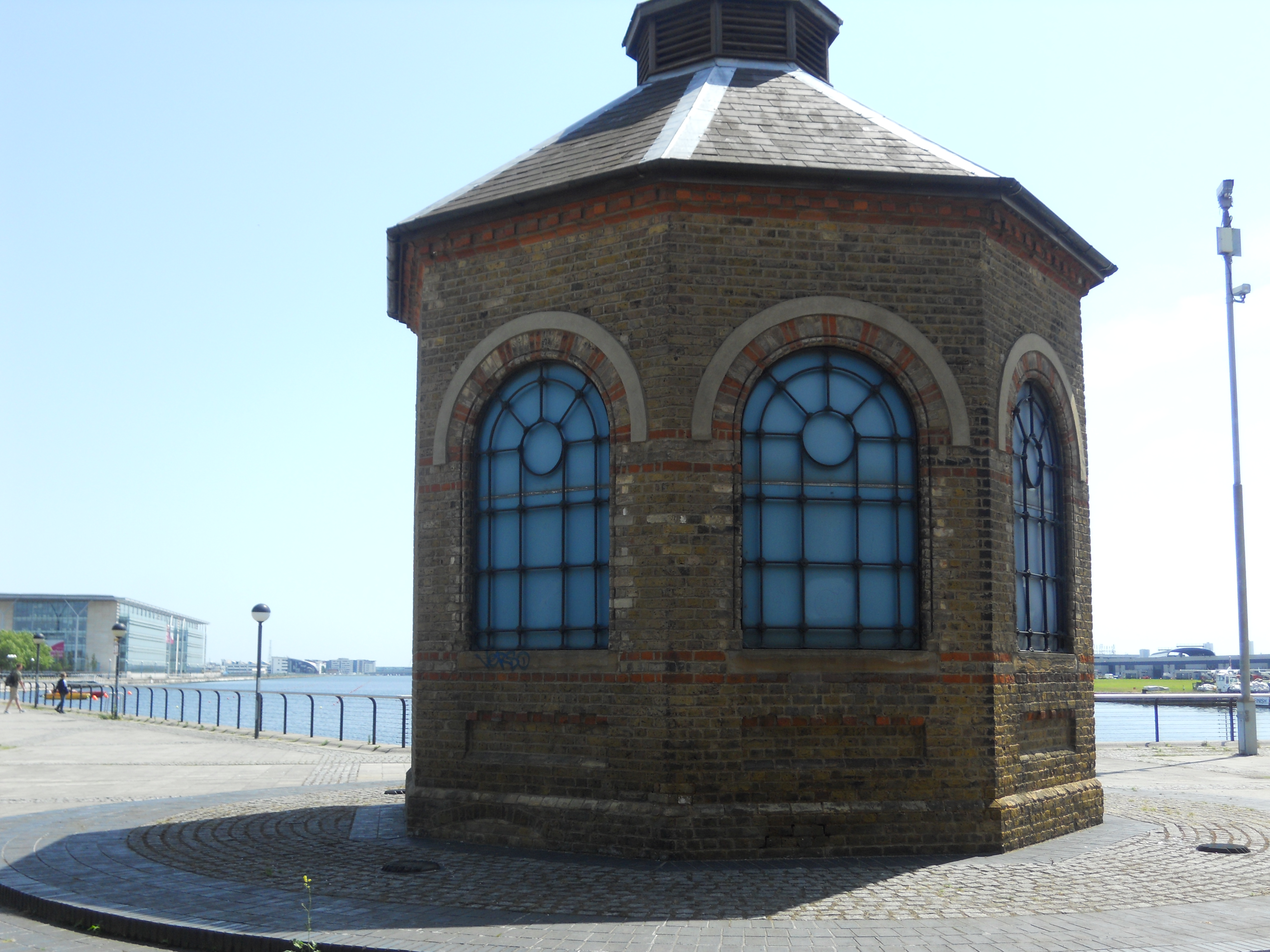
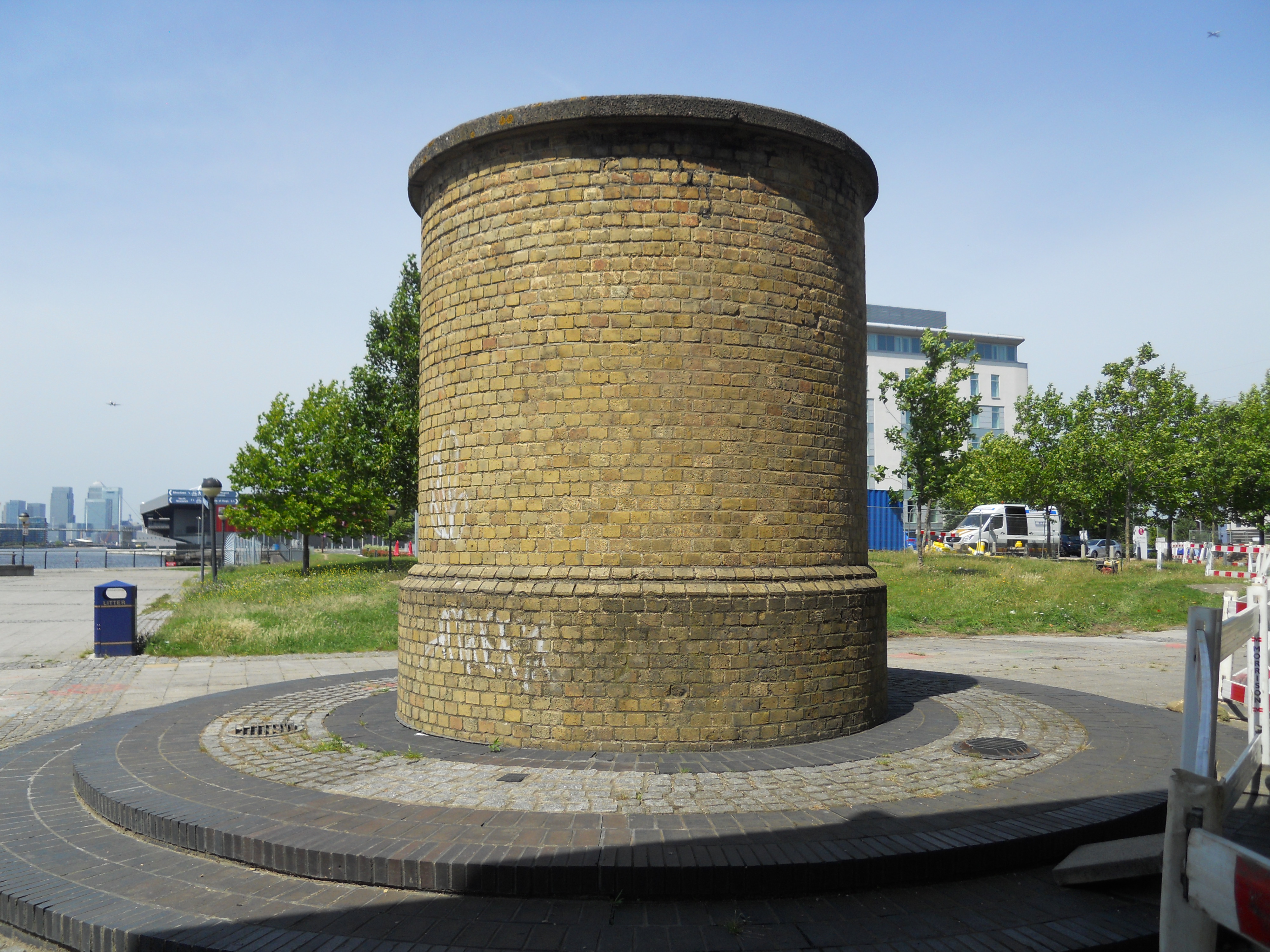
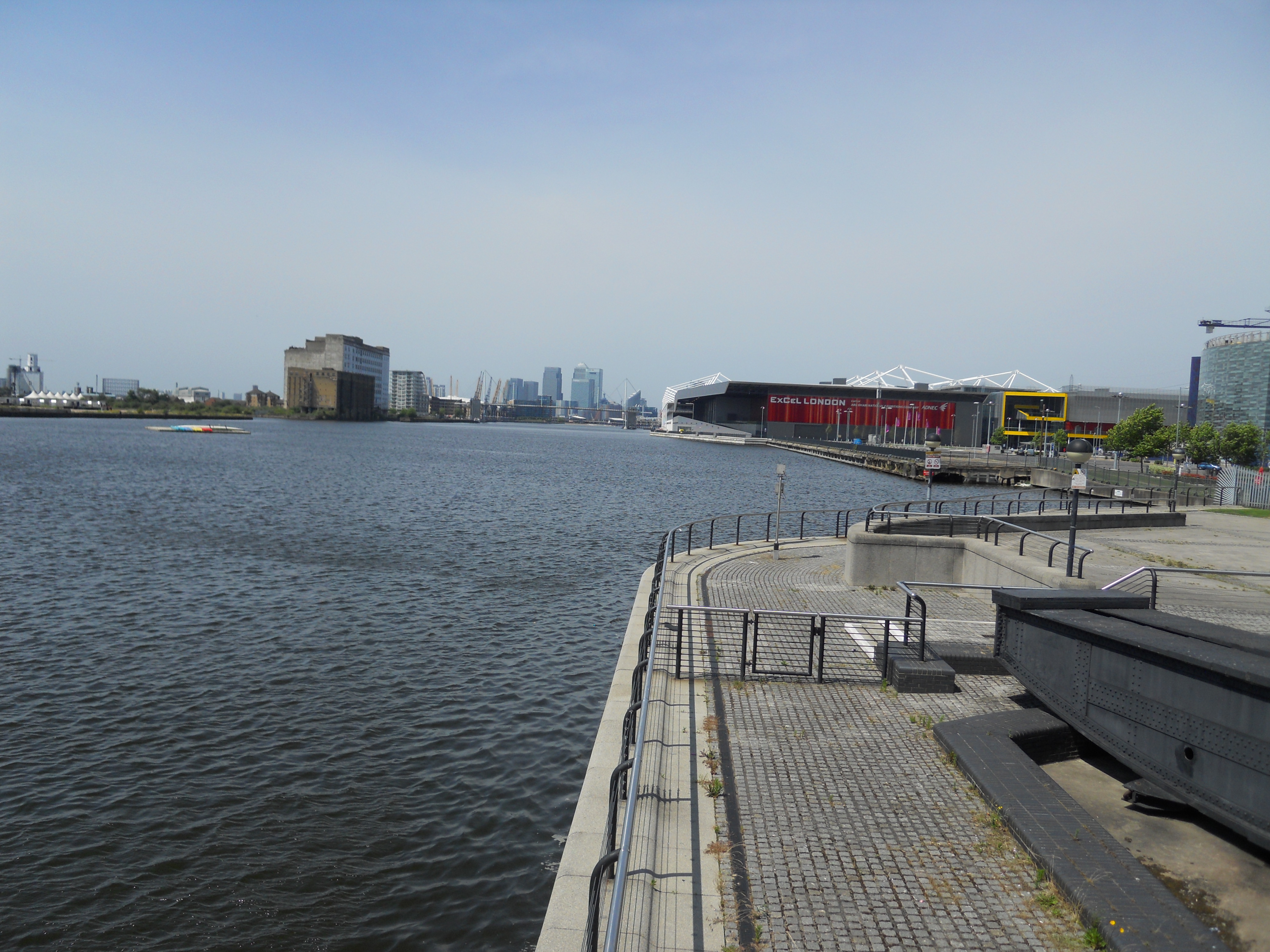
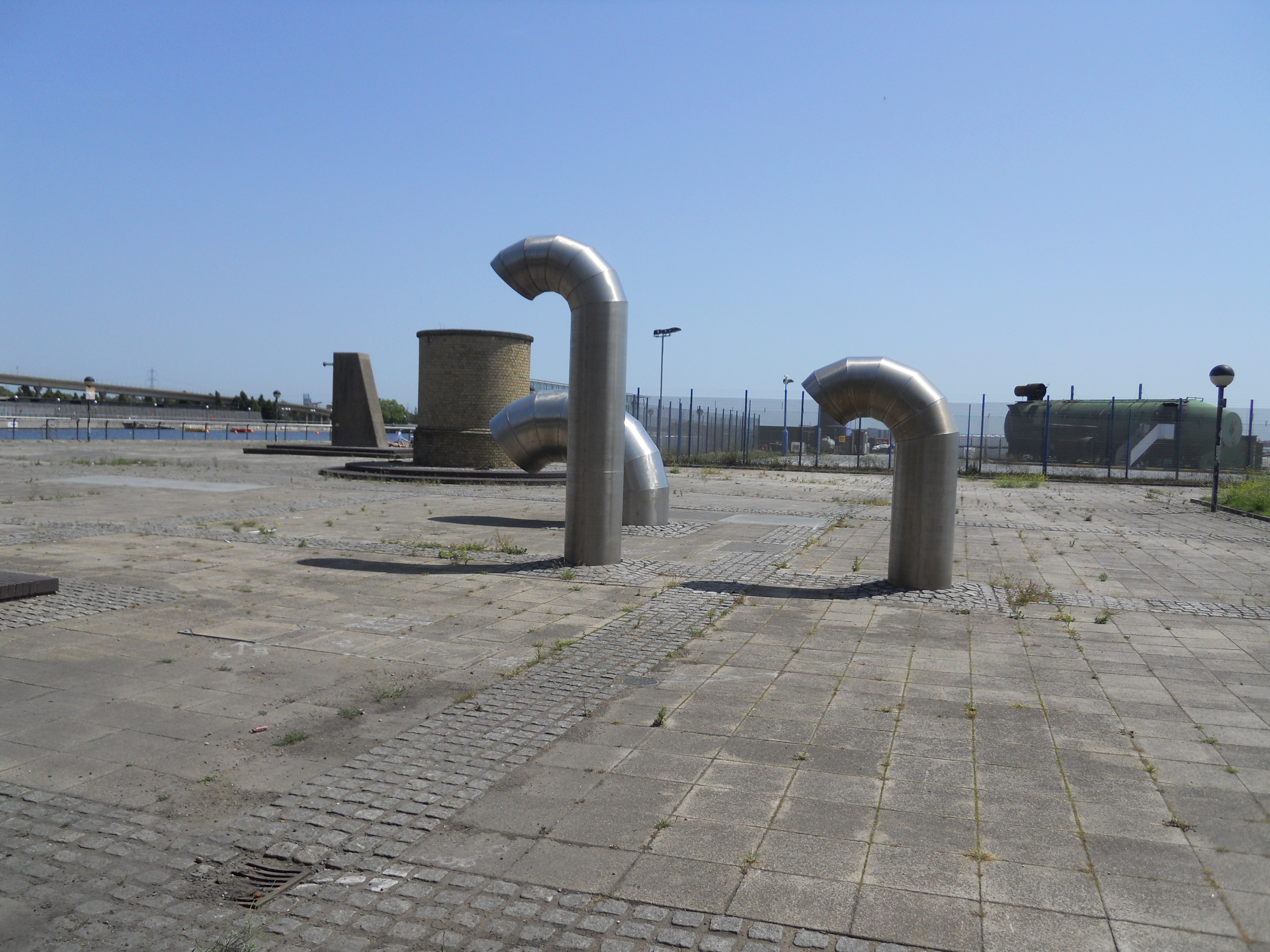
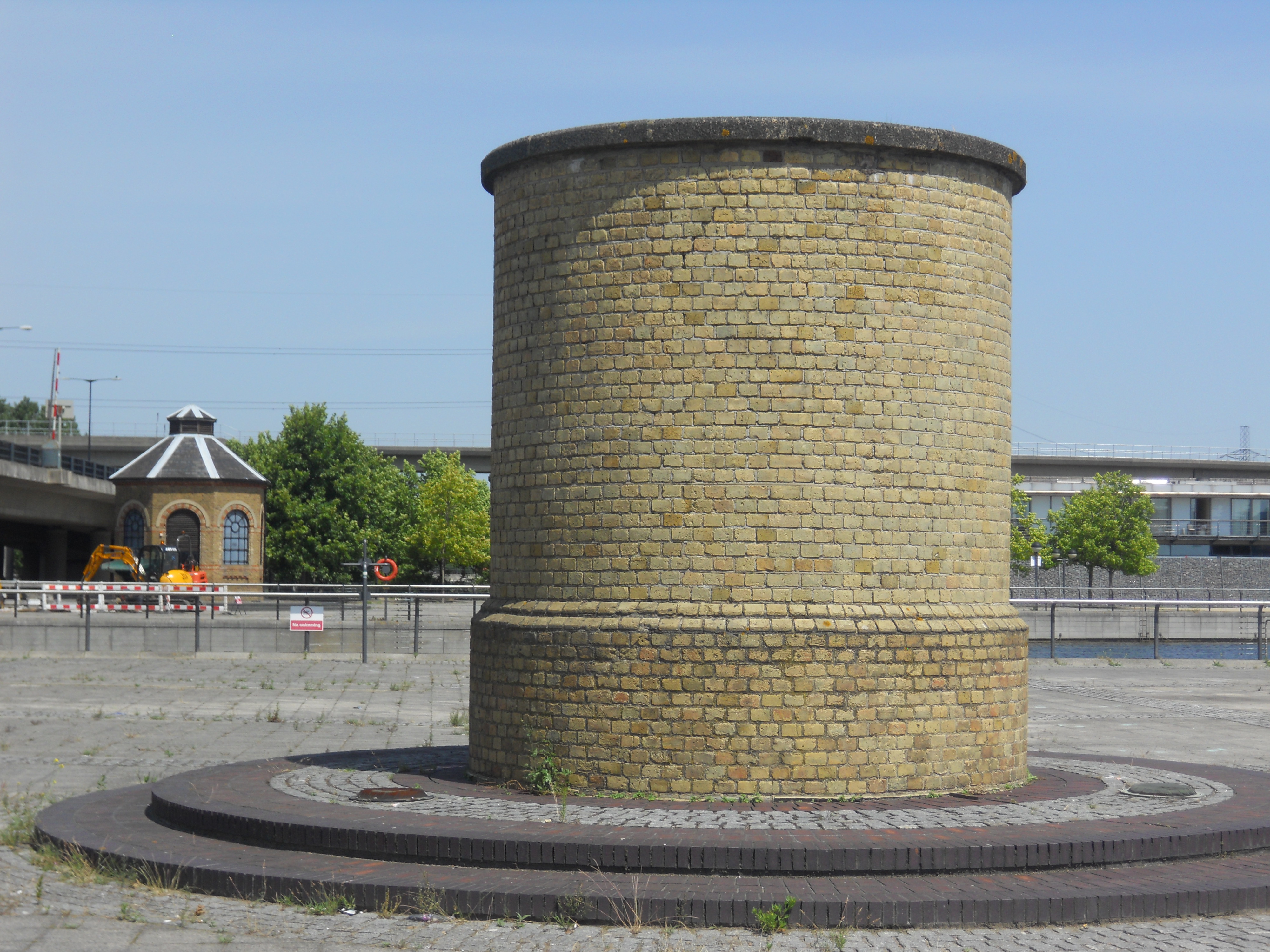
To get to the area you take the Docklands Light Railway to either Prince Regent or Royal Albert stations.
London’s University of Hole Digging
CrossRail is overseeing a new Tunneling and Underground Construction Academy or TUCA.
After CrossRail has been completed it will operate independently to train staff for other tunneling schemes. The only other such academy in Europe is in Switzerland, which focuses on hard rock tunneling. So if we are to have a Golden Age of Tunneling, we shall be well-prepared in the UK.
CrossRail Isn’t All New
You’d expect that a modern project like CrossRail would be all new tunnels.
But it’s not!
An article in Modern Railways describes how the old Connaught Tunnel from the long-abandoned North Woolwich to Palace Gates line is being opened up to take the new railway. There is an article on the tunnels and some pictures here of the tunnel. You’ll have to page down a bit.
I like this from the introduction to the MR article.
On paper, reusing this existing link, which runs beneath the intersection of the Royal Victoria and Albert Docks, is cheaper and less disruptive than boring a new tunnel. In practice, the work required to bring the route up to scratch is anything but simple which, from an engineering point of view at least, means there’s a lot of fun to be had.
A lot is not good clean fun too, as they will probably have to lay a 1,000 cubic metre concrete slab under water.
Don’t ever say engineering is boring! Even where tunnels are involved.
The Brunel Museum
The Brunel Museum is just a short walk from Rotherhithe on the East London Line and is well-signposted from there.
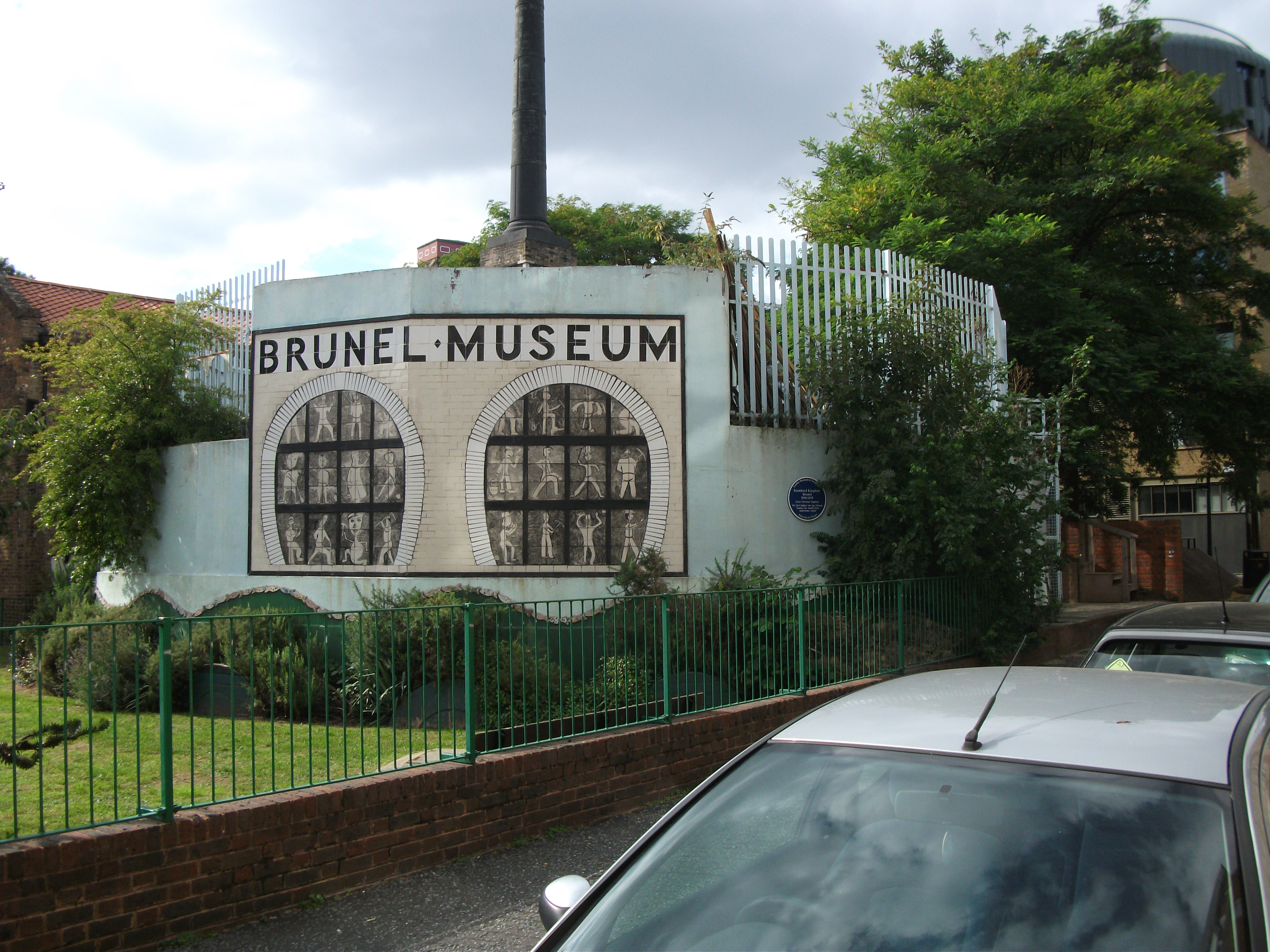
The Brunel Museum
It is a small museum with some good displays about Isambard Brunel and his often forgotten father, Marc. It is well worth the entrance fee of £2.
One of my most favourite books is the biography of Isambard Kingdom Brunel
 The Anonymous Widower