Cemex To Install World-First Hydrogen Process At UK Cement Plant
The title of this post, is the same as that of this article on The Chemical Engineer from 2024.
These two paragraphs introduce the article.
CEMEX is set to trial a process developed by Hiiroc that uses plasma to produce hydrogen for greener industrial heat at its cement plant in Rugby, UK.
Cemex is finalising contract details now with UK-based process developer Hiiroc and expects to start engineering studies early next year with hydrogen production set for a “hard deadline” of January 2026. The cement major thinks the process is a better bet for producing hydrogen than water electrolysis because it requires 80% less electricity and wins out over steam methane reforming because it doesn’t produce CO2.
I believe that this process, which has its origins in Hull University, could revolutionise the manufacture of zero-carbon hydrogen.
The article describes its first big application at Cemex’s Rugby cement plant.
There are obviously issues to be solved and the article is mainly an interview with Alfredo Carrato, who is innovation advisor at Cemex Ventures.
These are some thoughts.
HiiROC Is Containerised
The article says this.
Carrato expects the changes required to integrate the process at the Rugby plant to be minimal. One or two of Hiiroc’s containerised process units will be plugged into the grid and pipes installed to carry hydrogen to the existing kiln where a new burner will be installed to combust the hydrogen producing heat to convert limestone to clinker.
It also says this.
If successful, the Rugby plant could see eight or nine of Hiiroc’s modules installed at the site, Carrato said.
There could be a lot of low-carbon cement coming out of Rugby.
But containerisation also means that any factory using natural gas for a lot of heat, can plug in a number of Hiiroc’s containerised process units and decarbonise.
Worldwide Expansion
The article says this.
“We do have plans to expand this across our operations worldwide for a number of reasons. Hydrogen certainly is a relevant vector that we are considering to decarbonise our operations. And second, the modularity of the solution allows for a quick deployment.”
Cemex Aim To Be Net Zero By 2050
The article says this.
Cemex has set itself a target of becoming net zero by 2050. The Hiiroc process can make use of biomethane so could allow Cemex to replace its use of fossil fuel natural gas. It could also use renewable electricity to power its plasma burners. In terms of output, the process produces carbon black which can be used as an additive in its cement-making operations or sold for use in tyres, rubbers, plastics, inks, and toners.
“Because of the stoichiometry, the volume of carbon black is pretty significant, meaning we are not able to take the entirety of what is produced. So, we need to figure out how to also monetise it.”
Hiiroc is searching for alternative markets too. It has partnered with researchers in Europe and the US to investigate how the carbon black from its process could be used in other applications including filters, soil enhancers, and animal feed.
Note.
- The process can run on biomethane, as well as natural gas and chemical plant flare gas.
- The carbon black could be a long-term problem, but I suspect a use will be found.
Having worked in integrated chemical plants, I believe innovative uses for both feedstocks and what to do with the carbon black will be found.
Water Stress
The article says this.
Carrato said: “We’re looking at not only the carbon footprint, but also the stress on water. Water electrolysis has a lot of water demand, whereas technology such as Hiiroc has none. In regions where there’s a lot of water scarcity, we believe that Hiiroc can move the needle [for industrial decarbonisation] way better than water electrolysis.”
Any water problems seem soluble.
Conclusion
Alfredo Carrato of Cemex Ventures seems to be enthusiastic about his charge.
One Of The Jobs I Did, That I’m Most Proud Of
In the early 1970s, I developed and attempted to market a simultaneous differential equation solving program called SPEED, which stood for Simple Program for the Efficient Evaluations of Differentials or something like that.
It wasn’t very successful, but two companies asked me to write some for them.
- For Time Sharing, I put the central algorithm into their simultaneous differential equation solver to move the program up to the next level.
- WS Atkins, asked me to install it on their computer.
SPEED had a few advantages over typical simultaneous differential equation solvers of the time like IBM/CSMP.
- IBM/CSMP needed at least an IBM 360/50 computer, which I ran it on at ICI in Welwyn Garden City, where I was a general mathematical dogsbody. But SPEED could run on a dial-up line to a time-shared computer like a PDP-10.
- The time-shared computers as used by Time Sharing and WS Atkins, gave the big advantage, that as the size of the computer increased, the size of the problem, that could be tackled in proportion.
- IBM/CSMP and SPEED both had a simple column-oriented report writer, which unsurprisingly ended up in Artemis, which I wrote a few years later.
- I can’t remember, who at ICI gave me the tip, but I used a sophisticated version of the Runga-Kutta algorithm, that everybody used and some probably still do today. The version, I used was called Runga-Kutta-England, where like me England, was a graduate of Liverpool University.
This summary by Google AI described the algorithm.
The England version of the Runge-Kutta method (developed by R. England) is a highly efficient 4th/5th order embedded numerical integration formula. By reusing intermediate slopes across two methods of differing orders, it provides a highly reliable built-in error estimate for adaptive step-size control.
Does anybody still use Runga-Kutta methods? I suspect not!
A breakthrough of sorts came, when WS Atkins asked me to produce a larger system of the SPEED software, that could handle several tens of thousands of equations.
- Atkin’s client was the Water Resources Board and they were modelling the water distribution system for a large part of the UK.
- Prominent in the project was a Dr. David A, Dimeloe and we became friends and had dinner with our wives a couple of times.
- But I never received a copy of the report, that was written or heard any more since about 1975.
- But judging by the fact, that we seem to have adequate supply of water in the UK and problems seem to be all about sewage, politics, management and finance, I feel that David and his team, must have done a good job.
- I was also never asked to fix any bugs in the software.
I did have some trouble getting the money I was owed from the intermediary in the deal, but I eventually retrieved it through the County Court without a solicitor.
Mushrooms Could Be Used In Rivers To Clear E coli And Filter Sewage
The title of this post, is the same as that of this article on The Times.
This is the sub-heading.
Ofwat has funded a nationwide trial after tests revealed that leaky dams of fungi can trap and consume dangerous pollutants
These paragraphs add some detail.
Mushrooms could be deployed in rivers to filter out toxic pollutants after a trial showed fungi can destroy bacteria that pose a risk to human health.
Ofwat, the industry regulator, has awarded Anglian Water £1.5 million to use fungi to clean up rivers after a trial showed that they could remove 80 per cent of E. coli from rivers.
It sounds promising to me, as after living in the countryside for many years, I’ve heard so many countrymen and women, with strange remedies for things like algae.
Mooir Vannin Offshore Wind Farm
This is a wind farm off the Isle of Man, that I missed as it is not on Wikipedia’s List of Offshore Wind Farms In The United Kingdom.
But it does have a web site, which has this handy map.
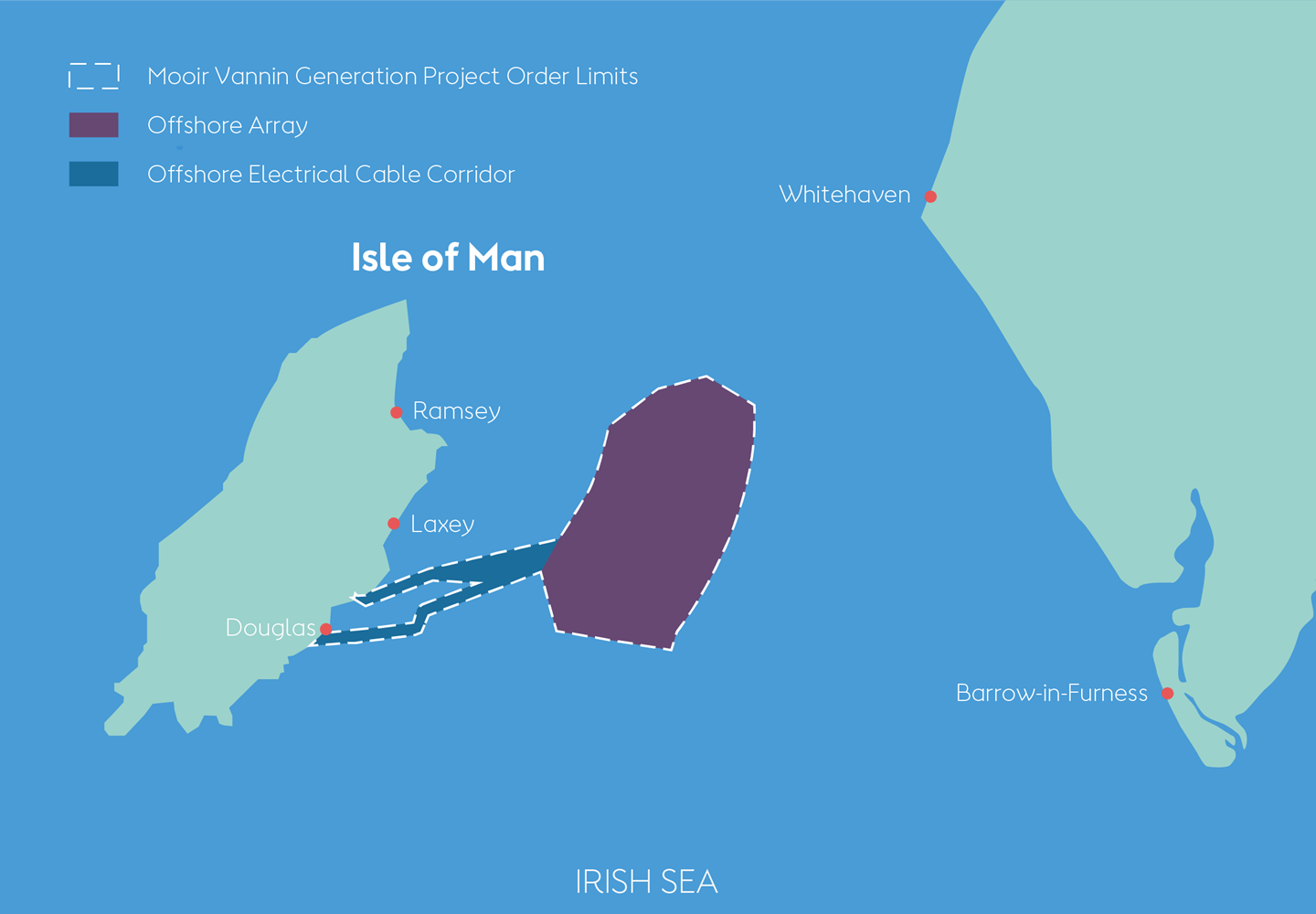
Note.
- The wind farm will have a capacity of 1.4 GW.
- Ørsted is building the web farm.
- It has planning permission.
- The operations base for the proposed Mooir Vannin Offshore Wind Farm will be located at Douglas Harbour on the Isle of Man.
- The Port is Owned By The Isle Of Man Government.
- Anticipated operational start date is the mid 2030s. I’ll assume 2035.
- According to the web site, connection will be to Douglas on the Isle of Man and Penwortham, Lancashire in the UK.
- Penwortham is part of Preston.
- Penwortham substation already has a 50 MW/50 MWh BESS and may get a bigger one.
- Current fossil-fuel power stations on the Isle of Man, include a number of diesel power stations and a 64 MW CCGT. They also have a 23 MW steam generator.
It looks like Mooir Vannin is large enough to give the island a carbon-free energy supply, backed up, by the UK National Grid at Penwortham.
I asked Google AI, “If The Isle of Man Was Going Into The Data Centre Business”, and received this reply.
The Isle of Man is actively positioning itself as a premier hub for data centres, tech firms, and AI companies. The government is utilizing its robust infrastructure, strong regulatory environment, and competitive tax policies to attract high-value data businesses to the island.
It also looks like they have a water system, that has a hydro-electric power-station.
Ørsted Is Danish
Ørsted is Danish and all of those countries to the North East of the UK have lots of islands.
So I asked Google AI, this question.”Does Denmark Have Any Islands With Power Stations?”, and received this comprehensive answer.
Yes, Denmark has several islands with power stations, ranging from natural islands utilizing large wind and biomass facilities to massive, pioneering “Energy Islands” built specifically as offshore power hubs.
Key Examples Include:
Bornholm (Baltic Sea): Designated as a major green “Energy Island” hub. It functions as a massive collection and distribution point for surrounding offshore wind farms, routing renewable energy to both the Danish grid and neighboring countries like Germany.
SamsØ (Kattegat strait): Known globally as a renewable energy island.
It is entirely powered by local onshore and offshore wind turbines and uses a mix of solar and battery storage systems to manage its energy needs, including marina charging.
North Sea Energy Island (VindØ): This is a colossal artificial island project (located roughly 80–100 km off the coast of Jutland) designed to act as an offshore power plant.
It acts as a hub to harvest and convert wind energy from hundreds of surrounding turbines.
Are Ørsted and Highview Power Still Talking?
In Highview Power, Ørsted Find Value In Integrating Offshore Wind With Liquid Air Energy Storage, it appeared that they still were.
As it appears that Highview Power’s Liquid Air Energy Storage can be sized to the application, I wouldn’t be surprised to see one of their batteries on an island powered by Danish wind turbines.
In Is Sumitomo Heavy Industries Highview Power Energy Storage System On Line At Hiroshima?, I describe how a Highview Power application, that uses cold, solar panels and a small Highview Power battery to increase the efficiency of a CNG Terminal.
How Many Of The UK’s Power Stations Are On Islands?
I asked Google AI this question and I received this answer.
There are three major, conventional thermal power stations on the UK’s offshore islands (two in Scotland and one in the Channel Islands), alongside several small-scale community-owned renewable plants that operate entirely off-grid.
The main island-based power stations include:
Lerwick Power Station (Shetland): A 66-73 MW diesel-fired plant commissioned in 1953. It provides a baseline of electricity for the Shetland mainland.
Sullom Voe Terminal Power Station (Shetland): An independent gas-fired station (roughly 92 MW capacity).
Its primary purpose is to serve the Sullom Voe gas terminal, but it also supplies the Shetland grid.
Queen’s Road Power Station (Jersey): A multi-engine facility in the Channel Islands that uses a mix of gas turbines and diesel generators to maintain island capacity.
(Note: Major UK islands, like the Isle of Wight, Anglesey, and the Isle of Skye, are physically connected to the mainland electricity grid via subsea cables, so they do not house their own large-scale, standalone power stations).
Beyond these conventional thermal stations, several smaller Scottish islands run on micro-grid, renewable-only power stations.
For instance:The Isle of Eigg: Powered entirely by a micro-grid of hydro, wind, and solar, completely disconnected from the UK grid.
It looks to me, that the Isle of Man, Shetland and Jersey, are the three most likely islands to get upgraded power systems and it also looks like Ørsted have the experience to make a good fist of it.
Conclusion
I have asked the question, I asked for the UK for a range of countries and I have received some interesting answers from Google AI. But the general trend seems to be to use appropriately-size medium-size and upwards, zero-carbon power stations with microgrids as on the Island of Eigg in the UK.
But I do believe that applying the technology that Ørsted, Highview Power and others are rolling out, that we can give the remote islands and places of Buckminster Fuller’s Spaceship Earth, the zero carbon power they need.
National Grid Has Awarded £12bn In HVDC Supply Chain Agreements
The title of this post, is the same as that of this press release from National Grid.
These are the first three paragraphs.
National Grid has completed the award of its High Voltage Direct Current (HVDC) civil works supply chain framework, with £12bn worth of agreements confirmed. This announcement marks the third and final stage of our £59bn supply chain framework awards and underlines the commitment to delivering the energy infrastructure needed to support the Great Grid Upgrade and the UK’s energy transition.
A total of six HVDC converter civil works suppliers have been awarded positions on Lot 1 of the Framework Agreement totalling approximately £9.07bn. In addition, three HVDC onshore cable civil works suppliers being awarded places on Lot 2 of the Framework, worth an estimated £3.7bn. The successful HVDC converter civils suppliers are Balfour Beatty, BAM Nuttall, Galliford Try, Laing O’Rourke, Skanska and Taylor Woodrow. The HVDC onshore cable civils Framework has been awarded to Balfour Beatty, Murphy, and VolkerFitzpatrick.
Contracts have been secured for a five-year period, with the potential to extend for a further three years. Both Frameworks cover confirmed and anticipated projects, including Eastern Green Link 4, in partnership with SP Energy Networks and LionLink in partnership with TenneT .
These are a lot of money allocated to projects, that will be delivered in the next few years.
Where’s the consolidated plan for capital expenditure from the Water Industry?
Water is also simpler, than electricity, as you are only dealing with one country. If you go through the paragraphs above, you’ll find TenneT, who do a similar job to National Grid in the Netherlands and parts of Germany.
I also found this advert from Thames Water, in a Southeastern train last week.

Does this indicate that Thames Water has project management problems?
Desperate Times Call For Desperate Measures
The title for this post was inspired by this article on the BBC, which is entitled Water Scheme Kicks In To Boost Severn Amid Drought.
This is the sub-heading.
A groundwater scheme in Shropshire that pumps additional water into the River Severn has been switched on
These are the first three paragraphs, which add more detail.
It comes after the Environment Agency (EA) last month declared drought status for the West Midlands, following the driest spring in 132 years.
The scheme, owned and operated by the agency, pumps groundwater stored naturally in sandstone underneath much of north Shropshire, and delivers it through an underground network of pipes into the Severn.
The scheme pumps almost 40 Olympic-sized swimming pools of fresh water every day into the river, with a total of 49 pumps and 53km (32.9m) of underground pipes.
It looks a good scheme to me, but I suspect, those pumps and pipes didn’t come cheap.
These two further paragraphs, explain how it works.
Two reservoirs in Wales – Clywedog and Vyrnwy – are the first resources used to top up the river during dry weather.
The groundwater scheme is the last option to be brought into operation during dry conditions, because of how resource-intensive it is.
I suspect politicians like Trump and Farage would not have sanctioned a scheme like this, as it only protects a river.
This page on the Environment Agency blog gives more details of the scheme.
I looked up the title, that I’ve used for this post on Google AI and received this answer.
“Desperate times call for desperate measures” is an idiom suggesting that unusual problems or difficult circumstances may require unconventional or extreme solutions that would not normally be considered. The phrase originated from an ancient Greek physician, Hippocrates, who wrote about extreme diseases needing extreme methods of cure. The saying acknowledges that when faced with significant challenges, bold or drastic decisions may be necessary for survival or success.
As it seems the scheme is working well, I feel that the decision to build it, was the right one.
Do Animals Lose Water In Low Pressure Weather?
I feel I do and I wrote a post called My Strange Skin, which is explained by water being driven out of my body.
So I asked Dr. Google, the question in the title of this post and got this answer.
Yes, animals can lose more water in low-pressure weather conditions. Lower atmospheric pressure, often associated with unstable weather, can increase water loss through evaporation and other physiological processes.
Here’s why:
Low pressure often means lower relative humidity, which increases the vapor pressure deficit between the animal’s body and the environment. This difference in water vapor concentration drives more water to evaporate from the animal’s body, particularly through the skin.
That’s all very sound physics.
Last night, I was woken by an intense strange itch in the sole of my right foot.
- As I often do, I rubbed the itch on the a genuine Indian rug I have on the floor by my bed, but it didn’t work.
- So I had to get up and apply a dollop of Udrate cream and rub it in.
About, half-an-hour later I got back to sleep.
Today, I got a similar intense itch in the sole of my left foot. Again it was stopped by a dollop of cream rubbed in. But this time it was Body Shop’s Hemp Foot Protector.
Does water find it easier to get out through the soles of my feet?
Exceptionally Low River Levels Raise Fears Over Water Supplies
The title of this post is the same as that of this article on the BBC.
This is the sub-heading.
Many of the UK’s rivers have hit exceptionally low levels and that could worsen in the next three months, according to the Centre for Ecology & Hydrology (CEH), raising questions over supplies to households, farmers and businesses.
These three introductory paragraphs add more details.
The warning comes after the driest spring in England since 1961, with northern regions experiencing the driest start to the year in nearly a century.
Almost all of the UK is expected to have below normal or low river levels in May, apart from the south-west of England.
The Environment Agency has said that the UK is at medium risk of drought and warned households of the risk of water restrictions.
In the 1970s, I was involved in a marginal way, in the planning of the water supply network in the UK, by the then Water Resources Board. My software called SPEED was used to solve the hundreds of differential equations involved.
Since the 1970s, I have felt, that as water supply in the UK has been fairly good, that the engineers, planners and mathematicians of the Water Resources Board didn’t do a bad job.
I don’t think, I can remember a period as long as this without rain.
I am drinking heavily to keep hydrated and I’m already today on my second bottle of Adnams Ghost Ship 0.5 % Beer.
But it just seems to go straight out through my skin, which I talked about in My Strange Skin.
I am Jewish in my father’s male line and Huguenot in my mother’s, so I have lots of ancestors, who lived in poor living conditions. So did Darwinian selection produce my leaky skin, that also heals itself quickly, in the harsh living conditions.
But on the other hand does it make me dehydrated all the time? And also create lots of red spots all over my body?
It’s not something new, as I can remember feeling this this as a child and helping my mother to count all the spots.
I hope that I will be fine, when we get some rain.
Name Your Poison!
The weather is hot and my cardiologist, GP and physiotherapist are advising me to keep hydrated.
This picture shows what I’m drinking.

Note.
- The 500 ml. bottle of beer costs £1.25 or £0.0025 per ml.
- The 330 ml. can of Diet Coke costs £4.75 for 8 or £0.0018 per ml.
The prices are from Ocado.
Tapwater is not much cheaper.

