Will Innovative Electrification Be Used On The Uckfield Line?
Chris Gibb’s report into the Govia Thameslink Railway franchise recommended electrification of the Uckfield Line. The September 2017 Edition of Modern Railways has a detailed examination of the proposals.
Reasons For Electrification
Various reasons are given for the electrification.
- Removing diesel trains from London Bridge station.
- Operational flexibility.
- More capacity
- Stabling and refuelling considerations with the current Class 171 trains at Selhurst depot.
- Increasing operational efficiency.
The Class 171 trains would probbly be better suited to other routes.
25 KVAC Ovhead Electrification
One of Chris Gibb’s recommendations is to use 25 KVAC overhead rather than 750 VDC third-rail electrification in an area, where third-rail is the norm.
He states that this is on cost grounds.
- Third-rail needs a feed to the National Grid every two to three miles.
- Overhead wires might need just one.
- DC has higher transmission losses, than AC.
He also suggests the following.
- Changeover between the existing third-rail and the new overhead systems would be South of Hurst Green Junction.
- The three tunnels on the route would be electrified using overhead conductor rail.
- Dual-voltage trains would be needed, which would change system on the move.
- Class 377 or Class 700 trains would be used.
He also indicxates that Class 379 trains would be available from 2020.
Stabling At Crowborough
Chris Gibb suggests building stabling for four twelve-car trains at Crowborough for the following reasons.
- It would improve crew efficiency.
- Itwould give more time overnight for maintenance and train cleaning.
- It would eliminate 75,000 miles of empty running a year.
- It would give a £3.6 million a year cost saving.
- It would give more space at Selhurst depot.
This sounds like a good idea.
Project Management And Finance
Chris Gibb gets very innovative about how the project should be managed, by suggesting that SNCF do the design for the electrification and then directly hire the contractor, bypassing Network Rail.
He also suggests an innovative way of financing the project, using private finance.
The Government’s Response
Chris Gibb recommendations of electrification and the stabling of trains at Crowborough have been accepted by the Government.
Conclusion
Surely, if private finance and planning permission can be obtained, this project should go ahead.
Discontinuous Electrification Using IPEMUs
In Basingstoke To Exeter By Electric Train, I started to work through, how short lengths of third-rail electrification could be used to power an electric train with an IPEMU-capability.
Third-Rail Electrification
This picture shows typical third-rail electrification at Kidbrooke station in South East London.
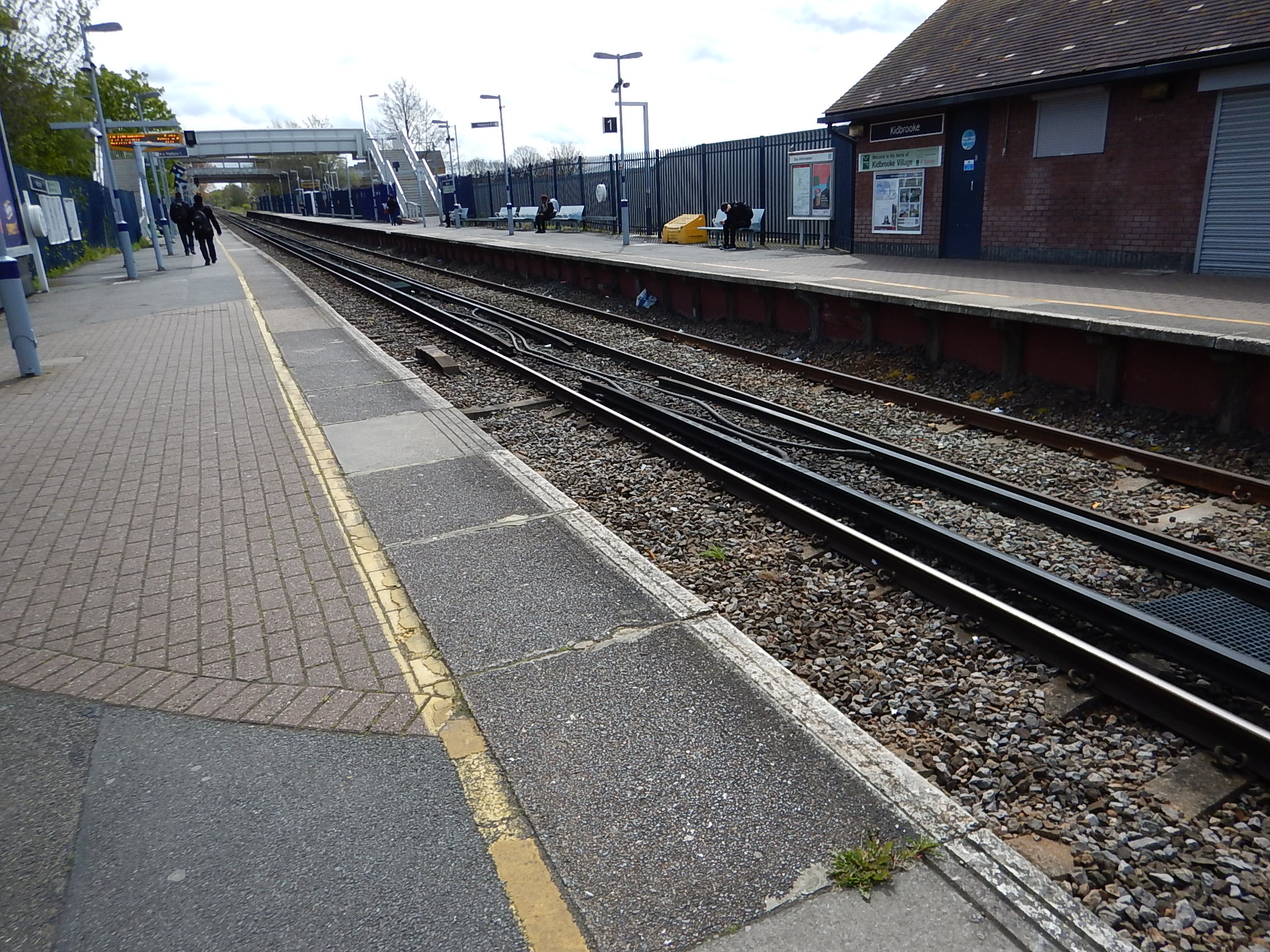
Note the following about the station and the electrification.
- The two tracks are between two platforms connected by a footbridge, which is a typical layout for hundreds of stations. Some stations might use a subway for connection.
- The two 750 VDC conductor rails are placed together in the middle of the track, well away from the passengers.
- There is a gap in the third rail, which I assume is for staff or emergency services personnel to cross the track in an emergency.
It is a simple and very safe layout.
With many years of installing third-rail systems in stations, Network Rail has the expertise to create safe systems in stations with island or just a single platform.
A Typical Electrical Multiple Unit
The Class 377 train is a typical modern electrical multiple unit common on third-rail routes.
- There are a total of 239 trainsets in service with lengths of three, four and five cars.
- The trains can work in combinations of two and three trainsets.
- The trains are a member of Bombardier’s Electrostar family.
- The slightly older Class 375 trains can be converted into Class 377 trains.
- The first trains entered service in 2003, so they still have many years of life.
- Some of the trains are dual-voltage and all could be equipped to use 25 kVAC overhead line equipment.
- They have a top speed of 90 mph.
- Bombardier have stated that these trains can be given an IPEMU-capability.
In addition everything said about the Class 377, can also be said about the later Class 379 and Class 387 trains, although these trains are faster.
The traction current supply to the trains has a very comprehensive design, that ensures trains get the electricity they need. Wikipedia says this.
All units can receive power via third-rail pick-up which provides 750 V DC. There are eight pick-up shoes per unit (twice the number of previous generation 4-car Electric multiple units), and this enables them to ride smoothly over most third-rail gaps. The units in the 377/2, 377/5 and 377/7 sub-classes are dual-voltage, and are fitted with a pantograph to pick up 25 kV AC from overhead lines. On these units the shoe mechanism is air-operated so that when powered down, or working on AC overhead lines, they are raised out of the way.
You don’t hear many reports of trains being gapped these days, when they are unable to pick-up electricity at somewhere like a level crossing.
So there could be a large number of electrical multiple units available with an IPEMU capability, which could be ostensibly 25 kVAC units, but could also pick up electricity from a 750 VDC third-rail.
A Charging Station At Oxted
I feel that Network Rail has the expertise to fit short lengths of third-rail electrification into stations, so that IPEMUs could pick up power, when they are stopped in the station.
These pictures show the recent installation of third-rail in the bay Platform 3 at Oxted station.
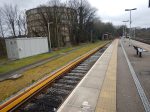
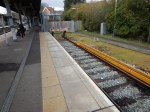
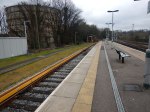

Note how the conductor rail is enclosed in a yellow shield.
Could this installation at Oxted, have been done, so that IPEMUs can run a shuttle to Uckfield?
Staff at the station didn’t know, but said the platform is used to terminate or park the occasional train from East Grinstea
d
IPEMUs To Lowestoft
Imagine such an installation at a station like Lowestoft, which has been suggested as a destination for trains with an IPEMU-capability.
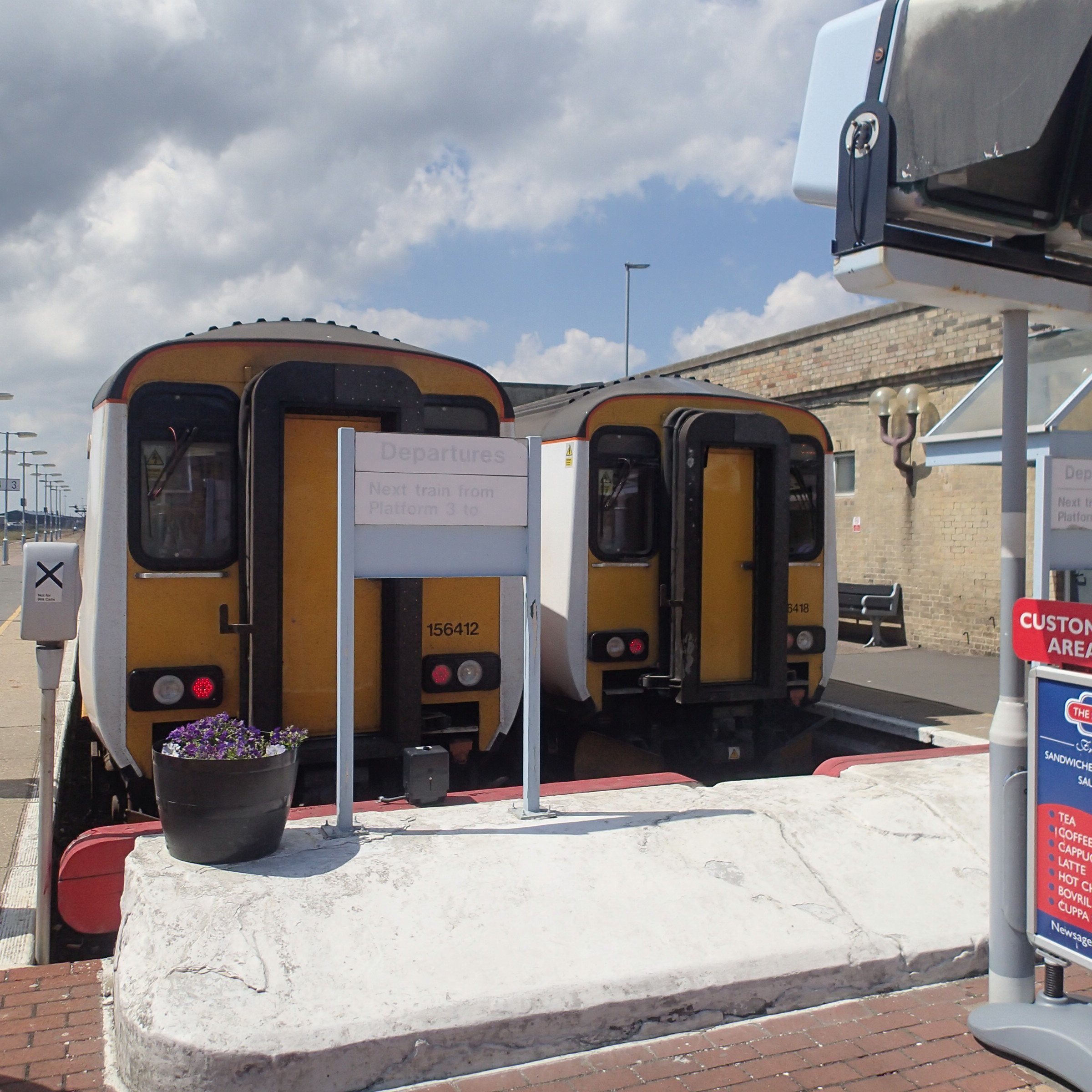
The picture shows two Class 156 trains at Lowestoft station.
Surely, two lengths of 750 VDC third-rail can be fitted between the tracks.
- The electrified lines would be no closer to passengers, than the third-rail installation at Oxted.
- The power supply would only be needed to supply electricity to charge the batteries.
- When no train was in the platform, the electricity supply to that platform would be switched off.
- The waiting time in the station would need to be sufficient to make sure the battery had enough charge to get to the overhead wires at Ipswich or Norwich.
- There would be little or no modification to the structure of the station.
- There would be no electrification needed between Lowestoft and both Ipswich and Norwich.
The biggest problem would be installing the power supply, but it would only be a transformer and rectiofier to provide 750 VDC. It would not have to cope with all the problems of regenerative braking, as the IPEMU capability of the train would take care of that.
It would appear that by using trains with an IPEMU-capability and well-proven simple technology at Lowestoft, the town can be provided with direct electric train services to Ipswich, Norwich and London.
At present the only trains with sufficient speed to not be a restriction on the Great Eastern Main Line, that can be given an IPEMU-capability are Class 379 and Class 387 trains. But Bombardier told Modern Railways, that a 125 mph Aventra is possible.
It would appear that the infrastructure modifications could be very affordable too!
The major cost would be the extra trains, but hopefully an increase in passenger numbers because of the better service would create the cash flow to lease them!
Perhaps the biggest advantage of using IPEMU trains to Lowestoft, is that electrification of the tracks through a beautiful part of East Anglia will not need to be performed.
It should also be said, that what works for Lowestoft, would also work for services to Sheringham and Great Yarmouth.
The technique would also work for branch lines from an electrified main line, where the out and back distance was more than the range of an IPEMU running on batteries. Examples would include.
- York to Scarborough
- Doncaster to Hull
- Edinburgh to Tweedbank
- Peterborough to Lincoln
- Manchester to Sheffield
But there are many more lines, where a charging station would bring much-needed electric trains to all over the UK.
Longer Lines
Some longer lines, where both ends are electrified and the distance is less than sixty miles, like Norwich to Cambridge and Carlisle to Newcastle, could be served by an IPEMU with sufficient range, that was charged at both ends of the line.
So that leaves longer lines over sixty miles, with no electrification at either end or just one electrified end.
Many, but not all, are through beautiful countryside and would the heritage lobby accept miles of overhead line gantries, marching through the hills and valleys.
I believe that on some longer lines, by using short lengths of third-rail electrification in selected stations, services could be run by electric trains with an IPEMU-capability.
Imagine an electric train an IPEMU-capability, approaching a station on a typical fast line with perhaps a 90 mph speed limit, like say the West of England Main Line, which is not electrified past Basingstoke.
- As the IPEMU applies its brakes, all of the energy generated by the regenerative braking would be stored in the train’s on-board energy storage, ready to be used to accelerate the train back up to line speed after the station.
- When the train makes contact with the third rail in the station, if the battery is not full, it can start to charge the battery from the rail.
- Once the battery is full, the charging would stop.
- On starting away from the station, the train could use power from the third rail, until it lost contact, after which it would use the energy stored on the train.
I think it should be possible that the train would leave the station with a full battery.
I would suspect that Bombardier and Network Rail are doing all sorts of calculations to find the best strategy, so that IPEMUs can be used to avoid the problems and costs of electrification.
Lines that could be electrified in this way would be ones, where trains stop at several stations along the route. Electricity supply at the stations, is no problem these days, as it could be connected to the mains or to some form of local generation.
It could be a very green concept!
Lines that could be electrified in this way would include.
- Cumbrian Coast Line
- Far North Line
- North Wales Coast Line
- Settle To Carlisle
- West of England Main Line
Selected stations would be fitted with charging and the trains would stop accordingly.
I’ve included the Far North Line because I believe it is possible to electrify the line in this way provided you could get a good enough electricity supply to the required number of stations. Obviously, you may decide not to do it, as you may have enough quality diesel trains.
Conclusion
If you could run electric trains on the Far North Line using charging at stations, you could run electric trains on any line in the UK.
Will Southern Fit On-board Energy Storage To Class 377 Trains?
When I wrote Will London Overground Fit On-board Energy Storage To Class 378 Trains? in March, I didn’t look very hard at Southern’s collection of over two hundred Class 377 trains, of which forty-six are dual-voltage units.
I then read this article on the Railway Technical web site, which is entitled Southern’s 377/6 takes shape in Litchurch Lane. This is said in the article.
Regenerative braking capability was provided on the trains from the beginning but it was not used.
Things have improved in the last few years and some parts of the network can accept returned power, but the article adds this caveat.
If the train detects that the line is unable to take the extra voltage, the regenerated power is dumped into an on-board resistor grid.
So it would appear that the Class 377 trains could benefit from the addition of on-board energy storage.
How much of the electricity bill it would save, is I suspect known to the accountants and it should be a fairly simple analysis to see if on-board energy storage were to be fitted all or some of Class 377 trains.
But converting a small number of trains, would give Southern a train capable of replacing the Class 171 trains on London Bridge to Uckfield and the Marshlink Line.
Class 377 trains with an IPEMU capability on these routes might give operational benefits.
- London to East Grinstead is already run by Class 377 trains. So the same trains could be used on both branches, which must be a benefit for the operator, in terms of driver and staff training.
- Class 377 trains already run to the end of the electrification at Ore from Brighton, Eastbourne and Cannon Street, so it might be advantageous for both operator and passengers to continue some or all of these services to Ashford.
- Rye and the other stations on the Marshlink Line would get a direct electric service to London.
The only problem is that Hastings wouldn’t get a high-speed service to St. Pancras.
The Uckfield Branch Is Almost Ready For Longer Trains
These are some of the pictures, that I took on the Uckfield Branch of the Oxted Line.





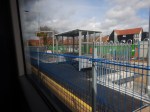
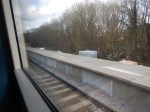


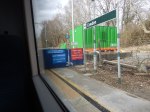


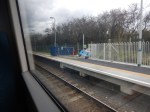

I can’t believe that they’ve spent all this money, just to run an eight, ten or twelve car train formed by formations of Class 171 trains.
Increased Services To Uckfield
On my trip, the line seemed exceedingly busy for one with just a single service an hour. When coming back North, I was passed by a Class 171 train going South, somewhere South of Ashurst station, which prompted me to take the picture of the passing loop.
So it would seem that my observations, ehich also included the sight of a long string of Class 171 trains at South Croydon, could point to Southern testing or training drivers on the line, to see if they can operate a more frequent service to Uckfield. After all, if the service were to be every half-hour to Uckfield, logic says, this would generate more business. They’ve certainly got the capacity at Uckfield with a new station with a long twelve-car platform and a large car park, which is now free to all users at weekends.
There is also an electrified two trains an hour service from East Grinstead to Victoria, which calls at Oxted station. There is probably scope, if you get the service pattern right, to get a two trains per hour service from both Oxted Line termini that serves London Bridge, Victoria and Farringdon for Crossrail, either direct or with one very easy change.
An Uckfield To Oxted Shuttle
Could Southern be planning to link a two train per hour service from Oxted to Uckfield, with the East Grinstead trains, to effectively give passengers on the Uckfield Branch, a two train per hour service to London? Perhaps, they will be using an Oxted to Uckfield shuttle to fill in the gaps between the London trains, as I suspect there aren’t the paths available for all Uckfield trains to go to a London terminus.
There would just be an easy interchange at Oxted or East Croydon.
Timings could be adjusted so that.
- A Southbound Victoria to East Grinstead service would allow cross platform interchange to the Oxted to Uckfield shuttle.
- The Northbound East Grinstead to Victoria service would call at Oxted a couple of minutes after the shuttle arrived.
As Southern know the traffic numbers and passenger behaviour, I’m sure they’ll get the timings right.
The Bay Platform Puzzle At Oxted Station
On Sundays, the service on the Uckfield Branch is just a diesel shuttle between Oxted and Uckfield, with a same platform interchange to the East Grinstead to Victoria service at Hurst Green station.
So why have Network Rail electrified the bay platform at Oxted Station?
There are three possible reasons.
- Network Rail are just future-proofing the Uckfield Branch, so that if it is electrified, they can still run the Sunday shuttle.
- The East Grinstead branch is very busy at times and an East Grinstead to Oxted shuttle could be used to give passengers access to the less busy Uckfield services.
- There is the possibility, that the Oxted branch will be served by an IPEMU in the future. This platform is being prepared, so it can charge the train’s on-board energy storage.
With respect to reason three, Oxted to Uckfield would also be a very good test track for IPEMUs and driver training, especially as there is only one passenger train an hour in both directions.
Hopefully, the reason will become clearer when the May 2016 timetable changes are announced. Although, nothing is known at present!
Trains To Work The Uckfield Branch
In my view there are only two trains that could work the line.
- Class 171 trains in an appropriate formation and as I wrote in Strings Of Class 171 Trains On Test, they certainly have acquired enough of these trains.
- Electrostar trains with an IPEMU capability.
I’d always assumed that Electrostar IPEMUs would be based on Class 387 trains, as Southern run them on Thameslink and Gatwick Express. Porterbrook have also ordered twenty from Bombardier.
But after writing Are The TOCs Arguing Over The Class 387 Trains?, and getting a tip-off (Thank you! John!) , I took a look at the closely related Class 377 trains and wrote Will Southern Fit On-board Energy Storage To Class 377 Trains?
The Class 377 train is an interesting possibility for conversion to an IPEMU for use by Southern.
- Bombardier has said that it could convert other recently-built Electrostars to IPEMUs
- The trains have regenerative braking, but it is not always used according to this article on railway-technical.com.
- Southern have over two hundred Class 377 trains in various sub-types with three, four and five car sets.
- Class 377 trains already work the East Grinstead Branch of the Oxted Line.
Because of the issue of the wasting of regenerative braking energy, there could be a financial case to convert some or all of Southern’s Class 377 trains to IPEMUs, whether they are used as such or not!
A mixture of the diesels and IPEMUs would also be an alternative.
I’ll now look in detail at the three alternatives. For this analysis, I’m assuming that Southern will want to improve the service with these objectives.
- At least two trains per hour from Uckfield to Oxted.
- Passengers can travel to and from both London Bridge and Victoria from both branches of the Oxted Line, with an easy change.
- Longer trains to Uckfield.
- Improved numbers of passengers using the trains between the Oxted Line and London.
I’m certain, that Southern could also have the long term objective of becoming an electric train only company, with all the positive operational and marketing benefits that that will give them.
They may also want to show that there is a demand for more capacity from the area to London, so that they can push for a reopening of the Wealden Line to Lewes.
Class 171 Trains To Uckfield
This solution works, as it has been running for years and given that Southern will soon have more trains, twelve car platforms, improved stations and car parking on the branch, it is an option they could implement for the May 2016 timetable change.
Electrostar IPEMUs To Uckfield
There are two ways this could be done.
Electrostar IPEMUs could work the whole line from London Bridge to Uckfield, charging their batteries on the London Bridge to Oxted section of the route. This would mean that the change to access Victoria would not always be a simple one at Oxted. It could involve a platform change at East Croydon.
I think a better alternative would be for Electrostar IPEMUs to work the current hourly London Bridge to Uckfield service and use another Electrostar IPEMU to work a shuttle between Oxted and Uckfield to fill in the half-hours and provide two trains per hour. It would charge the batteries in the bay platform at Oxted. This would not need another path between Oxted and London Bridge.
There are issues that must be settled before Electrostar IPEMUs can run to Uckfield.
- The technology has been shown to work on a four-car Electrostar, but will it work on a two or three train formation?
- How do you recover a failed Electrostar IPEMU from the Uckfield Branch? Southern wouldn’t want one incident to ruin everything!
- Will IPEMUs be created from Class 387 trains or Class 377 trains? The latter trains already work the East Grinstead Branch.
Because of the problems with the availability of Class 387 trains, I suspect Class 377 trains could be converted.
But whatever train is used, there would be tremendous kudos for the company that ran the first successful battery trains in the UK.
A Mixture Of Class 171 And Electrostar IPEMUs To Uckfield
One of the problems of running an intensive train service, is what do you do when a train fails? Sod’s Law also states, it will always fail at the worst time, in the most difficult place on the network.
In other words, an IPEMU will one day, fail with a flat battery or some other IPEMU fault at Uckfield station. Another train or a Thunderbird locomotive will have to go in and pull the train out.
To facilitate this, all trains run by Southern have the same Dellner couplings. Wikipedia says this about the couplings, when highlighting the difference between Class 170 and Class 171 trains.
The Class 171 Turbostar is a type of diesel multiple unit (DMU) train built by Bombardier Transportation (previously ADtranz) at its Litchurch Lane Works in Derby, England, which is identical to the Class 170, except for the replacement of the BSI (Bergische Stahl Industrie) coupler with a Dellner coupling. This provision was made to allow emergency joining with Class 377 DC third-rail electric units.
Remember that some of Southern’s Class 171 trains have been converted from Scotrail’s Class 170 trains.
As a Class 377 train is an Electrostar train, it would appear that a Class 171 train could easily rescue a stalled Electrostar IPEMU or vice-versa.
So could a conservative and safety-first approach, see an hourly London Bridge to Uckfield service worked by Class 171 trains, with a shuttle from Uckfield to Oxted run by a Electrostar IPEMU?
The East Grinstead Branch
The East Grinstead Branch of the Oxted Line has a two trains per hour service to Victoria worked by Class 377 trains.
Would there be any benefits on running Class 377 trains with an IPEMU capability on this line?
- If identical trains worked the Uckfield Branch, there must surely be operational advantages and benefits in the training of drivers and other staff.
- If the Oxted line is one of those with a poor power system, then there would be cost savings on electricity.
It would not appear that there are other connections, that can use the IPEMU capabilities of the trains, except fantasy ones, like running down the Bluebell Line to Sheffield Park.
Conclusion
I believe we could see an improved service to Uckfield with the May 2016 timetable change.
I think that the service will still be run initially by Class 171 diesel multiple units, but that when they are available, Electrostar IPEMUs could be tried out on the Uckfield Branch possibly as a shuttle between Oxted and Uckfield.
As passenger numbers increase and IPEMU reliability and acceptance is proven, I suspect that this line could be one of the first in the UK to be run solely by IPEMUs.
Future-Proofing The Uckfield Branch
The Uckfield Branch of the Oxted Line was open today, so as in A Trip To Uckfield, I had to use a Rail Replacement Bus from Crowborough, I took a train to Uckfield station and back from London Bridge. These are some of the pictures I took at Uckfield station.
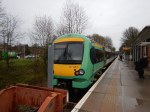
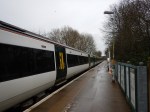
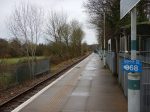
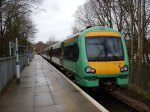
I can’t disagree with what I said in the previous post.
The platform work is certainly being done to a standard and length, that should be good enough, if the Uckfield Branch is used to create a second Brighton Main Line, by extending the line past Uckfield to Lewes on the route of the former Wealden Line.
All of the platforms I have seen on the Oxted Branch seem to be capable of taking a twelve-car train.
Uckfield’s Long Single Platform
Although, I suspect that Uckfield itself could be a bit longer, especially as workers still seemed to be extending it further to the North.
I would think, that this long platform would enable two eight-car trains to be parked in the station, if there was a need in the Peak or because one of the trains had failed.
It’s just more future-proofing.
Oxted’s Bay Platform
Platform 3 at Oxted station is a South-facing bay platform, which is used to provide shuttle and other services down the two branches. In the last couple of years, it has been electrified, which is just more future-proofing, in case it was required to run an electrified shuttle to East Grinstead.
IPEMUs To Uckfield?
The Oxted Line is electrified from London Bridge as far as Hurst Green station, where the two branches split.
- The East Grinstead Branch is electrified.
- Uckfield Branch is not and is about twenty miles long.
As a typical Electrostar IPEMU based on say a Class 387 train, would probably have a range of at least fifty to sixty miles, it would appear that IPEMUs could work the London Bridge or Victoria to Uckfield service.
- Between London Bridge and Hurst Green the trains would take thirty-two minutes, getting power from the third-rail electrification. Batteries would also be charged on this leg.
- Between Hurst Green and Uckfield, they would take forty-two minutes and rely on battery power.
I suspect too, that third-rail IPEMUs could charge their batteries fully before they left London Bridge.
Platform 3 at Oxted station might also be useful for charging an IPEMU running a shuttle service on the Uckfield Branch.
In my view, the work done on the Uckfield Branch in recent months has created a line, that would be an ideal route for IPEMUs to provide the service.
- Platforms have been sufficiently lengthened.
- Signalling can probably already cope with the longer trains.
- There is no more electrification required.
All that is needed is to add an IPEMU-capability to the required number of Class 387 trains and train the staff.
How Long Is An IPEMU?
There is one mathematical and marketing problem, that must be solved before trains are run.
Class 387 trains come in sets of four-cars and on Thameslink, typically run in formations of four-, eight- or twelve-cars.
What is the optimal length to run services on the Uckfield Branch, as determined by passenger demand?
And can this length of train be provided?
I’ve not seen anything for instance, which says how many IPEMUs can form a single train.
But I suspect that Bombardier wouldn’t design a train, without a multiple-working capability.
And of course, the Uckfield Branch has been future-proofed for twelve cars.
I suspect that the capacity of the Uckfield Line will be determined more, by the size of the car parks.
Onward To Lewes
This article in the Uckfield News is entitled £100k Budget pledge for Uckfield to Lewes rail line study.
So it is possible that the Uckfield Branch could be extended by about ten miles to Lewes, along the route of the disused Wealden Line.
Intriguingly, as Lewes is fully electrified an IPEMU train going from London Bridge to Lewes would do less distance on batteries than a train going from London Bridge to Uckfield and back.
One of the problems with extending past Uckfield, is that the trains would have to cross the B2102 by the station in the middle of Uckfield.
This used to be a level crossing and I’m certain, that this option will not be reinstated for safety reasons. It has to be said, that as an IPEMU could cross on battery power, there might be a better solution, than a traditional level crossing.
But IPEMUs have another advantage, in that they could use a short underpass without electrification. I just wonder whether that some clever design could squeeze the railway line under the road.
Conclusion
If the passenger demand is there, there would appear nothing in the design of the upgrade to the Uckfield Line, to stop IPEMUs being used to fulfil that demand.
 The Anonymous Widower