Comings And Goings Of Battery-Electric Buses On Route 242 At Aldgate Bus Station – 4th September 2025
I took these pictures of 242 battery-electric buses at Aldgate bus station, last night.

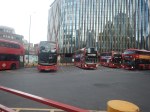
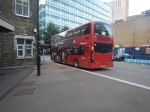
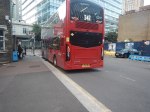
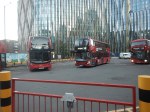
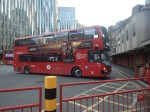
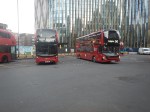
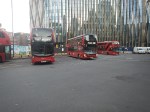
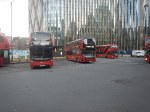

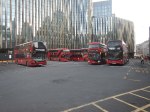
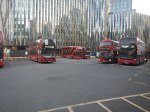


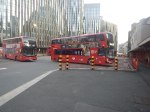




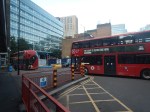
Note.
- All the buses on route 242, were Volvo BZL battery-electric buses.
- All the battery-electric buses backed onto the chargers for about ten minutes.
- Range on battery of the buses is probably about 214 miles according to Google.
- Buses arrived and left every few minutes.
- There was no indication, if the buses were charged at Aldgate bus station, although as the pictures show, some went dark for a few minutes.
If the buses were being charged, it certainly looked an efficient way to charge them.
I took these pictures of 242 battery-electric buses at Aldgate bus station and in Dalston, this morning.
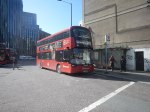
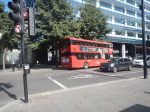
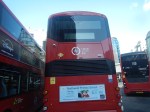
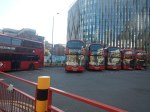
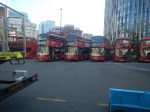

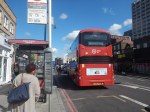
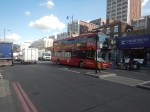
Note.
- All the electric buses are Streetlite Electroliners from Wrightbus.
- All Wrightbuses have a stylised ‘W’ on the front.
- The seventh picture shows the enlarged destination board on the back of the Streetlite bus.
Are Stagecoach running two different types of buses on the same route to ascertain the best and give the chargers a decent workout?
I have some further thoughts.
Could This Form Of Charging Be Used To Convert New Routemasters Into Electric Buses?
Consider.
- In Equipmake Hybrid To Battery Powered LT11, I show a battery-electric New Routemaster is possible.
- In Wrightbus Launches NewPower In Bicester, I write about Wrightbus’s new factory in Bicester to convert buses to battery power.
- In New Routemasters As Advertising Hoardings, I show how New Routemasters have a nice little secondary earner as advertising hoardings.
- New Routemasters have become a symbol of London.
- As pictures five to seven show, New Routemasters could share the chargers with younger battery-electric buses.
- There is still at least another dozen years left in most New Routemasters.
Converting a thousand New Routemasters must be cheaper, than buying a thousand new buses.
Could This Form Of Charging Be Used Outside London?
Most certainly, provided you can get enough power to the charger.
Aldgate doesn’t have a problem with power, as the Underground is underneath.
Feel The Power: Solent From First Bus Introduces Converted NewPower Electric Buses
The title of this post, is the same as that as this press release from NewPower.
These first three paragraphs add more detail.
Repowered vehicles from Oxfordshire-based NewPower will be running on the streets of Solent for the first time as First Bus introduces four newly converted electric buses into service in Portsmouth, Fareham and Gosport.
The ‘repowered’ diesel vehicles have been fully refurbished to a near-new standard and converted to electric power at NewPower’s hi-tech Bicester factory, delivering more environmentally friendly travel for passengers.
Repowered buses converted from diesel to battery-electric by NewPower are the most efficient on the market with a class-leading range of more than 230 miles, recent data has shown.
It certainly seems to me, to be a way to put more affordable zero-carbon buses on the roads.
Wrightbus Delivers More Hydrogen Buses To Germany Bringing Total To 43 – Around 130 Are Due To Be On The Roads By The End Of 2025
The title of this post, is the same as that of this article on the Belfast Newsletter.
This is the sub-heading.
The Ballymena bus manufacturer has also opened a European service centre and spare parts warehouse in Brühl, near Cologne
These three paragraphs add detail to the story.
Northern Ireland zero-emission bus manufacturer Wrightbus has delivered 12 new hydrogen vehicles to German operator WestVerkehr GmbH.
The latest order completion of Kite Hydroliner single decks means there are now 43 hydrogen-powered buses on the streets of Germany – with around 130 due to be on the roads by the end of 2025.
WestVerkehr GmbH is based in the westernmost district of Germany, on the border with the Netherlands, and will operate the Kite Hydroliners between Heinsberg, Hückelhoven, and Erkelenz.
I always think, that if you can sell anything vehicles to the Germans, there can’t be much wrong with them.
This picture shows one of the new Wrightbus electric buses, that I ride regularly around Finsbury in London.
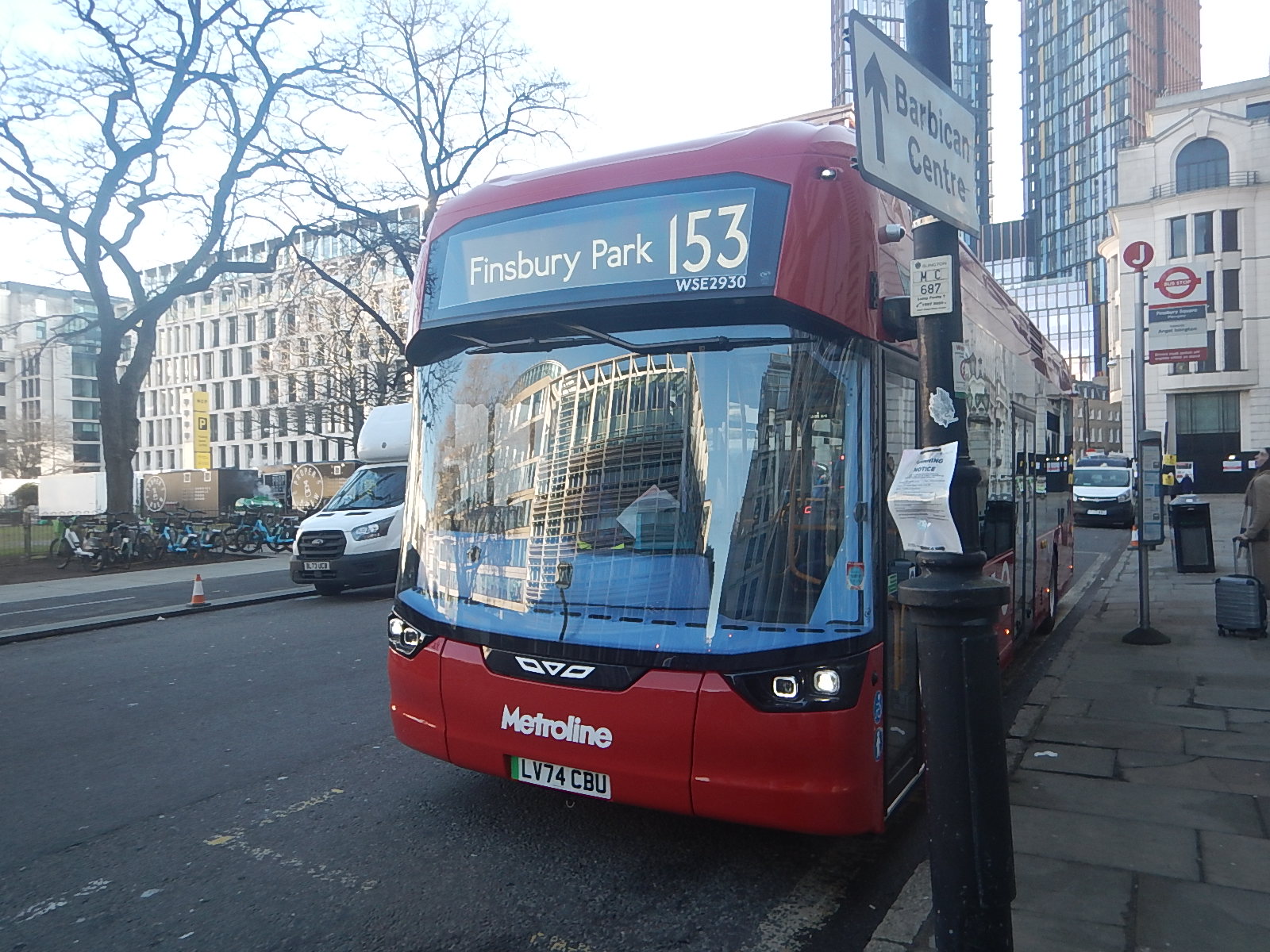
I was on a Chinese electric bus yesterday and there’s no doubt, that the ride in the Wrightbus product is smoother, than that of the Chinese one. Especially, when standing. The Chinese bus doesn’t even come close for ride with a New Routemaster.
London would do better, if it converted the thousand New Routemaster to zero-carbon power, rather than import a thousand Chinese buses.
In Equipmake Hybrid To Battery Powered LT11, I describe how one New Routemaster had a transmission transplant in Norfolk.
As it is possible, are Wrightbus NewPower working on it?
Wrightbus StreetDeck Ultroliner Next-Gen To Get Cummins Power
The title of this post, is the same as that of this article on Route One.
These three paragraphs give more details.
Wrightbus will utilise Cummins power in its StreetDeck Ultroliner diesel double-decker for the first time in a next-generation variant of that model.
Those vehicles will be powered by the six-cylinder B6.7 engine rated at 250bhp or 300bhp, driving through the Voith DIWA.8 seven-speed automatic gearbox. Such an approach will further reduce emissions, and the new model will be Ultra-Low Emission Bus accredited by Zemo Partnership, the manufacturer says.
The existing StreetDeck Ultroliner, which is powered by the Daimler OM 934 four-cylinder engine, will continue to be available. The first Cummins-powered examples are to be supplied to Isle of Man operator Bus Vannin.
As a hydrogen version of the the Cummins six-cylinder B6.7 engine is available, at some point in the future, these buses will be convertible to zero-emission hydrogen power.
Wrightbus have already set up a division called New Power to do the conversion of existing buses, as I reported in Wrightbus Launches NewPower In Bicester.
Wrightbus Launches NewPower In Bicester
The title of this post, is the same as that press release from Wrightbus.
This is the sub-heading.
World-leading bus manufacturer Wrightbus today took the wraps off a bold new enterprise designed to replace older diesel engines with new zero-emission electric powertrains.
These three paragraphs from the press release give more details.
NewPower, which has moved into a hi-tech factory in Bicester, Oxfordshire, aims to speed up the decarbonisation process by eradicating diesel powertrains in older fleets at a substantially lower price than a new bus.
Wrightbus becomes the first OEM to offer a re-powering service, utilising the unique skills of its 1,800-strong workforce to swap diesel for electricity. Its master technicians built the original buses and have unrivalled expertise in being able to swap powertrains.
Hailed as affordable decarbonisation, it is hoped that operators with mid-life bus fleets but without the funding for new zero-emission buses can take advantage of the instant sustainability switch.
Note.
- It appears that Wrightbus, have taken over the new factory of failed electric van manufacturer; Arrival.
- Converting a bus takes three weeks and six can be handled at one time.
- This gives the overall capacity to decarbonise five hundred buses per year.
I have some extra information from this article in Sustainable Bus magazine, which is entitled Wrightbus Launches Repowering Programme NewPower In Former Arrival Headquarter.
Which Buses Can Be Converted And How Much Does A Conversion Cost?
This paragraph is from the Sustainable Bus article.
UK trade media Bus & Coach Buyer reports that the new venture “is focused on fitting its tailored electric drivetrain into Streetdeck buses, then tailoring it for Gemini 2, then New Route Master, with plans to then engineer solutions for other common buses, at around £1m per model”.
Note.
- That is certainly a comprehensive conversion programme.
- I would assume the million pound per model is the development cost of an engineering package for a fleet of buses.
- London would get a thousand refurbished zero-carbon New Route Masters.
- A new double-decker bus can cost between £300,000 to £500,000.
It looks like a programme can be developed, that is profitable for all parties.
 The Anonymous Widower