Why Doesn’t The New Bus for London Have A Top Hat?
Some of the RT London buses of the 1950s and 1960s had the route number shown at roof level at the front of the bus. This was variously called a lighthouse box, a top box or a top hat. It’s the latter that I prefer and it was a great help when catching a bus, as you could more easily identify if the one in the distance was the bus you wanted.
It’s the one feature, I would have put into the New Bus for London, that Heatherwick didn’t!
A Late Running New Bus for London
It was running to the timetable, but tonight I travelled on a New Bus for London from the Angel to my house, catching the bus at The Angel a few minutes after nine o’clock. It was probably on time, but running later than I’d ever seen one before.
It was surprisingly full for a bus at that time, but I suspect like me, a lot of people got off the following 73 to go to Hackney rather than Stoke Newington. As the New Bus has three doors and the downstairs is more spacious, I think we’re going to see more of this bus-swapping, as for people like me, it gets me to a stop nearer my house and even if I was paying my own fare, I wouldn’t be charged any extra.
This hop-off and hop-on behaviour is one of the advantages of London’s automated Oystercard system. About the only interaction between driver and passenger on a London bus, as most people get on, is either a smile, a gesture or perhaps a quick greeting.
The bus tonight was running in one-person mode, with the driver controlling all three doors at stops.
It’ll be interesting to see, how the actual capacity changes when the next route for the New Bus for London; route 24, is fully operational. There are a lot of factors that will come into play.
1. The middle and rear doors are positioned by their own staircase and they have their own Oyster reader. So many passengers will get on through the more convenient door, touch in and go upstairs.
2. The middle door has a larger lobby than a standard bus and the rear door has the platform, so passengers will get themselves ready to leave the bus earlier. I know I do this on a New Bus for London, especially, if I’m going to jump off the back.
3. Because of the three doors, the front one only becomes an entry point for someone, who has to pay the driver, show a paper ticket bought elsewhere or is using the door as it’s the most convenient.
4. Buggies and wheelchairs usually go in the middle door. On a standard bus, wheelchairs come in the middle door, but buggy pushers generally have to use the front entrance. If they use the middle one, they then have to walk to the front to touch in or pay the driver.
5. The New Bus for London also develops its own unofficial stops. At the Angel, there is a light controlled crossing just before the stops by the station, when going south. I’ve got off at the lights, when they are red several times. Also at the Angel, there is often a queue to get on the bus stops at busy times. Passengers use the rear entry on a New Bus for London to avoid waiting for the bus to get on the stop.
All of these factors mean that the New Buses for London, load and unload passengers much quicker than the standard bus. This can lead to a shorter journey time from one end of the route to the other.
I also think that as passengers use the New Bus for London more, they will modify their behaviour to get a faster journey. There can’t be many people, who don’t like going as fast as possible from A to B.
The Timetable For The New Buses for London On Route 38
This post is for my benefit and it links to a timetable for the New Buses for London operating on Route 38.
My History Of Nail Biting
As a child I was a compulsive nail-biter. My mother always said, I started, when she stopped me from chewing the collar of my shirt. So you stop one habit and another starts.
I tried a few times to stop biting my nails, but it wasn’t successful and although I might stop for a few days on holiday outside of the UK, I started when I got back. C didn’t like it and at one time, I was painting awful stuff on my fingers to stop my biting of the nails. It wasn’t that successful.
Incidentally, two of my sons were nail-biters in a small way, but gave up before adulthood, which of course I didn’t do.
But then when I was diagnosed as a coeliac and went on a gluten-free diet, I stopped biting my nails. It happened virtually overnight and I’m not the only person I know, who has found this after going gluten-free.
These days my all twenty of my nails are very dry and need constant care to keep them in good condition. Interestingly, the odd bit I’ve broken off and eaten, taste just like my nails did as a child. You could argue that nails taste like nails, but my good nails of say ten years ago had a different flavour.
So perhaps, I bit my nails as a child because they were dry and that as I liked doing it I’ve remembered the taste.
When they tasted that way, I had these awful breathing problems, just as I have rhinitis today. So perhaps all that time off school, was caused by the same illness that has plagued me this winter.
Perhaps my body is incredibly dry and that is causing the rhinitis.
The great thing is that it didn’t kill me sixty years ago!
Why We Need More Walk-Through Trains?
The Class 378 trains on the London Overground are completely articulated and you can walk through from one end to the other.
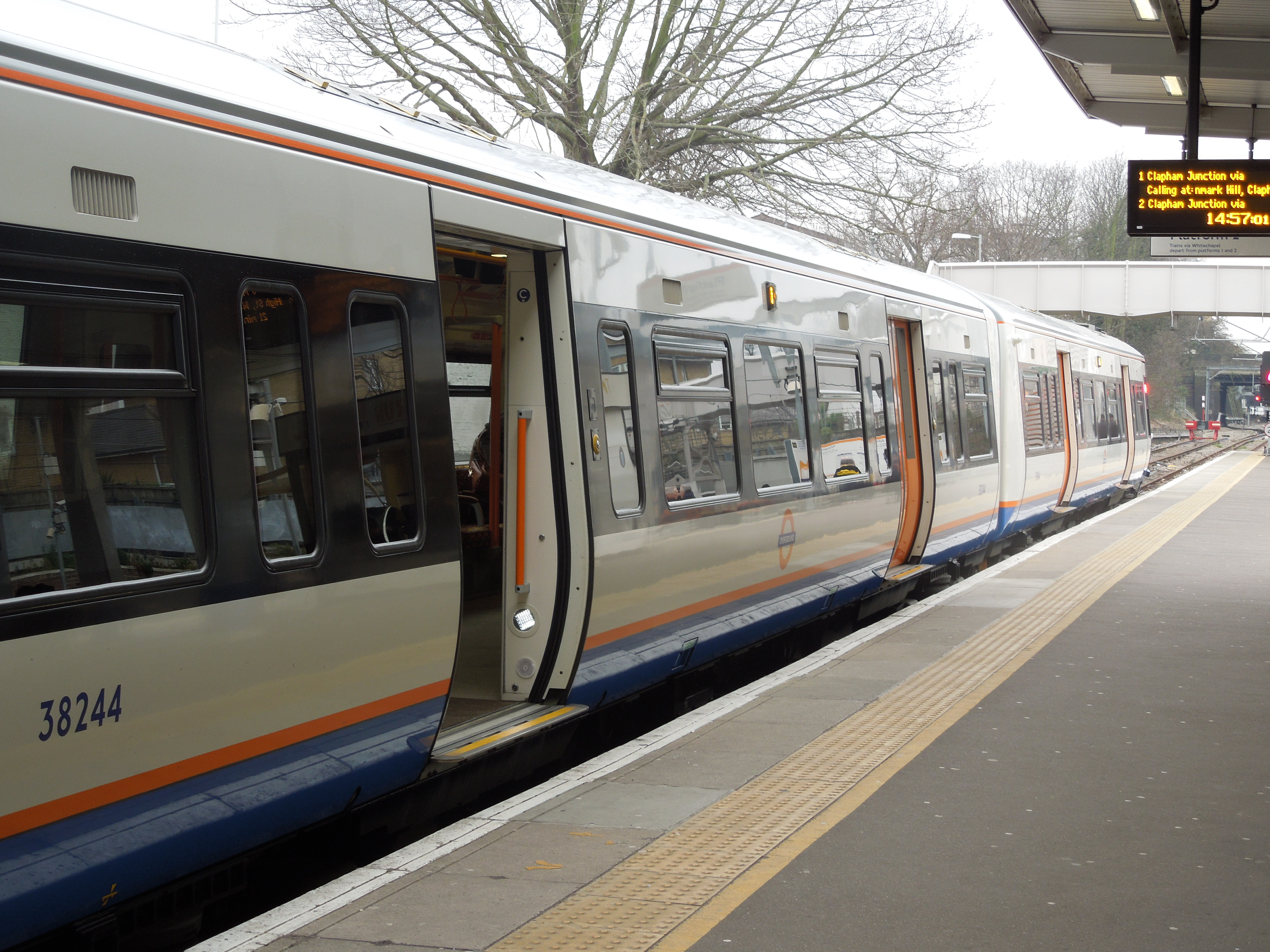
Class 378 At Highbury And Islington Station
The picture shows the train I got on to return from Highbury and Islington station, today. I got in at the end where you walk down to the platform at the station and then walked through to the other end, as that end is best for getting off at my station, which is Dalston Junction.
As there is no doors to open or close as on most trains, it’s an easy process and is something I’d like to see on a lot more trains, as not only is it more convenient, it might well be safer too! Already the new S stock trains for the London Underground are built similarly.
Sir Mervyn Suggests Splitting RBS
This is the gist of a story on the BBC’s web site. It’s an idea that might work, although I’m still in favour of liquidating all of the Royal Bank of UK Taxpayers.
On the other hand we could always use it as Danegeld to make unwanted immigrants go home, by giving them shares on condition they went away.
Now there’s an idea for UKIP!
It would solve the problems of immigration and RBS at the same time.
Taking Your Anger Out On Wikipedia
Last night as Manchester United threw their match away, I had an eye on the Wikipedia entry for the referee; Cüneyt Çakır.
Aspersions were being cast by the irate and removed by the moderators.
It’s all calmed down now!
Manchester United Blow It
You can argue, that the referee was wrong, but people do get sent off.
So last night, Manchester United were at fault in not being able to hold on to their lead or at least only ship one goal. Where was the Plan B for what you did if you lost a player? Surely, they should have done better!
last night, Ipswich had two players sent off at Nottingham Forest and then lost one-nil. Here’s the manager; Mick McCarthy’s quote from the BBC report.
They’re brilliant, they’re a great bunch, they really are fabulous. I was really proud of the way they went about their job.
“We were unlucky not to hold out. It’s a deflection that’s cost us – they didn’t look like they were going to get it any other way.
I know the match wasn’t as important, but it would appear the players did what they had to! And only failed by seven minutes!
In the past, I’ve watched some great games both live and on television, when one side has been reduced to ten men and still won or at least gone down with all guns blazing.
The Personal Touch From Sir Mervyn
This story reported on the BBC, is a good one, as it shows the tensions between the Bank of England and the so-called retail banks well. The guy who wanted to buy a van, sums up the banks as follows.
But Mike Benson is unimpressed, and is thinking of turning to other lending schemes which do not involve banks, like peer-to-peer lenders.
“There will come a point when we don’t need the banks. And sayonara to the banks!”
That is why he eventually decided to buy his van with his own cash.
I wonder if any of the peer-to-peer lenders have contacted him or as they tend to be low profile, he’s contacted any himself!
Sir Mervyn’s letter may be typical of the Bank of England. I once wrote to another director, who was writing a report on a particular subject. Not only did he reply, but he put some of my thoughts in the report and when it was published I received a copy, which acknowledged my contribution in an Appendix, along with all the others who’d done so.
Would you have got that response from Lloyds, Barclays or RBS?
 The Anonymous Widower