A Land Rover Defender Ambulance
This ambulance was parked outside the Red Cross in Moorfields, whilst I ate my breakfast in the LEON opposite.




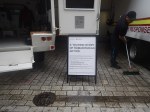
Note.
- It was from the Lincolnshire Red Cross.
- It was a very professional conversion.
- Judging by the sign it appeared to be promoting the link between Jaguar Land Rover and the Red Cross.
As an occasional user of an ambulance, I have some views on the design of these vehicles.
Should Ambulances Be Hydrogen Powered?
I asked Google AI this question and received this answer.
Hydrogen power offers significant advantages for ambulances by combining long driving ranges with rapid refuelling times, making it a strong contender for emergency fleets.
The Case For Hydrogen Ambulances
Fast Refuelling: Hydrogen tanks can be refuelled in about five minutes, keeping vehicles ready for back-to-back emergency shifts without long charging downtimes.
Longer Range: Fuel cell and battery hybrid setups (like the ZERRO project) can travel up to 300 miles, which is vital for rural areas or long-distance hospital transfers.
Onboard Power: Hydrogen fuel cells can power heavy medical equipment without draining the main drive battery or requiring extra diesel generators.
The Challenges
Infrastructure Costs: Public hydrogen refuelling stations remain scarce, limiting where vehicles can operate and refuel.
Vehicle Costs: Building and buying hydrogen fuel cell systems is currently more expensive than standard battery-electric or diesel setups.
Electric Competitiveness: Standard battery-electric ambulances are already performing well in urban areas where depots allow for overnight recharging and shorter daily shifts.
Note.
- I have been a passenger in about four or five hydrogen fuel cell-powered buses. All were mouse-quiet with no vibration. This is surely important in an ambulance!
- I used to live next to a London paramedic sixty years ago and he said it was a stressful job. Would a calm environment help to relieve that stress?
- The onboard power capability is surely important and will get more important in the future.
- As more hydrogen-powered vehicles appear on the roads, hydrogen fuelling stations will be less scarce.
The long-range of a hydrogen-powered ambulance might mean that patients were taken to an appropriate hospital immediately.
How Does The Performance Of Electric-Powered And Hydrogen-Powered Ambulances Compare?
I asked Google AI this question and received this answer.
Electric-powered and hydrogen-powered ambulances compare across range, refueling time, energy efficiency, and onboard power capabilities:
Range and Operational Capacity
Electric Ambulances (BEV): Typically offer a range of around 70 to 120 miles on a single charge, which suits local response cars, patient transport, or shorter urban shifts.
Hydrogen-Electric Fuel Cell Ambulances (FCEV): Use hydrogen fuel cells as a range extender to charge onboard batteries, providing a significantly higher extended range of up to 300 miles, which is closer to traditional diesel vehicles for demanding shifts.
Refueling and Downtime
Electric Ambulances: Require time plugged into charging infrastructure to replenish batteries, which can take anywhere from tens of minutes on rapid chargers to hours depending on power limits, creating potential downtime during fleet rotations.
Hydrogen Ambulances: Can be refueled with compressed hydrogen in roughly 5 minutes, allowing for immediate back-to-back operational shifts without prolonged downtime.
Energy Efficiency and Onboard Power
Electric Ambulances: Feature high overall powertrain efficiency (converting over 85% of battery energy into motion) and lower moving-part maintenance costs, but heavy medical equipment loads draw heavily on the primary battery and can restrict operational range.
Hydrogen Ambulances: Offer onboard power off-take capabilities directly from the fuel cell system, enabling high-draw medical equipment to run continuously without draining the main drive energy or requiring a separate noisy generator. However, hydrogen systems have lower overall well-to-wheel thermodynamic efficiency and higher complexity.
Infrastructure and Deployment
Electric Ambulances: Benefit from a rapidly expanding public and depot charging grid, with several NHS trusts already successfully deploying electric response and transport vehicles.
Hydrogen Ambulances: Remain in early trial and prototype phases (such as projects via ULEMCo and HVS) because specialized hydrogen refueling stations are scarce and expensive to build.
I suspect that the nature of the terrain in an area, will also affect the type of power selected.
My Sister’s Burst Aorta
This is a personal observation.
- My sister lives near Colchester General Hospital.
- After her aorta burst, she dialled 999 and an ambulance was dispatched.
- The paramedics corrected assessed her problem and didn’t muck around.
- They decided to take her immediately to Papworth Hospital on the other side of East Anglia.
- The road between the two hospitals is dual-carriageway all the way and possibly with a Police escort, they made the trip in time.
- After several months in hospital, she returned home.
- My sister has now fully recovered.
I believe journeys like this, would be faster and more comfortable in a custom-designed high-performance hydrogen fuel-cell ambulance.
It should be noted that the East Anglian Ambulance Service has been known to station ambulances on the bridges over the dual-carriageways to shorten response times to road accidents.
Are Toyota HiLux Pickups Used As Ambulances?
I asked Google AI this question and received this answer.
Yes, Toyota Hilux pickups are used as ambulances, especially in remote, rural, or off-road environments where standard van-based ambulances cannot travel.
Common Configurations
Canopy / Rapid Response Style: The pickup bed is fitted with a secure, weatherproof canopy or Truckman top to carry a single stretcher and essential emergency gear.
Box-Type Modular Body: A fully enclosed, purpose-built medical compartment is mounted directly onto the Hilux chassis, offering a climate-controlled environment and space for advanced life support (ALS) equipment.
Where They Are Used
Off-Road & Disaster Zones: Mountain rescue teams, humanitarian groups, and military field operations rely on the Hilux’s 4×4 capability and high ground clearance.
Specialized Services: Organizations like wildlife hospitals use adapted Hilux trucks as animal ambulances to reach stranded or injured wildlife in rough terrain. International agencies like the UN and WHO also deploy them in regions lacking paved infrastructure.
I would expect that in designing the next generation Toyota HiLux, Toyota have improved on the design for ambulances.
Will A Hydrogen-Powered toyota HiLux Pickup Make A Useful Ambulance?
I asked Google AI this question and received this answer.
A hydrogen-powered Toyota HiLux pickup can make a useful off-road or specialized utility ambulance, but its practical application as a standard emergency vehicle faces major limits.
Advantages for Ambulance Use
Off-road access: The rugged ladder-frame chassis of the HiLux allows access to remote, rugged, or off-road terrain where standard vans or traditional ambulances cannot go.
Quick refueling: Hydrogen fuel cells refuel in about 3 to 5 minutes, offering much faster turnaround times than battery-electric vehicles.
Clean operation: The fuel cell produces zero tailpipe emissions, creating a quiet, exhaust-free environment suitable for patient transport.
Good payload and towing: It targets a towing capacity of around 5,500 pounds (2,500 kg), handling heavy medical gear better than lighter electric alternatives.
Limitations for Ambulance Use
Cabin space: A pickup truck bed and cab offer less enclosed, climate-controlled volume for patients and attending medical staff compared to standard box ambulances or large vans (like the Toyota Hiace).
Infrastructure gaps: Hydrogen fueling stations remain very rare outside select urban or regional pockets, restricting emergency range and operational zones.
Availability: Toyota is targeting production for the hydrogen HiLux by 2028, meaning the vehicle is not yet available for immediate fleet purchase.
I do think though, that it would be very suitable for some specialist operations.
British American Tobacco Sponsored Reform UK Conference
The title of this post, is the same as that of this article in The Times.
This is the sub-heading.
Nigel Farage has promised to scrap the law that will ban everyone born after 2008 from smoking
These are the first two paragraphs of the article.
The maker of Lucky Strike and Dunhill cigarettes was a prominent sponsor at the annual conference of Reform UK, which has vowed to scrap the incoming lifelong smoking ban.
British American Tobacco and its Omni brand, an initiative to further its nicotine products business, was the sponsor on lanyards worn by delegates at the party’s conference in Birmingham this month.
Let’s hope that a serious politician protects us from this dangerous individual.
I write as someone, who lost his wife, because her tutor at university, insisted on smoking Capstan Full Strength all through tutorials.
She used to smell of tobacco smoke, a lot of the time.
My wife died of a squamous cell carcinoma of the heart in 2007, which is not a nice way to go. Papworth said it was a delayed secondary cancer from all that smoke-filled atmosphere many years before.
Few years earlier, she had fully recovered from serious breast cancer, but then she got the totally unrelated secondary cancer.
Her sad death is one of several, that are highlighted in this post about a study at Cambridge University, which I wrote about in Study Highlights Increased Risk Of Second Cancers Among Breast Cancer Survivors.
Sadly, her selfish tutor is still with us.
S
Trump Vows To Give Every Adult $5,000 If He Wins Midterms
The title of this post, is the same as that of this article on The Times.
This is the sub-heading.
At the first-ever Republican midterm convention, speakers called the Democrats ‘communists’ and championed the president’s policies of ‘common sense’
These are the first two paragraphs.
President Trump pledged to issue a “dividend” of $5,000 to every American adult if the Republicans hold the House and Senate in the midterm elections.
Speaking at the opening night of the first-ever Republican midterm convention in Dallas, Trump said the payout — which would amount to $1.35 trillion — had only one caveat: that it should be spent in the United States.
I first read this story, whilst I was recovering in Homerton Hospital, after a fall that appeared to knock me out in my bedroom. I suspect a rug slipped, while I was getting dressed.
Reports of the convention, sound more like that of a Mafia or drug-dealers convention, than that of a supposedly responsible political party.
Is The Testing Of All Babies In Italy For Coeliac Disease And Type 1 Diabetes Having Any Effects?
I asked Google AI, the question in the title of this post and received this reply.
Italy’s law (Law 130/2023) targets children aged 1 to 17 rather than newborns. Pilot screening programs (like D1Ce Screen) show major positive effects: they successfully catch hidden cases early—finding coeliac antibodies in nearly 3% of children and type 1 diabetes markers in 0.8%—which dramatically cuts down dangerous emergency complications like severe diabetic ketoacidosis at diagnosis.
Key Findings and Effects
Early Detection: Finds silent or pre-symptomatic cases that standard symptom-based testing misses.
Reduced Complications: Lowers severe diabetic ketoacidosis rates by up to 50% when type 1 diabetes is caught early.
High Prevalence Insights: Pilot data show coeliac markers reach nearly 2.8–2.9% in children, higher than previous global estimates.
Healthcare Feasibility: Proves that capillary blood collection through primary care pediatricians is organized and practical on a national scale.
The testing appears to be successful in Italy.
Jesy Nelson ‘Outraged’ After MPs Debate Muscle Condition That Affects Her Twins
The title of this post, is the same as that of this article on the BBC.
This is the sub-heading.
Former Little Mix singer Jesy Nelson says she is “heartbroken” and “outraged” by MPs, following a debate about spinal muscular atrophy (SMA) testing in parliament.
These two paragraphs add some more details.
The singer has been campaigning for newborn babies to be screened for the muscle-wasting disease after her twins, Ocean Jade and Story Monroe Nelson, were diagnosed with it.
Caught early, the condition is treatable. Without diagnosis, it can cause death within two years.
I am coeliac and I believe my youngest son, also suffered from the disease.
- His late mother also believed he was coeliac.
- But he refused to get tested.
- He died at the age of 37 from pancreatic cancer, as his weakened immune system couldn’t protect him.
- Italy has recognised the problems that undiagnosed coeliac disease causes and now tests all babies for coeliac disease and type 1 diabetes.
I wrote about it in Italy Leads The World In Screening For Coeliac Disease.
How Is The Testing Of Babies In Italy For Coeliac Disease And Type 1 Diabetes Going?
I asked Google AI the question in the title of this post and received this reply.
Testing babies and children for coeliac disease and type 1 diabetes in Italy is progressing successfully, rooted in groundbreaking legislation. Italy is the first country to pass a national law (Law 130/2023) mandating mass screening for these conditions in children aged 1 to 17.
The pilot project, known as the D1Ce Screen, was rolled out in four key regions: Lombardia, Sardegna, Marche, and Campania. Testing is typically conducted at ages 2, 6, and 10.
Here is how the rollout is progressing based on interim data and reports:
Pilot Study Success: The screening involves a simple capillary (finger-prick) blood draw administered by primary care pediatricians. Participation in the initial phase was high, with over 75% of pediatricians and thousands of children successfully screened.
Higher-Than-Average Positivity Rates: Preliminary data revealed that approximately 2.8% to 2.9% of children tested positive for coeliac-specific antibodies—more than double the global average of 1% to 1.4%. Additionally, around 0.8% of children displayed markers for type 1 diabetes.
Early Detection: The pilot has proven highly effective at identifying asymptomatic or “silent” cases of both conditions early, which is vital for preventing acute complications like Diabetic Ketoacidosis (DKA) and avoiding the long-term impacts of undiagnosed coeliac disease.
High Public Acceptance: Surveys from the pilot regions indicate that more than 90% of parents are highly willing to have their children screened, though general public awareness of the national program is still being scaled up.
Following these successful pilot rollouts, the government continues to expand the screening program to ensure full, nationwide coverage to protect at-risk children before severe symptoms develop.
Was There Often A Barrel Of Beer Available In Places Like Foundries, Where The Work Was Hot And Hard?
Readers of The Times has been discussing electrolytes in this hot weather and especially the possibility that beer contains electrolytes.
This was posted.
My elder father informed me yesterday his fridge is full of alcohol free Erdinger wheat beer. It is marketed as good for replacing electrolytes.
So there could be something in it.
At the moment, as I type this the temperature is 35.5 degrees and the humidity is 26%, so I’m finishing off last night’s bottle of Adnam’s Ghost Ship Alcohol-Free 0.5 % Beer.
I asked Google AI, the question in the title of this post and received this reply.
Yes. In heavy industries like foundries, glassworks, and steel mills, consuming large volumes of liquid was a medical necessity to replace what was lost to sweat. Historically, workers frequently supplemented their diets with beer—sometimes supplied by the company, sometimes delivered by local pubs, and sometimes factored into their pay.
Historical Context & Working Conditions
The Thirst Quenchers: In sweltering industrial environments where temperatures could exceed \(65^{\circ }\text{C}\) (\(150^{\circ }\text{F}\)), workers suffered massive fluid loss. A furnaceman or steelworker could sweat out up to twenty pints a day.
The “Beer Allowance”: In places like Britain’s steelworks in Sheffield, it was customary for workers to receive a weekly beer allowance—sometimes up to forty pints—often supplied directly to the sweltering factory floor via young workers known as “bucket boys”.
Liquid Nutrition: Before the advent of modern refrigeration and reliable municipal water, low-alcohol table beer provided crucial calories and hydration without the risk of waterborne illnesses. It was treated more like a food source than an intoxicant.
The Shift to Modernity
The Temperance Movement: The availability of alcohol at work gradually changed during the 19th and 20th centuries. The rise of the Temperance Movement and stricter workplace safety regulations meant that by the mid-to-late 20th century, foundries began phasing out alcohol in favor of safer, hydration-focused alternatives.
Modern Replacements: Today, foundries and heavy industries prioritize hydration through water, electrolyte replenishment, and salt tablets rather than on-site alcohol.
I should say, the following.
- My paternal grandfather was an alcoholic and it eventually caused his early death at around 40.
- I lose a lot of water through my skin. See My Strange Skin.
- I’ve always preferred beer to any other drink. But I’ve never had an alcohol-related problem.
So do I drink beer and usually real beer because of its electrolytes?
Green Tea, Broad Beans, Berries — Are You Eating The Best Five-A-Day?
The title of this post is the same as that of this article in The Times.
This is the sub-heading.
We need 500mg of flavanols a day for heart and brain health, new research shows. Here’s how to boost your intake
These three paragraphs add more details.
You may have ticked off fruit for breakfast, salad for lunch and pulses and veggies for dinner to get your five a day, but you could still be missing out — specifically on key nutrients called flavanols, which are important for disease prevention.
Not all fruit and veg are created equal and while a variety of plant foods is best for all-round health, researchers from the University of Reading, Harvard Medical School and the University of California Davis stressed this week that our focus should be on getting more flavanols, a specific group of antioxidant compounds found in foods such as berries, apples, kale, grapes, tea and cocoa. These matter because they support blood vessels, circulation and heart health.
For their study, published in the latest edition of the Food & Function journal, the scientists tracked the diets and urine biomarkers of more than 30,000 people from the US and the UK, and confirmed that a daily intake of 500mg of flavanols reduced deaths from cardiovascular disease by 27 per cent. Their results also showed that fewer than one in five people get enough flavanols in their diet and even those who hit standard NHS healthy eating guidance are often found to be lacking in the nutrients.
I eat a lot of strawberries, as I find strawberries and yoghurt in the afternoon helps to calm my uncomplicated pancolonic diverticular disease.
I also drink two or three bottles a day of Adnams Ghost Ship Alcohol Free Beer.
Does Low-Alcohol Beer Contain Flavanols?
I asked Google AI and received this slightly surprising answer.
Yes, low-alcohol and non-alcoholic beers contain flavanols. The brewing process retains a significant portion of these bioactive polyphenols (antioxidants).
How Flavanols Get into the Beer
Hops: Hops are the primary source of specific flavonoids and flavanols.
They are also the unique source of prenylflavonoids (like xanthohumol), which are known for their strong antioxidant and potential anti-inflammatory properties.
Malt: Barley and grains provide the majority (70-80%) of the total polyphenolic compounds found in a standard brew.
Brewing: Because non-alcoholic and low-alcohol beers undergo many of the exact same initial fermentation and brewing steps as regular beers, they naturally retain these compounds from the raw ingredients.
Style: Darker, heavier, or more heavily-hopped beers generally contain higher amounts of total flavonoids and polyphenols.
Processing: Certain filtration and stabilization methods used to reduce haze during production can also slightly decrease the flavonoid content.
Health Value: Because low-alcohol variants bypass the negative effects of ethanol, they are often highlighted by dietitians and nutritionists as a great way to enjoy the functional and nutritional benefits of beer, such as antioxidants and vitamins.
I also feel that a lot of what is said here could also apply to real ale.
Does Real Ale Contain Flavanols?
Yes. Real ale contains flavanols (such as catechins and epicatechins) and various other flavonoids, primarily sourced from the hops and malt used in the brewing process.
Key Flavonoids and Polyphenols in Real Ale
Flavanols: Compounds like catechin and epicatechin are present in beer, providing a source of antioxidants.
Flavonols: Real ales contain flavonols such as quercetin and rutin.Prenylated
Flavonoids: Hops provide unique prenylated flavonoids (like xanthohumol and isoxanthohumol). Because ales are typically more heavily hopped than lagers, they often boast higher concentrations of these specific compounds.
Why Real Ale is a Notable Source
Ales are top-fermented at warmer temperatures and are traditionally more heavily hopped than lagers, which aids in the extraction of these plant polyphenols. Furthermore, because real ale (or cask-conditioned ale) undergoes a secondary fermentation in the container from which it is served and is typically unpasteurized and unfiltered, it retains high amounts of these natural plant compounds compared to mass-produced, heavily filtered beers.
I’ve rarely drunk any foreign lager, since my father introduced me to Adnams at about 11.
Mushrooms Could Be Used In Rivers To Clear E coli And Filter Sewage
The title of this post, is the same as that of this article on The Times.
This is the sub-heading.
Ofwat has funded a nationwide trial after tests revealed that leaky dams of fungi can trap and consume dangerous pollutants
These paragraphs add some detail.
Mushrooms could be deployed in rivers to filter out toxic pollutants after a trial showed fungi can destroy bacteria that pose a risk to human health.
Ofwat, the industry regulator, has awarded Anglian Water £1.5 million to use fungi to clean up rivers after a trial showed that they could remove 80 per cent of E. coli from rivers.
It sounds promising to me, as after living in the countryside for many years, I’ve heard so many countrymen and women, with strange remedies for things like algae.
Italy Leads The World In Screening For Coeliac Disease
The title of this post is the same as that of this article on 360info.org.
This is the sub-heading.
Coeliac disease is common but often undetected. Researchers are looking at ways to make the disease both easier to diagnose and easier to treat.
This paragraph gives a few more details.
The land of pizza and pasta — Italy — has become the first country in the world to pass a law requiring all children under the age of 18 to be screened for coeliac disease and type 1 diabetes.
I feel the most interesting part of this law will be its secondary and long term ones.
Topics I will be following include.
- How will it increase the number of diabetics and coeliacs?
- Will it affect cancer rates?
- Will it affect obesity rates?
- Will it affect the rates of other diseases?
- Will it help to improve Italy’s chronically-low birth rate.
- Will it improve Italy’s performance in sports like swimming and athletics, that need a high degree of fitness.
How many other countries will follow Italy?

