Could Tram-Trains Be Used To Advantage North Of Manchester?
In A Plea For Help From Lancashire, I said this about creating a better service to Rossendale.
Perhaps one way to do create a service would be use Class 399 tram-trains to extend the Metrolink from Bury, if they are proven to work successfully between Sheffield and Rotherham in the next few years. After all, the first phase of the Manchester Metrolink to Bury was built by converting the old East Lancashire Railway,
I also said that I feel that the Germans and the French would use tram-trains in the area.
So how feasible would it be to extend the trams from Bury? This is a Google Earth image of the centre of Bury around the end of the Metrolink line from Manchester.
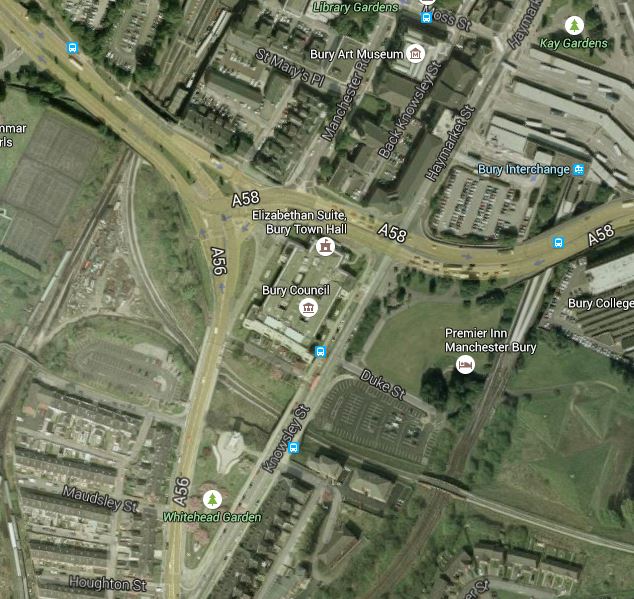
Bury Interchange
Note how the East Lancashire Railway from Bolton Street station passes under the A58 and turns east to continue to its next station at Heywood. The Metrolink stop is marked by the blue symbol labelled Bury Interchange and the tram line goes south passing under the A58 and the rail line.
I clipped this route diagram from the Wikipedia entry for the East Lancashire Line.
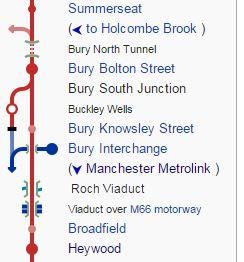
Bury Rail Lines
My untrained eye says that it wouldn’t be that difficult to have some tram-trains go via Bury South Junction and then up the East Lancashire Railway. A Buckley Wells Metrolink stop and Park and Ride has been proposed and the site is already owned by Transport for Greater Manchester. Although, I would suspect that the lines would run differently to those shown.
If Class 399 tram-trains or similar going up the East Lancashire Railway were to be proposed, it would certainly result in at least two additional stops in Bury at Buckley Wells and Bolton Street. The biggest problem would be to decide how far the trams would go. Originally the electric trains on the Bury Line as it then was, went to Rawtenstall station. Wikipedia says this.
The Association of Train Operating Companies have identified that the community of Rawtenstall on the East Lancashire Railway Heritage Railway could benefit from services connecting the station to the National Network.
So perhaps this could be a possibility.
One of the advantages of using tram-trains to add a commuter service to the East Lancashire Railway, is that it would reduce the need to find heavy rail platforms at Manchester Victoria. There may be a problem though in the capacity of the current Bury Line, which has a double tram every six minutes. But then a second crossing of the city centre is being built and there are proposals to add all sorts of extensions to the Metrolink network.
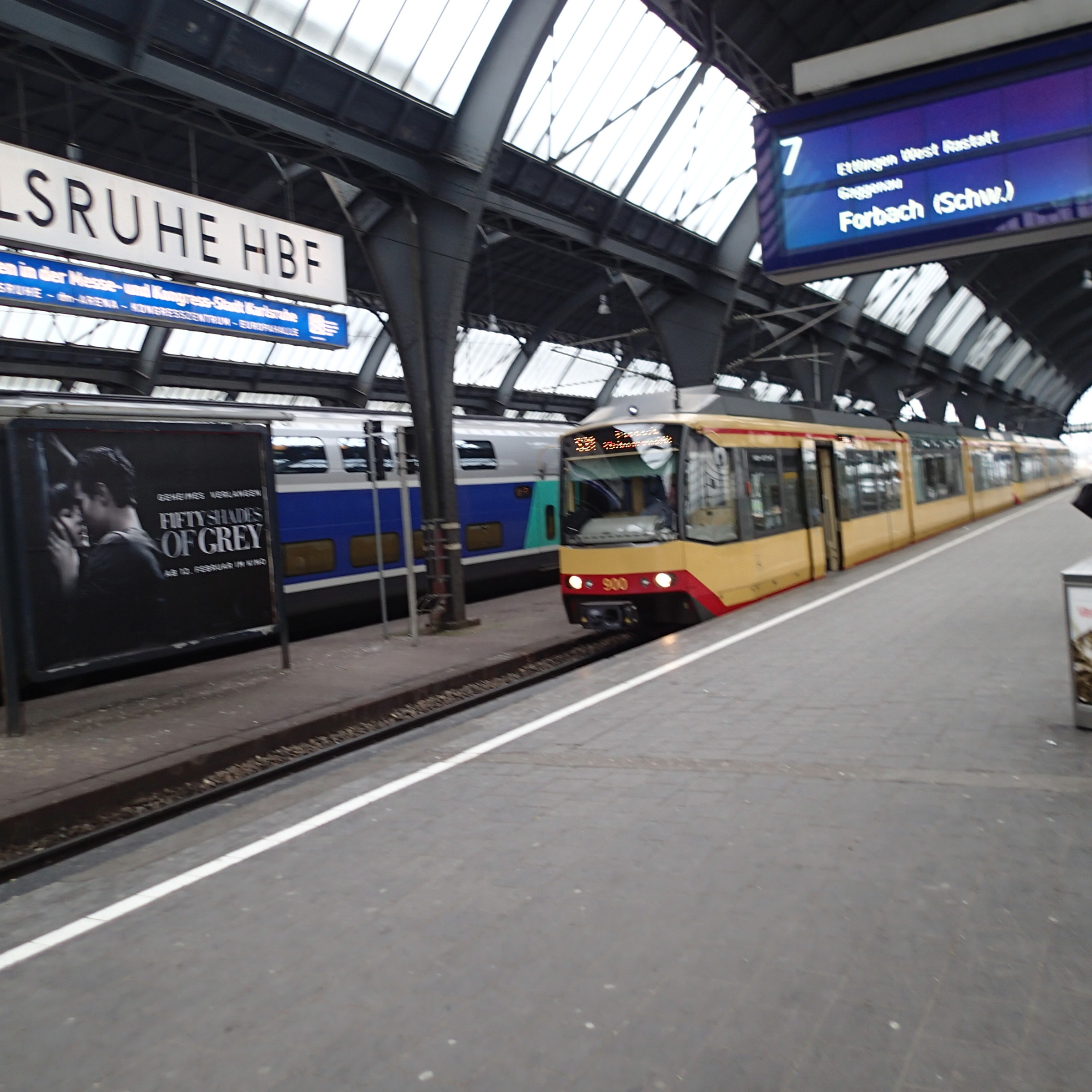
Tram-trains are remarkably flexible vehicles in that provided the loading gauge, platform height and track is correct, there is a power supply and signalling system they can use, they can go a vast number of places on the rail and tram network. As an example, here’s one of Karlsruhe’s tram-trains in a platform in the main station alongside a TGV.
So the only thing that limits their use is the correct certification for a route and the training of the staff. Tram-trains also have the advantage that they can run at slowish tram speeds in city centres and at much faster speeds on rail lines designed for such.
In my view all this means that to expand the Metrolink outside of its current network, you need to get a tram-train that can run on the central network in the city centre and then gradually equip and certify all of the branches out of the city for the chosen tram-train.
It would be nice to think in my view, that we could come up with one specification for a tram-train, that could be used everywhere in the country.
To show how tram-trains could be used, I’ll use the example of the new service around the Todmorden Curve from Manchester Victoria to Burnley and Blackburn.
The Caldervale Line through Blackburn, Accrington and Burnley is going to be electrified in the next few years, so it would only be necessary to additionally electrify the line from Rochdale to the Todmorden Curve.
Rochdale where the train and tram lines are close together as this Google Earth image shows, gives two possibilities.
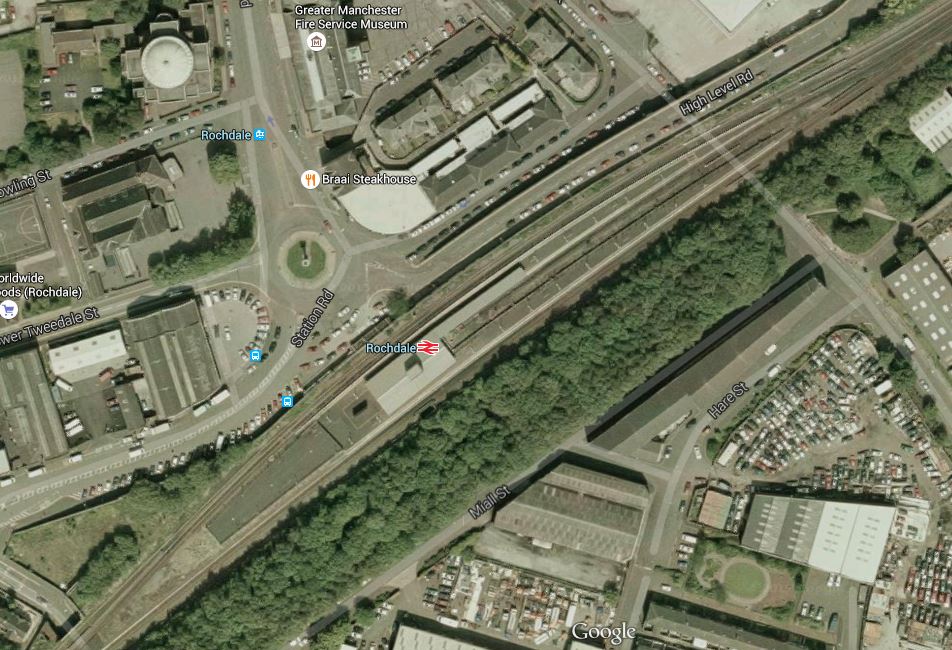
Rochdale Interchange
The tram-train could either go on the current route into Manchester Victoria, provided of course it was electrified or it could run to the city centre on the tram lines.
You pays your money and takes your choice depending on what optimises the network best for the passengers.
Peer-To-Peer Lending Is Different In The US
I like peer-to-peer lending and have quite a large sum invested. But after reading this article in the Financial Times, I’m pretty certain that if I lived in the United States, I wouldn’t touch peer-to-peer lending with a bargepole.
The reason is that in the United States, institutional investors get first pick of the borrowers and are developing software, so that the retail investors gets what’s left.
In the UK, the Peer-To-Peer Finance Association has moved to ban this practice and make all investors equal.
The day they give preference to institutions, my money will be withdrawn gradually as it becomes available.
I think we all have to remember that one of the causes of the Financial Crash of a few years ago was greedy bankers, who felt they were a class above the vast majority of people, who have made their money by sheer dint of hard work.
Whatever you do, read the article in the FT. It’s a cracker!
And also look at the Peer-To-Peer Finance Association web site!
Burnley And Ebbw Vale
You may wonder why I’m writing a piece about two towns in the United Kingdom, which are hundreds of miles apart.
Both towns have not been in the best of health lately, although employment has risen in Burnley between 2009 and 2013 by 7.1%, as against 0.6% across the North-West and 2.0% nationally, according to this article.
They are also towns with similar geographic and transport problems being in the hills with not the best transport links.
But last Sunday, both towns got improved rail links to their nearest big city.
Ebbw Vale Town station opened and trains now run direct to Cardiff every hour.
At Burnley, five hundred metres of new single track called the Todmorden Curve has enabled trains to run direct to Manchester Victoria every hour.
I have been monitoring news stories about both new pieces of infrastructure and these reports from local media are noteworthy and generally positive.
Ebbw Vale
First train pulls into new Ebbw Vale Town Station
Burnley
TODMORDEN CURVE: 500 metres of track has opened up new world
TODMORDEN CURVE: £12m spin-off for Burnley’s economy
The only article with a negative tone is this piece entitled Rossendale Scribbler: Forget the bus station, we should look to rail to improve our transport links, which has a touch of jealousy that the Todmorden Curve doesn’t help his travels.
It will be interesting to go back to Burnley and Ebbw Vale in a few months to see if the early green shoots of optimism have grown or withered.
A Must Read Article On The Tesla Powerwall
I have a Google Alert set for Tesla Powerwall and usually it just picks up pretty boring stuff, but this article from ecomento.com is better than most. It does state this.
The Tesla Powerwall won’t really make economic sense for most US customers until the price drops – considerably. The people who buy one now will help fund the research and development that needs to take place to drive battery prices down in the future.
So as with a lot of new technology, with my engineer’s hard hat on, I think it will be best to wait until the cost of solar panels, Powerwall-like devices and all the other electronics and control systems needed, have been proven to be reliable and have dropped in price.
My house here has a flat roof, which would be ideal for solar panels, so I’m watching the technology and will buy them, when the payback is less than five years.
Why five years? It’s the length of our fixed term parliament, so hopefully the financial conditions won’t be mucked up too much by a change of governmen.
A Plea For Help From Lancashire
I have a Google Alert setup to look for stories about the Todmorden Curve. Normally, it picks up worthy stories about the Todmorden Curve and the new services from Blackburn and Burnley into Manchester.
However, today, I picked up this story from the Rissendale Express, which is entitled Rossendale Scribbler: Forget the bus station, we should look to rail to improve our transport links. This is the first couple of paragraphs.
Watching the TV news on Sunday night, I saw a report on the opening of the Todmorden Curve – a short stretch of railway which now makes it possible to travel directly from Burnley to Manchester by train.
As train fans know, this stretch of track is but a few hundred metres long, yet it’s taken an absolute age to get it opened.
So you’d think that if a rail link is good for Burnley and Blackburn, then one would be good for Rossendale, which lies to the north of Bury and south of Blackburn.
The Rossendale scribbler then goes on to explain how Lancashire County Council is giving £3.5million to create a bus station in Rawtenstall, whereas he and a lot of the locals would prefer a rail service. A couple of weeks ago I had to take a bus from Blackburn to Manchester and I know where my sympathies lie.
He then goes on to explain, that there is already a rail line, but it is a heritage railway called the East Lancashire Railway. He then says this.
After all, Rossendale has a head start over many areas wanting a rail link – the railway track is already down.
Of course, fans of the East Lancashire Railway speak of concerns that commuter services would damage the heritage railway which attracts so many visitors to the area.
That need not be so of course. The two could run side by side, and train services running on from the ELR to Manchester could bring more people to the heritage line.
Some suggestions put the cost of commuter services at £10.5m.
It strikes me that if it is best for all citizens of the area, then a solution must be found that allows commuters into Manchester to share the line with those that want to play with steam trains.
There is also this article on the Manchester Evening News, where rail enthusiast, Pete Waterman, talks a lot of sense about dual use of the line.
If the Todmorden Curve is a success, I think that there will be more pressure to bring a commuter service into Manchester via the East Lancashire Line.
And then you get a story like this in the Lancashire Telegraph, which is entitled TODMORDEN CURVE: £12m spin-off for Burnley’s economy
Enough said!
As someone, who lives in an area of London, that has been reinvigorated by the refurbishment of the North and East London Lines, I know the effect a good rail line can have on employment, leisure, business and housing opportunities. So if running services into Manchester, would give the area a significant uplift, the services should start.
Perhaps one way to do create a service would be use Class 399 tram-trains to extend the Metrolink from Bury, if they are proven to work successfully between Sheffield and Rotherham in the next few years. After all, the first phase of the Manchester Metrolink to Bury was built by converting the old East Lancashire Railway,
I’m certain, that if the Germans or the French were creating a system like the Manchester Metrolink now, they would look at tram-train technology based on the Karlsruhe model. But this type of tram-train operation only dates from 1992, so unfortunately Manchester didn’t have the option to look at it, when the Metrolink was first proposed in 1982.
The Welsh Could Be Having A Lot Of Fun Playing Trains In The Cardiff Valleys
After my trip to Ebbw Vale Town yesterday, I started searching the Internet to see what projects might be in the pipeline for rail lines in the Valleys up from Cardiff.
There are a lot of routes spreading out from Cardiff, to places all over South Wales.
Currently, all lines are operated by a mixture of various types of diesel multiple unit, but David Cameron announced that the lines will be electrified in this report on the Government web site, published in November 2014. He said this.
I am delighted to announce today that we are going to press ahead with the electrification of the Valley Lines. After years of neglect, this part of Wales will finally get the infrastructure it needs with faster, more modern, more efficient trains and the impact will be huge.
Spreading the employment opportunities from Cardiff and out to the Valleys and helping hardworking people from all parts of this great nation to get on. This has only been possible because of the UK government and shows our long-term economic plan in action and working for the people of Wales.
It would be assumed that this will go ahead and it will be overhead electrification. The trains could be refurbished Class 315 electric multiple units, if this statement on their future on Wikipedia proves to be true.
On 31 May 2015, the fleet will again be divided with 44 (315818-315861) moving to TfL Rail (MTR Crossrail) with the Shenfield Metro services and the other 17 (315801-315817) to London Overground with the Lea Valley services. As most duties of the 315s will be taken over by new Class 345 Aventra trains once Crossrail is built, it has been suggested that the 315s could be cascaded to the Wales and Borders passenger franchise to be used on Valley Lines services in the Cardiff area following electrification
They may be nearly forty years old, but they aren’t bad trains and perhaps more importantly sixty-one trains will start to come available from London local services as the electrification is completed. In January, In January, I posted an article entitled Transport for London Get The Cleaners, Painters And Engineers Ready For The Shenfield Metro, so I would envisage that they will be cascaded in the best condition London could manage.
These trains are also all four carriages, so there would be more seats on the lines, if the electrics worked a similar timetable to the current diesels.
It is interesting to read this article on Wales On Line entitled Could electrification herald an expansion of the Valleys Lines trains? This is said for a start.
John Rogers, chairman of Railfuture’s South Wales branch, said: “The Welsh Government has a statutory duty to be an ecological government. Electrification brings lower maintenance costs and faster acceleration of trains. There’s historical evidence that electric trains are very popular and lead to increased patronage.
“It doesn’t make sense to electrify to a certain point and then say later, ‘We’re going to add another two or three miles. Can you come back and electrify it?’”
Don’t I just know it that when electric trains prove popular as here in East London, it is a non-stop struggle to increase the capacity to keep up with demand, by continually lengthening the Class 378 Trains on the London Overground.
So for a start, the Cardiff Valley Lines will probably eventually need all of those sixty-one trains, which can work in eight-carriage units on the busier lines if necessary.
They’ll also probably need to increase the car parking and bus frequencies at the outlying stations.
The Class 315s biggest advantage over the current diesels other than ecological and passenger comfort and space ones are that they possess better acceleration and Braking performance, although they have nominally the same top speed.
In the same article on Wales On Line this is said about the proposed extension to Hirwaun.
In February 2011, Network Rail delivered a report which the WG had commissioned into extending the Aberdare service to Hirwaun along a track now used only for occasional freight trains. The report estimated the infrastructure cost at £17m, which would include a loop line at Aberdare.
There is only one track for trains in both directions between Abercynon and Aberdare, with trains using a loop line at Mountain Ash to pass each other.
The loop is positioned to allow trains to leave each station along the line at the same minutes past each half hour.
A diesel train could not run from Mountain Ash to Hirwaun and back in time for the next service to follow 30 minutes later. Therefore an extra train would be needed for the Hirwaun extension, along with a new loop and extra signalling equipment for trains to pass each other at Aberdare.
The only scenario explored in Network Rail’s report was a service operated by today’s Sprinter and Pacer diesel trains, which date from the 1980s. However, modern electric trains would accelerate and brake faster for each station call, and promise to cut many minutes from journey times in the Valleys.
So electrification could deliver other benefits.
The article also suggests that the line I used to Ebbw Vale Town could be simpler if it were electrified.
A study by consultants for Network Rail in 2010 said the planned extension northwards from Ebbw Vale Parkway might involve constructing two tracks at the future Ebbw Vale Town station. This would incur the costs of building two station platforms and installing signalling equipment. Diesel trains would then be able to depart from the new station every 30 minutes, alternately to Cardiff and Newport.
In June 2011 Network Rail delivered a report on the Ebbw Vale line to the WG, again based ,on the service being provided by Sprinters, which said two platforms might be needed at Ebbw Vale Town. It seems likely, however, that only one track and one platform would be needed for electric trains.
I think they’ve started to create some of the new infrastructure, so the doubling of platform and stations might happen anyway.
The article finishes by listing several places, where lines could be extended.
3. Treherbert to Blaenrhondda or Blaencwm
Other sources talk about.
1. Reinstating a service to Abertillery.
2. Llantrissant to Beddau
3. St Fagans to Creigau
4. Routes out of Brigend via Tondu.
There’s certainly a lot of disused railway lines for the Welsh to speculate on. But then there were an awful lot of collieries.
So it looks like the Welsh are going to have fun in the Valleys.
In some ways it reminds me of the buzz that was felt where I grew up in Enfield in North London, when they electrified and extended the Lea Valley Lines in the 1960s.
It does all illustrate how electrification of rail lines isn’t as simple as you think, as it seems to give opportunities for more services and generate addition passenger traffic, that have other consequences.
I think the only thing we can say with any certainty, is that if the electrification goes ahead and the Class 315 trains are cascaded, then transport in and around the Welsh capital will be vastly improved.
By Train To Ebbw Vale
I don’t think I’d ever been to Ebbw Vale before. But I certainly hadn’t been by train.
So when I said that I was going to Cardiff today after getting in contact with an old acquaintance, who now lives in South Wales, he suggested that we meet up, when I was in the Welsh capital.
As a new station has just opened at Ebbw Vale Town, which was perhaps a dozen miles from his farm, he suggested that we meet there and find a convenient pub.
So I got on a Class 158 train direct from Cardiff Central and we quietly trundled up the hills to Ebbw Vale. These pictures detail the journey.
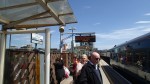
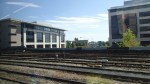
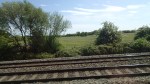
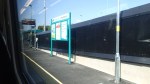
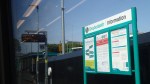
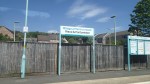
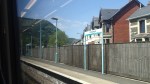
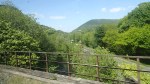

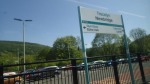
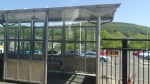
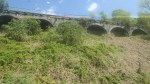

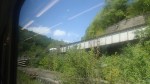
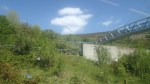
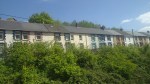
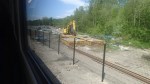
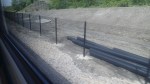
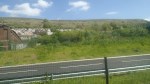
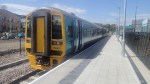
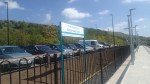
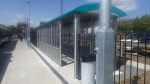
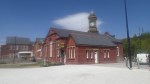

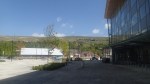
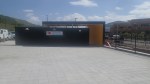
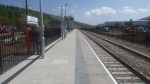
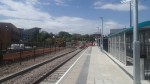
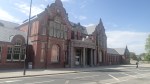
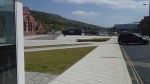
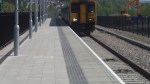
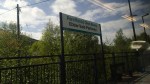
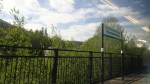
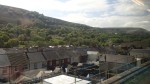
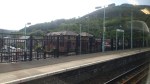
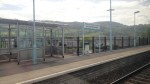
I didn’t really know what to expect, although the scenery on the way up was typical ofthe South Wales Valleys on a fine day. At the top, you arrive at a simple one-platform station in a landscaped bowl beneath the town, with various civic buildings and a funicular to the town centre.
Sadly, the funicular hadn’t started running yet!
Obviously, the project is not finished yet.
The first thing that must be done is get the funicular working reliably, so that visitors and regular travellers can get to the town centre.
Obviously, there is little information at present, about perhaps some walks or other things you might like to do. As I didn’t have much time, I didn’t have a real explore, but I would think that it might be a nice walk down the valley to Ebbw Vale Parkway station.
The other thing the station needs is a nice cafe and shop.
This Google Earth image shows the area round the station.
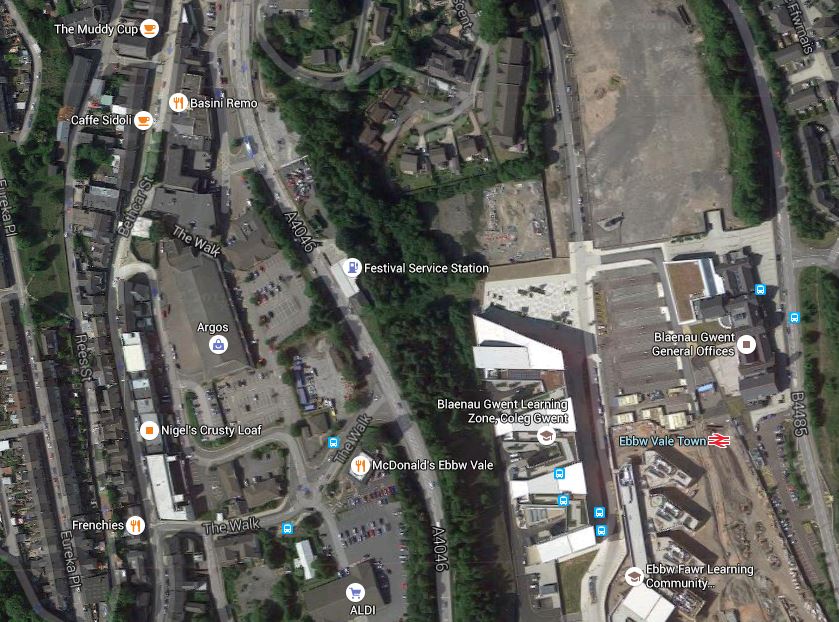
Ebbw Vale Town
It would appear that the town centre does have an elusive cafe.
Incidentally, the hospital isn’t far away down the hill. So that isn’t a difficult journey away!
Wikipedia says this in the article about Ebbw Vale Parkway.
Demand for travel to and from the station was seriously under-estimated by the promoters of the line’s reopening, even though the service provided was to Cardiff only and not to Newport as well, as originally assumed. For example, in 2008/09, usage at the station was forecast to be 50,000, for journeys on the lines to Cardiff and to Newport, but was actually about 250,000, for journeys on the line to Cardiff only. Part of the reason for the demand underforecast was the requirement that no demand from regeneration of the former steelworks area should be assumed.
If they’ve got the site for Ebbw Vale Town right, there could be another serious underestimate.
At least plans are in place for a second platform and I saw evidence of a second track being built, which will all allow a half-hourly service and a possible service to Newport.
Long term, the line like many of the lines in the South Wales Valleys, could be electrified, for which funding was announced in 2014 in this article in South Wales Online.
So in a few years time or so, when I travel between Cardiff and Ebbw Vale Town, will I use a much more frequent and faster service in something like a refurbished Class 315 electric train? In some ways it would be very fitting to do the journey in a steel-bodied train, even though they will be around forty years old. But then they are based on Mark 3 coaches and have the capacity to live more lives than the average cat.
As by 2022 or so, Newport and Cardiff will be on an electrified Great Western to London, if the connections are arranged correctly, places like Ebbw Vale will have a frequent electric service to London, Heathrow and all points East, which can only be good for the employment, leisure and other prospects for the South Wales Valleys.
Accessible Crossrail Sites
By accessible in this article, I don’t mean construction sites, where anybody could go and get around no matter what disability they have, but ones where anybody who could walk at least a few steps or be pushed in a wheel-chair can go to have a good look at the progress of London’s largest construction project.
Some sites worth visiting are stations, that are being rebuilt, at the same time as being fully operational.
Abbey Wood Station – Quite a large modern station is being created.
Hanwell Station – A Victorian gem is being improved and modernised.
Custom House Station – A new station is being built by the DLR station
Whitechapel – A massive project to create the Jewel of the East
There are also other places, where you can see a lot.
Eynsham Drive Bridge in Abbey Wood – It is over the top of the work at Abbey Wood.
Pudding Mill Lane DLR Station – In the middle of a Crossrail portal.
Crossrail Works At Abbey Wood Station
After taking the pictures from the Eynsham Road Bridge, I walked back to Abbey Road station taking pictures as I walked and crossed the line on a rusty footbridge.
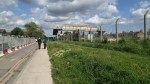
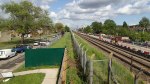
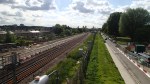
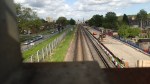
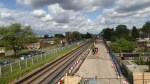

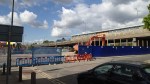
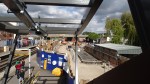
As the pictures show, there’s not much left of the original station. On the other hand, the contractors seem to be doing a good job of rebuilding a station, which is still being fully used by passengers.
It’s still not totally clear to me, where the tracks and platforms will go in Abbey Wood station. But so long as Crossrail and its contractors know, who cares?
Crossrail Works From Eynsham Drive Bridge, Abbey Wood
Just to the East of Abbey Wood station a bridge carries Eynsham Drive over the North Kent Line and the new Crossrail tracks. This Google Earth image shows the area.

Eynsham Drive To Abbey Wood Station
I took these pictures of and from the road bridge.

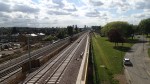
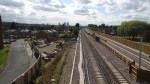
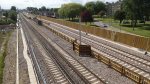


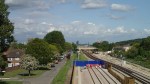

The Crossrail tracks are the ones with no third conductor rail and they are on the North side.
 The Anonymous Widower