Fighting The Algae
I walked through the New River Walk in Islington this morning and the Council were doing their best to fight the algae.




The theory is if you put bales of barley straw in water infected with the algae, it helps to combat it.
They don’t seem to be having much success, but then I didn’t when I tried it years ago in one of my ponds.
The Hauer-King House
I came across this house in Douglas Road, Islington this morning.
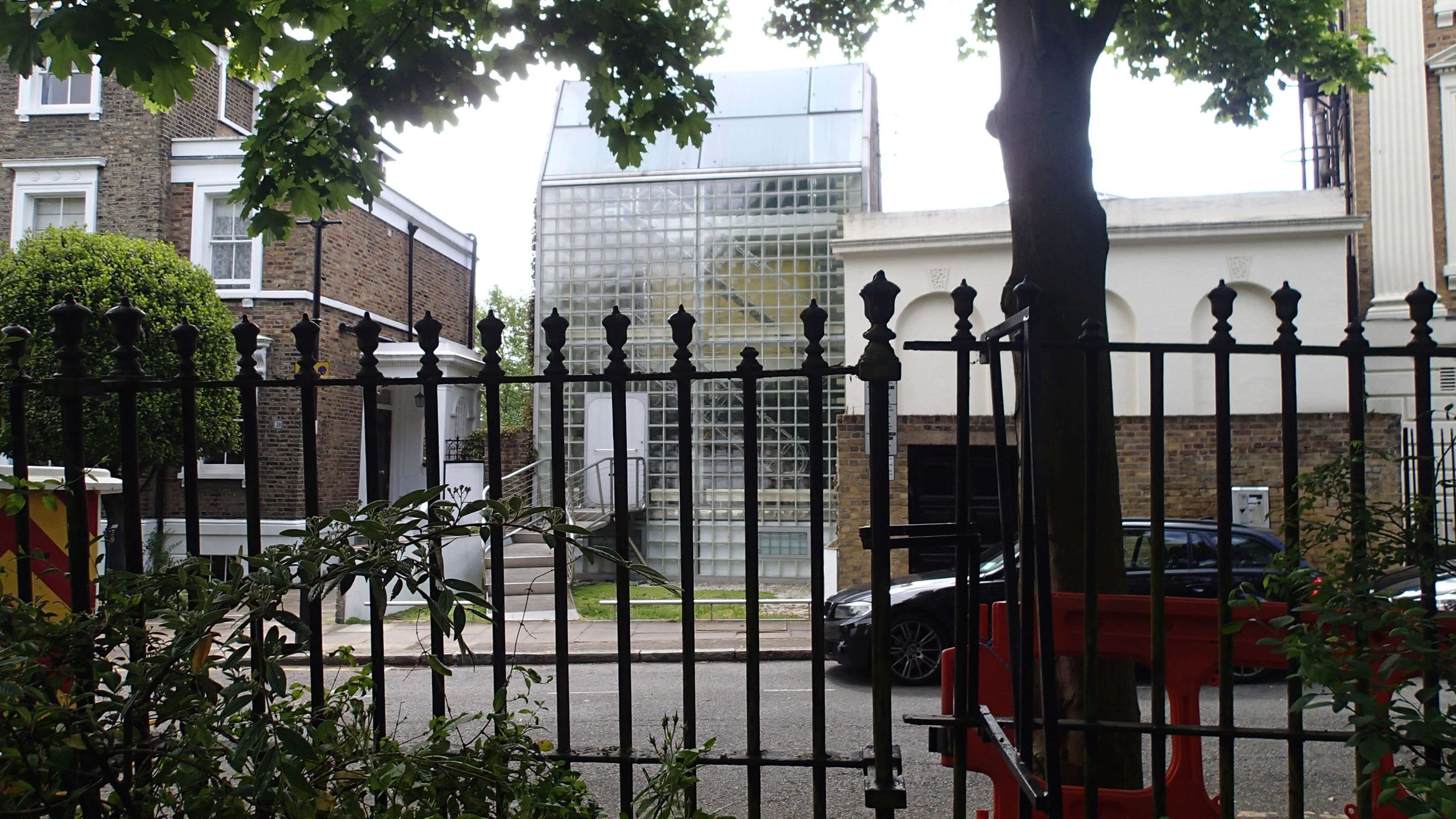
The Hauer-King House
There’s more about it here on the mimoa web site.
I bet it was a devil’s own job to get planning permission.
I’d love to have a look round.
A Trixi Mirror On The Essex Road
I saw this mirror on the traffic lights by Essex Road station a few weeks ago from the top of a bus, but it was only when I walked that way this morning, that I was able to photograph it.
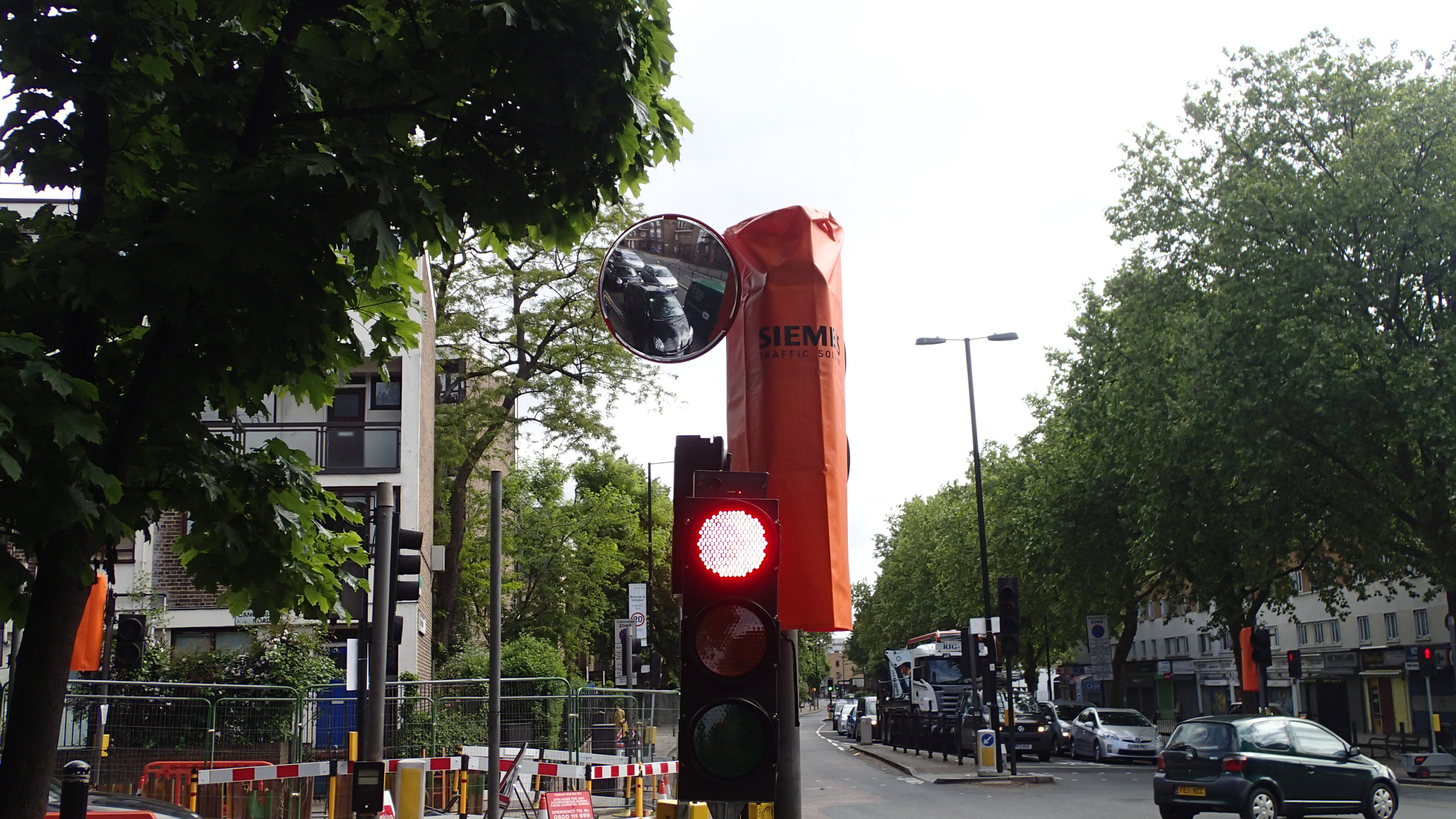
A Trixi Mirror On The Essex Road
It’s a Trixi mirror, from a company called Convex Mirrors amd is designed to protect cyclists from trucks and buses turning left, by making the driver more likely to see the rider.
Life Just Got A Whole Lot More Complicated
Well not really, but when I come home from the Angel, I usually get a 38 bus, which goes a little bit closer to my house. But now they’ve started to Routemasterise the 73 buses.

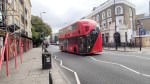
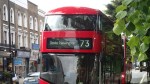
This means I can’t be sure I can distinguish the 38s, which were Routemasterised some time ago, from the thundering red herd on the Essex Road.
New Routemasters should have a top hat, as some of the old RTs of the 1950s did.
Transport for London Serves Up A Delicious Turkey
The local media is starting to pick up East London’s train revolution, if this article from This is Local London entitled Lower fares for overground stops that include Southbury and Turkey Street is anything to go by. I’m pleased to say that I spotted this one earlier.
It will be interesting to see if traffic goes up at stations like Southbury and Turkey Street.
I think the Overground takeover will define one of the battlefields for the next London Mayor in 2016. Who can prove they can offer most lines might come under TfL control, will gain an advantage at the ballot box.
Whither HS2 And HS3?
This morning there is an article in The Independent, which is entitled SNP fury as HS2 finds ‘no business case’ for taking fast train service to Scotland. Here’s the first paragraph.
The £50bn High Speed Two rail link will not be extended to Scotland, as the team behind the project has found there is “no business case” for the undertaking.
There may not be a conventional business case, as some of the reasons for developing a high speed railway up and down the country are emotional or for a country, where none of us will still be alive.
When HS2 is talked about in the media, freight is rarely mentioned outside of specialist magazines and web sites.
Although, HS2 will be built for the biggest freight trains, there are no plans for using it for this purpose at present. But, if the high speed line moves passengers away from the conventional East Coast, West Coast and Midland Main Lines, this will reduce the number of passenger trains and open up more paths for much needed freight trains to drive the economy.
The Electric Spine will take pressure off existing routes to the North and Scotland, but it does nothing to increase capacity north of Warrington and York, where both the East and West Coast Main Lines do not have the capacity of their southern ends. Some extra tracks and easier routes may be possible in places on these two Main Lines, but upgrading them will be difficult and politically sensitive.
The only other way to create more capacity between the North of England and Central Scotland is to electrify the Settle to Carlisle Line and complete and electrify the Waverley Route to Edinburgh.
I also mistrust all forecasts of passenger ridership on the railways. Two examples illustrate how bad they can be.
The estimate for traffic through the Channel Tunnel was very much on the high side and only now are the number of train passengers rising substantially towards that figure.
Locally, to me, the London Overground was started with three-car trains, which just five years later they are now converting to five cars. The original estimate ranks with some of the most spectacularly bad Treasury and Department of Transport predictions.
Add to this the usual mistakes, where they get the number of trains wrong and lumber places with unsuitable, inadequate or poorly designed trains, that are often unique one-offs to fit the budget. This means you can’t easily rustle up some more standard trains. At least with the Overground, Bombardier delivered the Class 378 trains, which can be cut and pasted into new formations and are still in production.
If you want to see an inadequate set of trains look at the Class 185 trains built for Trans Pennine services. Wikipedia has a whole section devoted to Overcrowding and Passenger Feedback. I have this feeling that some of the other trains ordered lately might be disasters, as the dead hand of the Treasury was too much on the decision.
So I can understand, why the SNP are angry that HS2 will not be extended to Scotland. More capacity is needed between England and Scotland for both freight and passengers, and if that is new capacity, it is likely that it would work well and in a reliable way, using standard trains that are just not UK-only specials, bought from the Treasury’s scraps and petty cash.
I do think though that our designs for HS2 are rather dated and don’t take things that are happening or have happened into account.
Crossrail in London has shown that putting a large twin rail tunnel under a major city, is not the problem it once was. Crossrail have also been very innovative in creating stations with the minimum disturbance to existing infrastructure. As an example, the new Whitechapel station for Crossrail has also used a technique called uphill excavation, where you create escalator and lift shafts upwards from the tunnels, rather than traditionally from the surface, which is much more disruptive.
These techniques can revolutionise the construction of HS2.
Take cities like Birmingham, Leeds, Manchester, Newcastle and Sheffield, which have developed and are continually developing extensive local rail, tram and bus networks. So why are we in Birmingham still talking about creating an HS2 station at Curzon Street? Surely, we just dig a very deep pair of HS2 tunnels under the city and then uphill excavate into not only New Street, but Moor Street and Snow Hill as well. The tunnels would be only made as long as necessary, although the underground station could be very large. But it probably wouldn’t be much bigger than the enormous double-ended Liverpool Street/Moorgate station being created for Crossrail.
The great advantage of this method of construction is that you can continue to develop your network of local trains, trams and other transport links, untroubled by the construction of the new station deep below. Anybody, who thinks this is not possible, should spend half-an-hour walking around Whitechapel station, where the Hammersmith and City, District and East London Lines are passing untroubled over the giant hole and through the building site for the new station.
I would have no idea as to the costs of this method of construction, but it surely must be more affordable, than creating a new station or modifying an old one, by traditional methods.
A station in Manchester could probably be created in a similar manner with a giant double-ended station linking into Manchester Piccadilly station at the Southern end and Manchester Victoria station at the Northern. This is a Google Earth image of Manchester city centre between the two main stations.
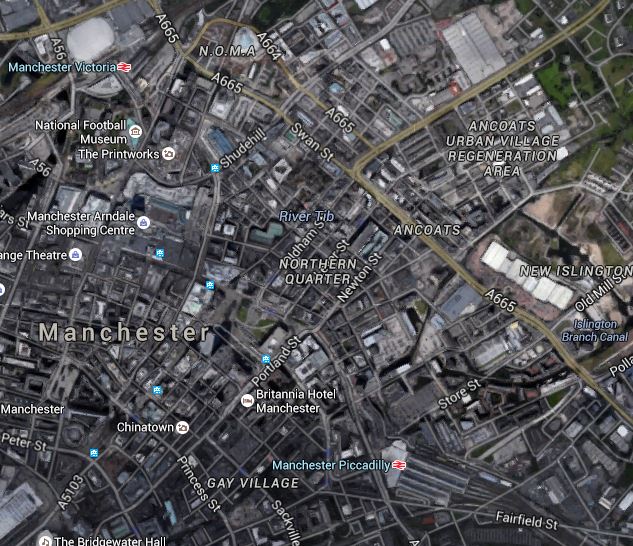
Manchester Piccadily And Victoria
Victoria is at the top and Piccadilly is at the bottom. The distance between the two stations is probably a couple of hundred metres more than between Moorgate and Liverpool Street, so designing a station deep beneath the city centre should be possible with a bit of help from long escalators and perhaps a travalator. If nothing else, it would be a wonderful way to transfer between the two stations in Manchester’s rain. It could also have entrances in places like Piccadilly Gardens
Leeds station could be a number of platforms for the high-speed lines under the current station.
Since HS2 has been proposed and still-born, the Northern Powerhouse and HS3 has arrived.
In my view we should plan HS2 and HS3 together and construct them together, as needs determine and budgets allow.
HS2 would start in London, possibly in an underground station which would be under one of the three stations on the Euston Road; Kings Cross, St. Pancras and Euston. It would probably be under Euston, but wherever it was it would be closely integrated into the Crossrail 2 station, which would be under Euston Road at right angles to the other lines and will serve the three current and the new HS2 stations.
I wouldn’t totally rebuild Euston station for HS2, as the station is so complicated and second-rate in its relationship with the Underground, that creating a decent connection between the current station would be so difficult to do without gumming up London’s transport system for umpteen years.
The approach used at Kings Cross to create the magnificent station we have today should be copied, where the main station was left virtually intact and new Underground entrances and subways were dug and tunnelled out to get the Underground connection working and then build a spacious station to give access to the platforms for the long-distance trains.
I also think that it would be better to build Crossrail 2 first and connect it to the three current stations on Euston Road, then tunnel HS2 accurately into the knitting.
The current Euston station would be kept fully operational throughout the construction of HS2 and only when that line is complete, would Euston station be given the sort of upgrade that has been so successfully done at Kings Cross, St. Pancras, Waterloo and Paddington.
HS2 would go North to a station at Old Oak Common, probably mostly in tunnel and it would then pass stations at Birmingham Interchange (Airport), Birmingham, Crewe, Manchester Interchange (Airport), Manchester and Leeds. I would put the stations in tunnels underneath the current transport hubs.
A branch off the main HS2, north of Birmingham, would go under Nottingham, Sheffield, finally rejoining the main HS2 at Leeds.
And why not balance the network, by having a branch off HS2 south of Birmingham going towards Bristol and Cardiff.
If the alignments were developed correctly, then loops under cities like Stoke might be possible.
HS3 could actually be integrated into HS2. Perhaps it would start under Liverpool Lime Street and then pass under Manchester Interchange, Manchester and Leeds.
From Leeds the HS2 and HS3 would split again, with one branch going North to Newcastle via York and the other going to Hull via Sheffield and Doncaster.
Obviously, this is only a back-of-an-envelop design and properly thought through it could be much better.
But I do feel that HS2 and HS3 will both benefit if they share a route between Manchester Interchange and Leeds, via perhaps Manchester and Huddersfield.
One of the aims of this design is to create a high-speed railway network, with as little demolition and disruption to the workings of our cities as possible.
What happens in Scotland is tricky, as in my view a lot of improvements are mainly Scottish solutions. For instance, as I said, the Waverley Route needs to be rebuilt to a high standard with electrification, Glasgow Crossrail needs to be created and Edinburgh to Glasgow needs to be fully electrified.
But when Newcastle gets a high speed connection to the south, the final piece in the jigsaw of high-speed lines would be to extend HS2 to Edinburgh and Glasgow. Hopefully, by the time that happens, we’ll have learned how to do it in a quick, affordable and non-disruptive way.
The one thing we mustn’t do is build HS2 as it is currently designed, as we can do much better than is proposed.
Death On The Line
This story on the BBC about a badly-handled death on the railway between Slough and Reading is tragic. These are the first few lines of the story.
A rail company has apologised after a staff member told passengers the train was delayed because someone “couldn’t be bothered to live any more”.
Passengers aboard a train to Plymouth were delayed after a fatality on the line.
But the staff on First Great Western could have handled it better.
On the other hand I sympathise very much with staff and passengers on this stretch of line out of Paddington, as this death was not a once in a decade happening.
Just after a previous incident, I was travelling back on an almost empty train to London from Oxford and I said something like “You must get a bit fed up with all these incidents.” to the conductor. He replied something like “More than just a bit!”
It is getting to the point, where something drastic needs to be done to stop people getting on the line. I think we really won’t see any improvement until all of the stations between Paddington and Reading become part of Crossrail and there is barrier access and more staff about on the platforms, if they follow a typical Transport for London policy.
Five-Car Trains Are Running On The North London Line
I took these pictures of a five-car Class 378 trains on the North London Line today.
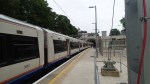
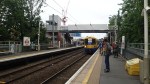
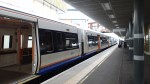
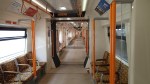
Although five-car trains seemed to be slow to appear, Bombardier seem to have got the cut and shut process working pretty fast now.
The Hackney Downs/Central Link Is Not Small
These pictures show the progress on the pedestrian link between Hackney Downs and Hackney Central stations.
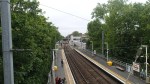
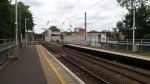
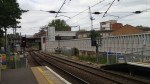
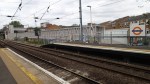
It certainly isn’t small, but once complete it will be a weatherproof way of getting between the two stations.
It should also be remembered that Hackney Downs station is not very step-free and I suspect that this walkway will only be the start of integrating these two stations to create a Hackney or Hackney Junction station. The new Tube Map for the end of May, shows the two stations connected.
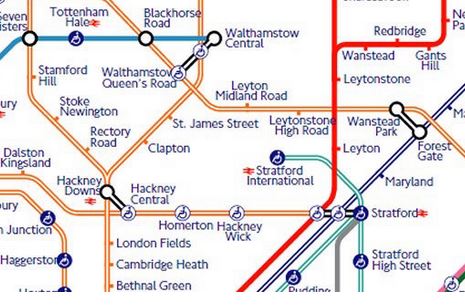
Hackney On The New Tube Map
I hope the ingenious individual who drew the new map, didn’t suffer too much mental anguish. Or did they go to Finchley Central station for divine inspiration?
The new link between Hackney Downs and Hackney Central stations, illustrates how far steel design and construction has improved, if you compare the pictures in this post with one taken in 1928 of the original link, which was demolished in 1944, when Hackney Central station was closed.
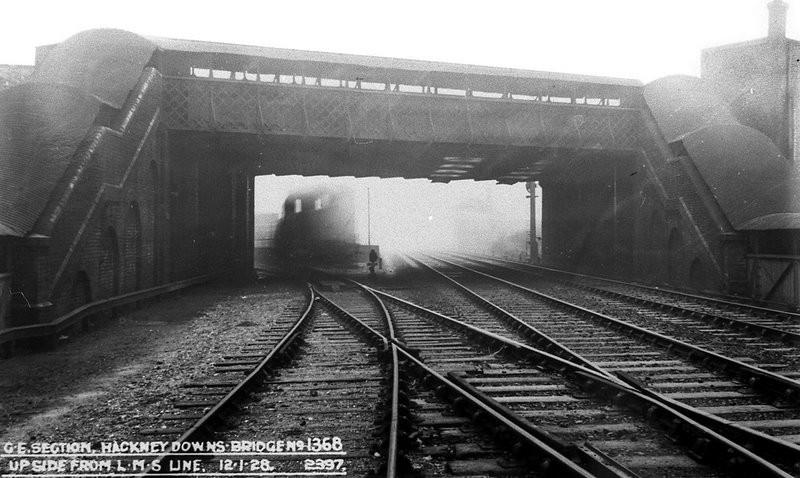
When I see terrible stations built in the last few years, like these in Kassel, with precipitous stairs and no lifts, I do wonder how architects and engineers manage to get it so bad. Perhaps they should fire the accountants and the politicians! After all, this bridge at Hackney from probably over a hundred years ago connects to both platforms at Hackney Central with a covered stairway and although it has no lifts, would probably have been considered state of the art in its time.
Thank You Transport for London
On the 31st May 2015, Transport for London take over the lines out of Liverpool Street to Enfield Town, Cheshunt, Chingford and Shenfield and two days ago they published this press release on their web site, which is entitled Passengers set to benefit as key commuter rail services transfer to TfL.
So what does that mean?
1. The services currently operate with National Rail pay as you go fares, which are generally higher than TfL fares. When services transfer, over 80 per cent of current rail journeys will reduce in price and TfL concessions will apply – giving customers substantial savings. The remaining 20 per cent of fares will remain unchanged.
2. All TfL concessions and discounts that currently apply to London Underground, the Docklands Light Railway, and London Overground will apply on the rail services transferring to TfL. I think that means I can travel free to Brentwood and Shenfield using my Freedom Pass.
3. There are a few other technical things that seem beneficial, like Brentwood being moved into Zone 9.
4. I suspect too, that the level of customer service will be better under TfL than Abellio Greater Anglia.
I can’t see any average passengers complaining about this package. Except perhaps those who commute on lines like c2c into London, where there are no fare reductions.
So it’s probably a big thank you to Transport for London.
 The Anonymous Widower