Chemnitz Trams And The Chemnitz Model
Like most German cities Chemnitz has an extensive tram network, which even runs a few vintage trams.
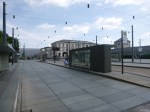
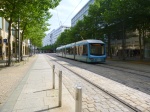
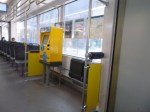

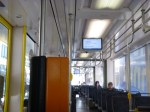
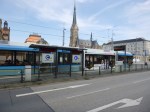


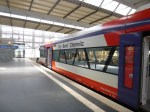
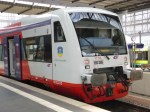
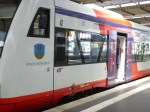
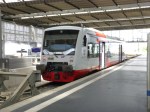
One of the reasons, I went to Chemnitz was that they are extending the system, by using tram-train technology in reverse. Normally in the Karlsruhe model, the city’s trams venture out into the surrounding area, by joining the heavy rail lines. I took pictures of this system, working in Karlsruhe, Kassel and Mulhouse. In Chemnitz, the City-Bahn Chemnitz allows trains to turn into trams at the Hauptbahnhof. In the pictures the red-and-white trams are train-trams.
In some ways the only difference between a train-tram and a tram-train, is whether the original vehicle is based on tram or train technology. But in the end the objective is the same and that is to have a vehicle that is capable of running on both tram and train tracks, with the crash-worthiness of a train. The Germans have ascribed the Chemnitzer model to what they are doing in Chemnitz. This is part of the first psaragraph of the article on the Chemnitzer model.
A special feature of the pilot line of the Chemnitzer model for Stollberg is the low platform height of 20 centimeters above the top of rail , while according to the Railway Construction and Operating Regulations (EBO) in new buildings and conversions actually at least 38 centimeters high platform are required. The vehicles ordered for the 1st stage of the CityLink family have doors with different entry heights, which both the inner city and the railway lines a barrier-free allows passenger access to platforms that are 38 or 55 centimeters high.
It illustrates the tortuous thinking that applies to some tram systems and it would appear tram-train systems. In Sheffield the Class 399 tram-trains will be low-floor , which will be compatible with the Sheffield Supertram, which is worked by trams that are 40% low-floor. But then in Sheffield, they have chosen to run tram-trains on a route where only one station will be shared with heavy rail. So will the trams have different door heights like Chemnitz or some other solution. This article from Rail Engineer explains.
Network Rail will also be building a turn back siding with a tram stop at Parkgate and low level platform extensions to Rotherham Central station.
So it sounds like one section of the platform will be used for trains and a lower one will be used for the tram-trains. It is an arrangement similar to the Clapham Kiss, where passengers walk down the platform to change trains.
 The Anonymous Widower
[…] running under the Karlsruhe model and train-trams under the Chemnitz model are showing a lot of promise in Germany and France. I believe that more cities will embrace these […]
Pingback by Thoughts On Double Deck Trains « The Anonymous Widower | June 27, 2015 |
[…] the full certification of the Vossloh Citylink tram-trains that are being used in Karlsruhe and Chemnitz. I’ve seen both systems and these are some pictures that I […]
Pingback by Vossloh’s Product Sheet For The Class 399 Tram-Train « The Anonymous Widower | July 8, 2015 |
[…] I described how the Chemnitz trams work in Chemnitz Trams And The Chemnitz Model. […]
Pingback by Riding Into the Future: Germany’s Pioneering Hydrogen-Powered Tram Project « The Anonymous Widower | February 27, 2024 |
[…] pictures from Chemnitz Trams And The Chemnitz Model, show the Regio-Shuttle […]
Pingback by Stadler Presents A World First In Berlin « The Anonymous Widower | September 1, 2024 |
[…] pictures from Chemnitz Trams And The Chemnitz Model, show the Regio-Shuttle […]
Pingback by New Bid To Connect Heritage Railway To Mainline « The Anonymous Widower | December 2, 2024 |