Project Management Says No, But Politicians Say Yes
There is a puzzle over rail electrification all over the country.
Take this article in Rail Technology Magazine entitled NR reopens one of final Manchester-Preston electrification bridges four months late.
The headline says it all and there are problems like this all over the United Kingdom. Some are down to incompetence, some are due to poor ground conditions, some are because new equipment is failing to work and some are just because of a shortage of trained staff.
So we are left with the great dilemma, that why is it that electrification in the North and West is in trouble and Crossrail, which is a much more expensive project is supposedly on time and budget?
In my view it’s like comparing apples with oranges.
Crossrail is a mostly new railway built in virgin ground. Most of the reused bits like the lines to Shenfield, Reading and Heathrow have been rebuilt and electrified in the past. Some things need to be beefed-up and brought up to modern standards, but these tend to be a series of small projects like updating most of the stations or a few big construction projects like building Canary Wharf and the other central stations.
On the other hand electrifying existing lines, of which much of the infrastructure hasn’t been touched for years, is a much more difficult business. Especially when you come across places like the bridges in Bolton, Chat Moss and the Farnworth Tunnel.
How many of us have despaired as the bills have come in as we are doing up an old houise and sworn on our father’s grave, that we’ll never buy another old property? I certainly have and now live in a twelve-year-old house, that although it was badly built is easily fixed.
I have heard engineers say that the Victorians Gerry-built a lot of our railways. That may or may not be true! But certainly, it’s not an easy job to electrify Britain’s railways.
So when I read this article on the BBC entitled Network Rail to restart electrification of train lines, which says this.
The electrification of two railway lines is to be restarted after the projects were halted so a review could be carried out, the government says.
Work on the TransPennine Express Railway – between Manchester and York – and Midland Mainline – from London to Sheffield – was paused in June.
Sir Peter Hendy, Network Rail chairman, said the “temporary pause” had “given us the space to develop a better plan”.
How do I square it with reality?
Obviously, Peter Hendy must be off his trolley, as if you put the wires up for electrification, you’ll have problems.
But at Blackpool and Rugeley, which are two part-completed electrification schemes, where everything appears ready for the wires to go up, I think I saw the germs of the new plan. The sites were all tidy, with no evidence of electrification or the detritus that Network Rail commonly leave behind. All the bridges were finished and where needed platforms seemed to have been extended for the new longer trains. Balfour Beatty have even walked away from the electrification contract at Blackpool.
Other clues have been published in the media.
- Northern Rail split their Liverpool to Blackpool service to at least use electric trains to Preston and diesels thereafter.
- First Great Western were rumoured to be buying battery-powered trains or IPEMUs for their services along the Thames Valley
- Hull Trains are also rumoured to be buying electro-diesel trains.
- But I missed the biggest clue. The only section between Liverpool and Newcastle, that is not electrified is the 34 miles between Leeds and Manchester. This had been announced deliberately as being unpaused. An IPEMU would bridge the gap with ease.
- All the Midland Main Line electrification announced as unpaused can be implemented by IPEMUs.
- A study has been anounced into the creation of a second main line to Brighton, which is an ideal route for running using IPEMUs in prime Tory territory. It would also release a number of modern diesel multiple units for use elsewhere.
- In today’s Sunday Times, there is talk of some of the new Class 801 electric trains being built as Class 800 electro-diesel trains for the Great Western. This doesn’t matter in the long-term, as it just means you remove the diesel engines to convert the 801s to 800s, when the wires are working.
Every day seems to bring more and more clues.
I’m getting more and more convinced that this technology that I rode in Essex in 2014, is going to be the solution. IPEMUs as they are now called have a range of about sixty miles on batteries and if the trains are properly engineered with regenerative braking and intelligent control systems, they might even manage further.
I may be totally wrong, but then I can see no other way that electrification can be delivered, in the desired time-scale, than by going for a mixture of Class 800 electro-diesel and IPEMU trains.
The Class 800 electro-diesel can be summarised as follows.
- Proven Hitachi technology with on-board diesel engines for non-electrified sections.
- Built in Japan and Newton Aycliffe in the North East.
- Ideal for main lines, which are not fully electrified.
- 200-plus kph capability
- Highly automated
- Can be converted to a Class 801 electric train by removing the diesel engines.
The Aventra and the IPEMU-variant can be summarised as follows.
- Proven Bombardier electric train technology coming together in a modern lightweight shape.
- Built in Derby.
- Just under 200 kph capability, if required. Normally probably 160 kph.
- Most Aventra trains can be fitted with batteries to work in IPEMU mode.
- Battery technology has been proven in public trial.
- Range is IPEMU mode is sixty plus miles.
- IPEMU trains have regenerative braking, so they are actually more efficient than many trains.
- Highly automated
The approach does have other advantages.
- Many lines can be served by new electric trains with only minimal upgrading.
- Those who object to unsightly overhead electrification, have nothing to complain about.
- Lines can be electrified as fast as new trains can be delivered, provided there is enough electrified route to charge the IPEMUs.
- Depots don’t need to be fully electrified.
- The approach gets round the shortage of overhead electrification engineers.
- If a line like Gospel Oak to Barking is going to be electrified for other purposes like freight, there could be much less disruption to passenger services.
As an Electrical Engineer, who specialised in control systems, at Liverpool University, I do feel a touch of admiration.
I believe that although it doesn’t look feasibly from a project management basis to electrify lines to the stated time-scale, engineers in Japan and Derby have given the politicians their dream.
I shall be watching every word of George Osborne’s Autumn Statement on Wrdnesday, November the twenty-fifth.
Further Investigations Around Camden Town
As there was nothing else to do, and I’d watched Match of the Day last night, I went to Camden Town to investigate the area and see if I could get any pictures of the disused lines that looped round Camden Road station.



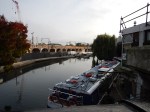
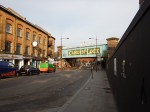
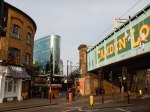
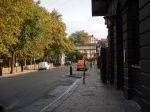
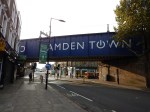
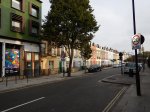
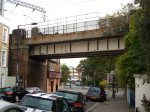
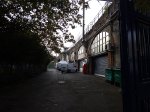
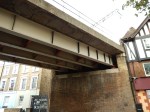
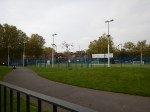

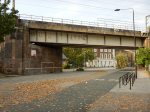
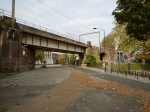
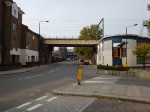
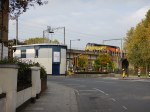




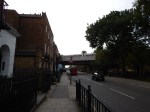
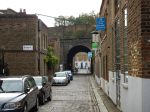
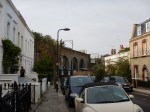
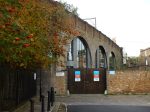
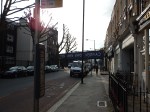
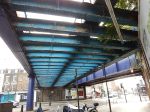
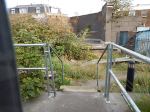
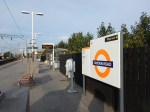
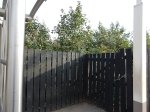
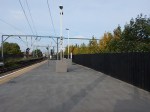

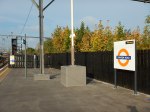
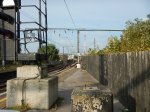
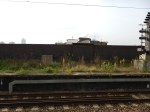
I walked up Camden High Street and then turned into Hartland Road, where in 1970 we nearly bought a newly-refurbished house for six grand. I wrote It Always Rains On Sunday, about a film shot in the road. The house we tried to buy could have been the one in the film or one of its neighbours.
I then went in a circle following The North London Line before I ended up on Royal College Street, from where I entered the station to get a train home to Canonbury.
As I did in Camden Town Station Capacity Upgrade, I can add a few conclusions and questions.
- What is happening between Hawley Road and the Regent’s Canal? This Planning Framework from Camden Council gives some history and some rules.
- The loop around the station ends in a stub end above Camden Gardens.
- The arches underneath the loop seem to be in good condition.
- The arches under the railway in Camden Gardens have no obvious current use.
- There would appear to be enough space to create any platform extensions needed at Camden Road to accommodate the planned six car trains.
- The extended platforms could probably reach to Camden Gardens.
- Could escalators and/or lifts to connect Camden Road and Camden Town stations be built into the empty railway arches in Camden Gardens?
As I said previously, there is a lot of scope to do something really good in this area. Further digging has led me to this article in the Evening Strandard, which has this picture of what is now called Camden Lock Village.
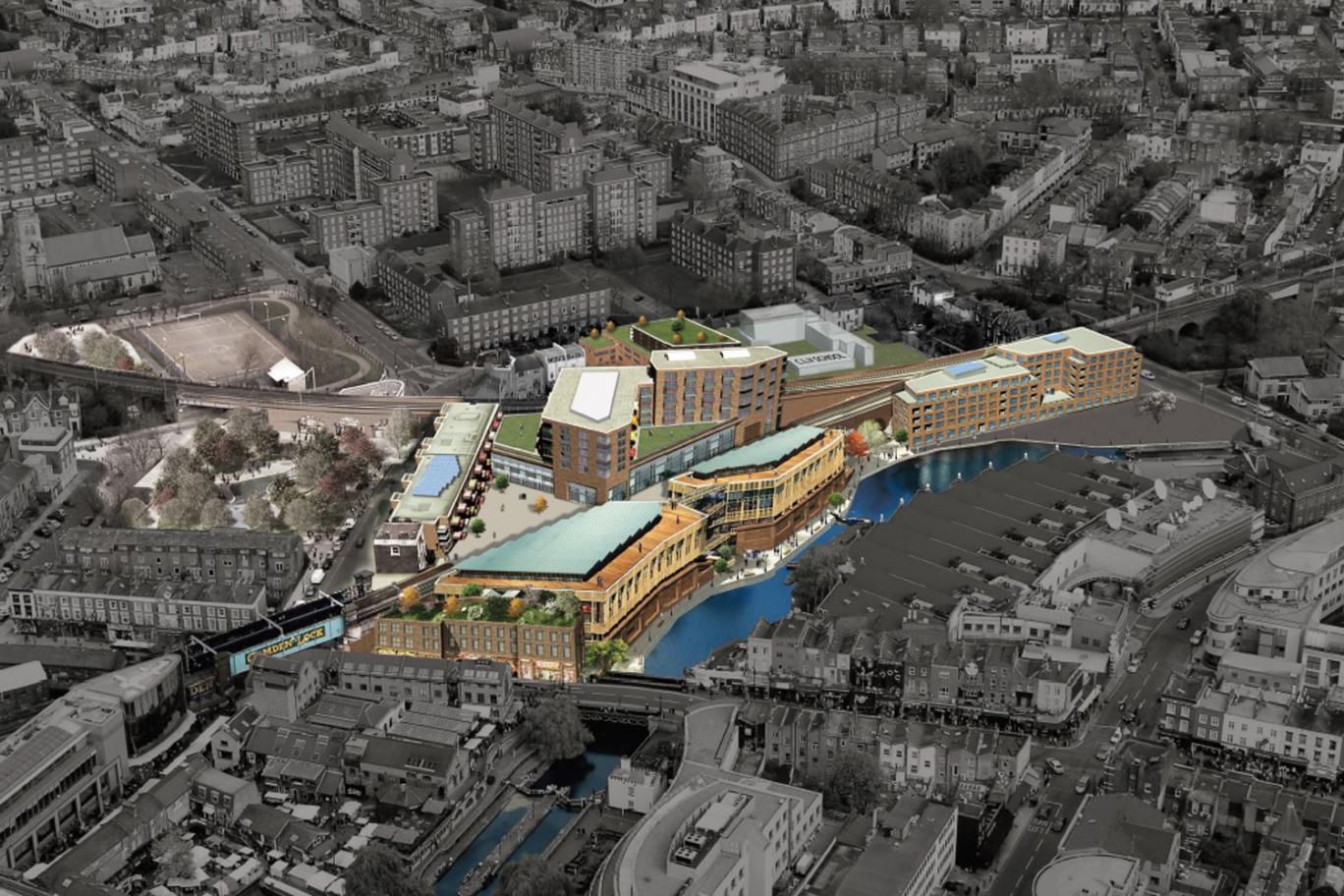
Camden Lock Village
Note how the rail lines thread their way through the development.
This is said by the Standard about the development.
The plan for the project will feature 170 new homes, of which 156 are private and the rest affordable housing. There will also be new shops and market pitches and 100,000 square feet of offices.
Building firm McLaughlin & Harvey has also been hired to build a primary school and nursery.
If you add in the number of visitors already going to the area, I can’t believe that serious thought has not been given to how the development will effect the new Camden Town station and its relationship to Camden Road station.
We could be seeing some interesting plans, when TfL show them in full on Wednesday and Thursday this week.
If as I suspect TfL decide to go to for a full Camden Interchange, where the following lines meet.
- North London Line
- Edgware – Charing Cross – Battersea – Clapham Junction Section of the Northern Line
- High Barnet – Bank – Morden Section of the Northern Line
Then I feel that they will throw other services into the Interchange.
TfL have talked for years about reopening Primrose Hill station on the line between Camden Road and Queen’s Park on the Watford DC Line. Who knows if it will happen?
Something that will happen is an increase in frequency and capacity on both the North and East London Lines. This will mean a full Camden Interchange is more likely.
What is often the biggest constraint on frequency is turning the trains at the end of the line. I do wonder if the former loop at Camden Road station could be used as a turnback platform for trains from the East. It’s certainly a possibility.
I can remember when the current London Overground was designed, that there was talk of some East London Line trains terminating at Willesden Junction. So perhaps in the future we might see a service from Crystal Palace to Willesden or Camden Road via Highbury and Islington.
One of the rules of scheduling is to match your available resources to the needed demand. So as TfL have all the details about complete passenger journeys including any changes, they know the pattern of services that will result in the most efficient loading of the trains.
Passengers on the whole are intelligent, so when a new service is provided, they will check it out to see if it gives them a better journey. If it does they will continue to use it. This phenomena explains why both new roads and rail lines generally attract more traffic than was originally forecast.
Another Bloody Sunday
I don’t often rant on this blog, but it’s Sunday and I hate them!
I’m not religious, and never have been, so I object that a minority of the population stop most of the shops from opening. At least if I could go to Waitrose now, that would solve my meal problem for today.
Today, there is only one Premier League football match on the box and that is Newcastle against Norwich. So I won’t watch that!
I hate going to the cinema or theatre alone, so I shall probably waste time all day, in endless pointless pursuits.
Why can’t Sundays be like any other day?
To make matters worse today, I felt that I’d like to go for a walk around Camden.
But the North London Line didn’t start running until an hour after I arrived.
Also today, the headline across the Sunday Times reads – Legoland and Thorpe Park – Treat the kids – 2 for 1 entry.
That is seriously funny! Especially, as I’ve never been to a Theme Park in my life!
 The Anonymous Widower