The New Roof At Crystal Palace Station
In August 2010, I wrote A Day At Crystal Palace, after a visit to Selhurst Park to see Ipswich play. I took this picture of Crystal Palace station.

East London Line Platforms at Crystal Palace
Now compare it with these I took today.


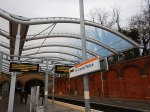
As you can see, they’ve now fitted a roof.
I like it.
The Missing Piece In The IPEMU Jigsaw
I very much believe that the IPEMU is a viable train. But I have never met anybody else, who went to Manningtree to ride the prototype Class 379 BEMU in early 2015.
On the other hand, the techology can’t be that bad, as there is this article in the Derby Telegraph, which is entitled Battery-powered trains win award for Bombardier. This is an extract from the report.
James Ambrose is a principal engineer at Network Rail, which is one of the companies involved in the programme.
He said: “We are always looking for ways to reduce the cost of running the railway and make it greener too.
Per Allmer, head of Western Europe, Middle East and Africa region at Bombardier Transportation, said: “The IPEMU demonstrates what battery technology offers the rail industry.
“It’s a technology we can incorporate onto future trains, such as our Aventra and retro-fit into existing modern rail vehicles, adding value to existing fleets.”
Everybody can understand, how it could be built into a new train like the Aventra and Bombardier have told me that all Aventras will be built so energy storage can be added if required.
Whether an operator would buy their Aventras with energy storage, would depend on a lot of factors.
- Will the trains run on short sections of non-electrified lines?
- Will regenerative braking and energy storage, save the operator money?
- Will they have to fully electrify a depot?
- Would a greener train, fit with their company profile?
The big problem though with buying new Aventras; bog-standard or IPEMU, will be nothing to do with the technology, but the wait for the trains to be delivered.
There are a lot of train companies out there, who need independently-powered trains; diesel or battery-electric, now and not in 2020!
The Missing Piece
The retro-fit market for the technology is the missing piece in the jigsaw.
Consider the conversion of a suitable train into an IPEMU variant.
- There is no need for complete trains to be manufactured.
- Battery rafts can be built in any capable factory.
- The complete train can probably be fitted together in a depot, like Ilford.
- The train can be returned to normal service immediately the energy storage is fitted and tested.
In the extract from the Derby Telegraph article, Per Allner from Bombardier did say that the technology adds value to existing fleets.
So what trains can be retro-fitted with IPEMU technology?
In this article in Rail Technology Magazine, which is entitled Bombardier enters key analysis phase of IPEMU, my question is answered by Marc Phillips, head of engineering projects at Bombardier Transportation. This is said.
Asked about the retrofit and what this could mean for other rolling stock, Phillips told us: “All Electrostars to some degree can be retrofitted with batteries. We are talking the newer generation EMU as well as the older generation. So, the 387s and 379s are the ones where we have re-gen braking where we can top-up the batteries and use the braking energy to charge the batteries. That gives us the best cost-benefit over operational life.”
Older EMUs make the business case more difficult, he said, but it can still technically be achieved.
With my electrical and control engineering knowledge, I would only say that I can’t disagree.
Everybody should read the Rail Technology Magazine article in detail. Bombardier’s attention to detail in getting the bateries right, is to be commended.
Class 379 Trains
I rode the modified Class 379 Stansted Express between Manningtree and Harwich, sitting opposite from one of the engineers working on the project. He gave me the impression, he was pleased with the performance of the train, which had a useful range on batteries, with a similar performance and driver experience to an unmodified train.
The Class 379 train has this specification.
- They are a member of the Electrostar family.
- They were constructed between 2010-2011.
- There are four-cars to a trainset and they can run in eight-and twelve-car formations.
- They have a 110 mph top speed.
- They have regenerative braking, which can be used to charge the batteries to save electricity.
There are thirty trainsets in service between Liverpool Street, Stansted Airport and Cambridge.
The prototype was converted to an IPEMU, demonstrated on a test track and in service, and then converted back to a standard train in only a few months.
So conversion of trains to an IPEMU variant can’t be a very difficult and time-consuming process.
This means that whether you would give Class 379 trains an IPEMU capability, is virtually down to the accountants.
It just depends on whether the new route opportunities and the electricity saving of the regenerative braking/energy storage combination, are sufficient to make installation of energy storage a worthwhile proposition.
Even if Abellio Greater Anglia don’t want to run any new routes with IPEMUs, the installation of the energy storage might be worthwhile on the current routes to Stansted Airport and Cambridge on energy costs alone.
But East Anglia has several lines that could be easily run by Class 379 IPEMUs.
- Liverpool Street-Norwich via Cambridge
- Liverpool Street-Peterborough
- Ipswich-Cambridge
- Cambridge-Norwich
- Ipswich-Peterborough
- Liverpool Street-Lowestoft
I have ignored all the branch lines, as a 110 mph train would be wasted on say Marks Tey-Sudbury or Ipswich-Felixstowe.
On the other hand, Class 379 IPEMUs would displace some better diesel multiple units from the longer routes, which would be ideal for the branches.
As Abellio was very much involved in the IPEMU trial, by lending a train, crew and a suitable branch line, I wouldn’t be surprised to see all of the Class 379 trains given an IPEMU capability.
If none are given one, then Abellio have looked at the figures and found that an IPEMU doesn’t stack up!
All will be revealed in June 2016, when the new East Anglian Franchise is confirmed.
Class 387 Trains
The Class 387 train has a similar if not better specification to the Class 379. It is also dual-voltage, so can run on third rail electrification.
In Rumours Of Battery Powered Trains, I said how in the September 2015 Edition of Modern Railways there was an article entitled Could Class 387 Trains Be Battery-Powered?
I think the answer to this question is in the affirmative. Especially, if Abellio feel that they will be going along the IPEMU route in East Anglia.
There are fifty-seven four-car Class 387 trains, either built or on order, with an extra order of twenty-seven trains for the Gatwick Express.
In their article, Modern Railways says the following about the use of IPEMUs on the Great Western.
Delivery as IPEMUs would allow EMUs to make use of as much wiring as is available (and batteries beyond) while electrification pushes ahead under the delayed scheme, and in the longer term would allow units to run on sections not yet authorised for electrification, such as Newbury to Bedwyn. The use of IPEMUs might also hasten the cascade of Class 16x units to the west of the franchise.
After my investigation to Henley, Marlow and Windsor, I feel that Class 387 IPEMUs could work these branches without the cost of electrification.
Again the decision on IPEMUs is one for the accountants.
And talking of accountants, Porterbrook, who are a rolling stock leasing company have bought twenty trains. Companies like these are not noted for their generosity and usually don’t buy trains to sit in sidings waiting for an operator to come along.
As both Porterbrook are based in Derby, as are Bombardier, I suspect that they know a lot more than they’re saying.
Other Electrostars
I wonder if in addition to the Class 379 and Class 387 trains, the IPEMU technology could be applied to earlier versions of Electrostars.
There are a lot of them.
Class 378 Trains
The London Overground has a fleet of fifty-seven Class 378 trains, with the following specification.
- 75 mph top speed.
- Some trains are dual-voltage.
- Five-car layout with metro-style seating.
- They don’t have regenerative braking.
- They were built between 2009 and 2015.
At present, there is no reason, I can see to give them an IPEMU capability. But who knows?
Class 377 Trains
Various operators have a total of 239 Class 377 trains, with the following specification.
- 100 mph top speed.
- Some trains are dual-voltage.
- All trains are wired for conversion to 25 KVAC.
- Three- four- and five-car trains.
- They don’t have regenerative braking.
- Some were built as late as 2013.
I wonder how different these trains are to the Class 379 and 387 under the skin and if they could have an IPEMU capability added, without great difficulty.
If the upgrading is simple, then I am sure Govia Thameslink Railway could well be interested.
At present, Southern have sixteen Class 171 trains, that work lines without electrification. So perhaps some of their 160 Class 377 trains could be given an IPEMU capability to work those lines and allow the Class 171 trains to be cascaded to other operators.
In One of North London’s Forgotten Lines Is Awakening, I wrote how Govia Thameslink Railway were buying more Class 700 trains for the Northern City Line.
So if they ever decide to replace the Class 377 trains, with more Class 700 trains, could conversion of the Class 377 trains to IPEMUs for cascade become a viable option?
Class 375 And Class 376 Trains
I think that the Class 375 and Class 376 trains may be too old and they don’t seem to have the 25 KVAC capability of the other classes.
Conclusion
The Class 379 and Class 387 trains can be easily converted to IPEMUs and may well be.
The Class 377 trains might be possible to convert, but it would probably be unlikely unless GTR decided to replace them. Once converrted they could be a capable 100 mph IPEMU, for cascade to lines without electrification.
Will Merseyrail Rescue Croston?
Like everybody, I have been watching the news and in particular the floods in the North.
There have been several reports from the village of Croston, which has suffered particularly badly!
I don’t know the village, but I looked it up on Wikipedia and found that there is a Croston station serving the village.
This Google Map shows the village and the station.
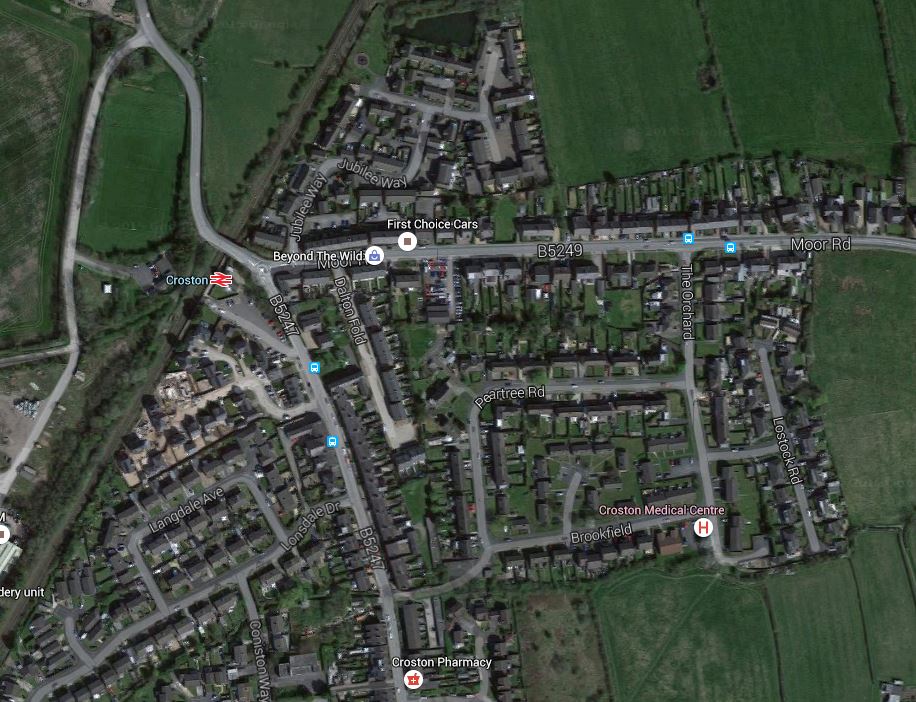
Croston Station
Croston station lies on the Ormskirk Branch Line, which connects Ormskirk on the Mersetrail network around Liverpool, to Preston and the the West Coast Main Line. The Ormskirk Line one of those terrible and neglected pieces of infrastructure, left behind after the cuts of the 1960s and 1970s,
Merseyrail have ambitions to connect Liverpool to both Preston via Ormskirk and Manchester via Kirkby with new electric trains. I wrote on this in Is Liverpool Planning To Invade Manchester By Train? I said this.
———-
In the October 2015 edition of Modern Railways, there is an article about Merseytravel looking for a new fleet of trains for their 750V DC network, which is entitled New Trains For Liverpool. This is said.
Merseytravel has indicated that it will be seeking ‘innovative proposals’ from manufacturers, with considerable emphasis being placed on the overall cost of operating the fleet rather than just the basic cost of the trains themselves. Options such as regenerative braking and onboard systems to store energy under braking to be used for acceleration will attract particular interest. The independently-powered EMU (IPEMU or battery train) concept evaluated earlier this year on a modified Class 379 in East Anglia ,might see an application here.
It does appear on a quick look, that a version of the new Aventra train, which comes with an IPEMU capability as standard might be suitable for Merseyrail, as it could connect Preston to Ormskirk and Manchester to Kirkby, without any more electrification.
———-
Some of my thoughts in the Invading Manchester post, is based on this document, which is entitled Liverpool City Region Long Term Rail Strategy, so it is not idle speculation.
A half-hourly four-car service through Croston and other stations in the area linking to Liverpool and Preston using IPEMU trains, would not help directly with the floods, but would get people into and out of the area without needing to use a vehicle on flooded roads.
I’m sure that the engineers from Bombardier and Network Rail will ensure that an IPEMU can operate some kind of service in conditions as we’ve experienced over the last few days.
Intriguingly, I have just been reading this article in Rail Technology Magazine, which is entitled Bombardier enters key analysis phase of IPEMU. In a section entitled Market Applications, this is said.
Bombardier has started assessing potential customers for battery-powered trains, looking first at branch line applications. Batteries could be a solution allowing non-continuous electrified infrastructure, and emergency rescue and last-mile opportunities.
Although emergency rescue is probably more about power loss than floods, Bombardier obviously feel that an IPEMU has some genes inserted from a cross-country vehicle.
Knowing the way Liverpudlians think, I suspect that what was said about IPEMUs for Merseyrail in the October 2015 edition of Modern Railways will happen.
Who Parked This Bus Here?
Yesterday, I needed to go between Waterloo and Victoria stations.
According to my mother’s ready reckoner that is four stations; Embankment, Westminster, St. James’s Park and Victoria and one interchange at Embankment.
So at two minutes a station and one interchange at five minutes that is a total of thirteen minutes.
But after a bit of difficulty locating a bus spider map for Waterloo, I found that I could get 507 bus direct to Victoria station, from the Cab Road, which is a very short level walk from the main station concourse.
I waited perhaps two minutes for the bus and it took fifteen minutes for the journey.
So my bus journey probably took just four minutes longer than the Underground, but there were no steps, escalators or changing trains.
The 507 bus also stopped in the forecourt of Victoria station, just a short level walk from the trains.
The forecourt at Victoria station is rather small, so why do they allow buses like these to take up valuable space?

Who Parked This Bus Here?
I think that tourist buses are an unnecessary curse on London’s traffic and they are part of a big industry that rips off visitors and puts them off the greatest city in the universe!
Hopefully, someone will write a guide and an app, which will mean that all the Routemasters can be used as tourist buses, which explore all parts of the City.
I live on the Routemaster-equipped 38 route from Victoria to the romantically-named Clapton Pond and know a lot of the interesting history you pass through from end-to-end of the route.
One decent audio-guide app, would help to consign tourist buses to the dustbin of stupid and unnecessary ideas.
The Spacious New Platforms At London Bridge Station
These pictures show some of the rebuilt terminal platforms, at London Bridge station.
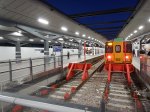


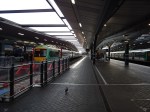

Space is much better than the London Bridge station, that I remember from before the rebuilding started.
Even the Class 455 trains, built in the 1980s, but refurbished since, doesn’t seem to show its true age.
London Air Ambulance Gets A Brain Scanner
The BBC are running a story this morning about the London Air Ambulance having a portable brain scanner and that they are able to scan injured patients on the way to hospital.
I’ve had a few brain scans in my time, but I can’t imagine one of the machines that have scanned me, being air-transportable in anything less than a C-130 Hercules.
But search the Internet and you find the device. It’s called an InfraScanner. It works using the same infra-red spectrum as a television remote control.
This superb piece of medical engineering, or others based on the same technology, must end up in the bag of every A&E doctor, or those who work in areas where there is a high risk of brain injuries, like sporting events or combat zones.
 The Anonymous Widower