When Is A Train Not A Train?
Take a modern train, say something like a Class 172 DMU or a two-car version of say a Class 710 EMU.
The size and weight of these are very similar to that of one of Sheffield’s trams.
Many, if not all, trams in the UK run to a set of rules, which allow the following.
- Running at up to 50 mph on a dedicated track, which can be either single or double track.
- Running at slower speeds through City Centres and amongst pedestrians, as they do through Birmingham, Blackpool, Croydon, Edinburgh, Manchester, Nottingham and Sheffield
- Trams are driven, by a trained driver, who takes notice of everything and everybody around the tram.
- Passengers can cross the track in designated places provided they keep a good look-out.
- Passengers can only board a tram at a designated stop.
- All rail vehicles run to the same rules.
The rules must work, as you don’t often hear of trams having accidents with pedestrians. In fact fourteen people have died in accidents with modern trams in the UK since 2000. The rate seems to have dropped in recent years, so are drivers getting better and pedestrians learning how to live with the trams?
I believe that in Zwickau in Germany, local trains, run on the tram tracks in the City Centre. There’s more on it under Vogtlandbahn in Wikipedia.
So could some branch lines be run according to tram rules, but using standard modern trains, like Class 172 or Class 710 trains?
In A First Visit To Clacton, I said this about the Walton-on-the-Naze branch of the Sunshine Coast Line.
I do wonder whether some branches like the short one to Walton-on-the Naze could be run to tram rules using on-board energy storage. It might enable stations to be built step-free without electrification, lifts and bridges, provided trains kept to a safe slow speed.
In an ideal system, the rules could be.
- No electrification. Zwickau uses diesel vehicles, but ones using on-board energy storage would be ideal.
- Trains do not exceed an appropriate slow speed. Zwickau uses 80 kph.
- Step free access from platform to train.
- All trains on the line run to the same rules.
- No freight trains.
The advantages would be.
- There is no electrification.
- Signalling is standard railway signals and rules. Often routes would run under One Train Working, which is very safe and well proven.
- Many routes could be built as single-track without points and like the Sudbury branch trains would go out and back.
- DMUs would be exactly, the same as others of their type.
- EMUs would be too, but would have on-board energy storage.
- Extra stations could be added to the line, by just building platforms.
- The line could perhaps be extended past its current terminus.
I must get to Zwickau and see how the Germans do it.
A few examples of lines that could run to these rules include.
- Sudbury Branch
- St. Ives Branch
- Walton-on-the-Naze Branch of the Sunshine Coast Line
- Windermere Branch
Whether some of these would need it, is doubtful. Some though, like Sudbury and St.Ives, terminate as a single platform in a car park.
The Felixstowe Branch certainly couldn’t as it has lots of freight trains, although the final section, from where it branches off the line to Felixstowe Port could.
I said that no freight trains could run on the routes, but those devilish Germans have designed a freight tram that runs in Dresden to supply the Volswagen factory in the city. It’s called a Cargo Tram.
Could this be a way of bringing freight into a City Centre? as I said in The LaMiLo Project, this type of thinking is in the minds of planners.
A First Visit To Clacton
Despite living quite close to Clacton for perhaps about thirty years of my life, I’d never been to the town before today.
I needed some sun and felt that a visit and a walk along the front was in order.
Since the Shenfield Metro train service through East London to henfield has been run by TfL Rail, getting to places like Clacton and Sudbury, as I did, a couple of weeks ago, has become a lot cheaper.
Sudbury cost me £11.70 return, and Clacton today was £14.25! As Clacton is seventy miles from London, surely that is good value!
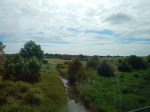
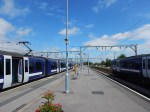
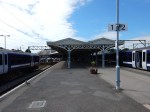
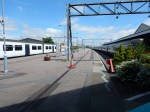
These are of some pictures I took of the trip from the time I joined the Sunshine Coast Line at Colchester.

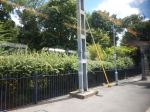


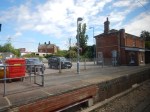
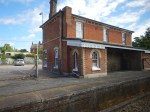

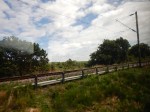



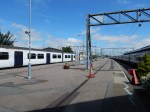
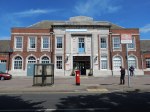


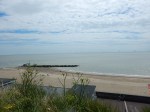



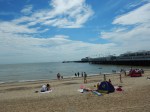
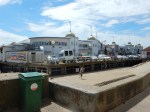


Note.
- The stations on the branch look reasonable, although Thorpe-le-Soken station could do with improvements.
- According to a local, the front at Clacton has had a recent makeover.
- There is a maintenance depot for the trains at Clacton.
- The line is an electrified double-track, although the branch to Walton-on-the-Naze and Frinton-on-Sea is only a single-track.
- I must admit to being surprised at the size of Clacton station with four platforms capable of taking twelve-car trains.
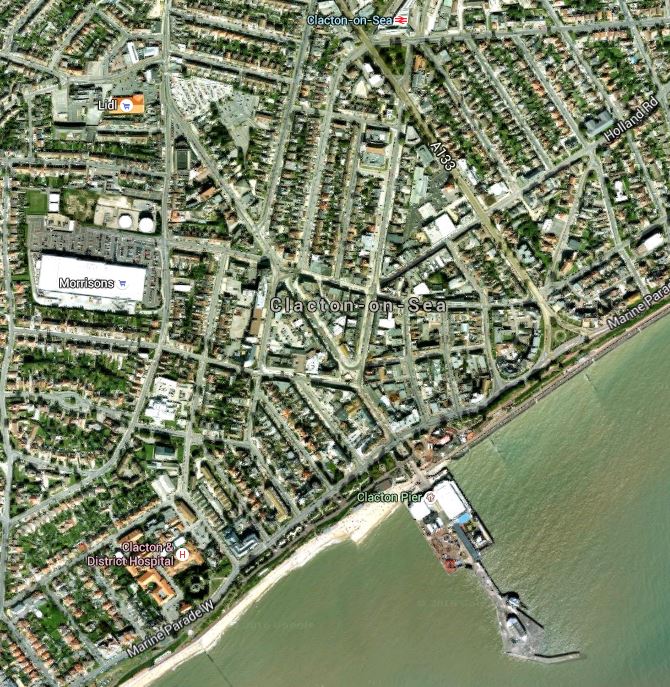
This Google Map shows the route where I walked.
Clacton
I walked down from the station to the sea front, along the promenade to the Pier and then back up to the station. It was virtually flat all the way.
One of the reasons, I went to Clacton was to look at the train service and see if it is likely, than the new franchise will improve it.
- As I said earlier, most of the stations I saw are in reasonable condition, although some may need step-free access.
- Thorpe-le-Soken station would appear to need improvement.
- According to Wikipedia Abellio has plans to improve stations at at Alresford, Kirby Cross and Weeley
- It is still possible to see the remains of the second track to Walton at Thorpe-le-Soken station.
- Generally, the Off Peak service to Clacton and Walton is one train per hour.
- Going to Clacton, I rode in an acceptable Class 360 train, but going back I was in a Class 321 train.
- Signalling on the Sunshine Coast Line was modernised a few years ago, but what is the state of the electrification?
- Colchester Town station is served by a spur from the Sunshine Coast Line, which has a low speed limit because of sharp curves.
There is certainly scope for improvement.
These are a few notes on what can be done.
Colchester Town Station
Wikipedia says this about the station.
As of 2013 there is only one platform, but there is space for a second which would make possible a more intensive service on the Sunshine Coast Line. To the east of the station, Colne Junction is the western extremity of a triangle which gives access towards Colchester station to the west and Hythe station to the east. The curve to the north from Colne Junction to East Gates Junction is sharp, with a continuous check rail which necessitates slow passage.
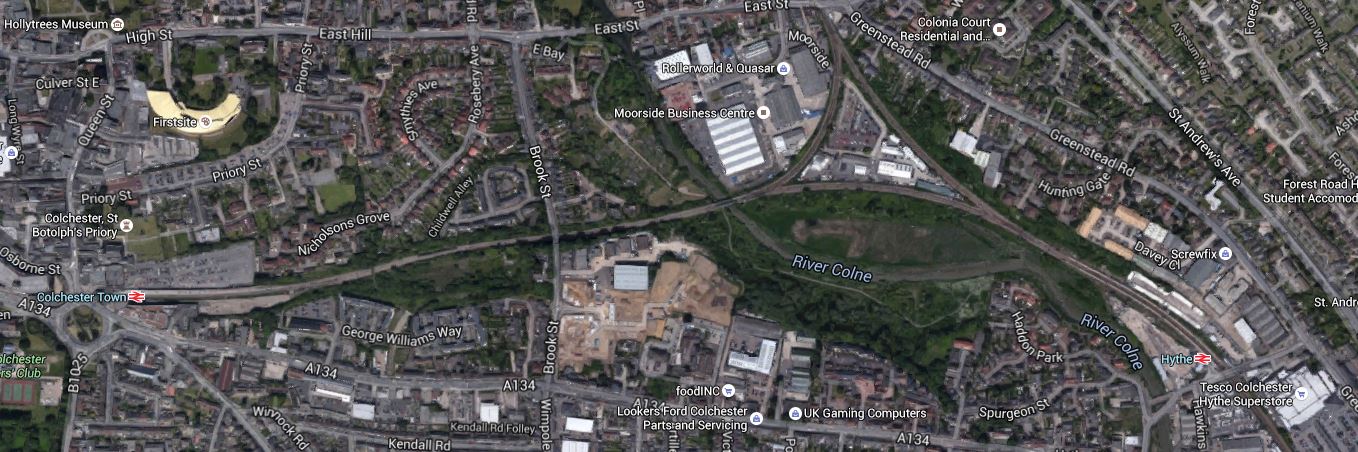
This Google Map shows Colchester Town station and Colne Junction.
Colchester Town Station And Colne Junction
Colchester Town station is at the Western side of the map and the lines lead out of the station to the triangular Colne Junction.
As the map shows, it is a much sharper curve to turn North than go to the Sunshine Coast.
The other station shown at the |Eastern side of the map is Hythe station, which is on the route to Clacton and Walton.
I suspect that there have been many sensible ideas to improve services through Colchester Town station, but that as train services in East Anglia have always had a low priority, nothing has been done.
These pictures show Colne Junction from a train between Clacton-on-Sea and Colchester.


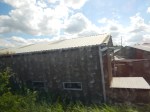

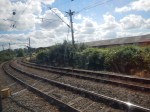
I was surprised to see that all sides of the junction are double-track.But not surprised to see a collection of second-rate industrial and Royal Mail development in the middle of the junction.
An absolute minimum of improvements would be.
- Improving the curve to the North at Colne Junction, so that there is a speed increase for trains going to and from Colchester and towards London, that serve Colchester Town and the Sunshine Coast Line.
- A second platform at Colchester Town station.
- Opening Colchester Town station on Sundays.
I will be interested to see if improvements are proposed in the new East Anglia Franchise.
New Trains
In Could Class 387 Trains Do Norwich In Ninety And Ipswich In Sixty?, I wrote that to obtain these timings, North of Chelmsford, all trains must be capable of holding a 100 mph line speed or perhaps even 110 mph.
The Class 360 trains might be fast enough, but there are rumours in the Derby Telegraph, that a new fleet of Bombardier trains will be ordered, to fulfil a requirement in the new franchise agreement.
If a version of something like a Class 710 train is ordered, it could have the following characteristics.
- Four-car trains, able to run in four, eight and twelve car formations.
- 100 mph or 110 mph line speed.
- Regenerative braking.
- Provision for on-board energy storage.
On the Sunshine Coast Line, the trains would not use the onboard energy storage for primary traction, but to save energy, as I don’t suspect the line has been updated for regenerative braking.
These trains will certainly provide a better passenger experience. They could also be faster between Liverpool Street and Colchester.
Electrification
The electrification looked to be in good condition, but judging by the design, some of it, is fairly elderly.
I also have my doubts as to whether the overhead wires can handle regenerative braking. Use of regenerative braking in the UK have shown energy saving around 15%, but it does need a more expensive infrastructure.
So will we see, a project to renew the wires, transformers and other electrical equipment, as has been seen on parts of the Great Eastern Main Line?
I think we will, but the operator could use on-board electrical storage in new trains to simplify the electrification.Instead of returning braking energy through the overhead wires, it would be stored on the train for using the train to get started again.
One idea that could happen, is that to appease the sensitive souls in Frinton, that the Walton-on-the-Naze branch could be run using onboard energy storage to eliminate any pantograph noise. After all the branch is only five miles long. But that would be five miles less of overheasd wire to maintain.
I do wonder whether some branch lines like the short one to Walton-on-the Naze could be run to tram rules using on-board energy storage. It might enable stations to be built step-free without electrification, lifts and bridges. I wrote about Thurston station, where they have a walk across with lights in Two Solutions To Make Crossing A Railway Safe.
Track Improvements
As with Colne Junction, I suspect that there are some long-standing ideas to increase the line speed from the current 40-90 mph on the Sunshine Coast Line.
Have Train, Will Travel
This article in the underland Echo is entitled Metro bosses unveil plans to extend network, including direct link between Sunderland and South Tyneside.
This is the opening couple of paragraphs.
Ambitious plans to extend and expand the region’s rail and Metro networks have been drawn up by public transport bosses.
The scheme – to be presented to the North East Combined Authority (NECA) – could see a direct link between Sunderland and South Tyneside and the network extended as far as Washington and Peterlee.
It is a comprehensive plan, that takes note and advantage of the best practice and technology from around the world.
The Proposed New Routes
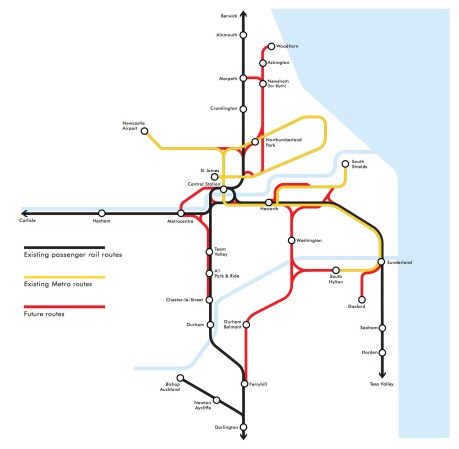
Plans for the Tyne and Wear Metro include.
- Sunderland City Centre to Doxford Park using the route of the former Hetton Colliery Railway.
- New Routes From South Tyneside by linking the South Shields and Sunderland routes, using an existing single-track railway in the region of Tyne Dock.
- A Wearside Loop can be created to serve Washington using existing rail routes.
- The Leamside Line could be used as a new Metro route.
- Re-electrification of Sunderland to 25 KVAC would give advantages to Network Rail and allow Metro services to go South.
- Dualling of the track through South Tyneside.
Every plan seems to have serious element of using former and existing routes in a creative manner.
This map shows how the network could look in a few years.
The Metro Has A Touch Of The Karlsruhes
What many forget about the Metro, is that it some of its operation on the Sunderland route is based on a modified form of the Karlsruhe model, where heavy rail passenger and freight trains, share tracks with the Metro.
I was surprised once on a station on the Metro to see a Grand Central High Speed Train come through.
The last two improvements listed above; 5 and 6, use this capability.
The Durham Coast Line runs from Newcastle to Middlesborough and the East Coast Main Line, via Sunderland and Hartlepool. The only electrified section of this line is that which is used by Metro trains.
If new Metro trains could run on their current 1500 VDC and 25 KVAC, then if the line was fully electrified, the following benefits, would be realised.
- Metro trains could go as far South as Middlesbrough.
- Grand Central could run electric trains to Middlesbrough, Hartlepool and Sunderland.
- There would be a second electrified route South from Newcastle, for use as a diversion.
- Network Rail would get maintenance advantages, as the electrification is network standard.
So we would see Metro trains sharing the route with high speed passenger trains like Class 800s and electrified freight.
The South Tyneside Dualling would incorporate the freight line to the Jarrow Oil Terminal into the Metro. I think that the line would be arranged, so that if freight ever needed to use the line, the Karlsruhe model would apply.
It looks to me that this dualling and the upgraded electrification through Sunderland would be done together.
New Trains
New trains are also mentioned and in this article on Global Rail News. This is said.
Nexus, the Tyne and Wear region’s Passenger Transport Executive (PTE), said it would look to procure a new fleet of multi-system trains capable of operating on the Metro’s 1.5 kV DC electrification system and the 25 kV AC used on the national rail network. Battery technology is also being considered for short sections of non-electrified line.
Looking at the map, there are a couple of short new lines, that might be ideal for IPEMUs.
Conclusion
Taken as a whole, it is good well-thought out plan.
 The Anonymous Widower