New Study Shows How North Sea Offshore Wind Can Yield More While Costing Less
The title of this post, is the same as that of this article on offshoreWIND.biz.
This is the sub-heading.
A less dense development of offshore wind in the German Exclusive Economic Zone (EEZ) of the North Sea, and a relocation of capacities to neighboring countries can both increase the yield from offshore wind and reduce costs, a new study by the Fraunhofer Institute for Wind Energy Systems (Fraunhofer IWES) has shown.
These two paragraphs add more detail.
With Germany’s current expansion target of 70 gigawatts (GW) by 2045 and the planned land use to date, the utilization of offshore wind power will fall far short of its technical potential, the study has shown.
While the North Sea is among the windiest regions worldwide, shading effects would significantly reduce the achievable yield of up to 5,000 full-load hours. Furthermore, the close proximity of wind farms reduces each other’s wind output.
It appears from the text in this must read report, that the Germans might develop as much as 20 GW in neighbouring countries.
In Will A Large Green German Elephant Get Involved In The Clacton By-Election?, I talked about a 2 GW cluster of wind farms being developed by RWE and their partners.
- 1.1 GW – Five Estuaries
- 504 MW – North Falls
- 353 MW – Galloper
Note:
- In total they are around 2 GW.
- The wind farms are around 30 km. offshore.
- RWE are a respected German company, who are one of the UK’s largest electricity generators.
I believe that RWE and their partners could receive a lot of opposition to an overhead power line across Essex to connect these wind farms to the National Grid, and 2 GW would not be a small set of pylons.
Would it be a better value project to bring this energy to Germany, either as green electricity or green hydrogen, than connect it to the UK’s National Grid?
Consider.
- A cable between the three wind farms and the nearest part of Germany would be about 300 miles.
- The longest undersea interconnect is the Viking Line between England and Denmark, which is 475 miles long.
- RWE have been building a big offshore electrolyser in The Netherlands called H2OpZee and I believe that similar technology could be used at Clacton.
- 2 GW of energy would be ten percent of the energy, that Germany needs.
- I’m sure Rachel from Accounts would be happy for any payments for the energy.
It looks to me that energy links between the UK and Germany will only get more numerous and stronger as the years roll by.
North Sea Exclusive Economic Zones
Out of curiosity, I searched for a map and found this on Wikipedia.
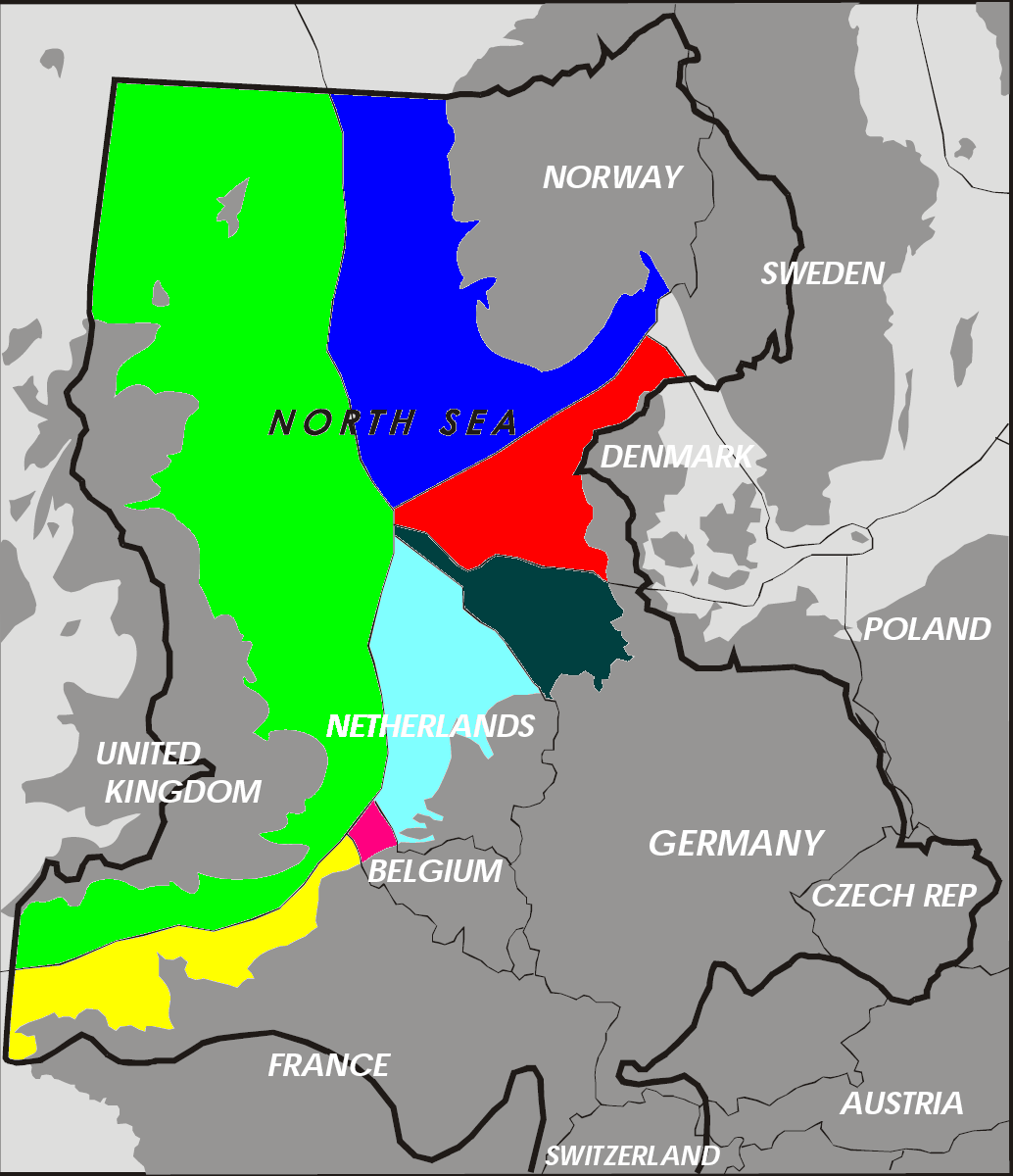
Note.
- Yellow is France.
- Mauve is Belgium, who drew the short straw.
- Light Blue is The Netherlands.
- Black is Germany, who despite their large land area, don’t have as much sea as the UK.
- Red is Denmark.
- Dark Blue is Norway.
- Green is The UK.
Didn’t we do well!
But Belgium and Germany miss out badly, when it comes for virgin sea to fill with wind farms.
Energy Links To Belgium
The UK has developed or is developing two grid links to Belgium.
- Nemo Link – a 1.0 GW interconnector.
- Nautilus – A 1.7 GW offshore hybrid asset.
National Grid is a partner with their Belgian equivalent ; Elia in both.
Energy Links To Germany
Germany is developing.
- NeuConnect – a 1.4 GW interconnector.
- GriffinLink – a hybrid offshore link.
- AquaVentus – In AquaVentus, I outlined this massive German project to bring Hydrogen to Germany from the North Sea.
I believe there will be more links.
Will A Large Green German Elephant Get Involved In The Clacton By-Election?
Before I start I’ll ask a question.
What Does Farage Think Of Offshore Wind Farms?
Google AI gave me this reply.
Nigel Farage opposes offshore wind farms, viewing them as an unreliable energy source and arguing that they cause industrial decline and impose “intolerable costs” on households.
His specific stances include:
Taxation & Subsidies: He has pledged that his Reform UK party would eliminate subsidies for wind projects and impose a windfall levy on existing wind farms that have received subsidies.
Energy Alternatives: Farage advocates for abandoning “net zero dogma” and pushes instead for increased oil and gas drilling in the North Sea, along with the expansion of nuclear energy.
Environmental Impact: He has criticized both onshore and offshore wind infrastructure for “despoiling our landscapes and seascapes”. His opposition aligns with previously documented discussions with US President Donald Trump, who has lobbied him against wind turbines.
RWE Development In The Clacton Constituency
RWE or RWE-led consortia are developing three wind farms in the waters off the constiuency.
- 1.1 GW – Five Estuaries
- 504 MW – North Falls
- 353 MW – Galloper
Note:
- In total they are around 2 GW.
- The wind farms are around 30 km. offshore.
- RWE are a respected German company, who are one of our largest electricity generators.
I believe that RWE and their partners could receive a lot of opposition to an overhead power line across Essex to connect these wind farms to the National Grid, and 2 GW would not be a small set of pylons.
But although RWE are German, they may have a Plan B.
RWE have been building a big offshore electrolyser in The Netherlands called H2OpZee and I believe that similar technology could be used at Clacton.
- The electrolyser would be about 30 km from the shore and look like a typical wind farm substation.
- There would be connections to both the UK and Germany, and green hydrogen would be able to be sent either way.
- As Germany is decarbonising industry using hydrogen, I suspect that most green hydrogen would initially be exported.
- But it could attract businesses that needed a lot of green energy to the Clacton area.
- And Clacton certainly needs jobs.
How would Farage deal with something that would bring prosperity to his constituency, but was against his principles?
Has The Clacton Constituency Anything To Do With The Offshore Wind Industry?
I ask this question as Nigel Farage, who is the sitting MP has called a by-election.
Before I answer, the question in the title, I will ask Google AI if he supports wind farms.
I received this reply.
Nigel Farage does not support offshore wind farms. As the leader of Reform UK, he opposes them and has pledged to eliminate renewable energy subsidies, impose a windfall tax on wind developers, scrap net-zero targets, and prioritize the expansion of North Sea oil and gas extraction.
Put this alongside the answer to the question I put in the title of this post.
Yes, the Clacton constituency is directly connected to the offshore wind industry through both established infrastructure and future energy projects off its coastline.The constituency’s specific ties to the wind sector include:
Gunfleet Sands Offshore Wind Farm: Located just 7 kilometers (about 4 miles) off the coast of Clacton and Holland-on-Sea, this wind farm has been operating since 2010. It features 48 turbines and can be seen directly from the town’s beachfront.
Electrical Connection Points: The Gunfleet Sands Offshore Transmission Owner (OFTO) system connects this wind farm to the UK’s national grid via cables and onshore substations based in the local area.
Five Estuaries Offshore Wind Farm: The Clacton coastline falls within the proposed zone for this massive £1.5 billion project. Jointly developed by SSE Renewables and RWE, the project is projected to power over 400,000 homes, with onshore grid infrastructure and cabling proposed for the North Essex area.
If the right independent candidate stood againt Farage, this could be an interesting contest.
Farage Faces Questions Over Who Funded £885,000 Clacton Constituency Home
The title of this post, is the same as that as this article on the BBC.
This is the sub-heading.
Reform UK leader Nigel Farage faces pressure to account for how his partner paid for a £885,000 home after a BBC investigation raised further questions about his previous explanation.
These two introductory paragraphs, give more details.
The Clacton MP has denied avoiding more than £44,000 in additional stamp duty on the purchase of the constituency home by putting it in his partner Laure Ferrari’s name, saying that she bought it with her own funds.
He suggested that she was able to afford to buy the four-bedroom home, which was bought without a mortgage, because she comes from a wealthy French family.
The BBC appears to have fully investigated the deal and doubt the veracity of some of the tale, that Farage told.
I notice, that the house in question is in Frinton.
My late wife was a barrister and once acted for the Co-op to get an off-licence in the town.
- Up until this action the town had been dry.
- C told me, that the Co-op had appointed a charming Asian gentleman as a manager.
- She used all her legal charm to get the action through.
- She also joked afterwards about hate mail, but I don’t think it was serious.
It appears that you can still buy alcohol in Frinton.
A First Visit To Clacton
Despite living quite close to Clacton for perhaps about thirty years of my life, I’d never been to the town before today.
I needed some sun and felt that a visit and a walk along the front was in order.
Since the Shenfield Metro train service through East London to henfield has been run by TfL Rail, getting to places like Clacton and Sudbury, as I did, a couple of weeks ago, has become a lot cheaper.
Sudbury cost me £11.70 return, and Clacton today was £14.25! As Clacton is seventy miles from London, surely that is good value!
These are of some pictures I took of the trip from the time I joined the Sunshine Coast Line at Colchester.




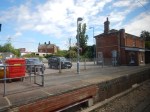
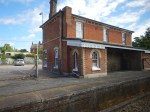



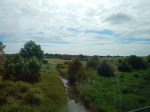
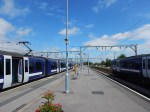
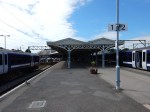

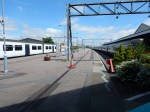
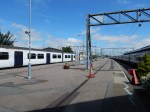



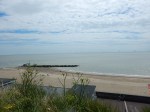


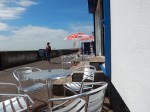

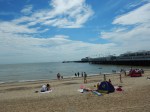


Note.
- The stations on the branch look reasonable, although Thorpe-le-Soken station could do with improvements.
- According to a local, the front at Clacton has had a recent makeover.
- There is a maintenance depot for the trains at Clacton.
- The line is an electrified double-track, although the branch to Walton-on-the-Naze and Frinton-on-Sea is only a single-track.
- I must admit to being surprised at the size of Clacton station with four platforms capable of taking twelve-car trains.
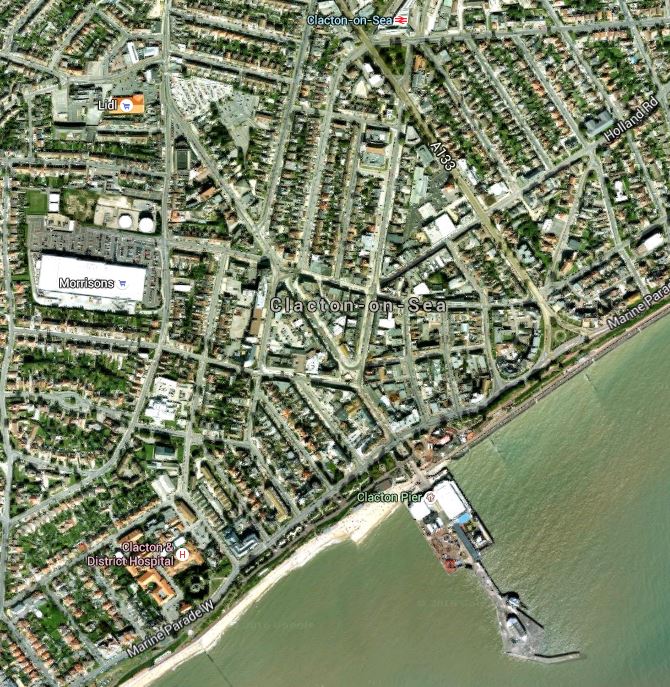
This Google Map shows the route where I walked.
Clacton
I walked down from the station to the sea front, along the promenade to the Pier and then back up to the station. It was virtually flat all the way.
One of the reasons, I went to Clacton was to look at the train service and see if it is likely, than the new franchise will improve it.
- As I said earlier, most of the stations I saw are in reasonable condition, although some may need step-free access.
- Thorpe-le-Soken station would appear to need improvement.
- According to Wikipedia Abellio has plans to improve stations at at Alresford, Kirby Cross and Weeley
- It is still possible to see the remains of the second track to Walton at Thorpe-le-Soken station.
- Generally, the Off Peak service to Clacton and Walton is one train per hour.
- Going to Clacton, I rode in an acceptable Class 360 train, but going back I was in a Class 321 train.
- Signalling on the Sunshine Coast Line was modernised a few years ago, but what is the state of the electrification?
- Colchester Town station is served by a spur from the Sunshine Coast Line, which has a low speed limit because of sharp curves.
There is certainly scope for improvement.
These are a few notes on what can be done.
Colchester Town Station
Wikipedia says this about the station.
As of 2013 there is only one platform, but there is space for a second which would make possible a more intensive service on the Sunshine Coast Line. To the east of the station, Colne Junction is the western extremity of a triangle which gives access towards Colchester station to the west and Hythe station to the east. The curve to the north from Colne Junction to East Gates Junction is sharp, with a continuous check rail which necessitates slow passage.
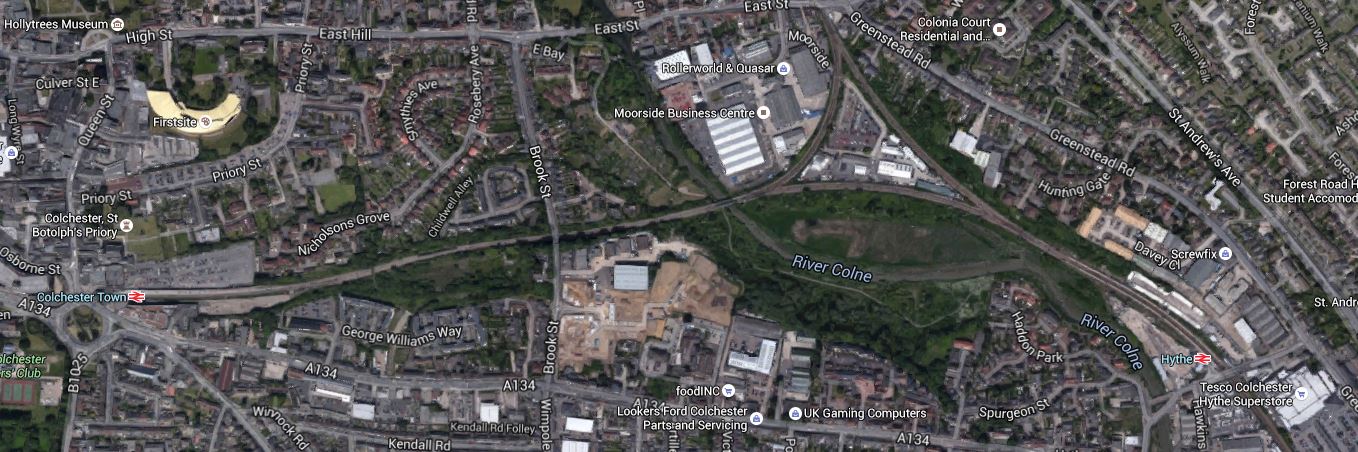
This Google Map shows Colchester Town station and Colne Junction.
Colchester Town Station And Colne Junction
Colchester Town station is at the Western side of the map and the lines lead out of the station to the triangular Colne Junction.
As the map shows, it is a much sharper curve to turn North than go to the Sunshine Coast.
The other station shown at the |Eastern side of the map is Hythe station, which is on the route to Clacton and Walton.
I suspect that there have been many sensible ideas to improve services through Colchester Town station, but that as train services in East Anglia have always had a low priority, nothing has been done.
These pictures show Colne Junction from a train between Clacton-on-Sea and Colchester.



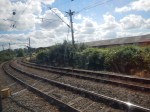
I was surprised to see that all sides of the junction are double-track.But not surprised to see a collection of second-rate industrial and Royal Mail development in the middle of the junction.
An absolute minimum of improvements would be.
- Improving the curve to the North at Colne Junction, so that there is a speed increase for trains going to and from Colchester and towards London, that serve Colchester Town and the Sunshine Coast Line.
- A second platform at Colchester Town station.
- Opening Colchester Town station on Sundays.
I will be interested to see if improvements are proposed in the new East Anglia Franchise.
New Trains
In Could Class 387 Trains Do Norwich In Ninety And Ipswich In Sixty?, I wrote that to obtain these timings, North of Chelmsford, all trains must be capable of holding a 100 mph line speed or perhaps even 110 mph.
The Class 360 trains might be fast enough, but there are rumours in the Derby Telegraph, that a new fleet of Bombardier trains will be ordered, to fulfil a requirement in the new franchise agreement.
If a version of something like a Class 710 train is ordered, it could have the following characteristics.
- Four-car trains, able to run in four, eight and twelve car formations.
- 100 mph or 110 mph line speed.
- Regenerative braking.
- Provision for on-board energy storage.
On the Sunshine Coast Line, the trains would not use the onboard energy storage for primary traction, but to save energy, as I don’t suspect the line has been updated for regenerative braking.
These trains will certainly provide a better passenger experience. They could also be faster between Liverpool Street and Colchester.
Electrification
The electrification looked to be in good condition, but judging by the design, some of it, is fairly elderly.
I also have my doubts as to whether the overhead wires can handle regenerative braking. Use of regenerative braking in the UK have shown energy saving around 15%, but it does need a more expensive infrastructure.
So will we see, a project to renew the wires, transformers and other electrical equipment, as has been seen on parts of the Great Eastern Main Line?
I think we will, but the operator could use on-board electrical storage in new trains to simplify the electrification.Instead of returning braking energy through the overhead wires, it would be stored on the train for using the train to get started again.
One idea that could happen, is that to appease the sensitive souls in Frinton, that the Walton-on-the-Naze branch could be run using onboard energy storage to eliminate any pantograph noise. After all the branch is only five miles long. But that would be five miles less of overheasd wire to maintain.
I do wonder whether some branch lines like the short one to Walton-on-the Naze could be run to tram rules using on-board energy storage. It might enable stations to be built step-free without electrification, lifts and bridges. I wrote about Thurston station, where they have a walk across with lights in Two Solutions To Make Crossing A Railway Safe.
Track Improvements
As with Colne Junction, I suspect that there are some long-standing ideas to increase the line speed from the current 40-90 mph on the Sunshine Coast Line.
 The Anonymous Widower