Along The Avocet Line
I took these pictures on a trip from Exeter to Exmouth and back on the Avocet Line.

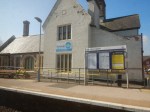
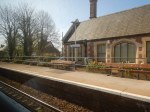





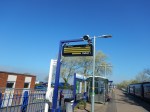



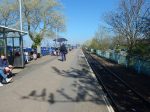
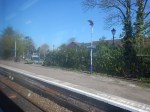
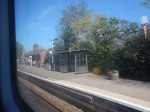

These are my thoughts under various topics.
Exmouth
Exmouth reminded me of the seaside town, where I spent a fair bit of my childhood; Felixstowe.
- They are both coastal towns.
- Exmouth has the larger population of 34,400 to Felixstowe’s 23,000.
- Both have adequate shopping centres, although Exmouth has a large Marks and Spencer Simply Food by the station.
I didn’t get to the beach.
The Starcross And Exmouth Ferry
There is a ferry between Starcross station and Exmouth, which seems to be well used.
Exmouth Station And The Train Service
Exmouth station was rebuilt in 1986 and it is a one-platform station with facilities and a large Marks and Spencer Simply Food.
The only problem is the trains themselves, as their frequency, which is generally two trains per hour, is acceptable.
But two Class 143 trains coupled together is inadequate, for a summer’s day when passengers have buggies, bicycles and lots of young children.
Monkerton Station
Monkerton station is a proposed new station on the Avocet Line, that would be built between Polsloe Bridge and Digby & Sowton.
The Seaside Special
Exmouth station and the Avocet Line powerfully makes the case for a Seaside Special train.
- Four cars.
- Independently-powered by diesel or perhaps batteries in the future.
- A range of perhaps thirty miles.
- Lots of space for buggies, bicycles and large suitcases.
- Step-across access between platform and train.
I’m sure Greater Anglia and Great Western Railway, with help from other train operating companies could come up with workable specification.
Get the specification right and it might be the short distance commuter train, where a proportion of passengers want to bring bicycles.
With the current developments in train refurbishment, the new Class 319 Flex and Class 230 trains might be the place to start.
An Excursion To Axminster
My Devon Day Ranger allowed travel to Axminster, so I took a trip.
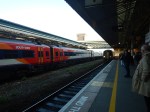

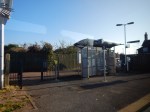















These are my comments on various topics.
Peninsular Task Force
According to the June 2016 Edition of Modern Railways, the Peninsular Task Force has made recommendations about this route.
- An improved line.
- An enhanced South Devon Metro
- A better diversion route.
- Speeding up of services between London Waterloo and Exeter by 36 minutes.
It will be interesting to see what actually happens.
Axminster Station
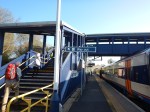
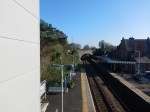
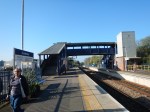
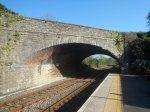
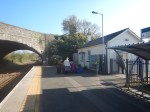
I was surprised to find that Axminster station is quite a sophisticated one as the pictures show.
It also had an excellent cafe that made me a fgluten-free bacon sandwich.
Class 800/802 Trains On The West Of England Line
The West Of England Line is currently certified for InterCity 125s, so it would probably allow Class 800 and Class 802 electro-diesel trains to use the route.
It might need some updating to some of the connecting routes East of Yeovil Junction.
Speeding Up Services Between London Waterloo And Exeter
Most of the services on this route are run by 90 mph Class 159 trains, which are well-matched to the 90 mph West Of England Line.
The current trains are diesel, which means they can’t take advantage of the electrified section of the line between London and Basingstoke.
In the June 2016 Edition of Modern Railways, this is said about services between London Waterloo and Exeter.
Journey time improvements of up to 36 minutes between Exeter and London Waterloo are forecast through a combination of linespeed improvements and trains calling only at Salisbury between Clapham Junction and Yeovil Junction.
The described stopping pattern would cut seven stops, at how many minutes a stop?
I have read that cutting a stop saves around three minutes a stop, but the amount will depend on a large number of factors.
- Braking for the stop.
- Accelerating back to line speed.
- The ease with which passengers can enter and exit, which is helped by wide doors and large lobbies.
- The quality of the driving.
Looking at the timetables various stops can take between three and seven minutes.
As an example, the Class 159 trains take 52 minutes between Basingstoke and Waterloo with stops at Woking and Clapham Junction, but a 100 mph electric train does it in 45 minutes with just a stop at Clapham Junction.
Without the actual figures, I can only take an educated guess.
An average of four minutes would mean finding eight minutes from linespeed improvements.
But there would be one simple way to speed up the trains.
Running Class 802 trains would certainly reduce journey times.
- They are electro-diesel trains, so could use the electrification between London Waterloo and Basingstoke.
- They have a 100 mph speed on diesel power, if speed limits allow.
- They have a 125 mph speed on electrified lines, if speed limits allow.
- Their undoubted power would get them quickly up to linespeed, thus reducing stop time.
- They have probably got better braking performance, than the current Class 159 trains.
But also consider.
- If linespeed is increased from the current 90 mph to perhaps 100 mph, the Class 159 trains can’t take any advantage.
- Running on electricity between London and Basingstoke, could also save a few minutes and some carbon emissions.
- Upgrading the line West of Basingstoke to allow higher speed where possible.
- Adding some more passing loops, at stations like Whimple.
- Any extra electrification past Basingstoke would be welcomed.
This could realise savings of perhaps fifteen to twenty minutes.
I am assuming the following.
- The more powerful Class 802 variant of the Class 800 train will be used, as speed on diesel power will be important.
- The trains can be fitted with third-rail shoes, like the closely related Class 395 train.
- I wonder, if it would be prudent to make all Class 802 trains dual-voltage.
Operationally, the trains may offer other advantages.
- If they are closely related to the Class 802 variant used by GWR for Peninsular services, this must be beneficial, as FirstGroup is involved in both train operating companies.
- It appeared to me at Exeter St. Davids that the Class 159 trains need a lot of refuelling, so the large fuel tanks of the Class 802 trains might save refuelling time.
- The joint fleet could be serviced at the same depot in perhaps either Exeter or Plymouth.
- Running similar trains on both routes from Exeter to London might give a marketing advantage.
- Five-car and nine-car Class 802 trains could be used as appropriate.
- It might be economic to extend some Waterloo services past Exeter.
A quick calculation shows that to provide an hourly service needs the following number of trainsets.
- Class 159 trains with a round trip of 7 hours – 7 trainsets of two trains.
- Class 802 trains with a round trip of 6 hours – 6 trains.
This could make the smaller Class 802 fleet easier to manage.
A South Devon Metro
The Modern Railways article has a brief reference to an enhanced South Devon Metro.
Currently, between Yeovil Junction and Exeter, there is generally one train per hour (tph).
This is not enough.
So in addition to the current service could the South West be seeing a modern diesel service from perhaps Yeovil Junction or Salisbury to Plymouth, at perhaps one tph.
But ideally, there should be four tph on the route to provide a Turn-Up-And-Go service.
New Stations
The stations at Axminster, Cranbrook and Whimple have recently opened, reopened or rebuilt.
There is also this article on DevonLive, which is entitled Second Cranbrook station still in the pipeline.
So could the eco-village of Cranbrook, get a second station called Cranbrook East?
I suspect that development of the line West of Salisbury could see some more and better stations.
Conclusions
The recommendations of the Peninsular Task Force should probably be followed.
I think we’ll see the following on the West of England Line.
- An enhanced service of at least 2 tph from Yeovil Junction to Exeter, with some extended to Plymouth.
- London Waterloo to Exeter in under three hours.
- A variant of Class 800 trains working the route.
- New and improved stations.
One great advantage is that First Group are at least part-owners of the two train operating companies in the region.
 The Anonymous Widower