Grayling Gives Green Light To Network Rail ECML Improvements
The title of this post, is the same as that of this article on Rail Technology Magazine.
This Google Map shows the Werrington area, just North of Peterborough on the East Coast Main Line.
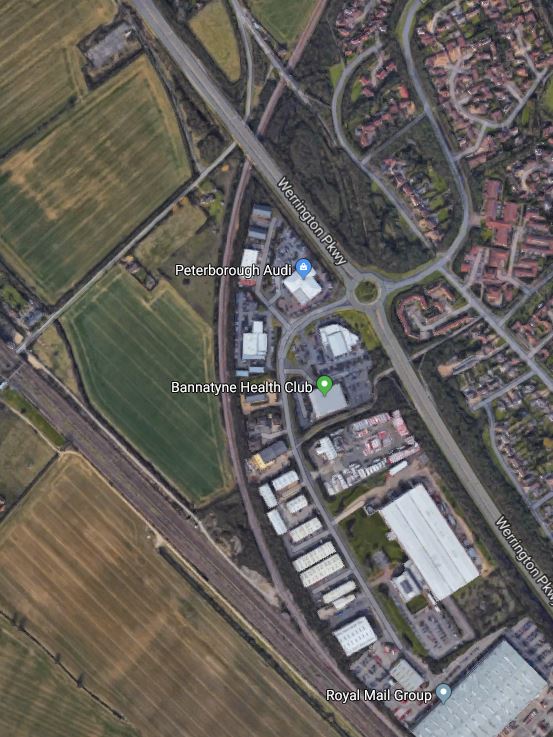
Network Rail have a web page, which describes the Werrington Grade Separation in detail.
This is said.
We will build a new two-track railway line, just over 3km in length, under the East Coast Main Line at Werrington Junction that will enable high-speed trains to pass over the Great Northern Great Eastern Line. North of the Cock Lane footbridge the Stamford Lines would be widened to the west to create four tracks. The central pair of tracks would then dive into a new underpass, below the ECML, and rise to meet the GNGE line approximately 600m after Lincoln Road.
This Google Map shows the Cock Lane footbridge over the East Coast Main Line.
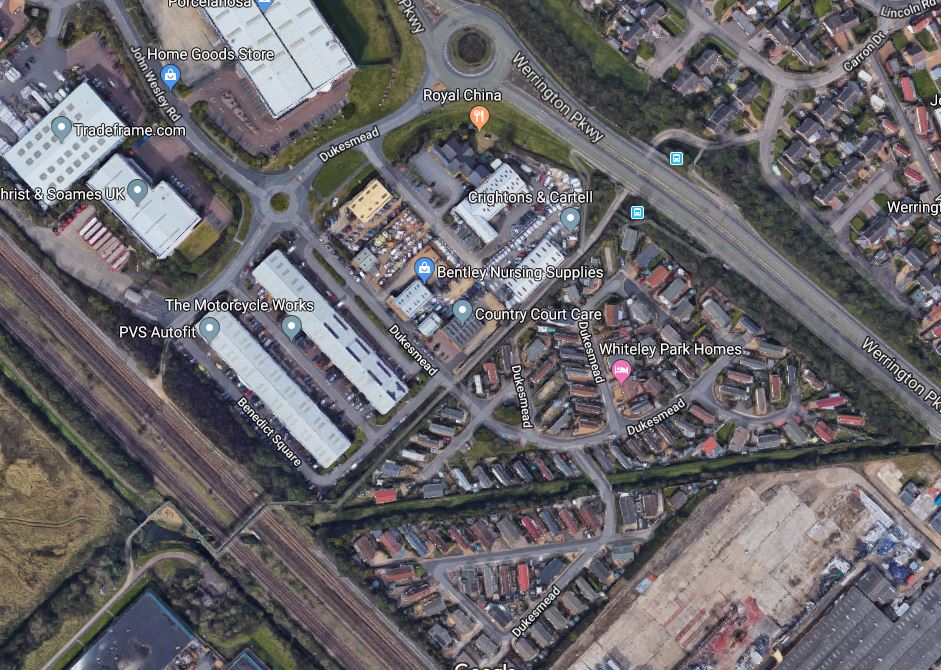
Note the large number of tracks on the East Coast Main line. Those on the |Western side are the Stamford Lines.
This Google Map shows Northern end of the route, where it joins the Great Northern Great Eastern Joint Line.
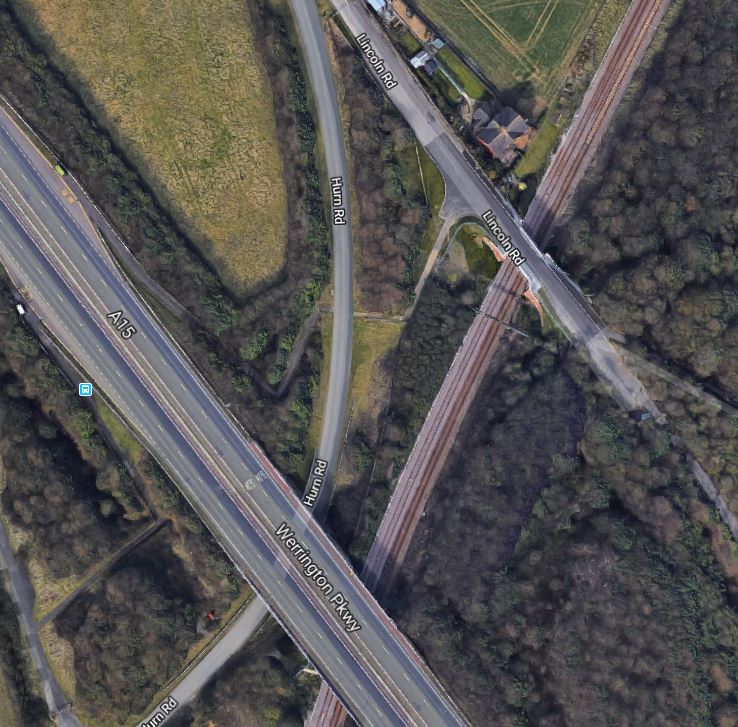
From the video below, it looks like the new double-track railway crosses the Werrington Parkway and Lincoln Road under new bridges.

Note that video is good, but you will end up on the Network Rail web site, when it finishes. Why can’t they use YouTube like everyone else?
It is certainly a comprehensive scheme, which will stop freight trains slowing the expresses on the East Coast Main Line.
Line Speed And Gauge
The Great Northern Great Eastern Joint Railway has an operating speed of 75 mph and a loading gauge of W10.
From watching the video, the gauge appears to be at least W10 and it appears that the train is not going slowly.
Certainly, it will accommodate the largest freight trains, but will we see passenger services between Peterborough and Lincoln saving time?
Peterborough And Lincoln Passenger Services
Currently, these services are timed for a Class 153 train and it takes 78-80 minutes with five stops.
Building The New Track
I suspect that the scheme has been designed so that it can be built without causing major disruption to the trains on the East Coast Main Line.
The single-track Acton Dive Under was successfully built with only minor disruption to Great Western Main Line services, so Network Rail have good form in this area. I talked about this in The Acton Dive-Under From The Noel Road Bridge.
Peak District Freight Sidings Get £18m Network Rail Boost
The title of this post is the same as this article on Rail Technology Magazine.
This Google Map shows the spa town of Buxton and the surrounding countryside.
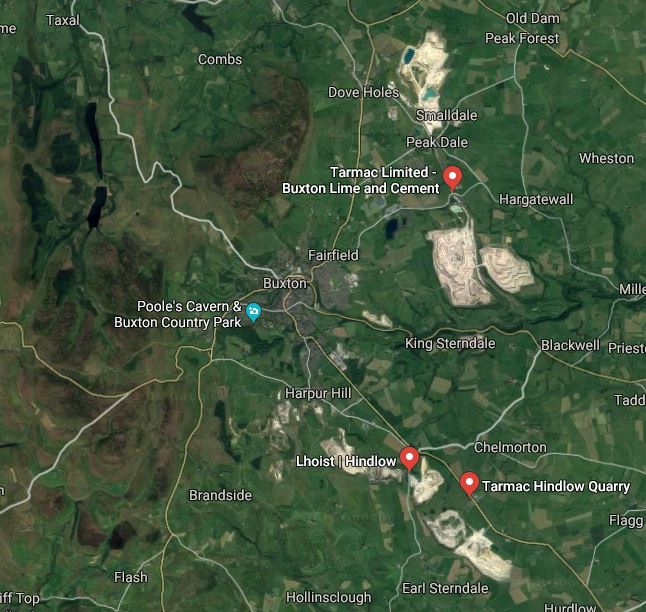
One of the towns major industries is quarrying and the white areas to the East of the town are the quarries. The large quarry at the top of the map is Tunstead Quarry, which produces 5.5 million tonnes of limestone a year.
This paragraph from Wikipedia, sums up the uses of limestone.
Limestone has numerous uses: as a building material, an essential component of concrete (Portland cement), as aggregate for the base of roads, as white pigment or filler in products such as toothpaste or paints, as a chemical feedstock for the production of lime, as a soil conditioner, or as a popular decorative addition to rock gardens.
So how does all this limestone get to where it is needed?
This map from this document on the Network Rail web site, shows the rail lines to the quarries

Note the two freight lines.
- The Great Rocks Freight Line goes between a junction near Chinley station on the Hope Valley Line to Buxton via Tunstead Quarry and is used to take heavy trains into and out of the area.
- The Quarry Freight Line connects other quarries to Buxton.
Trains going to and from the quarries on the Quarry Freight Line must reverse in sidings at Buxton to access the Great Rocks Freight Line.
This Google Map shows the various lines at Buxton.
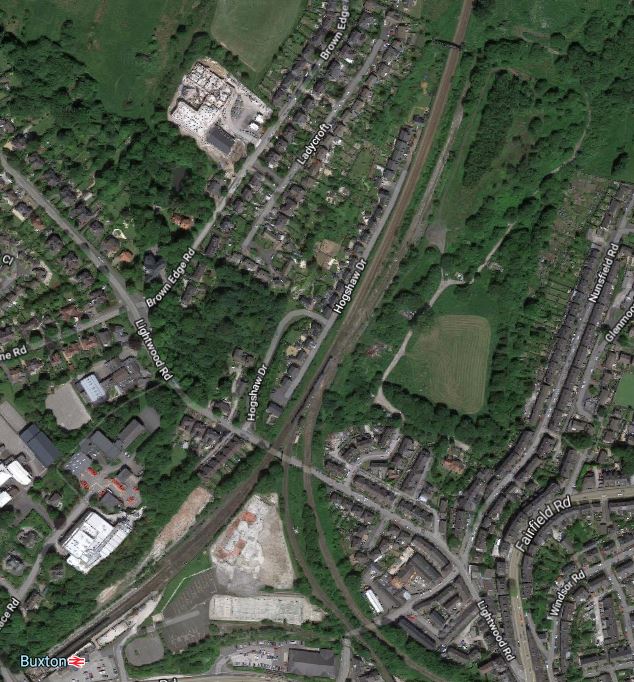
Buxton station is in the South West corner of the map and the Buxton Line to Manchester goes out at the North.
The two freight lines come to Buxton from the South East and join in the sidings that run along the Buxton Line.
I took these pictures in March 2017.
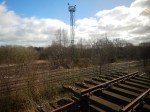
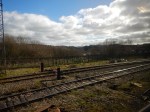
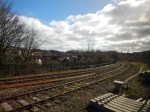
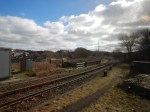

They show the sidings, as my train approached Buxton station.
It would be desirable to be able to run longer trains to and from Hindlow and Dowlow quaries on the Quarry Freight Line, but these sidings are not long enough to reverse the longer trains.
The £18million project will lengthen the sidings, so trains can consist of 26 instead of 18 wagons.
- Each train will transport 2,500 tonnes of materials.
- Each train will take 76 lorry loads from the roads.
The longer trains will mean that no new train paths will be needed on the crowded rail network.
Conclusion
This is only a small project, but it will increase freight capacity to and from Hindlow and Dowlow quarries by forty-four percent.
New Access To York Station As Part Of Major Brownfield Redevelopment Plans
The title of this post, is the same as that of this article on Rail Technology Magazine.
This the first paragraph.
New plans including a new access point to York station and the expansion of the National Railway Museum headline groundbreaking proposals of creating 6,500 jobs in the city.
The development is a partnership between.
- Homes England
- Network Rail
- York City Council
- National Railway Museum
This page on the York City Council web site, is entitled Major Developments At York Central.
This is the first paragraph.
York Central is the large brownfield site to the west of the city’s railway station. It lies between the A19 and A59 road corridors, and is contained by operational rail lines.
The document goes on to say that redevelopment of parts of the site could include.
- 1,000 to 2,500 homes
- 60,000m2 to 120,000m2 of office, leisure and retail uses
To gauge the size of the site, this Google Map shows the area.
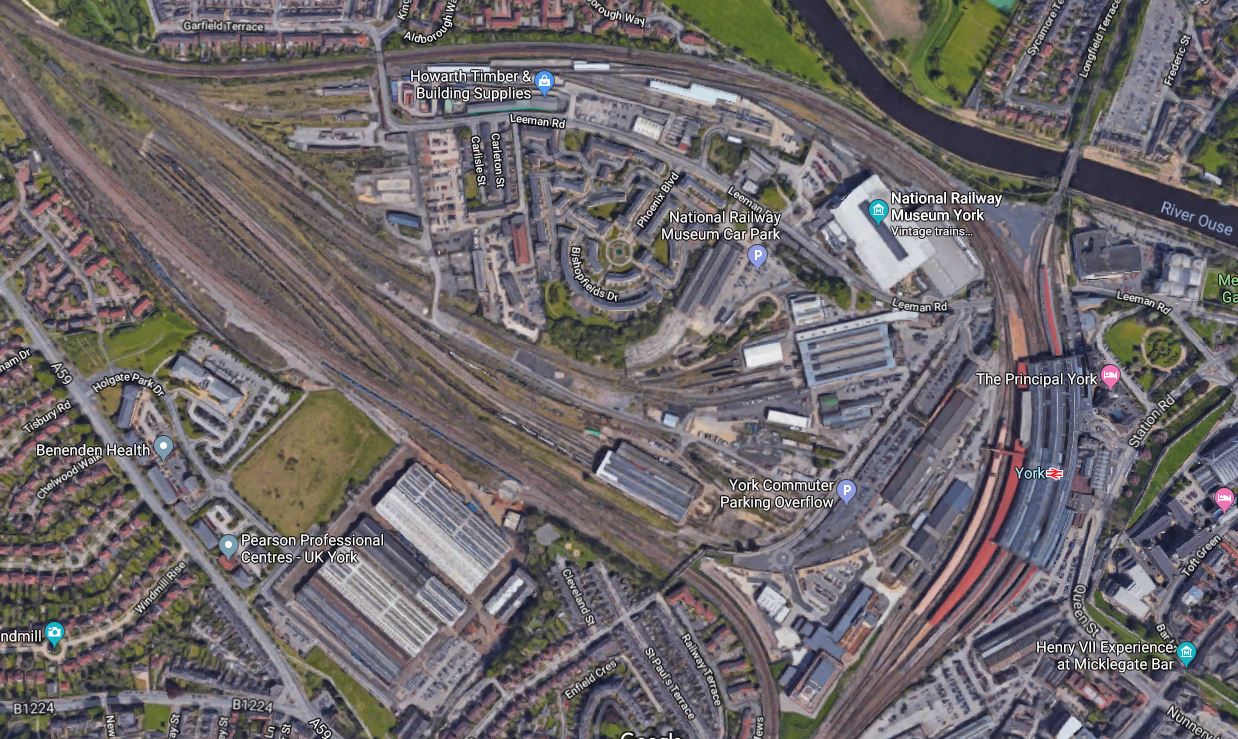
Note the large York station towards the right of the map.
This looks to me to be the sort of development we need to do more of in this country.
More Thoughts On Aberdeen Crossrail
In A Crossrail For Aberdeen, I put down my initial thoughts for Aberdeen Crossrail.
Now that I’ve been to Aberdeen and travelled on most of the Aberdeen Crossrail route between Inverurie and Montrose stations, I can add more thoughts.
I shall express my thoughts in generally a Southerly direction.
Inverurie Station
Currently, this is a two-platform station on a passing loop.
This picture gives a flavour of the station, which is Grade B Listed.
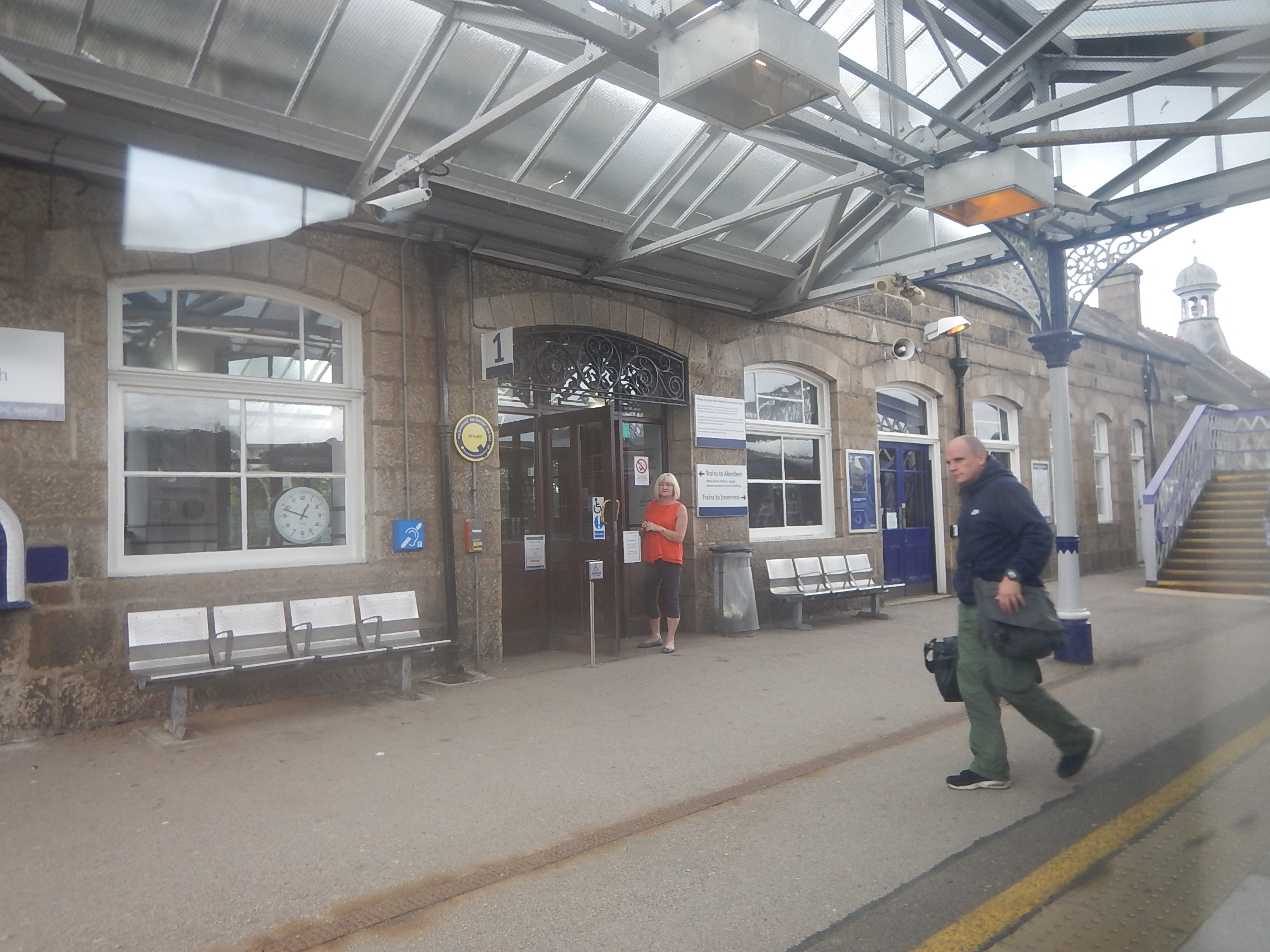
You can just see, the rather elderly iron footbridge across the tracks.
I suspect that platform usage will be as follows.
- Platform 1 – All through trains to and from the West and Inverness.
- Platform 2 – All trains starting or terminating at Inverurie.
If platform 2 is to be in regular use, then there will be pressure to improve the footbridge.
Double Track From Inverurie To Aberdeen
Most of this section seems to be single track, with passing loops at Inverurie and Dyce stations.
The only difficult bit is probably where the track goes under the new Aberdeen Western By-Pass.
This Google Map shows where they cross to the West of Dyce station.
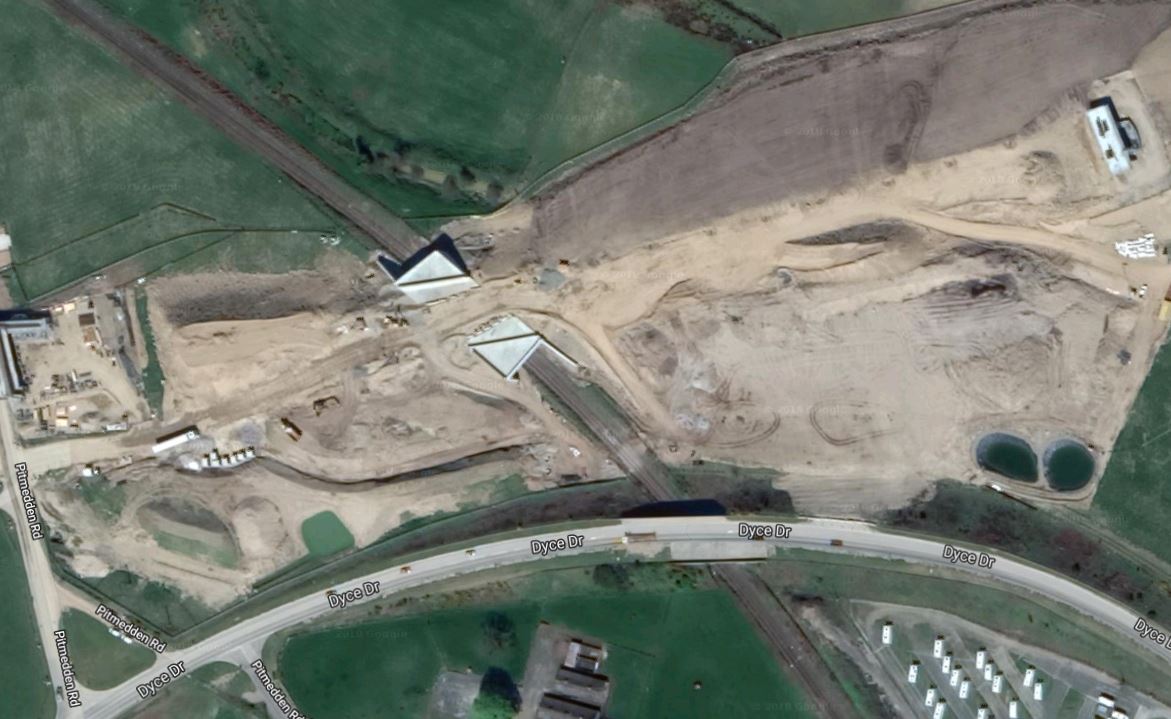
The difficulty is not the engineering, but the insolvency of Carrilion, who were the contractor for the road.
Dyce Station
These pictures show Dyce station, where I changed from train to bus.
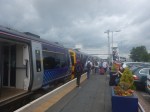
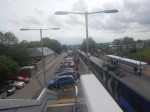
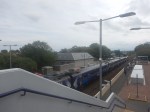
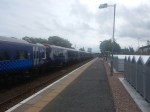
I’m pretty sure that once the track is complete, Dyce station will only need a small amount of work.
Aberdeen Station
Aberdeen station is not only a transport hub with a bus station, but it is also connected directly to the Union Square development.
It is certainly ready for Aberdeen Crossrail.
InterCity 125s
In my travels up and down between, Aberdeen, Montrose, Stonehaven and Dundee, it surprised me, how many journeys were made on an InterCity 125.
I’ve read somewhere, that one of the reasons, ScotRail are bringing in shortened InterCity 125s, is that passengers tend to use these faster trains on journeys like those between Stonehaven and Aberdeen.
Although the shorterned InterCity 125s will be limited to 100 mph, their bags of grunt, will mean good acceleration and surely faster times between Aberdeen and Dundee, Edinburgh, Glasgow and Stirling.
Trains For Aberdeen Crossrail
I timed the InterCity 125s at 100 mph on large sections of the route between Aberdeen and Montrose, as this picture of the SpeedView App on my phone shows.
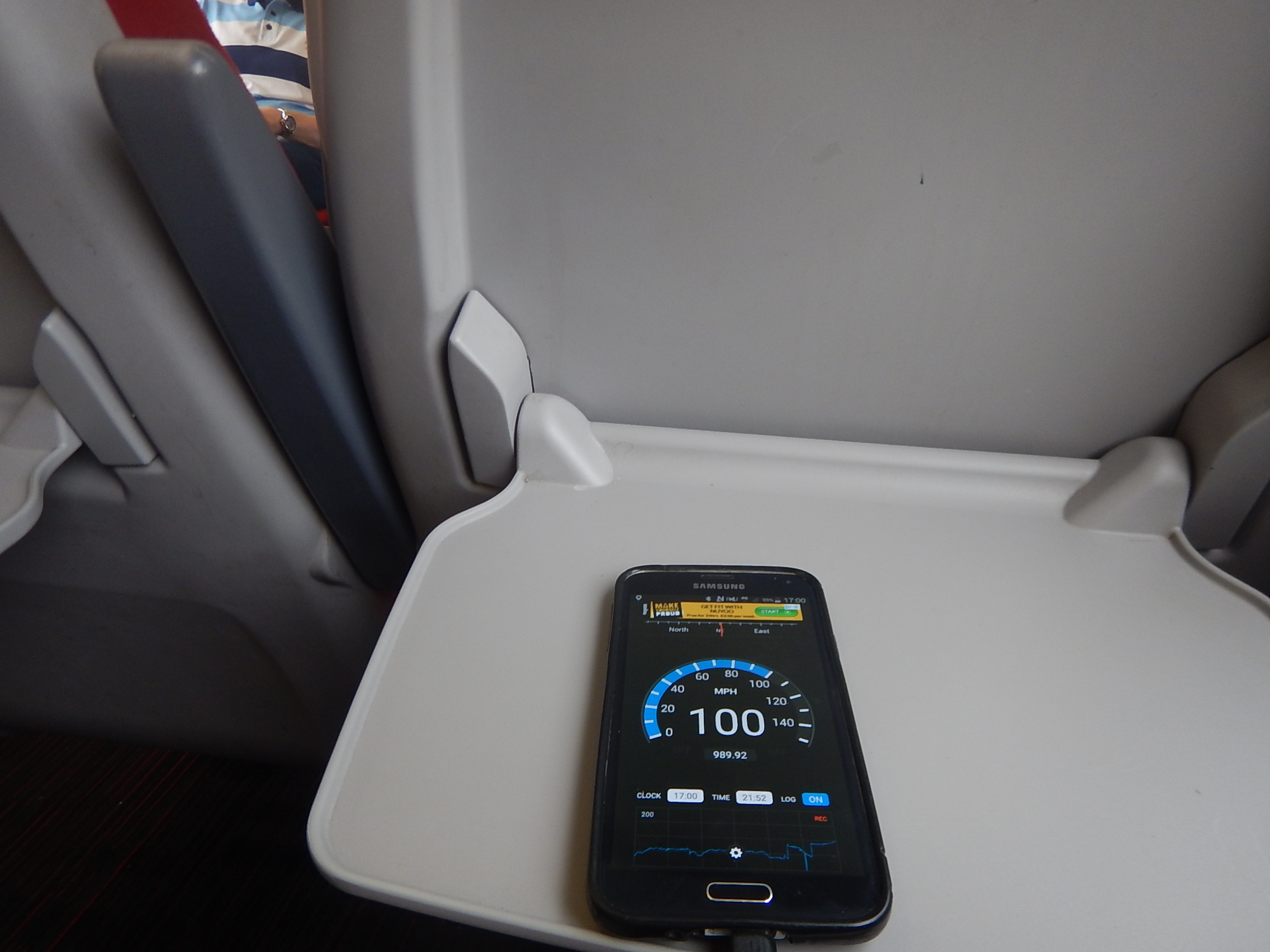
I think this means, that any trains working passenger services on the Edinburgh-Aberdeen and Glasgow-Aberdeen Lines must be capable of continuous operation at 100 mph.
As Wikipedia gives the operating speeds of both lines as being this figure, it does appear that Aberdeen Crossrail will be a fast local service, very much in line with the performance of services from London to Basingstoke, Brighton, Chelmsford and Oxford.
Initially, I suspect that ScotRail will be using Class 170 trains to provide the stopping service on Aberedeen Crossrail. Class 158 trains could also provide the service, but their 90 mph operating speed may not be enough.
ScotRail certainly have enough Class 170 trains, but I suspect that running two-car trains between Montrose and Inverurie stations, which stop everywhere will not have enough capacity. So a pair of trains will need to be used for each service.
In A Crossrail for Aberdeen, I said this under Frequency Issues.
The route of Inverrurie to Montrose has been deliberately chosen.
- Inverurie to Aberdeen takes around 23 minutes.
- Montrose to Aberdeen takes around 35 minutes.
So with slightly faster trains and line speed, than currently used, it should be possible for a train to go from Inverurie to Montrose and back in two hours to include a few minutes to turn the train round.
A two hour round trip means that a train leaving Inverurie at say 06:00 in the morning, will if all goes well, be back in Inverurie to form the 08:00 train.
How convenient is that?
This means that one tph will need two trains, two trph will need four trains and four tph will need eight trains.
These figures would be doubled if four-car trains were to be run on the route.
I feel that four-car trains will be needed on all services on Aberdeen Crossrail, if some of the passenger loading I saw, were to increase. As it surely will do, if they have a more convenient and much better quality service.
Passengers will also see the lots of seats on the shortened InterCity 125s, speeding past and will want some of that.
Two two-car trains working as a four-car train can provide the capacity, but in my view they are not what passengers want, as they can’t circulate in the train to find a preferred seat.
I also think, that at least two tph should run between Montrose and Inverurie stopping at all stations.
This would require four four-car trains.
ScotRail doesn’t at present have any suitable four-car trains.
Will It Be Hydrogen Trains For Aberdeen Crossrail?
Trains will need to be independently powered, as I think it unlikely that the route will be electrified.
I’m sure that CAF, Stadler or another manufacturer, will be happy to supply a small fleet of four-car diesel trains.
But would Abellio want to introduce more diesel trains, when they have enough Class 170 trains to provide a pretty good four-car service
Class 769 trains, which are bi-mode could be used, but they only do around 90 mph on diesel.
I am led to the conclusion, that the only suitable train available to a reasonable time-scale will be Alstom’s proposed conversion of a Class 321 train, running on hydrogen.
- The trains are capable of 100 mph using electric power.
- I would be very surprised if these trains couldn’t do 100 mph on hydrogen power.
- The new interiors fitted under the Renatus project, are a quality upgrade, as I said in A Class 321 Renatus.
- The trains could be available from 2020.
There is plenty of wind in the Aberdeen area to generate the hydrogen.
Conclusion
Aberdeen Crossrail will become a two trains per hour service using four-car trains.
I wouldn’t be surprised if those trains are Alstom’s Class 321 trains, powered by hydrogen.
 The Anonymous Widower