Reading And Oxford – 10th June 2023
Yesterday, after breakfast on Moorgate, I went for an explore at the Western end of the Elizabeth Line.
My aim was to change at Reading for Oxford and then have a bit of an explore in the University City.
These are my observations and thoughts.
Changing Trains At Reading
There are two trains per hour between Liverpool Street and Reading station, but at the Moorgate end of Liverpool Street station, there is no way of buying a ticket, that would get me between Reading and Oxford. To make things more complicated, I needed to be quick with my change at Reading, as I only had a few minutes before the next Oxford train left Reading.
In the end I had to leave Reading station and walk across the concourse in front of the station.




O then bought a ticket in a machine and then re-entered the station.
Great Western Railway can do better.
In Germany, there would be a ticket machine inside the barriers for those changing trains. But we never do that!
In the end, I missed my train and had to wait thirty minutes for a very crowded London Paddington to Oxford train.
Electrification At Oxford
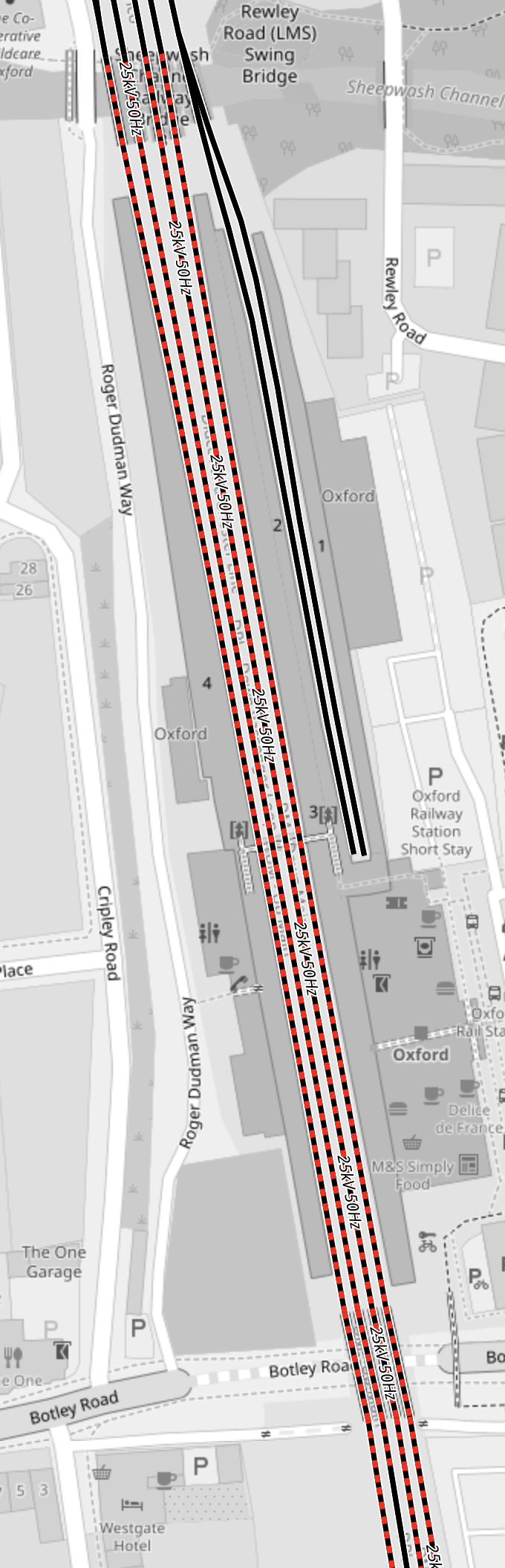
This map from OpenRailwayMap shows the planned electrification at Oxford station.
Note.
- The four through lines are shown in dotted red-and-black, which indicates, that they will be electrified with 25 KVAC overhead electrification.
- The proposed electrification continues all the way to Didcot Parkway station on the map.
- The two black tracks are the unelectrified platforms for Chiltern and East West Railway services.
But the proposed electrification stops just outside the station. Why?
Great Western Railway Services Beyond Oxford
Great Western Railway run an hourly service to Great Malvern, which according to Wikipedia terminates as follows.
- 4 trains per day continue to Hereford calling at Colwall and Ledbury.
- 1 train per day terminates at Worcester Shrub Hill.
- 4 trains per day terminate at Worcester Foregate Street.
So what are the distances of these stations from Oxford?
- Great Malvern – 65.6 miles
- Hereford – 86.3 miles
- Worcester Foregate Street – 57.6 miles
- Worcester Shrub Hill – 57.2 miles
I suspect that one version of the Hitachi Intercity Tri-Mode Battery Train, which is shown in the infographic below
could handle all these distances.

After the Oxford and Didcot Parkway electrification is complete, trains will arrive at Oxford station with a full battery.
But how would the batteries be recharged for the journey back to Oxford?
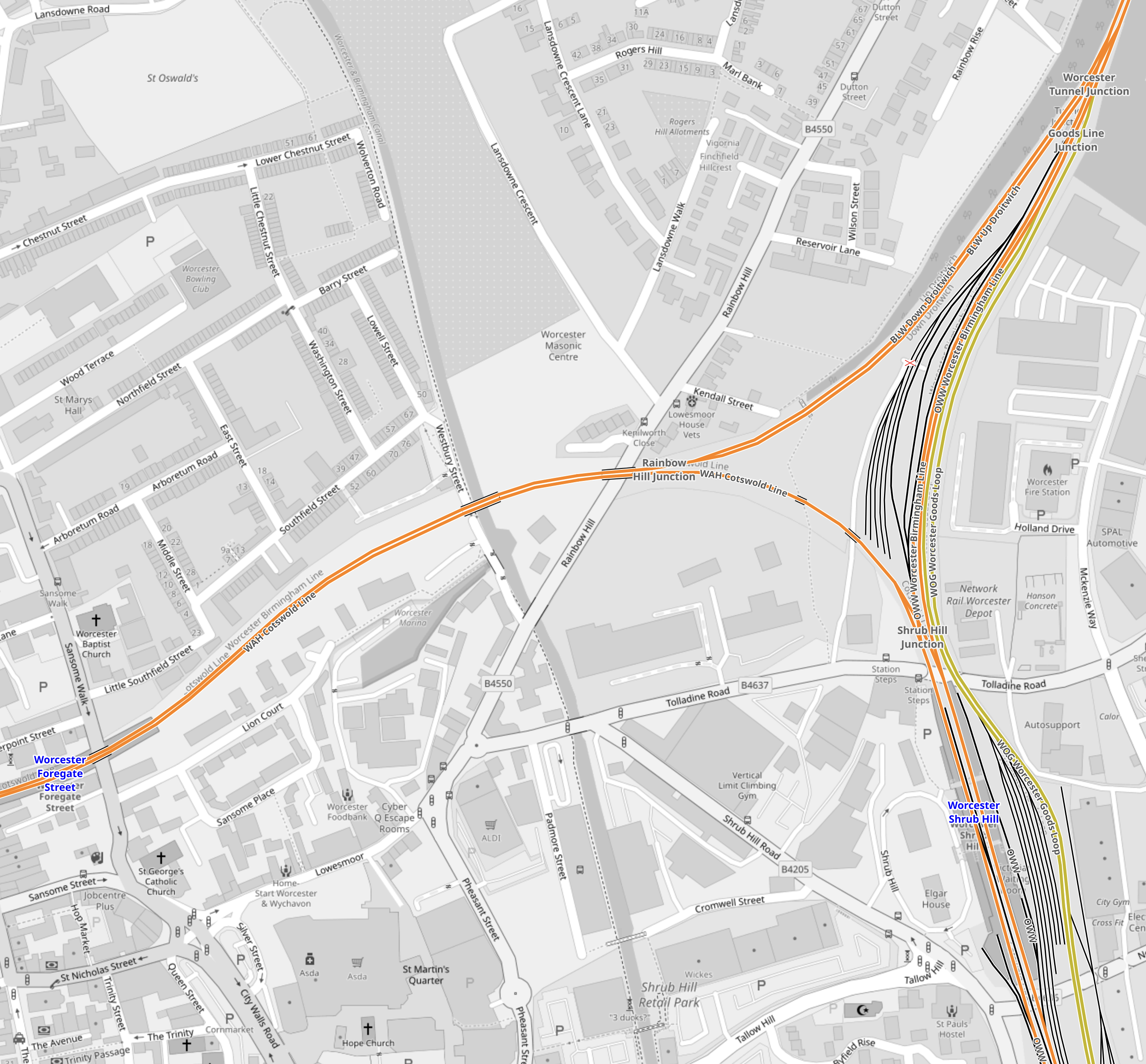
This map from OpenRailwayMap shows the tracks at Worcester.
Note.
- Trains to and from Oxford, use the tracks in the South-East corner of the map.
- Trains to and from Birmingham, use the tracks in the North -East corner of the map.
- Trains to and from Great Malvern and Hereford, use the tracks in the South-West corner of the map.
I suspect that some selective electrification would be able to charge the trains.
Trains take around twenty minutes to go between Great Malvern and Worcester Shrub Hill via Worcester Foregate Street.
Electrifying this 8.5 mile section would surely enable the following.
- Trains to leave Worcester Shrub Hill for Oxford with a full battery.
- Trains to leave Great Malvern for Hereford with a full battery.
- As Hereford and Great Malvern are only 20.7 miles apart, I suspect a return trip without a recharge is possible.
- Trains terminating at Worcester Shrub Hill and Worcester Foregate Street to be fully recharged before travelling back to Oxford.
Other services to and from the Worcester stations could also be run by battery-electric trains.
As Worcester Shrub Hill and Oxford stations are only 57.2 miles and well within the capabilities of most battery-electric trains, there would be no need to electrify the route.
I may of course, be wrong about the length and position of the electrification at Worcester, but this could be just one of many solutions using partial electrification.
Does this explain the stopping of the proposed electrification at Oxford?
In addition, there must be marketing opportunities in running a battery-electric service to Hereford and Worcester.
The Bay Platforms At Oxford Station
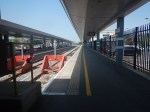
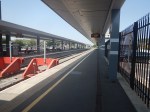
These pictures show the two North facing bay platforms 1 and 2 at Oxford station.

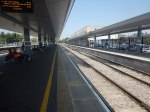
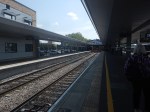
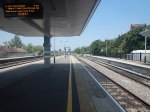
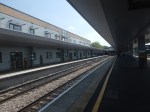
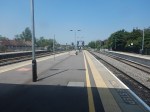
Note.
- The platforms are not electrified.
- They appear to be easily updated with electrification to be able to charge Chiltern and East West Railway trains.
- Marylebone is only 66.7 miles from Oxford.
- Milton Keynes Central is just over 40 miles from Oxford.
- Bedford is just under 60 miles from Oxford.
I suspect that services from Oxford to Bedford, Marylebone and Milton Keynes can all be run by battery-electric trains.
 The Anonymous Widower
Electrification to Oxford was originally part of GWR electrification, but was cancelled, along with Bath and Bristol. OpenRailwayMap uses the OpenStreetMap data, which is entirely maintained by volunteers. The Oxford section should be changed so it reflects the current situation, but presumably whoever entered the electrification data has forgotten about it/has no time/can’t be bothered. If you have time, you can edit this yourself (though I would warn that there’s quite a learning curve for using the editor – I’ve made quite a few changes myself).
Southampton-Oxford-Birmingham and Birmingham-Bristol are main lines (intercity) and in most European countries would be electrified (along with the loop via Worcester). Oxford-Worcester would then easily be within battery range. However, I’m not holding my breath.
Comment by Peter Robins | June 11, 2023 |
It was all to be electrified as the freight spine but NR really failed the industry in its execution of GWR electrification learning NO lesson from the WCRM upgrade – what was the common denominator Bechtel.
Comment by Nicholas Lewis | June 11, 2023 |
Many trains in Germany and other parts of Europe have ticket machines on the train!
You could have bought online as well.
Comment by Nicholas Lewis | June 11, 2023 |
I just caught a train in Germany a while back, and went to the machine to buy a ticket, but there was such a long queue, my destination had arrived before I got to the front of it.
I buy pretty much everything online these days, as it’s so much easier and you can buy much cheaper tickets that way. That applies to other countries too. Ticket machines in other countries tend to be much more helpful than British ones too, giving you the times, connections, costs to help you choose. British ones are generally really poor.
Comment by Peter Robins | June 11, 2023 |
As I often start my day, in a cafe, reading the day’s news and messages, I often don’t decide, where I’m going until mid-morning. As I only ever buy on-line tickets from my computer ay home and the cafe I use is connected to most main line stations in London, I prefer to use a ticket machine.
Also with LNER’s new machines I can have on-line prices bought in the fifteen minutes before the train leaves.
Comment by AnonW | June 11, 2023 |
I think UK railways generally don’t have ticket machines on the “paid for” side of gated stations to prevent fare evasion. It would require very careful configuration of the machine specific to the station to mitigate potential evasion opportunities.
And of course the industry wants you to buy tickets digitally anyway to reduce ticketing costs and make penalty fares easier to enforce (when joining from an unstaffed station, with broken or no ticket machines).
Comment by MilesT | June 11, 2023 |
I wouldn’t pay too much attention to that map of Oxford station, as it doesn’t show the new loop line that’s being constructed to turn the down platform into an island. And not before time; it should have been done a century or so earlier. I’d imagine the electrified tracks will extend into the carriage sidings just north of the station on the down side. As for the Chiltern trains, why waste time with battery units? Just get on and electrify it properly, as any other country would do! Wind-up trains are all very well for little branches (eg Henley) where the cost of masts and wires wouldn’t be justified, but the busy route into Marylebone deserves a lot better.
Comment by Stephen Spark | June 11, 2023 |
The electrification argument, is never as simple as you think. In East Anglia, I’ve had two wasted days, because gangs had stolen the overhead wires.
And the Nimbys don’t like them. I used to know someone, whose son was a lawyer working on electrification for Network Rail. He got large numbers of abusive messages. Look what happened at that bridge in Oxfordshire, where the Nimbys won, just as they have over onshore wind turbines.
In the 1980s, my software was used by British Rail to try and get a handle on problems with signalling cable breaks.
Some of the stories were unbelievable.
Comment by AnonW | June 11, 2023 |
Why doesn’t the rest of (electrified) Europe suffer from these problems of cable theft, nimby complaints (an argument in favour of SR third rail?!) etc? On the ticketing issue, why can on-train and on-platform ticket machines and card-readers work perfectly well but not here? Plenty of similar questions, of course. Why is it so difficult for Britain’s railways to learn lessons or to adopt equipment and policies that have been tried & tested on the Continent? This blindness to good practice because it’s ‘foreign’ is a long-standing issue within the culture of Britain’s railways.
Comment by Stephen Spark | June 11, 2023
Theft and nimbies are surely relatively minor matters though. The main problems with track electrification are surely (a) cost and (b) time taken. NR came up with a decarbonisation plan that involved electrifying a large number of tracks, but they seem to have now realised that the money needed simply isn’t there. In any case, at their current rate, this plan wouldn’t be finished till the end of the century, and I’d agree with Stephen that NR needs to learn lessons from other countries on speeding up the process. Scotland has been steadily pursuing track electrification, but the STK involved is relatively small, as the population is heavily concentrated in the central lowlands, extending up the coast to Aberdeen. Wales is the same: most live in the SE, and most of the rest in a small belt along the N coast.
England’s STK, though, is far greater, and decarbonisation on most routes can be achieved with batteries far faster and at far less cost than track electrification. This moves the cost from NR to the rolling stock, but under GBR this should be the same entity. I don’t however see the two as exclusive. Aim to electrify the main lines (tbd) at some point as funds permit, and have a priority list for this. But in the meantime install batteries on as many routes as possible ASAP. As tracks are electrified, either the battery trains can be moved, or the batteries removed.
Comment by Peter Robins | June 12, 2023
So the rest of us have to be inconvenienced because of the small minority of fare evaders? Is fare evasion not a problem in Germany?
Comment by JohnC | June 11, 2023 |
I wouldn’t know! But on my travels around Germany, I’ve bought tickets on the platform many times. Their machines are also useful for planning what I want to do the next day.
Comment by AnonW | June 11, 2023 |
Germany generally operates a model of assumed purchase with a proof, and has bigger teams of revenue protection officers to provide sufficient fear of enforcement.
The problem is that ticket machines at origin are not enabled to be flexible in fare issuance (and there is a group action court case ongoing abut boundary fares which is in part about this issue)/are too complicated for some to use.
The answer of course is German style regional rail passes (monthly), maybe with a regional day option, a bit like the travelcard (which TfL is trying to remove).
Comment by MilesT | June 12, 2023 |
[…] as I have calculated in Reading And Oxford – 10th June 2023, that to run battery-electric trains to Hereford needs a length of electrification between […]
Pingback by A Fraught Journey Between Worcester Shrub Hill And Reading Stations « The Anonymous Widower | June 13, 2023 |