Hochtief Brought In For Crossrail Station Construction Work
The title of this post is the same as that of this article on Building.
This is the first two paragraphs.
Hochtief has been handed a £40m contract to carry out improvement works at three stations in west London that will be part of the Crossrail route when it opens.
In a deal published to the Official Journal, the German contractor has been chosen to carry out improvement work at Hayes and Harlington, Southall and West Drayton stations.
The article then goes on to give a detailed report oif the state of the Crossrail stations in the central section.
In the article, the new Crossrail boss; Mark Wild was also very forthcoming about the line’s problem.
My Project Management experience, says to me, that the standard of planning and reporting on the project wasn’t of the best.
When Are We Going To Get Some Rain?
It’s now over a month since I experienced any rain and I feel totally crap, with a very dry month and I suspect dry lungs as well.
I drinking lots of 0.5% alcohol beer, tea and lemonade, but it all seems to make no difference!
I need a right royal downpour, so I can walk around in it.
Thoughts On The West London Orbital Railway At West Hampstead Thameslink Station
I passed through West Hampstead Thameslink station today and took some pictures of the two tracks that run through the station on the South side of the four tracks of the Midland Main Line.
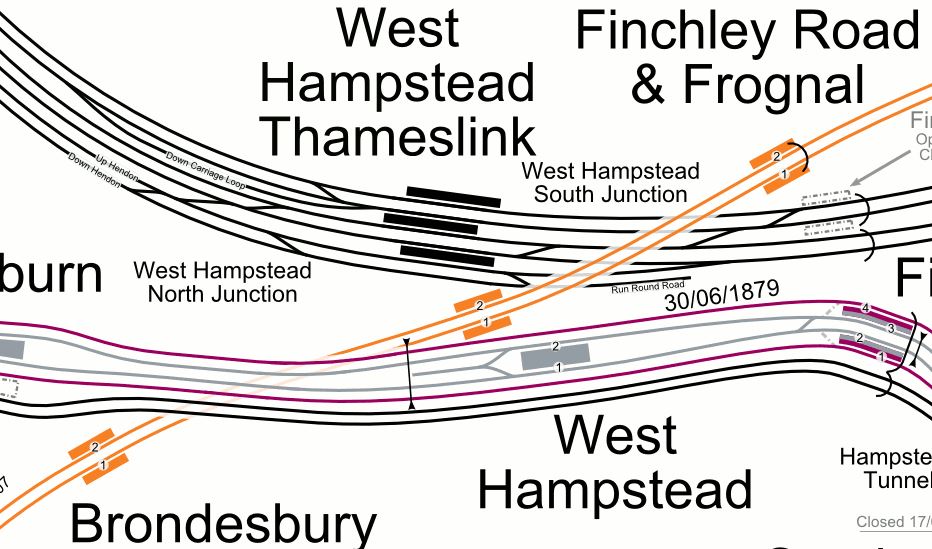
This map from carto.metro.free.fr shows the lines through the various stations at West Hampstead.
Note.
- The six tracks shown in black through West Hampstead Thameslink station.
- The Northernmost four tracks are those of the Midland Main Line.
- The Southernmost pair are labelled Up Hendon and Down Hendon and lead to the the Dudding Hill Line. via Cricklewood station.
- There is also a short track which is labelled Run Round Road, which could be useful to reverse trains on the West London Orbital Railway.
- The six tracks are crossed by the North London Line, which is shown in orange.
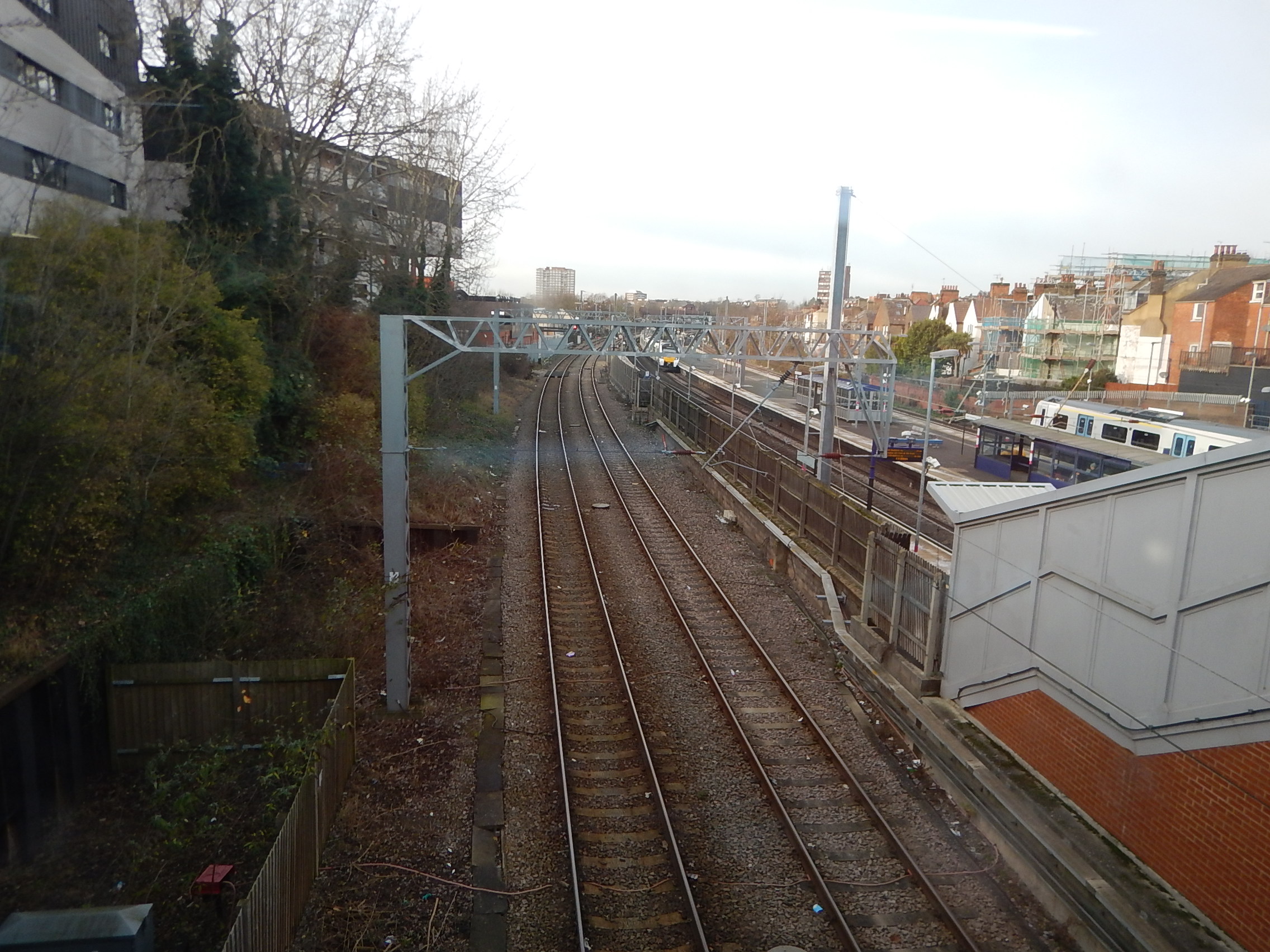
This picture shows the two Hendon Lines looking away from London from the footbridge of the station.
Note.
- The Down Hendon is on the left, with the Up Hendon on the right.
- Both tracks have 25 KVAC overhead electrification.
- The bridge, from which I took the picture, is step-free.
As there are numerous crossovers on the approach to the station, I feel that it would be possible to build a platform on the Up Hendon line.
- The platform would share an island and access with the existing Platform 4.
- It would be fully step-free.
- Electrification in the platform could recharge an electric train, that was using batteries.
- A single platform could handle the required four trains per hour (tph)
This picture shows the two Hendon Lines looking towards London from the footbridge of the station.
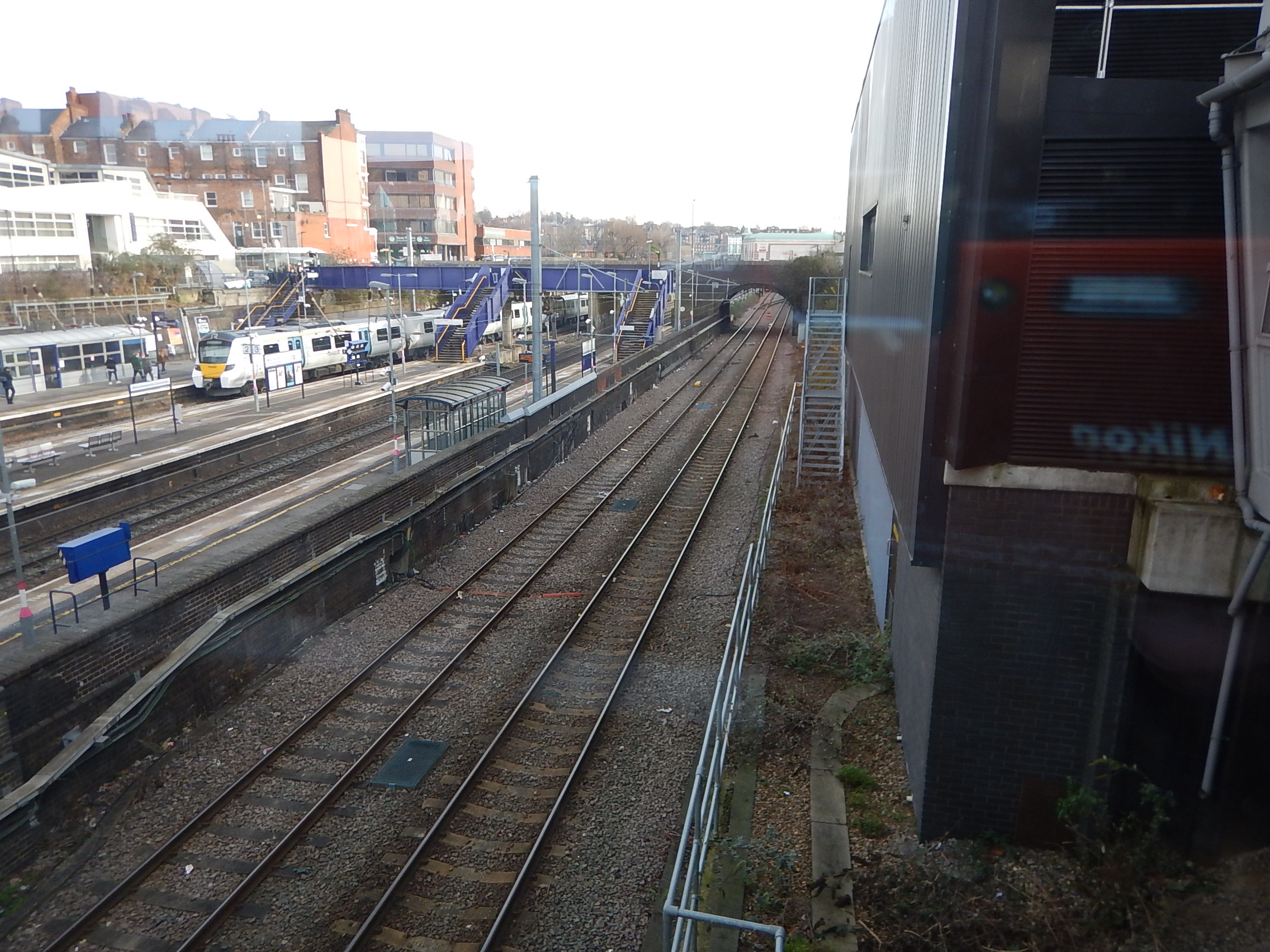
It would appear that if required the platform could be made long enough for an eight-car train or built on the Down Hendon line.
There are certainly possibilities to make the interchange between Thameslink and the West London Orbital Railway a very easy one, that is totally step-free.
Will The West London Orbital Railway Take Passengers From The North London Line?
I suspect that there are passengers, who will swap from the the North London Line to the West London Orbital Railway.
They will do it because the new route will be more convenient.
This will be no bad thing, as the North London Line can get crowded at times. And it will only get more so in the future!
Are Platforms Being Extended On The North London Line?
At West Hampstead station today, I took this picture.
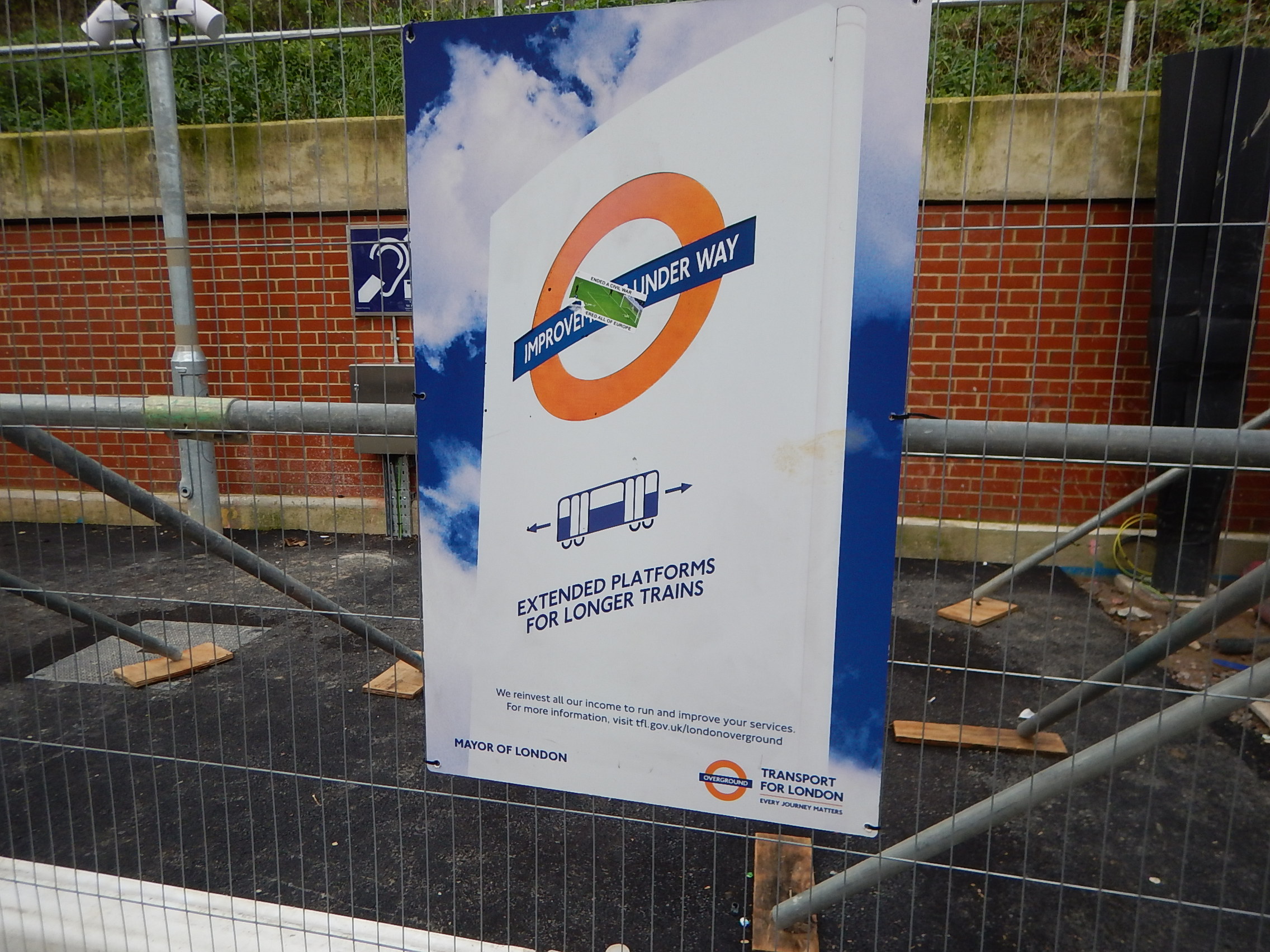
I have not found any reference to platform extensions on the North London Line and West Hampstead station in particular.
However I did find an answer from the Mayor to this question.
Further to your answer to Question No: 507 / 2013 and 1039 / 2013 is the Department for Transport ‘Access for All’ funding allocated for the financial year 2012/13 still guaranteed for the work needed to make this station step free; when will work commence and when will it be completed in making the station step free; on what do you base your assertion that local stakeholders are supportive; which local stakeholders do you claim are of this mind; and what information has been disseminated locally, to whom and in what manner, on the present proposed plan?
This was the answer.
I am determined to provide step-free access (SFA) at West Hampstead, but it is important that any scheme taken forward maximises benefits for passengers and ensures value for money.
Consequently, TfL has decided not to proceed with a standalone SFA scheme, but to take some extra time to ensure that SFA works can be integrated with further enhancements which are necessary at West Hampstead station – including platform extensions for the new 5-car service, work to reduce congestion in the ticket hall, and integration with an adjacent development. This will reduce costs, increase benefits and keep passenger disruption to a minimum.
As a result, TfL will re-apply for Access for All funding in Control Period 5 next year. Work on site could start in 2015.
It looks like the platform extension work was delayed until the work was carried out to make the station step-free.
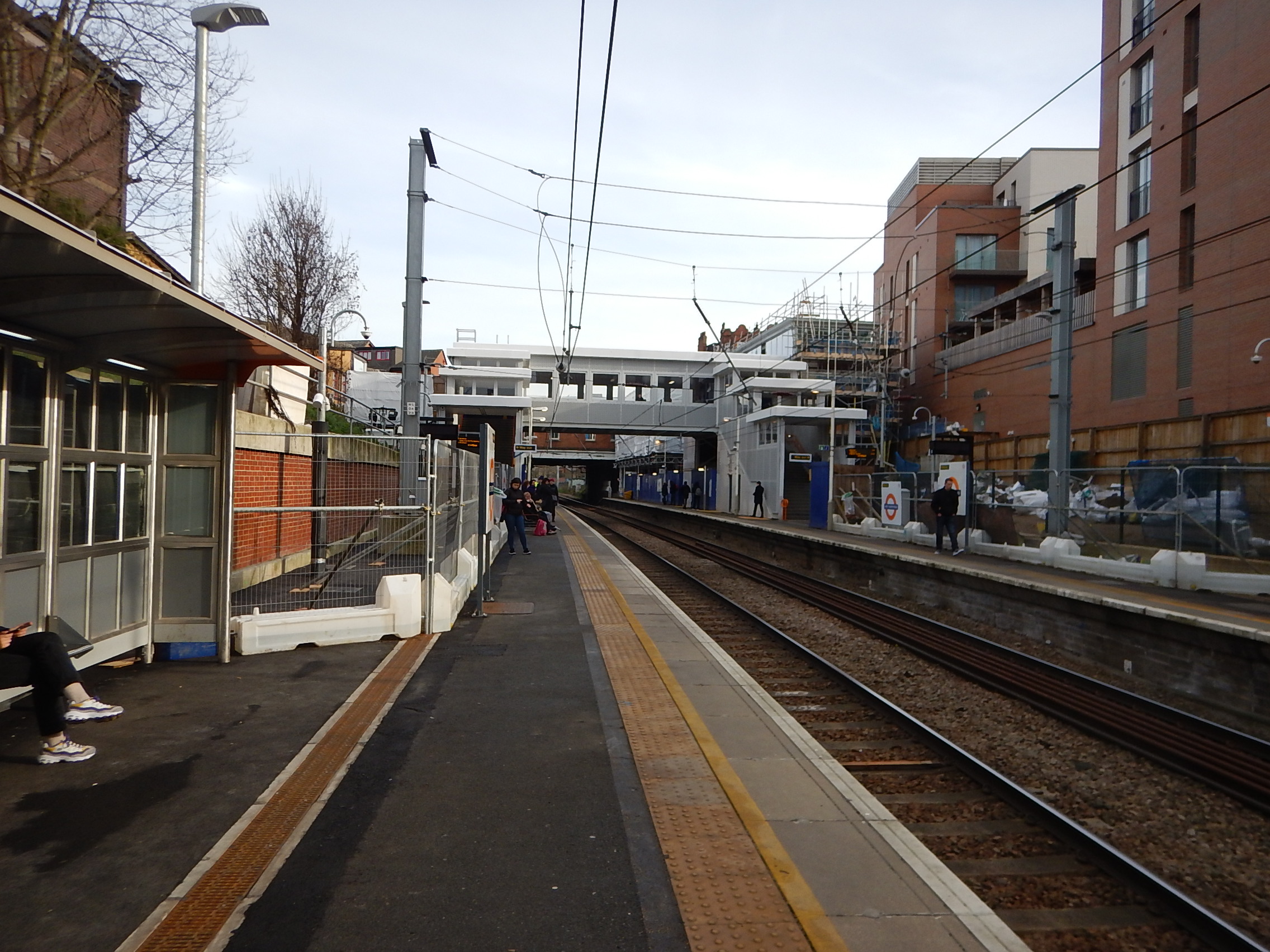
The picture shows that the work at the station appears to be nearing completion.
When my train arrived, it appeared that the platforms are sized for five-car trains.
Will these platforms be long enough, when new stations open to connect the North London Line to High Speed Two and Crossrail at Old Oak Common station.
The Structure Of Artemis
Some claim, that Artemis was the first relational database. I don’t! Although, I must admit, it would be nice to have invented something.
When the system was being designed, we realised that we needed to use a small computer that could fit into a desk. This would differentiate us from the competition, which was inevitably based on large mainframe computers like the IBM 360.
We all had experience of dial-up time-sharing computing using a teletype, but we knew of the limitations of dial-up lines and wanted a project management system, that could fit into a small office, possibly on-site or at a remote location.
In my mind, I had an image of a computer system like the IBM 1130, I’d used a few years earlier at Liverpool University.
This had a processor, a keyboard, some rudimentary data storage and a printer in a desk-sized unit.
I can remember drawing up a list of three possible computers, that could be used.
- Digital Equipment Corporation (DEC) – PDP-11.
- Data General(DG) – Nova ~(?)
- Hewlett-Packard (HP) – 2100
I think, we thought that the DEC would be favourite.
- It was the market leader in small computers.
- Our chairman, had spent a lot of money buying PDP-10 computers for his company; Time-Sharing Ltd.
- I had a lot of experience, with their Fortran compiler on the PDP-10 and it was very good.
But, they just didn’t want to know and felt our plan was an impossible dream!
DG tried hard, but to get the computing power, I estimated we would need, their offering would be expensive.
Luckily HP were more interested.
I remember the day, that their two salesmen, gave the Chairman and myself a presentation, by his swimming pool on a very hot summer’s day in possibly 1977 or 1978.
HP gave me a lot of help and I was able to use a machine at their premises in Wokingham to thoroughly test out the 21MX computer and its Fortran compiler.
We ended up using a computer with a specification like this.
- A 21MX processor.
- 64 Kb of memory
- A five megabyte hard disc, with a 5 megabyte removable disc.
- A VDU and a printer.
It all fitted into a custom-built desk, about the same size as a typical office desk.
I’d now got a computer and ~I could start to design Artemis.
All complicated software systems need access to some form of tables or arrays.
If you have ever used a spreadsheet program like Microsoft Excel seriously, you’ll know that you can create a series of worksheets in a workbook.
But this was the 1970s and the first spreadsheet program; VisiCalc didn’t launch until 1979.
For Artemis, I needed arrays to hold the following during processing.
- The activities
- The events
- The calendar details
- The resource details
And I didn’t think small, so the maximum-sized project was going to be 16000 activities.
For a time, it looked as if, I would have to write a sophisticated database structure to access the data on the limited five megabyte hard discs.
But HP had just released a program possibly called DSMP, that could handle up to 16 tables of up to 16,000 records.
So I used this program to handle the data that I needed.
Activities
In a PERT network, activities are entered for each task in a project.
I used two tables for this. The main one held the activities themselves and a secondary one held details of the resources needed for the activity.
Both tables had a 16,000 limit.
Calendars
Artemis had a comprehensive calendar structure and these were stored in another table.
Each activity was linked to the appropriate calendar record.
Resources Available
Another table was used to list the resources available to a project.
Working Tables
One working table contained all the event names used by the activities.
Linking Them All Together
I used a variety of techniques to link these tables together.
In some cases, I used simple pointers, which used the record number, but in other cases, I wrote very sophisticated and fast software to generate the links on the fly. Incidentally, the algorithm was based on research I found in IBM’s library on the South Bank, that dated from the 1950s.
I had taken HP’s DSMP program and effectively created a relational structure, that created links as it needed them.
Building On The Original Structure
In my view, I made the right decisions technically, as it enabled the scope of Artemis to be expanded.
The Multi-User Version
This was designed in an alcohol-fuelled session with Nobby (Richard Nobbs), in either Suffolk or Amsterdam and basically involved Nobby creating a version of DSMP for HP’s multi-user operating system.
Linked Datasets
I was able to use the structure to create other tables in the projects.
Again the linking was on the fly and it greatly increased the applications of Artemis.
So Was Artemis A Relational Database?
It is true to say, that from the earliest days in the late 1970s, I used relational techniques deep in the program to link all of the data together.
Working on such a small computer, I had no choice!
Deep Insights Into Crossrail
London Reconnections is a web site, that often gives deep insights into rail projects in the London area.
Recently, they have published two articles about Crossrail.
I have read every word of both articles and feel that, the Project Management on Crossrail has been severely lacking.
If I go back to the days of Artemis, Project Managers were always using our innovative graphics to communicate all of the details of project costs and status to managers and stakeholders.
I can remember in one case, we were the bringers of terrible news about costs to a major company. One of our project managers had distilled a very large project to a series of graphics on a single sheet of A3 paper, so senior management couldn’t avoid our message.
Today, the company would probably shoot the messenger, but we went on to sell the company over a dozen systems.
I know nothing of modern Project Management systems, but surely they are more capable than Artemis, which was largely written by myself and others in the 1980s.
Network Rail And Project Management
This article on the Railway Gazette is entitled UK Railway News Round-Up.
This is a paragraph.
Network Rail has awarded The Knowledge Academy Ltd a framework contract to provide project management courses for its employees.
Have Network Rail finally accepted, that they have a project management problem?
How Will Class 710 Trains Access Willesden TMD?
This map from carto.metro.free.fr shows the track layout around Willesden TMD, where the Class 710 trains for the Gospel Oak to Barking Line (GOBLIN) will be stabled.
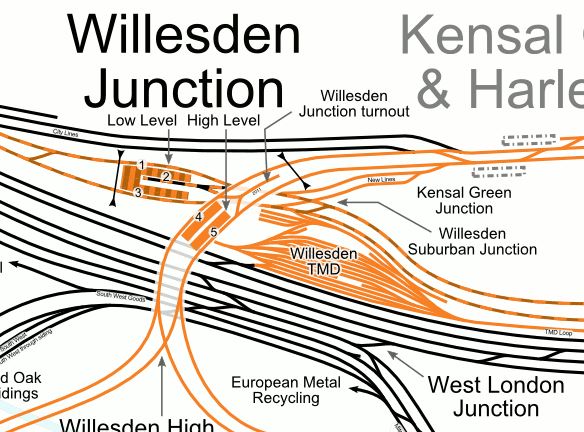
Note the following lines around Willesden TMD.
North London Line
The North London Line goes through platforms 4 and 5 at Willesden Junction station.
South of the station it splits, with the North London Line continuing to Richmond and the West London Line going to Clapham Junction.
North of the station the line continues to the East and at Gospel Oak station, the GOBLIN branches away.
The Bakerloo Line And Watford DC Line
The shared tracks of the Bakerloo Line and the Watford DC Line, which are shown in black/orange go through platforms 1 and 3 at Willesden Junction station.
To the East the tracks go towards Euston and to the West, they go towards Watford.
There is also a bay platform 2 in Willesden Junction station, which is shown in these pictures.

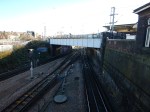
Note that is long enough to take a five-car Class 378 train and that it is also electrified with London Underground’s four-rail electrification.
Platform 2 To The North London Line to the East
Two tracks give a direct route from Platform 2 at Willesden Junction station to the Eastbound North London Line. greatkingrat says they are labelled “New Lines”
Looking from the train this morning, I don’t think this pair of tracks is electrified, so it doesn’t allow Platform 2 to be used to turn electric trains running on the North London Line.
I have seen Platform 2 used as a terminus, but the trains must use the electrified route via Primrose Hill.
After greatkingrat’s comment, I went back and had a second look.
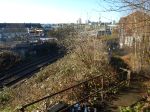
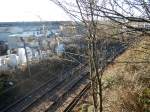
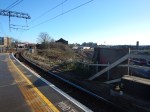
Note.
25 KVAC overhead electrification can be seen at the North London Line end of the tracks.
There is 750 VDC third-rail electrification at the Willesden
This Google Map shows, where the connecting tracks join the Bakerloo/Watford DC Line.
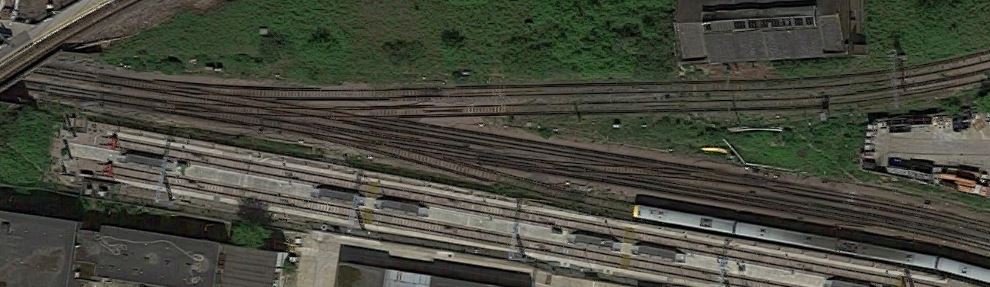
It does appear that the third-rail and a couple of gantries are visible.
- Trains leaving Platform 2 should be able to use third-rail electrification until they are under the overhead wires, when they would change over.
- Trains arriving at Platform 2 would use overhead wires, as far as they could and then swap to third-rail.
If this route is to be used by new Class 710 trains, I’m sure it will get more than adequate testing.
Entering Or Leaving Willesden TMD
I am not sure, how Class 378 trains working the Watford DC Line service transfer to and from Willesden TMD, but it does appear there are some convenient crossovers.
I have looked at Real Time Trains and early in the morning of the 9th of January, these trains called at Platform 2 at Willesden Junction station, that originated at Willesden TMD.
- 05:02 – Willesden TMD to Barking
- 05:15 – Willesden TMD to Upper Holloway
- 05:23 – Willesden TMD to Stratford via Primrose Hill
- 05:56 – Willesden TMD to Kensal Green
- 06:17 – Willesden TMD to Euston
There were also other services, which appeared to be going between Euston and Stratford.
It looks to me that trains were being positioned to start service and that the bay platform 2 at Willesden Junction station is used to reverse trains, coming out of the depot.
It also appears that some trains use the electrified route to the East via Primrose Hill.
The 05:02 and 05:15 are Class 172 trains going to the GOBLIN, and as they are diesel trains, they use the pair of direct tracks, that connect to Platform 2.
How Will Class 710 Trains Go Between the GOBLIN And Willesden TMD?
As the Class 710 trains will be dual voltage trains, they should be able to take the direct route, which has both types of electrification and requires a change at some point.
They can also take a roundabout route possibly via Primrose Hill and using Platform 2 at Willesden Junction station to access the depot.
But I suspect Class 710 trains will have battery power.
This would enable them to take the same short cut, but without using the electrification, between Platform 2 and the North London Line, that the Class 172 trains use currently.
Dual-voltage Class 378 trains should be able to use the short route.
Conclusion
Fitting batteries to Class 710 trains, would make their operation on the GOBLIN, a lot easier, as they could use the batteries to get in and out of Willesden TMD.
Could it be that the software that handles power and charges and uses the batteries, is the unreliable software?
This article on Rail Magazine is entitled Gospel Oak-Barking Fleet Plan Remains Unclear.
This is a paragraph.
London Overground was due to put new Bombardier Class 710 electric multiple units into traffic on the route from March 2018, with a full rollout by May. However, problems with the Train Control Management System (TCMS) has so far prevented this.
I also think that for a train to work the GOBLIN and be stabled at Willesden TMD, it must be a dual-voltage train or have a capability to run on batteries.
 The Anonymous Widower