Football In The Fog
Surprisingly, the strongest team on the pitch; the fog, didn’t win this game.


The guy next to me was a teacher, whose duties included taking games, Never having been any good at ball games, I wouldn’t know, but he felt it was very difficult out there.
Strangely, Ipswich seemed to improve, when they substituted the blonde-harired Williams and two other lighter-skinned players, with three of a much darker hue in Bru, McGoldrick and Ward.
Perhaps, they were more difficult to pick out. After all, McGoldrick used his head to create one goal and score the other.
Passing The Ordsall Chord Site
The first set of pictures were taken on Friday between Deansgate and Salford Cresent stations show the current state of the bridge across the River Irwell.


I took these pictures were taken on the Saturday, as my train from Liverpool went between Eccles and Manchester Victoria stations and then from a second train from Manchester Victoria on its way to Wigan via Salford Central and Salford C resent stations.
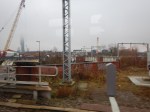
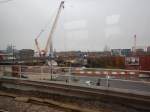


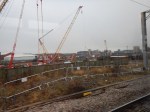
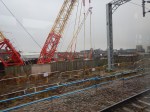

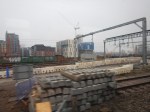
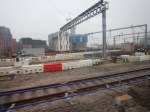

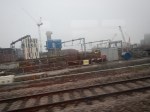
Note.
- The first train was the 11:20 from Liverpool Lime Street to Manchester Victoria.
- The second train was from Manchester Victoria to Wigan Wallgate.
- The biggest crane on the site has a capacity of 1,350 tinnes and is the largest mobile crane in the country.
I’ll be going back, when it all reopens to have a look.
Probably the best way to get the pictures is to go to Manchester on a sunny day, buy a Lancashire Day Ranger ticket and constatntly shuttle back and forwards across the various lines.
Bidston Station And The Borderlands Line
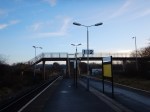
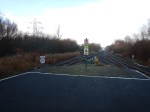
Whilst in Liverpool, I took the Wirral Line to Bidston station, where the Borderlands Line to Wrexham Central station connects to the Merseyrail third-rail network.
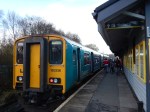


This Google Map shows the location of the station.
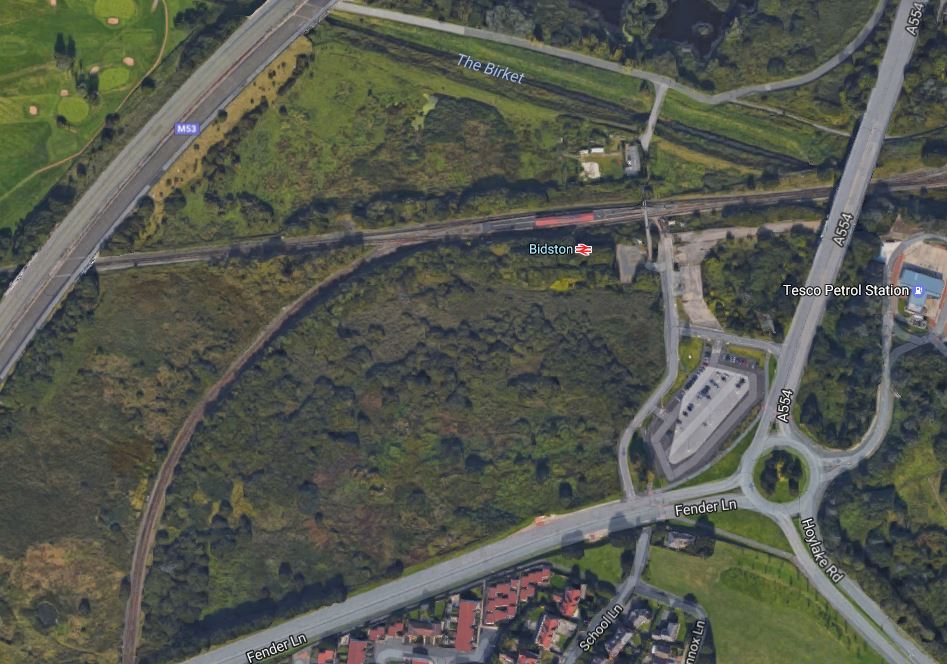
Bidston Station
Some things surprised me at Bidston station.
- The station had the feeling of a rural junction in deepest Lincolnshire or Devon, rather than one a few miles from the centre of one of the UK’s biggest cities.
- When the train arrived from Wrexham it was much busier than I expected.
- The junction between the two lines was laid out in lots of space.
- The state of the station, which considering its location was very good with a large waiting room.
I could also understand, why various bodies say that the Borderlans Line could be run by trains with an IPEMU capability or to put it simply – on-board energy storage or batteries. Wikipedia says this under Proposed Battery Trains for the line.
A trial of a converted Electrostar train using energy from overhead wires and batteries when on non-electrified sections of track was undertaken in January and February 2015 on the Mayflower line. The train can travel up to 60 miles on energy stored in the batteries also recharging the batteries via the overhead-wires when on electrified track, at stations and via brake regeneration. A month later in March 2015, the introduction of battery powered trains was proposed for the Borderlands line by Network Rail.
The document suggested that consideration had been given to electrification and to running services further into Birkenhead ceasing termination at Bidston for greater connectivity. However these options were expressed as offering low value for money. They proposed that using battery powered rolling stock precluding full electrification of the line, providing a cheaper method of increasing connectivity into the electrified Birkenhead and Liverpool sections of the Wirral line. From the document:
“In the longer term, potential deployment of rolling stock with the ability to operate on battery power for part of their journey may provide the ability in an affordable manner to improve the service offering between the Wrexham – Bidston route and Liverpool.
Trains could operate on batteries on unelectrified sections of the track and take power from an electric pick-up on the electrified sections. Adoption of these types of trains would preclude full line electrification.
My thoughts on this are as follows.
New Infrastructure
Obviously, I only looked at Bidston station, but it would appear that except for perhaps signalling and electrificastion changes, that the station could accept trains with an IPEMU-capability tomorrow.
For instance, there would need to be electrification for some distance down the Borderlands Line, so that a train arriving from that direction with low batteries, wou;dn’t get stalled, if another train had failed in the station.
I don’t know the answer, but as Merseyrail is an island of third-rail electrification, Merseyrail are probably capable of calling on competent third-rail experts, either in-house or from a regional contractor.
New Stations
Plans exist for new stations on the line.
Whether the line is fully-electrified or served by trains with an IPEMU-capability is irrelevant, with stations probably being designed to be suitable for either.
One suggestion is for a new station at Woodchurch close to Junction 3 of the M53.
This Google Map shows the motorway junction.
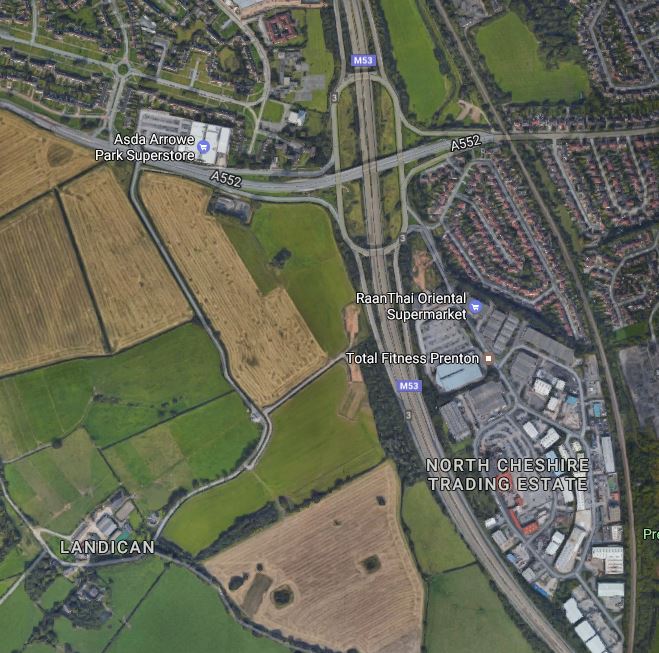
Junction 3 Of The M53
Note how, the Motorway and the Borderlands Line go either side of the North Cheshire Trading Estate.
There is also plans for a station at Deeside Industrial Park, which looks like it could have a railway line already.
Another possibility would be to improve Shotton station, so that it was a genuine interchange between the Borderlands Line and the North Wales Coast Line.
This Google Map shows the area.
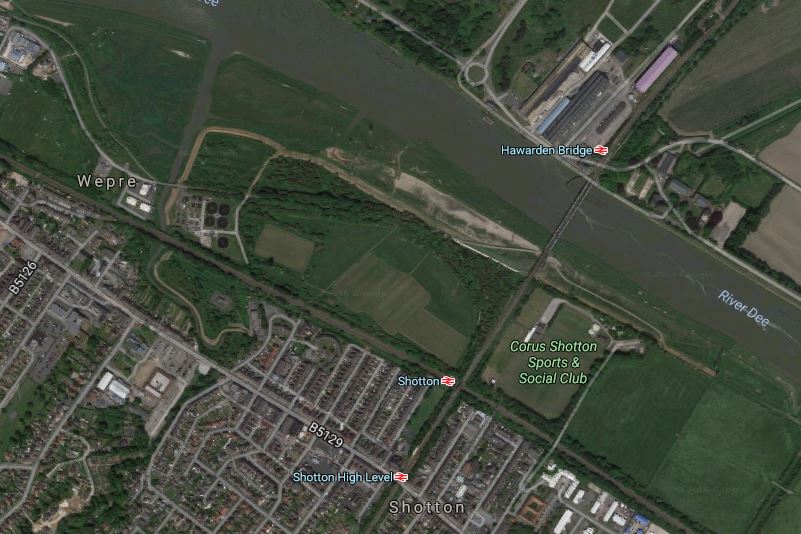
Shotton Stations
Note Hawarden Bridge station on the other side of the River Dee, which is also on the Borderlands Line.
Capacity In Liverpool On The Wirral Line
The single-track loop of the Wirral Line under Liverpool, that serves James Street, Moorfields, Lime Street, Central and James Street agin, is soon to be relaid with new track to go along with its recently-refurbished station, that can handle two three-car Class 508 trains, running as a six-car unit.
With modern signalling, it would probably have a limit of upwards of twenty trains per hour (tph), giving a train under the Mersey in both directions at least every three minutes.
Currently, the service on the Wirral Line includes.
- 4 tph to Chester
- 2 tph to Ellesmere Port
- 4 tph to New Brighton
- 4 tph to West Kirby
Capacity seems to be adjusted to that needed by running a mixture of three and six-car trains.
But there is undoubtedly spare capacity in Liverpool’s loop of stations.
And if more capacity is needed between Birkenhead and Liverpool, then running extra trains to new destinations on the West side of the Mersey is a simple way to increase it.
Wrexham would be an ideal destination, especially if at least two tph were provided on the route.
Freight Issues
There would appear to be a few freight trains, but none of a high frequency.
Wrexham to Liverpool Timings
Currently Wrexham Central to Bidston takes a couple of minutes over the hour. West Kirby trains, also take 34 minutes to go from Bidston round the loop under Liverpool
So this would probably mean that if you got the timings right, you could get from Wrexham Central to Liverpool Lime Street in about eighty minutes.
As Chester to Liverpool Central takes forty-one minutes, eighty minutes is rather slow between Wrexham and Liverpool.
So could electric trains do the route in under the hour?
If the line was fully electrified, judging on the Chester timings, that this is certainly the case.
Trains Needed Between Liverpool And Wrexham
As the round trip to and from Liverpool would probably take two hours, it would appear that two trains would be needed to provide an hourly service, with four trains nbeeded for 2 tph.
As there is a short platform at Wrexham Central station, trains would probably have a maximum length of three-cars.
IPEMU Range
Wrexham Central to Bidston stations, is about thirty miles, so based on Bombardier’s rumoured figures of sixty kilometres a charge, going out and back to Wrexham might be a bit on the long side.
So I wouldn’t be surprised to see the single-track line between Wrexham General and Wrexham Central stations given third-rail electrification, to make sure that trains with an IPEMU-capability can work the line.
If extra stations are added to the Borderlands Line and Shotton station is rebuilt as an interchange with North Wales, I could see that the extra cost of third-rail electrification to Shotton would have a high value.
As Shotton is only about twenty miles from Wrexham, it might be possible to bridge the gap between Shotton and Wrexham using onboard power.
Costs
This is said about electrification costs of the Borderlands Line in Wikipedia.
Network Rail’s conclusion was that full line electrification is only feasible if it could be delivered for less than £100,000 for each km per single track. The twin track line would be £200,000 per line km, giving a total figure of £8.7 million, which is far below the estimate of full line electrification of £66 million. Another consideration is whether a new pattern of service delivers significant net benefits.
The new Stadler trains being purchased for MerseyRail are costing £460 million for 52 trains, according to this article in the Railway Gazette, which works out at about nine million pounds a train.
So if two trains are needed to provide an hourly service to Wrexham, the cost of the extra trains will be significant.
The Railway Gazette article also says this about the trains.
At 99 tonnes, the EMUs will be lighter than the current 105 tonne trains, and energy consumption is expected to be 20% lower, including regenerative braking; options for energy storage are to be studied.
The 750 V DC third-rail EMUs will be capable of conversion to dual-voltage operation for use on 25 kV 50 Hz lines with a view to serving Skelmersdale, Warrington and Wrexham in the longer term.
So I suspect, it’s put up the money and take your choice.
Conclusion
It would certainly be possible to electrify the Borderlands Line either using third-rail or overhead and I’m certain that any prudent transport authority would go for an optimal solution, especially as extending to Wrexhan will need extra trains.
I could see an holistic solution being applied to the Boasderlands Line.
- At least two tph to Wrexham Central station.
- New stations at Beechwood, Deeside Industrial Park and Woodchurch.
- A rebuilt Shotton station.
- Partial third-rail electrification.
- Use of onboard energy storage to power trains on lines without electrification.
As it would be a project, where benefits were to both Merseyside and North Wales, funding would probably have several options.
Undergound Stations In Liverpool
I took these pictures so I would have a record of the underground stations, as they are at the present time.


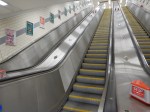
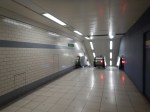
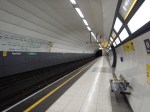
They are all clean, modern stations, that can handle two Class 507/508 trains, working as a six-car.
The pictures give a good idea of the size of the tunnels, which are 4.70 metres in diameter.
Compare this to other underground railways.
- Crossrail – 6.20 metres.
- Victoria Line – 3.81 metres.
- Northern City Line – 4.90 metres.
- Waterloo and City Line – 3.89 metres.
I would think that like the Northern City Line in London, that they may have the problem that trains need to be specially built for the tunnels.
So would this rule out a train like an Aventra, which has been designed to work in the larger tunnels of Crossrail?
On Liverpool’s Northern Line
I took these pictures on Merseyrail’s Northern Line.


Note.
- Merseyrail have been updating the platforms and step-free access, but usually there is a small step up into the train.
- There are several stations with wide island platforms.
- Compared to the London Overground, there don’t appear to be many coffee stalls on the platforms. Transport for London encourages independent stalls.
- All platforms, that I saw, could handle two three-car Class 507/508 trains, working as a six-car train.
- The Northern Line has various branches and it seemed that the system has been designed to go down one branch and then do a quick change to go up another.
The only thing the line needs is new faster trains.
Currently, journey times are as follows.
- Southport- Hunts Cross – 64 minutes
- Kirkby – Hunts Cross – 44 minutes with a change.
- Ormskirk – Hunts Cross – 72 minutes with a change.
It strikes me,that if trains could get Southport to Hunts Cross in under an hour, this might have knock-on effects, as to the number of trains needed.
The Victoria Line in London has now simplified its diagrams, by removing a few bottlenecks and the outcome is increased frequencies on the line.
I suspect that Merseyrail engineers have been following the Victoria Line works with interest.
At present four trains per hour (tph) go to each of the Northern terminals, with 8 tph terminating at Liverpool Central station and four tph at Hunts Cross station.
Could Liverpool be seeing a Thameslink style service where perhaps twelve or perhaps more tph ran on the core route between Sandhills and Hunts Cross stations?
Twelve tph would need twenty four three-car trains if all round trips could be within an hour, with popular services perhaps run with six-car trains.
Modern trains with a lot of driven axles can do so many more round trips in a day.
Deansgate Station
I took these pictures of Deansgate station as I passed through.
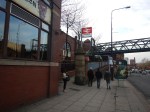

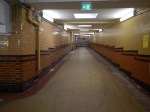
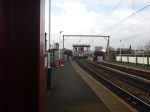
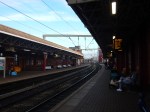
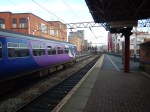


Deansgate station needs a lot of improvement.
This Google Map shows the area.
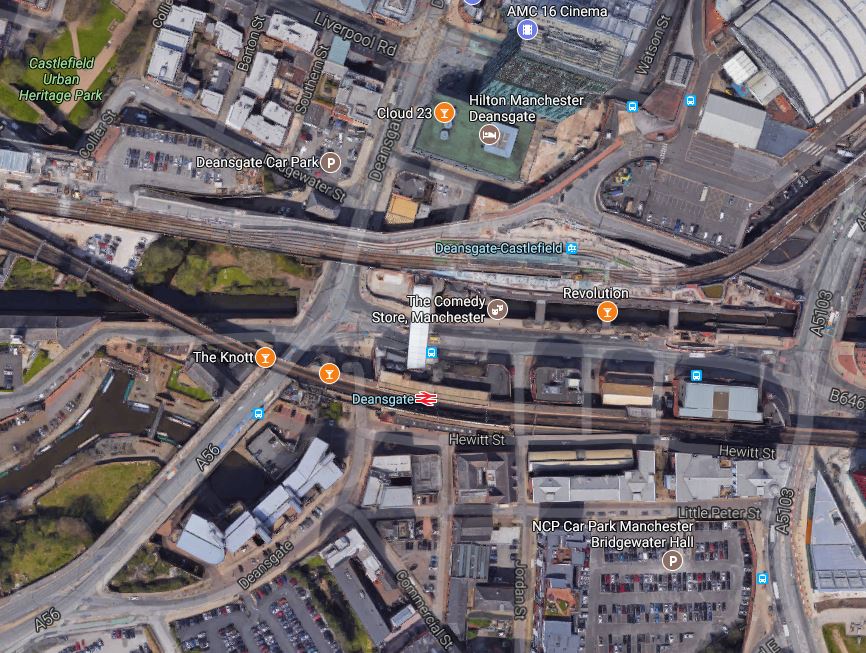
Around Deansgate Station
I don’t think, I’ve seen an area of a UK city, with so many parked cars. Why aren’t people coming into the City by using the trains and the trams?
All that wasted land could be used for something useful like housing or commecial developments.
I walked to the station and I used the lift to get to the platform, but even so, I still had to climb quite a few steps. I wonder that it is station that many avoid because, the access is better at other stations.
On the other hand it is an interchange to the Manchester Metrolink at Deansgate-Castlefield.
Also when the Ordsall Chord is completed and when a full timetable is implemented, surely there will be many more services through the station.
So hopefully, improvements are planned.
Walking Between Manchester Piccadilly And Deansgate Stations
I took these pictures as I walked between Manchester Piccadilly and Deansgate stations.
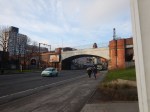




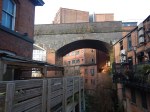
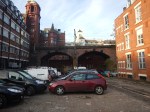



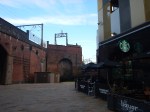



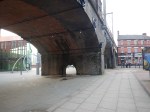
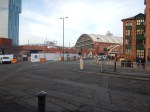


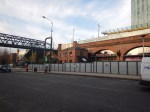
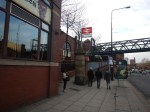
The viaduct is certainly substantial.
I find walking difficult in Manchester, as there are virtually no maps. In London there are walking maps everywhere; on bus stops, at tube and rail stations and free standing.
One of the strange things, is that in all the pictures I took on this walk, there is no evidence of Oxford Road station, which is between Piccadilly and Deansgate. There were so signs either.
Perhaps, it’s been knocked down, since I visited a few weeks ago?
Others would say that I should use the map on my phone, but that is not easy, as my left hand is dodgy and to use a phone, I prefer to lay it flat somewhere and use it with my right hand.
I still think that the reason London is so well-mapped, is that because it is so large, the average Londoner find themselves in a strange area quite often and need immediate help. But in smaller cities, the city is small enough for all the locals to memorise the city, so they object if sums of money are spent on maps.
The only other city in the UK with good maps is Glasgow, which in terms of area is the second largest.
With this walk from Piccadilly to Deansgate, I just followed the viaduct. But it wasn’t easy at times, as there were various dead-ends, too much unnecessary traffic and parked vehicles and difficult road crossings.
Perhaps Manchester needs some combined Cycling and Walking Superhighways! And perhaps a Congestion Charge, to discourage people from bringing cars into the centre, as it did in London.
I wonder if anybody, has done an analysis of the number of visitors and tourists a city gets against the usability of its public transport and walking routes. My personal scores out of five for various UK cities would be.
- Birmingham – 3
- Brighton – 4
- Bristol – 2
- Cardiff – 4
- Edinburgh – 3
- Glasgow – 4
- Leeds – 3
- Liverpool – 4
- Manchester – 2
- Newcastle – 3
- Nottingham – 4
- Sheffield – 3
This is all very personal, as obviously I know Liverpool well. But in fairness you can give brief instructions on how to spend a day or two in Liverpool, as the centre is extensively pedestrianised and this gives the visitor a linear focus on which to explore the City.
Brighton has the seafront and once you know how to get back to the station, on foot or by bus, it has this focus on which to base your visit.
Does Manchester City Centre have a linear focus?
Manchester doesn’t draw you in with a welcoming station, as do Liverpool, Sheffield or Newcastle, and I suspect, it doesn’t make the most of casual visitors passing through.
The Back Side Of Manchester Piccadilly Station
These pictures show the back side of Manchester Piccadilly station.
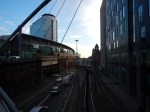
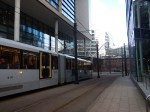



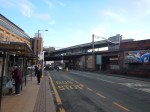
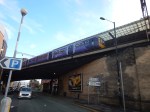

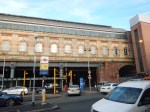
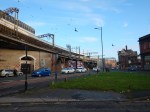
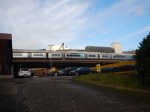
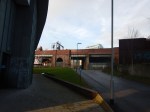
Note.
- It wasn’t easy to get out to that side of the station.
- The two platforms outside the station on the viaduct are the dreaded Platforms 13 and 14, with their serious overcrowding, lack of facilities and lots of draughts and cold.
- Platforms 13 and 14 must be the worst pair of platforms in the UK.
- I nearly got run over three times trying to cross the road.
I doubt that I’ll ever see Manchester Piccadilly station improved.
Thoughts On The Train Strikes
These strikes have all the qualities of an irresistible force meeting an immovable object.
The latest headline on an article on the BBC is Southern rail strike enters second day as Acas talks start.
I doubt the talks will be very productive.
Here are my thoughts about various issues.
London
I have been running around in driver-only-operated (DOO) trains for quite a few decades now. Especially, as I have always travelled frequently on the London Underground.
Wikipedia has a comprehensive section on One Man Operation in London.
This is said about the Underground.
All trains on the London Underground are single-manned.Conversion to one-man operation began in 1984 and was completed in 2000.
In some ways though the Underground, is not full DOO, in that on nearly all stations, there are staff on the station, who assist the driver to safely dispatch the trains.
Assistance From Staff
The staff on the platform are also there to assist passengers, who need help. This page on the Transport for London web site describes the role of staff.
This is said under Assistance To And From Trains.
On the Tube, TfL Rail and Overground, station staff will also accompany you to the train and help you on board and, if needed, can arrange for you to be met at your destination. Anyone can use this service, but it is particularly used by blind and visually impaired passengers and people using boarding ramps onto trains.
If you would like to use this service, ask a member of staff when you arrive at the station.
That is very much turn-up-and-go for everybody!
So what happens on Southern?
This page on the Southern web site gives full details of what they offer.
This is said.
When should I ask for help?
If you want to book ‘help’ try to call us at least one day before you travel.
That is not acceptable.
So there’s one job for the redundant guards on Southern – They could help on the platform, as they do on the London Underground and Overground.
The Gospel Oak To Barking Line
London hasn’t been without trouble though, as this from Wikipedia shows.
TFL now operates 100% of its overground network as driver-only trains. The latest conversion was announced in July 2013 on the Gospel Oak to Barking Line. The National Union of Rail, Maritime and Transport Workers (RMT) challenged the move, claiming passenger safety would be compromised. Transport for London replied that at the time the East London Line, already one-man operated, has one door-related incident for every 7 million passengers, while the section of the network which currently uses conductors has one door-related incident for every 4 million passengers.[10] On 16 August 2013, the RMT called a 48-hour strike over the August Bank holiday weekend. According to the RMT, the proposal set forth by Transport for London would imply Driver Only Operations on the whole of the London Overground network and make 130 guards redundant London Overground Rail Operations stated in response that they had given “the RMT assurances on employing conductors in alternative customer service roles and offering a generous voluntary redundancy package to those who want it.” According to RMT, the proposals to implement driver only operations are in response to the 12.5% reduction in Transport for London’s funding announced in Chancellor of the Exchequer George Osborne’s Comprehensive Spending Review
I certainly don’t remember that strike. So it must have been really significant!
Overground And Underground
You should always remember that when the Overground started, every train had a second man, but gradually they have been moved to the platforms.
The Overground works a different system to the Underground on doors in that the driver enables the doors for opening and they are actually opened by the passengers individually. On the Underground, the driver just opens and closes all doors.
Crossrail
It will be interesting to see, what system the new Class 345 trains for Crossrail use.
It’s an Overground train in the outer reaches and an Underground train in the centre.
The Class 345 trains also appear to be very hi-tech with various innovative features.
Automatic Train Operation
The Victoria Line in London has always run with automatic train operation (ATO). The Wikipedia entry has two entries about London.
On the London Underground, the Central, Northern, Jubilee, and Victoria lines run with ATO.
ATO was introduced on the London Underground’s Northern line in 2013 and will be introduced on the Circle, District, Hammersmith & City, and Metropolitan lines by 2022. Although ATO will be used on Crossrail and Thameslink, it has not yet been implemented on UK mainline railways
Lines like the Victoria Line, Crossrail and Thameslink, will not be completely automatic, but the driver will be an intelligent monitor to what the train is doing. It could be compared to auto-land on an aircraft, where the plane is actually controlled, by the autopilot and the pilots monitor.
As a Control Engineer, I believe we’ll be seeing large increases in the use of ATO in the UK in the next few years. Many intensively used lines could probably handle more trains, with a controlling ATO system.
Will the Unions object to ATO?
They haven’t seemed to yet, as ATO generally seems to see an increase in the number of trains, which means more staff.
More Automation On Trains
This is happening, but then this is only following the lead of more automation in planes and road vehicles.
Crossrail trains will set a new standard in automation.
This is a snippet from the an article in the Derby Telegraph
Unlike today’s commuter trains, Aventra can shut down fully at night and can be “woken up” by remote control before the driver arrives for the first shift.
I described this to a driver for Northern and a big smile came over his face.
Perhaps more contentious is the autoreverse system fitted to Crossrail trains, that I wrote about and explained fully in Crossrail Trains Will Have Auto-Reverse.
The system will work at a Crossrail terminal like Paddington or Abbey Wood.
- The driver selects auto-reverse in the terminal platform.
- The train then drives itself into the reversing siding.
- The driver starts to walk back through the train towards the other cab.
- When the train reaches the end of the reversing siding, it reverses back into the return platform.
- By the time the driver has walked the length of the train and installed himself in the cab, the train will have arrived in the platform and will be ready to depart.
I suspect that there will be a high-level of safety systems, with the driver probably carrying a dead man’s handle, that connects to the train by radio.
It will be interesting to see how the Unions react to such a system.
- One of the reasons for the auto-reverse is that it is needed to get 30 trains per hour, through the tunnel.
- Drivers will avoid a 200 metre walk.
- No passengers will be on the train, when the driver is out of the cab.
But it will mean more staff being employed, to drive and service the extra trains and handle the extra passengers.
Conclusion
I am drawn to the conclusion, that lots of automation and driver aids are coming to the railways.
DOO is the first of many issues, where there will be a fight.
If the Unions don’t like it, they will reap the wrath of the passengers, train companies and most politicians.
 The Anonymous Widower