Cinderella Will Take You to the Ball!
If ever there was a railway that was built on the cheap and was very much an ugly duckling, that has metamorphasised into a swan, it is that Cinderella of London’s transport system, the Docklands Light Railway.
It is a unique concept in the United Kingdom, in that the small trains are driverless and generally run between unmanned stations, to cut down both the capital and running costs. Each train has an onboard customer service representative for security as well as dealing with the passengers, He or she can drive the train in an emergency.
It may in some ways be a Cinderella, but over the twenty years or so it has been running, it has grown like Topsy from its original routes linking the City, Canary Wharf and Stratford to serve Lewisham and Woolwich south of the Thames and the City Airport and other places to the east.
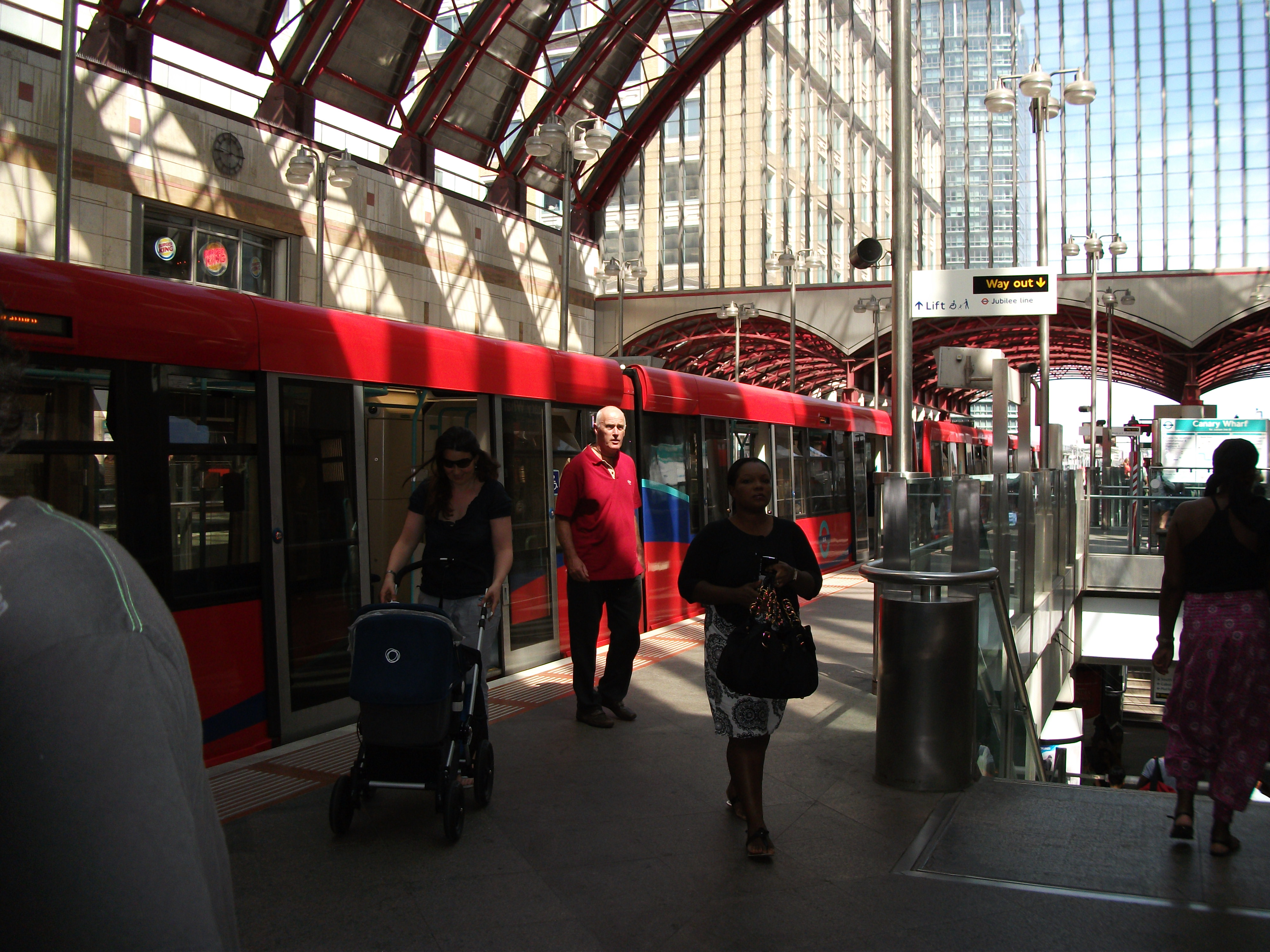
Docklands Light Railway at Canary Wharf
Now that the Olympics are just two years away, this line has new and larger trains and will play a major part in moving people to and from that big party in Stratford. Even now, some of the best views of the Olympic Park are from the DLR.
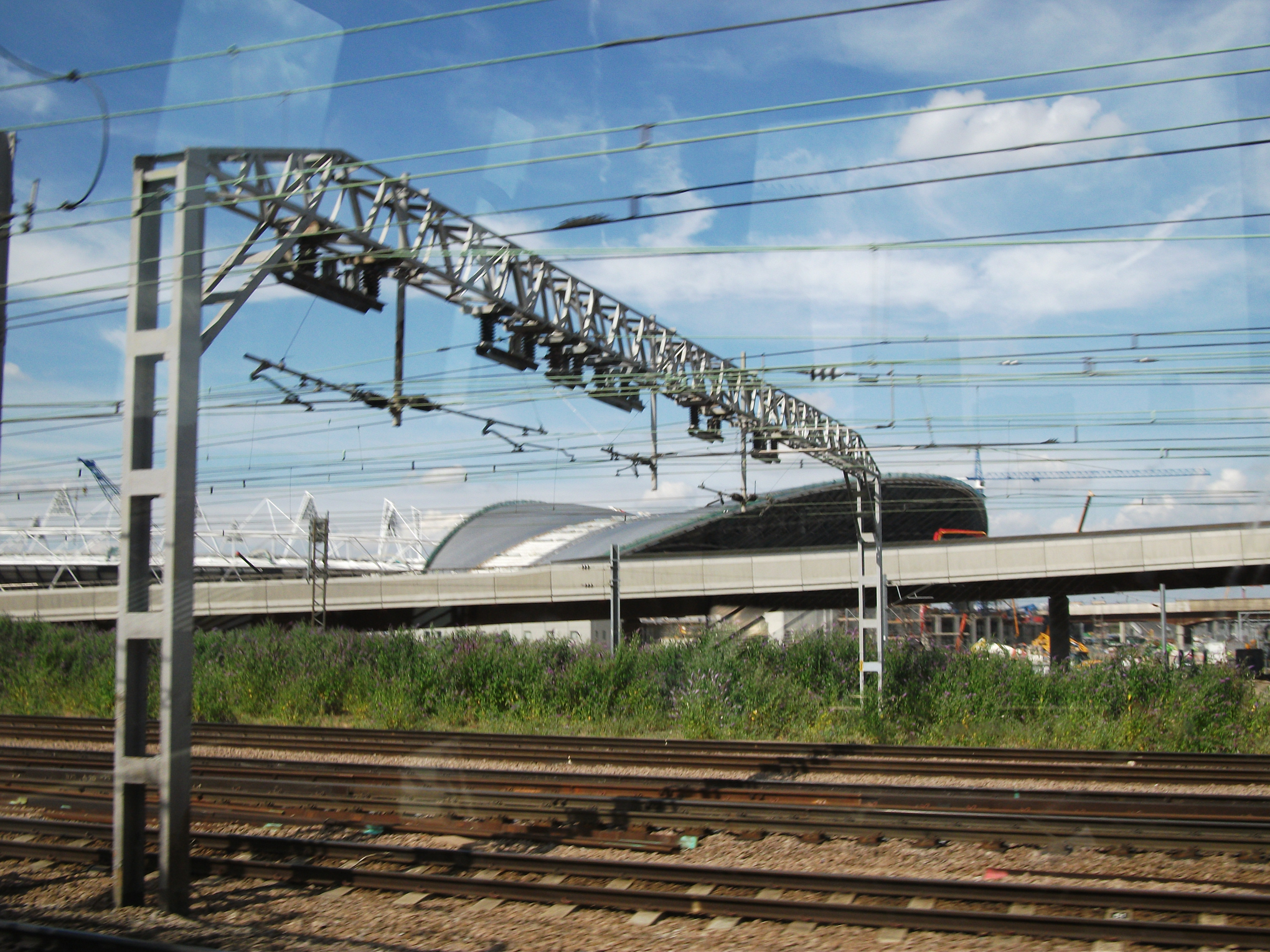
Olympic Park From the DLR
I travel the DLR a lot if I can, as it is the best way to explore the east of London. Views are superb, as unlike the Underground, very little of the line is in tunnels and much of it is on viaducts or bridges raised above the ground. No trip by a tourist to London is complete without using London’s most unusual and unique transport system.
I can’t understand, why the concept has not been copied elsewhere. I feel that the badly-designed, implemented and built Cambridge Busway could almost now have been built as a smaller version of the DLR. Trains might be just two coaches and running at ground level from Trumpington, via Addenbrookes and the city centre all the way to Histon, Long Stanton and St. Ives. The DLR has shown that such a concept will work and in the end, people get to love it.
Towards The Olympic Park
When I left Dullingam, I had had the vague intention of taking the newly rebuilt North London Line, either to Richmond or Stratford to see the Olympic Park for 2012. Access to the line is just one stop away from King’s Cross at Highbury and Islington.
A few minutes later, I was on the platform there waiting for my brand-new train to Stratford.
What impressed me was the attention to detail. Look at this staircase for example.
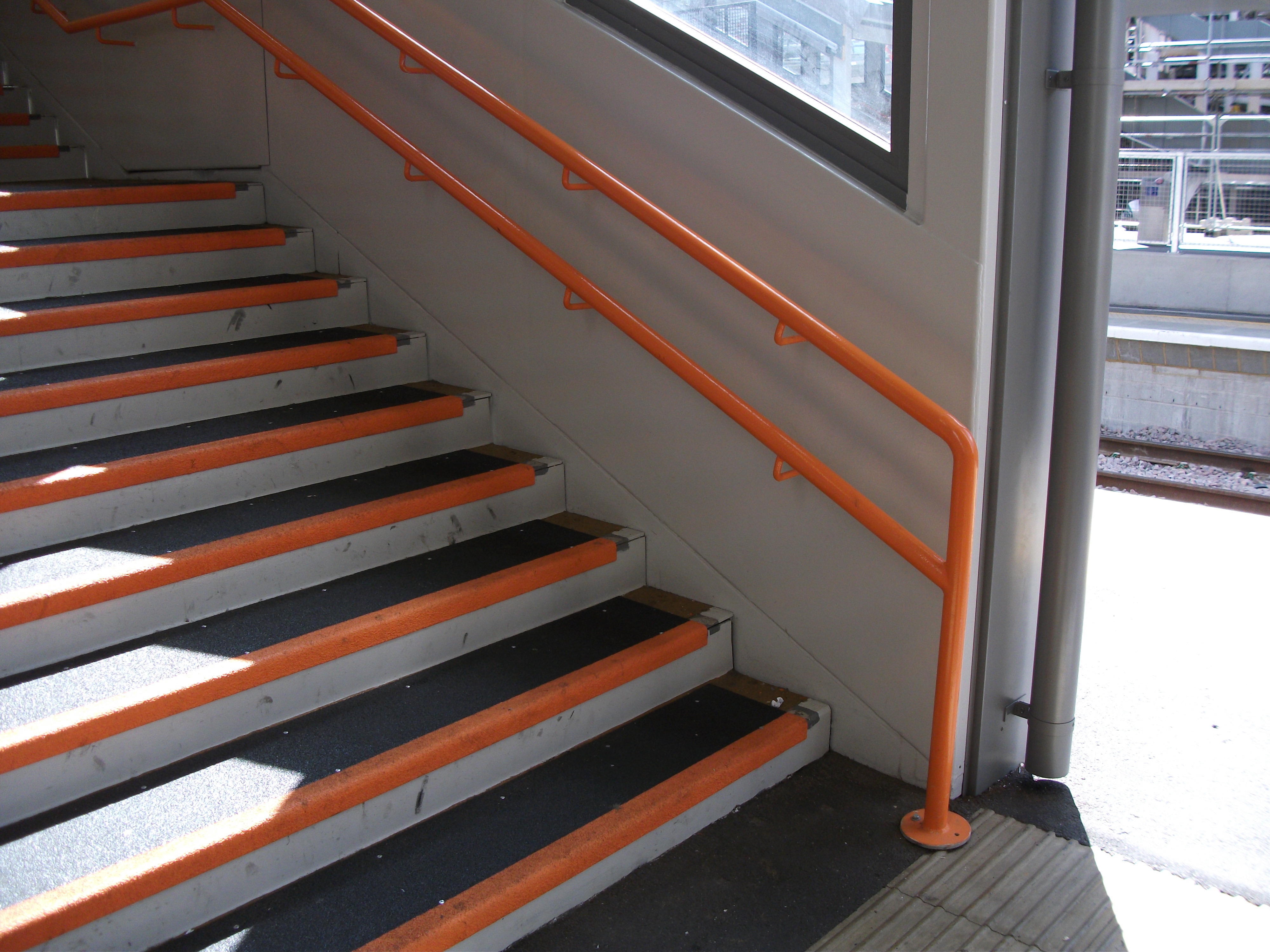
Stairs at Highbury and Islington
Now I am not disabled, but the grip in my left hand is not good and I have some issues with my eyesight, in that I miss objects at a low level. But here the rails and step edges are in bright orange, so I had no difficulty negotiating them at all.
Have they also have decided that on an outdoor station, that flowers rather than art is the best way to decorate the stations. Note the hanging baskets shown here as the train arrives.
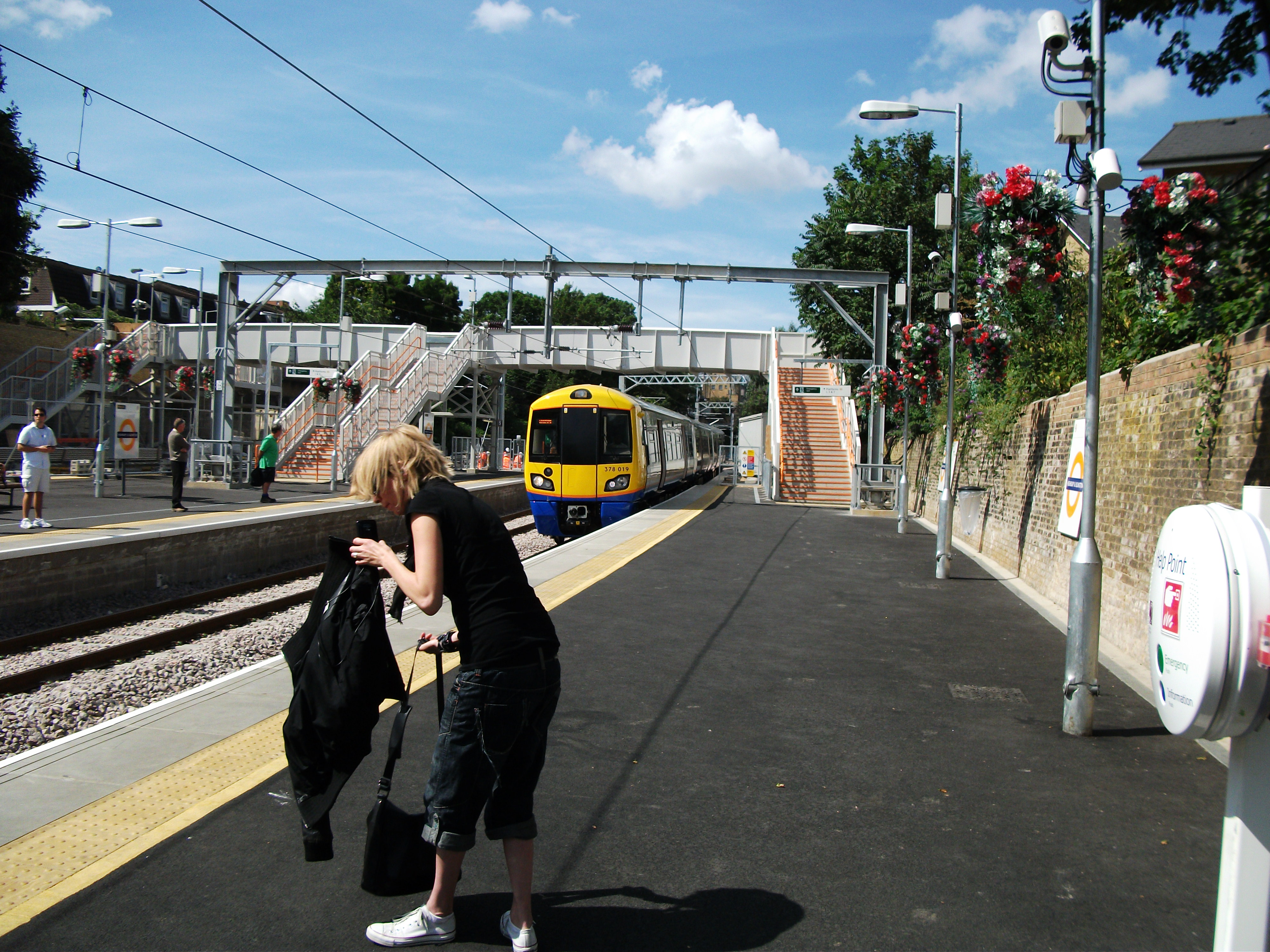
The Stratford Train arrives at Highbury and Islington
The trains are a far cry from the old stock that used to creep around the North London Line, when I used to take it from Broad Street to Willesden to get to Metier at Stonebridge Park. They were third rail electric trains then, but now they are fed from an overhead catenary. This is a first for London Underground or Overground, but it is so they can get freight trains from East London to the main West Coast Main Line.
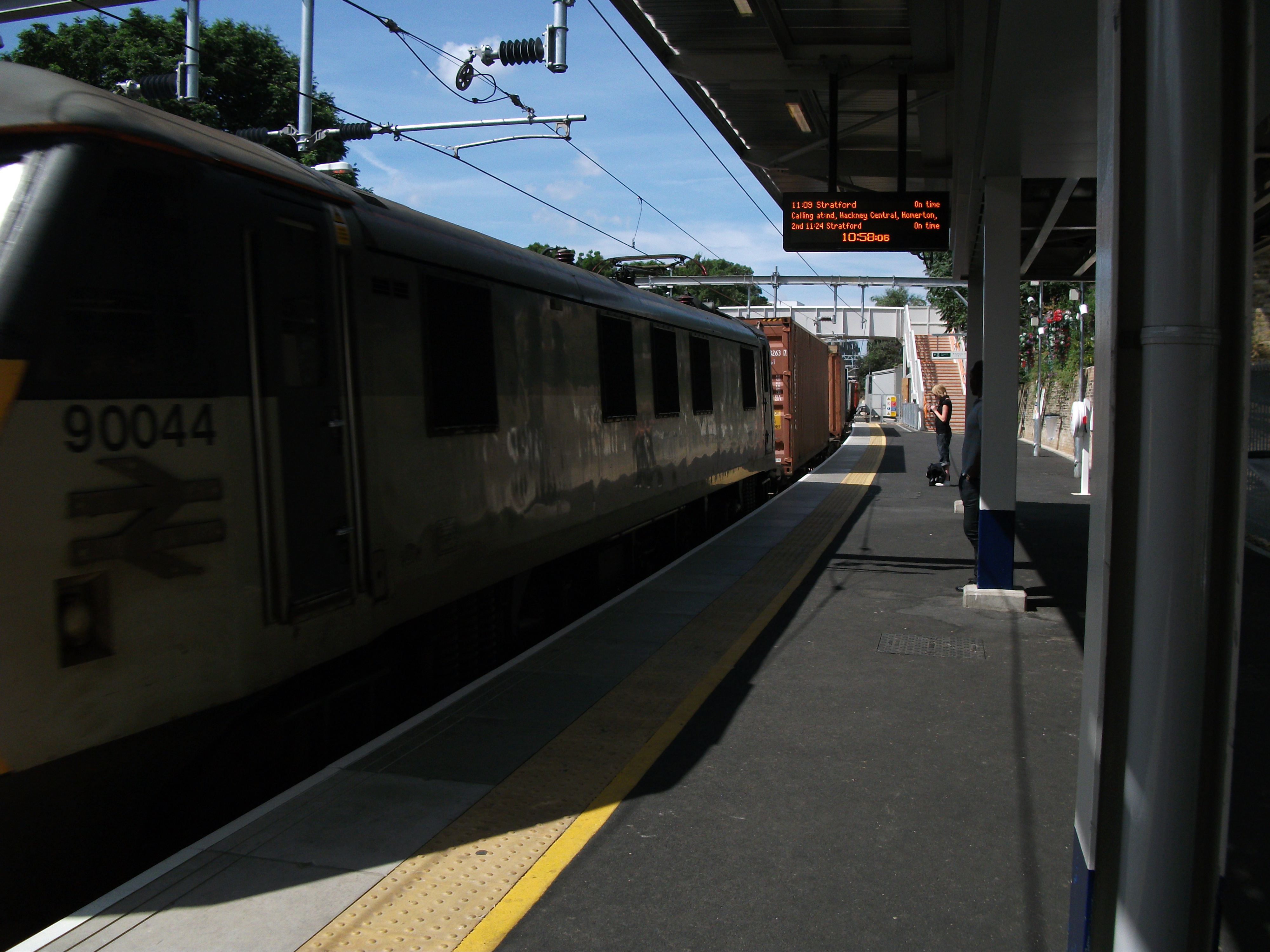
Here a load of containers are trundelling towards Stratford and then probably up the Norwich line to the port of Felixstowe.
My train was on time and I took it all the way. The last part of the journey is through the Olympic Park.
Here the main stadium is rising towards completion.
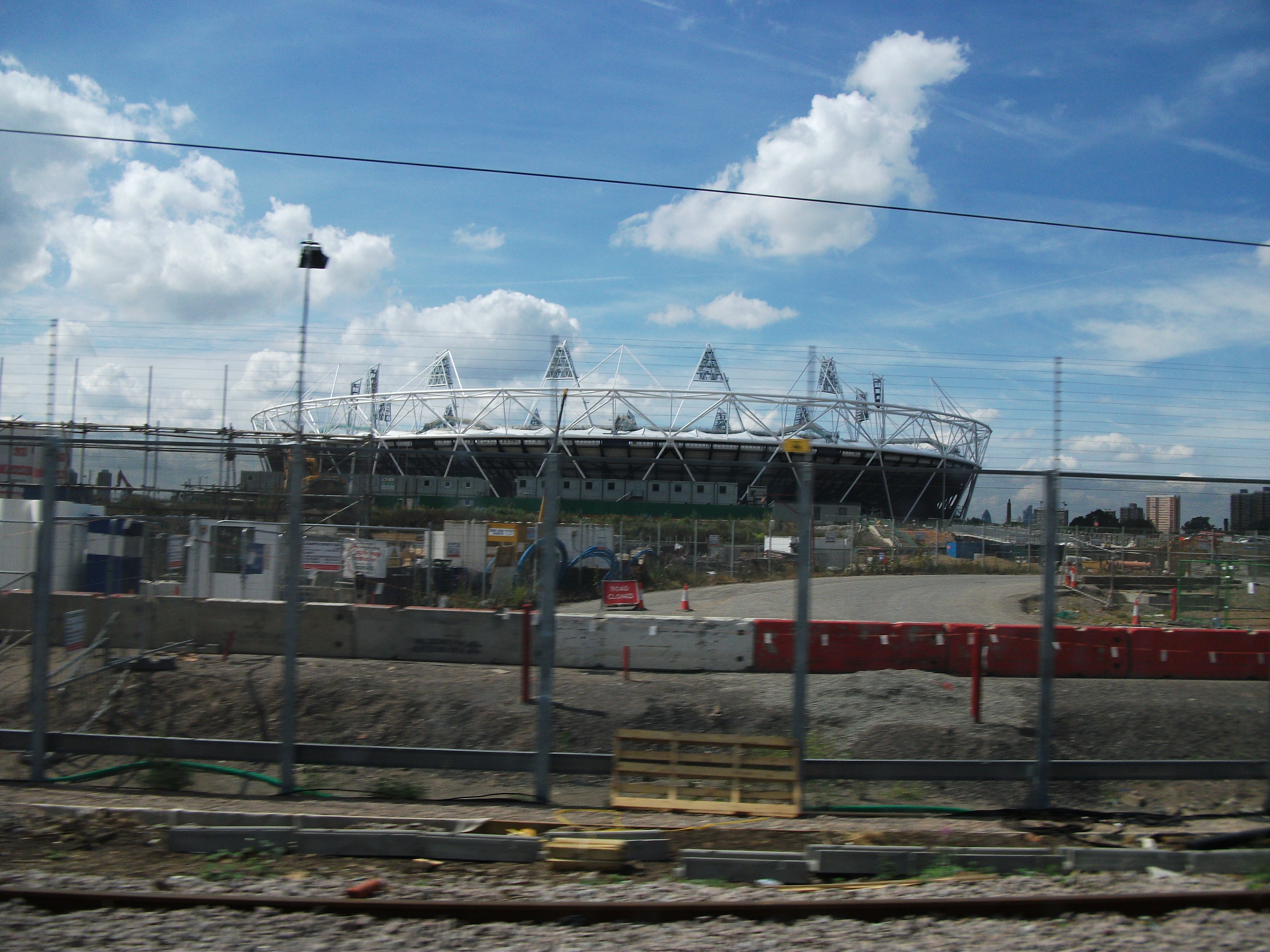
The Olympic Stadium Rises
And this is the aquatic centre.

Aquatic Centre
It is all very different from when as a child, I used to go to Stratford to bunk the engine sheds to collect engine numbers. I don’t think kids do that any more!
At Stratford, you have several choices about how to continue your journey.
- North London Line – You could take the line across the city, with its superb views of central London, to have a walk in Hampstead Heath.Kew Gardens or along the river at Richmond.
- Central Line – This is the quickest way back to the City and central London.
- Jubilee Line – This will take you to Greenwich, Canary Wharf and the West End, through some of the most spectacular stations on the planet.
- Docklands Light Railway – This is the route for people, who like to explore. Get a good guide book and just go to a station and walk around what I say is the real London, with its markets, churches, canals and historic buildings. And of course, its rich tapestry of people!
I chose the last and took the driverless train to Canary Wharf.
Proving I’m Not Tired of Life!
It was Samuel Johnson, who famously said, “When a man is tired of London, he is tired of life!”
As there was little to do to keep me at home, I got a lift from one of the stud staff to the small station at Dullingham from where I got the local train to CAmbridge from the fast train to London.
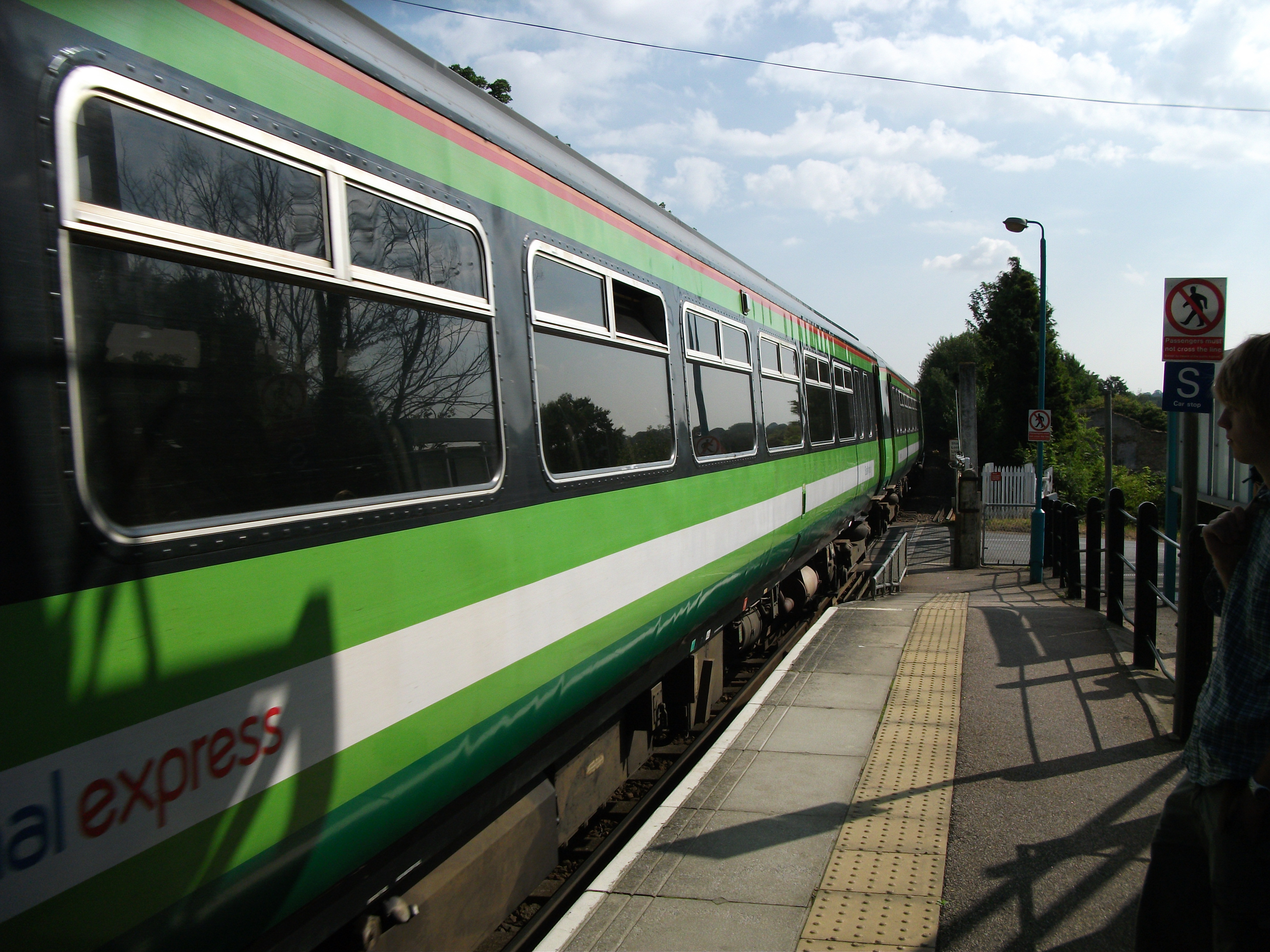
Cambridge Train Arriving at Dullingham
For just £21.10, I bought a ticket that got me to London and allowed me to roam all over the city as far as Croydon in the South and Barking in the East. So I do have a Senior Railcard!
When I left I hadn’t too much idea about what I was going to do, but I had vague thoughts about travelling around seeing some of the sights and perhaps going to see some friends in South London.
Well, within an hour from leaving Dullingham, I was in Kings Cross, after an enjoyable journey chatting with three ladies of about my own age. The American lady opposite was at a legal Summer School in Cambridge and was intending to use the trains to explore London and places further, whilst in the city. I think she said that she’d bought a Senior Railcard in Cambridge to get the discount of a third on tickets. I hadn’t realised that the cards were available for non-UK citizens, but it seems fair and it will encourage tourists of the right type.
I Can Drive
Not legally, I should add and not on any public road. But a couple of weeks ago, when I needed to move the Jaguar, it was a struggle and I ended up stalling it in reverse. whether it was my arm or my leg, I didn’t know, but today, I was able to move it so I could put all of the bottles for recycling in the boot. I then did a three point turn on the stud yard.
It’s progress! I hope!
Tourism Will Increase by 60%
This report was on the Press Association web site.
The value of tourism to the UK economy is set to rise by more than 60% to £188 billion by 2020, according to a report.
The number of jobs supported by tourism is predicted to increase by 264,000 to 2.89 million in the next 10 years, the report commissioned by VisitBritain added.
The amount of spending per year by overseas residents is likely to almost double from £16 billion now to £31 billion in 2020.
It is all good news, but are places like Middlesbrough ready for it. In my travels recently, London, East Suffolk and Newcastle certainly are.
The Thunder of Three-Thousand Three-Hundred Horses
I think it was Paul Theroux, who wrote about waking up to the sound of the railroad. At home in Cockfosters, I used to hear the sound of the steam trains travelling north towards the North and Scotland, as they ran through Oakleigh Park and New Barnet. From about eight I used to cycle to the line to collect train numbers. It was towards the end of the steam age, and I can still see and smell, Gresley‘s magnificent A4 Pacifics as they roared through Hadley Wood, where we used to put pennies on the line, so they were squashed flat. I also broke a front tooth at Oakleigh Park, when I fell off my bike. It has been capped twice, so hopefully it is a good omen for the rest of my body.
Everything started to change in 1955, when an interloper arrived on the scene, in the shape of English Electric’s Deltic prototype, which I could hear as it raced north once a day. It was called Deltic after its lightweight and very compact Napier diesel engine of the same name. At the time, the 3,300 bhp made them the most powerful railway engine in the world. The diesel engines had originally been developed during the Second World War to power ships like MTBs and mine hunters, but found their fame in the powerful railway engine. Some of the engines even ended up in fast patrol boats in the US Navy.
The Deltic signalled the end of an era and by the time I went to Liverpool University in 1965, all the formidable A4s had gone to be replaced by the production Deltics or Class 55s, as they are more correctly called.
When I worked for ICI at Welwyn Garden City in the very early seventies, I travelled north a few times to the manufacturing site at Wilton on Teesside behind the Class 55s.
One of the most memorable train journeys I have ever experienced, if not the most memorable, was on one of the return trips from Teesside.
I had finished my work at Wilton that day, when I was rung by the Transport Office, who asked if I ‘d mind being taken to Darlington early to catch the London train, as they had a VIP, who wanted to go early for the train to Bristol. I said yes, as that would mean a car journey in comfort instead of the local train from Eaglescliffe, through the hell-like landscape of the steelworks.
In the end, I arrived at Darlington with about an hour to wait for my train. After looking at Locomotion No. 1, which in those days was displayed on the platform, I retired to the bar for a pint. Just as I was settling in a chair, an announcement said that the train now arriving was the delayed Talisman for London. I asked if I should board the train and if I did would I get to London early. I got a double yes, left my pint and got on the train, which at that time was running forty-five minutes late, as a generator slung under a carriage had disintegrated and they’d had to stop to leave the offending carriage behind.
There is an interesting aside here about Locomotion No. 1, in that Hunter Davies saw the engine on the station and then went into W. H. Smith on the station to buy a book for the journey back to London. As he had just seen the engine, he looked for a biography of its creator, George Stephenson , only to be told that no-one had written one. Later he supposedly checked this with his agent, who then suggested that he write the book. So that is why an author of popular biographies of the such of the Beatles and Wayne Rooney, ended up writing the first biography of the only engineer, known to nearly everybody.
At the time of my return trip, the fastest Darlington to Kings Cross trains took three hours, whereas today a time of two hours forty-five minutes is about average, with the fastest ones taking about two hours twenty-five minutes. I should say that Darlington is 232 miles from Kings Cross.
My train that day had a clear run, as it had delayed everything behind it, so the driver was able to open up those Napier Deltic engines to try to regain the lost forty-five minutes.
And regain them he did!
Despite stops at probably York, Doncaster, Newark and Peterborough, he was able to keep the speed to such a level, that by the time we stopped in London, he was on time. So that means he probably took two hours fifteen minutes, which worked out as an average speed of just over 103 miles per hour including stops. Not bad for a train with a maximum speed of just 100. I actually timed the train at about this speed, just north of Peterborough.
Train journeys are not like that today. I remember eating dinner on the train and it was possibly the worst-served meal, I’ve ever had on a train, as the waiter had difficulty walking up and down, as the train bumped and lurched. The guard also kept passing through, announcing the latest estimate of our arrival time in Kings Cross.
I sometimes think that time has enlivened this story, but it was a wonderful thrill to find out what a properly-driven Deltic could do. Eurostars, TGVs and the other modern fast trains don’t give that same feeling! Certainly my trip to Middlesbrough behind a Class 91 for part of the way will not be so exciting.
The Invisible Bus Map of Middlesbrough
As my trip to Middlesbrough is only at the end of next week, I felt it would be sensible to make sure that I can find my way around. It looks like the B & B, where I will be staying is within walking distance of the Riverside Stadium and the station, but it would be nice to have a bus map, so that I can perhaps get about quicker. After all, I have a pass for all buses in the UK, so I should probably use it.
But there would appear to be no map on the Internet of Middlesbrough buses. Perhaps everybody who travels always knows where they are going or uses their own car. But compare the city, to Cambridge and Ipswich, both of which have excellent maps giving all you need.
The Opposite of Death By A Thousand Cuts
Sometimes we just concentrate on how austerity generally means cuts, cuts and more cuts. But in this month’s edition of Modern Railways there is an example of the opposite. East Coast, the company that runs services from London to the North and Scotland, has just introduced Operation Peppercorn, which is series of many small upgrades to increase the capacity of the route and get the London to Edinburgh time under four hours. Perhaps, it’s just looking after the pennies and letting the pounds look after themselves in an engineering sense.
There is no references to Operation Peppercorn on the web, which is a pity, as many would benefit by reading the article, which shows that small amounts of money targetted at a problem, can often make a big improvement in a short time.
Buses, Trains and Walking
On Wednesday, I needed to get from Aldgate to Piccadilly Circus, so I took a bus. In London, you just look at the list of places on the shelter and then find out, which stop in the area is the one you want. In this case, I was lucky as it was the same shelter, but usually, it’s only a walk of a couple of metres. I think I waited perhaps a minute before my 15 bus arrived. I have a free pass, as I’m over sixty, so it was just a matter of showing the card, climbing upstairs and finding a seat. As I get tired, I find that buses are a convenient place to sit in towns like London. After a brief rest, I arrived at my destination.
Similarly, the trains are now pretty comfortable and for my journey home, after a second bus ride to Kings Cross, I was able to get a seat. As the train was busy, First Capital Connect were employing a firm lady to organise everybody in the carriage. We do things differently here to Japan, but she had the same effect, as she got everybody sitting orderly, by eliminating those, who feel that they are entitled to two seats.
I was quite refreshed by Cambridge, before my transfer to the train for Newmarket. There was a bit of hassle, as I had to exit the station to get another ticket, rather than purchase it on the train. They have now installed gates at Cambridge to clamp down on fare dodging, but they’ve also made it difficult to say go to the M&S in the station to get your supper, whilst you are waiting for your connection. They should think these things through properly.
I don’t really have a problem with walking, but where I was in London wasn’t too well provided with places to sit, to get the rest I need to take. So in some ways, I thought that it might be better to use my pass and just sit in a bus.
But at least I know I can manage!
 The Anonymous Widower