Future-Proofing The Uckfield Branch
The Uckfield Branch of the Oxted Line was open today, so as in A Trip To Uckfield, I had to use a Rail Replacement Bus from Crowborough, I took a train to Uckfield station and back from London Bridge. These are some of the pictures I took at Uckfield station.
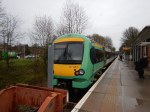
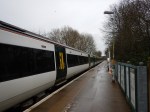
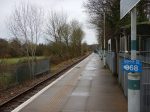
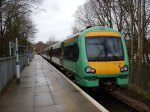
I can’t disagree with what I said in the previous post.
The platform work is certainly being done to a standard and length, that should be good enough, if the Uckfield Branch is used to create a second Brighton Main Line, by extending the line past Uckfield to Lewes on the route of the former Wealden Line.
All of the platforms I have seen on the Oxted Branch seem to be capable of taking a twelve-car train.
Uckfield’s Long Single Platform
Although, I suspect that Uckfield itself could be a bit longer, especially as workers still seemed to be extending it further to the North.
I would think, that this long platform would enable two eight-car trains to be parked in the station, if there was a need in the Peak or because one of the trains had failed.
It’s just more future-proofing.
Oxted’s Bay Platform
Platform 3 at Oxted station is a South-facing bay platform, which is used to provide shuttle and other services down the two branches. In the last couple of years, it has been electrified, which is just more future-proofing, in case it was required to run an electrified shuttle to East Grinstead.
IPEMUs To Uckfield?
The Oxted Line is electrified from London Bridge as far as Hurst Green station, where the two branches split.
- The East Grinstead Branch is electrified.
- Uckfield Branch is not and is about twenty miles long.
As a typical Electrostar IPEMU based on say a Class 387 train, would probably have a range of at least fifty to sixty miles, it would appear that IPEMUs could work the London Bridge or Victoria to Uckfield service.
- Between London Bridge and Hurst Green the trains would take thirty-two minutes, getting power from the third-rail electrification. Batteries would also be charged on this leg.
- Between Hurst Green and Uckfield, they would take forty-two minutes and rely on battery power.
I suspect too, that third-rail IPEMUs could charge their batteries fully before they left London Bridge.
Platform 3 at Oxted station might also be useful for charging an IPEMU running a shuttle service on the Uckfield Branch.
In my view, the work done on the Uckfield Branch in recent months has created a line, that would be an ideal route for IPEMUs to provide the service.
- Platforms have been sufficiently lengthened.
- Signalling can probably already cope with the longer trains.
- There is no more electrification required.
All that is needed is to add an IPEMU-capability to the required number of Class 387 trains and train the staff.
How Long Is An IPEMU?
There is one mathematical and marketing problem, that must be solved before trains are run.
Class 387 trains come in sets of four-cars and on Thameslink, typically run in formations of four-, eight- or twelve-cars.
What is the optimal length to run services on the Uckfield Branch, as determined by passenger demand?
And can this length of train be provided?
I’ve not seen anything for instance, which says how many IPEMUs can form a single train.
But I suspect that Bombardier wouldn’t design a train, without a multiple-working capability.
And of course, the Uckfield Branch has been future-proofed for twelve cars.
I suspect that the capacity of the Uckfield Line will be determined more, by the size of the car parks.
Onward To Lewes
This article in the Uckfield News is entitled £100k Budget pledge for Uckfield to Lewes rail line study.
So it is possible that the Uckfield Branch could be extended by about ten miles to Lewes, along the route of the disused Wealden Line.
Intriguingly, as Lewes is fully electrified an IPEMU train going from London Bridge to Lewes would do less distance on batteries than a train going from London Bridge to Uckfield and back.
One of the problems with extending past Uckfield, is that the trains would have to cross the B2102 by the station in the middle of Uckfield.
This used to be a level crossing and I’m certain, that this option will not be reinstated for safety reasons. It has to be said, that as an IPEMU could cross on battery power, there might be a better solution, than a traditional level crossing.
But IPEMUs have another advantage, in that they could use a short underpass without electrification. I just wonder whether that some clever design could squeeze the railway line under the road.
Conclusion
If the passenger demand is there, there would appear nothing in the design of the upgrade to the Uckfield Line, to stop IPEMUs being used to fulfil that demand.
D-Train Prototype Takes Big Step Forward
This is title of an article in Rail Magazine, which shows a picture of a two-car Class 230 train.
I have a feeling that because of all the other developments in the UK rail industry, that sadly for the project’s backers, that this will be a project filed under Heroic Failures.
If Arriva Rail North can find ways to buy a new fleet of CAF Civity trains and IPEMU technology breaks through as expected, the market in the UK for the D-Train must be getting a lot smaller.
It could be getting to the point, where the train is totally unsaleable in the UK.
We Think We Have Problems With Rail Viaducts
Some of the most impressive structures on the UK’s railways are the Victorian brick viaducts.
- Digswell Viaduct on the East Coast Main Line at Welwyn.
- Dollis Brook Viaduct is the highest point on the London Underground.
- Dutton Viaduct on the West Coast Main Line.
- Imberhome Viaduct is on the Bluebell Railway.
- Kingsland Viaduct is my local viaduct on the East London Line.
- London Bridge – Greenwich Railway Viaduct in South East London is one of the oldest.
- London Road Viaduct on the East Coastway Line in Brighton
- Ribblehead Viaduct on the Settle to Carlisle Line is regularly featured in newspapers, often with steam trains on the top.
- Royal Border Bridge on the East Coast Main Line at Berwick-on-Tweed is Grade 1 Listed.
- Sankey Viaduct was built in the 1820s, is Grade 1 Listed and is considered the earliest major railway viaduct in the world.
- Stockport Viaduct is the largest brick structure in the UK.
- Welland Viaduct is on the Oakham to Kettering Line.
All of this small selection are still in use on the railways and are Grade II Listed or better.
Many have been renovated at great expense in the last few years and I was prompted to write this post after reading this article on the Network Rail web site, which is entitled Bridges improvement plan for Cheshire will revitalise landmarks. This is said.
Network Rail will refurbish four bridges and two viaducts during an 11-day closure of the Crewe to Manchester and Sandbach to Northwich railway lines, from 13 to 24 February 2016.
The vital work will make the railway safer and more reliable for passengers, motorists, pedestrians and canal users across the county.
Two of Cheshire’s most well-known architectural landmarks, the Grade-II listed viaducts at Holmes Chapel and Peover, will have a full makeover as part of the programme. Water stains on the walls of both viaducts will be removed, damaged brickwork repaired and both structures waterproofed.
At the same time, Network Rail engineers will undertake strengthening work to the Hungerford Road bridge in Crewe, Shipbrook Road bridge in Rudheath, and to the Whatcroft underbridge and the Trent and Mersey Canal bridge in Davenham.
In some ways all this work is a tribute to those Victorian engineers and bricklayers, who designed and built them in the first place.
But it’s an awful lot of work to do!
So I asked myself, if these structures are a uniquely British heritage.
Google and Wikipedia revealed this article about the Göltzsch Viaduct on the Liepzig-Hof Line in Germany. This is said.
It is the largest brick-built bridge in the world, and for a time it was the tallest railway bridge in the world.
As you can get a direct train from Liepzip to Hof, I think, it is still one very much in use.
I think next tme, that I’m in the area, I shall visit.
Searching For What Is Going To Happen On The East London Line After The Thameslink Programme Opens
My E-Mail To Thameslink On The 14th February
On the 14th February, I sent this e-mail to the Thameslink Programme.
At present when I go to Gatwick Airport, I get an East London Line train from Dalston Junction to New Cross Gate or Norwood Junction, from where I pick up a Gatwick Train.
Can you confirm, that the current service will be equally good or even better after the Thameslink Programme is completed?
A Reply From Thameslink On The 17th February
On the 17th February, I got this reply.
Thanks for your email.
The Thameslink Programme is transforming north-south travel through London. This infrastructure and new trains investment programme will increase capacity on one of Europe’s busiest stretches of railway. For more information on the benefits of the programme, you can visit our website here, and an interactive map of our improvement sites here.
We’ve already delivered longer, 12-car trains between Brighton and Bedford, platform lengthening at several stations, track work and upgraded stations including West Hampstead, Farringdon and Blackfriars. The most complex part of the programme is now underway; this includes rebuilding London Bridge station, and laying new track and signalling equipment around the station to create a spacious and better connected transport hub.
We are linking parts of the East Coast Mainline to the Thameslink network, allowing passengers from Cambridge and Peterborough to travel to Blackfrairs and beyond, relieving congestion on the Underground.
There will also be a link with Crossrail at our hub station at Farringdon, giving access to Gatwick, Luton and Heathrow airports and St Pancras International.
Dalston Junction is managed by TfL, and so any enquries about an improved link from this station to Gatwick should be directed to overgroundinfo@tfl.gov.uk.
I hope this is helpful, thanks for getting in touch.
Kind regards,
Jen Pattison, Thameslink Programme
My E-Mail To Overground Info On The 17th February
So I sent off a longer e-mail to Overground Info.
If say you want to go between Dalston Junction and Purley, you will certainly have to change trains.
Currently, it takes between fifty and sixty minutes and you sometimes change at New Cross Gate and at other times the suggested change is Norwood Junction.
It’s alright for me and others who know how to use the various journey calculators or apps, but what about people like my late wife, who never ever owned a smart phone or even sent a text message.
The full simple rule for Dalston Junction to Purley, seems to be something like take a West Croydon train from Dalston Junction to Norwood Junction and then get the first train to Purley from there.
Different rules apply to different stations
Thameslink is going to bring major changes to how we go places along the East London Line and especially, if we venture into any Thameslink territory.
My simple example of Dalston Junction to Purley might get a lot more complicated, as some documents and web pages, say that Thameslink services between London Bridge and East Croydon will not stop. So how do passengers on the East London Line catch these trains to places like Purley, Gatwick and Brighton?
To get to Thameslink, those on the East London Line, will have to go to Whitechapel and get a train to Farringdon or St. Pancras
That will be a pain for anybody, whose local station is anywhere on the East London Line and very much a degradation of the current service.
Those living near Norwood Junction have already lodged a petition with the London Assembly.
My Reply From OvergroundInfo On The 19th February
On the 19th February, I got this reply.
Thank you for contacting London Overground.
I am sorry however I am unable to help with the issue you raise. They will be best addressed by Thameslink.
As a result I have passed your comments to them. I am sure that you will hear from them soon, however if you want to contact them their details are:
You certainly can’t complain about the promptness of the replies but I’m back to square one.
All I want to know, is how the millions of us in East London will get to Gatwick Airport, as conveniently as we do now!
The IPEMU Advantage
Others question and they do rightly, my enthusiasm for the IPEMU or the battery-powered train.
This post which takes information from a variety of sources explains why I think as I do.
This document on the Network Rail web site explains the thinking of Bombardier and Network Rail.
Running Trains
Running trains is a co-operation between several parties.
- The passengers.
- The train operating companies like Virgin Trains, LOROL, Abellio Greater Anglia etc.
- The train builders like Bombardier, CAF, Hitachi, Siemens etc.
- The infrastructure provider like Network Rail, airports, property developers etc.
- The regulators and elected bodies like Government, TfL etc.
So what advantages does an IPEMU bring to each group?
The Train Builders
Is it simply a matter of who makes the best trains, will get the greatest number of orders?
The train of the future will.
- Be powered by electricity.
- Have regenerative braking to capture braking energy as electricity.
- Have a lot of power-hungry passenger features like air-conditioning, wi-fi and charging sockets.
- Have the ability to move to a limited amount without power, in depots, when the power fails, or where there are deliberate electrification gaps.
- Have a very sophisticated drive control and train management system, which matches train speed and acceleration to location, line, traffic, weather, passenger demand and type of power available.
In some ways regenerative braking is the most important, as it can save almost twenty per cent of the electricity used by a train.
I wouldn’t be surprised that, in a few years time, manufacturers will find it very difficult to sell a train without regenerative braking.
The electric power generated in regenerative braking can either be returned to the power supply or stored on the train.
Returning power is easy on DC systems using conductor rail, like subways, the Underground or Southern Electric, but can be expensive on 25 kVAC overhead systems.
Remember too, that when a train stops, it has to start again and will want the braking energy back.
From an engineering point of view, probably the best way to create an electric train with regenerative braking is to have onboard energy storage to capture the braking energy.
This is already done extensively in an analogous manner with hybrid road vehicles. It could even be done now with a diesel-electric train such as an Inter-City 125.
This leads to the proposition that within a few years all train manufacturers will need to make trains, with some form of battery or onboard energy storage.
The latter term is better as who knows what will be used for energy storage in the future? Batteries, KERS and super-capacitors have all been used in rail applications.
Consider.
- All of Bombardier’s new Aventra trains, have provision to plug in an energy storage device, if the customer wants one.
- Several tram manufacturers have products which use onboard energy storage, that have already been ordered and/or delivered.
- Road transport and increasingly buses and passenger cars are hybrid with onboard energy storage.
- Trains with onboard energy storage can be moved without power in depots and when wires come down.
- Bombardier have stated that their IPEMU technology is also being designed to retrofit to existing modern trains like Class 375/377/378/379/387 etc. trains.
- The complicated mathematics of steel wheel on steel rail mean the extra weight of the onboard energy storage is not a disadvantage.
All of this goes together to make the cost of running a train more affordable.
Bombardier’s Prototype IPEMU
Bombardier must be pretty bullish about their technology, as a year ago, they allowed the public to ride on a Class 379 train, that had been modified to be a technology demonstrator.

An Outwardly Normal Class 379 Train
I rode the train and was very impressed.
,It felt just like a standard train and I wouldn’t have known it was running on battery power except for the engineer sitting opposite, who was monitoring the train on his laptop.
Since that ride, there has been no adverse reports in the press and Bombardier have won an award for the technology.
When I am asked what are some of the most impressive experiences in my long life, riding this train certainly ranks towards the top, of those, which were not of my design or creation.
Until I came home and looked up the physics of steel wheel on steel rail, despite being an electrical engineer, I just didn’t believe that batteries could move a train.
In The Technology That Enables The Aventra IPEMU, I wrote about the physics and also what Bombardier seemed to be planing for the new Aventra train, which will have the capability of onboard energy storage.
I think it is true to say, that the unique thing Bombardier has done is to put a credible package together and demonstrate it in public.
The Train Operating Companies
Train companies gain a rather diverse set of advantages from IPEMU technology..
- More services can be given modern electric trains.
- Depots and sidings can be built without electrification, which saves money and makes them safer for the workforce.
- Electrification can be cut back to where it is actually needed.
- Regenerative braking cuts times at stops and increases service speed.
- As trains use less electricity, costs are less.
- IPEMU trains have a limited diversion capability, which can ease disruption.
- The company has a greener profile.
Hopefully, the performance and profile of the company will attract more customers and hence increase profits.
The Passengers
They will gain mainly from the benefits of modern electric trains.
But IPEMUs will bring other benefits to passengers.
- New services to new destinations.
- Faster services on routes with lots of stops.
- Better response when problems inevitably occur with overhead wires.
Hopefully, the lower cost of electric trains with regenerative braking may even result in lower fares.
The Regulators And Politicians
I have a feeling that the regulators will like the IPEMU, as the benefits will mean that passengers should be happier with better services, at hopefully a lower fare.
Politicians, and regulators are mainly of that ilk, that loves to leave a legacy. And they especially like to leave a legacy, which means they get voted back!
Consider the simple one or possibly two station extension of the Gospel Oak to Barking Line (GOBlin) to Barking Riverside.
- It looks like it will sensibly be done after the main route is fully electrified.
- Only Class 710 trains would be used on the extension.
- These trains will be Aventras and could easily be fitted with an IPEMU capability.
- Once it leaves the main line all infrastructure is new.
I believe that using an IPEMU on the extension would be beneficial.
- No electrification would be needed.
- Stations would be simpler.
- There would be no visual intrusion of overhead gantries.
- Train noise would be less.
- Removing electricity would make the environment safer.
- No one is likely to object.
But the main benefit, is that the extension can be built at a much lower cost.
How many new or improved short extensions to the main electrified rail network would IPEMU technology enable?
The politicians will come to love the concept of an IPEMU!
The Infrastructure Providers
Network Rail helped fund the original trial at Manningtree using a modified Class 379 train and you can understand why!
Electrification of lines is enormously expensive for infrastructure companies.
- Putting up wires means raising hundreds of bridges and boring out tunnels.
- Putting up wires seems to constantly drill through important cables.
- Putting up wires in depots, stations and sidings can be very complicated.
- Putting up wires raises heritage issues.
- The Nimbys often don’t like unsightly wires.
- A major cost is often getting the power to the wires.
- Upgrading existing electrification for traditional regenerative braking is not a simple operation.
- Engineers to do the work are in short supply.
So infrastructure companies will probably welcome anything that cuts the amount of new electrification and upgrade work.
One piece of technology we will see increasingly, is the ability of electric trains to deploy and retract the pantograph at line speed, as I believe the new Hitachi Class 800 trains can do.
So where will we see IPEMU technology used to cut the amount of electrification, but not the deployment of electric trains?
- Any branch line from an electrified main line, that is currently run by a diesel multiple unit. Branch lines like Felixstowe, Henley, Marlow, Sudbury, Uckfield and Windsor are probably IPEMU-ready after some platform extension and signalling work for longer trains.
- New extensions from an electrified line to major property developments like Barking Riverside.
- New extensions into restricted spaces, such as airports like Glasgow and Luton.
- Existing lines that connect two electrified main lines like Cambridge to Ipswich and Cambridge to Norwich.
- Electrification gaps can be left in heritage areas like the Grade 2-listed Hebden Bridge station or where the Midland Main Line, runs through the Derwent Valley Mills World Heritage Site.
- Electrification gaps can be left where the geography is just impossible to build, access or maintain the overhead wires.
- Depots and sidings can be left without electrification.
Obviously, electrification gaps can only be left where all trains are diesel, bi-mode or have an IPEMU capability.
Relying on rumours and snippets in the media, the Internet and on blogs, I think we’ll see IPEMUs used in these places first.
- The extension of the Gospel Oak to Barking Line to Barking Riverside.
- Branch lines on the Great Western Railway, between London and Didcot.
- Branch lines in East Anglia.
- Merseyrail to Preston and Wrexham.
- Removal of diesel trains from the Southern franchise in Sussex and Kent.
I would add the Northern City Line, but the order for new trains has gone to Siemens.
The electrification of this line from Finsbury Park to Moorgate is a mixture of third rail and overhead.
As the new trains will be the only ones working this line, a train could use an IPEMU capability South of Finsbury Park. When all the Class 313 trains have been moved on, the third rail electrification would not be needed.
As it’s a couple of years before the Class 700 trains are delivered, I just wonder if they’ll have an IPEMU capability.
According to this article in the Daily Telegraph, Siemens are certainly experimenting with the use of batteries in trains.
The Current Status
Of the major manufacturers, this is the current published status, as far as I can determine.
- Bombardier have demonstrated their technology in public and used it in trams.
- Bombardier are researching heavily into the best battery system at Mannheim.
- Bombardier have also built large numbers of EMUs in recent years, that are suitable for retrofit with IPEMU technology.
- CAF spend heavily on R & D, have used the technology in trams for some years.
- CAF have sold that type of tram to the Midland Metro.
- JR East, who are on the list of preferred suppliers for Merseyrail’s new trains, have working Battery Trains In Japan.
- Siemens and Alsthom have trams running on batteries.
- Hitachi are backing the bi-mode, but must have access to Japanese technology.
On the down-side Bombardier have well publicised financial problems.
The Future
Currently, the IPEMU technology has a range of about fifty miles on battery, which if there is no en-route charging means that it could be used on short branches up to twenty miles.
This range will grow, as engineers know how to stretch the onboard energy storage capacity.
Engineers will also learn how to use the technology to take electric trains into more and more places, that are now thought impossible.
I think that the launching of battery trams in Birmingham will alight everybody’s minds to the possibilities of battery power.
New Trains On Thameslink
I had breakfast at Kings Cross and then hopped across the city on Thameslink to Blackfriars to go for a walk through the Tate Modern. I came back to Farringdon, as because the East London Line is closed, a bus from Moorgate is the best way to get home.
These were pictures I took of new trains on Thameslink.
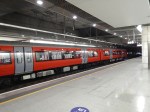
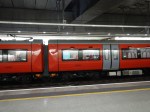
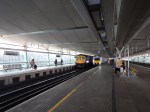
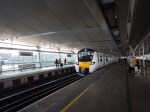
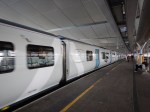
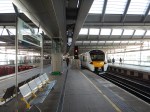
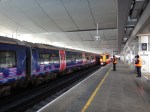
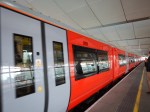

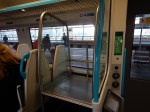
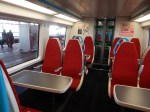
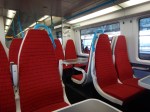
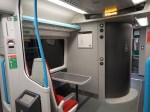
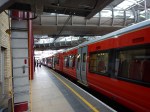
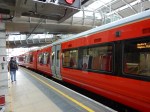

Note the following.
- The red trains with the grey doors are Class 387/2 trains destined for the Gatwick Express later this month.
- The interior shots were all taken in a Class 387/2 trains.
- The white train with the sloping front and the light blue doors, is a new Class 700 train, which will run on Thameslink.
The pictures were taken at St. Pancras International, Blackfriars and Farringdon.
The new Class 387/2 trains had a definite feel of the Class 387/1 trains about them, except they had sizeable luggage racks and possibly more tables.
There are better and more luxurious airport trains in the world, including probably the Class 332 trains of Heathrow Express. But as a train to speed you to the Airport in thirty minutes or so, with plenty of space for you and your luggage, they probably pass the first test by a good margin.
They would be very good on other Airport routes in the UK.
- Routes connecting Manchester Airport to Liverpool, Manchester, Crewe and Blackpool.
- A possible Gatwick Express route from Reading to Ashford International, which I think could happen, if an IPEMU variant were to be developed.
- To and from Airports like Cardiff, Stansted and Southend.
An IPEMU variant could be useful in developing spurs to airports like East Midlands, Luton and Glasgow, which would be built without wires from lines with full electrification. Bombardier has the technology, all they need is the orders.
Would this approach be an affordable way to create the much needed airport link at Glasgow Airport?
- A single-track spur leading from the Inverclyde Line to the Airport to a single platform station would probably have enough capacity for a two or three trains per hour service.
- No electrification would be needed, which would mean that there would be greater flexibility in the route of the line. It might even go in a single-track tunnel under taxiways.
- There would be some modification to the signalling.
- The trains would be bog standard Class 387/2 trains, except for the energy storage.
- Two trains would probably give a two trains per hour service to the airport, as Glasgow Central to Paisley \st. James takes around twenty minutes.
- The trains would just be more trains running between Glasgow and Paisley.
- It would be simpler than a tram-train and require no special rules or modified stations.
- I can’t think of any new regulatory issues, as it will be a train running on a railway.
- There would need to be some staff training.
The overall system would be no more complicated than running the demonstration Class 379 IPEMU on the Harwich branch, which seemed to work so well.
How much would it cost?
The creation of the new line to Ebbw Vale Town station and the single platform station is reported to have cost less than twelve million pounds.
According to this article in Railway Technology, Porterbrook have paid £100million for twenty Class 387 trains, so two trains would cost ten million.
I also think that provision of the track and trains in something like the Glasgow Airport Rail Link, is the sort of project that a company would provide and then lease to the train operator.
No wonder, that Bombardier have won an award for the technology and Porterbrook bought some Class 387 trains on spec.
Caledonian Sleeper’s New Locomotives
The excellent Calendonian Sleeper has recently received some new locomotives according to this article in Rail Magazine.
But the Class 73/9 locomotives are not new, but refurbished electro-diesel locomotives built in the 1960s. It’s just that they are a bit smaller than most diesel locomotives and are ideal for moving the sleeper trains around Scotland.
In the 1960s, 49 were built and on a quick count up, I think that nearly thirty are still being used on the UK rail network.
But like other locomotives of that era and a couple of decades after, where there’s a part to play some of these old stagers can still do a reliable turn.
Some like a few Class 47 locomotives have even been rebuilt into new updated Class 57 locomotives, as this is an affordable way to get effectively new locomotives.
As there still appears to be a shortage of freight locomotives, I think some of our engineers will be creating virtually new locomotives from old ones currently preserved in the strangest of places.
But it certainly seems to be a reliable way to create the needed motive power.
So next time you take a Calendonian Sleeper into or out of the North of Scotland, just look at the locomotive and reflect on the fact that you might not be the oldest thing on the train.
East London Line And Thameslink
If say you want to go between Dalston Junction and Purley, you will certainly have to change trains.
Currently, it takes between fifty and sixty minutes and you sometimes change at New Cross Gate and at other times the suggested change is Norwood Junction.
It’s alright for me and others who know how to use the various journey calculators or apps, but what about people like my late wife, who never ever owned a smart phone or even sent a text message.
The full simple rule for Dalston Junction to Purley, seems to be something like take a West Croydon train from Dalston Junction to Norwood Junction and then get the first train to Purley from there.
Different rules apply to different stations
Thameslink is going to bring major changes to how we go places along the East London Line and especially, if we venture into any Thameslink territory.
My simple example of Dalston Junction to Purley might get a lot more complicated, as some documents and web pages, say that Thameslink services between London Bridge and East Croydon will not stop. So how do passengers on the East London Line catch these trains to places like Purley, Gatwick and Brighton.
To get to Thameslink, those on the East London Line, will have to go to Whitechapel and get a train to Farringdon or St. Pancras
That will be a pain for anybody, whose local station is anywhere on the East London Line and very much a degradation of the current service.
Those living near Norwood Junction have already lodged a petition with the London Assembly called Norwood Junction wants Thaneslink.
The Thameslink Sheduling Problem
I have been said by others, to know about scheduling. Admittedly, it is with respect to resources in large projects, but what is the difference mathmatically between scheduling fitters, engineers, bedspaces, cranes and helicopters on a rig in the middle of the North Sea and the scheduling of passengers, trains and platforms in rural Surrey.
Probably not much in reality, except for one major difference; politics.
If you tell a body to turn up at Aberdeen Airport to get a helicopter to the rig where they are to work at 07:30, he or she probably won’t complain, but if you say that because of Thameslink all services from your station will be going to London Bridge and through the tunnel to Cambridge and there will be four trains an hour at two minutes past the quarter hour, he or she will probably write angrily to everybody from the local paper to his MP and trhe Archbishop of Canterbury. Judicial review will also be threatened.
Sadly with the Sutton Loop, Network Rail’s plans were overturned by Parliament, which sets a dangerous precedent. Network Rail may have been wrong anyway, but I am just using it, to show how sensitive scheduling of trains can be.
So there is a need to provide a service from all stations, that is all things to all men and women, their dogs, children and relatives from Peru and Timbuctoo.
In my view the two branch lines that I visited in A Trip To Tattenham Corner and A Trip To Caterham illustrate the problem well and also show the level of service required.
Caterham Station has an Off Peak service of two trains per hour into London Bridge and another two into Victoria.
It would appear that some of the Victoria trains can be used to get London Bridge with a change at Purley, which involved a wait of ten minutes or so.
When speaking as the man on the Dalston train, this is not good enough.
- I get four services an hour to each of Clapham Junction, Crystal Palace, New Cross and West Croydon every hour.
- If I want to get to East Croydon, the fastest route at any particular time may mean changing at New Cross Gate or Norwood Junction, often with a change of platform.
As can be seen, what I have is better than Caterham does, but it is still not perfect.
My route to anywhere in South London, should be the same every time I go that destination and it should be something like take a train to X, stay on the platform or walk across it and the train to your destination will arrive within a few minutes.
If the timetable is the optimal one, then the rules could be published.
So to return to Caterham and the Caterham Line to Purley.
An ideal service would be four trains an hour of a sufficient number of cars leaving the same few minutes after each quarter hour.
- Destinations would be a mixture of Victoria or London Bridge.
- Trains would probably stop as now, at all stations until Purley.
- At a station before or at East Croydon, there would be a convenient same platform interchange to services to other appropriate northern destinations of London Bridge, Cannon Street, Charing Cross, Victoria, Thameslink and Dalston Junction.
Possible interchange stations would be Purley, South Croydon, East Croydon, New Cross Gate and London Bridge.
My proposal may seem ambitious, but I believe it is possible.
It might even be easier, if all four services from Caterham went to a particular terminal or even only went as far as Purley or South Croydon. But anybody other than someone like myself, who is not part of the decision process, would be out of a job, once everybody protested about how will they get to Victoria.
Commuters have all the intelligence and stubbornness of sheep.
What they probably need is something like this.
- Four trains an hour leaving at easily remembered times.
- If necessary an easy interchange to their preferred destination.
- An alternative route, should something happen on the journey, like being called on their mobile phone to an urgent meeting away from the normal workplace.
- A flexible return journey.
- A seat, that is preferably by a window with a table!
- A twenty-four hour service to allow for social events after work.
- Lots of convenient on-platform services.
- Free wi-fi and power sockets.
Everybody will have their own version of this.
Interestingly the Thameslink Class 700 trains were designed without wi-fi and power sockets. This article in the Railway Gazette has details. This is said.
DfT ordered the Class 700 EMUs without wi-fi, seat-back tables or at-seat power sockets in standard class, but on February 11 announced that £50m would be made available for the installation of wi-fi on rolling stock operated by GTR, Southeastern, Chiltern and Arriva Trains Wales, Discussions are now ongoing between Siemens, GTR and Cross London Trains, which was awarded the DfT contract to finance, supply and maintain the new Thameslink fleet.
According to Siemens, the installation of wi-fi would not be difficult, but there would be a significant weight gain from adding power sockets. The cost and practicality of seat-back tables is also being discussed.
So don’t always blame the train company. In this case blame the Department for Transport under Blair’s Government.
If we take Tattenham Corner and the Tattenham Corner Line, it should expect nothing less, than Caterham and the Caterham Line.
After Thameslink is completed there will be two twelve-car Class 700 trains, so there’s two London Bridge services an hour, which makes a nice four from Purley if you have two from Caterham.
As sometimes trains for the two lines split and join at Purley, I do feel that passengers who use the two lines would not be averse to some form of interchange at Purley.
The completed Thameslink seems to be designed like this, with respect to Purley,
There are five services which run twice per hour all day, which are the backbone of the route.
- Bedford to Brighton – semi-fast
- Bedford to Gatwick Airport – via Purley and Redhill
- Cambridge to Brighton – semi-fast – via Purley
- Peterborough to Horsham – via Purley and Redhill
- Cambridge to Tattenham Corner- semi-fast – via Purley
All of these services go through the core, London Bridge and East Croydon.
But none seem to be calling anywhere else between London Bridge and Purley.
According to Wikipedia, this is the service pattern from Purley towards London.
- 2 to London Victoria, calling at Purley Oaks, South Croydon, East Croydon, Selhurst, Thornton Heath, Norbury, Streatham Common, Balham, Wandsworth Common, Clapham Junction and Battersea Park (faster services to Clapham Junction and London Victoria are available by changing at East Croydon)
- 8 to London Bridge, of which
- 4 call at East Croydon and Norwood Junction
- 2 call at East Croydon, Norwood Junction and New Cross Gate
- 2 call at Purley Oaks, South Croydon, East Croydon, Norwood Junction, Anerley, Penge West, Sydenham, Forest Hill, Honor Oak Park, Brockley and New Cross Gate
And this is the pattern towards the Coast.
- 4 to Caterham, calling at Kenley, Whyteleafe and Whyteleafe South
- 3 to Tattenham Corner, calling at Reedham, Coulsdon Town, Woodmansterne, Chipstead, Kingswood and Tadworth
- 1 to Tonbridge, calling at Coulsdon South, Redhill, Nutfield, Godstone, Edenbridge, Penshurst and Leigh
- 1 to Reigate, calling at Coulsdon South, Merstham and Redhill
- 2 to Horsham, calling at Coulsdon South, Merstham, Redhill, Earlswood, Salfords, Horley, Gatwick Airport, Three Bridges, Crawley, Ifield, Faygate and Littlehaven
After Thameslink opens there will be eight Thameslink services, made up of two each of the four out of five services (All accept 1) that call at Purley in both directions.
In my view Thameslink need to answer the following questions.
Given that Thameslink is unlikely to stop at New Cross Gate, Norwood Junction and any other station on the East London Line, what is the recommended route between Purley and stations on the East London Line like Whitechapel, Shoreditch High Street and Dalston Junction?
This is obviously something that I am interested in.
Everything I seem to read seems to say that the East London Line has nothing to do with Thamwalink and it’s up to Transport for London to sort.
At Purley, will there be improved interchange between lines?
I am thinking if in particular, whether there will there be same platform or walk across interchange between.
- Services going along the Caterham and Tattenham Corner Lines,
- Thameslink services
- Those to and from Victoria?
At present the interchange may be step-free, but the subway isn’t the best.
Get Purley station right and it might be the key to providing four trains per hour to Caterham and Tattenham Corner.
At it’s simplest it could even be a shuttle service from both branches, that met the Thameslink and Victoria services.
Conclusion
It does seem to me that at present the route planners have a very difficult problem and are struggling to find a solution that suits all passengers; regular or occasional.
I suspect that this part of Thameslink isn’t unique to the service in that respect.
 The Anonymous Widower