Could The Gospel Oak To Barking Line Be Extended To Ealing Broadway?
In their article on the future of the Gospel Oak to Barking Line, Railfuture has a section entitled Benefits for passengers and train operations. It says this.
Electric trains have better acceleration and an Overground fleet of 4-car electric trains would be able to carry many more passengers, relieving overcrowding. All-electric extensions of the service at each end of the route, which TfL wants to run, become possible, such as to Barking Riverside in the east and/or to Willesden Junction/Clapham Junction (even Ealing?) to the west. Some other works would be needed, such as new platforms and subways at Gospel Oak on the through lines.
I agree with the point about extensions at either end of the Gospel Oak to Barking Line (GOBlin), but where in the West should the line go?
Railfuture suggests three choices and there are other plans in the pipeline that could decide where the GOBlin could go!
All options except four have a possible problem, in that trains would have to merge at Gospel Oak and share the North London Line to Willesden Junction.
1. Willesden Junction
This is the easy choice, as there is already a bay platform at Willesden Junction station and space for another.
2. Clapham Junction
Extension to Clapham Junction station would mean the trains going down the West London Line.
I think there are two major questions over extending to Clapham Junction.
Clapham Junction is a crowded station, which probably couldn’t cope with more than the four London Overground services each hour without building a new platform.
But it has to be asked, if the longer trains and better interchange at Willesden Junction would make it easier for passengers along the West London Line to get to the North of the City and thus obviate the need to increase services on the West London Line.
Another important question that has to be asked about the West London Line, is would it benefit from more stations, especially one to serve the new housing developments at Earls Court.
3. Ealing Broadway
The theory goes that because of Crossrail, the Central Line will see a decrease in passenger numbers from Ealing Broadway and that one of the Central Line platforms could be taken over by the GOBlin. This diagram from carto.metro.free.fr shows the layout of lines in the area from Ealing Broadway to the West London Line.
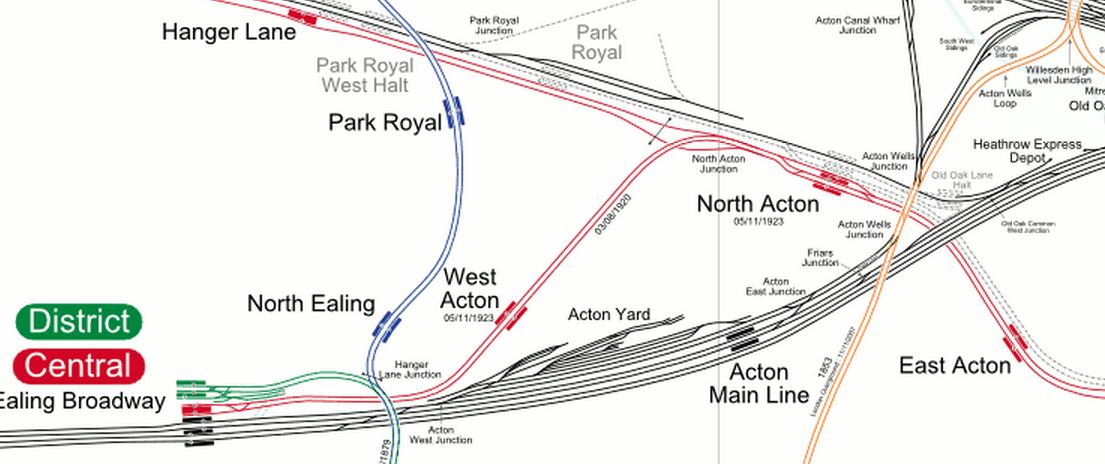
Ealing Broadway Station To West London Line
It is certainly possible to drive a train along the route and I suspect freight and Network Rail maintenance trains do it all the time.
But is it worth doing?
There is a discussion on District Dave’s web site, which kicks the extension to Ealing Broadway around, that probably comes to the conclusion it might cause all sort of operational problems for the Great Western Main Line and Crossrail.
4. Transport for London’s 2050 Plan
Transport for London’s 2050 Plan envisages some trains from the GOBlin linking via the Carlton Road junction to reach the Midland Main Line and Thameslink. I talked about this in Electrification of the GOBlin.
Doing this has two main advantages; GOBlin trains would not have to travel on the North London Line and there are plenty of places, that could be destinations.
As Gospel Oak’s sole terminal platform would now not be so important, as trains went around the station on existing lines to the South, Gospel Oak station could probably be redesigned and converted into a comprehensive high-capacity step-free interchange between the two Overground lines. This map from our French friends shows the layout of lines in the area.
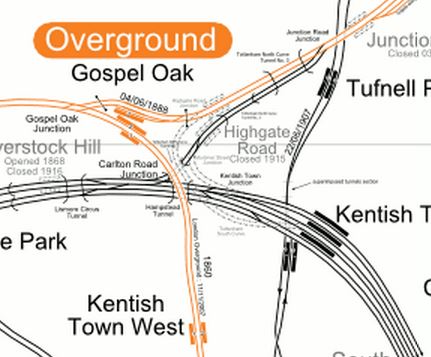
Gospel Oak Lines
Note that in the top right of this map stations at Junction Road and Tufnell Park are shown, which could be joined together in the future.
5. Old Oak Common
The development of an interchange at Old Oak Common will be a big game changer, as it will line so many lines in the area.
So it is a possibility for a destination of GOBlin trains, but if there was a good interchange at Gospel Oak would it just be putting another service into the mix at Old Oak Common for the convenience of a few passengers.
So what would I do?
It is obvious, that electrification of the GOBlin, Crossrail and the developments at Old Oak Common would prompt a sort out of the various lines and services in the West of London.
I would possibly do some station improvements to improve connectivity for a start.
- Willesden Junction is not an easy interchange and could be rebuilt to be much better.
- Gospel Oak is not a proper interchange and if the GOBlin starts to use the Carlton Road junction, then it will need to be rebuilt.
- There have been plans to connect the North London Line to the Central Line at North Acton.
- Central Line platforms could be built at Park Royal station.
There are also questions to be answered.
- Where does the Dudding Hill Line fit in all this?
- Will Crossrail make the western end of the Ealing Broadway branch of the Central Line less important.
- Could the Piccadily Line and the Central Line be simplified?
There are so many possibilities.
Conclusion
I doubt that the GOBlin will ever go to Ealing Broadway, although going along the Dudding Hill Line is a serious possibility.
The Easiest Way To Get To Ipswich For Tuesday Night Football
Tuesday night football at Ipswich, and probably Colchester, is a difficult and overly expensive journey, when you have to trouble out for a kick-off at 19:45 using the crowded trains of the rush hour, which charge you more for your pleasure.
Normally if I want to go to Ipswich on a Saturday, it costs me £26.25 for an Off Peak Return from Liverpool Street with a Senior Railcard. But last night, on a Tuesday it would have cost me £50.65.
But Crossrail has come into play with the takeover of the Shenfield Metro by TfL Rail, which means I can use my Freedom Pass to Shenfield for nothing. Younger people, using Oyster or contactless cards have seen a reduction in cost, which some publicity claims is 40%.
So last night, as I had to stop off at Forest Gate on the way, I took TfL Rail to Shenfield in the rush hour.
I then exited the station, had a coffee in one of several nice independent cafes around the station and then re-entered after buying a return ticket from Shenfield to Ipswich, which got me to the ground at a convenient time for the match.
It was all very civilised and for most of the way, I had a seat and was able to sit comfortably and read the paper, as most of the other passengers had departed by Witham.
And for this I paid the princely sum of £16.75, which is approximately a third of the regular price. Here’s the proof.
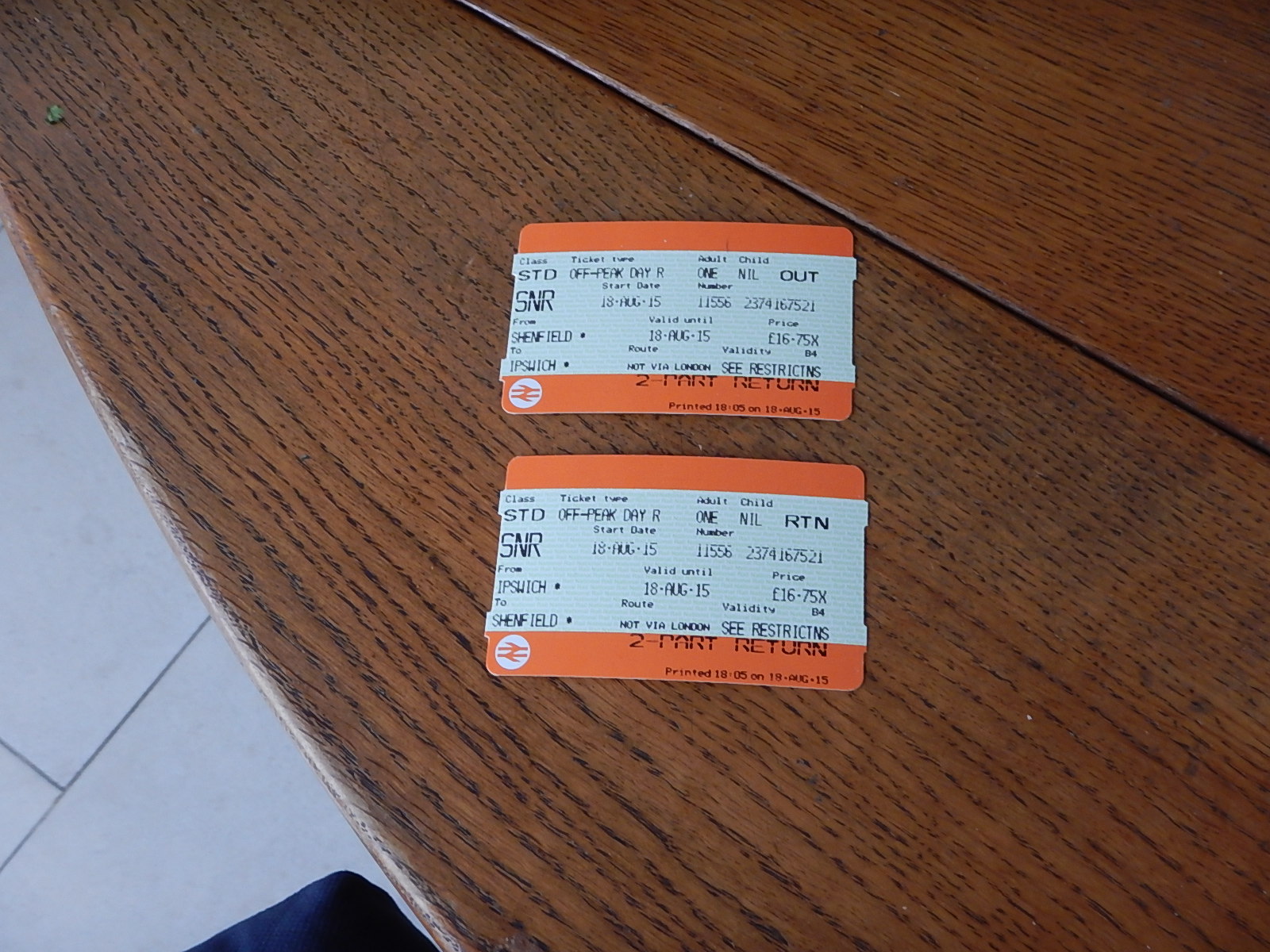
London To Ipswich For £16.75
I shall be going this way again, especially as I have friends in Shenfield, with whom I could share a drink.
This is a substantial benefit to anybody living in London with a Freedom Pass, who needs to go to anywhere in the South Eastern portion of East Anglia.
You’ve always been able to buy tickets from the Zone 6 Boundary, but the trouble with that is Harold Wood, which isn’t as well connected as Shenfield. You also have difficulty buying these tickets on-line and usually have to go to a booking office.
If you don’t have a Freedom Pass, using contactless cards to Shenfield on TfL Rail and then using an onward ticket from Shenfield may well be cheaper for the whole journey.
Of course, if you bought your onward ticket from Shenfield before you travelled, all you would do is get off one train at Shenfield and get on another to your ultimate destination.
The only drawback is that the journey via Shenfield is slower.
Currently, Ipswich is about 70 minutes from Liverpool Street, but when the Norwich in Ninety improvements are completed, I think we could see this time reduced to 60 minutes or even less. New trains with sliding doors would help too!
Shenfield is 43 minutes from Liverpool Street at the moment, but Crossrail will reduce this by a couple of minutes. Ipswich is probably an hour past Shenfield, but Norwich in Ninety must reduce this.
The biggest change could come when Crossrail opens and there is a new East Anglian rail franchise. If I was bidding for the new franchise, I would stop a proportion of the fast London-Colchester-Ipswich-Norwich trains at Stratford, Romford or Shenfield to interface with Crossrail, so that the journeys for passengers were optimised to get as many on board as possible., to maximise my company’s profits and hopefully my bonus.
Norwich in Ninety plus Crossrail can only mean that house prices in East Anglia will continue to rise.
From Walthamstow To Hackney
The space in the East of London up the Lea Valley between Walthamstow and Hackney is all grass, scrub, reservoirs, canals, rivers and railways.
These pictures were taken on a train between Walthamstow James Street and Clapton stations.


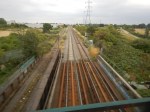




It is a very underused area and lies just to the south of the proposed Walthamstow Wetlands. The only development that will happen here is to reinstate the Hall Farm Curve to enable trains from Walthamstow and Chingford to join the Lea Valley Line to Lea Bridge and Stratford. It will probably end up though, ringed by high-rise housing, like you can see along the River Lea.
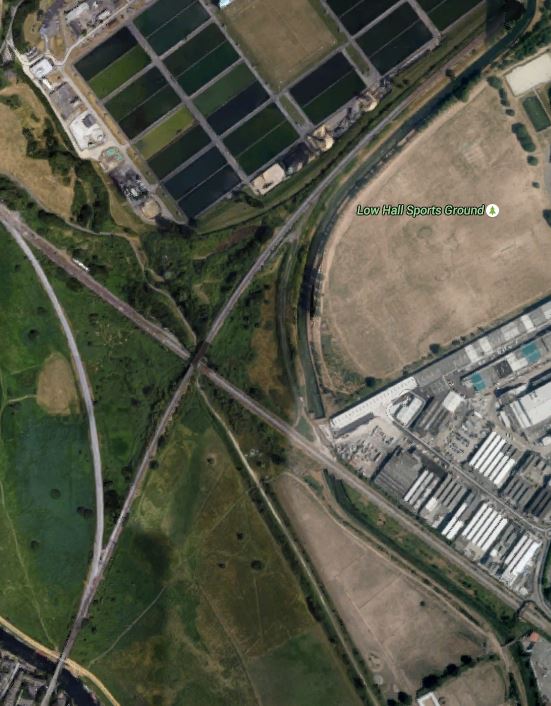
London is a surprising city. Soon it will be a City with a world-class nature reserve just a few minutes from the business heart of the City, This is a Google Map of the area.
Walthamstow To Hackney
Note the two rail lines crossing in the middle. The route of the Hall Farm Curve can be made out, as it hugs the boundary of the unmanaged area.
At the top of the picture you can see the filter beds of Thames Water’s giant water factory, that provide a lot of London with water using the massive reservoirs of the Lea Valley, some of which will form part of the Walthamstow Wetlands.
If you take a train from Liverpool Street to Stansted Airport or Cambridge, you’ll come over the River Lea and then take the curve to join the main line before passing through the Walthamstow Wetlands and stopping at Tottenham Hale.
Electrification Of The GOBlin
I have just found this article on the Gospel Oak to Barking Line on the Railfuture web site.
It explains the way the line will be electrified and other issues very well.
One thing it says is that the line will be electrified in two parts, so that whilst the overhead wires are erected on one part and passengers will be put on the bus, the other part can be used by four-car trains. Provided of course they lengthen the platforms.
The Railfuture article is an interesting read, as it talks about this short stretch of electrification.
1. The Line Connects Electrified Lines
It is joined to electrified lines at each end and several along its route, which will enable through electric passenger and more importantly freight trains to use the route.
It also means that getting electric power to the line shouldn’t be too much of a problem.
2. A Freight By-Pass For The North London Line
At present electric freight trains have to use the North London Line, but using an electrified GOBlin would avoid congested junctions at Stratford, Forest Gate and Camden Road.
3. More Passenger Capacity
Replacing two-car Class 172 diesel trains with new four-car Aventra electric trains, won’t just double the passenger capacity, but because electric trains have faster acceleration, they will do better than that.
4. Extended Passenger Routes
The extension of the GOBlin to a new Barking Riverside station was announced in the 2014 Budget, but the Railfuture article talks about extending services the other way to Willesden Junction, Clapham Junction or even Ealing, which probably means Ealing Broadway.
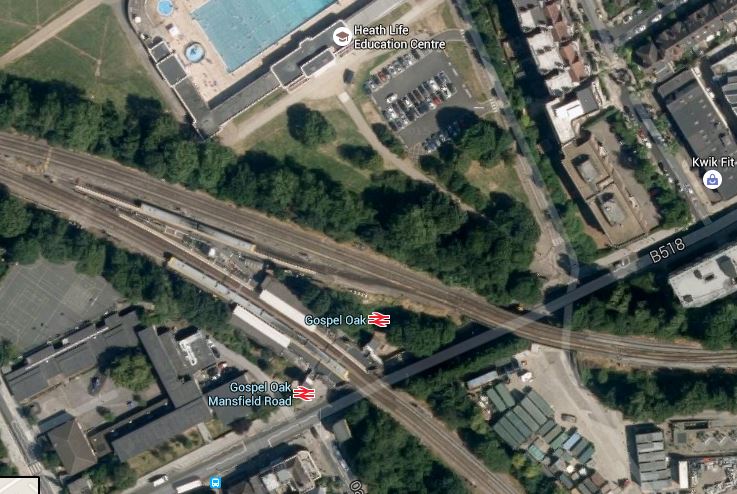
You can understand why Transport for London might want to do this, but it would need new platforms at Gospel Oak. This Google Map shows the station.
Gospel Oak Station
Note that there is a Class 172 in the platform and it looks like accommodating a train, twice that length might need a platform extension.
I suspect that Transport for London will look at other options, depending on where passengers go from Gospel Oak and the number of freight trains that have to be pathed through the area.
On a personal view, I’d like to see trains on the GOBlin terminating in Ealing, as that would give me an easy route to the area, by getting a 141 bus from outside my house to Harringay Green Lanes.
But I don’t think that is likely. After all when Crossrail opens, I can just take a 141 bus the other way to Liverpool Street/Moorgate and get Crossrail to Ealing.
Greater Electric Freight Capacity and Flexibility
Railfuture reckon that up to thirty freight trains a day will leave London Gateway and many will be electric hauled and need to make their way up the West Coast Main Line. An electrified GOBlin gives them two routes across London.
The second route will also enable services to be maintained, when say one line is blockaded.
Limited passenger services could also be run via Stratford and South Tottenham to Gospel Oak, when work is being undertaken on the North London Line.
Harringay Park Junction
Railfuture also says that this vital junction will be electrified.

Harringay Park Junction
The GOBlin runs across the image, with the junction under the bridge on the left.
It will allow eastbound freight trains to go north on the East Coast Main Line.
Carlton Road Junction
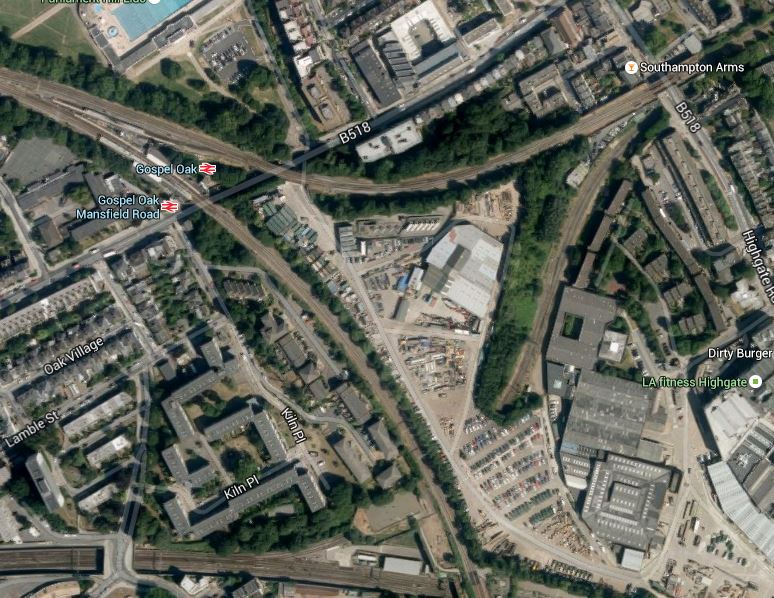
Another junction, that Railfuture believes will be electrified.
Carlton Road Junction
It will allow westbound trains to go north on the Midland Main Line, which runs across the bottom of this image
A lot will be freight going up towards the Radlett Freight Terminal or the Midlands, but a proportion will take the Dudding Hill Line to go west.
Dudding Hill Line
I think that it will not be long before the Dudding Hill Line is electrified to allow both electrified freight and passenger services to go west, by bypassing the North London Line.
Certainly Transport for London have identified this route as a possible GOBlin extension.
The Piccadilly And Victoria Lines, Manor House Station And Harringay Green Lanes Station
The planners and the politicians created a real dog’s breakfast here, when the Victoria Line was designed and built in the 1960s.
A Few Facts
I’ll start with a few facts, as far as we can trust Wikipedia.
From the Planning and construction section of the entry for the Victoria Line.
A test tunnel from Tottenham to Manor House under Seven Sisters Road had been bored in 1959 and was later incorporated into the running tunnels.
From the entry for Seven Sisters station.
The section of Victoria line between Seven Sisters and Finsbury Park stations is the longest between adjacent stations in deep level tunnels on the London Underground network.
From our own observations.
There is a ventilation station at the junction of Green Lanes and St. Ann’s Road. This was put in, as it’s a long way between Turnpike Lane and Manor House stations. The Cockfosters Extension section of the entry for the Piccadilly Line says this.
It was also planned to build a station between Manor House and Turnpike Lane at the junction of Green Lanes and St Ann’s Road in Harringay, but this was stopped by Frank Pick, who felt that the bus and tram service at this point was adequate. However, a ‘Ventilation station’, in similar architectural style to tube stations of the time was provided at the site, and is visible today. There was also some opposition from the London and North Eastern Railway to the line.
I think we underestimate the influence the LNER had on shaping London’s railways. Much was positive, but some was about protecting their interests.
I had a great uncle, who lived in Harringay and in the 1950s, we’d go and visit him on the 29 bus, as it was a long walk from Turnpike Lane.
What Might Have Been
Here again from various parts of Wikipedia.
From the Victoria Line section of the entry for the Piccadilly Line
During the planning stages of the Victoria line, a proposal was put forward to transfer Manor House station to the Victoria line, and also to build new “direct” tunnels from Finsbury Park to Turnpike Lane station, thereby cutting the journey time in and out of central London. This idea was eventually rejected due to the inconvenience to passengers that would have been caused during rebuilding, as well as the costs of the new tunnels.
From the entry for Seven Sisters station.
During the planning phase of the Victoria line, thought was given to converting Manor House into a Victoria line station and diverting the Piccadilly line in new tunnels directly from Finsbury Park to Turnpike Lane via Harringay Green Lanes, but the idea was abandoned because of the inconvenience this would cause, as well as the cost.
From fifty years and more after construction of the Victoria Line it might seem to be a feasible plan on a cursory look.
- It would speed trains on the Piccadilly Line to Kings Cross and Central London, as the route is shorter.
- There would be an extra station at Harringay Green Lanes on the Piccadilly Line, which would replace Manor House.
- It might also be feasible to turn the ventilation station at Green Lanes into a station.
- There would be an extra station at Manor House on the Victoria Line.
Also affecting these services will be this summer’s upgrade to the Victoria Line which will allow thirty-six trains per hour on that line.
So if you take the two improvements together passengers on both the Victoria and Piccadilly Line would get a better service with extra stations.
Enter Crossrail 2
Crossrail 2 will add another dimension to the planning in this area.
I’ll start with a personal observation from my childhood.
Many times, I travelled from Oakwood to Leicester Square or South Kensington and it’s a long way! It probably still is! And in trains that are a lot more crowded.
The opening of Crossrail 2 will affect the Piccadilly and Victoria Lines.
- Passengers on the Piccadilly Line from Wood Green northward may switch to Crossrail 2 at Turnpike Lane.
- Passengers on the Victoria Line from Walthamstow may switch to Crossrail 2 at Tottenham Hale.
- Many passengers from the London Boroughs of Barnet, Enfield, Harringey and Waltham Forest, will change their route to Central London with the arrival of Crossrail 2. And before that an upgraded Thameslink.
I think overall, we’ll see an easing of the lot of passengers on both the Piccadilly and Victoria Lines, by the end of the next decade. The Piccadilly Line should also have been upgraded with new and larger trains, running to an increased frequency. The Future Upgrades section for the Wikipedia entry for the Piccadilly Line says this.
On current plans, resignalling work on the Piccadilly line will begin in 2019 and new trains should be in service by 2022.
If the Piccadilly Line eases South of Turnpike Lane, then there may be scope for opening more stations on the line at perhaps the ventilation station on Green Lanes and Harringay Green Lanes.
And what about an interchange to the North London Line at Maiden Lane to serve the Kings Cross Central development?
How Could New Stations Be Built?
Doing anything at present to create any new stations on the Piccadilly Line is probably not feasible, as it would be impossible to shut the Piccadilly or Victoria Lines for long enough to do anything substantial. There’s been enough chaos caused by shutting the outer reaches of the Victoria Line this summer.
Transport for London have a similar problem about creating a link between the Central Line and the East London Line at Shoreditch High Street station. Transport for London feel that nothing can be done until Crossrail opens. I discussed that link in Will Shoreditch High Street Be Connected To The Central Line?.
Creating new stations on the Piccadilly Line probably can’t be done, until Crossrail 2 is opened, as how do the passengers get to work, rest and play?
I think that in a few years time actually creating the stations will not be as difficult as it would be today, from a construction point-of-view. The experience gained on building Whitechapel station on Crossrail, where a technique called uphill excavation has been used, might be applicable.
Conclusion On The Piccadilly Line In Harringay
My view is that a sort out of the Piccadilly Line and its stations in Harringay is possible and probably very worthwhile, but only after Crossrail 2 has been opened.
Planned Rail Development At Harringay Green Lanes Station
Over the next few years, there will be two major developments on the GOBlin through Harringay Green Lanes station.
The line is going to be electrified with 25 KVAC overhead lines, which will mean putting up structures to support the cables. The bridge across Green Lanes will probably be replaced, as it doesn’t look to be in the best of condition and to be safe, it will probably be replaced before the wires are erected.
The new electric trains will be four-car and this will probably mean the platforms have to be extended. I suspect that Transport for London may well future-proof the station and extend the platforms for perhaps six or even eight-car trains.
There is definitely space at the eastern end of the station to do the platform extension, but why not extend the platforms over the bridge and perhaps even use glass sides, as they’ve done at Deptford. Extending over the road will also mean that in future a western entrance or link to Harringay station could be created.
As no plans to replace the bridge have been published that I can find, could it be that Network Rail and their architects are working with property developers to design a proper flagship station?
I also think that designing a station to carry the overhead wires in its structure, as I’ve seen at Liege station, may simplify the design and save on the cost of the building.
Property Development And Harringay Green Lanes Station
If you want a profitable development, building car parking is a waste of money, so good access to public transport is essential.
For this reason and especially for housing, property development will be the force that drives the development of London’s transport system.
There is a lot of scope for property development in the area around Harringay Green Lanes station.
This document from the London Borough of Harringey entitled Harringay’s Local Plan lists a large number of development sites around the station.
On Page 92 the document details the St. Ann’s Hospital Site, which lies to the north of the GOBlin. It details how the South West corner of the hospital site will be connected to Green Lanes and the station.
On Page 94 the document goes on to talk about the Arena Retail Park, which adjoins the station.
Both sites have something that developers love. They are both in single ownership; one public and the other private.
So you can have control of the sites without the sort of problems that Tottenham Hotspur have had on building their new stadium, which has delayed the development for some years.
As it will be in the developers’ interest and profitability to have good public transport, I would be very surprised not to see a very good station built at Harringay Green Lanes to serve their developments and also to improve the transport opportunities for locals. This is said in the document.
Access to Harringay Green Lanes Station should be improved by creating a
new entrance on Portland Gardens.
Also, no sane developer would build this station without a secret place, where the escalators and lifts to the Piccadilly Line could be installed. As an example, Tottenham Court Road and perhaps Angel stations, are already ready to accept Crossrail 2.
I believe that given the amount of property development that will take place in the area, a new station at Harringay Green Lanes will be one of the first new buildings to be constructed.
Imagine the advertising potential for your development to see a shiny glass and steel station built over Green Lanes, as you drive or ride a bus through the area. Buiilding the station partly over the road would mean you need to use less valuable land and it would be easier to create a Hackney style link to Harringay station along the railway. If you want to see what can be done, go to Deptford station.
Tailpiece
If you have a flagship station at one end of Green Lanes in Harringay, why not have one at the other by converting the ventilation station into a real one?
I just wonder if that should and could be done before Turnpike Lane is rebuilt for Crossrail 2, so that there is an alternative station, if Turnpike Lane had to be closed.
Crossrail have shown that they like to be good neighbours and converting the ventilation station could be something they’d look at to cool the anger of diverted passengers and local residents. The superb new Pudding Mill station on the DLR was built by Crossrail, as the old station was in their way and had to be demolished. I was very surprised that the new station is so spectacular, but I suspect that through good design, clever use of space and leaving out expensive escalators and various utilities not needed if there are driverless trains and no booking office, that the station wasn’t as expensive as it looks. The property developers and West Ham United won’t be complaining.
Before GOBlin Electrification – Walthamstow Queen’s Road
Walthamstow Queen’s Road is of a similar standard to most of the other stations on the Gospel Oak to Barking Line.



The station like Harringay Green Lanes is step-free by ramps and at some point will need lifts.
Before GOBlin Electrification – Wanstead Park
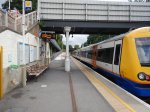
Wanstead Park station is another tidy station on the Gospel Oak to Barking Line.


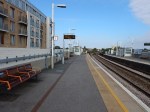
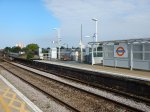
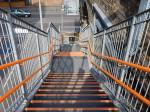


It has two steep staircases and no lifts, but the platforms can be easily extended, if needed for the new trains.
In my view the station also needs a light-controlled crossing by the entrance and better placed bus stops, so that transfer to the nearby Forest Gate station is easier.
Before GOBlin Electrification – Woodgrange Park
Woodgrange Park station is one of only two stations on the Gospel Oak to Barking Line, that is electrified.
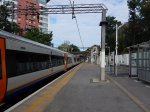
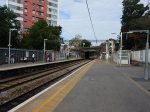
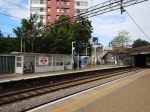

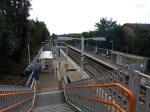

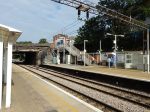


As the electrification stretches all the way to Barking, the only thing the station will need to bring it up to the standrd passengers expect, is perhaps a couple of lifts.
If the platforms need lengthening, there are abandoned sections that could probably be brought back into use. This Google Map clearly shows the usable white and disused sections of the platforms.
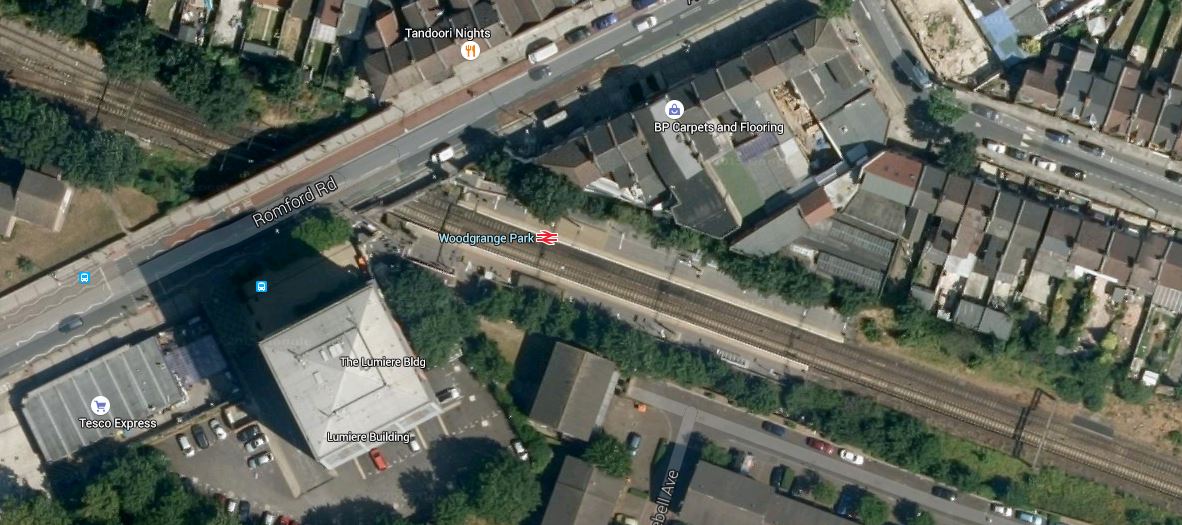
Woodgrange Park Station
I estimate from this image that the current length of usable platform is around eighty metres. So they could probably accommodate one of the new four-car trains. But should the platforms be extended to future-proof them for six or even eight-cars.
Before GOBlin Electrification – Harringay Green Lanes
To get to the Gospel Oak to Barking Line, I get a 141 bus from outside my house to Harringay Green Lanes station.

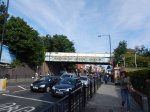
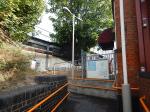


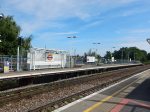
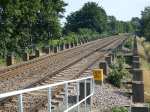
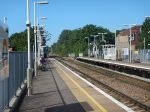
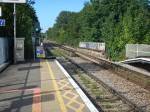
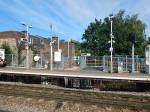


It is another tidy station serving a retail park on the site of the old Harringay stadium. Like most of the stations on the line, there are no lifts and the two platforms are served by stairs and ramps.
Other than the inadequate step-free access, note the following about the station.
- The platforms are not unduly long, but there would appear to be foundations from previous ones, that were longer.
- The bridge although obviously sound, probably needs a bit of work to bring it up to the required visual standard.
- The station is an out of station interchange to Harringay station and work could be done to make the walking route easier. I estimate that the distance is about 50% longer than the Hackney Downs/Central Link.
- There is a lot of commercial and retail use in the area, that may be redeveloped.
Note too, that the Piccadilly Line crosses underneath and there is a long distance between the stations either side on that line. No plans exist to create an interchange, but it is a station, where that should never be ruled out.
This is a Google Map showing the area around the two Harringay stations.
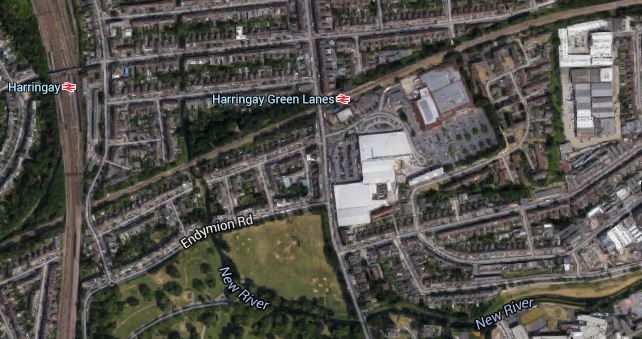
The Area Around The Two Harringay Stations
I think that by 2050, Harringay Green Lanes station will be very different.
Have You Got A Bit Of Concrete To Lay?
In this page on their web site, Crossrail have just unveiled their 465 metre long concreting train.
They’ve also put up a video.
It was bought second-hand from the French and delivered through the Channel Tunnel.
Let’s hope it works!
 The Anonymous Widower