To Brighton The Long Way
As it had been a long time, since I’d been to the Rye area in Kent, I decided to go to see Ipswich at Brighton, by taking the long way round via Ashford, Brighton and Lewes.
I arrived at Ashford on the high speed Class 395 from St. Pancras and from there to Rye, I had a very clean Class 171 to myself.
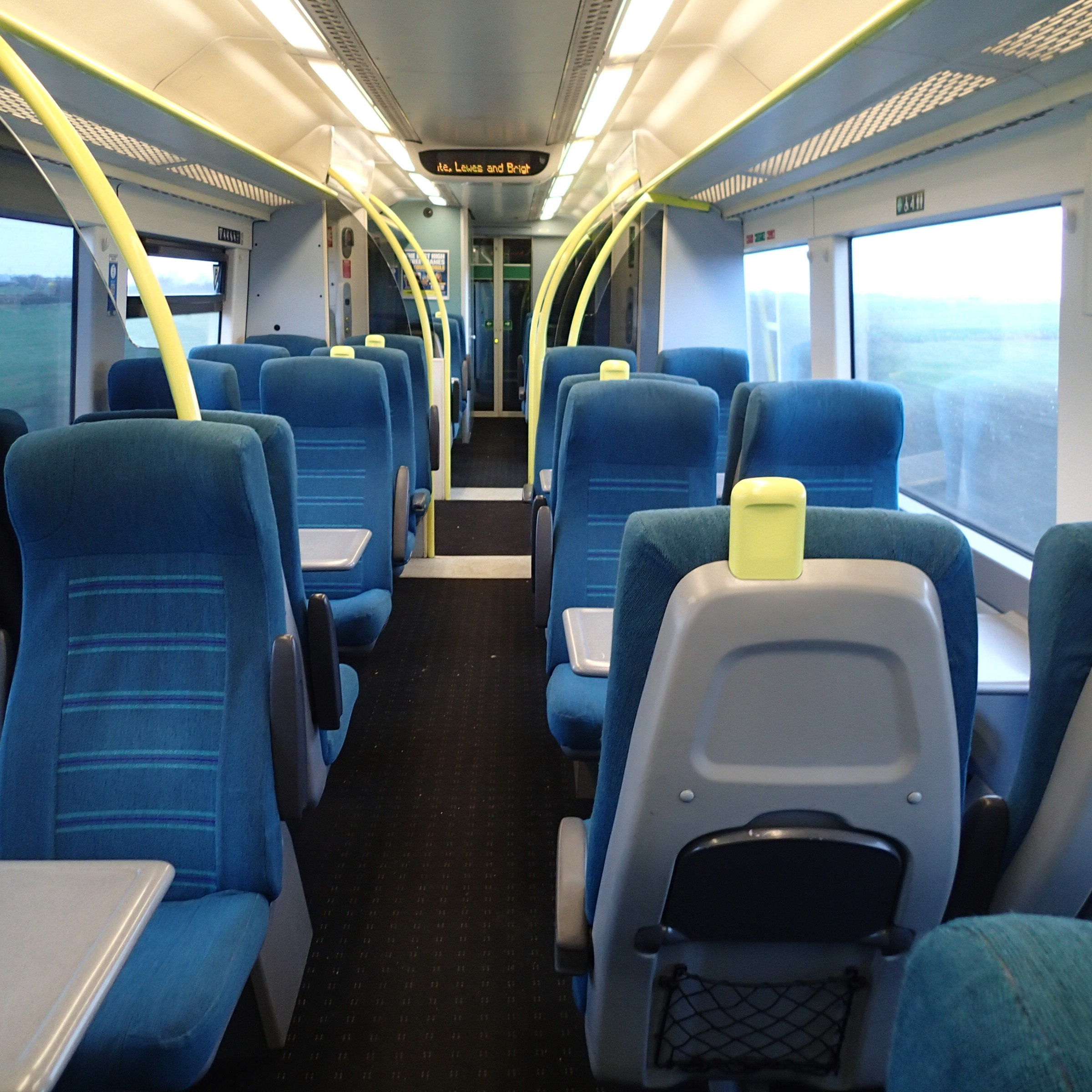
My Personal Class 171
With some of the controversy about the lack of toilets on Crossrail, it is interesting to note that the six car Class 395 has only two toilets, whilst the two car Class 171 has just a single. So it would appear that there isn’t much demand for toilets-on-the-go in Kent.
On a serious note, the journey from Ashford to Rye is on the Marshlink Line, which has recently been looked at for electrification so that high-speed services can come from St. Pancras to Hastings, Bexhill and Eastbourne via Ashford. It’s reported here in Kent Online.
If you look at the area from Ashford to Eastbourne, it is not one of the most prosperous places in the South East, although it has improved in recent years, so the promoters of the scheme might have a point, when they say an improved train service might give the whole area a lift.
An electrified Marshlink Line connecting Ashford to Ore where the existing third-rails finish could be one of those additions to the rail network, where because it’s there, you get all sorts of unexpected benefits.
The electrification would have to be third rail, which is probably something Network Rail want to avoid. But this would mean that apart from the freight services to Dungeness Power station, all the services along the South Coast could be electric, as third rail running is no problem for the Class 395. The Class 171 would find employment elsewhere.
The case is probably not a strong one, as if it was when the Marshlink Line had problems in Ore Tunnel a couple of years ago, the powers that be, would have taken the opportunity presented by the line closure to electrify it.
What will probably result in the electrification of the Marshlink Line is developments on the diesel-operated Uckfield branch of the Oxted Line. In the discussion of the future of this line on Wikipedia, various scenarios are put forward that could result in the full electrification of this line. If this happens, then electrification of the Marshlink Link would remove the Class 171 trains from Sussex and Kent, which surely would be a saving in train care costs.
According to this report in the Sussex Express, the council is backing electrification of both lines.
Electrifying two rail lines in East Sussex, including Uckfield to Hurst Green, is the best way of improving capacity, reducing journey times and boosting the county’s economy, a council chief said.
East Sussex County Council has designated the electrification and dual tracking of the Uckfield to Hurst Green and Hastings to Ashford lines as its key priorities for improving rail infrastructure and services.
The report also mentions an East Sussex Council Council report entitled Shaping Rail In East Sussex.
I have read this and it is a sensible document, that shows the council is serious about providing a good rail service for the area.
One thing the report mentions is that Thameslink was going to go to Eastbourne, but this has now been dropped. Other reports show that many commuters would like to be in London in seventy minutes instead of the current ninety and they had hoped a direct link via Thameslink would have helped achieve this. I doubt, going from Eastbourne to London via Ashford, would be anywhere near the magic seventy.
After 2018 when Thameslink is fully open, the pressure on railways in East Sussex will inevitably increase. Especially, as it is a county, where a lot of the roads are not an easy alternative.
I do wonder if electrification and dualling of these two lines is going to be one of a host of infrastructure projects announced before May.
Also Available In Red
I took this picture on Piccadilly after leaving the Royal Academy.
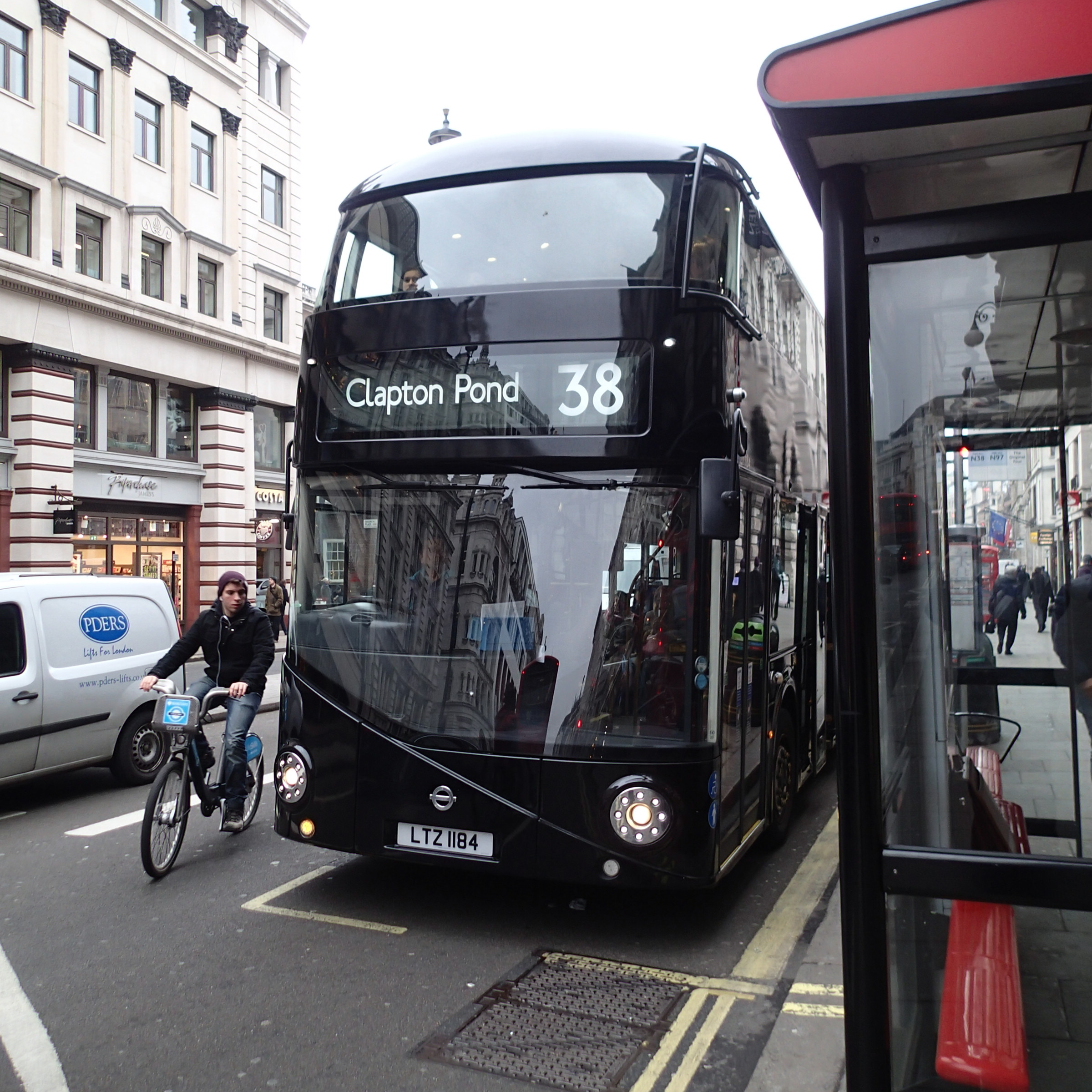
Also Available In Red
As I passed the bus, the tail-gunner recognised me and wished me well, probably because I travel on a 38 up to four times a day and usually sit downstairs.
All very uplifting!
I do wonder though, if new Routemasters do create their own little communities as they cruise around London, which all helps the city run smoothly.
An Information Free Journey
This afternoon, I took an Abellio Greater Anglia train from Bruce Grove to Hackney Downs.
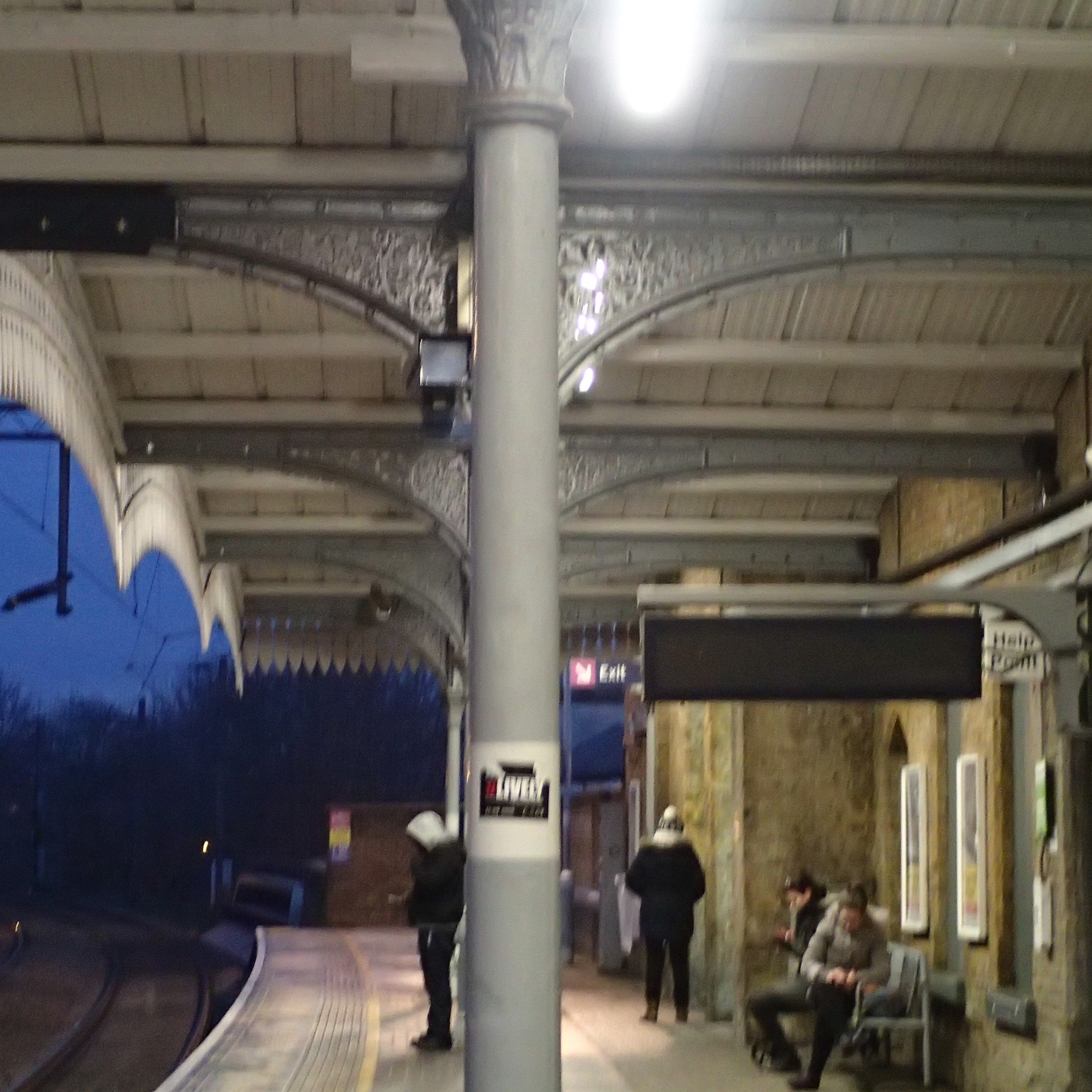
An Information Free Journey
The displays weren’t working on both platforms at Bruce Grove station and the only way to tell where the train was going, was to read the display on the cab, as the train trundled out of the gloom.
The Class 315 train, resplendent inside in all its girlie pink, doesn’t have information displays and as the driver was economical with his announcements, you were left peering into the dark to determine the stations, from the names on the badly-lit platforms.
Luckily, just before Hackney Downs station, is the floodlit blue Mossbourne Community Academy, and I was forewarned of our arrival, and didn’t end up in Liverpool Street.
I know that on the thirty-first of May this year, the Lea Valley Lines will come under the control of Transport for London, so Abellio may think they have reasons to provide minimal service on these lines.
But that is no reason to keep passengers in the dark!
An Interesting Correlation With Job Creation
Today, the Centre For Cities published their Cities Outlook 2015. The report is discussed here on the BBC web site, in a report entitled Economic growth ‘dramatically’ diverges between North and South.
They compare the top five cities; Milton Keynes, London, Cambridge, Brighton and Bournemouth for job creation with the five worst; Gloucester, Rochdale, Blackpool, Newport and Hull and conclude that the performance difference is due to the five best being in the south-east.
They can make their point, but if you look at the next five best and worst, I believe another pattern is starting to emerge.
In sixth to tenth place are Portsmouth, Coventry, Newcastle, Aberdeen and Nottingham and the next five worst are Grimsby, Huddersfield, Swindon, Wigan and Burnley.
I’m going to put a list of the top and bottom cities together with how many trains there are with less than two changes to London after 20:00 and what the time of the last direct or one-change train leaves.
This is the top ten.
Milton Keynes – > >20 trains with last train 00:24
London – N/A
Cambridge – >20 with last train 23:22
Brighton – 15 trains with last train 23:05
Bournemouth – 7 trains with last train 23:12
Portsmouth – 12 trains with last train 23:19
Coventry – 11 trains with last train 23:31
Newcastle – 3 trains with last train 21:15
Aberdeen – Not relevant, but you can fly after 20:00
Nottingham – 5 trains with last train 21:32
And this is the bottom ten.
Burnley – 1 train with last train 20:12
Wigan – 3 trains with last train 21:28
Swindon – 6 trains with last train 23:16
Huddersfield – 4 trains with last train 21:12
Grimsby – 1 train with last train 20:34
Hull – 2 trains with last train 20:57
Newport – 3 trains with last train 21:43
Blackpool – 1 train with last train 20:21
Rochdale – 1 train with last train 20:00
Gloucester – 3 trains with last train at 22:14.
I think it is true to say that for the top ten in the creating jobs table, they have much better return trains to London in the evening than the bottom ten.
Some of those in the bottom ten like Grimsby, Hull, Blackpool and Rochdale have truly dreadful services back to London.
I haven’t looked at the outward journey in any detail, but surely if the return is bad, the outward journey would be of a reduced standard.
So some of these cities are not only a long way to drive, but a complete pain on the train. Would you establish or expand a manufacturing plant or offices, if you knew that every trip might have to incorporate an overnight stay? Given that you could now fly to a lot of places in Europe, do a day’s work sand return to your own bed.
It is my view that we could improve the productivity of decision makers , many of whom are based in the London area, solely because London has such a large population, by ensuring that every major town and city south of Hadrian’s Wall could be reached from the capital in a reasonable time with no more than a single change.
One effect of this would be to create a multiplicity of places, where perhaps a new factory was located, or you’d be going to get something you needed manufactured. All too often, certain cities have advantages over their rivals, as when the money was being dolled out a few years ago, they got an improved railway or a better station.
It All Happens In London In May
May is looking to be a big month for the infrastructure of London.
I’ve just read this article in the Hackney Gazette, which is entitled Canary Wharf Crossrail Artwork Released.
But as the article says, we won’t see the artwork until 2018, when Canary Wharf Crossrail station opens.
But what the article does say, is that the shops, restaurants, bars and the roof garden will open to the public in May.
So what else is happening in May?
1. Crossrail will take over the Shenfield Metro services in May. I have spoken to staff about this and everybody I spoke to seemed positive about the move and there has been the odd article like this one in the Btrentwood Gazette that has shown a positive tone.
2. Cossrail has put out this report, which says that tunnelling will be complete in the Spring amongst other things.
3. The Lea Valley Lines become part of the London Overground on the 31st of the Month. I don’t think you’ll find many, who believe it was wrong that London took over the North and East London Lines to create the Overground in 2007. So probably the sentiment for this takeover is positive.
4. Today on Hackney Central station, I asked a London Overground employee, when the pedestrian link to Hackney Downs station will open. It should be in May. He also told me about all the other developments at Hackney Central that are being planned, like extra lifts. The Overground does seem to have instilled infectious enthusiasm into its staff.
There is also the little matter of the first General Election of 2015.
Work To Start On Lea Bridge Station
According to this article on the Walthamstow Guardian web site, work could start soon on the new Lea Bridge Station and it could be open by the end of the year.
I first reported on this reopening in April 2013.
Should Every Train Have A Clock?
Every London bus shows a clock on the stop display and because of this, I rarely wear a watch these days.
Some trains now show a clock on their destination displays too!
I hope this is going to be universal.
Do Crossrail Trains Need Toilets?
ITV have published this web article entitled The £1bn Crossrail where you can’t spend a penny.
It’s a catchy headline, but is the article just knocking copy to get views or rival politicians making a point.
At present, the Class 315 trains that run from Shenfield to Liverpool Street, do not have toilets. The journey takes up to forty three minutes. So does anybody get taken short on a train?
I discussed this with a customer support guy, that I met at Tottenham Court Road. We thought that some Underground journeys would be longer. I’ve just looked up Cockfosters to Heathrow, which is a journey that if I still lived in the area where I grew up, I’d probably do occasionally. It takes ninety minutes.
So if toilets were to be provided on Crossrail Class 345 trains as some journeys will take nearly an hour, they should probably be provided on long distance Underground services.
In my chat at Tottenham Court Road, I was reminded about the version of the iconic tube map that shows the location of toilets. It actually shows, whether toilets at stations are inside or outside the gate line.
Surely, a much better and more affordable solution would be to update the ribbon maps in all Underground and Crossrail trains to show if the station had toilets, in the same way, they show the step free access. Some extra signs on stations showing the status and location of toilets would also be a good idea.
Incidentally on the Essex and Reading legs of Crossrail, several of the stations already have decent toilets. Getting off a train and catching the next one, to have a relaxed toilet break, is probably not a huge delay, due to the high frequency of the trains.
London has a chance to set high standards in this area, without putting toilets on any trains.
Although saying that, Thameslink’s Class 700 trains will have toilets, but then Brighton to Peterborough might take two hours plus.
Perhaps, ITV should stick to reporting the news they do best, like I’m A Celebrity Get Me Out Of Here.
An Opportunity For Dalston?
Look at this map of the rail and Underground lines in East London going north around Dalston Junction.
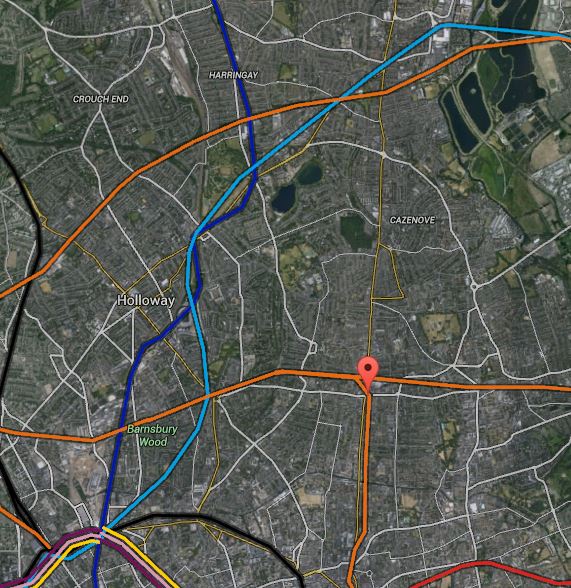
Map 1. Rail Lines Around Dalston
The light blue,dark blue, black and orange lines are the Victoria, Northern and Piccadilly lines and Overground respectively. Stations to note are.
1. Dalston Junction which is marked by the red arrow.
2. Tottenham Hale at the top right and is shown in more detail on this larger scale map.
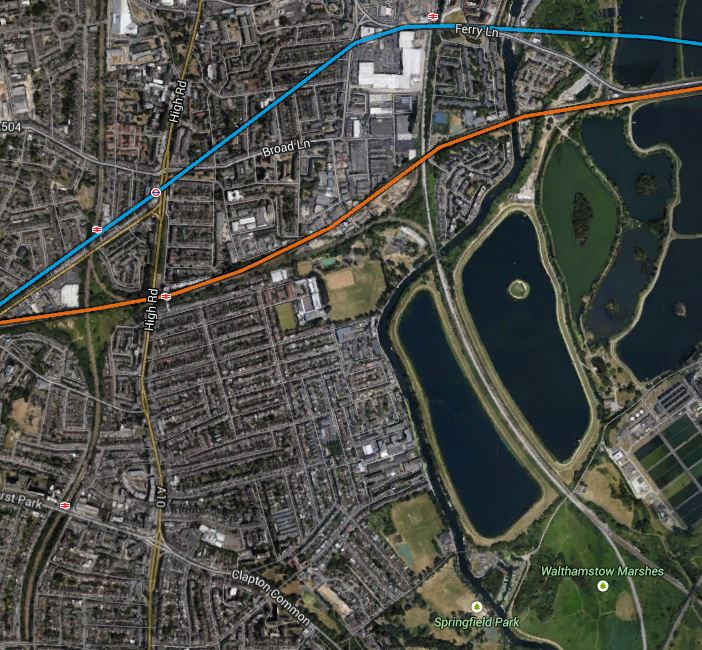
Map 2. Tottenham, Seven Sisters Area
3. Seven Sisters is the next station as you come south-westerly from Tottenham Hale and is marked by both tube and national rail symbols on the second map.
4. Below and slightly to the right of Seven Sisters is South Tottenham on the Gospel Oak to Barking Line.
5. On the original map, Angel is towards the left at bottom, approximately south west from Dalston Junction. This is a larger scale map of the area.
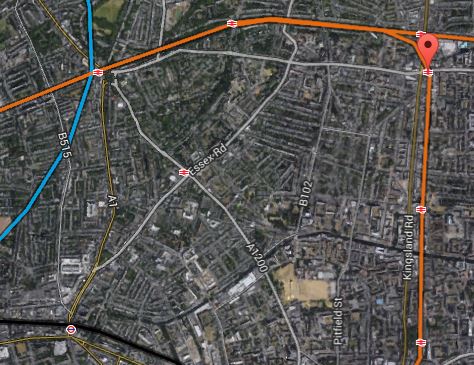
Map 3. Angel To Dalston Junction
In this map, Angel is close to the bottom left. Note how you can see Highbury and Islington, Essex Road and Canonbury stations north of the Angel and Haggerston and Hoxton stations south from Dalston Junction on the East London Line.
Roads, like Essex Road, Balls Pond Road and New North Road are visible, as is the Regent’s Canal.
From the limited information that has been published about Crossrail 2, I believe that the New Southgate branch will pass under Seven Sisters and very close to South Tottenham before meeting the other branch from Tottenham Hale somewhere near Walthamstow Marshes shown on Map 2 and in detail below.
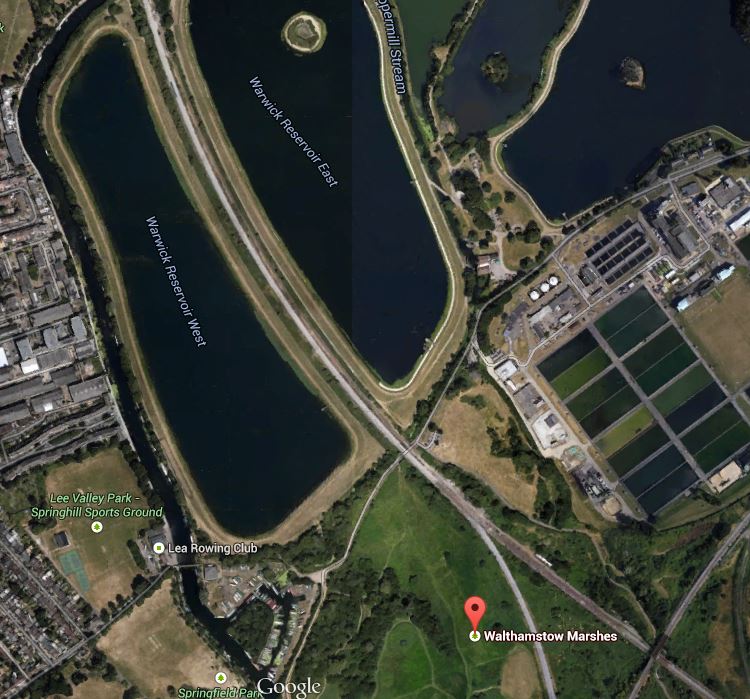
Walthamstow Marshes
The map shows how Walthamstow Marshes could also make an ideal site from where to build the tunnels.
1. It is a spacious site with good road access, where the running tunnels to New Southgate, Tottenham Hale and Central London may all meet.So if a big deep shaft could be dug here, as Crossrail 1 did on the Limmo Peninsular, it could be used to launch and retrieve the tunnel boring machines (TBM). Looking at how far the TBMs went from Limmo to Farringdon on Crossrail 1, which is a distance of 8.3 km, I suspect that their successors on Crossrail 2 could go a long way under London and given the right ground conditions, perhaps even all the way to Wimbledon.
2. The site is close to the West Anglia Main Line and surely this could be used to bring in heavy equipment and materials.
3. Around the west of the Marshes, the map shows the River Lea, which could be another transport artery into the site.
4. As there are several reservoirs there is plenty of raw material for the drink that builds the railways; tea.
5. The one problem is that the Marshes are a Site of Special Scientific Interest. But having seen how Crossrail 1 handled the potentially tricky situation at Stepney City Farm, I suspect that if they follow similar rules, then an amicable solution can be found.
From the junction near Walthamstow Marshes, Crossrail 2 has said that the line will go to the next two stations; Dalston Junction and the Angel.
This would mean that the line would run roughly north east to south west from the junction of the two branches of the line to the Angel. Whether it is aligned under a road, a railway or even the Regent’s Canal, would obviously be a matter for the engineers.
On this map, I have drawn the possible route in pink.

Map 4. Possible Crossrail 2 Route At Dalston
Not shown on Map 4 is the line of the Channel Tunnel Rail Link, which runs in a tunnel underneath the North London Line.
I believe that it might be possible to dig the tunnel so that it passes underneath both Dalston stations, despite the presence of the Channel Tunnel Rail Link. In this respect, I have great faith in the ability of London’s finest hole diggers to navigate correctly and not connect New Southgate and Tottenham Hale to France.
One of my Google Alerts today, picked up this article from the Hackney Gazette, entitled Crossrail 2 threatens another Georgian terrace in Dalston.
As someone who lives close to Dalston Junction and whose roots are very much in the area, I want what is best for the local area. I also have my own list of buildings that should be saved.
So I went down to Dalston Junction and took pictures of the area between and around the two stations, starting just south of Dalston Junction and then walking north, picking up some shopping in Sainsburys and having a coffee in fed on the way.
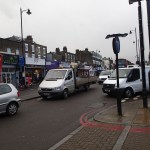
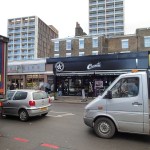
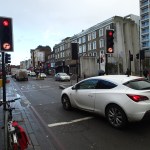

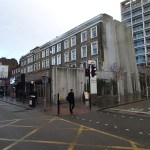


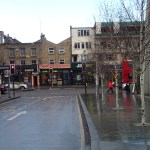
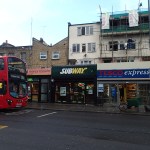
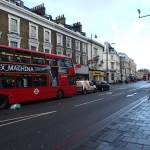
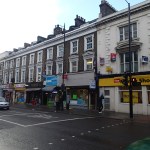
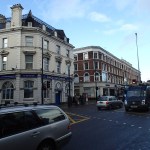
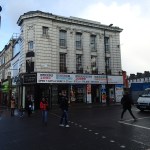
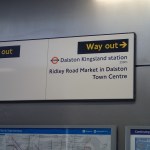
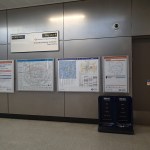
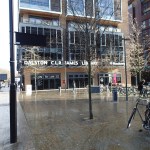

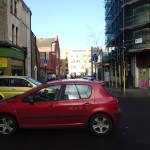
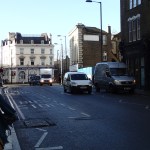

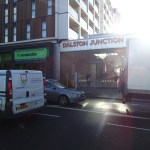
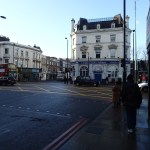
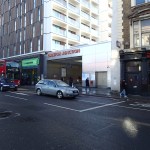
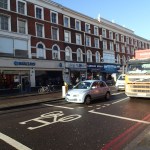
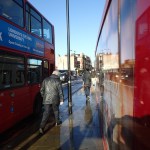
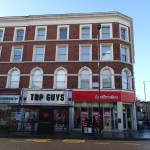
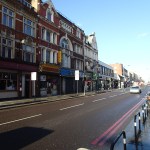
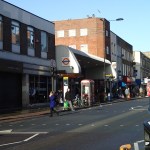
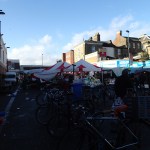
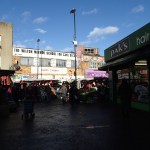
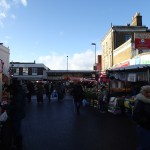
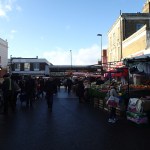
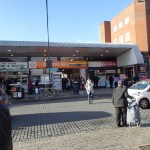
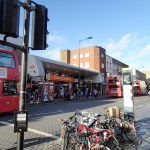


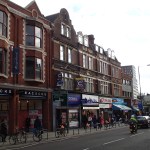
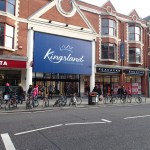

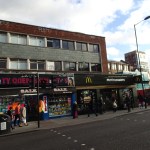
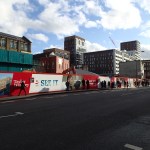
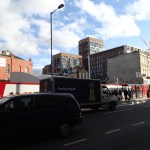

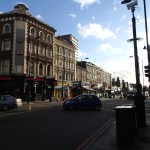
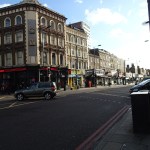
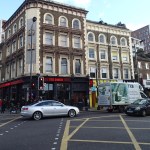
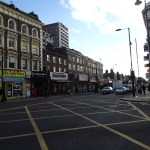
Quite frankly, I think that for most of the buildings, only some of the frontages and some interiors like that of the former eel and pie shop, are worth saving.
But as my pictures show the two main problems in the area are the movement of large volumes of both vehicular traffic and pedestrians.
As I don’t drive, I have no personal interest in the former, if the buses still get through.
But I regularly walk up and down the Kingsland Road to Sainsburys, Boots and the Market. The pavements are a nightmare, as they are narrow and very busy.
The new Dalston Junction part of the solution to the walking problem has been built, with a draughty but rain-free passage between the two station entrances.
So wouldn’t it be nice, if this passage could extend up to at least Dalston Kingsland station? If it did it might be a traffic generator for the underused bus station, which could do with more routes. A passage would of course make the interchange between the two stations easier.
At least the Kingsland Shopping Centre is proposed to be redeveloped to a more modern layout. Pictures in the link, give hope that there could be a traffic-free route from at least Kingsland station to Dalston Lane, which somehow has to be crossed. The current arrangements of a light-controlled crossing works, but could be improved upon.
The walking link between the two stations will hopefully be improved when the new Dalston Kingsland station is rebuilt, as someone from London Overground indicated to me it will be, a few months ago.
Could something bigger be rolling through Dalston?
Something is and it’s called Crossrail 2.
In one of the pictures it shows a sign at Dalston Junction station, showing that it is 250 metres between the two stations.
I will make an assumption here, that Crossrail 2 will use the same Class 345 trains and platforms matched to their size as Crossrail 1. I think it would be a reasonable assumption to make, as this would mean a common fleet and a lot of repeated platform design.
And how long are the platforms on Crossrail 1?
They are 260 metres long.
So would it be possible to fit a double-ended station for Dalston, that avoided the Channel Tunnel Rail Link and was connected to the platforms at the two Dalston stations at each end?
I don’t know as I haven’t got the detailed dimensions, but the last time London Overground threaded a rail line under Kingsland High Street, they managed it without mishap. If the station followed the traditional hump-backed design, then it would rise up to the platforms, which would be deep under the area and could be connected to the two stations by escalators and lifts. If the Crossrail 2 station had a wide centre platform between the tracks, then it could also be used by passengers transferring between the two stations. The platforms would have platform edge doors, so there would be no safety or draught issues. It might even be possible to make the central Crossrail 2 platform wide enough for a cafe, kiosks and an information office.
The design would have advantages for passengers.
1. It would give full interchange between the North London Line, East London Line and Crossrail 2, which would make so many more journeys possible, like for example Turnpike Lane to Homerton or Shoreditch High Street to Ware, with just a single step-free change.
2. Dalston Junction is the first station on Crossrail 2, after the two northern branches have joined, so just as at Whitechapel on Crossrail, you could come down one branch walk across the platform, perhaps picking up a coffee on the way, and get on a train up the other branch.
3. In the case of an interchange between either the North or East London lines and Crossrail 2 it would be up or down on an escalator or in a lift, but between the East and North London Lines, you would have a nearly 250 metre walk as well. But the walk would be easier and more pleasant than the current one on the surface.
4. Would the ability to transfer at Dalston between the North London Line and Crossrail 2 serve Hackney sufficiently well, so that the need for the possible Hackney branch of Crossrail 2 could be delayed?
There could possibly be some advantages to Dalston
1. As the interchange between the East and North London Lines is now a safe walk out of the weather and traffic, would this be a good enough connection to make it unnecessary to reopen the Dalston Eastern Curve, thus releasing this land for something better in perpetuity.
2. But the great advantage of this plan to Dalston, is that it doesn’t require any demolition of buildings on the surface, except for the unloved Dalston Kingsland station.
3. Dalston Junction station already has a building that is big enough, but could you do away completely with buildings at Dalston Kingsland station? You might just have escalators ending level with the street and a simple glass front like the new Tottenham Court Road tube station. The money saved on the building could be used to add extra escalators and lifts. Perhaps on both sides of Kingsland High Street.
I probably have all this totally wrong, but I believe that Crossrail 2 could be a bigger opportunity for Dalston, if a double-ended station is built to serve both Junction and Kingsland.
It is only possible because the Victorians had the foresight to build the two Dalston stations the same distance apart as the length of a Crossrail station.
Transport for London Get The Cleaners, Painters And Engineers Ready For The Shenfield Metro
There is an article in the Brentwood Gazette, entitled Shenfield to London slow trains to get refresh before end of year, which illustrates how Transport for London aim to hit the ground running, when they take over the Shenfield Metro services in May this year.
1. The Class 315 trains will be refreshed. I took these pictures.


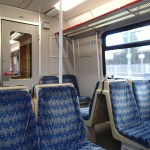
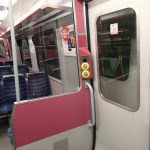
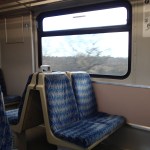

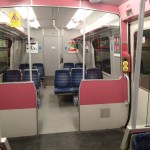
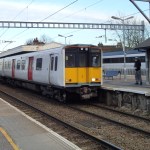
I think that TfL could spend billions on these trains and they wouldn’t be that much better, as in their current state, they do the job they were built for of moving people in and out of London, reliably and with enough comfort for those with seats. So fixing the seat covers, perhaps getting rid of the awful pink colour and asking Aggie and her ilk to give them a good clean, and they’ll last until the Class 345 trains arrive.
2. Staff will be on duty when trains are running.
3. The stations will be fully integrated into TfL’s information and brought up to their standards.
I wonder if their other big acquisition in May;the Lea Valley Line services will get the same treatment.
 The Anonymous Widower