It’s Not Just The Dutch That Get Rail Ticketing Wrong
We always think of the Swiss as being clever and efficient, but according to this report on the BBC web site, they seem to have trumped the Dutch by bringing in a ticketing system, that is even worse, than the one I described here.
One thing that never seems to work with these systems, but does usually work well in the UK, is how the system deals with the occasional problem or a traveller, like the man I met, who was using a London bus for the first time in his sixties, despite living there for years. In his case, the probably very friendly bus driver was able to help him out.
I’ve had a case on the train from London to Ipswich, where I had got on the train with the wrong ticket. I can’t remember exactly why, but it may have been that I’d punched the wrong button on the machine, when I bought the ticket. In Switzerland, now, that would now mean a fine of £133, but the inspector sold me the appropriate upgrade and even took into account my Freedom Pass and Railcard. Ticket inspectors are the first line in both protecting the revenue and making the customers happy.
Let’s hope British train companies don’t do any of these.
1. Bring in swingeing fines for genuine mistakes.
2. Abandon the simple orange tickets that everyone understands.
3. Insist that everybody has a smart phone.
Point two has so many simple advantages other than the obvious one of familiarity. Imagine your ninety-year-old mother lives in Edinburgh and you want her to come to you by train. You just post her the ticket and seat reservation and tell her to get to Waverley at the appropriate time. It usually works well, as the tickets are of a size and type, that don’t get lost and are easily understood. They can also be easily shown to staff, which can’t always be said for a display on a smart phone.
Should London Improve The Sub Surface Tubes?
London’s three sub-surface lines; Metropolitan, District and Circle, are getting new S-Stock trains, but you do wonder if investment in the stations along their core route would improve things no end and perhaps even add more capacity to the lines. It should be said incidentally that the new trains will add more capacity and when they are running at full speed, they should give a further increase in passengers carried.
The part I know best is the Hammersmith and City and Circle lines from Whitechapel to Paddington.
Kings Cross St. Pancras station has already been rebuilt and has good access from the two main line stations and to the three deep lines that meet at the station. It will be even better in a few months, when the buses have been reorganised around the new square opening outside. We tend to forget about buses, but they are often an invaluable way to get to your required train line.
Whitechapel, Liverpool Street, Moorgate, Barbican, Farringdon and Paddington stations are all on Crossrail and will probably go through a lot of changes to improve access over the next few years. The stations from Liverpool Street to Farringdon, will effectively be connected to two giant double-ended stations on Crossrail, so interchanges to the Central and Northern lines and Thameslink will be greatly improved. In fact, when you look at journeys made in the eastern part of Central London, you can see how Crossrail will transform them. Even a journey as mundane as Liverpool Street to London Bridge will be a lot easier, as you’ll just dive into the Crossrail station to walk to the Northern line at Moorgate. I’ll probably use that route to get to my 141 or 21 bus from Liverpool Street to get home.
The next station is Euston Square, which is one of those stations on the London Underground, that was built in the wrong place. They didn’t even rectify the problem, when the current Euston station was built in the 1960s, by moving it in front of the station, like the corresponding station at Kings Cross St. Pancras. Probably all that could be done is to put lifts into the North entrance to the station and improve the walking route from the main line station. When the main line station is rebuilt, Euston Square station will probably be part of the rebuilding.
Great Portland Street station is typical of many of the Central London, sub-surface stations. Short double staircases lead down to two platforms on either side of the tracks. Lifts or escalators could probably be installed, but I suspect a clever engineer or architect could do better.
Baker Street station is one of the architectural gems of the Underground and doing anything to improve it will be difficult. The junction to the east of the station also makes things difficult operationally.
Edgware Road station, is one that needs significant improvement, although as with many of the sub-surface stations, space is limited. Since the Circle line, stopped being a circle in 2009, the station has become a nightmare, as many visitors can’t understand that you have to change trains to continue round.
Paddington station, when it is fully rebuilt and Crossrail has been opened, may help with the problems of the sub-surface lines. If I come into Paddington from say Bristol or Cardiff, I will take the bridge at the back of the train and walk to the Metropolitan line, from where I get a train to Moorgate for a bus home. But when Crossrail is running from Reading to Moorgate, I might take that route instead, by changing trains at Reading. I suspect that many commuters from Reading, will go direct to Central London stations on Crossrail. After all, that was one of the reasons for which the line is being built.
So it would seem that on the Northern part of the lines, only Edgware Road and Euston Square stations need substantial improvement.
The Rail Industry And The Samaritans Get Together To Cut Suicides
One of the most common ways of committing suicide these days, is to jump in front of a train. It happens about 250 times a year. But this article about the Samaritans and the rail industry getting together, shows that everybody is concerned and taking action.
We need more initiatives like this.
Fyra Replaced By Slow Train To The Hague
This article from the Europe by Rail web site is a lesson to all those politicians and civil servants, who think they understand the transport needs of the general public. This is the first paragraph.
The Belgian Railway authorities this afternoon announced the return of old-style InterCity services from Brussels to stations in the Netherlands. This is to provide some kind of replacement for the short-lived FYRA service, introduced in December 2012 and then withdrawn last month.
The service has actually lasted less than two months.
There is also a sting in the tail of the article.
Meanwhile, coach operators have spotted a gap in this busy cross-border market. One company starts a new express link from Rotterdam to Brussels early next month.
After all, the UK has a large network of long distance coach services that compete with rail, so why not between Brussels and big centres of population in The Netherlands/
Where To Park In Edinburgh
This article is the second most popular on the BBC’s web site.
I just wonder how many of the viewers are from Glasgow!
Surprisingly, it doesn’t have anything to do with the Edinburgh tram.
Railways In Afghanistan
In Modern Railways this month, there is an informative article about how they are starting to build railways from scratch in that trouble country.
Apparently, they never developed a railway system, like neighbouring countries, and only now, with the need to remove vast amounts of natural resources around and out of the country, that the railways are being proposed.
It is a daunting task, made worse by the mountainous terrain and the fact that surrounding countries have a variety of different gauges.
Let’s hope the engineers succeed in their aims, as it might bring some wealth, prosperity and freedom to the country. There is a Wikipedia article, which gives more details.
What’s This All About?
I went to lunch at Leon in Kings Cross station today and saw this small crowd afterwards on the concourse.


Does J K Rowling realise what she’s started? I suspect her bank account does!
The Man Who Didn’t Know How To Use The Buses
Whilst waiting at the Angel for a bus, I was approached by a guy, who asked if he could buy a ticket on the bus to get to Stoke Newington. I told him he could, but as he looked to be in his sixties, I asked him, if he was eligible for a Freedom Pass. He was 65 and lived in Hackney, so he was!
But he said he’d never used the buses, as he was a mini-cab driver.
Perhaps major bus stops like the Angel, need instructions on how to use the buses.
Is This The Best Way To Get To London Zoo?
I went to the London Zoo today, and noticed they have a Boris bike station, by the main entrance.
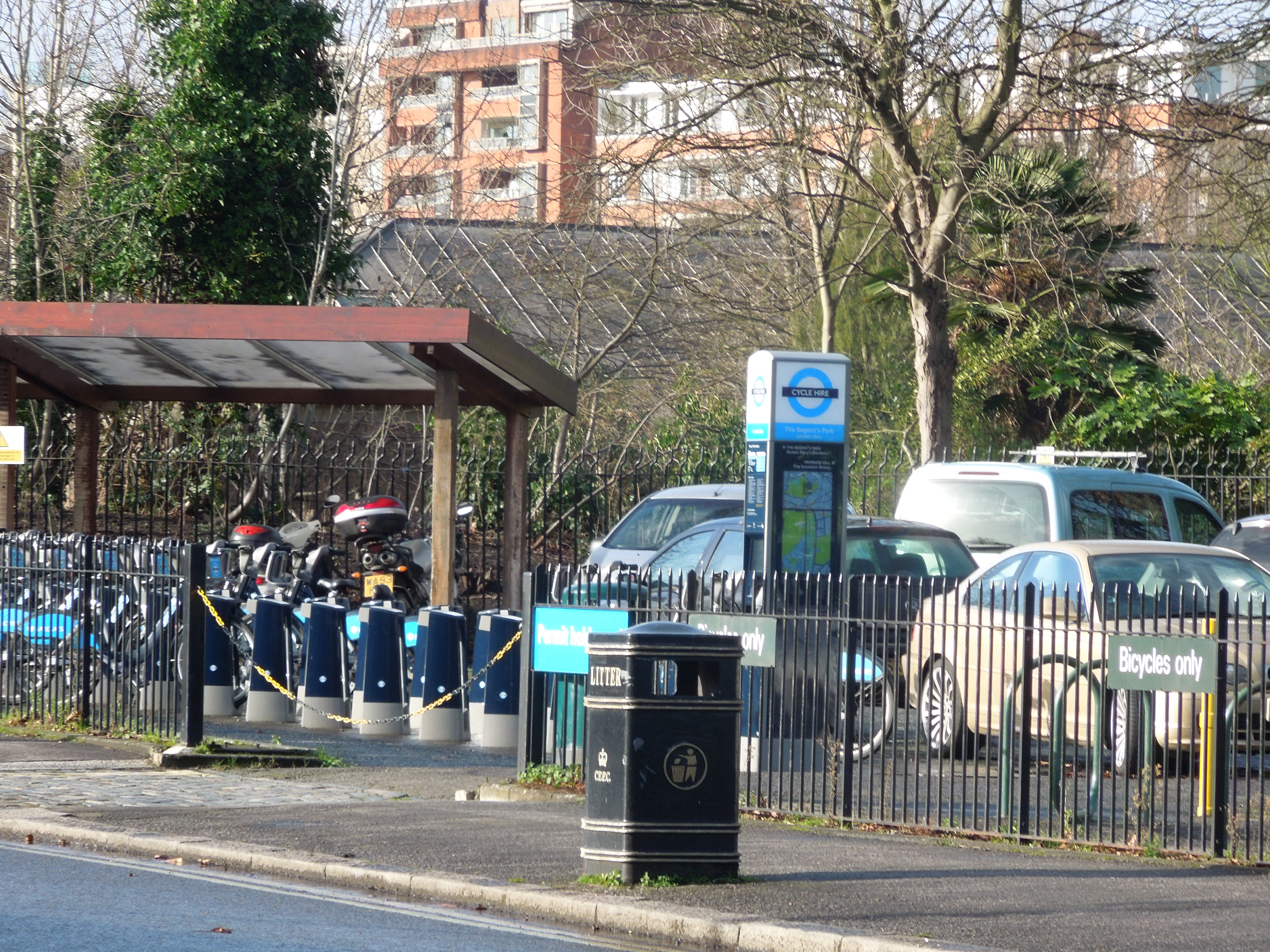
Is This The Best Way To Get To London Zoo?
Surely this must be one of the best ways to get to the Zoo from Marylebone Road or the area just north of the West End. It will be a nice cycle through and around Regent’s Park.
Note that if you type “Boris bikes” into Google, you get the official site at Transport for london.
 The Anonymous Widower