The Problems of Evening Football at Ipswich
Evening football shouldn’t be a problem, but yesterday meant that I had to travel from Stratford in the rush hour and that means that a cheap day return wasn’t available unless I left before 4:30. In the end I got the 4:09 after taking the North London Line from Dalston Kingsland. The trouble was this got me to Ipswich at about five thirty for a match that starts at a quarter to eight.
Ipswich isn’t too good for eating gluten-free, the only place being Pizza Express and they were full, so in the end I resorted to plan B of eating a packed supper in the rain in the stands. I should say though, that I could have booked myself a gluten-free meal in the restaurant at Portman Road, but I didn’t want to pay the extra to sit away from my friends.
The salad I took was interesting in that it was a Four Bean and Buckwheat Salad from Waitrose.
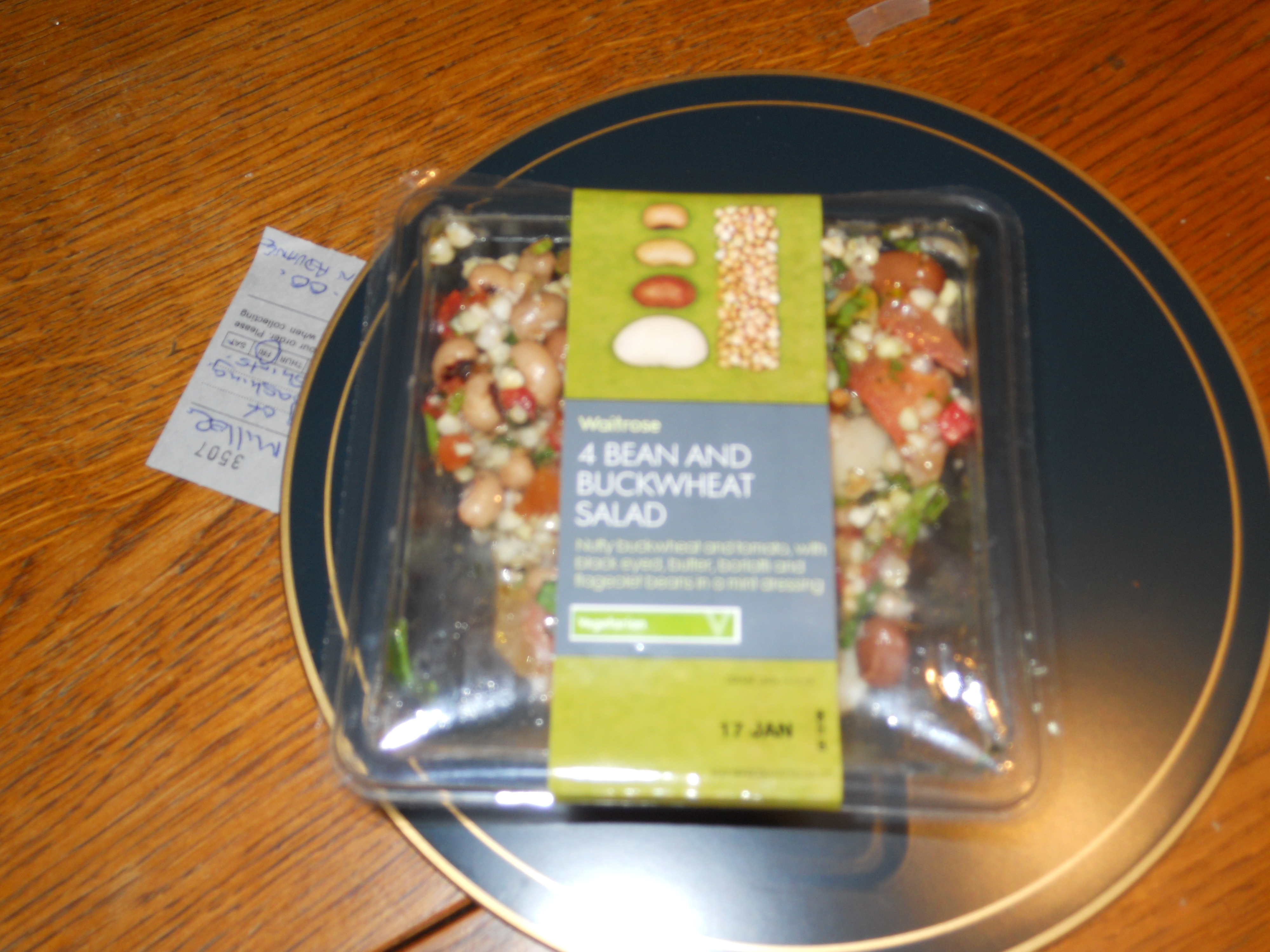
Waitrose Four Bean and Buckwheat Salad
I ate it with some salami and an EatNakd bar. It was delicious and I don’t seem to have suffered any reaction. But then it didn’t list any allergens on the package. Why can’t they label it with None? Thanks go to the guy in Waitrose in the Barbican for checking the rather small print on the label.
I did make one mistake in that I forgot to take any cutlery, but thanks to Marks and Spencer in Ipswich for letting me have one of their free forks, without making a purchase.
We see a lot of bad service, so when I get good service it should be recognised.
Manor House
The Manor House used to be an enormous pub in the 1960s, famed as a music venue.
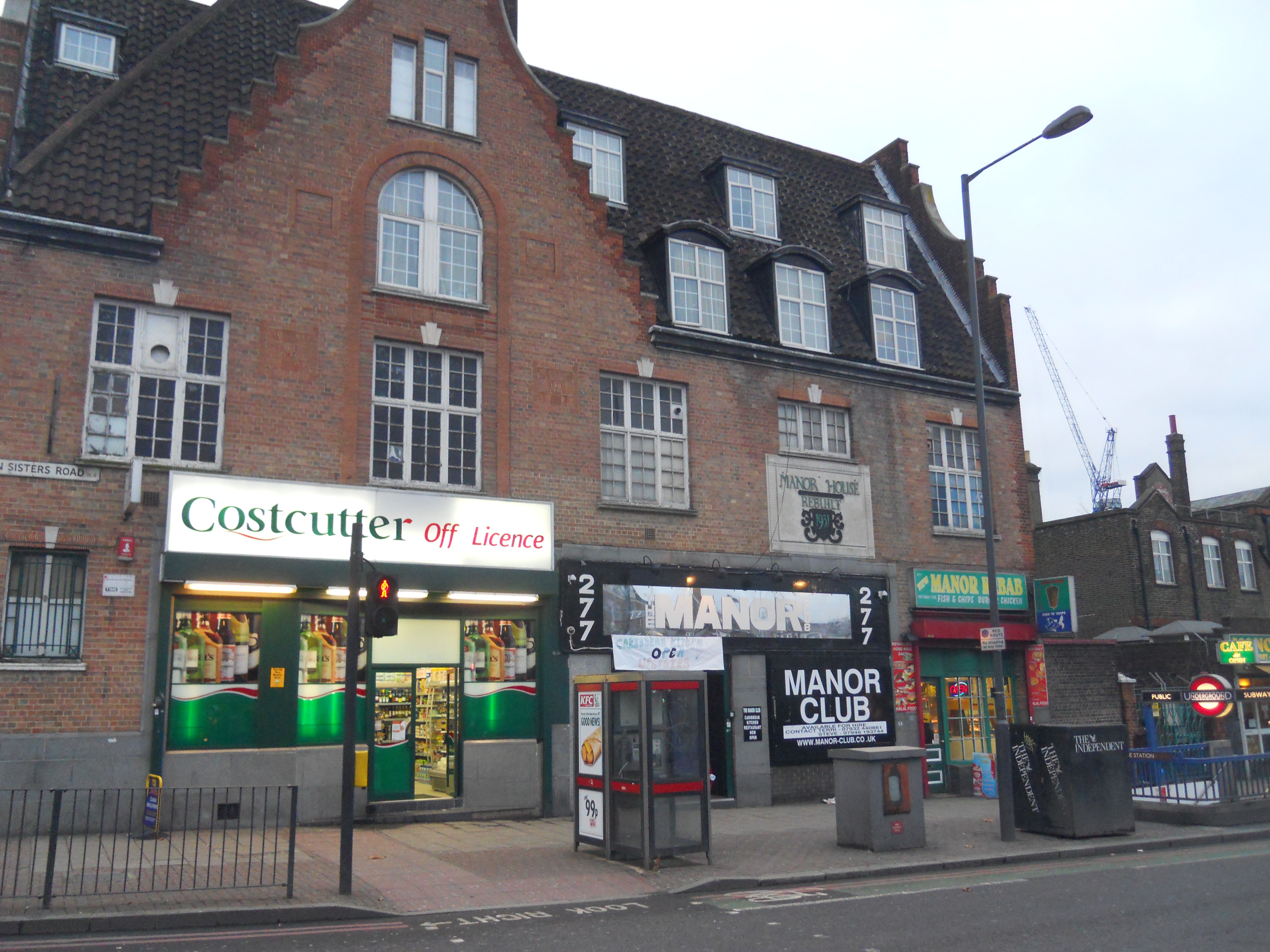
The Manor House
I went a couple of times and can’t remember who I saw. But I did hear of a tale, where John Mayall was playing, with the legendary Eric Clapton as one of his band. Eric got rather drunk and couldn’t continue. But a previous member of the band, Jeff Grimmett (?), was there and although being in a worse state that Eric took over. Apparently, it was a performance to rank with the greatest.
What’s Red and Lies Upside Down in the Gutter?
This is an old elephant joke from the 1960s and the answer is a dead bus.
It’s funny, but I’ve been on trains and planes that have broken down or developed faults, but I’ve never been on a bus that has suffered a similar fate.
Until today, that is!

A Dead Bus
As I was close to Turnpike Lane station, I took the Piccadilly Line to Manor House. This is one of the longest runs between stations on the tube and breaks the two-minute rule of calculating how long the journey will take. A good estimate of journey time is two minutes per station with five minutes for each change of line.
I’m not sure if it is unique, but Turnpike Lane still has the classic 1930s uplighters on the escalators. One place that still has them is Moscow, where London Underground installed all the original escalators. In Moscow, when I was there a few years ago, most of the escalators were still in wood, just like they used to be in London, until they were replaced after the King’s Cross fire.
A Walk Down Memory Lane
Or more correctly between Turnpike Lane and Wood Green stations on the Piccadilly Line.
I’d taken a 141 bus to Turnpike Lane from the end of my road and alighted opposite the station.
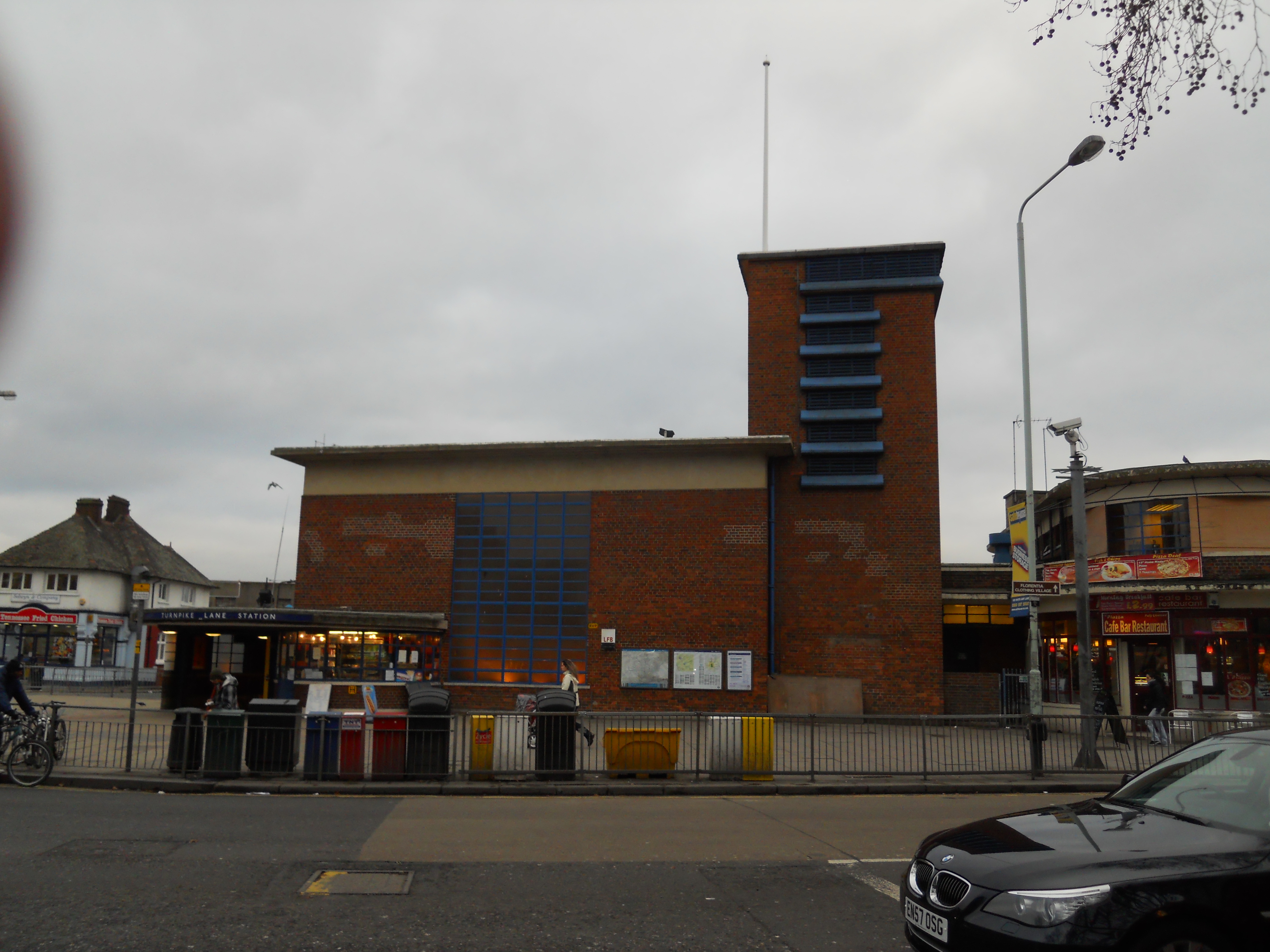
Turnpike Lane Tube Station
Or should I put the local name underneath which sounded like Turnpicky Larny. I wonder if it’s still used.
I walked down the west side of Wood Green High Road and the first place I remembered was the Marks and Spencer on the other side.
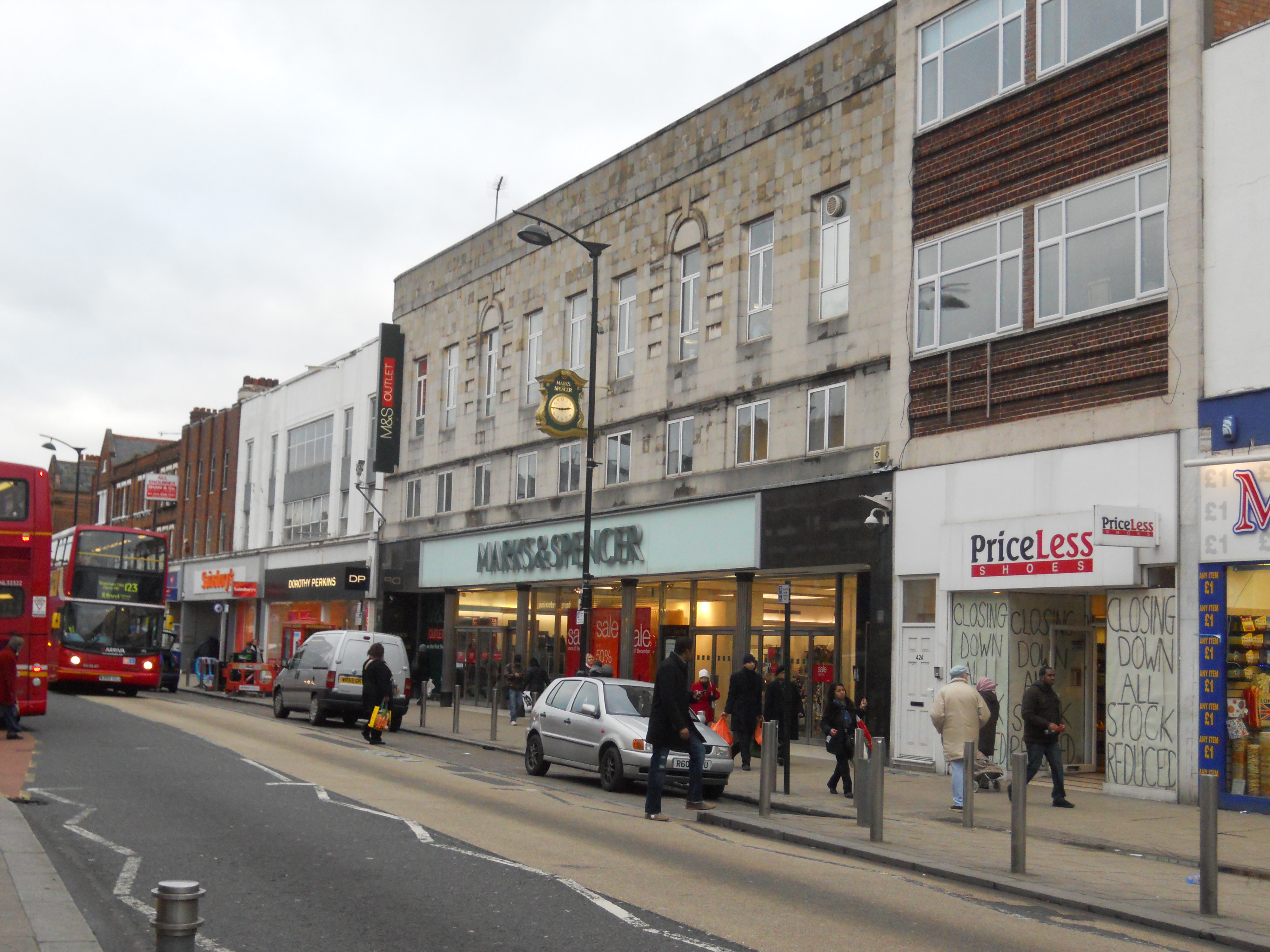
Marks and Spencer at Wood Green
I didn’t go in, but it certainly looked to be in a worse state than how I remember it from the 1960s, when it was one of their flagship stores. I visited it many times, as a bag carrier for my mother, when she used to do the food shopping, when she was working with my father in Wood Green.
Further up you can still see the remains of the old Wood Green Empire above the Halifax.
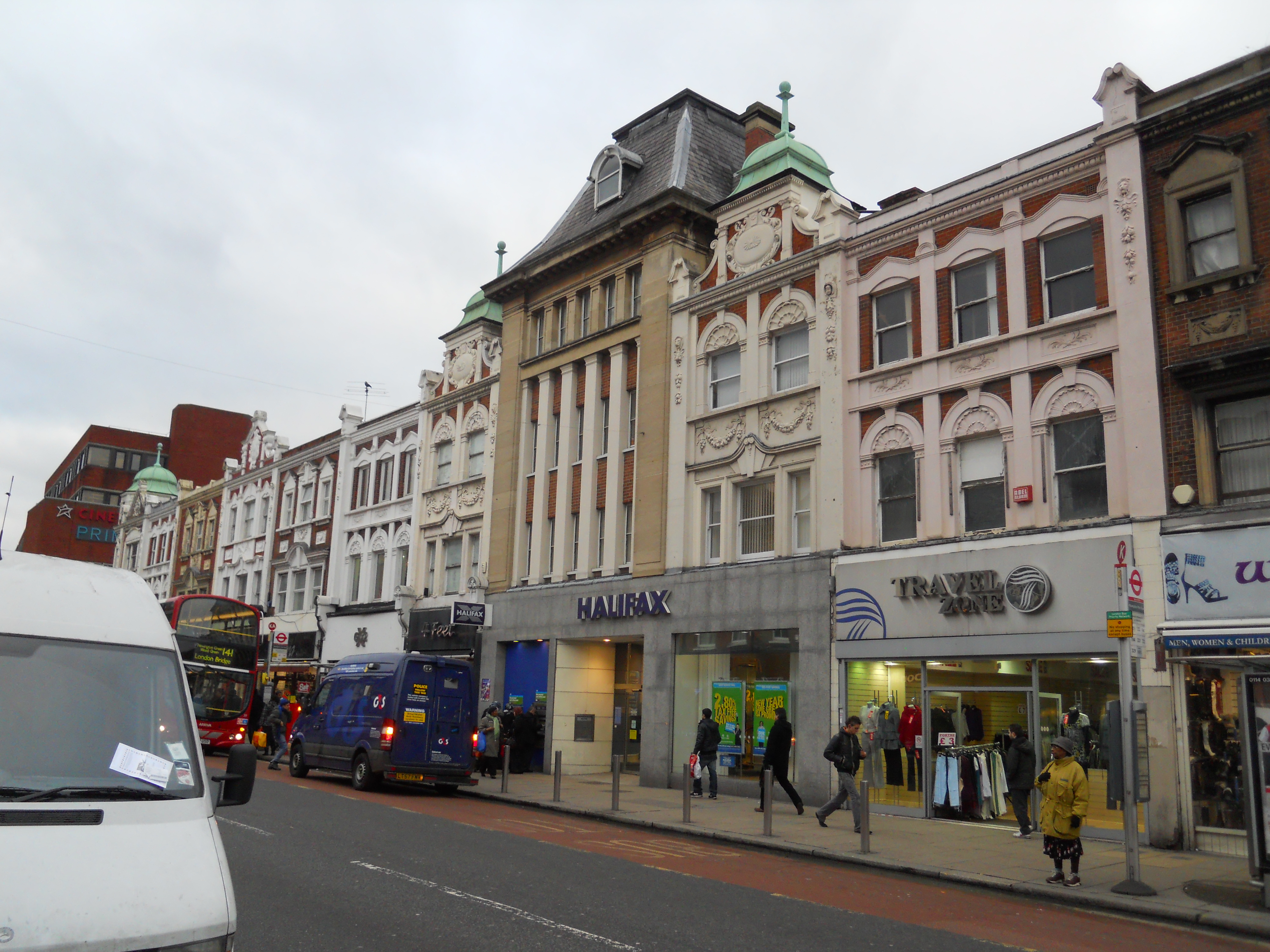
The Remains of the Wood Green Empire
I can remember going there once to see the pantomime. It may have been Babes in the Wood, with Ted Ray, but even if I hadn’t had the stroke, I wouldn’t be sure.
My father also claimed that he’d appeared on the stage there in a variety show. But at one time, I know he did print the programs and posters for the theatre, so perhaps he did a deal. Knowing him, that could have been possible.
The centre of Wood Green High Road used to be crossed by a railway bridge that carried the Palace Gates railway line to Palace Gates from Seven Sisters. At one time there was a station in the area called Noel Park and Wood Green, but although I can remember the bridge and trains running on the line, I can’t remember the station. To the south of the bridge there used to be a pub called the Alexandra, which was pulled down in the 1960s or just before to build Wood Green’s first supermarket. Now the whole area has been redeveloped as Wood Green Shopping City.
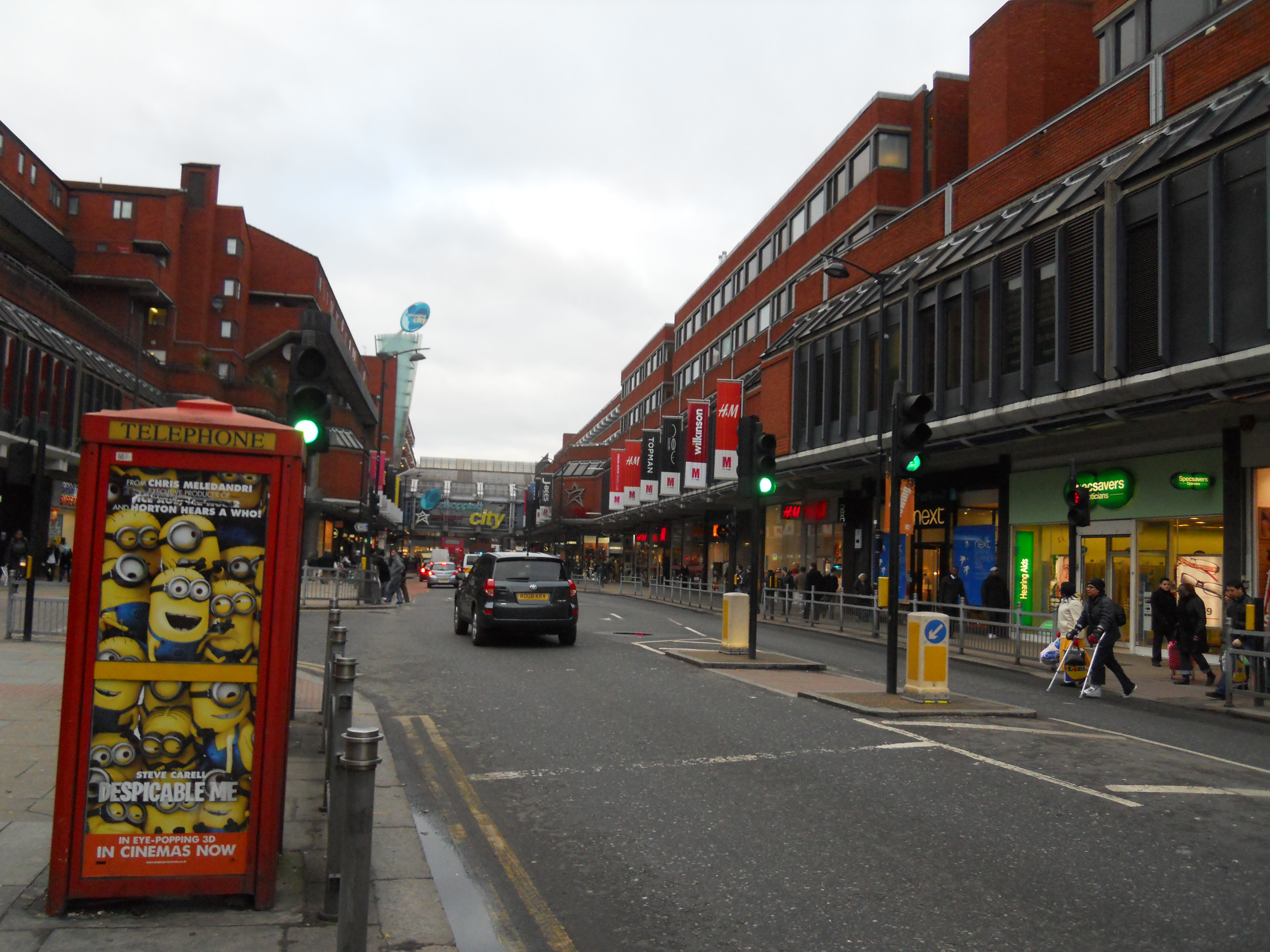
Wood Green Shopping City
Moving along towards Wood Green tube station, I passed what some refer to correctly as the Broadway, but I just remember it as the place where you caught the trolley buses. On the left there used to be a restaurant called the QS for Quick Service and one of the first burger bars. I can remember visiting both quite a few times with my mother. I can still remember and smell, the chef, Ally, turning the greasy burgers as he fried them.
On the corner opposite the tube station, there is a pub which is now called the Goose.
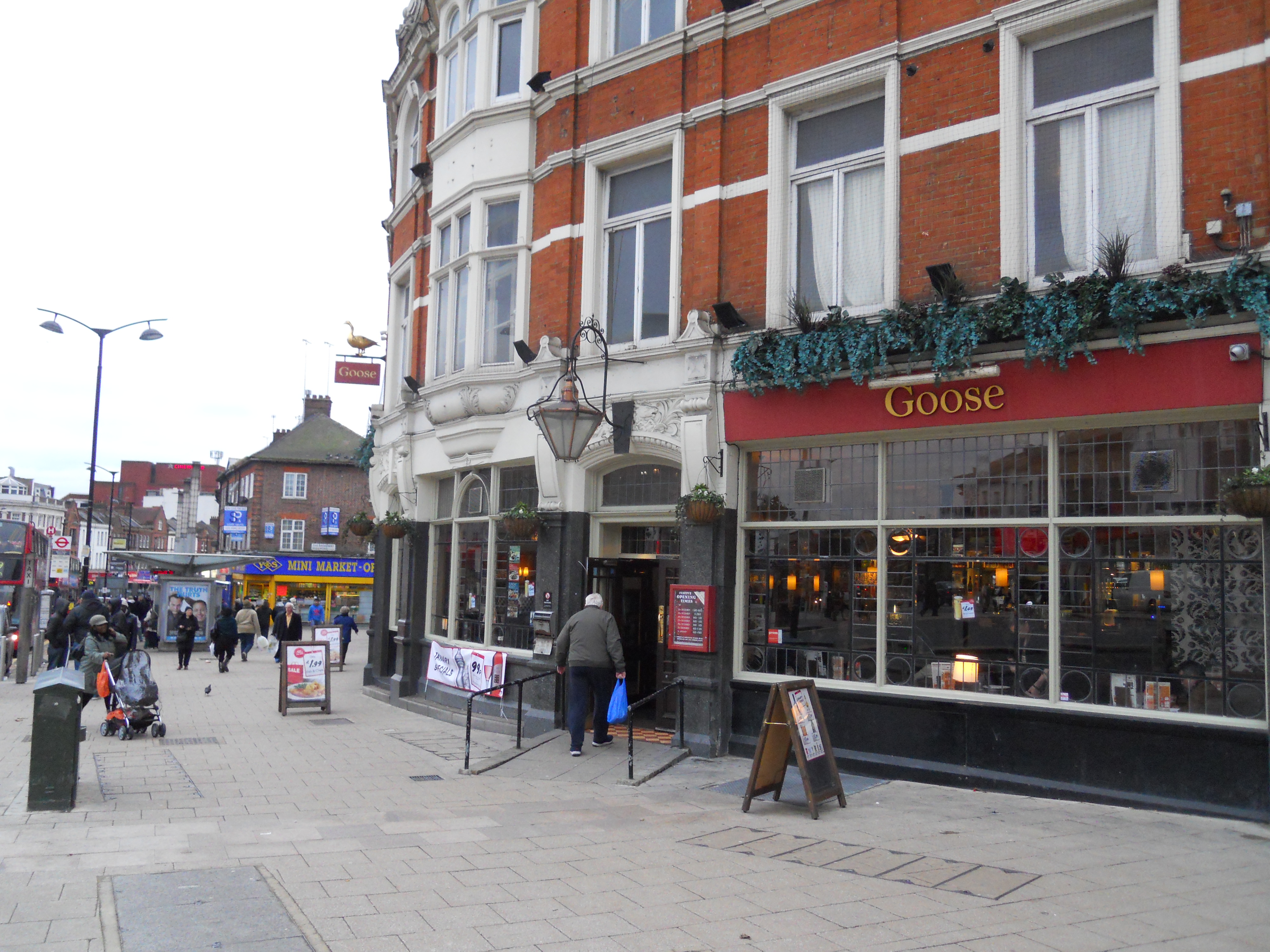
The Goose, Wood Green
I think the pub used to be called the Nag’s Head and it is part of a family tale. My father used to live with his mother over the print works in Station Road, which is just around the corner. One Sunday morning her dog, who was a renowned thief, arrived back with a large cooked joint of beef in his jaws. My grandmother, immediately washed such a prize present off and that was the family’s Sunday lunch. My father surmised that the chef in the Nag’s Head had put the cooked joint on the window sill of the kitchen at the back of the pub to cool down a bit and the dog just couldn’t resist.
I then crossed the road by the tube station to catch a 141 bus back home from where the trolley buses stopped.
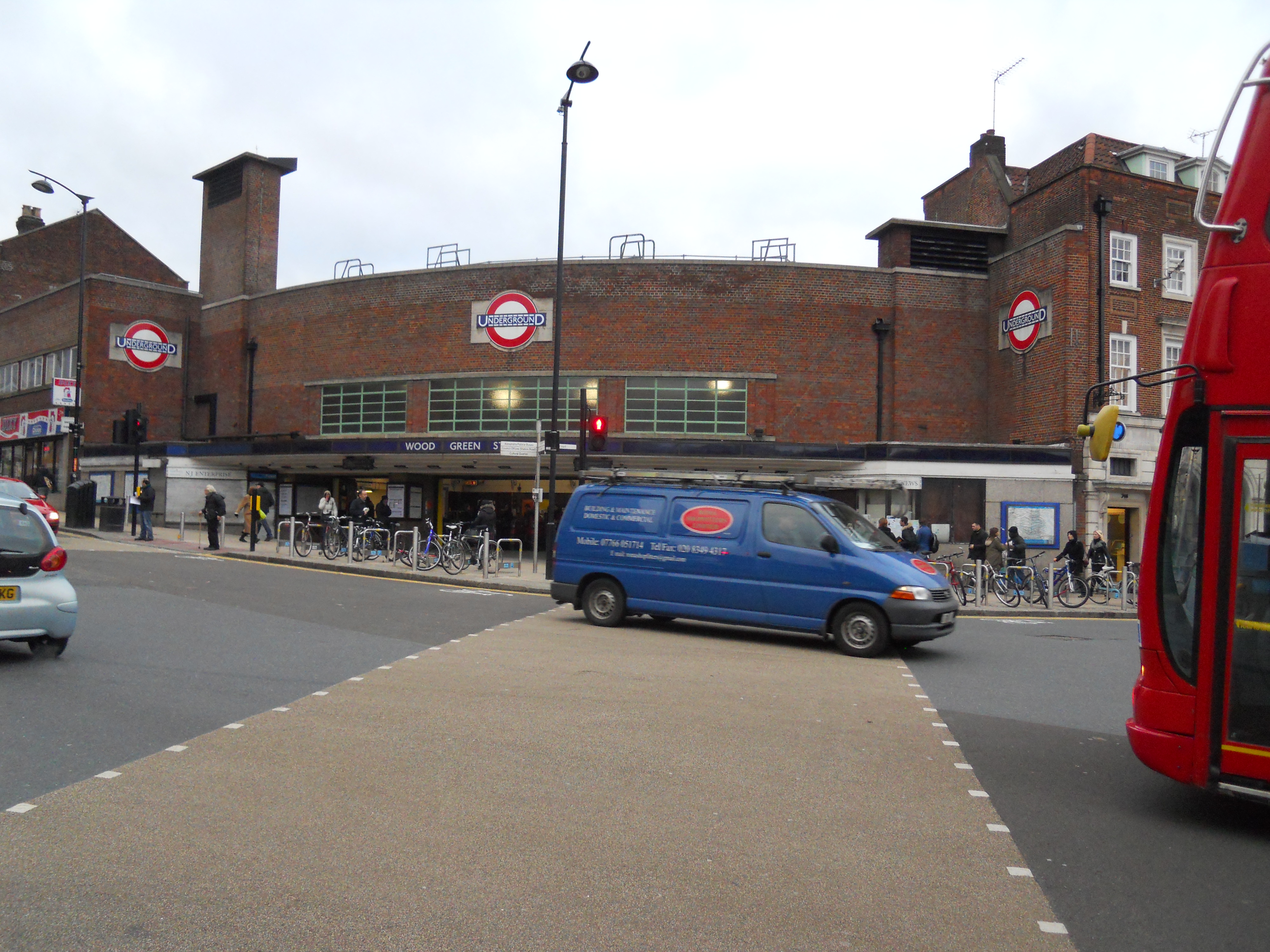
Wood Green Tube Station
All of these stations from Cockfosters to Turnpike Lane are very much part of my childhood and I remember them all with affection.
The Bus Powered by a 2-Litre Diesel Engine
The 141 bus passes the end of my road, on its way to Wood Green, where my father’s print works used to be.
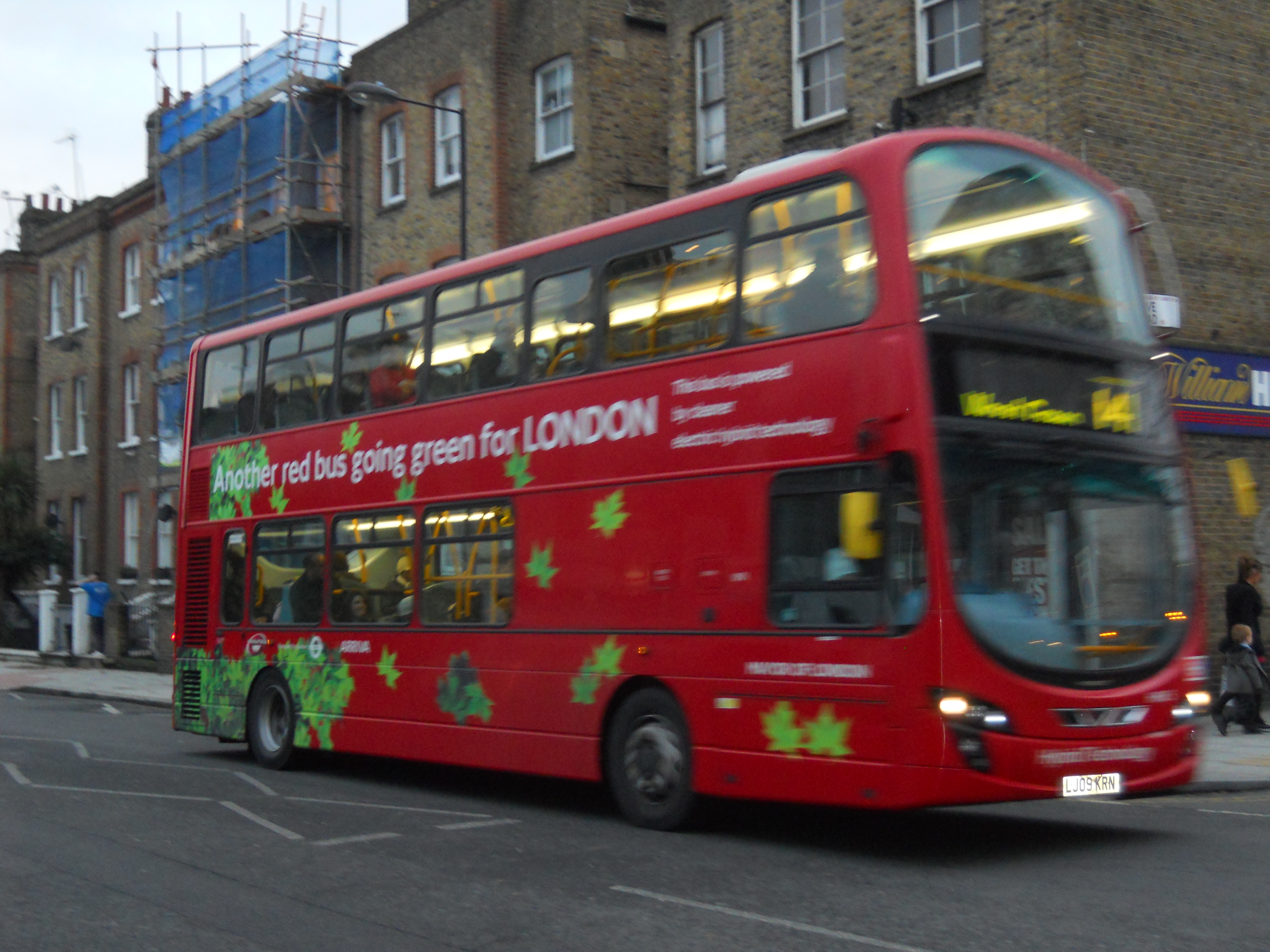
A 141 Bus to Wood Green
The route is partly operated by hybrid buses, some of which are Wright Gemini 2 HEVs, which are powered by the 2-litre diesel engine from a Ford Puma.
I’ve always been a bit suspicious of hybrid cars, but surely this bus must be more fuel-efficient, than a similar-sized traditional bus.
An interesting aside here is that the bus is also built without a chassis, partly to save weight and the company that builds these buses, the Wright Group, is family-owned in Northern Ireland.
So does innovation and good design flourish in companies which benefit from not being under the control of unimaginative shareholders and wunches of bankers?
Fuel Prices
Someone has sent me an invitation to join their group protesting about fuel prices.
I will not be joining, as I’ve always felt that a large part of the problems of this fragile planet are caused by people, and especially Americans, who create just too much carbon dioxide, which every scientifically correct individual knows has a lot to do with global warming. Today, as I write, the Zoological Society of London, launches the Edge Coral Reefs project to save them from extinction.
So what should we do about fuel prices?
It’s not so much about what you do with the prices it’s what you do with the tax revenues they generate.
I have seen the benefits of putting container traffic on the trains in and out of Felixstowe Docks. There are less trucks on the road for a start and how much is this contributing to reduction in carbon emissions and shorter journey times for other motorists. So the first thing we should do is make sure that more and more containers go between the ports and inland depots by train. And preferably by electric trains. There are a few links that need to be built, like one to the new container terminal in Liverpool and we also need better road-rail interfaces in some large conurbations.
I actually think that one of the reasons truck drivers are militant, is tat they can see these job losses arriving as the containers shift to rail. The rail freight companies are talking about saving truck journeys in hundreds of thousands with each new scheme.
Railway electrification and better commuter trains and buses should be another beneficiary of extra tax revenue, as give people better services and they use them. I know it’s only a small line across Suffolk, but as the Ipswich-Cambridge service has improved over the last few years, more and more people have used the service. I also know examples of couples, who have effectively gone from two to one car, because of better public transport.
I’ve worked at home for over forty years and this can easily be encouraged by faster broadband everywhere. I also believe that this can in itself be a strong engine for growth in rural areas, where public transport of a sufficient standard will never be available.
I would also like to see fuel taxes used to reduce Income Tax and increase benefits in some cases.
We must use all of these things to nudge people towards a more sustainable lifestyle.
Technology too has its part to play in this and I’d like to see developments like these cars proposed by Gordon Murray. But would these wean people away from their beloved 4x4s and people carriers? Probably not, but fuel prices are one way to make them pay for their selfishness!
So in my view, high fuel prices should be here to stay.
I and Bridie
I and Bridie were one of the stalwarts of the Liverpool folk scene in the 1960s along with The Spinners and perhaps later on, The Scaffold.
I saw this poster outside the Philharmonic Hall and took a picture.
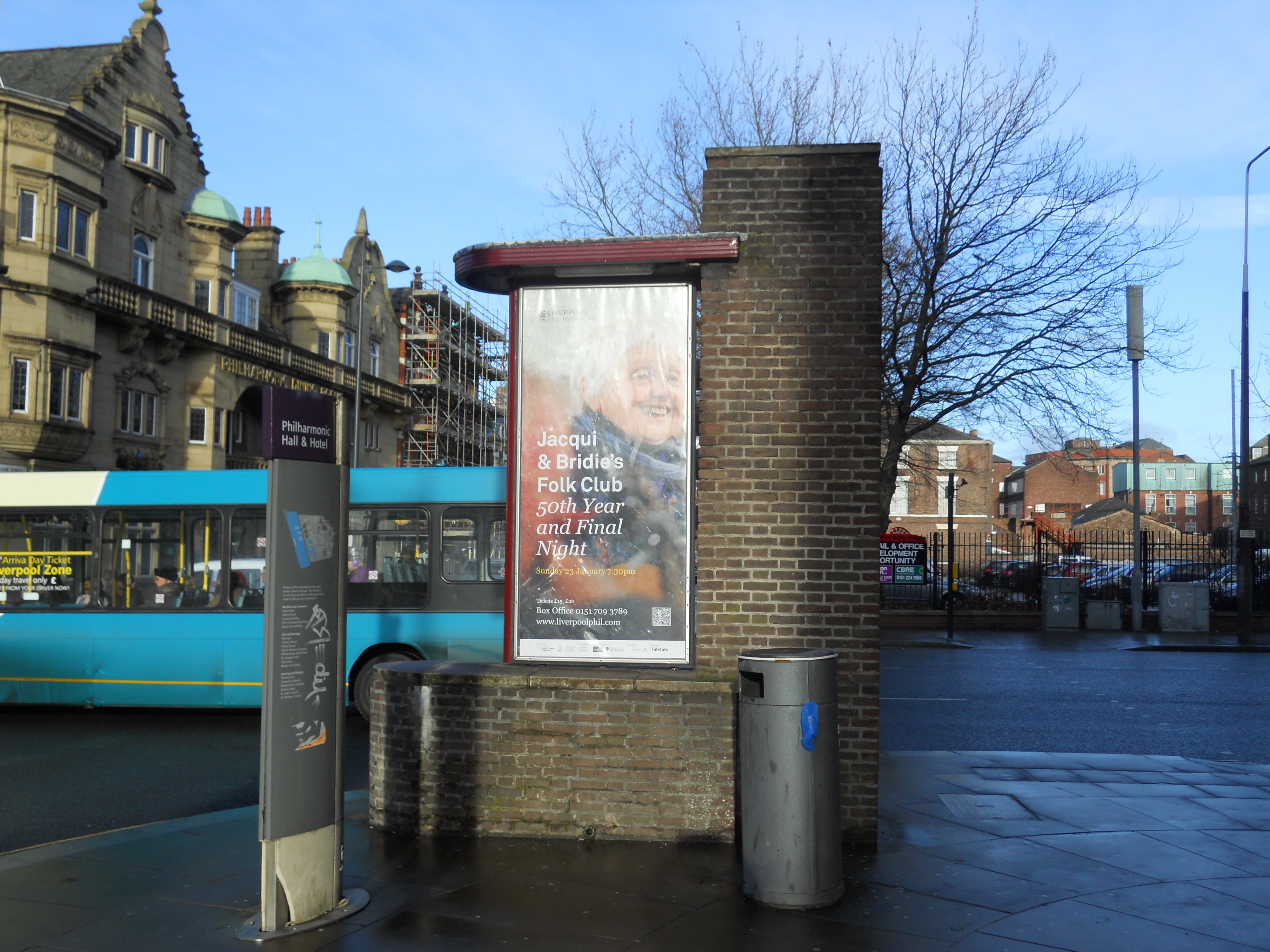
Jacqui and Bridie's Folk Club
The Three Graces
The Three Graces is the collective term for the buildings on the Liverpool waterfront. It’s changed a lot since I first went there in the 1960s to get the Crosville buses to my digs at Huyton. It’s now even got a canal connecting the Leeds and Liverpool canal to the Albert Dock.

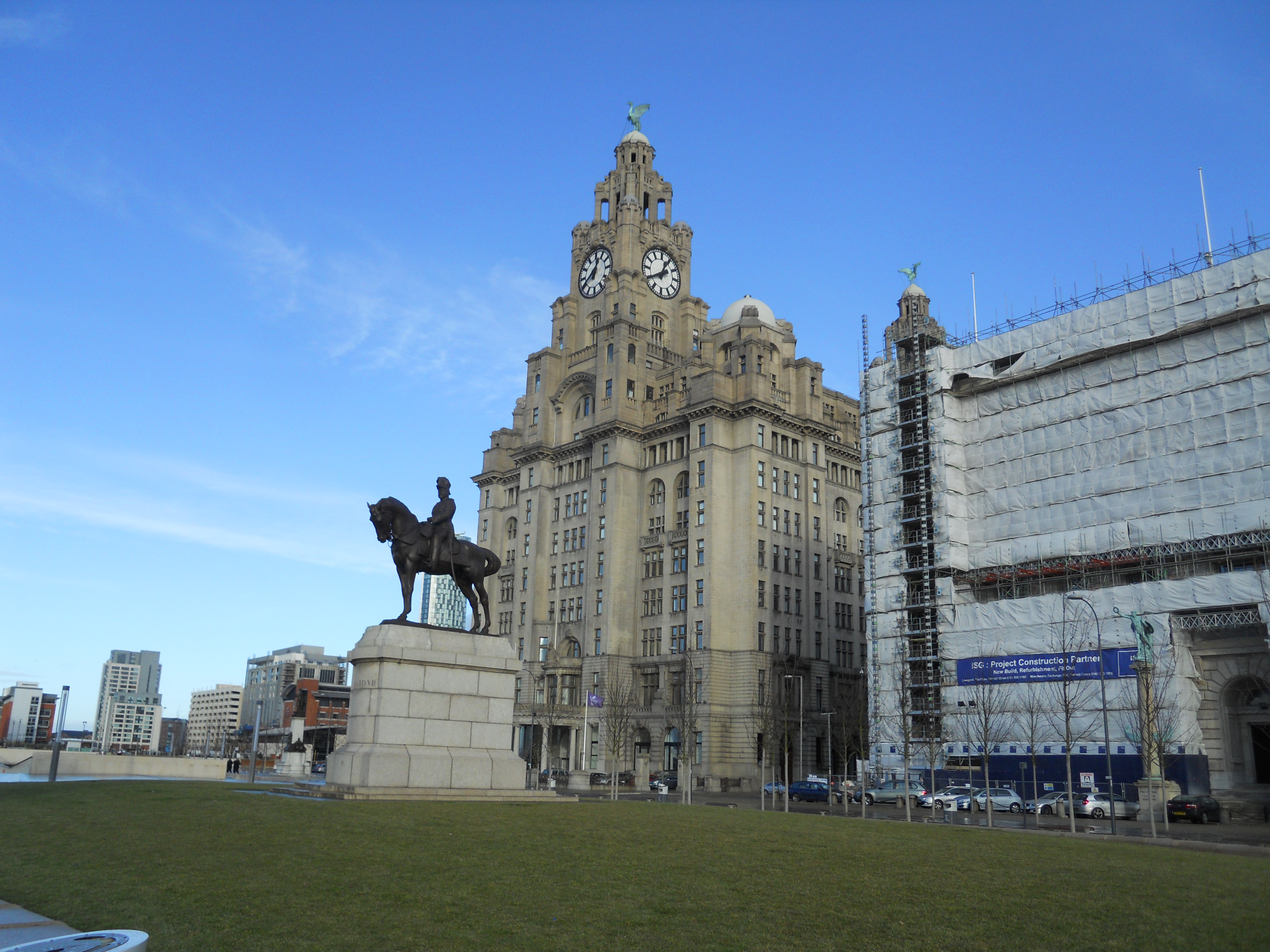
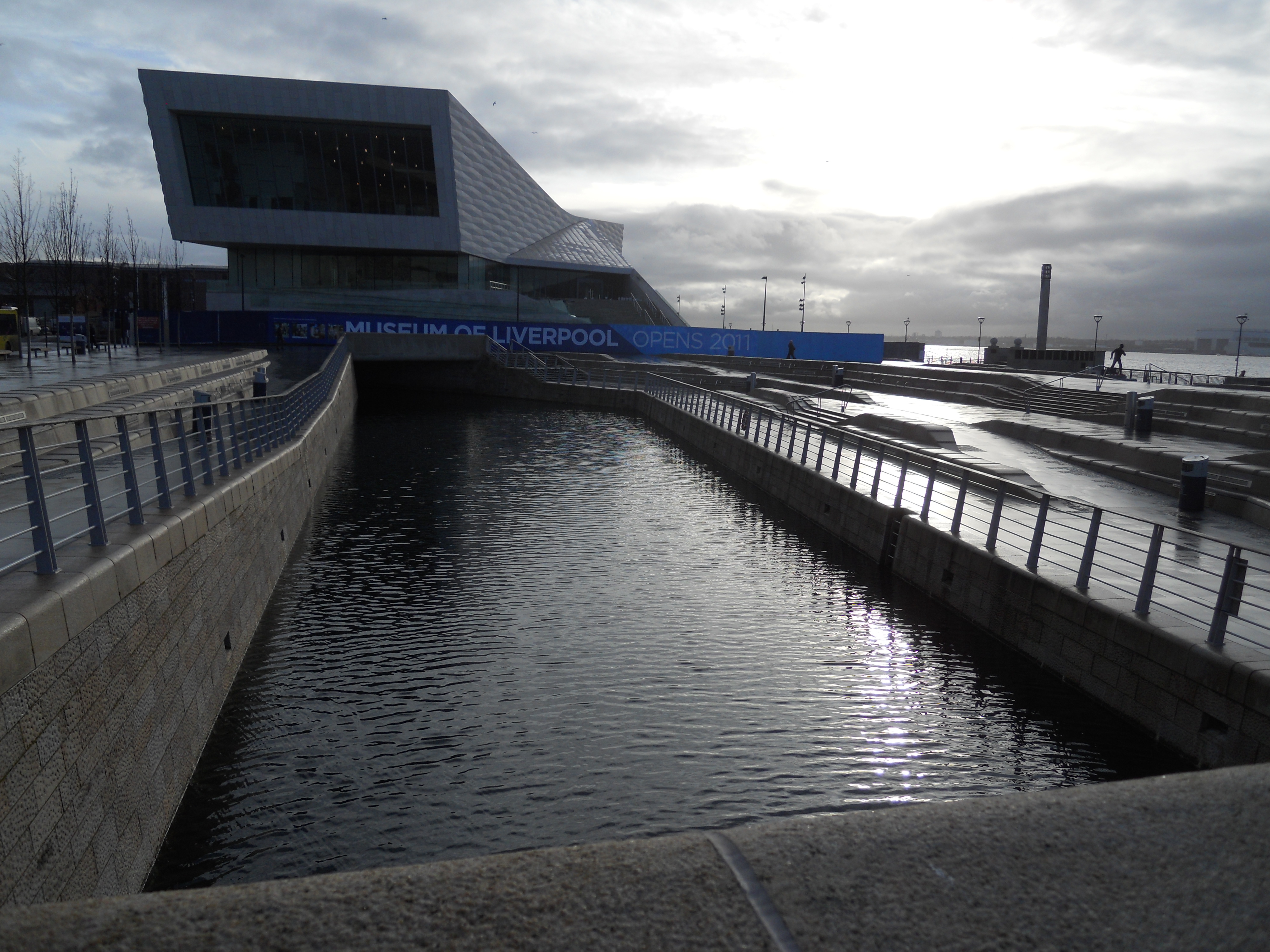

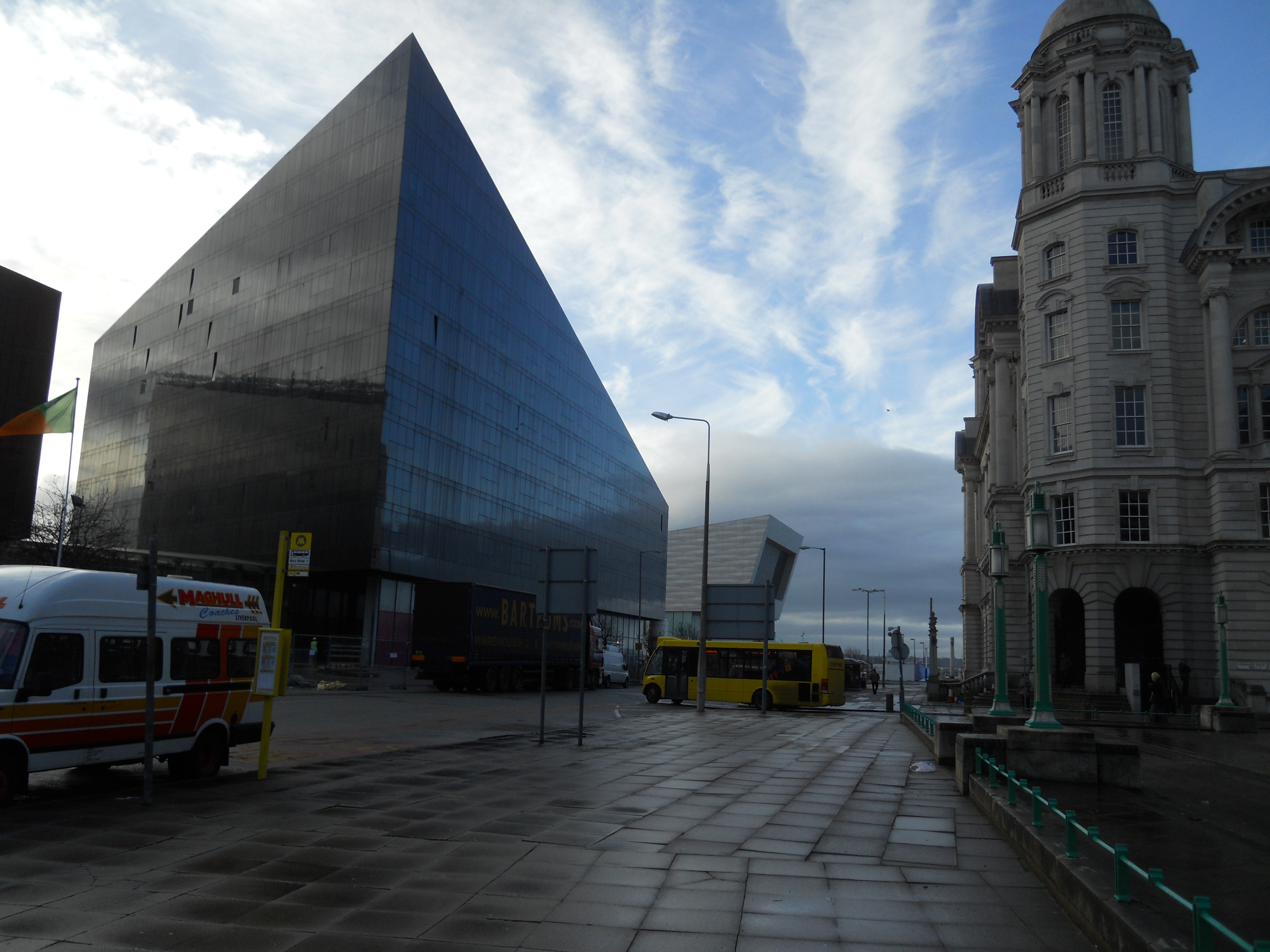
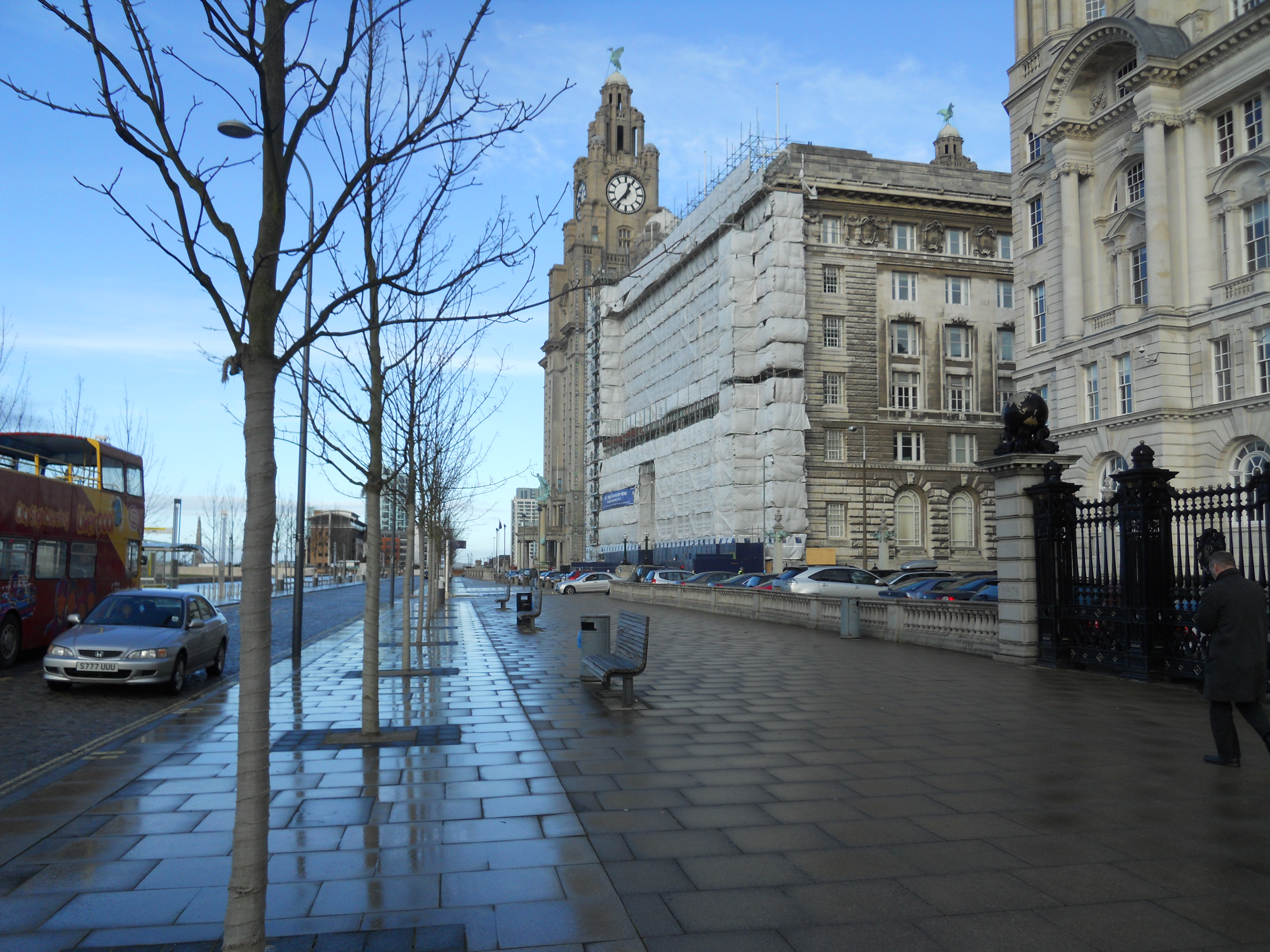
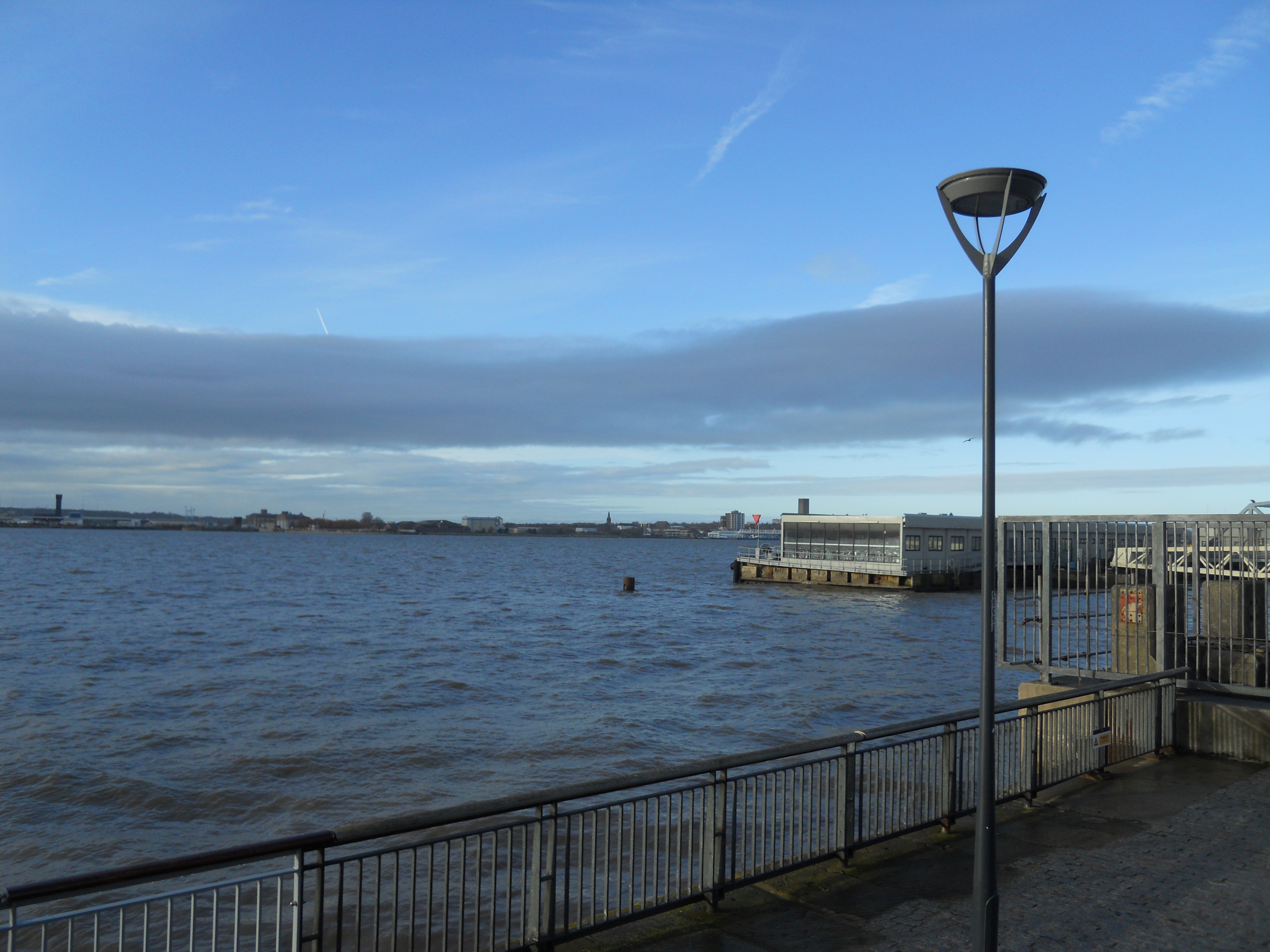
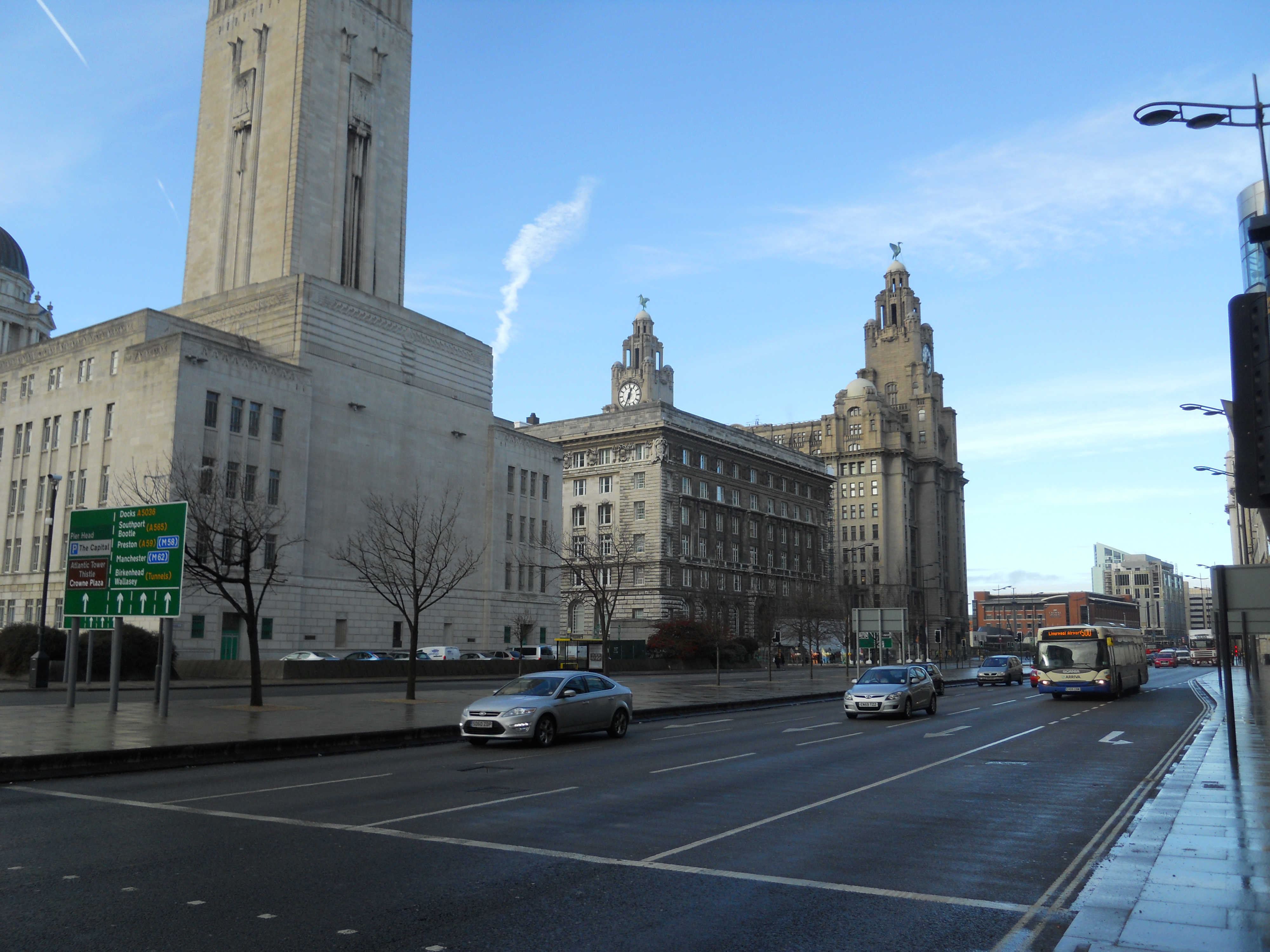
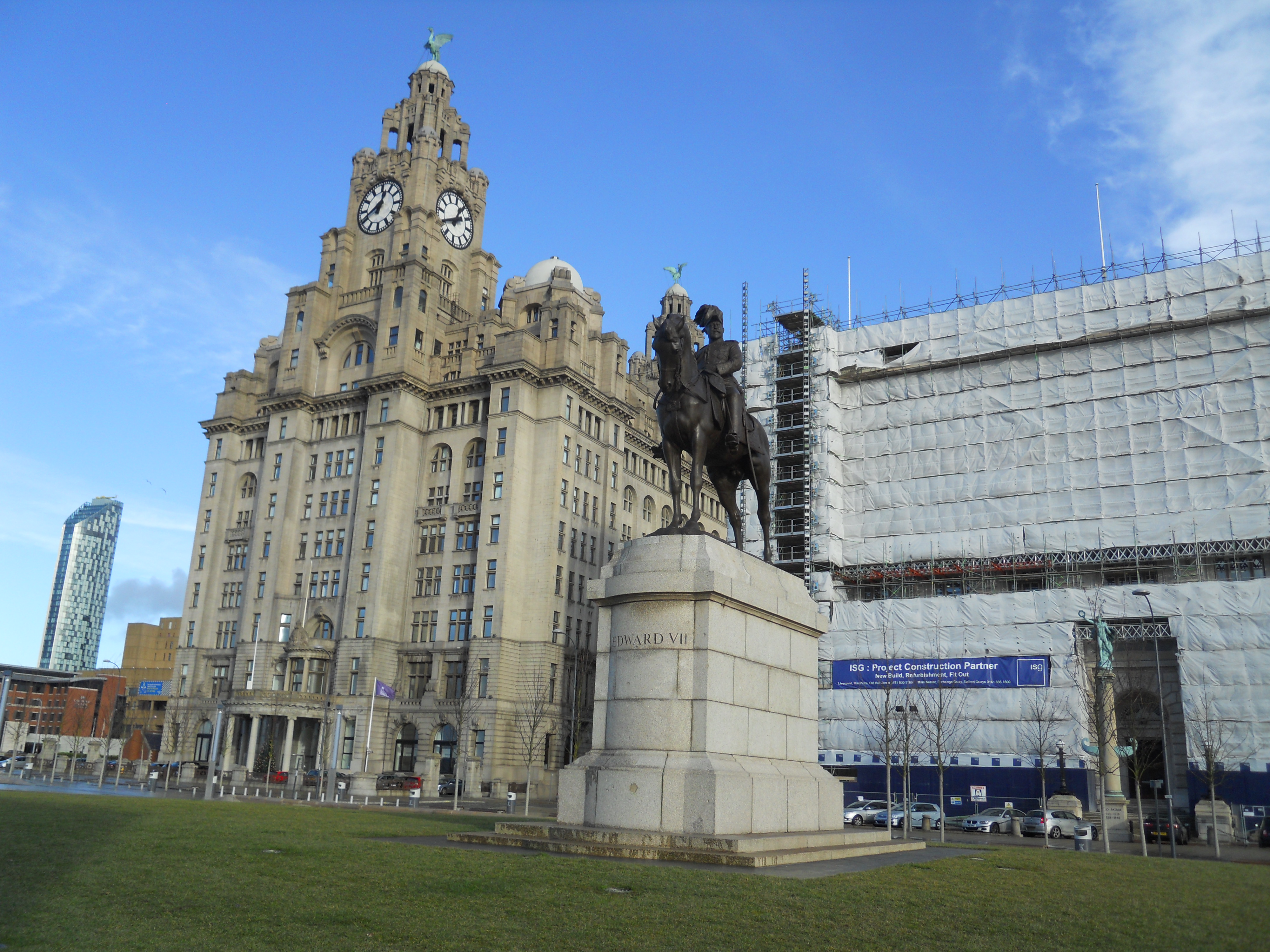
To get to the Pierhead from Lime Street, you take the Wirral Line of another of Liverpool’s unique features, a proper Underground railway to James Street and then walk a couple of hundred metres.
Train Across the Mersey
Everybody knows about the Mersey Ferries, in part due to Gerry Marsden‘s song of the same name. The train though crosses the river at Runcorn on one of my favourite bridges, the Ethelfreda or Britannia Bridge, depending on your preference.
The bridge lies alongside the Runcorn-Widnes road bridge, which was built in the 1960s. I remember after a party once in Cheshire getting C to stop the car on the bridge as I was feeling unwell. I then proceeded to puke my guts into the river below. After that incident, she nearly didn’t marry me! I never went to another party, where ICI’s Petrochemicals and Polymer Laboratory, were responsible for the punch.
There is an interesting footnote to the design of the bridge and that is why it is not a suspension bridge. It is hinted at in the Wikipedia entry for the bridge.
The next idea was for a suspension bridge with a span of 1,030 feet (314 m) between the main towers with a 24 feet (7 m) single carriageway and a 6 feet (2 m) footpath. However aerodynamic tests on models of the bridge showed that, while the bridge itself would be stable, the presence of the adjacent railway bridge would cause severe oscillation.
But the true story is all about how good engineers know their subjects.
The designers of the bridge made a presentation before the design was finalised to the ICI Merseyside Scientific Society. One of those attending was Mond Division’s vibration expert, who supposedly had a fearsome knowledge of the subject, even if he was slightly eccentric. After the presentation, he rose to his feet and said that he’d done some quick calculations and because of the proximity of the two bridges, the proposed suspension bridge would shake itself to pieces at a particular windspeed.
The bridge designer was not amused.
But ICI’s vibration expert was proved to be right in wind tunnel tests and we now have the steel arch bridge. Here are some notes on the design from Wikipedia.
The design of the bridge is similar to that of Sydney Harbour Bridge but differs from it in that the side spans are continuous with the main span rather than being separate from them. This design feature was necessary to avoid the problem of oscillation due to the railway bridge.
So good design avoided creating another Galloping Girtie.
I took a video as the train crossed and you can see the road bridge and some of the details of the railway bridge, with the large Fiddlers Ferry power station in the distance.
A Day in the Second City
To me, Liverpool is England’s second city, despite the claims of Birmingham and Manchester, which are pretty weak really.
If I was to show you pictures of Birmingham or Manchester cathedrals, would you recognise them? Probably not, but most people know both of Liverpool’s two iconic and world-class ones; Anglican and Catholic.
Liverpool too, has a compact centre behind the world famous waterfront which together make up the Liverpool Maritime Mercantile City, a UNESCO World Heritage Site. Liverpool also has some of the best collections of art in the UK outside London.
Then too, we all know musicians, actors and comedians from Liverpool, but lists of those from Manchester and Birmingham are noted for being rather short. The latter may have produced Tony Hancock, but I can’t name a second comedian for Birmingham. A lot of people think that Beryl Reid was from the city, but she was born in Hereford.
I’d actually sold the tool-kit for an XJ-S on eBay to someone in the city, who is restoring one of these classic Jaguars and as I always like an excuse to visit, I used the proceeds to deliver them personally.
So at 10:07 yesterday morning, I boarded the Virgin express for the city. A few minutes over two hours later I was in Lime Street Station. I’m a great believer in what I would call destination stations, where you could go to meet a friend, client or business colleague and have a meeting or a meal. St. Pancras is obviously that type of station, Euston and Edinburgh are definitely not and Kings Cross is getting there fast. In a couple of years, Lime Street will be a place to visit in its own right, especially, as it is opposite one of England’s greatest buildings, St. George’s Hall. Pevsner rated that building one of the finest neo-Grecian buildings in the world.
So the evidence that Liverpool is the second city is overwhelming and now that Virgin Trains have a very good service from London, I’d add it to the must-see list for any visitor to the UK.
I’d first arrived in Liverpool with a tatty cardboard suitcase containing my clothes and a few books in 1965 to start my course in Control Engineering at Liverpool University. Then the station was grimy and dirty and as the train crawled into the station after a four hour journey from London, I did wonder what I’d let myself in for. But in a way it started a love affair that has lasted nearly fifty years.
I should also say, that I had been given an unconditional offer by the University of a place, so I’d never even had a visit or an interview. In those days you either accepted those offers immediately or you might lose them.
 The Anonymous Widower