DeepForm
On Wednesday I went to the TDAP Wave 8 Demo Day, which was organised by the Advanced Propulsion Centre.
One of the cohort of companies there was DeepForm, who were described like this.
DeepForm is transforming sheet metal pressing with its patented cold-shear press design, which reduces blank sizes by up to 45 % and trimming waste by up to 85%. This drop-in technology lowers material costs and embodied CO2 in existing press lines without compromising performance, quality or speed. Spun out of the University of Cambridge in 2022, DeepForm enables OEMs and Tier 1 suppliers to adopt the breakthrough through IP licensing, simulation and design support.
The company have an impressive web site, which deserves a very full read.
In their presentation, they showed two products, that could benefit from their innovation; a large steel component for Jaguar Land Rover and a humble aluminium drink can.
As I walked home ntoday, I saw this advert displayed on a bus stop.
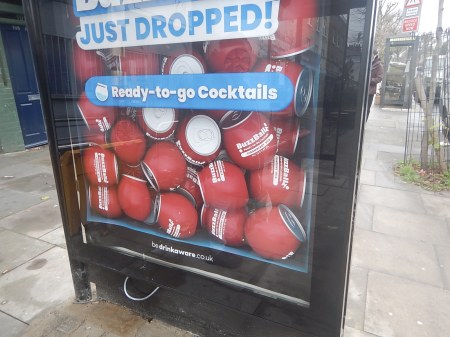
The cans for BuzzBallz are also shown on the company’s web site.
But these products are are only the start.
For instance, I can see lots of small plastic items and components, that can’t be recycled, could be made from aluminium, which is easy to be recycle.
I also think companies like IKEA will love the design freedom, the technology will give.
Rio Tinto Signs Australia’s Biggest Renewable Power Deal As It Works To Repower Its Gladstone Operations
The title of this post, is the same as that of this press release from Rio Tinto.
These three paragraphs outline the deal.
Rio Tinto has signed Australia’s largest renewable power purchase agreement (PPA) to date to supply its Gladstone operations in Queensland, agreeing to buy the majority of electricity from Windlab’s planned 1.4GW Bungaban wind energy project.
The agreement, which follows the announcement last month of a PPA for the Upper Calliope solar farm in Queensland, will make Rio Tinto the biggest industrial buyer of renewable power in Australia and is another major step in the work to repower the company’s Gladstone production assets – Boyne aluminium smelter, Yarwun alumina refinery and Queensland Alumina refinery.
Under the new PPA with Windlab, Rio Tinto will buy 80% of all power generated from the Bungaban wind energy project over 25 years. The project, which is currently in early development, will be built and operated by Windlab at a site in Queensland about 40 kilometres from the town of Wandoan, and 290 kilometres south-west of Gladstone, subject to development and grid connection approvals.
This Google Map indicates the position of Gladstone on the coast of Queensland.
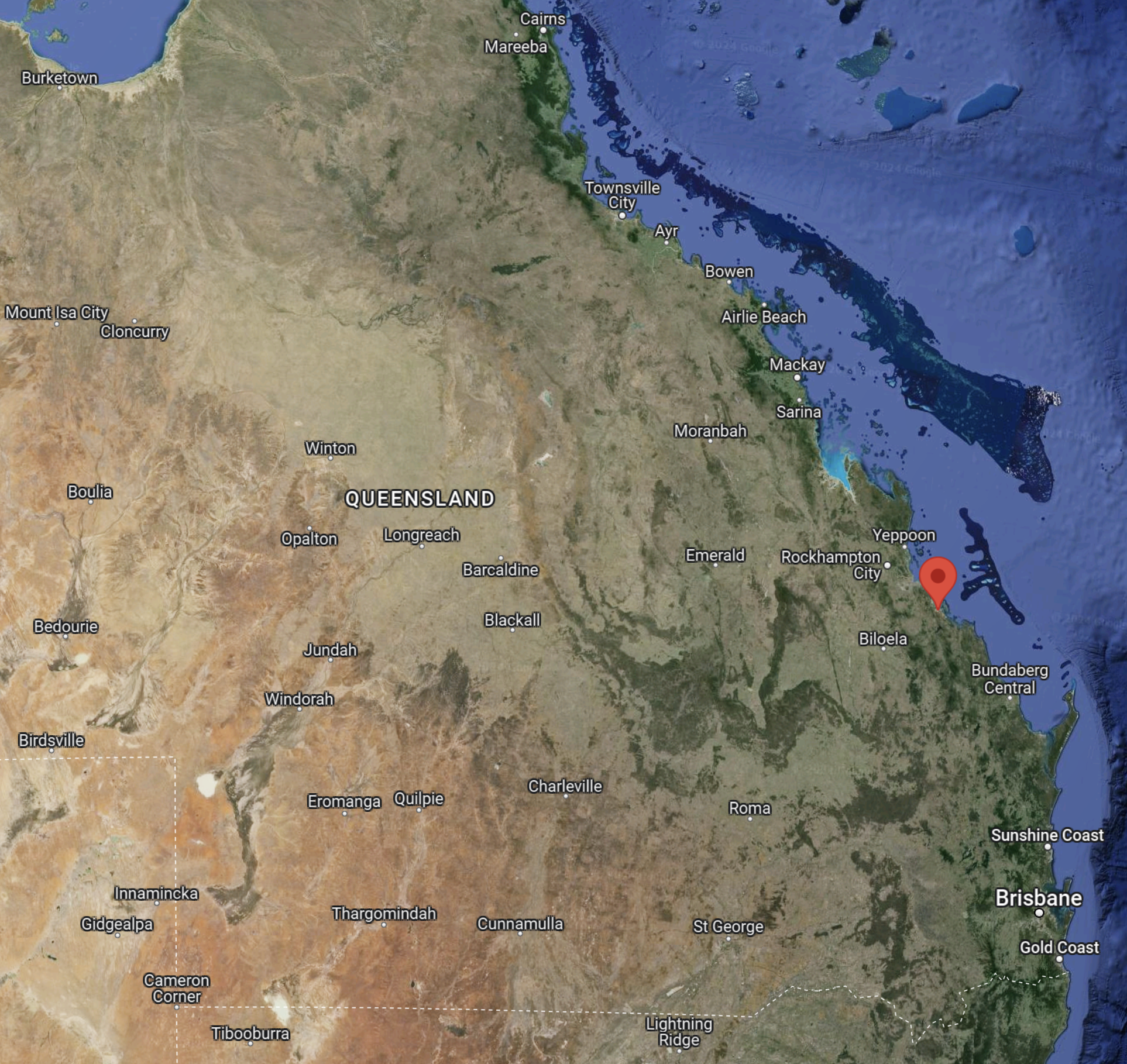
This map brings back memories.
I had hired a Piper Arrow from Sydney and I flew my late wife via Mildura, Adelaide, Coober Pedy, Yulara to Alice Springs taking about a week for it.
From Alice, I flew via Mount Isa to Cairns, which is at the top of the map on the coast.
I remember on leaving Aloce, I asked Air Traffic Control, what time it was in Queensland. The reply was “They’re half-an-hour ahead and twenty-five years behind!”
Mount Isa was infamous on the trip, as it was there we met the only disagreeable Aussie on the whole adventure. Unfortunately, he was in charge of the fuel and didn’t want to serve us. Probably, because he was drunk.
Finally, we got away and spent a couple of nights at Cairns, where we drove up the coast and explored the Daintree.
It was then a short hop for the plane onto the Battier Reef, where we stayed at a resort called Bedarra, which was probably the most exclusive place we ever stayed.
After a few days it was back in the plane and down the coast to Brisbane. That was a strange flight, as all Australian airline pilots were on strike, so we had the airspace to ourselves. At Mackay, the refuellers were so lacking in business, they were all too happy to fuel the plane.
After a couple of days in Brisbane, we flew the plane to Goondawindi, where we picked up our eldest son, before flying back to Sydney, where we took a flight home.
It was a memorable trip and I now wish, that we’d extended it by a couple of weeks.
Conclusion
Australia is a land of boundless solar energy, which is why we went there on holiday and Rio Tinto will be doing all there aluminium smelting by the use of renewables.
I can see in the future that the UK’s boundless wind energy will attract high energy businesses to the UK.
Norwegian Companies To Explore Using Aluminium In Floating Offshore Wind Turbines
This is based on this press release from World Wide Wind, which is entitled WORLD WIDE WIND AS and HYDRO ASA Signs Letter Of Intent Aiming At Using Aluminium In Offshore Floating Wind Turbines.
This is the first paragraph.
Hydro, the world leading Norwegian aluminium and energy company and World Wide Wind AS, a Norwegian company developing a floating wind turbine, have signed a Letter of Intent (LoI) to explore the use of aluminium in the renewable wind industry. The two Norwegian companies are partnering up to develop floating wind turbines with a design specifically meant for offshore conditions. The goal is to use sustainable and recyclable materials in the construction, including aluminium.
In Do All Wind Turbines Have To Be Similar?, I said this about the radically different turbines of World Wide Wind.
I’ll let the images on the World Wide Wind web site do the talking.
But who would have thought, that contrarotating wind turbines, set at an angle in the sea would work?
This is so unusual, it might just work very well.
As aluminium is lighter, it might be a factor in the success of the design.
This is the last paragraph of the press release.
World Wide Wind’s integrated floating wind turbines are scalable up to 40MW – 2,5 times current wind turbines – and will use less materials and have a smaller CO2 footprint than conventional turbines. It is World Wide Wind’s ambition that these turbines will represent future design for floating wind turbine design.
40 MW is a very large turbine. This is definitely a case of handsome is as handsome does!
Novel Long-Duration Energy Storage System Installed At World’s Largest CSP Plant
The title of this post is the same as that of this article on Recharge.
This is the sub-title.
Technology that stores power in molten aluminium inaugurated at 580MW Noor Ouarzazate solar complex in Morocco.
Other points from the original article.
- The idea is from Swedish start-up; Azelio.
- The the Noor Ouarzazate solar complex is rated at 580MW
- Noor is Arabic for light.
- Energy is stored as heat in molten recycled aluminium at 600 °C.
- When energy is needed, a Stirling engine is used to generate energy.
- Waste heat can also be captured and used to heat buildings.
- The system has a 90 % round-trip efficiency.
I feel this could be a winner in the long term.
Re-Use Rather Than Re-Cycle
I remember in the 1970s or 1980s hearing the Research Director of Pilkington on Radio 4, giving a defence of using glass as packaging.
He argued that one of the problems with glass coffee jars and sauce bottles was that after use and a quick wash, they looked like they could be refilled with new product. In those days, coffee jars were often used for the storage of small items like screws, clips and dry foods like rice and pasta.
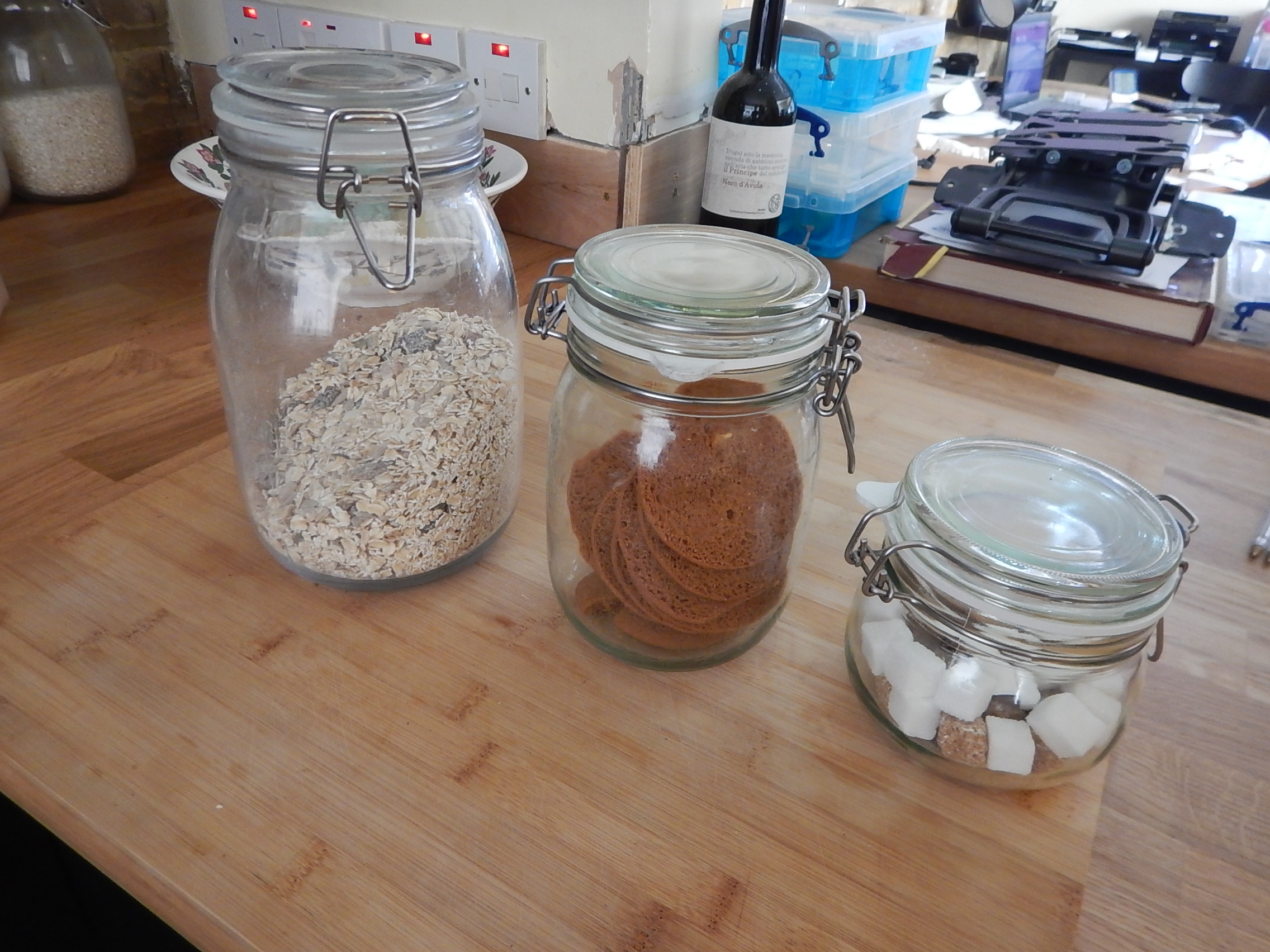
Now we’ll buy a designer jars, like these from IKEA.
In those days a lot of milk and beer bottles were returned to the dairy or brewery, but are we going to send empty beer bottles back to some of the exotic places from where they came.
The Research Director argued, that the best thing to do with glass bottles was to smash them up and re-use for other purposes.
One of the uses he discussed was to use broken glass as an aggregate substitute in road construction. This does happen and I’ve read of by-passes being constructed on a bed of broken glass and seen broken glass being used under paving slabs.
Glass came from materials dug out of the ground and it’s going back under.
He also said that to create new bottles was cheaper, than reusing bottles, unless there was a direct link, like milk rounds from a dairy.
This morning on wake Wake Up To Money, they were discussing cutting the use of plastics. So I sent in the following text.
I wonder if black-plastic ready-meal trays could be replaced with a light-weight glass variant. Along with bottles, they would just be washed and crushed after use for aggregate. Several roads have been built on broken bottles.
It was read out.
Consider.
- We drink a lot of beer that comes in glass bottles. One of my beer bottles from Marks and Spencer weughs 280 grams.
- They would be oven-proof, microwave-safe and freezable.
- You could eat your meal out of the dish!
- They might save on washing-up time.
- They could go in the dry-recycling after a quick rinse.
But above all, they may have other uses.
I also suspect that the other pakaging could be similar.

Could a piece of plastic be glued to the tray in the same way?
My idea is probably total rubbish!
But some of Marks and Spencer’s pies already come in just an aluminium tray and a cardboard box.
They need to be cooked in an oven and are not microwavable.
The pie goes down the gullet and the aluminium tray and the cardboard box, go into the dry recycling.
One thing I will be right about, is to say that there are some clever packaging scientists and designers out there, trying to create a freezable ready-meal, that can be cooked in a microwave, that isn’t protected in anything that can’t go direct in the dry recycling.
 The Anonymous Widower