Was There Often A Barrel Of Beer Available In Places Like Foundries, Where The Work Was Hot And Hard?
Readers of The Times has been discussing electrolytes in this hot weather and especially the possibility that beer contains electrolytes.
This was posted.
My elder father informed me yesterday his fridge is full of alcohol free Erdinger wheat beer. It is marketed as good for replacing electrolytes.
So there could be something in it.
At the moment, as I type this the temperature is 35.5 degrees and the humidity is 26%, so I’m finishing off last night’s bottle of Adnam’s Ghost Ship Alcohol-Free 0.5 % Beer.
I asked Google AI, the question in the title of this post and received this reply.
Yes. In heavy industries like foundries, glassworks, and steel mills, consuming large volumes of liquid was a medical necessity to replace what was lost to sweat. Historically, workers frequently supplemented their diets with beer—sometimes supplied by the company, sometimes delivered by local pubs, and sometimes factored into their pay.
Historical Context & Working Conditions
The Thirst Quenchers: In sweltering industrial environments where temperatures could exceed \(65^{\circ }\text{C}\) (\(150^{\circ }\text{F}\)), workers suffered massive fluid loss. A furnaceman or steelworker could sweat out up to twenty pints a day.
The “Beer Allowance”: In places like Britain’s steelworks in Sheffield, it was customary for workers to receive a weekly beer allowance—sometimes up to forty pints—often supplied directly to the sweltering factory floor via young workers known as “bucket boys”.
Liquid Nutrition: Before the advent of modern refrigeration and reliable municipal water, low-alcohol table beer provided crucial calories and hydration without the risk of waterborne illnesses. It was treated more like a food source than an intoxicant.
The Shift to Modernity
The Temperance Movement: The availability of alcohol at work gradually changed during the 19th and 20th centuries. The rise of the Temperance Movement and stricter workplace safety regulations meant that by the mid-to-late 20th century, foundries began phasing out alcohol in favor of safer, hydration-focused alternatives.
Modern Replacements: Today, foundries and heavy industries prioritize hydration through water, electrolyte replenishment, and salt tablets rather than on-site alcohol.
I should say, the following.
- My paternal grandfather was an alcoholic and it eventually caused his early death at around 40.
- I lose a lot of water through my skin. See My Strange Skin.
- I’ve always preferred beer to any other drink. But I’ve never had an alcohol-related problem.
So do I drink beer and usually real beer because of its electrolytes?
Green Tea, Broad Beans, Berries — Are You Eating The Best Five-A-Day?
The title of this post is the same as that of this article in The Times.
This is the sub-heading.
We need 500mg of flavanols a day for heart and brain health, new research shows. Here’s how to boost your intake
These three paragraphs add more details.
You may have ticked off fruit for breakfast, salad for lunch and pulses and veggies for dinner to get your five a day, but you could still be missing out — specifically on key nutrients called flavanols, which are important for disease prevention.
Not all fruit and veg are created equal and while a variety of plant foods is best for all-round health, researchers from the University of Reading, Harvard Medical School and the University of California Davis stressed this week that our focus should be on getting more flavanols, a specific group of antioxidant compounds found in foods such as berries, apples, kale, grapes, tea and cocoa. These matter because they support blood vessels, circulation and heart health.
For their study, published in the latest edition of the Food & Function journal, the scientists tracked the diets and urine biomarkers of more than 30,000 people from the US and the UK, and confirmed that a daily intake of 500mg of flavanols reduced deaths from cardiovascular disease by 27 per cent. Their results also showed that fewer than one in five people get enough flavanols in their diet and even those who hit standard NHS healthy eating guidance are often found to be lacking in the nutrients.
I eat a lot of strawberries, as I find strawberries and yoghurt in the afternoon helps to calm my uncomplicated pancolonic diverticular disease.
I also drink two or three bottles a day of Adnams Ghost Ship Alcohol Free Beer.
Does Low-Alcohol Beer Contain Flavanols?
I asked Google AI and received this slightly surprising answer.
Yes, low-alcohol and non-alcoholic beers contain flavanols. The brewing process retains a significant portion of these bioactive polyphenols (antioxidants).
How Flavanols Get into the Beer
Hops: Hops are the primary source of specific flavonoids and flavanols.
They are also the unique source of prenylflavonoids (like xanthohumol), which are known for their strong antioxidant and potential anti-inflammatory properties.
Malt: Barley and grains provide the majority (70-80%) of the total polyphenolic compounds found in a standard brew.
Brewing: Because non-alcoholic and low-alcohol beers undergo many of the exact same initial fermentation and brewing steps as regular beers, they naturally retain these compounds from the raw ingredients.
Style: Darker, heavier, or more heavily-hopped beers generally contain higher amounts of total flavonoids and polyphenols.
Processing: Certain filtration and stabilization methods used to reduce haze during production can also slightly decrease the flavonoid content.
Health Value: Because low-alcohol variants bypass the negative effects of ethanol, they are often highlighted by dietitians and nutritionists as a great way to enjoy the functional and nutritional benefits of beer, such as antioxidants and vitamins.
I also feel that a lot of what is said here could also apply to real ale.
Does Real Ale Contain Flavanols?
Yes. Real ale contains flavanols (such as catechins and epicatechins) and various other flavonoids, primarily sourced from the hops and malt used in the brewing process.
Key Flavonoids and Polyphenols in Real Ale
Flavanols: Compounds like catechin and epicatechin are present in beer, providing a source of antioxidants.
Flavonols: Real ales contain flavonols such as quercetin and rutin.Prenylated
Flavonoids: Hops provide unique prenylated flavonoids (like xanthohumol and isoxanthohumol). Because ales are typically more heavily hopped than lagers, they often boast higher concentrations of these specific compounds.
Why Real Ale is a Notable Source
Ales are top-fermented at warmer temperatures and are traditionally more heavily hopped than lagers, which aids in the extraction of these plant polyphenols. Furthermore, because real ale (or cask-conditioned ale) undergoes a secondary fermentation in the container from which it is served and is typically unpasteurized and unfiltered, it retains high amounts of these natural plant compounds compared to mass-produced, heavily filtered beers.
I’ve rarely drunk any foreign lager, since my father introduced me to Adnams at about 11.
Can You Take A Dulcolax With Uncomplicated Pancolonic Diverticular Disease?
I was suffering from constipation this morning, as the low barometric pressure was drawing the water out of my body.
So I wondered if I could safely take one of my usual Dulcolax tablets.
I asked Google AI, the question in the title of this post and received this reply.
You should not take Dulcolax with uncomplicated pancolonic diverticular disease, especially during a flare-up, without first consulting a healthcare provider. Stimulant laxatives like Dulcolax can be risky and may cause issues, such as gastrointestinal problems or increased risk of perforation. Instead, a healthcare provider will likely recommend consulting them for advice on which constipation treatments, if any, are appropriate, such as bulk-forming laxatives if your diet is insufficient.
I didn’t take any Dulcolax tablets.
But I’ve just hydrated myself with a bottle of Adnams Ghost Ship 0.5% Beer and it did the trick!
Are Zero- And Low-Alcohol Beers Cutting Road Accidents?
In The Times today, there is an article, which is entitled Drink-Driving ‘Effectively Legalised’ As Number Of Breath Tests Falls, where these are the first three paragraphs.
Drink-driving has effectively been legalised due to plummeting rates of breathalyser tests and light punishments for offenders, campaigners have warned.
The number of breath tests conducted by police has fallen by more than 62 per cent over the past decade as dangerously inebriated drivers receive short bans.
In 2009, police carried out 647,380 breath tests, but by 2023, that figure had fallen to just 240,322.
This later paragraph, adds a few more statistics.
In 2002, 18 per cent of breath tests were positive, compared to 16 per cent in 2023, while the number of drivers prosecuted for drink-driving offences has significantly decreased. Convictions for drink-driving fell from 55,300 in 2012 to 40,292 in 2023, coinciding with the sharp decline in breath testing.
Note, that in both extracts the latest comparison date is 2023, whereas the earliest date is 2009 and 2002.
This analysis is not the full picture, as there are two big differences between drinking in 2002 or 2009 and 2023.
The first difference is that 2002 and 2009 are pre-Covid, but 2023 is post-Covid.
So did Covid alter our drinking habits, which could have perhaps meant more people drank at home?
The second difference is that in 2023, zero and low alcohol beer was readily available.
I don’t drive, after a stroke ruined my eyesight, but I do drink up to four bottles a day of 0.5 % real ale. The beer I drink has been regularly available since 2017.
I wonder how many nominated drivers are now drinking these beers?
A serious survey and analysis needs to be done.
AI Could Make New Runways Obsolete
The title of this post, is the same as that of this article on Jewish News.
This is the sub-heading.
As Heathrow’s controversial third runway gets the green light and Gatwick looks on track for a second one, an Israeli tech innovation could reduce the need for such costly expansions.
These paragraphs add some detail.
IntellAct is a cutting-edge AI company that helps airports maximise efficiency, cut delays and save billions of pounds. By optimising ground operations and reducing aircraft turnaround times, it could spare airports the need for new runways entirely.
“The aviation industry is bleeding from a thousand cuts,” says Udi Segall, IntellAct’s founder and CEO. “Constant delays – with an average of 15.5 minutes per flight — add up to billions in costs. We saw a financial opportunity in how airlines manage their activities, and that’s where IntellAct comes in.”
IntellAct leverages big data and machine learning to provide airlines, airports and ground handling teams with real-time visibility into service performance bottlenecks and the ability to address them in a way that can yield significant operational improvements and a dramatic reduction in flight delays.
It’s an interesting thought.
I am reminded of a story from the 1960s, from ICI.
They had a polypropylene plant, that was notoriously inefficient, so a guy called Humphrey Bowen (?) used a discrete simulation program called HOCUS to create a board game of the chemical plant. This game was then played one Sunday, with beer and sandwiches between the various teams of production workers. It became heated at one point, but they did learn a lot about the behaviour of the plant and improved its efficiency.
I think it is true to say, that in the early 1970s, I worked with a bunch of interesting people at ICI Plastics.
These days, use might be made of a digital twin.
Lumo Launches A 0.5% Beer For The New Year In Partnership With A Newcastle Brewing Company
The title of this post, is the same as that of this article on the Cumberland Gazette.
This is the sub-heading.
Lumo has launches a locally-sourced, low-alcohol beer in partnership with Newcastle’s Donzoko Brewing Company to be available on services between Edinburgh and London.
These two paragraphs add a bit more detail.
Big Nothing 0.5% will be available in time for the new year, aimed towards those taking part in giving up alcohol for Dry January. The addition is part of Lumo’s commitment to providing locally sourced onboard options as part of the catering offer on its services on the East Coast route.
The release of the drink comes after the Rail Safety and Standards Board (RSSB) reported a 45% increase in alcohol-related incidents during the festive period last year.
I shall be trying some of this beer next time I travel on Lumo.
A Simple Late Lunch
I’ve just had one of my typical late lunches.




It was one parcel of Marks and Spencer’s smoked salmon pate on toast, washed down with a half-litre bottle of Adnams Ghost Ship 0.5 % beer.
O’ll probably have the second parcel of salmon for lunch tomorrow.
Excitement Brewing for Gateshead FC Away At Wembley
The title of this post, is the same as that of this news item on Lumo.
This is the sub-heading.
Lumo, the Open Access rail operator, has teamed up with local Gateshead brewery Black Storm to offer Gateshead FC fans a special commemorative beer onboard its trains.
These first two paragraphs add a few more details.
Hot on the heels of Tyneside based Lumo, the Open Access rail operator, announcing an extra train on Saturday 11th May to get Gateshead FC fans back from London as part of the club’s huge achievement of a second Wembley FA cup final in as many years, they’ve teamed up with local Gateshead brewery Black Storm to offer fans and travellers a special commemorative beer onboard its trains.
The appropriately named’ Whistle Stop’ is a 5% ABV Helles Lager featuring special commemorative Gateshead FC Wembley 2024 and Lumo branding on the can and will be available to purchase on the LumoEats at seat trolley service on all Lumo trains from this week, including on its specially named ‘Heed Army Express’ trains on Saturday 11th (running from Newcastle to London at 07:12 and 10:22, and returning at 20:26).
Surely, rail companies should do more deals like this to support local teams and suppliers.
My Alcohol-Free And Gluten-Free Real Ale Has Arrived
I have been drinking Adnams Ghost Ship 0.5% beer for some years now.
It should be noted that as a coeliac, I have to drink gluten-free beer and because I am on Warfarin, I can’t drink much alcohol.
My body has certified the beer as gluten-free, ever since it was released a few years ago.
On Saturday, my first consignment of the new Ghost Ship 0.5% beer arrived, which is properly certified as gluten-free.
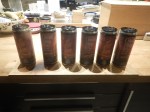
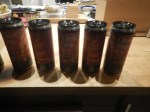



This paragraph from this page on Adnams web site describes what they mean by gluten-free.
Ghost Ship is inspired by tall tales of the ghostly ships that haunted the shores of Walberswick. The seeds of these stories were likely sown by smugglers in a plot to keep the Suffolk coast clear. In contrast, Ghost Ship 0.5%’s creative new look invites you in, flying the flag for low-alcohol beer. It has been painted by a talented local artist with a love of that very same coastline. Adnams invested in a de-alcoholiser specifically to craft Ghost Ship 0.5%. This reverse osmosis plant allows the team to brew and ferment Ghost Ship 0.5% like all our other beers and then, at cold temperatures, remove the alcohol. It leaves all the lovely flavours from a full fermentation in the beer, allowing it to sail away with those original characteristics. Our Ghost Ship 0.5% 330ml cans are validated as gluten free. When producing Ghost Ship 0.5%, we use an enzyme to help with filtration when using our de-alcoholiser. This breaks down gluten-type molecules which helps with the process, reducing gluten content to below 20 parts per million (ppm). Only foods that contain 20ppm or less can be labelled as ‘gluten-free.’
I’ll go along with that!
But then I’ve been drinking Adnams Ghost Ship 0.5% beer for at least five years and I’ve never had a reaction.

