The View From Platform 1 At Birmingham Moor Street Station
Birmingham Moor Street station is one of my favourite stations, as it is rather a unique restoration and enlargement of an old Great Western Railway station.
I hope the restoration for Crossrail of Hanwell and West Drayton station please me as much.
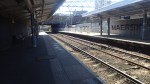
My train was leaving from Platform 1, so I took these pictures whilst I waited.
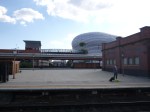
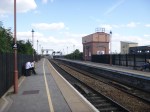
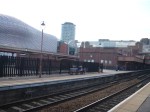
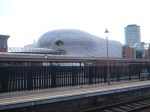
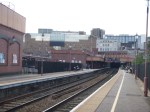
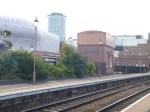
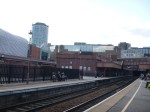

Platform 1 and 2 are either side of the lines to Birmingham Snow Hill station and were opened in the 1980s and when the station was enlarged later the buildings were matched to the original terminus, which is Grade 2 Listed
The low-flying barrage balloon in most of these pictures is Birmingham’s Selfridge store.
Before Crossrail 2 – Tottenham Hale
In the near five years since, I moved back to London, Tottenham Hale station has changed for the better, with the addition of a lift to the Victoria Line platforms and the reorganisation of buses, taxis and other traffic around the station.
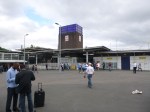


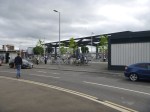
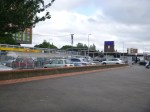
But over the next few years, we should be seeing a lot more changes as this Future section in the Wikipedia entry for the station. The significant section is about Crossrail 2.
In February 2013, the Crossrail task force of business group London First, chaired by former Secretary of State for Transport Andrew Adonis, published its recommendations on Crossrail 2, favouring a route almost identical to the regional option proposed by TfL in 2011. The report was endorsed by Network Rail.
This proposal will see four tracks restored through Tottenham Hale and direct links to South-West London.
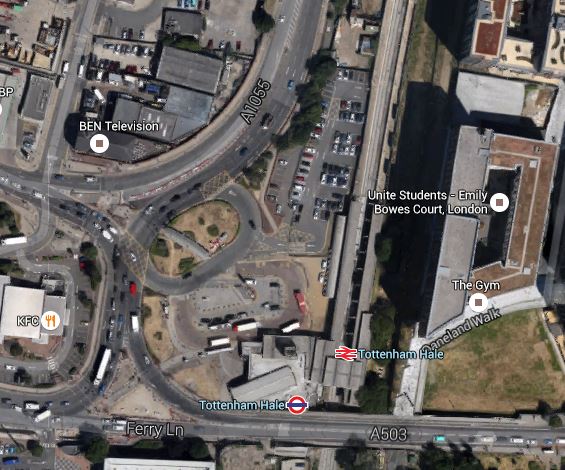
This Google Map shows the station and the surrounding area.
Tottenham Hale Station
This image appears to have been taken before the new Tottenham Hale Bus Station was created and the traffic system was changed.
With all the development going on, putting four tracks through the station will need a very narrow track and platform layout.
On this page of the Haringey web site are more details and an artist’s impression of the proposed station. This picture is shown in an article in the Tottenham Journal.

Proposed Tottenham Hale Station
I would suspect that a wide bridge would extend eastwards from this building over the tracks with lifts and escalators to the platforms. Looking at this image, it does strike me that the the architect has taken some of Charles Holden‘s stations as their inspiration.
Tom Dixon’s Water Tower House
As I walked from Kensal Rise station to Ladbroke Grove, I couldn’t avoid seeing this building by the Grand Union Canal.
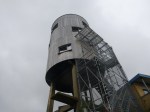
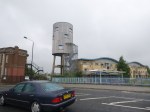

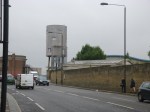
It is a house created by Tom Dixon from a water tower. This page on the inhabit web site gives more details.
This Google Map shows the area, where a bridge carries Ladbroke Grove over the Grand Union Canal.

Grand Union Canal At Ladbroke Grove
The house is the round structure on the South side of the canal, by the bridge, to the right of the long silver building.
On the canalside in front of the house and the silver building is another interesting structure.


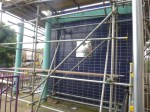
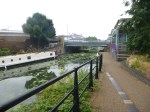
It is a Monitoring Station for the electricity cable networks that are run by National Grid. It appears to be in a state of refurbishment at the moment, which stopped me taking a picture of the plate which gave details of its function.
A Double-Sided Station
Southend Central station is one with an unusual layout. It is just off the High Street in Southend, as this Google Map shows.
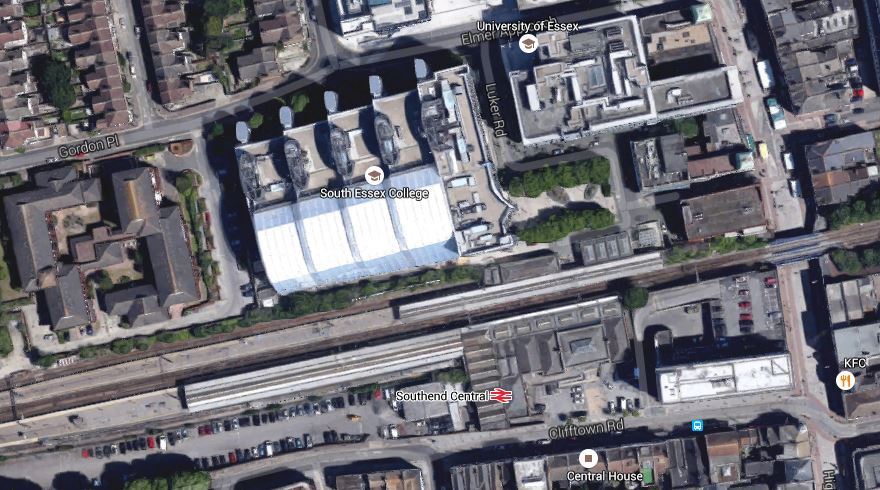
Southend Central Station
The main station buildings are on the Southern side of the line, but on the Northern side, there is another set of entrances and some facilities.
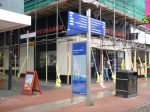
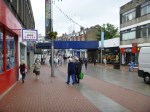
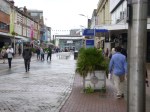
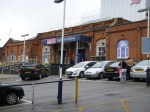
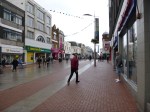

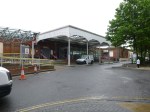
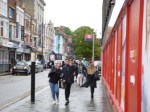
The pictures show both sides of the station and the bridge across the High Street.
It strikes me that if this station ever gets rebuilt, perhaps in conjunction with a shopping, residential, leisure or office development, the architect has a lot of scope to create a uniquely accessible building.
Period Details At Arnos Grove Tube Station
The Grade II* Listed Arnos Grove tube station is one of the architectural gems of the Northern Piccadilly Line. Today, as I journeyed to Cockfosters, I got off and looked around, taking these pictures.


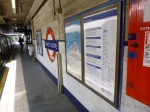


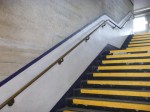


In all the years I lived in North London, I don’t think, I ever used the station as a destination.
London’s transport authorities have certainly looked after it well.
Bennetts Associated Designs For The Western Crossrail Surface Stations
I’ve put this link to a downloadable project sheet on the Bennetts Associates web site on this blog, as it gives an insight into the upgrading of the thirteen surface stations west of the central core.
What Are We Going To Do With The Palace Of Westminster?
The Palace of Westminster has an iconic status, in addition to its function as home to the two houses of the British Parliament.
It’s well-document problems, as detailed here with their solution in the Guardian are pretty serious, so something drastic needs to be done to either preserve or replace the building. The article suggests complete modernisation of the way we are governed with electronic voting, modern offices and the like. This is a typical paragraph.
Yet the buildings cannot be considered in isolation. The deterioration of the estate is an opportunity as well as a crisis. There can be no question of expensively retrofitting the palace to recreate outmoded working practices, traditions and habits. Parliament must become a workplace, instead of a Victorian club. Few modern offices do or should have bars, let alone subsidised ones. A rethink of the institutions, organisation and culture is well overdue, and it must be reflected in the renovations chosen.
I agree with the first part of it, but in some ways too much change in the way it works could destroy British democracy for ever.
I feel so strongly, that I wrote this letter to The Times.
I spent most of my working life, writing software to support the project management of large enterprises.
This has led me to the conclusion, that often what gets created is often very different in concept to the original proposals, once engineers and architects apply some innovative thinking.
I have heard so many arguments in all different directions on the rebuilding of the Palace of Westminster, that I despair anything will ever be agreed. So let’s think laterally!
If you go a couple of bridges upstream, you come to the home of MI6. On the river frontage of this building, one of several large junctions for the new Super Sewer is being dug deep into the river.
The most pressing problems in the cramped Palace are space, services and vehicle access and parking.
We could use the techniques of the Super Sewer, to create a building for these urgent needs alongside, but a respectful distance away from the Palace, deep under the river.
The two buildings would be connected by tunnels and if an island garden could be created on top of the new building, by footbridges. Vehicles would enter through tunnels at either end to and from the Embankment. Parking would be solely in the new building, thus releasing space in front of the Palace and freeing up the parking underneath for more important uses.
I believe that creating this second invisible building, would allow the current Lords and Commons to function as normal during the rebuilding. Modern lighting, would even allow the creation of world class offices and perhaps a third chamber under the Thames.
It wasn’t published, as I suspect they filed it under madmen!
But is it so unfeasible and just silly?
Look at this Google Map of the River Thames between Westminster and Lambeth Bridges.
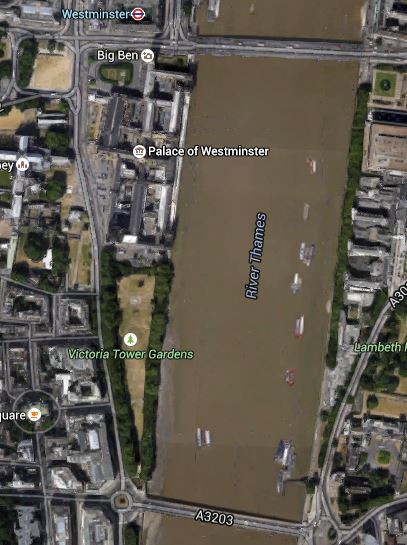
The Palace Of Westminster And The Thames
The only construction in the river, will be the Super Sewer, that goes underneath it somewhere in the middle. This picture shows the River looking from Victoria Tower Gardens towards Westminster Bridge.
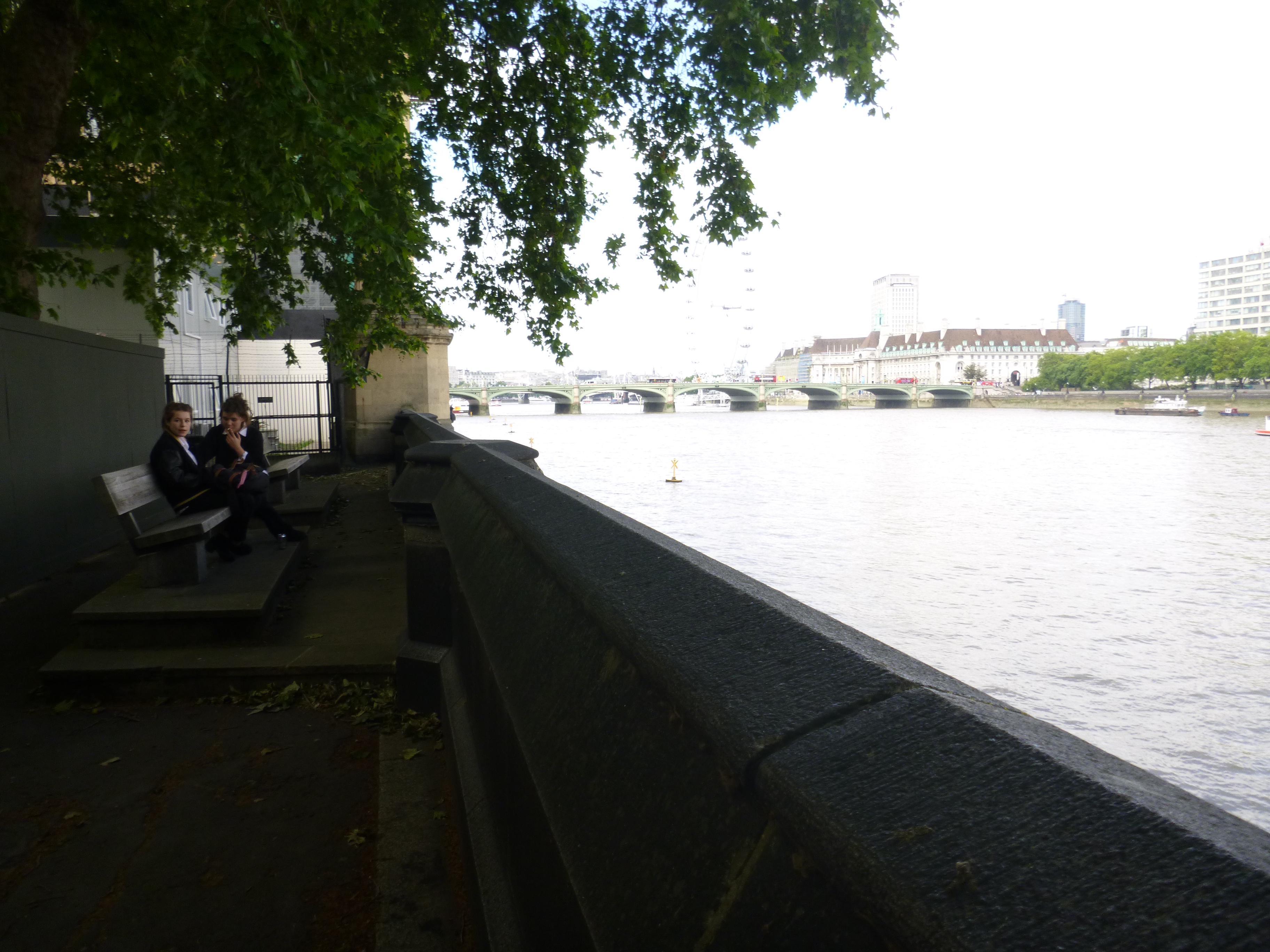
Westminster Bridge
It is a view that must be protected. On the other hand the view on the other side of the Palace, is just a jumble of security blocks and car parking.

In Front Of The Palace Of Westminster
The whole area is a World Heritage Site and it is not treated with the respect it deserves. In fact, it is a complete disgrace.
This Google Map shows the area of the World Heritage Site.
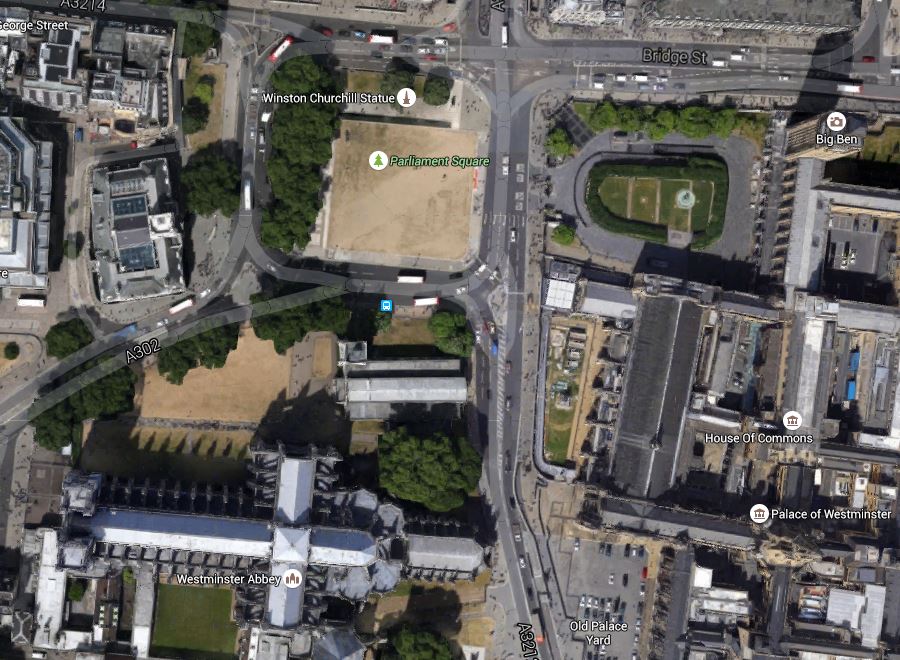
Westminster World Heritage Site
It needs to be improved by banning all traffic except bicycles and buses from the whole area around Parliament Square, the Palace of Westminster and Westminster Abbey.
Extending my plan to do this would put an immersed tunnel in the river from say Whitehall Gardens opposite the London Eye to Lambeth Bridge.
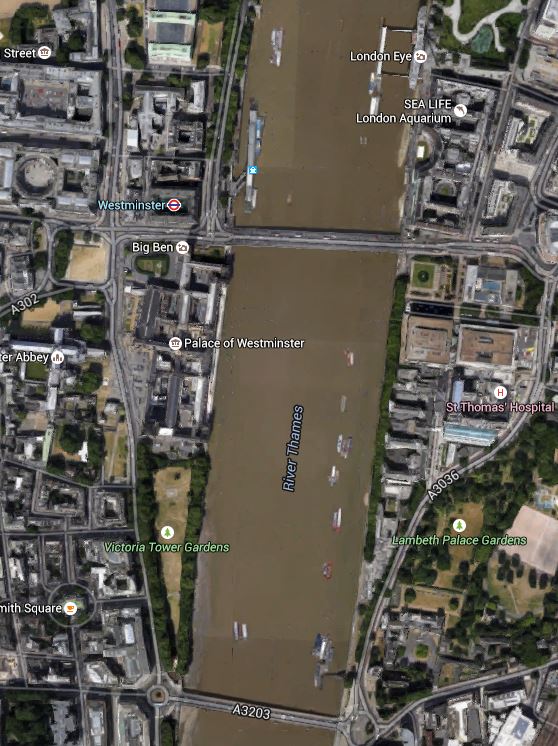
Whitehall Gardens To Lambeth Bridge
It would run through or alongside the new building under the river, that I proposed in the letter to The Times.
Note that there is another building in London, that is built deep down into the water connected to everywhere else by tunnels. It is the massive Lord Foster-designed Canary Wharf station for Crossrail.
The construction of the new building and the tunnels, should be well within the compass of those that designed and built the station. Incidentally that station was built in six years at a cost of five hundred million pounds., without interfering with the daily life, going on all around. You could even bring in construction materials and take out the large amount of spoil on the river.
Once the building, with its car parks and tunnels is complete and connected to the Palace of Westminster, you could start to refurbish the historic palace.
I think that it is totally feasible,
I would also incorporate the following into the design.
1. Pedestrianise as much of the area as possible, whilst allowing buses and cyclists.
2. Build a modern semi-circular third chamber in the new building, to act appropriately as the Commons or Lords during refurbishment. And why not build it big enough for joint sessions of both houses with all the modern features that most parliaments around the world possess?
3. Put all services, car parking and vehicle access into the new building.
4. The new building would of course contain the extra much needed offices.
5. Perhaps more radically, the top of the building could be covered by a floating island, which could be a viewing garden for the Palace, with access by walkways from Westminster Bridge and Victoria Tower Gardens. It can’t be fixed, as the river is tidal.
I think if we think radically, architects and engineers can come up with a scheme that is workable and turns the Palace into a modern Parliament without any loss of history, and the area into a World Heritage Site worthy of the name.
It won’t happen and in thirty or forty years time, they’ll be another crisis concerning the state of the Palace of Westminster.
Liège-Guillemins Station
As I wandered my way back to Brussels for the Eurostar, I just had to stop of at Liège-Guillemins station and take some pictures.
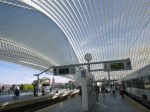
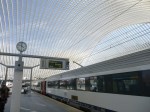
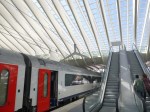
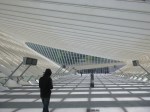

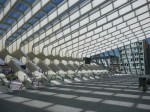
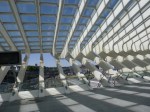
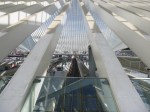
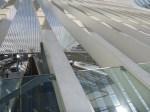
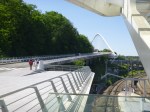
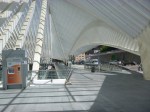
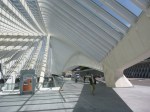
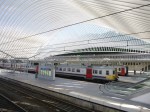
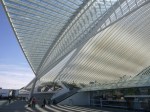
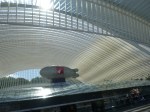
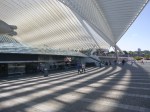
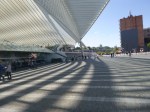
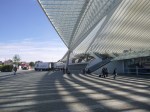
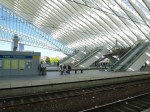
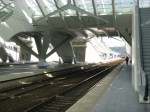
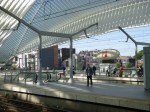
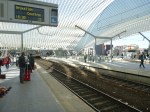
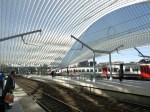
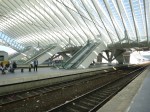
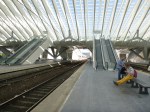
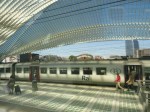
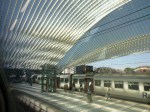
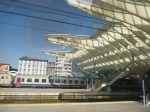
Is there another station like it in the world? This Google Map shows the layout.
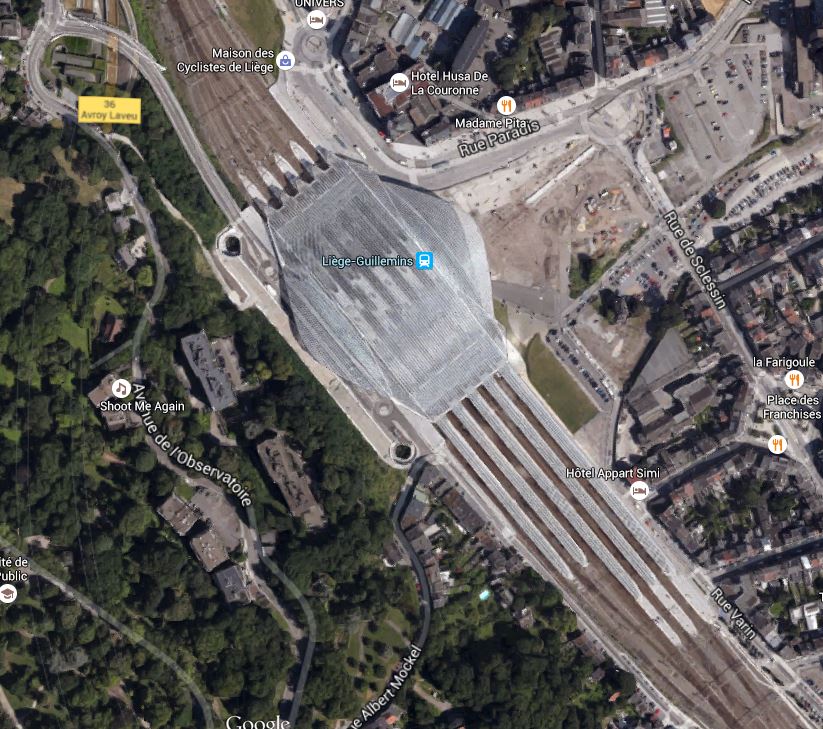
It is a design by Santiago Calatrava. Let’s hope that the Belgians did a good job on building this station. In 2007, I saw some of his buildings in Valencia and the concrete hadn’t worn well!
The totally new station cost €312million, which compares with £500million for the restoration and extension of Kings Cross station. Compare these figures with the reported £44million for the restoration of Manchester Victoria station, the complete reconstruction of Reading and Birmingham New Street stations.
Direct comparisons are difficult, but I cam’t help feeling, that in terms of cost, Manchester Victoria station is out of line with the others. It just shows that god design is often cheaper than bad.
One difference between the British projects and Liège-Guillemins station, is that the British ones are or were updating of existing stations, whereas the Belgian one was a new station built a short distance away.
Perhaps in some ways, to combine rebuilding with moving the station is a better plan, as both Reading and Birmingham New Street could be thought expensive compared to Liège-Guillemins.
So with all the problems there have been during the rebuilding of London Bridge station, would it have been better to have put the rail lines through in an optimal manner for operational purposes and perhaps created a new station further South.
London Bridge station was and still is a difficult problem, but hopefully it’ll be spot on when it opens.
Mitcham Eastfields Station
With the summer now giving us lighter evenings, after Wednesday’s visit to Greenhithe station, I decided to have a look at another of Network Rail’s modular stations.; Mitcham Eastfields. The station has an unusual layout as this Google Map image shows.
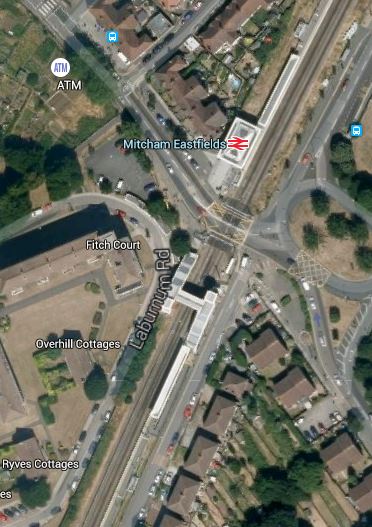
Mitcham Eastfields Station
Note that the two platforms are one each side of a level crossing and that the down platform where trains from London arrive has no facilities except a bridge to connect it to the other platform. It is an interesting attempt to find a solution to the level crossing problem. Wikipedia says this about the design.
The platforms are 170 m long, with a building on the up (northbound) platform. The platforms are arranged so that each is situated beyond the level crossing in the direction of travel, allowing the crossing to be reopened while trains are stopped at the station, minimising the disruption to road traffic.
I took these pictures as I walked from the down to the up platform over the footbridge.
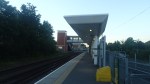
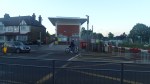

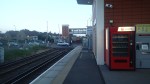
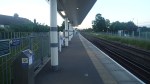
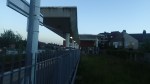
The design might need some fine tuning in the addition of a light-controlled crossing for foot passengers crossing from the down to the up platform, but it is an innovative approach to putting a station by a busy level crossing on a line with frequent trains.
Freight At Maryland Station
I had to catch a train from that ruin in the East, Maryland, this afternoon. When I took pictures of all the stations before they are taken over by Crossrail, I gave Maryland a score of 2/10. As these pictures I took today, show of a freight train passing through, I think I was generous.



Sorting this dump out will need a real top quality architect with imagination. This Google Earth image shows the station and the roads around it.

Maryland Station
The following problems will challenge the design team.
1. The site is cramped and surrounded by busy roads.
2. The access to the station is along narrow pavements, even if they opened up the entrance on the South side.
3. The Crossrail platforms on the South side of the station are too short for the new trains and selective door opening will have to be used.
4. There would also appear to be few redeeming features in the current station. There isn’t any Victorian ironwork to preserve.
This is what is shown at present on the Crossrail web site.
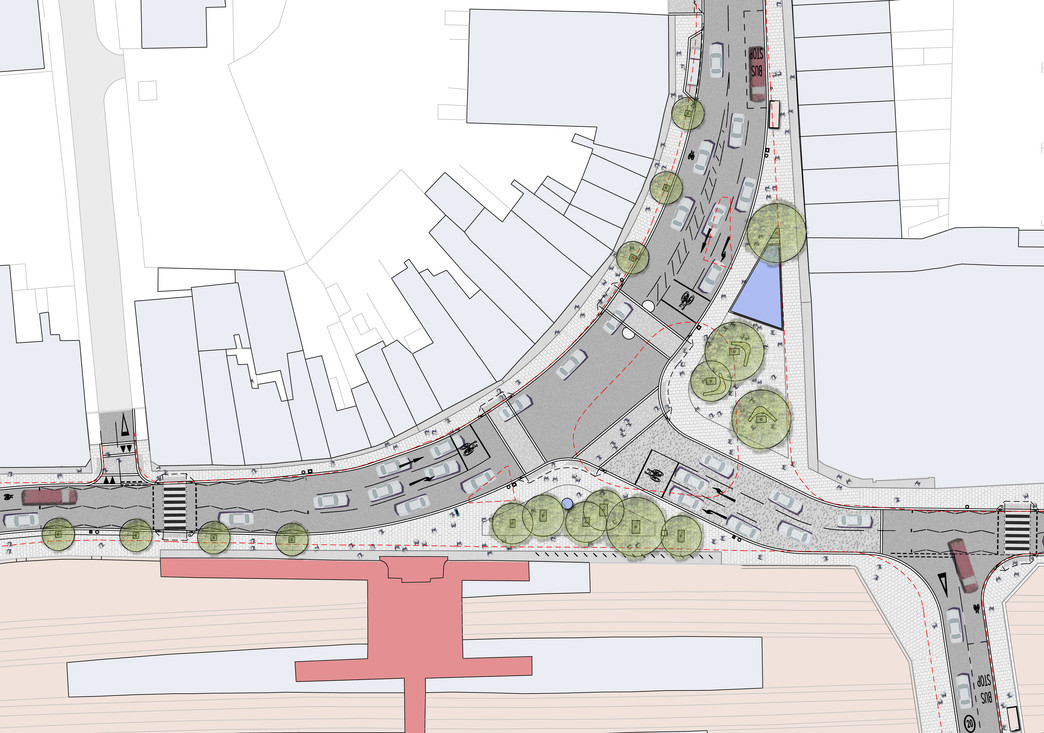
Proposed Design
At least the number of trees has been increased!
I wish the architects the best of luck, but I sometimes feel that the only way to improve the station, would be to put a concrete raft over the whole area and build some tower blocks on top. At least they’d have good access to the rail system.
But then what do I know about architecture?
 The Anonymous Widower