1960s Architectural Failures
Yesterday, I went to or through four stations; Highbury and Islington, Euston, Manchester Piccadilly and Huddersfield.
Huddersfield is a Grade 1 Listed Building which means it is one of the finest buildings in the country. The others are three of the worst examples of how we designed and built stations in the 1960s.
So it got me thinking about what are the worst examples of 1960s architectural design, that I’ve seen. I’ll start with the three I’ve already named.
Euston station – I probably went to Liverpool a couple of times from Euston before the current station was built and I have vague memories of catching trains there during the building in perhaps 1965 to 1967. The design shows classic “Think Small” attitudes as it was deliberately built with foundations that couldn’t support development above. Only twenty or so years later, Liverpool Street station was remodelled, which shows how good design can be applied to old buildings. Since then St. Pancras and Kings Cross have been rebuilt using similar thought processes to those used so successfully at Liverpool Street. One does wonder what would have happened at Euston, if the rebuilding had been a few years later. Euston is now to be rebuilt for HS2 and I suspect they’ll get it right this time.
Euston has another big problem, that you don’t see on the surface. The Underground station is one of the worst in London, with no step-free access, innumerable staircases and escalators and a dingy cramped ticket hall. The only good thing about Euston station is that coming off a train, it’s easy to walk to a bus, as I did last night. But try taking a heavy case on the Underground.
In some ways, Euston’s problems with the Underground should have been solved, when they built the Victoria Line, which opened at around the same time as the new Euston station. It just showed how bad project planning was in those days. The fact that the Victoria line was built on the cheap didn’t help.
Highbury and Islington station – This suffers badly because of the decision to build the Victoria Line on the cheap. Again it is not step-free and it perhaps is one of the worst stations for disabled access in the Underground, as when you get down the escalator, you then have a tunnel and a staircase to get to the platforms. At least the Overground platforms have lifts to the surface. Since I have moved to the area, the station concourse has been opened up considerably and it is not dark and cramped like it was a couple of years ago. To be fair to Transport for London, I think they’ve achieved the improvement without using tons of money. But solving the problems of access to the underground platforms will be very expensive.
Manchester Piccadilly station – This suffers in that it doesn’t have enough platforms and lines. Additionally, of all the main stations in the country, it probably has some of the worst connections to other means of transport. It makes you wonder if it was designed as a cheap stop-gap solution to accept the new electric trains from London. They are spending a fortune on the Northern Hub, but will it get rid of all the hangovers from the 1960s and all the resulting layers of sticky tape? Only time will tell, but judging by the improvement of planning in recent years, it probably will. If you want to read about planning failures in the area, read this Wikipedia topic about the Ordsall Curve, which is a crucial part of the Northern Hub. It would appear that it had the go-ahead ( and money) in 1979.
So that’s dealt with yesterday’s examples, what others can be added to this list?
Kings Cross station – Although not specifically 1960s, but a few years later, this now virtually demolished extension was best described as a wart on the face of the Mona Lisa. The man who designed it, must have had the biggest conservation stopper of all time. I can’t wait until I see the new Kings Cross plaza in the autumn.
Various stations – There were a lot of stations built in the 1960s that I don’t like, although some are listed. I would start with a short list of Harlow Town, Stevenage, and Walthamstow Central. Railways have a lot to answer for, but some of their worst excesses were reserved for buildings like this signal box in Birmingham. Many reckon that Birmingham New Street station is another bad example, but at least the operation of the station seems to be pretty good. In fact the planned reconstruction of the station; Gateway Plus, is all about greater passenger comfort. So yet another 1960s monstrosity will bite the dust. Gateway Plus has this condemnation of 1960s thinking.
The current New Street station was built to cater for 650 trains and 60,000 passengers per day, which was roughly the same usage it experienced when it was first constructed. It was believed that demand for rail travel would decrease. However, it now caters for 1,350 trains and over 120,000 passengers – twice its design capacity. Passenger usage of New Street has increased by 50% since 2000.[2] It is predicted that passenger usage of the station will increase by 57% by 2020.
We do seem to have cut corners for decades and only now the chickens are coming home to roost.
Are Bookings At The Shard Going As Well As Expected?
I ask the question, not because I want it to be unsuccessful, but this evening, I was browsing the on-line copy of The Times and an advert to visit the Shard was displayed.
I would have thought, that given the building’s prominence on the London skyline, it really wouldn’t have needed to advertise that it was open for business.
I did check The Shard’s web site and there did seem to be tickets available for the following two Sundays, although the Saturdays are sold out.
On the other hand with weather like we’ve been having, I might even pass a trip up the building. Even if it was a gift!
But articles like this one in the Daily Mail aren’t very helpful.
I shall probably go to the cable car this Sunday, but there is a slight problem in that the Docklands Light Railway isn’t running to the northern terminal.
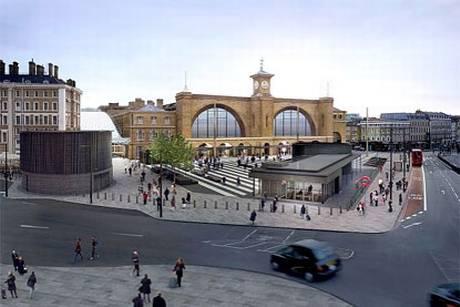
The New Kings Cross Piazza Is Emerging
This picture shows what the area in front of Kings Cross station will look like.
Most of the demolition appears to have been completely, as this picture from today shows.
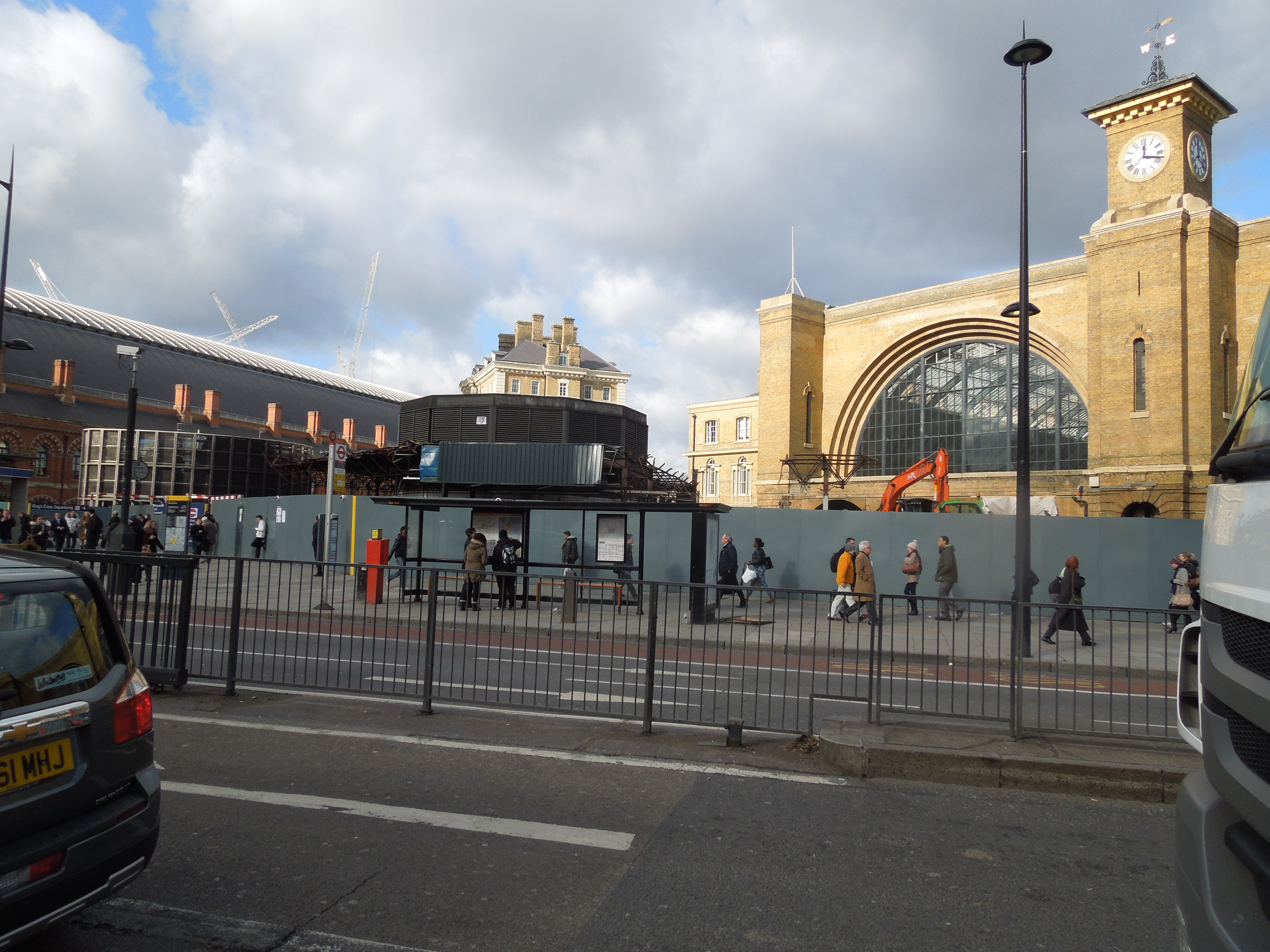
Note the short fat tower to the left of the centre of the picture. This must be the top of some sort of shaft and if you look it is also in the design of the new piazza. I bet the architects are cursing it, very loudly!
What Do You Do With Old Listed Buildings?
The old penguin pool at London Zoo is still there.

It illustrates the conundrum about what you do with old historic buildings, which have outlived their purpose, so well.
In my view it should be taken down, moved somewhere else and used for another purpose. It is totally unsuitable for its designed purpose and it takes up valuable space on a constricted site.
Living In The Toilet
This article on the BBC, shows how even the smallest buildings in London are being converted into homes and other uses. The opening paragraph says it all.
Converting abandoned public toilets in London into flats and businesses is providing a solution to rising property prices for some.
I don’t think it’s just about property prices. The conversions that I’ve seen both in the article and on the television, seem to be stylish and are good adverts for their designers and architects.
Remember too, that many of these buildings were very well built in the Victorian era and are still sound buildings. After all we’ve seen offices and warehouses transformed into stylish dwellings, so why not the smaller ones too?
Holloway And Caledonian Road Stations
In some ways these two stations are a pair, but not in their step-free access.
Holloway Road is a classic two lift station, where you descend to just above the tracks and walk down to the platforms. But there is more to this station than meets the eye. Just look at this picture.
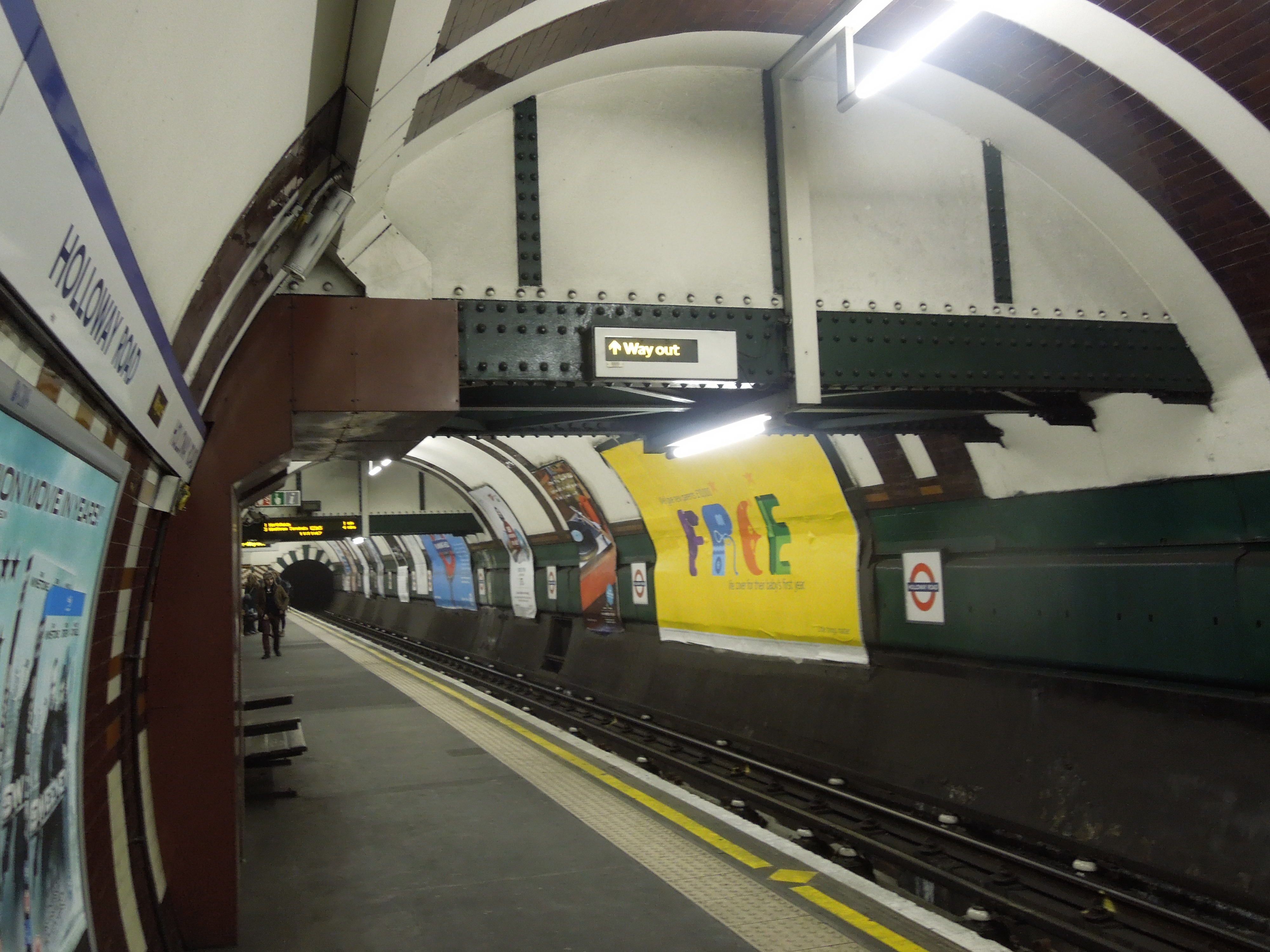
Holloway Road Station
It shows two passenger bridges over the westbound platform. according to Wikipedia, the station was built with two lift shafts and experiments were tried out with a spiral escalator. Perhaps the second one was for this device. The tiles certainly show a second entrance to the platforms. That spiral escalator would have been something if it worked.
If Transport for London could find a solution for step-free access here, they could probably solve the problems at other stations, like Covent Garden and Russell Square.
Caledonian Road shows what might have been. The lifts go down to platform level and you step outside, turn left or right and you’re on the platform. Perhaps they made a mistake somewhere and dug the lift shafts too far. But they did create a truly step-free station. But this is curious.
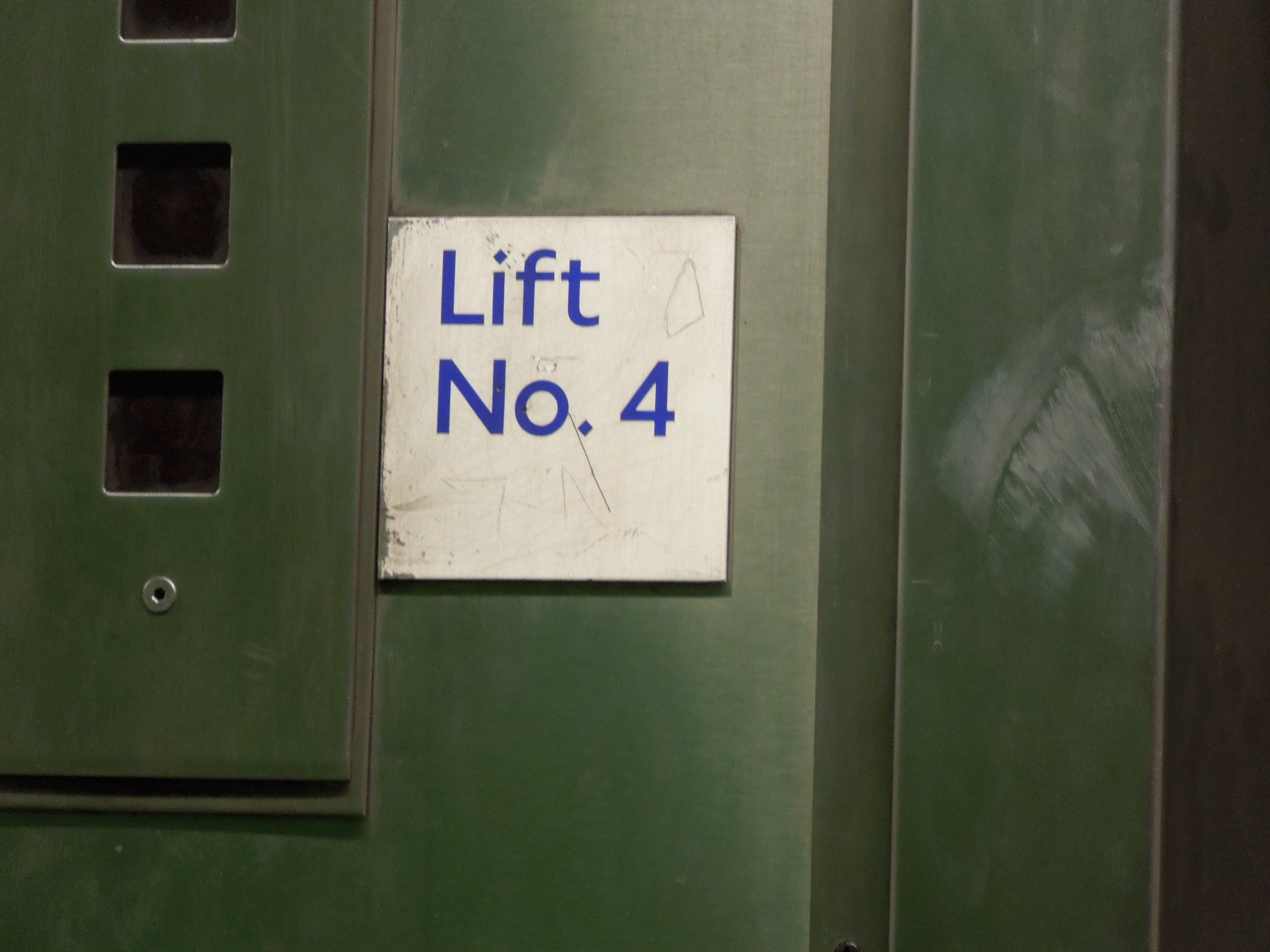
Where Are Lifts 1 and 2?
I found lifts 3 and 4, but where are 1 and 2?
Going Back To My Childhood
Well, not really! But this afternoon, I did go back to the northern reaches of the Piccadilly line. The aim was to look at the escalator layout of the stations to see how difficult they would be to upgrade to step-free access, possibly using inclined lifts, as I outlined here.
I joined the line at Manor House station, but didn’t go all the way to Cockfosters, as the last two stations, don’t have escalators. Starting from the end of the line, here’s what I found.
Cockfosters – This station could probably be made step-free by fitting conventional lifts into the structure to access the tunnel under Cockfosters Road. Once in the tunnel, the station is then step-free to the platforms.
Oakwood – Looking at the ends of the various Underground lines, the end station is more often than not step-free. But in the case of the northern end of the Piccadilly line, Oakwood was made step-free rather than Cockfosters.
Southgate – When I mused about fitting an inclined lift at this station in this post, I said it would be a challenging design problem. Southgate is one of the architectural jewels of the line and this picture shows why.
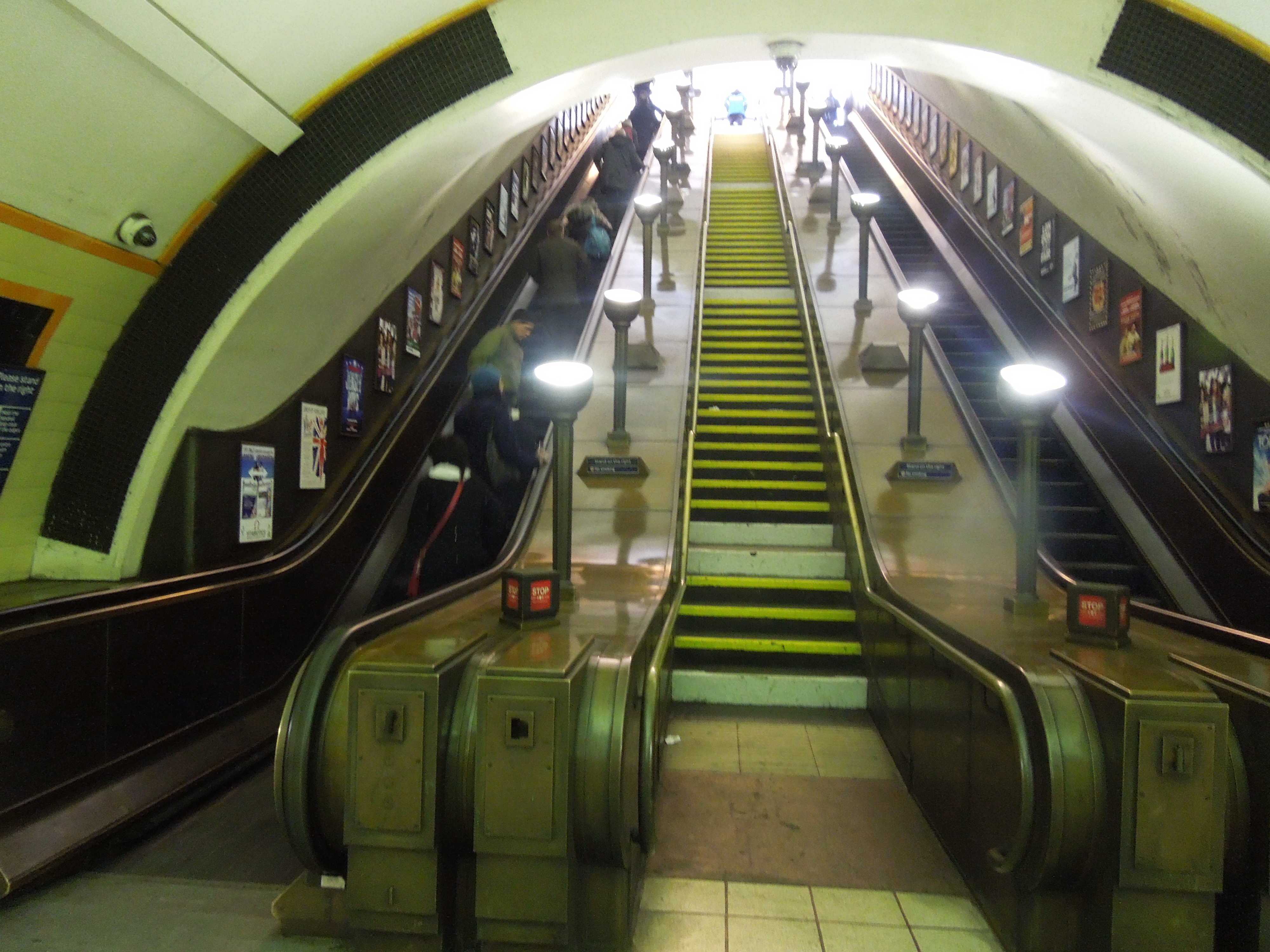
Escalators and Uplighters At Southgate Station
It is a gem of 1930s design and architecture with all that bronze, even if the yellow paint on the stairs in the middle for health and safety reasons, is out of place. The station may not have the original wooden escalators, but someone had the sense to fit modern treads in the old casing, rather than a complete modern escalator.
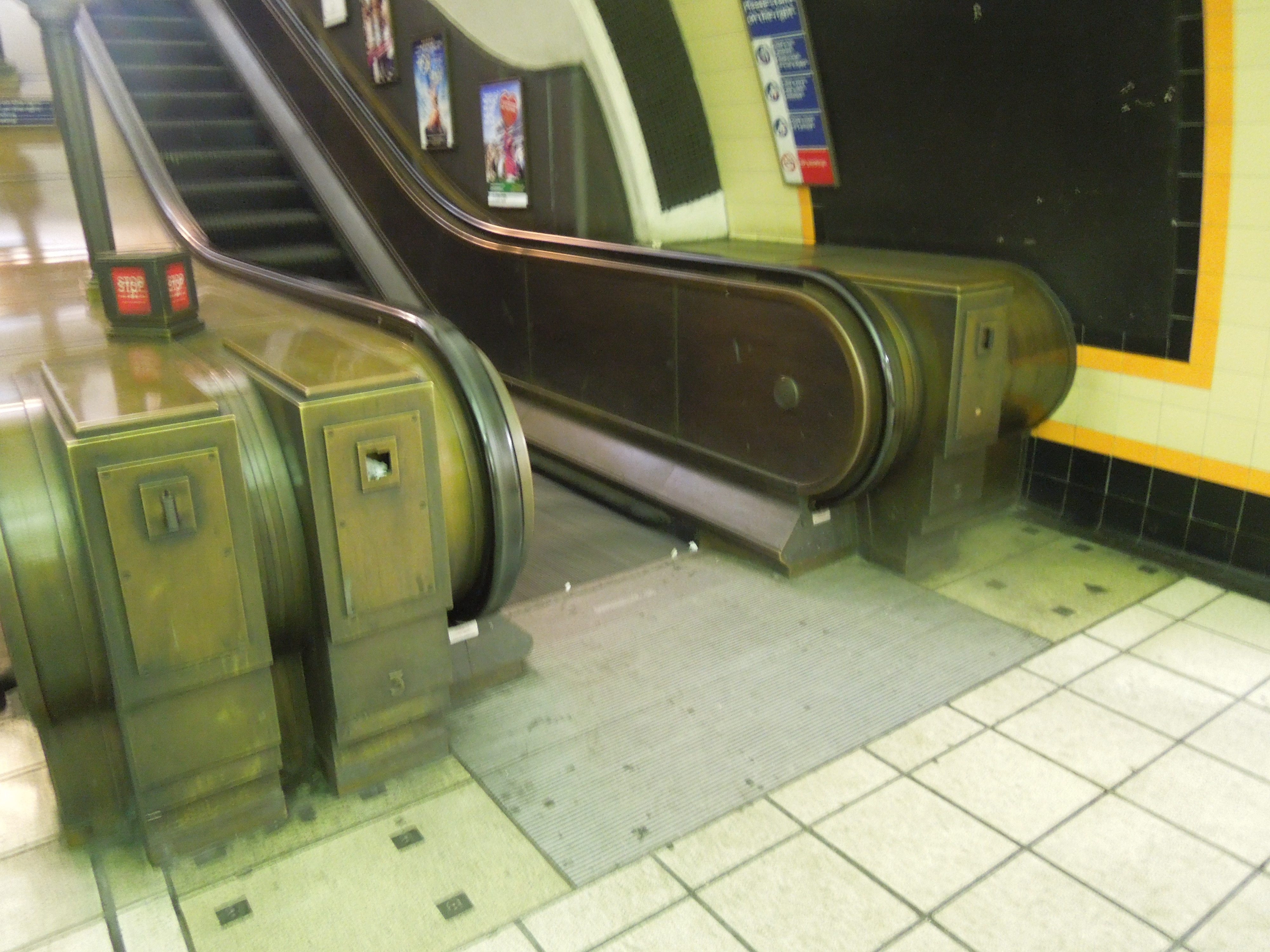
Escalator At Southgate Station
This station could take an inclined lift in the central space, but it would have to be done with enormous sympathy using similar materials to the original Charles Holden design.
There would be two other problems with an inclined lift.
As the station is now, it could easily be converted into an Underground station of several decades ago for making a film, as it was for The End of The Affair. I remember it was strange seeing a film, that had been shot in a place I knew so well.
The heritage lobby would have a field day trying to stop the installation. After all the station has won awards for its restoration over the last few years and it is a Grade II* Listed Building.
But all that adds to making it the sort of challenge, that a good designer would relish.
Arnos Grove – This is a surface station and could be made step-free with the addition of lifts in the same manner used on several stations on the Undergound and Overground network.
Bounds Green – Like Southgate, this station is a two escalator and one staircase station, where the staircase could be replaced with an inclined lift. But it doesn’t have the heritage problems of Southgate, as the station has modern escalators.
Wood Green – This is a three escalator station and step-free access would probably have to be installed, by digging a traditional lift shaft. I say shaft, as I suspect because the running tunnels are fairly wide apart, there is probably somewhere to slot in a shaft that served both platforms by descending into the platform level lobby or a cross tunnel, as was done at Tottenham Hale station.
Turnpike Lane – The problems here are similar to Wood Green, as it is another three escalator station, where a traditional lift would have to be sunk from the booking office to the platform levels. But another problem is that some form of lift would be needed to descend to the booking office level, which is below ground.
Manor House – This is very similar in layout to Turnpike Lane, but it would need lifts at seven exits to the surface to be fully step-free.
Finsbury Park – This is almost a low-level station with steps up to a pedestrian tunnel. Conventional lifts could probably be added without too much difficulty. There is a lot of development going on at this station and it will be interesting to see if the step-free access improves. The last time I visited access wasn’t good.
I think that the difficulty of making some of these stations completely step-free, shows how much our attitudes to those with difficulties getting about has changed since the stations were built in the 1930s. Charles Holden’s stations either had escalators or a short flight of steps, like Cockfosters or Arnos Grove. Compare the equipment at these stations with those on the Jubilee line extension, where all stations are fully step-free. But to be fair to Charles Holden, the Victoria line built thirty years after the Piccadilly line even now has only three step-free stations, Tottenham Hale, Green Park and Brixton stations. The Victoria line station, that I use the most; Highbury and Islington is a maze of tunnels and little short of a complete rebuild will improve matters.
Having looked at Southgate and Bounds Green, I think that an inclined lift could be a excellent idea at these two stations. You wouldn’t rip out the central escalator at Wood Green, Turnpike Lane and Manor House, as it was put in because the number of passengers needed it. But at least these three stations have larger platform tunnels, which must help the installation of a conventional lift.
However, putting in an inclined lift would not only make it easier for those in wheelchairs, with babies in buggies or heavy cases, but it would add to the station’s capacity. One point about an inclined lift, is parties where some need the lift and others don’t, can effectively travel up and down together at the same time, with those who can walk on the adjoining escalator. So the size of an inclined lift, may actually be smaller for the same capacity. It would probably also go up and down almost continuously.
I’m With Guy De Maupassant
Will Self has written an article about the Shard for the BBC web site. I liked this bit.
It was said of the French writer Guy de Maupassant that he ate dinner in the restaurant of the Eiffel Tower every night of the week, and when asked why, replied, “Because it’s the only place in Paris from where you can’t see the Eiffel Tower.”
I wonder if Guy De Maupassant would agree with me on Europe’s tallest building. It is just too easy to see, as I showed in this article.
On the other hand, I’ve no desire to eat dinner every night in the building, as it will only encourage someone to build something even more intrusive.
A Design Challenge
It is absolutely essential that the London Underground increases the number of stations that have step-free access.
Southgate station is a station I know well, as I used it many times to go to and from my school. It is one of those stations with three escalator slots, as this picture shows.
The middle one was just an emergency staircase, but this could be converted into an inclined lift, as is proposed at Greenford.
But as Southgate is a Grade II* Listed building, it would have to be installed with a high degree of sensitivity, which would be the design challenge.
But solve it at Southgate and you could solve it on any of the number of stations, that have two escalators and a staircase.

