North Sea, Baltic Sea Countries Enter Pacts To Protect Offshore Energy Infrastructure Amid Concerns Over Russian Sabotage
The title of this post, is the same as that of this article on offshoreWIND.biz.
This is the sub-heading.
Eight Baltic Sea countries signed a joint declaration on collaborating closer to secure critical offshore energy infrastructure in the region on 10 April, only a day after six North Sea countries entered into a similar agreement. Both are a result of security concerns arising from the Russian invasion of Ukraine and reports of possible sabotage of offshore and subsea energy infrastructure in the North and Baltic Seas.
These are the first two paragraphs.
Concerns over Russia sabotaging offshore energy assets came into the spotlight after four gas leaks were found in September 2022 on the twin Nord Stream pipeline system in the Baltic Sea.
Following national investigations into the incident initiated by Germany, Sweden and Denmark, and studies by the Norwegian and Swedish seismic institutes, European authorities said that the incident could have been the result of “deliberate actions”.
Hopefully, mutual defence will see off, the Evil Vlad!
Germany Has Potential For 82 GW Of Offshore Wind
The title of this post, is the same as that of this article on Renewables Now.
These are the two introductory paragraphs.
Germany has the potential to raise its offshore wind energy capacity to 81.6 GW which is above the federal government’s target of 70 GW by 2045, a study by research institute Fraunhofer IWES shows.
To exploit all the potential for wind energy in the North Sea and the Baltic Sea, Germany needs to devise a strategy for more efficient use of the available space and use new offshore wind power technologies in additional areas in a way that will not raise concerns and affect nature conservation.
This map shows the German parts of the North Sea and the Baltic Sea.
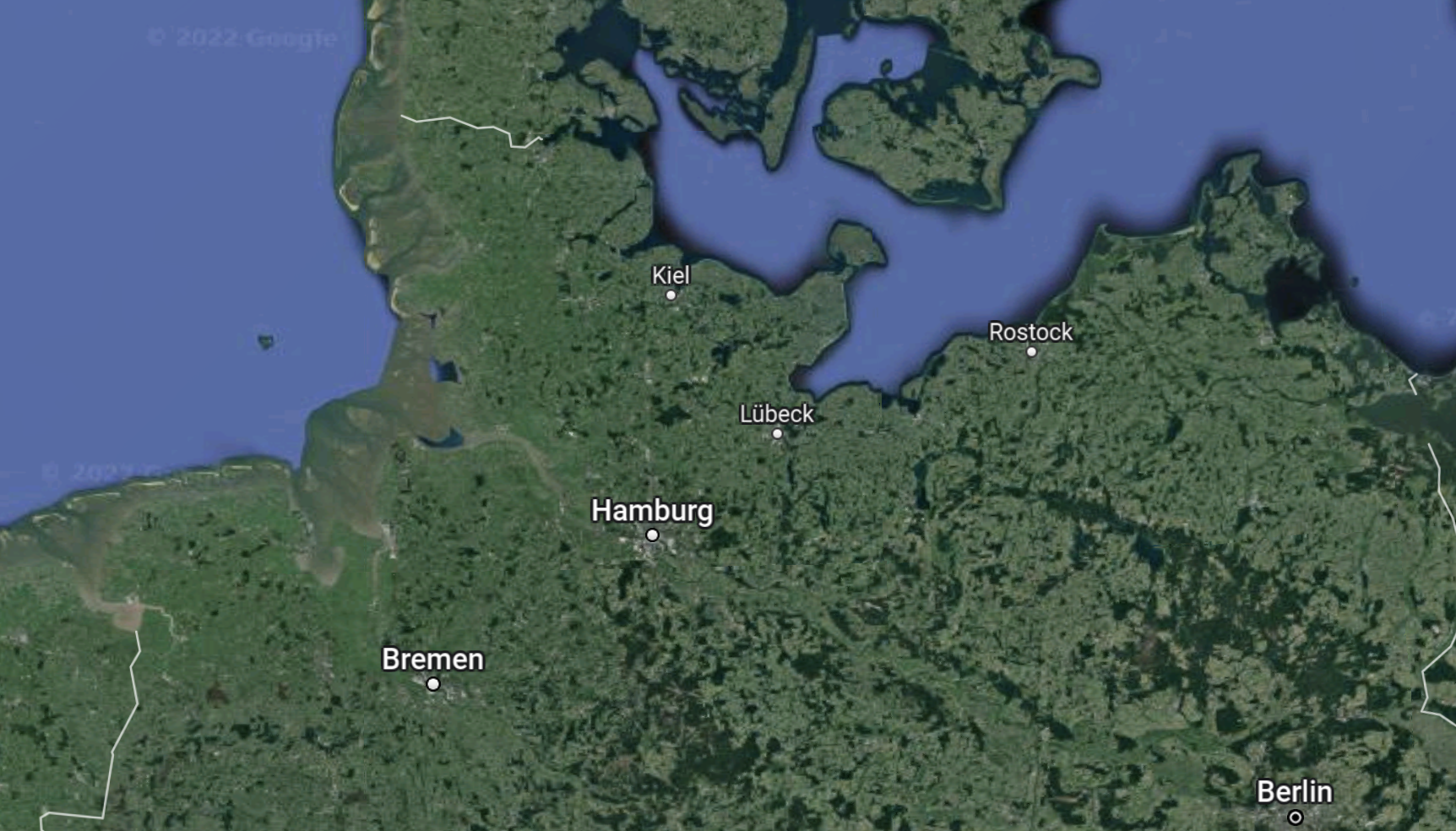
Note.
- White lines show the borders with The Netherlands, Denmark and Poland.
- Heligoland in the South-East corner of the North Sea. Could this island be used as a giant offshore substation?
- There are plenty of ports to service offshore developments.
- It looks like compared to the UK, a fair proportion of German offshore wind farms will be closer to the land.
Currently, Germany has 7.8 GW of offshore wind in operation, with around seventy percent of the turbines in the North Sea.
According to the Wikipedia entry called Wind Power In The UK, in 2019, the UK had installed 8.4 GW of offshore wind turbines, and there could be a potential to have a total of 120 GW in British waters.
With the Belgians, Danes, Dutch, Irish, Norwegians, Poles and Swedes joining this party, I can see the world’s largest wind power station being developed in the North and Baltic Seas.
 The Anonymous Widower