Poland Receives Its First Electricity from Offshore Wind As Baltic Power Starts Delivering
The title of this post, is the same as that of this article on offshoreWIND.biz.
This is the sub-heading.
Electricity generated by the Baltic Power offshore wind farm has entered Poland’s national power grid, marking the first time the electricity generated by offshore wind turbines is added to the country’s energy mix.
This first paragraph gives more details of the project.
54 of 76 turbines have already been installed at Poland’s first offshore wind farm, with the first now generating electricity. Construction is scheduled for completion this autumn, ORLEN and Northland Power, the owners of the project, said.
When complete, the Baltic Power wind farm will generate up to 1.2 GW.
How Much Offshore Wind Does Poland Have Planned?
I asked Google AI, the question in the title of this section and received this reply.
Poland has massive offshore wind plans in the Baltic Sea.
The country targets 5.9 GW by 2030 and 18 GW by 2040. To meet these goals, the government is pursuing two primary development phases to transition the national grid away from coal.
A breakdown of Poland’s offshore wind rollout includes:
Phase I (Advanced Projects): Includes 5.9 GW of capacity.
Baltic Power: Poland’s first offshore wind farm (1.2 GW), developed by Orlen and Northland Power, officially connected to the national grid in July 2026.
Bałtyk 2 & 3: Equinor and Polenergia have finalized financing for an additional 1.4 GW, slated for commercial operation around 2028.
Phase II (Auction-Backed): Poland recently allocated over 3.4 GW in new capacity through competitive offshore wind auctions, pushing development well into the next decade.
Long-Term Outlook: Industry groups estimate the total technical potential in Poland’s portion of the Baltic Sea could reach up to 33 GW.
Will Poland Be Welcoming Any Invading Germany Wind Farms?
In New Study Shows How North Sea Offshore Wind Can Yield More While Costing Less, I talked about how Germany doesn’t have enough sea in which to place the wind farms it needs to generate the green electricity and hydrogen it needs.
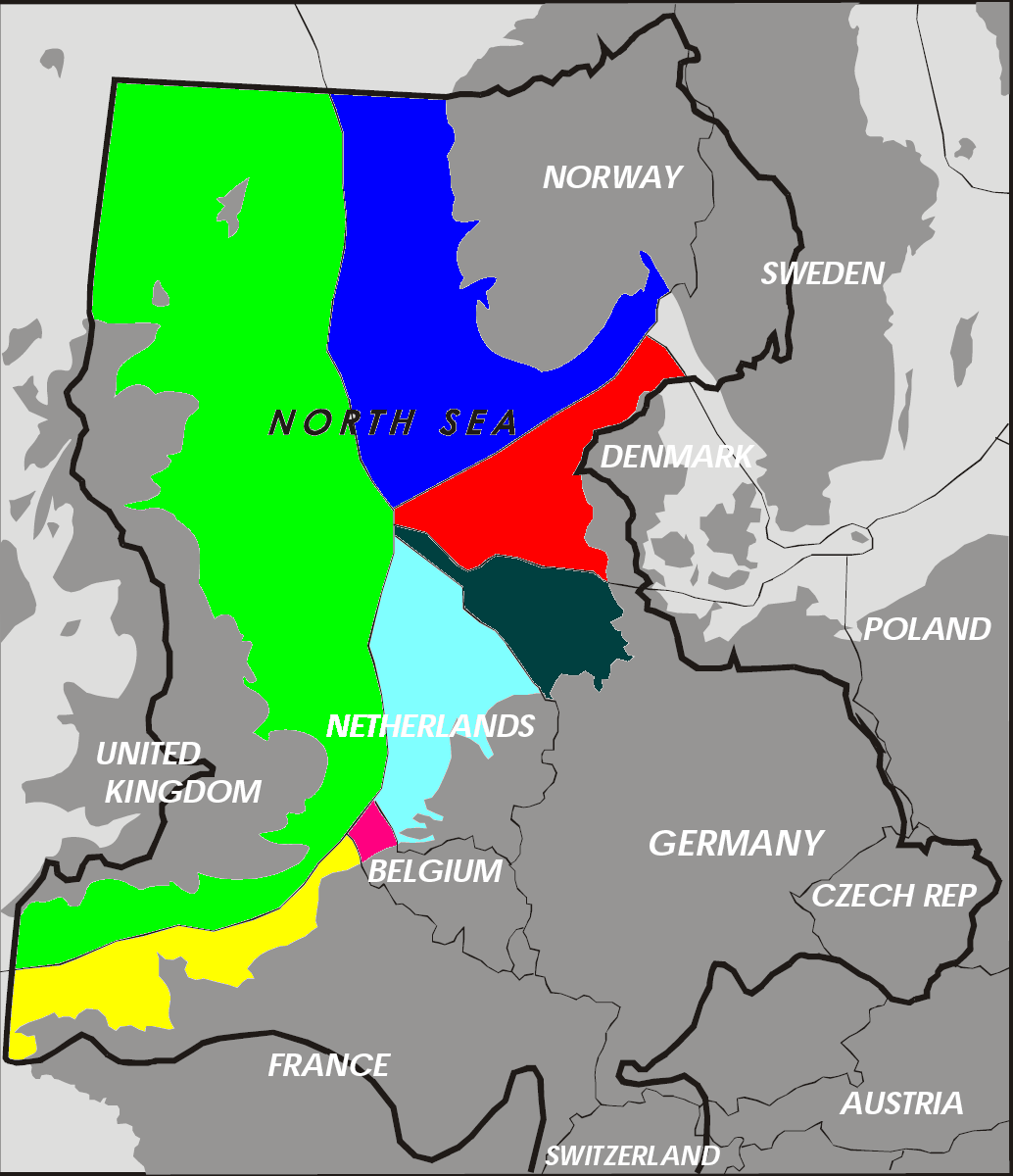
This map from Wikipedia shows Exclusive Economic Zones in the North Sea, but it also shows who has control of the sea in the Baltic.
Note.
- Yellow is France.
- Mauve is Belgium, who drew the short straw.
- Light Blue is The Netherlands.
- Black is Germany, who despite their large land area, don’t have as much sea as the UK.
- Red is Denmark.
- Dark Blue is Norway.
- Green is The UK.
- Germany and Poland seen to share the Southern Baltic.
I wouldn’t be surprised to see Germany and Poland co-operating to maximize the wind power capacity of the Southern Baltic.
A Visit To Poland’s Coal Capital
On one of my trips to Poland, I went to Katowice, which is in Poland’s coal-mining region. I wrote about it in An Excursion In Katowice.
Google AI produced this snapshot of Katowice.
Katowice is historically known as the “Polish Coal Capital” and served as the absolute backbone of the region’s heavy industry. First transforming into an industrial powerhouse in the mid-19th century due to rich local coal and metal reserves, the city’s economy and rapid growth were entirely reliant on coal mining and steel.
While coal and heavy industry historically anchored its identity, the city of Katowice has aggressively transformed into a modern cultural, technological, and business hub. The wider Silesia region remains heavily tied to coal mining, but the municipality itself has shifted its focus to avoid reliance on it.
My visit to Katowice was an excellent pit-stop on a train ride between Krakow and Prague, when I did my Home Run From Krakow.
If you like your food and like me, you’re coeliac, I would certainly recommend Poland for a few days away.
Strangely, the language is not a problem, as if you get three Poles together, one will speak English better than what you do.
Offshore Wind Could Help Create ‘Electric Shipping Highway’ Across Europe, Study Says
The title of this post, is the same as that of this article on offshoreWIND.biz.
This is the sub-heading.
Offshore wind farms, energy islands, ports and proposed “Offshore Power Zones” could together form the foundation of an integrated maritime energy system capable of supporting large-scale vessel electrification across Northern Europe, according to a study by Maersk’s Stillstrom, Baltic Energy Island and the Port of Roenne.
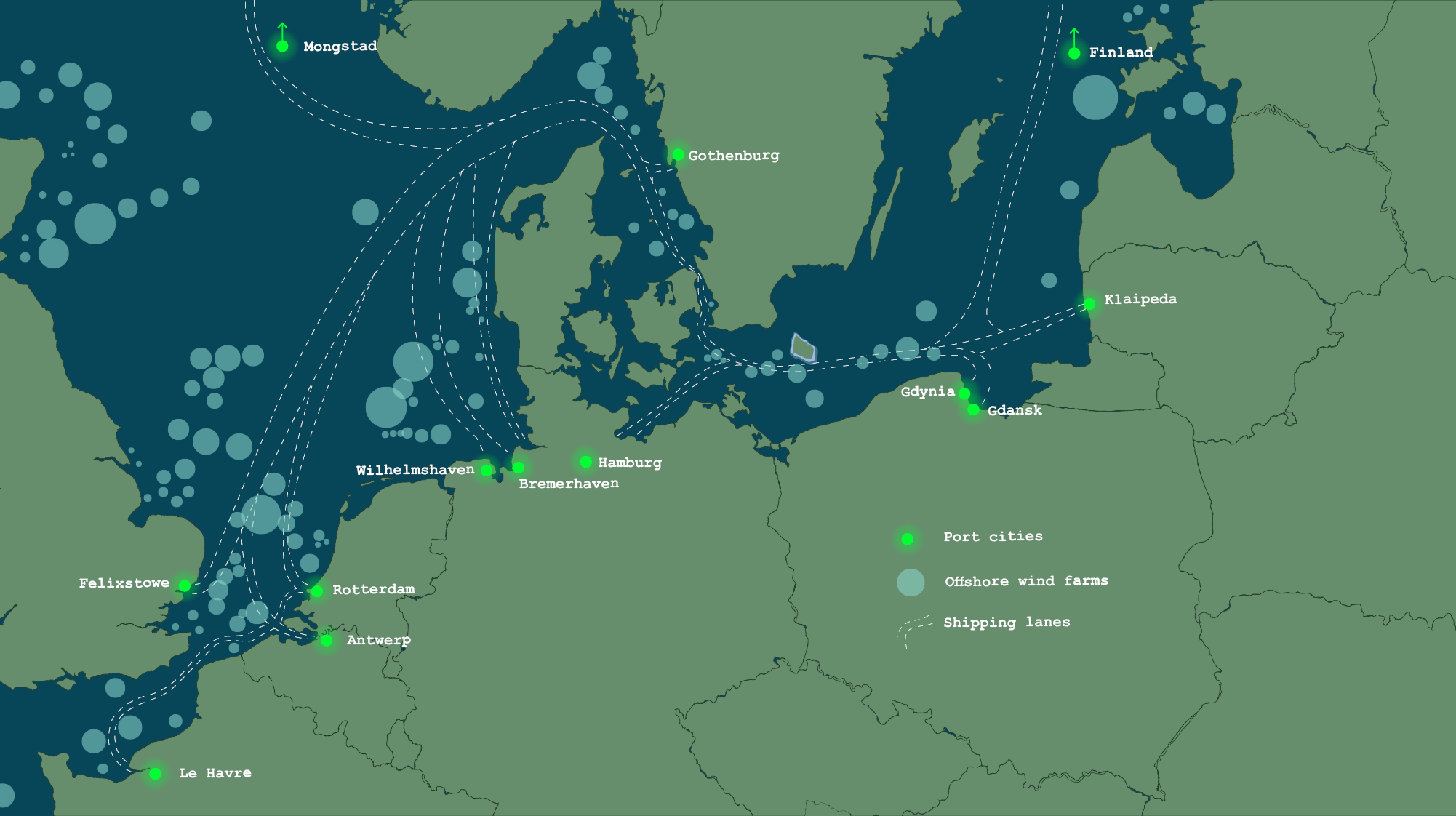
This is a map from the report.
Note.
- In Investment in Grain LNG, I talked about Centrica and Grain LNG Terminal, Centrica’s plans for the terminal, which include bunkering.
- London Gateway and Immingham are two substantial ports on the East side of England.
Are English ports, except for the notable exception of Felixstowe, not shown on the map, because of Brexit?
These two paragraphs add some detail.
According to the findings, it is estimated that around 37,000 cargo vessels pass Bornholm each year, consuming approximately 3 million tonnes of marine fuel and emitting around 10 million tonnes of CO₂ annually. Full electrification of this traffic is estimated to require about 17 TWh of electricity per year, potentially replacing roughly EUR 2 billion in fossil fuel imports with domestically generated renewable power.
The whitepaper also introduces the concept of Offshore Power Zones (OPZs), developed by Stillstrom, which involves vessels accessing offshore wind-generated electricity at sea for battery charging or hotel loads. The report sees these zones linked with electrified ports to form an “electric shipping highway” stretching from the English Channel through the North Sea into the Baltic Sea.
Note that Bornholm is between Sweden and Germany.
North Sea, Baltic Sea Countries Enter Pacts To Protect Offshore Energy Infrastructure Amid Concerns Over Russian Sabotage
The title of this post, is the same as that of this article on offshoreWIND.biz.
This is the sub-heading.
Eight Baltic Sea countries signed a joint declaration on collaborating closer to secure critical offshore energy infrastructure in the region on 10 April, only a day after six North Sea countries entered into a similar agreement. Both are a result of security concerns arising from the Russian invasion of Ukraine and reports of possible sabotage of offshore and subsea energy infrastructure in the North and Baltic Seas.
These are the first two paragraphs.
Concerns over Russia sabotaging offshore energy assets came into the spotlight after four gas leaks were found in September 2022 on the twin Nord Stream pipeline system in the Baltic Sea.
Following national investigations into the incident initiated by Germany, Sweden and Denmark, and studies by the Norwegian and Swedish seismic institutes, European authorities said that the incident could have been the result of “deliberate actions”.
Hopefully, mutual defence will see off, the Evil Vlad!
Germany Has Potential For 82 GW Of Offshore Wind
The title of this post, is the same as that of this article on Renewables Now.
These are the two introductory paragraphs.
Germany has the potential to raise its offshore wind energy capacity to 81.6 GW which is above the federal government’s target of 70 GW by 2045, a study by research institute Fraunhofer IWES shows.
To exploit all the potential for wind energy in the North Sea and the Baltic Sea, Germany needs to devise a strategy for more efficient use of the available space and use new offshore wind power technologies in additional areas in a way that will not raise concerns and affect nature conservation.
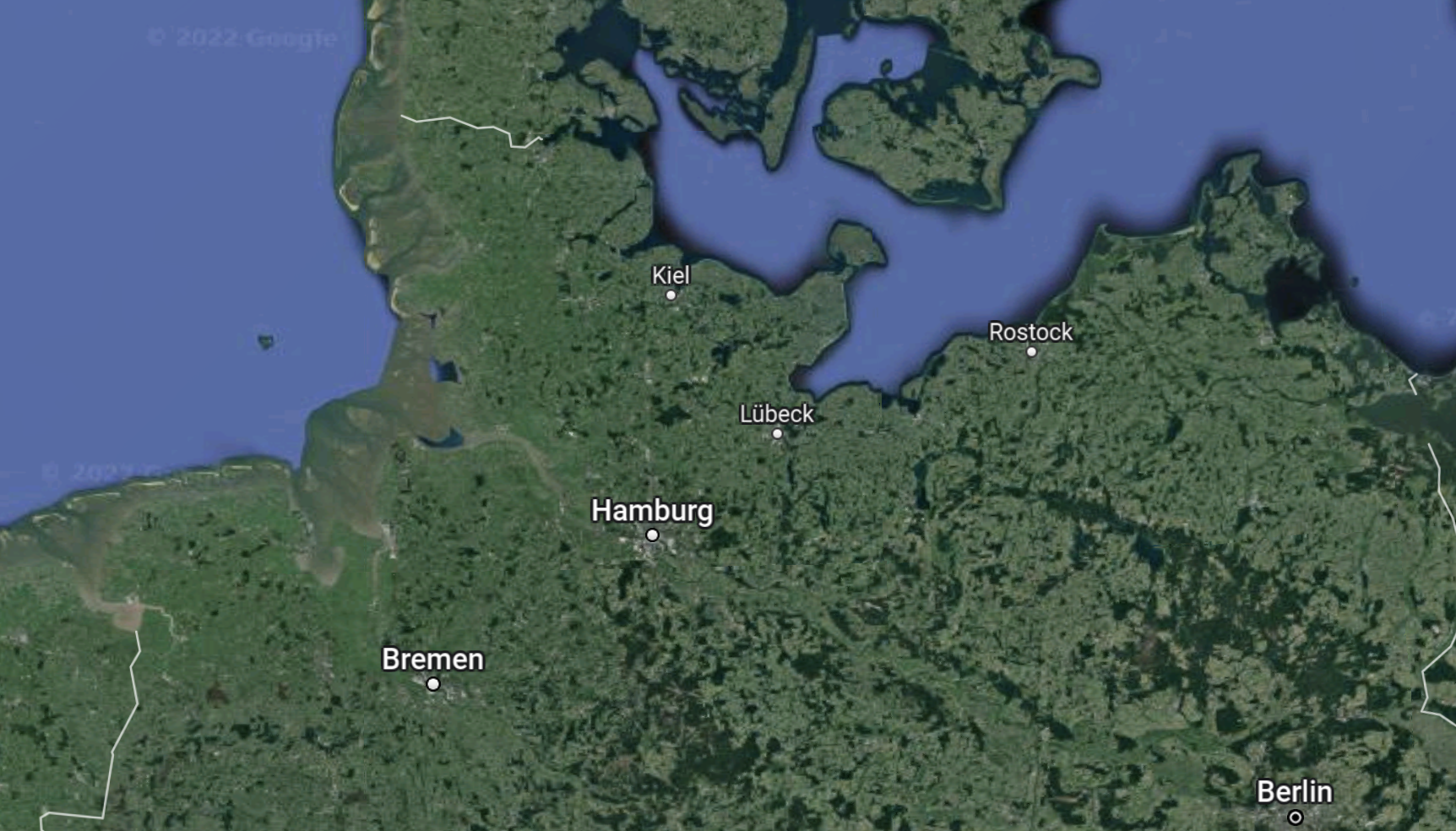
This map shows the German parts of the North Sea and the Baltic Sea.
Note.
- White lines show the borders with The Netherlands, Denmark and Poland.
- Heligoland in the South-East corner of the North Sea. Could this island be used as a giant offshore substation?
- There are plenty of ports to service offshore developments.
- It looks like compared to the UK, a fair proportion of German offshore wind farms will be closer to the land.
Currently, Germany has 7.8 GW of offshore wind in operation, with around seventy percent of the turbines in the North Sea.
According to the Wikipedia entry called Wind Power In The UK, in 2019, the UK had installed 8.4 GW of offshore wind turbines, and there could be a potential to have a total of 120 GW in British waters.
With the Belgians, Danes, Dutch, Irish, Norwegians, Poles and Swedes joining this party, I can see the world’s largest wind power station being developed in the North and Baltic Seas.

