First Monopile In At ‘Most Ecological Offshore Wind Farm Yet’
The title of this post, is the same as that of this article on offshoreWIND.biz.
This is the sub-heading.
Van Oord, using its installation vessel Boreas, installed the first monopile at the Ecowende offshore wind farm on 3 December. The project, a joint venture between Shell, Eneco and Chubu Electric Power, is being built off the coast of the Netherlands and is said to become the most ecological offshore wind farm to date.
These four paragraphs add more details.
The offshore wind farm, located approximately 53 kilometres off the Dutch coast near IJmuiden, will have 52 monopile foundations produced by Sif and Smulders supporting 52 Vestas V236-15.0 MW wind turbines.
The offshore wind farm is dubbed “the most ecological to date” since it incorporates several technologies and methodologies that are nature-inclusive, including monopiles coming in two diameters, 8.8 metres and 9.3 metres, to support varying turbine tower heights, as research indicates that higher turbine tip heights may allow birds to fly more safely between the structures, reducing collision risks.
Some of the wind turbines will feature red blades as part of a trial to assess whether increased visibility reduces bird collisions.
Offshore construction on Ecowende (Hollandse Kust West Site VI) offshore wind farm started in September with the installation of eco-friendly scour protection.
Note.
- It looks like its a 780 MW wind farm.
- They’re certainly looking after the birds.
- Scour protection is mainly to protect the wind farm, but at least it’s eco-friendly.
But then the Dutch must know a bit about building windmills, that last a long time.
AI Tech Tracking Seabirds At Aberdeen Bay Offshore Wind Farm
The title of this post, is the same as that of this article on offshoreWIND.biz.
This is the sub-heading.
Vattenfall, Norwegian AI technology start-up Spoor, and British Trust for Ornithology have teamed up on a project that will test AI technology in tracking 3D flight paths of seabirds flying near the wind turbine blades at the Aberdeen Bay Offshore Wind Farm in Scotland.
This is the first paragraph.
The project has already started, with four cameras already installed and collecting data on birds’ 3D flight paths throughout the wind farm and in the immediate vicinity of the turbine blades. Data on seabird movements has already started coming in and validation trials have been completed both offshore, with an observer present, and onshore, with a drone, according to Vattenfall.
This looks like a very neat piece of technology, that hopefully will solve how birds interact with wind turbines.
From my experience of landing and taking off light aircraft at the old Ipswich Airport, where there were a lot of seabirds, my money would be on that birds will learn to use their AI (Avian Intelligence) to avoid the blades of wind turbines.
Dutch Stop Offshore Wind Turbines To Protect Migratory Birds In ‘International First’
The title of this post, is the same as that of this article on offshoreWIND.biz.
This is the sub-heading.
The wind turbines at Borssele and Egmond aan Zee offshore wind farms were stopped for four hours on 13 May, to help migrating birds pass by safely.
These three paragraphs outline the measures taken to protect the migrating birds.
According to the Dutch Government, this is the first time such a measure has been applied and is in line with the approach of the government and participating companies to increasingly focus on ecology and biodiversity in offshore wind farms.
The wind turbines’ speed will be reduced to a maximum of two rotations per minute during the predicted night-time peak migration to give the birds a safe passage.
The shutdown was part of a pilot phase, which could become standard this autumn and will also include wind farms that are still being built or will be constructed in the future.
I wonder how this Dutch action fits with research from Vattenfall, that I wrote about in Unique Study: Birds Avoid Wind Turbine Blades.
Unique Study: Birds Avoid Wind Turbine Blades
The title of this post, is the same as that of this media report from Vattenfall.
This is the sub-heading.
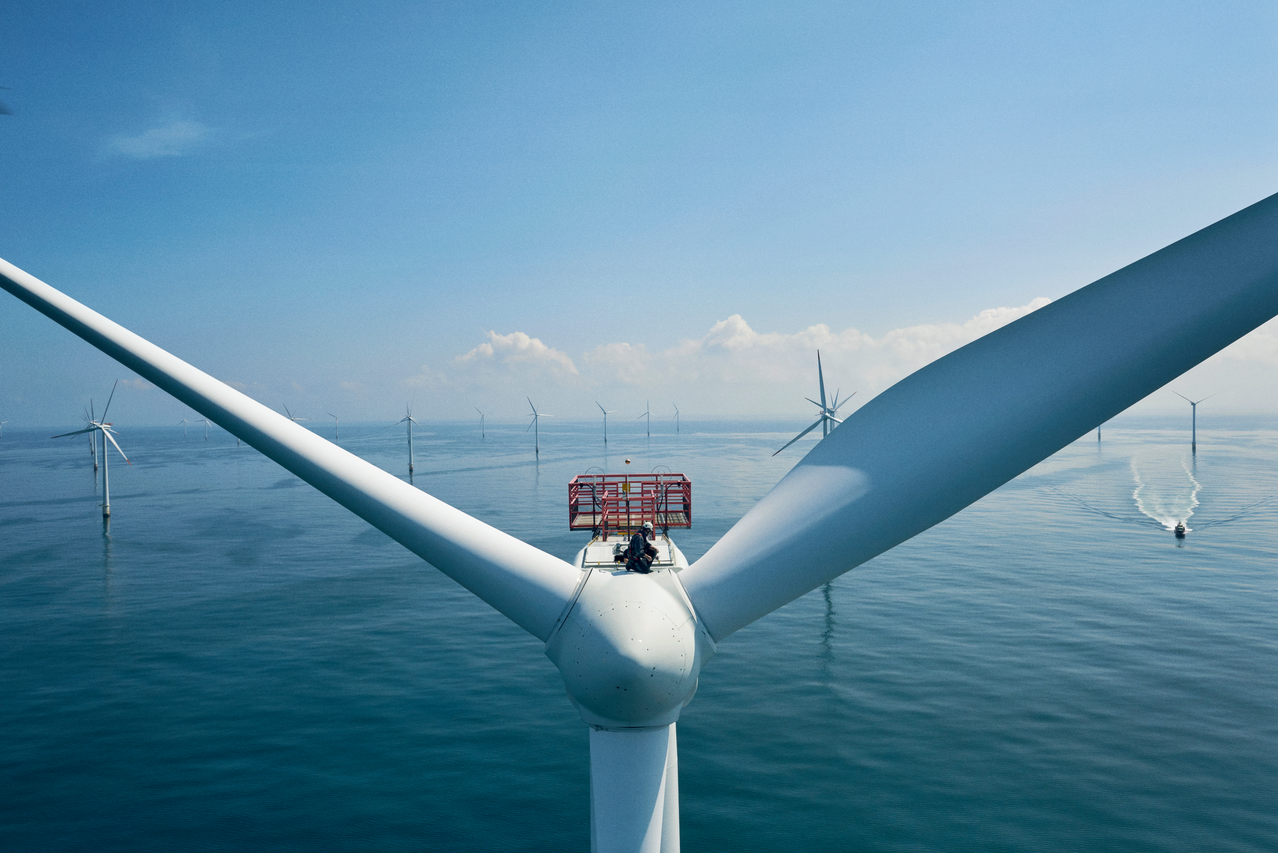
Seabirds deliberately avoid wind turbine rotor blades offshore – that is the main finding of a new study that mapped the flightpaths of thousands of birds around wind turbines in the North Sea. Most importantly, during two years of monitoring using cameras and radar, not a single bird was recorded colliding with a rotor blade.
I must admit I’m not surprised, as I’ve landed a light aircraft many times with birds flying above the runway and I can’t remember ever hitting one. But I have seen several dive out of the way.
The report is a fascinating read.
Birds And Offshore Renewable Energy
I have worried about this for some time, as die-hard wind farm opponents use birds being scythed to pieces in wind farms as an emotional reason for not building wind farms.
I searched the Internet and found this academic report from the University of Rhode Island, which is entitled How Are Birds Affected by the Block Island Wind Farm and How Do They Interact With the Wind Turbines?.
Note.
- Block Island Wind Farm is a mildly controversial 30 MW wind farm off the coast of Rhode Island.
- Block Island wind farm is the first commercial offshore wind farm in the United States.
The report gives three ways about how birds interact with wind farms.
Birds Fly Out Of The Way
First, many birds do not experience any interaction with the turbines at all as they fly either at a higher altitude or closer to the shore than the turbines’ locations.
Wind Farms Become A Food Source
The second interaction between birds and offshore wind turbines is a positive one that has been documented throughout Europe; but, with only the Block Island Wind Farm, it is too early to document in the United States. Researchers have found that the base of a wind turbine can create artificial reefs that act as an attractive site to both fish and shellfish. These artificial reefs provide a feeding ground for certain species of birds as the turbines essentially become a central habitat for many bird species’ prey.
Displacement Of The Birds
The final interaction that birds have with offshore wind turbines is displacement. This primary negative effect is experienced when wind turbines are constructed in areas that birds would naturally like to be; but, due to the structures, no longer have access to. To put it simply, he says, “if you put the turbines where the birds want to be, you take away these areas from the birds”.
Conclusion
It appears to me, that if you are putting up wind farms, whether they are offshore or onshore, that it is essential you do your research.
As in this case, experts from the local university are often a good resource to call upon.
 The Anonymous Widower