Cardiff And Caerphilly – 24th March 2026
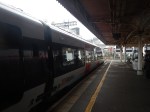
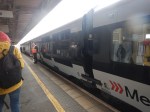
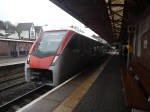
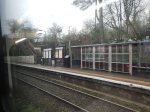
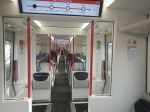
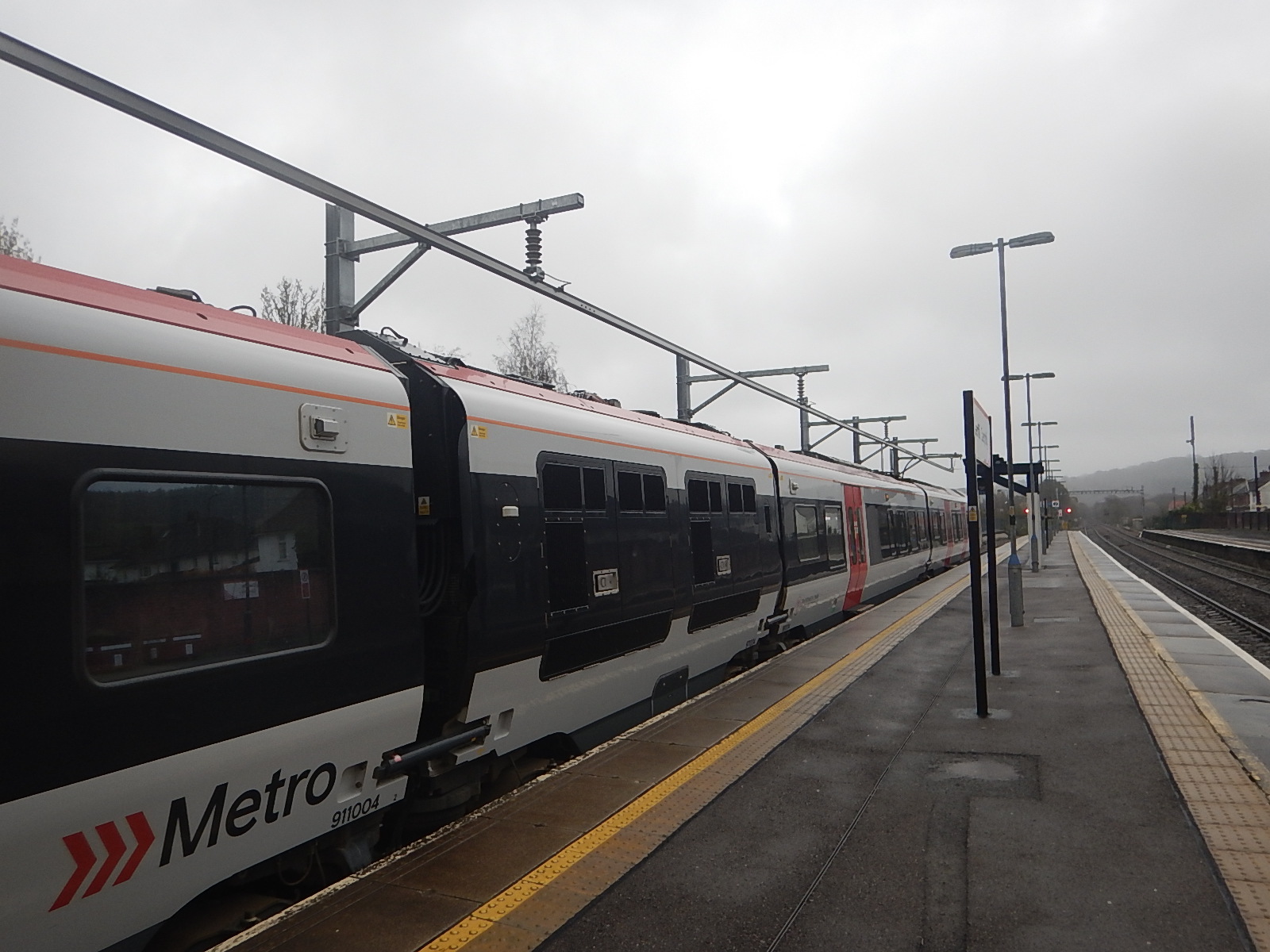
I took this pictures, as I rode up the Rhymney Valley from Cardiff to Caerphilly.
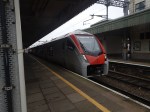
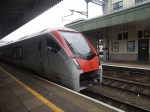
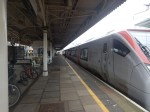
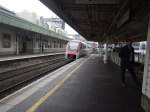
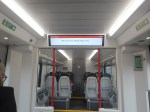
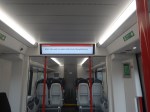
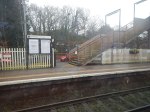
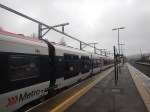
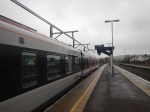
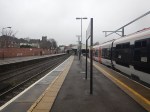
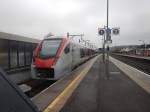
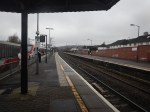
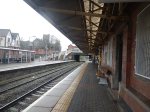
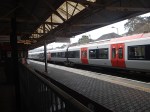
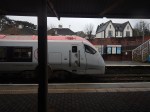
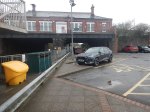
Note.
- The trains I took up and down the valley were both Class 756 tri-mode trains.
- My train reversed to Penarth in Platform 1.
- I think they were running using the diesel power in the power pack.
- There is an overhead conductor rail in Platform 1 at Caerphilly station to charge trains.
- The electrification North of Caerphilly station can be seen through the bridge in one of the pictures.
- Platforms 2 and 3 are not electrified.
I think Caerphilly station is a very neat electrification layout for occasional charging of battery-electric or tri-mode trains.
I have some specific thoughts.
What Have Caerphilly And St. Pancras Thameslink Stations Got In Common?
These pictures show the rigid conductor rail through St. Pancras Thameslink station.
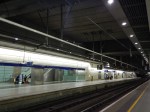
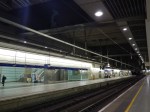
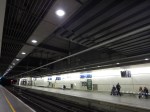
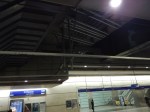
It looks remarkably similar to that in Platform 1 at Caerphilly station.
Judge in this picture.
The rails are probably out of the same Swiss electrification maker’s parts bin.
Both look equally professional with an I-section conductor, which could be aluminium, as it is lightweight and a good electrical conductor.
Google AI finds this.
The I-beam overhead conductor system used in St. Pancras Thameslink station is made of a hollow extruded aluminium profile. This system, known as a conductor beam, holds a conventional copper contact wire, providing a rigid, low-profile alternative to traditional overhead wires.
Key details:
Material: Extruded aluminium profile.
Structure: Hollow, designed to hold an un-tensioned, conventional copper contact wire.
Application: Developed by Balfour Beatty to reduce the required depth of overhead line equipment.
Installation: Often installed in a sinusoidal wave to ensure consistent wear on the pantograph.
This technology is used in areas with restricted overhead space, such as tunnels and some modern station approaches, to manage 25kV AC electrification.
It looks like it’s been used to provide a charging rail in Caerphilly station.
Is The Conductor Rail In Platform 1 Used To Create A Continuous Electrical Connection Around Caerphilly Station?
Look at this OpenRailwayMap, which shows the completed electrification through Caerphilly station.
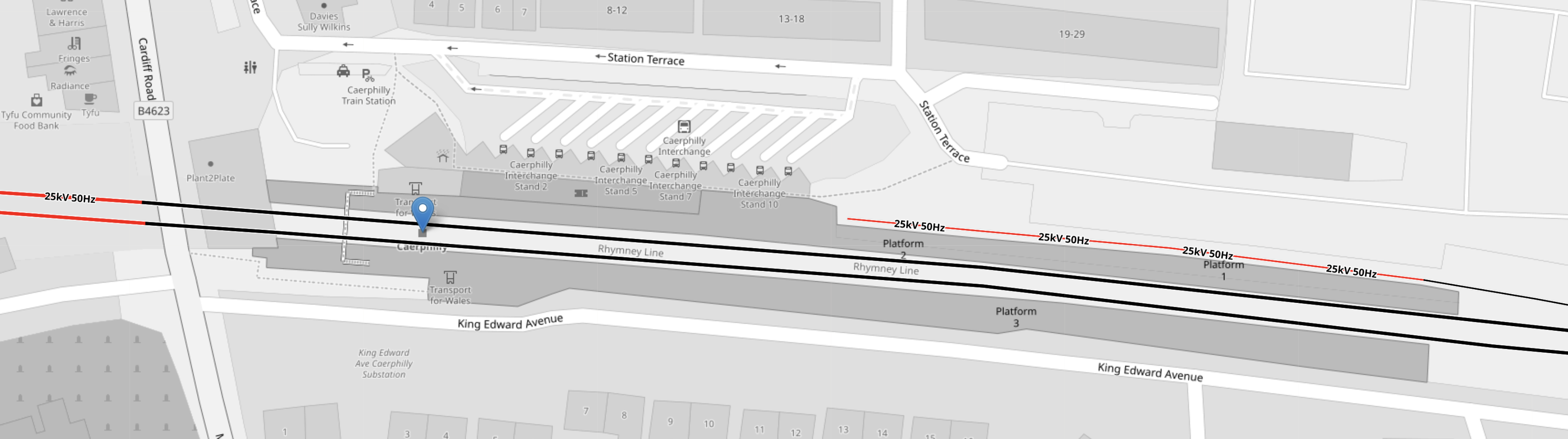
Note.
- Red tracks are electrified.
- Black tracks are not electrified.
- Caerphilly station is indicated by the blue arrow.
- The electrification continues to the Western end of the station.
- The two main platforms 2 & 3 are not electrified.
- The bay platform 1 is electrified to charge trains for return to Cardiff.
- Class 756 tri-mode electric-diesel-battery trains are already in service.
- There appears to be a comprehensive bus interchange.
The power for Platform 1 could come from the electrification at the Western end of the station.
I wouldn’t be surprised that the Rhymney Line will be fed with electricity at the heads of the valleys and it is fully-connected down to Cardiff to give a secure electrical connection.
Will Welsh Wind Power From The Heads Of The Valleys Be Used To Power The Cardiff Valley Lines?
To start with, as I know it can be blowy there, I asked Google AI, this question.
“Is Onshore Wind Planned At The Heads Of The Valleys In South Wales?”
I received this answer.
Yes, there is significant onshore wind energy development planned and in progress along the Heads of the Valleys area in South Wales. This region, encompassing areas like Merthyr Tydfil, Blaenau Gwent, and northern Rhondda Cynon Taf, is part of a broader push to increase onshore wind capacity in Wales, with many projects located on Natural Resources Wales forestry land.
Key Developments and Proposed Projects (2025-2026):
Trydan Gwyrdd Cymru: The Welsh government-owned developer has selected sites in South Wales for new, large-scale wind farms intended to be operational by 2040.
Carreg Wen Wind Farm: A planned 18-turbine project located between Aberdare and Maerdy (Rhondda Cynon Taf), near the Hirwaun/Heads of the Valleys area.
Hirfynydd Renewable Energy Park: A proposed project located on the Hirfynydd mountain range between Seven Sisters and Banwen, north of Neath, near the western end of the Heads of the Valleys.
Mynydd Llanhilleth and Trecelyn Wind Farms: Projects in the pre-application or planning stages by Pennant Walters in the Blaenau Gwent area.
Abergorki Wind Farm: A consented three-turbine project on Mynydd Maerdy (Rhondda Cynon Taf) with construction scheduled for 2026.
Operational Context:
Pen y Cymoedd: Already operational and currently the largest onshore wind farm in England and Wales, situated in the hills above the upper Neath, Afan, Rhondda, and Cynon Valleys.
Grid Infrastructure: Proposed new substations, such as one near Hirwaun (Rhondda Cynon Taf), are intended to connect these new projects to the national grid.
These developments are part of a target to generate 70% of Wales’ electricity from renewable sources by 2030, with a focus on areas previously identified as suitable for large-scale wind development.
Note.
- Pen y Cymoedd is the largest onshore wind farm in Wales and England, with an installed capacity of 228 MW.
- With the right size of battery, I’m fairly sure, that this wind farm could go a long way to powering the Cardiff Valley Lines.
- Carreg Wen Wind Farm is planned to be 108 MW wind farm.
- Hirfynydd Renewable Energy Park is planned to be a 100 MW hybrid development of wind turbines and solar with a battery.
- Mynydd Llanhilleth is planned to be a 48 MW wind farm.
- Trecelyn is planned to be a 20 MW wind farm.
- Abergorki is planned to be a 13 MW wind farm.
The total of new developments is 389 MW, which is about the same size as a Rolls-Royce SMR.
How Green Are The Valley Lines?
This news item from Transport for Wales is entitled 100% Electrification Of The Core Valley Lines Complete.
This is the sub-heading.
Transport for Wales has completed the full electrification of the Core Valley lines, at the heart of the South Wales Metro, delivering one of Wales’ most ambitious rail infrastructure transport projects.
These two paragraphs describe the current status.
Dubbed the ‘Welsh Tube’, the £1bn project brought electric tri-mode trains to the South Wales Valleys for the very first time in 2024. This spring, TfW will introduce the first of its 36 fully electric Class 398 tram-trains. The new fleet will initially operate between Pontypridd and Cardiff Bay, providing greener, more frequent services as part of the South Wales Metro.
Passengers are already benefitting from these improvements with the Core Valley lines being one of the most punctual and reliable networks in Great Britain over the past 6 months.
This OpenRailwayMap shows the electrification in the Cardiff area.
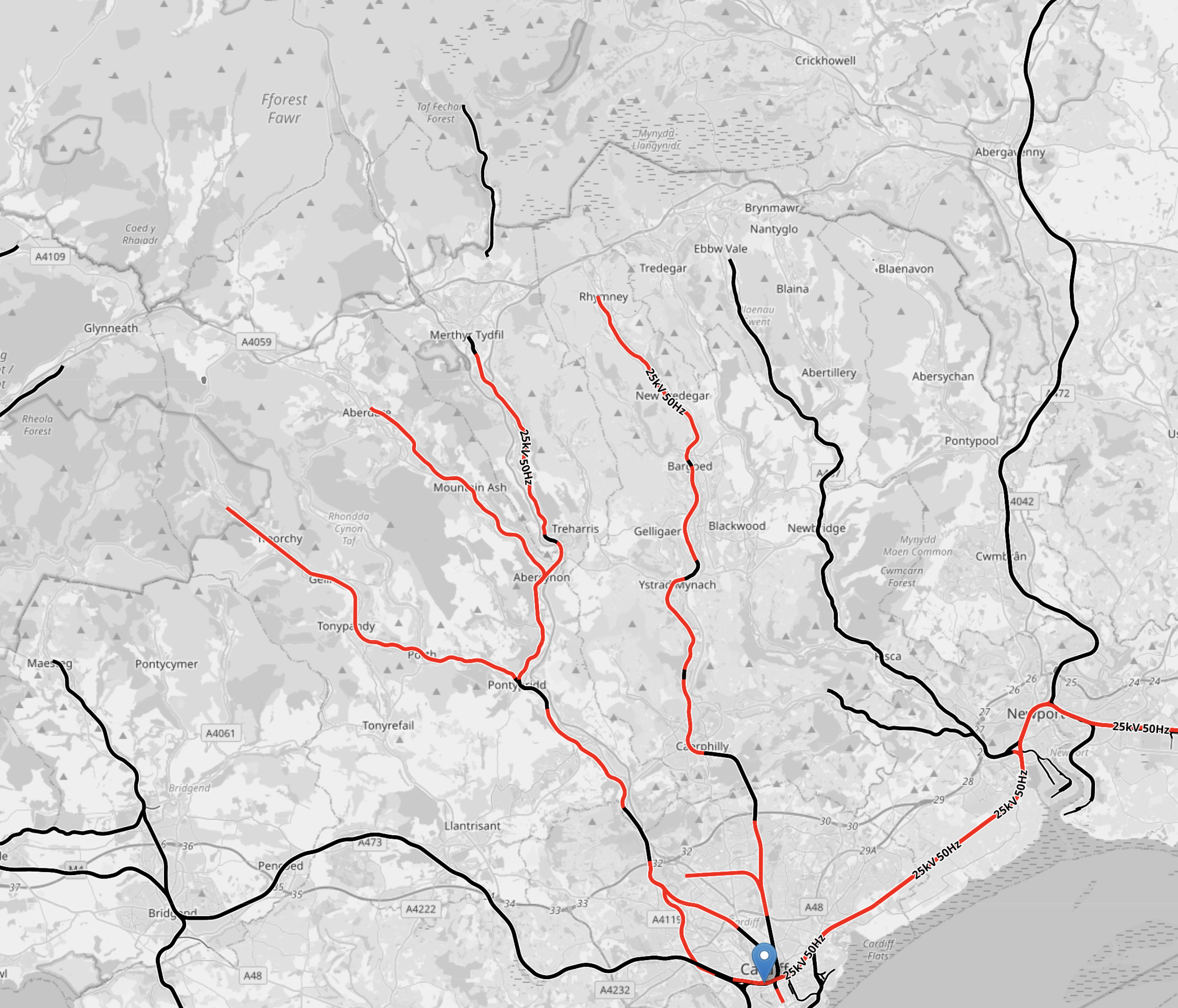
Note.
- Red tracks are electrified.
- Black tracks are not electrified.
- Cardiff station is indicated by the blue arrow.
- The black track going West from Cardiff is the South Wales Main Line to Llantrisant, Bridgend, Port Talbot and Swansea.
- The red track going East from Cardiff is the South Wales Main Line to Newport, the Severn Tunnel, Bristol Parkway, Reading and London.
- The lines going North up the valleys are from the West to Maesteg, Treorchy, Aberdare, Merthyr Tydfil, Rhymney and Ebbw Vale.
- The most Easterly line is the Newport and Hereford Line.
I will now look at some of the electrification.
Caerphilly Station
Caerphilly statition is on the Rhymney Line.
In June 2018, I wrote Caerphilly Station and took these pictures of the station.
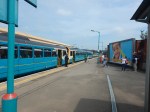
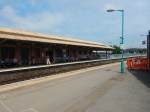
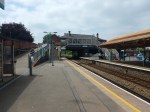
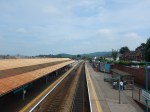
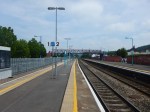
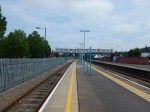
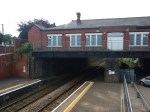
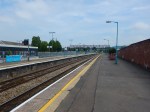

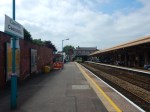
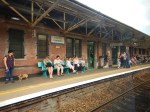
At the time, I considered it a difficult station to electrify.
This OpenRailwayMap shows the completed electrification through Caerphilly station.
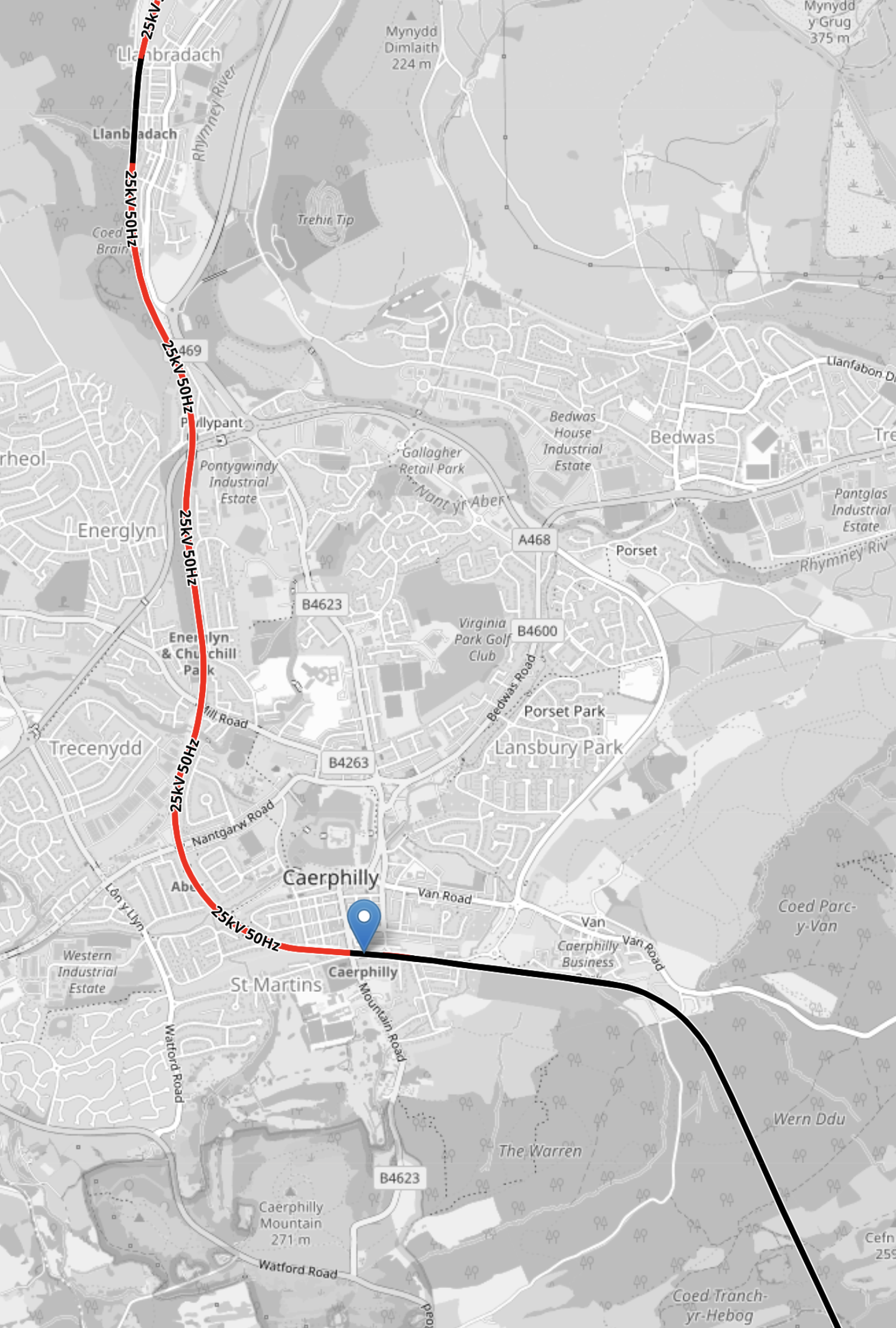
Note.
- Red tracks are electrified.
- Black tracks are not electrified.
- Caerphilly station is indicated by the blue arrow.
- Tracks to the North of Caerphilly are electrified.
- Tracks to the South of Caerphilly are not electrified.
- The electrification layout allows station with its two bridges and the 1784 metre Caerphilly Tunnel to the South of the station, to be unwired.
- There appears to be another section of plain track to the North of Caerphilly.
This second OpenRailwayMap shows the completed electrification through Caerphilly station.
Note.
- Red tracks are electrified.
- Black tracks are not electrified.
- Caerphilly station is indicated by the blue arrow.
- The electrification continues to the Western end of the station.
- The two main platforms 2 & 3 are not electrified.
- The bay platform 1 is electrified to charge trains for return to Cardiff.
- Class 756 tri-mode electric-diesel-battery trains are already in service.
- There appears to be a comprehensive bus interchange.
Climbing The Valley Lines In The South Wales Metro
There are five terminal stations on the Cardiff Valley Lines, of which four will be served by battery-electric trains or tram-trains from Cardiff.
In this post, I will show how they will achieve this feat.
Consider.
- To get to Aberdare, Merthyr Tydfil or Treherbert, a tram-train must first get to Pontypridd.
- To get to Rhymney, a train must first get to Caerphilly.
I will now deal with the seven stations in alphabetic order.
Aberdare
This OpenRailwayMap shows the three branches of the Cardiff Valley Lines, that go through Pontypridd.

Note.
- Electrified lines are shown in red and unelectrified lines are shown in black.
- The branch to Aberdare is the middle of the three branches.
- It is planned that the service on the Aberdare branch will be provided using Class 398 tram-trains, that will be fitted with batteries.
- Electrification will be complete between Aberdare and Pontypridd.
It would appear that a tram-train could run between Aberdare and Pontypridd using the complete electrification.
Caerphilly
These two OpenRailwayMaps show the tracks through Caerphilly.
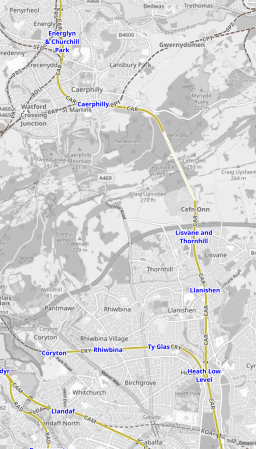
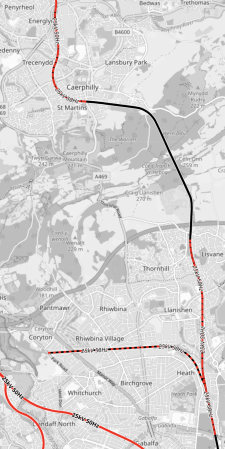
Note.
- The map on the left shows infrastructure, with the Rhymney Line shown in yellow.
- Caerphilly station is in the top third of the map.
- The white section of the Rhymney Line is the Caerphilly tunnel.
- The map on the right shows electrification, with the sections of the Rhymney Line that will be electrified are shown in red.
- Black sections will not be electrified.
- North of Caerphilly, the Rhymney Line is electrified, but through the station and the Caerphilly tunnel, there will be no electrification.
Trains will use battery power, where there is no electrification.
Ebbw Vale Town
This OpenRailwayMap shows the Ebbw Valley Railway.
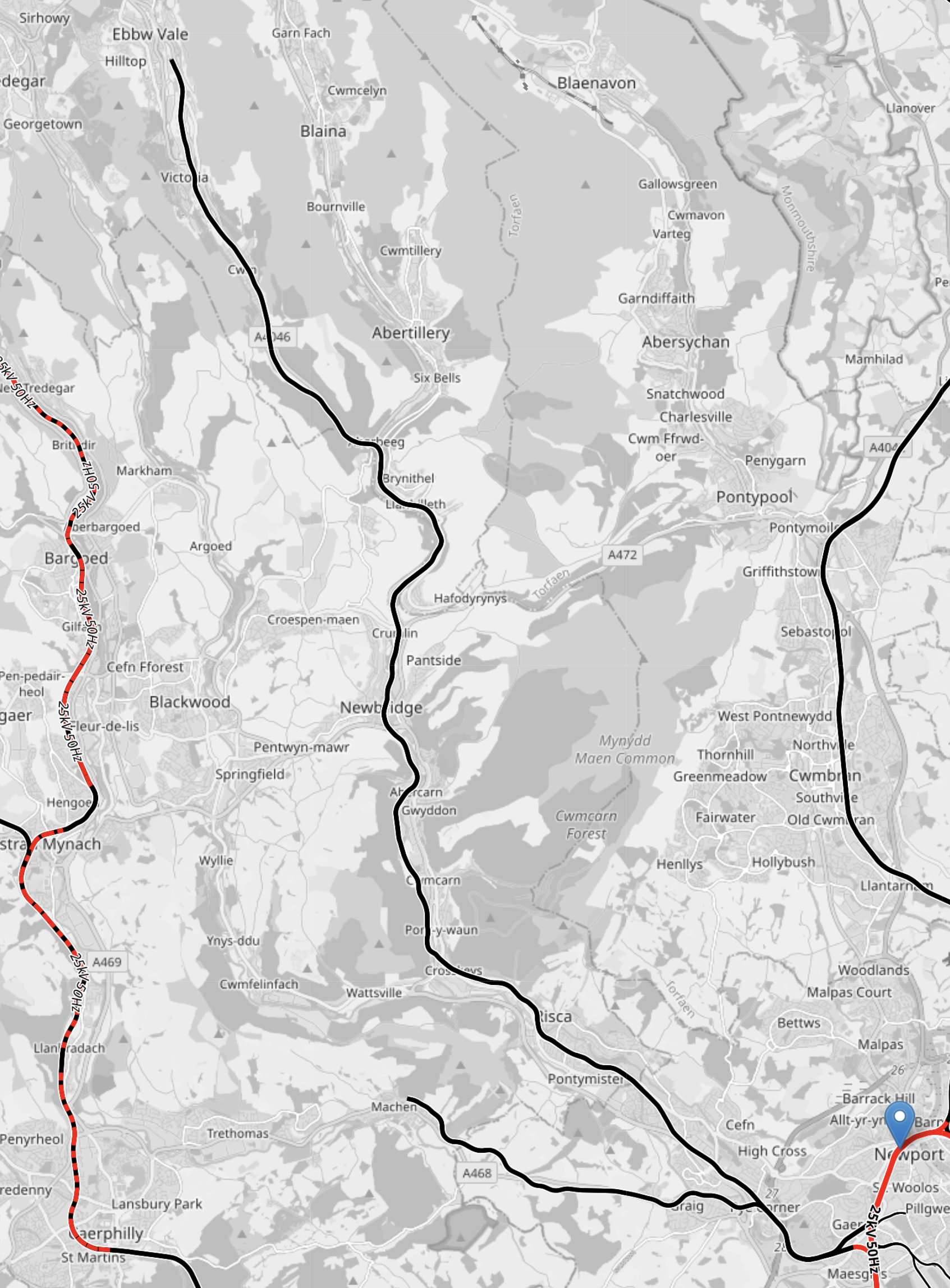
Note.
- Electrified lines are shown in red and unelectrified lines are shown in black.
- Lines where electrification will be installed are shown in red and black.
- Newport is marked by the blue arrow.
- The North-South Line at the left is the Rhymney Line.
- The North-South Line in the middle is the Ebbw Valley Railway.
- The North-South Line at the right is the Marches Line to Hereford and Shrewsbury.
Trains will use diesel power on the Ebbw Valley Railway, as there is no electrification and no means of charging battery-electric trains.
It does seem strange that no electrified solution has been proposed for the Ebbw Valley Railway.
Consider.
- An Abertillery branch has been proposed.
- A Newport and Ebbw Vale Town service has been proposed and will be implemented.
- Perhaps the line is difficult to electrify.
It could just be, the electrifying the Ebbw Valley Railway, was a step too far.
Merthyr Tydfil
This OpenRailwayMap shows the three branches of the Cardiff Valley Lines, that go through Pontypridd.
Note.
- Electrified lines are shown in red and unelectrified lines are shown in black.
- The branch to Merthyr Tydfil is the rightmost of the three branches.
- It is planned that the service on the Merthyr Tydfil branch will be provided using Class 398 tram-trains, that will be fitted with batteries.
- Electrification will be complete between Merthyr Tydfil and Pontypridd, except for two short sections.
- I would assume that the short unelectrified sections can be handled using the tram-trains battery power.
It would appear that a tram-train could run between Merthyr Tydfil and Pontypridd using the electrification and the tram-trains batteries.
This shows the track layout at Quaker’s Yard station.
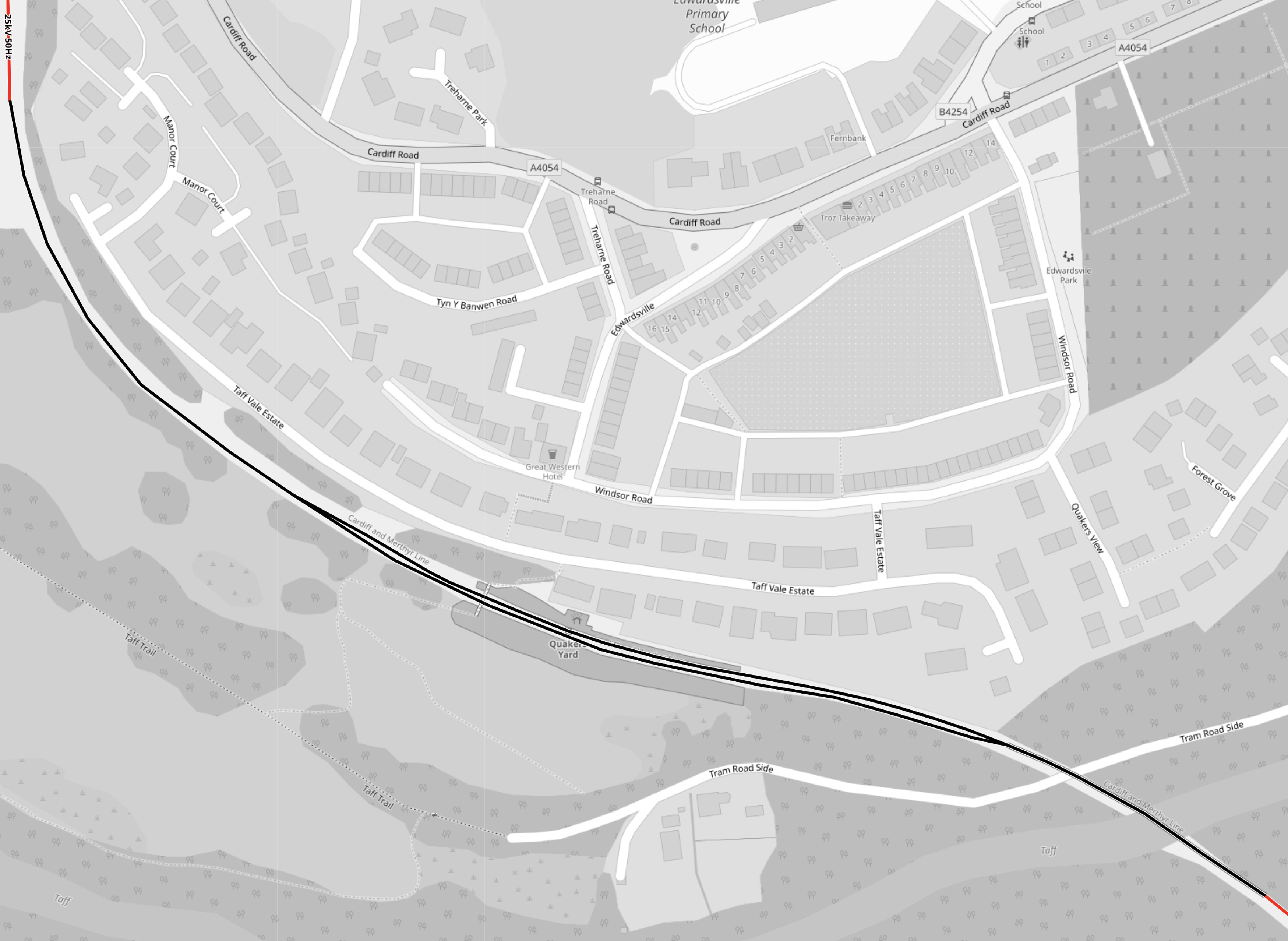
Note.
- Electrified lines are shown in red and unelectrified lines are shown in black.
- There are only two short length of electrification shown in the corners the map.
- Quaker’s Yard station has two platforms.
- The track layout appears to have single- and double-track sections.
It looks like it has been decided not to electrify this section. Perhaps, it was just too complicated to electrify easily?
This 3D Google Map shows the terminal station at Merthyr Tydfil.
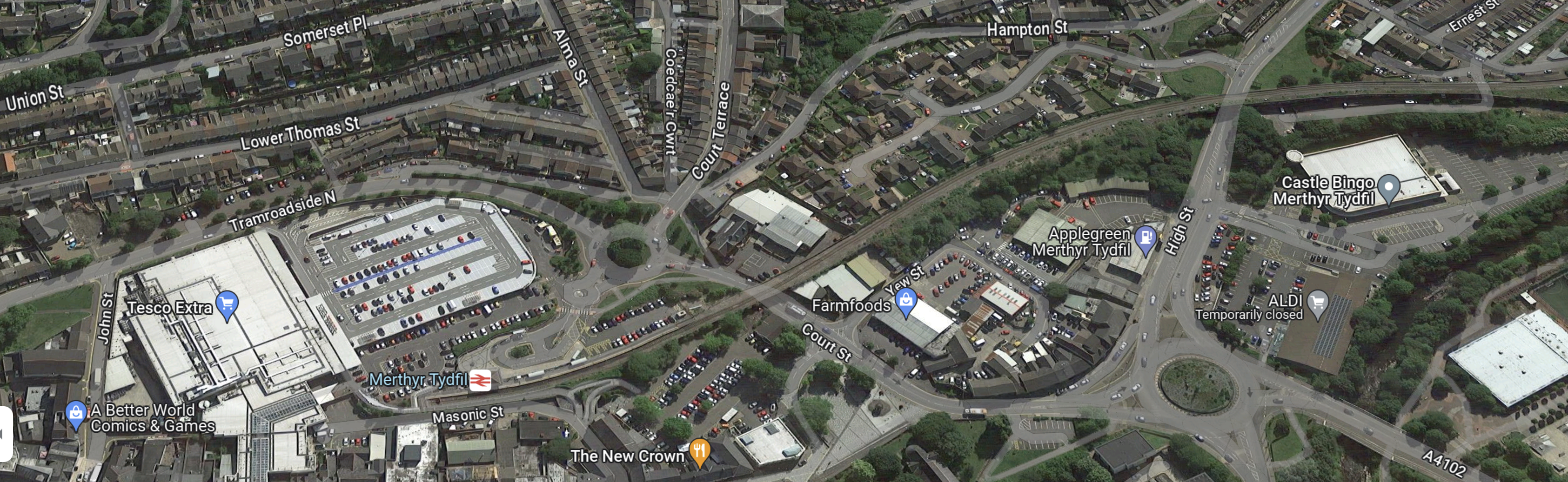
It looks like the railway runs through the town to the station. So perhaps leaving out the electrification made everything safer?
Pontypridd
This OpenRailwayMap shows the tracks through Pontypridd.
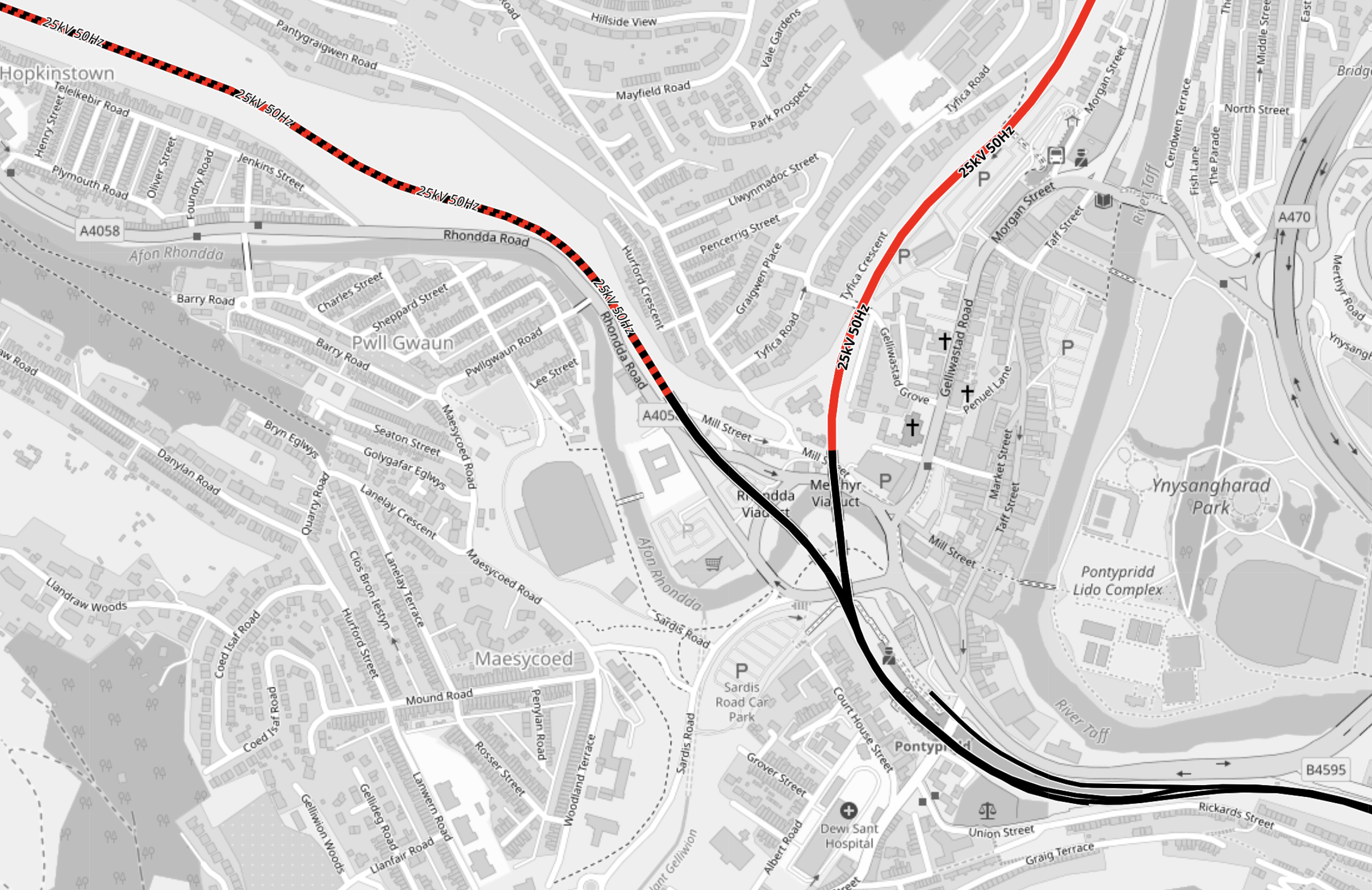
Note.
- Electrified lines are shown in red and unelectrified lines are shown in black.
- Lines where electrification will be installed are shown in red and black.
- The line leaving the map in the South-East corner is the line to Cardiff.
- The line leaving the map in the North-West corner is the Rhondda Line to Treherbert.
- The line leaving the map in the North-East corner is the Merthyr Line to Aberdare and Merthyr.
Pontypridd stations lies at the junction of the three lines.
This OpenRailwayMap shows the platforms at Pontypridd.
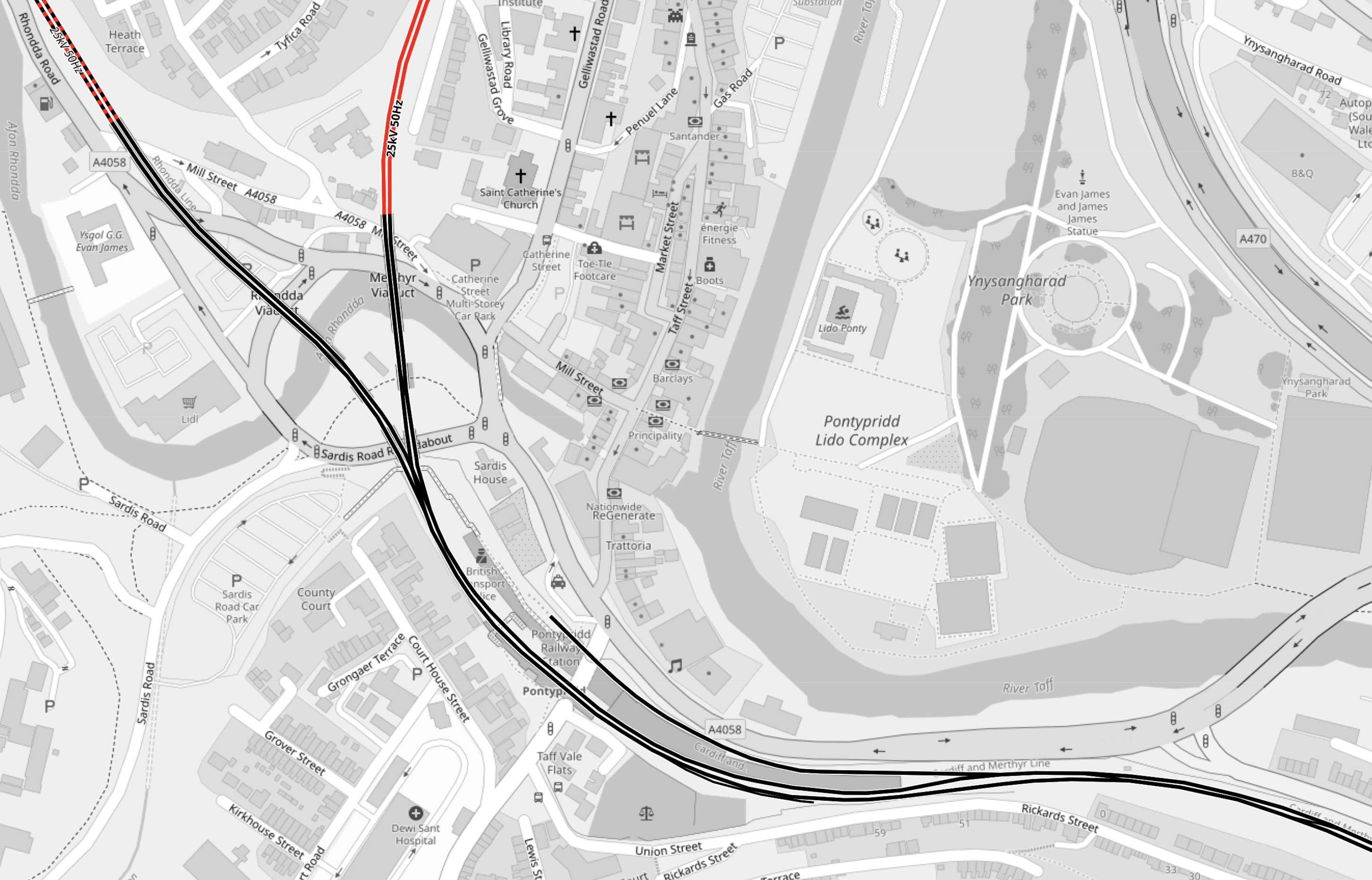
Note.
- There are two long through platforms.
- There is a bay platform on the North side of the station for extra Cardiff services.
- The station is not electrified.
These pictures show Pontypridd station.
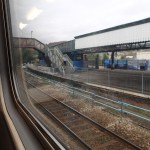
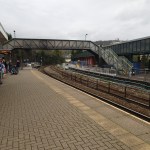
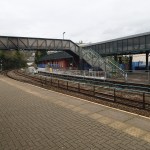
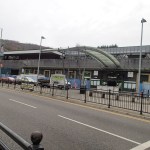
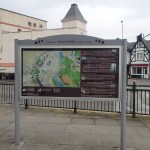
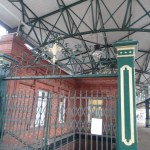
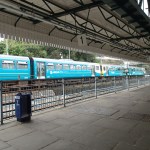
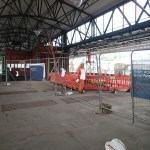
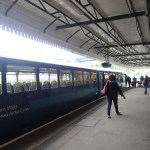
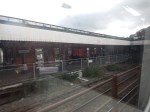
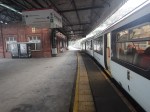
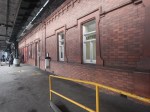
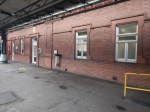
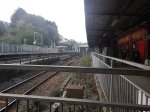
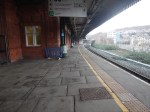
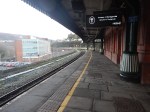
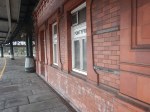
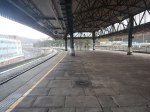
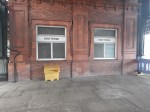
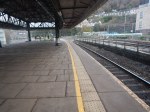
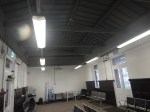

The station is Grade II Listed.
How will the tram-trains be powered through Pontypridd station?
Older Welsh railwaymen have told tales of how the coal trains from the mines in the valleys to Cardiff Docks were powered in part using gravity to propel the trains to the Docks. Steam locomotives then hauled the trains up the hills to get another load of coal.
Will Newton’s Friend be used to help the tram-trains return to Cardiff?
As the tram-trains descend, regenerative braking can be used to recharge the batteries.
A sophisticated computer control system, would choose the source of power from that which is available.
Descending from the terminal stations of Aberdare, Merthyr and Treherbert, and through Pontypridd would probably need a small amount of battery power to nudge the train to descend down the hill.
Fully-electrified stations like Aberdare and Treherbert will have the luxury of being able to use power from the electrification to start the descent.
Climbing the hills will be mainly on battery power, with the batteries being charged, where overhead electrification exists.
Rhymney
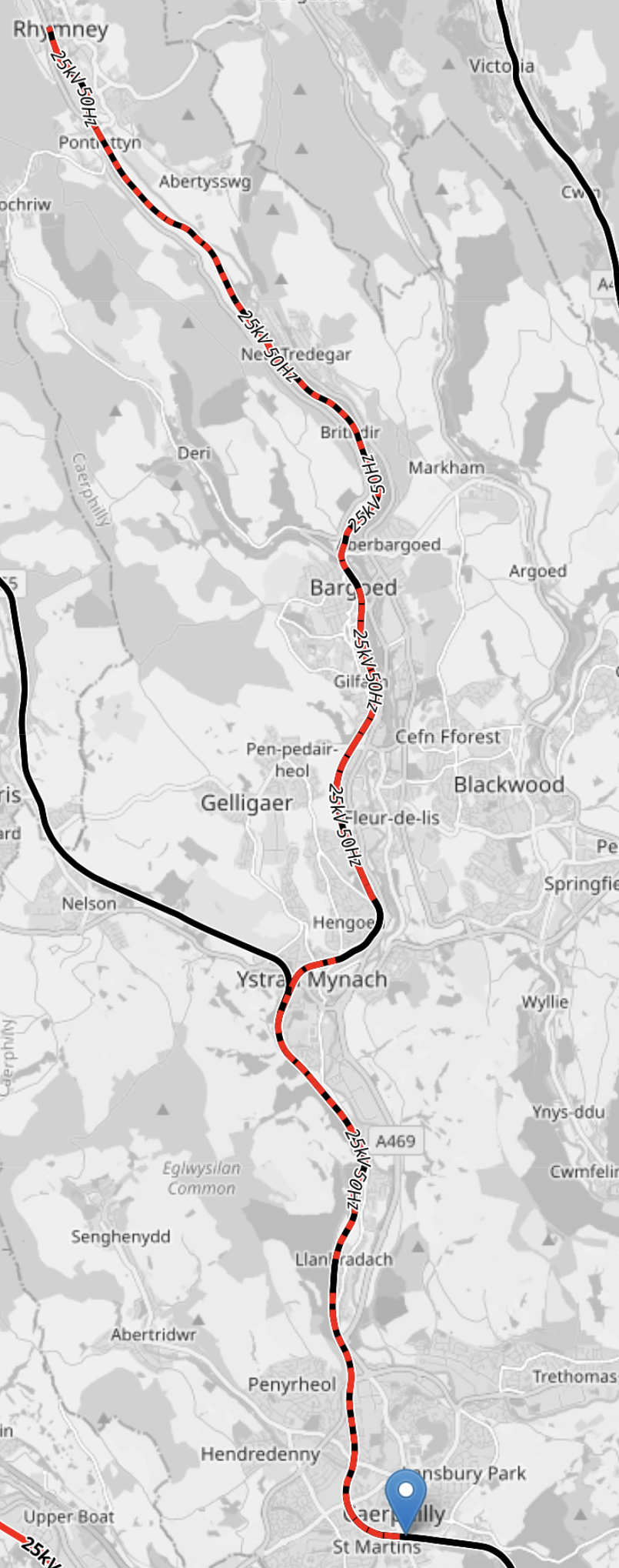
This OpenRailwayMap shows the Northern part of the Rhymney Line from Caerphilly to Rhymney.
Note.
- Electrified lines are shown in red and unelectrified lines are shown in black.
- Lines where electrification will be installed are shown in red and black.
- Caerphilly is marked by the blue arrow at the bottom of the map.
- Rhymney is at the Northern end of the rail line.
- Bargoed, Hengoed, Llanbradach and Caerphilly stations appear not to be electrified.
- It is planned that the service on the Rhymney Line will be provided using Class 756 trains, that will be fitted with batteries and diesel engines.
The Class 756 trains appear to have been designed to climb to Rhymney in all conditions, including a complete power cut. They will use batteries on the unelectrified sections of the climb.
Treherbert
This OpenRailwayMap shows the three branches of the Cardiff Valley Lines, that go through Pontypridd.
Note.
- Electrified lines are shown in red and unelectrified lines are shown in black.
- Lines where electrification will be installed are shown in red and black.
- The branch to Treherbert is the leftmost of the three branches.
- It is planned that the service on the Theherbert branch will be provided using Class 398 tram-trains, that will be fitted with batteries.
- Electrification will be complete between Treherbert and Pontypridd.
It would appear that a tram-train could run between Treherbert and Pontypridd when the electrification is complete.
Conclusion
Each of the five lines use their own methods of getting trains up the hills.
I suspect we’ll see some of the ideas used here on other stretches of electrification.
Crafty Electrification On The Rhymney Line
I was puzzled on Wednesday, when I took the Class 231 train to Caerphilly on the Rhymney Line, when I saw no signs of electrification.
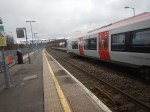
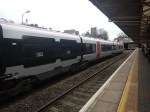
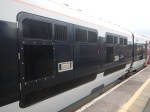
These are pictures I took at Caerphilly station.
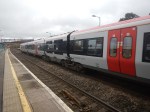
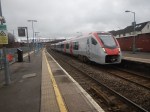
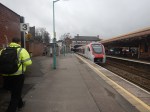
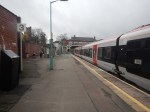
These two OpenRailwayMaps show the tracks through Caerphilly.
Note.
- The map on the left shows infrastructure, with the Rhymney Line shown in yellow.
- Caerphilly station is in the top third of the map.
- The white section of the Rhymney Line is the Caerphilly tunnel.
- The map on the right shows electrification, with the sections of the Rhymney Line that will be electrified are shown in red.
- Black sections will not be electrified.
- North of Caerphilly, the Rhymney Line is electrified, but through the station and the Caerphilly tunnel, there will be no electrification.
Trains will use battery power, where there is no electrification.
This article on Modern Railways gives more information.
This OpenRailwayMap shows the electrification around Cardiff Central and Queen Street stations.
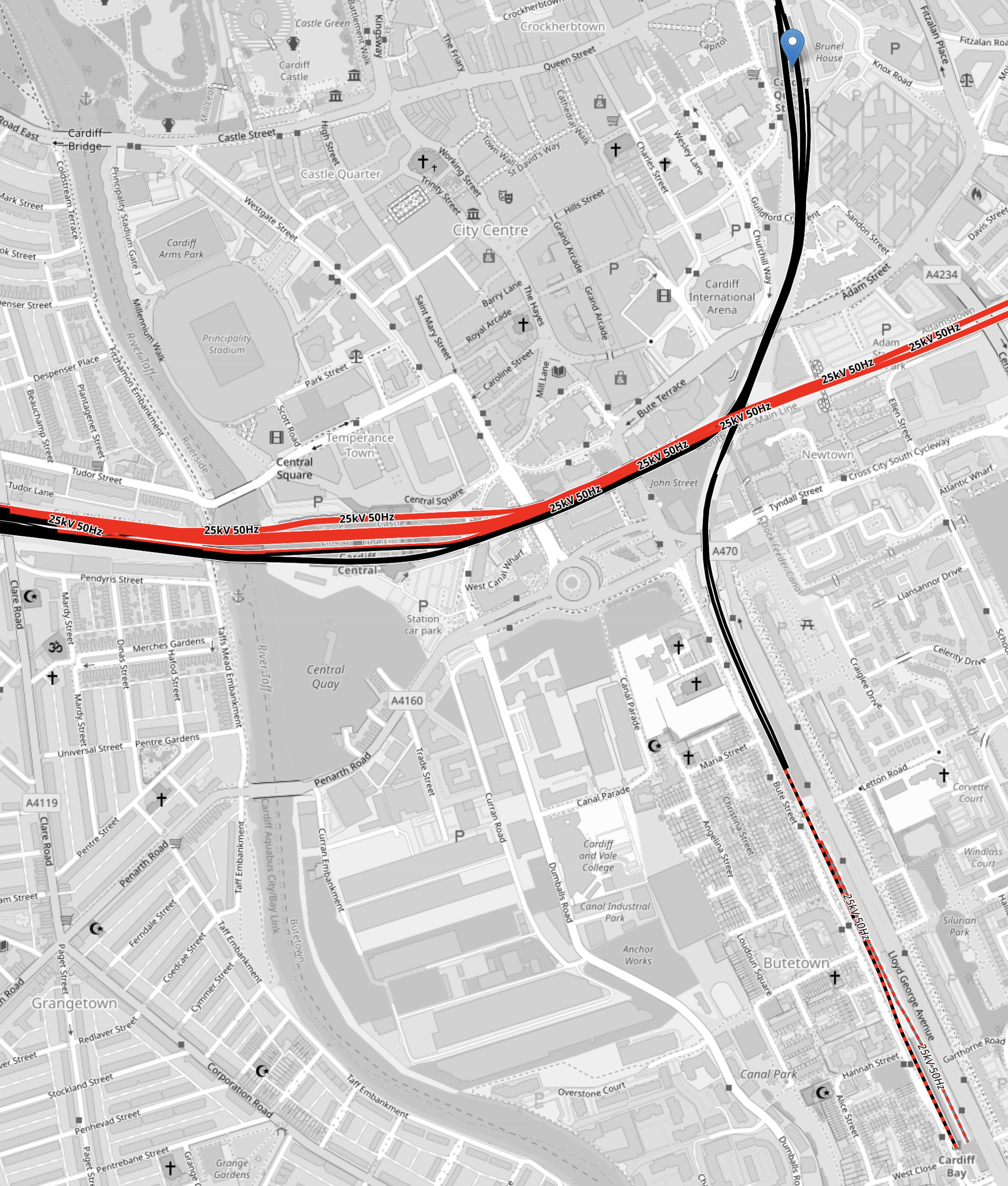
Note.
- Electrified lines are shown in red.
- Unelectrified lines are shown in black.
- The four-platform Cardiff Queen Street station is marked by the blue arrow in the North-East corner of the map.
- There appears to be no plans for electrification in Cardiff Queen Street station.
- The electrified line across the map is the South Wales Main Line.
- The nine-platform Cardiff Central station sits on the South Wales Main Line.
- The main line platforms at Cardiff Central station are electrified, but it appears that Platforms 6.7 and 8. that will serve the South Wales Metro, will not be electrified.
- The line going to the South-East is the branch to Cardiff Bay station.
- The Southern part of this branch appears to be planned to be electrified. so that it can charge the tram-trains before they return North.
This article on Modern Railways says this about catenary-free sections (CFS) in the electrification of the South Wales Metro.
Catenary-free sections are concentrated on areas where it is disproportionately expensive to erect overhead wires. These include the area around Cardiff Queen Street station and the adjacent junction, which has complicated switches and crossings. North of Queen Street, the Cathays area adjacent to Cardiff University and the hospital would present a significant electromagnetic compatibility challenge, so a CFS avoids this complication. Other catenary-free areas will include Pontypridd, where the station features listed canopies and the track is curved, and around the new depot at Taff’s Well, where there will be a significant number of new switches and crossings as well as challenges around highway bridges.
I am in touch with two major electrification companies and I am sure we’ll be seeing a lot more crafty electrification and the use of battery-electric trains.
My First Ride On Class 231 Trains – 22nd November 2023
I had several rides on Class 231 trains on a visit to Cardiff.
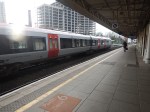
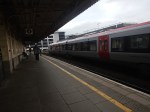
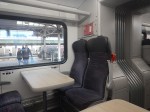
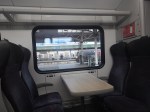
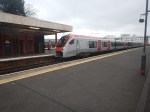
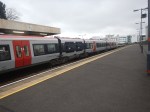
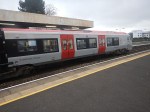
Note.
- The trans were running on the Rhymney Line.
- Like Greater Anglia’s Class 755 trains, they have pop-out steps and a PowerPack in the middle.
- The trains didn’t appear to be using their pantographs to run on electric, where it existed.
They were very similar to the Class 755 train.
Caerphilly Station
Caerphilly station is an important one on the South Wales Metro.
The current service is a four trains per hour (tph) service to Cardiff Queen Street and Cardiff Central stations. Some trains travel through to Penarth station
In 2023, the service will be upgraded.
- Two tph between Barry Island and Rhymney stations via Cardiff Central.
- Two tph between Bridgend and Rhymney stations via Cardiff Central and Rhoose Airport
- Two tph between Penarth and Caerphilly stations via Cardiff Central.
In 2023, the service will be three minutes quicker to and from Cardiff.
In addition, note the following about Caerphilly station.
- The station is on the Rhymney Line, which will be worked by Tri-Mode Stadler Flirts.
- The station lies just to the North of the Caerphilly Tunnel, which is not being electrified and trains are expected to transit using battery power.
- The station has a bay platform.
- The station appears to be a hub for buses.
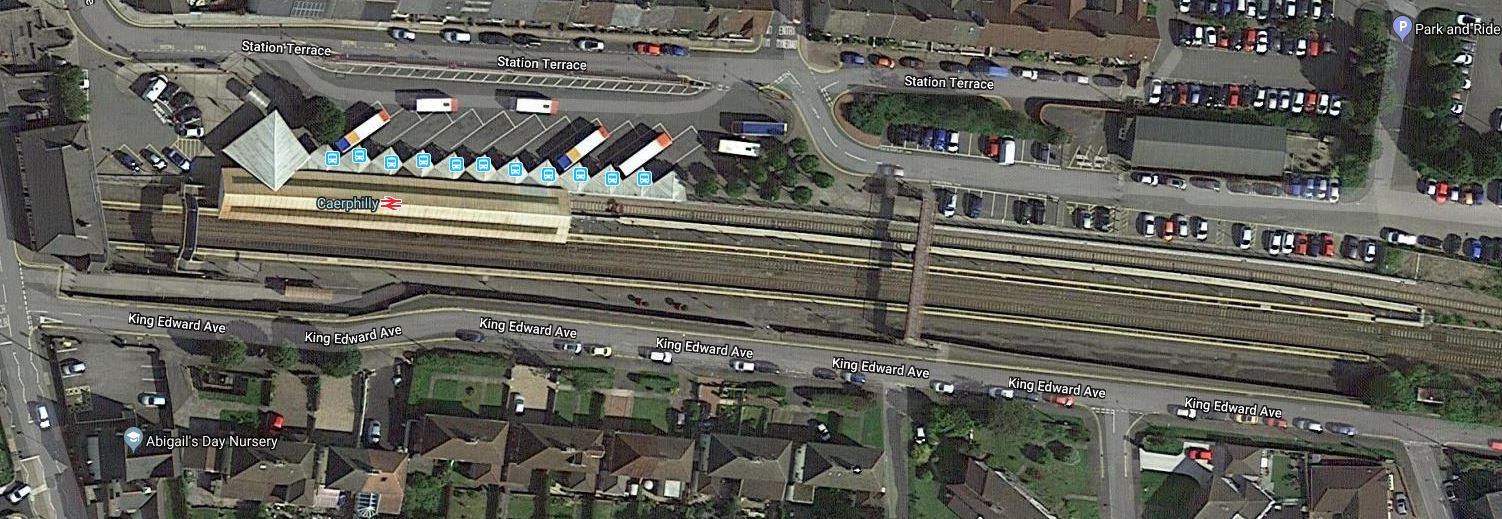
This Google Map shows the station.
Note.
- The long bay platform on the North side of the station. It may be long enough to accommodate two of the Tri-Mode Stradler Flirts, which are 65/80 metres long. This means that the bay platform could be very valuable for service recovery.
- The station serves as a Park-and-Ride.
- Three structures cross the track, which from the left are the old station buildings, the station footbridge and a footbridge independent from the station.
- Looking at the track layout on the Eastern approach to the station, the cross-overs are within fifty metres of the platform end.
These pictures show the station.
These are my thoughts on various issues.
Electrification Under The Bridges And The Old Buildings
I think there would be serious issues with standards for electrification at this station.
The three structures will have to be handled in the way I described in How Can Discontinuous Electrification Be Handled?
The Old Station Building
The old station building is integral with a road bridge and would be a costly and very disruptive operation to replace.
So if the structure will safely last a hundred years or so and the wires can be squeezed underneath using discontinuous methods, everybody wins.
The Easternmost Footbridge
The Easternmost bridge at the far end of the platforms looks to be a fairly recent structure and is independent of the station, as it just gives pedestrians a route across the railway. It might even have been built, when the bay platform was built a few years ago.
The Station Footbridge
So that leaves the elderly footbridge, which probably dates from 1871, when the station was moved to its present position.
It is the main way that passengers cross the line and given that Caerphilly station has nearly a million passengers a year, it would be classed by disabled activists as a disgrace.
A few stations up the line, lifts were added to the footbridge at Ystrad Mynach station, in conjunction with other works. Wikipedia says this.
In 2014, the station underwent a £1.6 million refurbishment with new ticket machines, waiting areas and ticket office, with disabled toilet being installed in addition to major work carried out on the footbridge with lifts being installed to improve accessibility.
Surely some of the money saved on electrification could be spent on improving access?
Electrification Between The Structures
25 KVAC wires have to be several metres away from any staff and passengers.
The Northbound Platform 3 is wide and if the overhead wire can be suspended high enough, I suspect that the latest regulations can be met.
The Southbound Platform 2 is narrower and the platform has a low roof, which might mean electrification is trickier.
But if as I suspect, battery power and gravity will be used to power the trains on the downhill track, then there could be a case for leaving the downhill track without wires.
That could save half the costs on some sections of the route.
Electrification Of The Crossover
On a railway with full electrification all crossovers must be electrified..
But on the Rhymney Line, all the trains will be Swiss all-purpose trains, that can work on all power sources, probably including cuckoo-clock motors.
So imagine a Tri-Mode Stadler Flirt arriving from Penarth, which will be turning back in the bay platform at Caerphilly.
- It would use the electrification between the unelectrified Caerphilly Tunnel to just before the crossover to come up the hill and probably add some charge to the batteries, that have been depleted in the run through the mile-long tunnel.
- \\\the train would probably rate at a signal just before the crossover, until told to proceed by the signalling system.
- The pantograph will be dropped and the train switched to battery or diesel power.
- When giving the green by the signal, the train would move into the bay platform.
All done efficiently and safely without any electrification, which would not be installed on the crossover or in the bay platform.
Train Failure In The Caerphilly Tunnel
There will have to be a plan for handling train failures in the tunnel. I suspect that as Switzerland has lots of railways in the mountains, some with extensive tunnels, that the Swiss have pretty good methods for dealing with failures.
One Train Rescues Another
Trains are generally designed, so that a second train can rescue a failed train of the same class or even a similar type. This makes good sense, as a train operator generally has several trains of the same type and their Thunderbird locomotive may be working miles away.
I’m sure that the Tri-Mode Stadler Flirts will have this capability.
Rescuing A Train Going Downhill
If a train should fail in the Caerphilly tunnel on the downhill track, a second train would probably couple up and shepherd the train slowly down the hill to the depot at Canton.
Rescuing A Train Going Uphill
If a train should fail in the Caerphilly tunnel on the downhill track, a second train would probably couple up and push the stricken train into the bay platform at Caerphilly station.
Conclusion
The more I look at the South Wales Metro, it has been designed in an holistic manner with routes, tracks, electrification, stations and trains all designed to work together.
 The Anonymous Widower