Demolition Has Started For The New Platforms At Oxford Station
Demolition has finally started of the old parcels office at Oxford station to create the two platforms for the Chiltern service to the station.



I can’t see this being a large project, as hopefully, it will just be creating the platforms and making sure there are shelters and the other platform details.
Wikipedia says this about the two new platforms.
The scheme also includes two new platforms at Oxford station, to be built on the site of the disused parcels depot. The new platforms will initially be five carriages in length, but provision will be made for them to be extended southwards to eight carriages.
Will they be in Chiltern’s or Great Western Railway’s house style?
As Chiltern Railways coaches are in sets of six, will these platforms be built initially to handle eight coaches? It would seem to be prudent!
Also according to this section in Wikipedia, services will start in December 2016.
Could A Chiltern Metro Be Created?
In the Wikipedia entry for Chiltern Railways, there is a section under plans labelled Active.
Three of the entries in this section refer to the stations between London Marylebone and West Ruislip or a Chiltern Metro.
- Lengthening of platforms at South Ruislip, West Ruislip, Sudbury Hill Harrow, Sudbury and Harrow Road and Northolt Park to accommodate eight vehicles, thereby obviating the need for vehicles to be locked out of use on departure from London Marylebone.
- The restoration of the quadruple track between South Ruislip (Northolt Junction) and West Ruislip, allowing trains to call at both stations without blocking the line. Triple track currently exists at West Ruislip, with the up platform loop still in situ, and at South Ruislip, with the Down Main through line also in situ. This would involve the reconstruction of the new down platform at West Ruislip, and the reconstruction of the up platform at South Ruislip. This ‘Chiltern Metro’ service was not programmed into the last round of franchising agreements.
- New Chiltern Metro Service that would operate 4+tph for Wembley Stadium, Sudbury & Harrow Road, Sudbury Hill Harrow, Northolt Park, South Ruislip and West Ruislip. This would require a reversing facility at West Ruislip, passing loops at Sudbury Hill Harrow, and a passing loop at Wembley Stadium (part of the old down fast line is in use as a central reversing siding, for stock movements and additionally for 8-car football shuttles to convey passengers to the stadium for events)
So could a Chiltern Metro be created between Marylebone to at least as far as West Ruislip.
In A Modern Electrified Metro Network Using IPEMU Technology, I postulated what a local metro would be like.
- Services are run by modern four-car electric trains, that meet all current and envisioned access and customer requirements.
- Services are run by a standard train, so if the network expands, more trains can be easily built!
- The ability to lengthen the trains, say for an important sporting or cultural event.
- Enough trains to run four trains per hour services on important lines and perhaps one per hour on lines that get much lesser use.
- Most services run out and back from the central station.
- As little disruption as possible, whilst creating the metro.
So does Chiltern’s broad plan of a metro between Marylebone and West Ruislip fit those rules?
- Modern four- car trains like Class 710 trains could run the service.
- Bombardier’s Aventra, which is the basis of the Class 710 will be around for some time, so extras will probably be available.
- Three-train formations of twelve-cars can probably be created, but eight-car would probably be an initial maximum need.
- Not a problem on a short metro line, which would probably need four sets for a four train per hour service.
- All services go to and from Marylebone.
- I’m sure, if IPEMU technology were to be used, electrifying between Marylebone and at least West Ruislip, could be done without major blockades of the line.
It would appear that the objectives can be easily met and using standard Aventra trains with an IPEMU capability would help.
The Current Service Pattern
Wikipedia lists the current services, outside the peak from Marylebone as the following.
- 2 trains per hour (tph) to/from Birmingham (one fast, first stop Bicester North, and one semi-fast, first stop High Wycombe).
- 1tph to/from Banbury (semi-fast, first stop High Wycombe). Some extend to Stratford-upon-Avon.
- 1tph to/from Bicester North (semi-fast, first stop Gerrards Cross)
- 1tph to/from Princes Risborough (semi-fast, first stop Gerrards Cross)
- 1tph to/from High Wycombe (stopping service)
- 1tph to/from Gerrards Cross (stopping service)
- 2tph to/from Aylesbury (via Amersham). One of these services in each hour continues on to serve Aylesbury Vale Parkway
- 2tph to/from Oxford Parkway (fast)
So that is nine trains an hour through West Ruislip, two up the Aylesbury Line and eleven between Marylebone and Neasden.
What Would A Chiltern Metro Look Like?
Wikipedia is fairly precise, that the inner section between Marylebone and West Ruislip would stop at the following stations.
- Wembley Stadium
- Sudbury & Harrow Road
- Sudbury Hill Harrow
- Northolt Park
- South Ruislip.
Although other documents on the web suggest a first stop at a new station of West Hampstead Interchange.
My journey today on the line took twenty minutes.
Some questions occur to me.
- Will extra stations be added?
- Will some trains go on to places like Gerrards Cross, High Wycombe and Princes Risborough?
- With modern signalling and extra tracks in places, what is the capacity of the various sections of the line.
- How many extra services to what destinations, do Chiltern want to run?
Chiltern’s answers will be better than my speculation.
What Trains Should Work The Metro?
Ian Walmsley in the April 2015 Edition of Modern Railways writes enthusiastically about Bombardier’s new Aventra train, where under Potential he starts with this sentence.
As a platform, the design will be offered in various guises for future contracts up to 125 mph.
He then goes on to say this about a possible future order for Aventras.
But the interesting one to me is East Midlands Trains electrics. As a 125 mph unit it could cope well with Corby commuters and the and the ‘Master Cutler’ crowd – It’s all about the interior.
Could Chiltern use a similar train, that was equally at home, running at over hundred miles per hour to and from Birmingham or trundling through North West London on the Metro?
Consider.
- The advantages of an identical fleet that can work all lines and services must be immense!
- I believe a universal high-class interior is possible, as Class 387 trains are almost there. Remember, Chiltern don’t do low class!
- All trains would have an IPEMU capability to reduce electrification and running costs.
- In a few years time, all IPEMUs will have automated pantograph up and down, to use electrification where available.
- Some could be dual-voltage to work on London Underground lines through Amersham.
Chiltern passengers certainly live in interesting times.
The Chiltern Metro And the Chiltern Main Line
In the following sections, I shall now look at the various parts of the route of the proposed proposed Chiltern Metro and its shared route with the Chiltern Main Line as far as West Ruislip.
Marylebone Station To Neasden
Marylebone station has a simple track layout, that is unlike most of the other London termini.
This Google map shows the station.
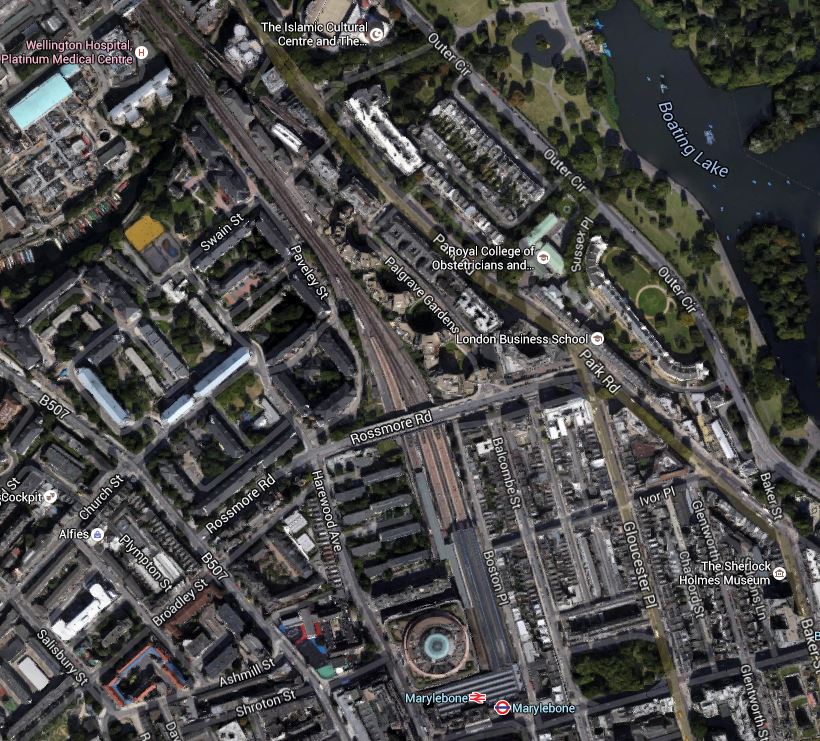
Marylebone Station
Complicated it is not, as it appears just two lines lead into and out of the station, and there are no major junctions until Neasden South Junction.
This map from carto.metro.free.fr shows the lines at Neasden.
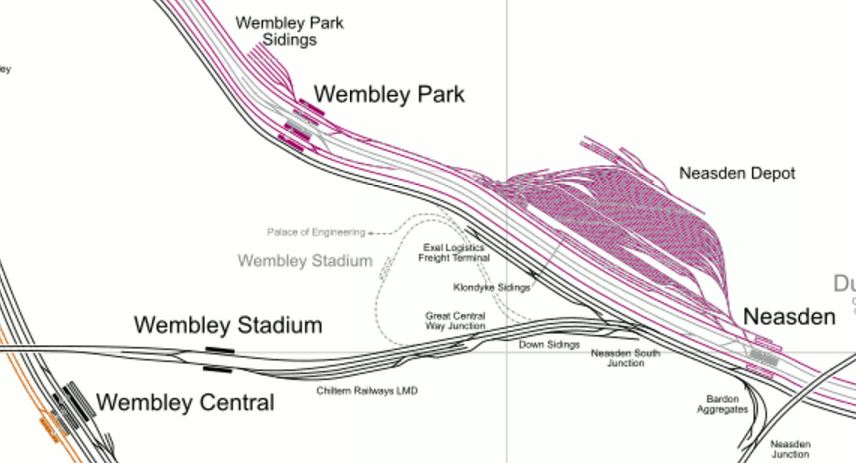
Lines Through Neasden
Note how the Chiltern Lines, which are shown in black, divide opposite Neasden Depot.
- The Chiltern Main Line goes off to the west through Wembley Stadium station.
- The London to Aylesbury Line goes off to the North West through Wembley Park station.
It certainly isn’t a complicated layout.
If you are going to use IPEMUs on Chiltern, I believe that it would be relatively easy to electrify the five miles of the lines from Marylebone to Neasden and what was felt necessary of the tracks in the platforms, to ensure that the trains reached Neasden South Junction on the way to West Ruislip with the on-board energy storage nearly full.
If this could be achieved, then some or all of the line and its stations between Neasden and West Ruislip could be left without electrification.
West Hampstead Interchange
If any station sums up the complicated nature of the UK’s railways it is the proposed West Hampstead Interchange.
This map from carto.metre.free.fr, shows the various lines go through the area.
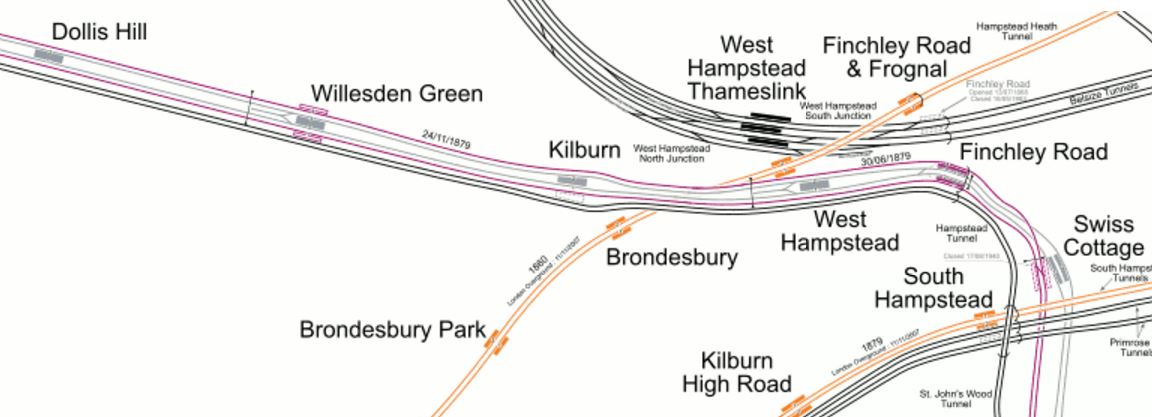
West Hampstead Lines
From North to South the stations and lines are.
- West Hampstead Thameslink station is electrified to 25 KVAC and Midland Main Line services, Thameslink services and freight services between the Gospel Oak to Barking Line and the Dudding Hill Line go through.
- West Hampstead station is electrified to 25 KVAC and North London Line services go through.
- West Hampstead tube station is electrified to 630 VDC and Jubilee Line services go through.
- The Metropolitan Line passes to the south of the tube station. There are no platforms.
- The Chiltern Lines are the Southernmost lines and are not electrified. There are no platforms.
The layout of the Chiltern Lines from Marylebone to Neasden may be uncomplicated, but West Hampstead is a lot of railway to sort.
It might be easy to add platforms for the Metropolitan Lines and Chiltern, but given the narrow pavements and large amount of traffic in the area, creating a new West Hampstead Interchange won’t be easy.
The Wrong Kind Of Electrification?
If the Chiltern Line is to be electrified, it is very much entwined with the London Underground.
- From Marylebone to Neasden the Chiltern Lines follow London Underground’s Jubilee and Metropolitan Lines, which have London’s 630 VDC fourth-rail electrification.
- After Neasden, Chiltern trains on the Aylesbury Line actually run on electrified London Underground tracks between Harrow-on-the Hill and Amersham..
- Between South Ruislip and West Ruislip stations the Chiltern Lines run alongside the Central Line.
- According to Wikipedia, London Underground are updating their fourth-rail electrification to deliver the standard 750 VDC commonly used by third-rail electrification in the UK.
Given that a major cost of electrification is getting power to the electrification, I just wonder if any electrification of the Chiltern Lines would piggy-back off the London ~Underground in London and off the 25 KVAC systems around Birmingham and the East-West Rail Link.
The sections that would not be electrified, would be handled by IPEMUs working from their on-line energy storage.
As Digby said to Dan Dare, “It’s not very pretty! But it works!”
I can’t believe that engineers working on the development of Chiltern Railways are not looking at the possibility of using some of the infrastructure, London Underground has already installed.
Bombardier are already building some dual-voltage Class 710 trains for the London Overground, so rolling stock won’t be a problem.
Wembley Stadium Station To Sudbury Hill Harrow Station
This Google Map shows the line Chiltern Main Line between Wembley Stadium to Sudbury Hill Harrow stations.
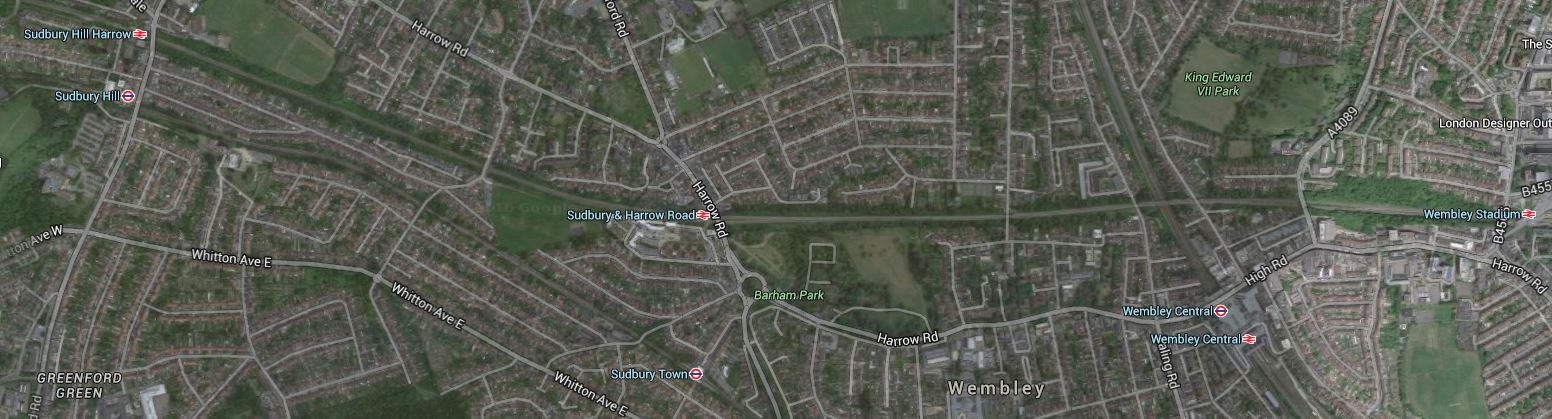
Wembley Stadium Station To Sudbury Hill Harrow Station
The only station in the middle is Sudbury & Harrow Road.
The line in this section is very reminiscent of the Gospel Oak to Barking Line and it shows as a green scar on the map.
This map from carto.metro.free.fr shows the same area.
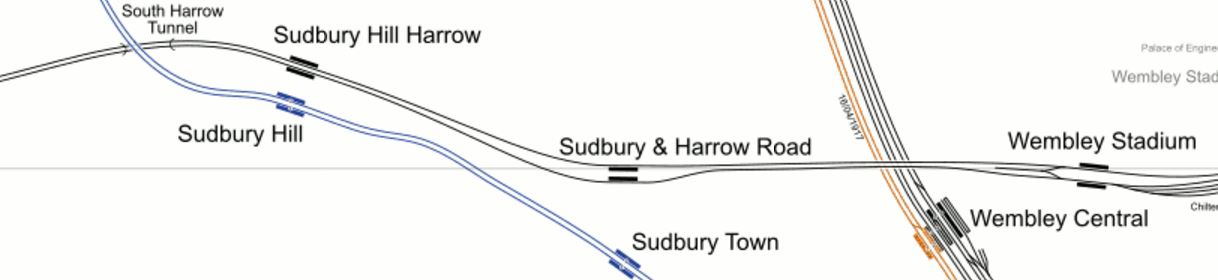
Chiltern Main Line Through Wembley And Harrow
These are some pictures I took of the line.

If it were to be decided to electrify this part of the line, I suspect it would no more difficult than the Gospel Oak to Barking Line.
Electrification Or Passing Loops?
Some stations like Sudbury Hill Harrow and Wembley Stadium are down to have passing loops to allow faster trains to overtake stopping ones.
But as the line is likely to be run by electric trains, does their superior braking and acceleration mean that at some stations, the need for passing loops is avoided.
Obviously, Chiltern and Network Rail have done extensive calculations and optimised the number of passing loops against the trains that will be run on the line.
Trains with an IPEMU capability, which includes regenerative braking, may also reduce the need for passing loops.
Wembley Stadium Station
Wembley Stadium station is planned to be the first station on the Chiltern Metro, although others think that the first station should be West Hampstead.
This Google Map shows the station.
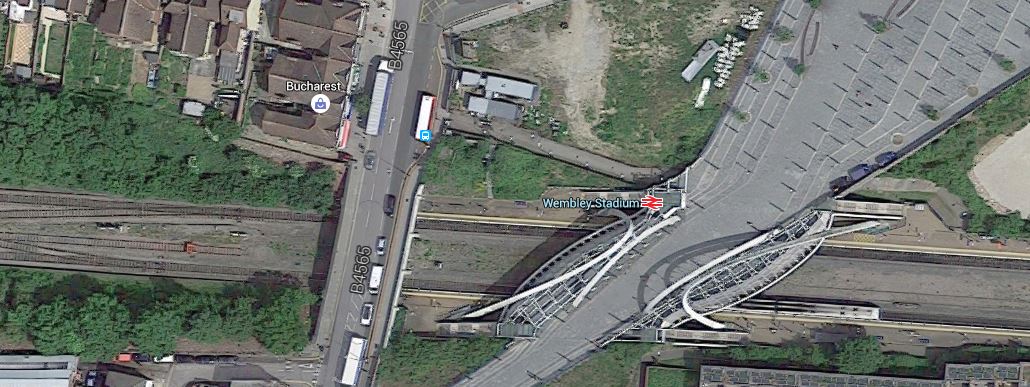
Wembley Stadium Station
Note.
- There is a large space between the two platforms and lines in the station.
- There is certainly enough to create one or two passing loops, so that fast trains can pass trains calling at the station.
- The station has probably been designed for twelve-car trains.
- There would be no need to electrify through the station.
I took these pictures as my train went through today.
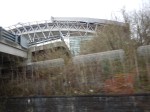
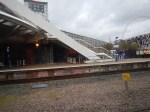

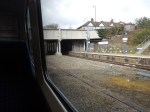
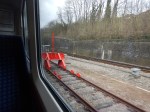
It certainly is a wide space in the middle.
Sudbury And Harrow Road Station
Sudbury And Harrow Road Station is not a very busy station and my train didn’t stop. I also didn’t get any pictures.
This Google Map shows the rather cramped layout of the station, squeezed between the two lines.
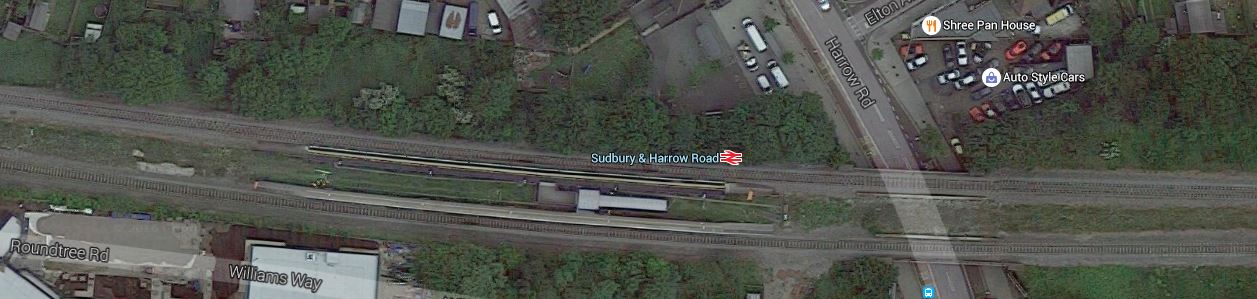
Sudbury And Harrow Road Station
Note.
- The station in an island layout.
- The platforms could be lengthened for the Metro.
- A passing loop could be squeezed through if possible.
- Electrification would probably be possible if required.
Hopefully the changes would attract more passengers to this station.
I visited this station once before and wrote about it in The Station With The Least Passengers In London.
Sudbury Hill Harrow Station
Sudbury Hill Harrow Station is a basic station.
This Google Map shows the layout of the station and the area around it.
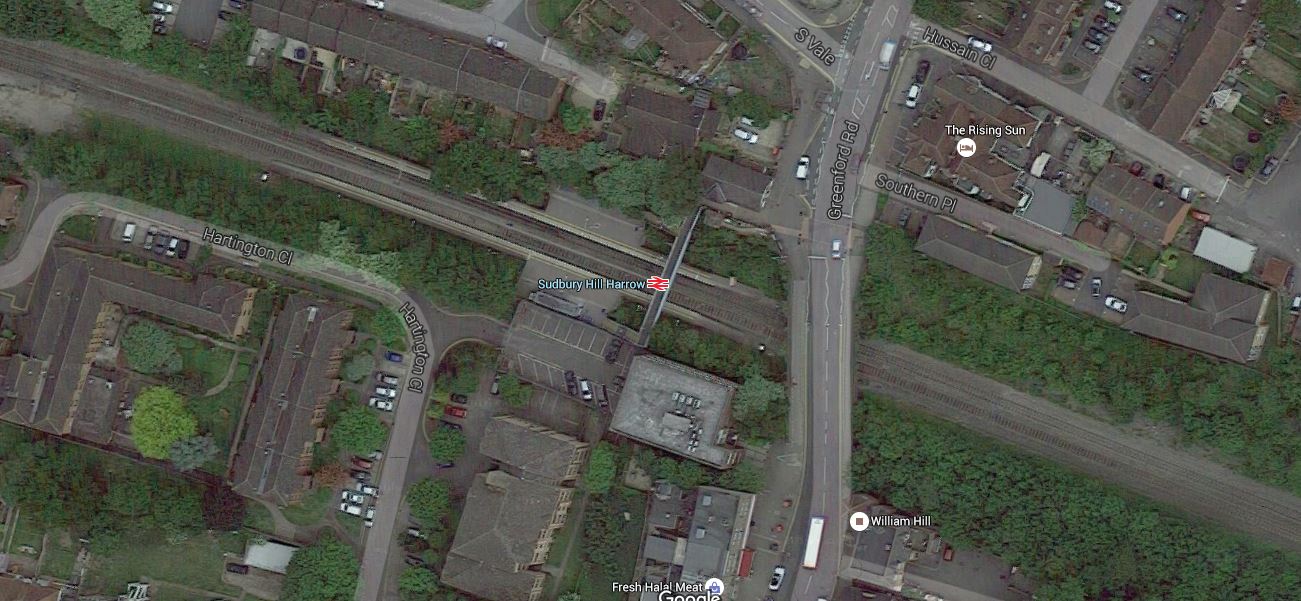
Sudbury Hill Harrow Station
I took these pictures as I passed through today.
This station is down for platform lengthening and the addition of passing loops, so I suspect this will mean a complete rebuild.
This could be tricky, as the line is a main line with nine trains an hour in both directions.
But there would appear to be space to the East of the road bridge and if the station was to be rebuilt provision could be made for electrification.
Northolt Park Station
Northolt Park Station is another basic station.
This Google Map shows the station.
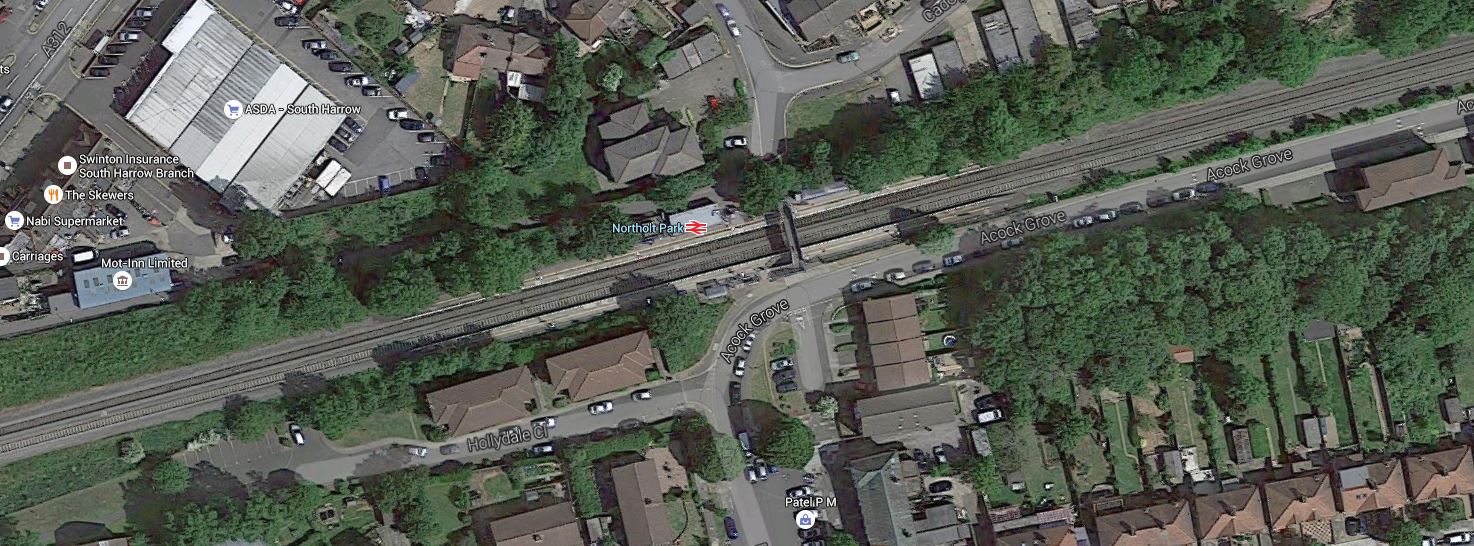
Northolt Park Station
I took these pictures today.
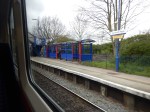
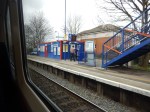
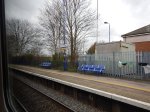
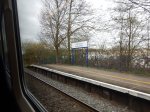
This station is another one, that is down for lengthened platforms. But it will be tight and there is no place for passing loops.
Northolt Junction
Northolt Junction is where the Chiltern Main Line meets the Acton-Northolt Line to form the Great Western and Great Central Joint Line, that goes on to High Wycombe and eentually Birmingham.
This Google Map shows the junction.
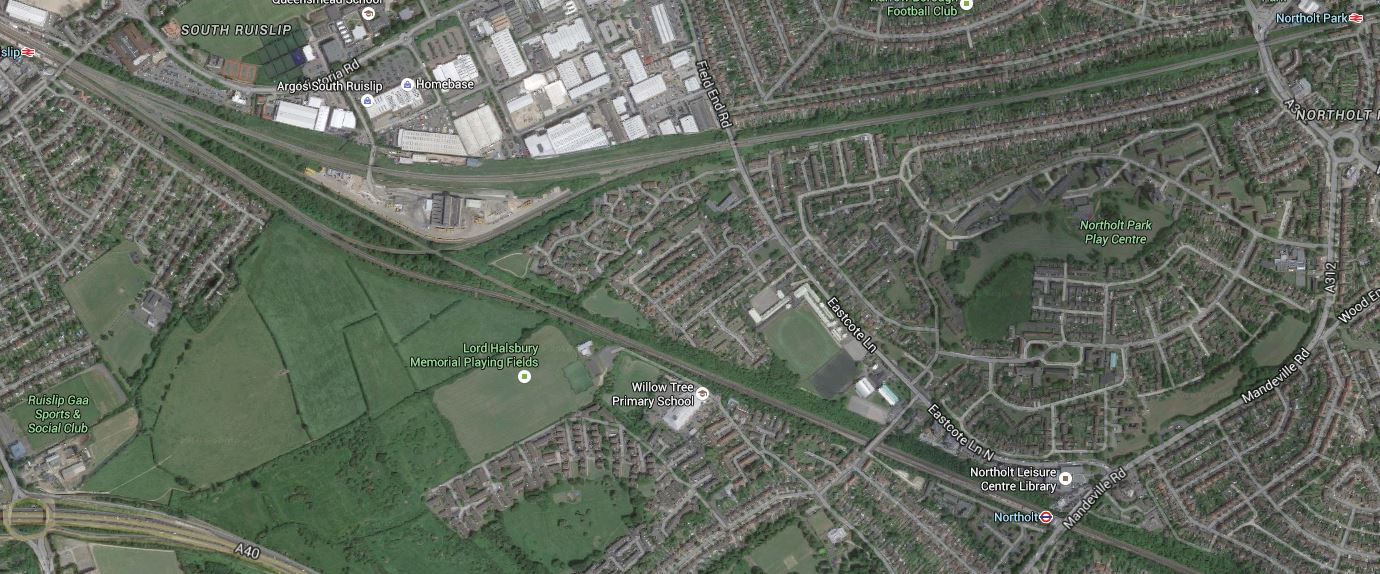
Northolt Junction
Note the waste recycling plant in the middle of the junction.
This map from carto.metro.free.fr shows the lines in the area.
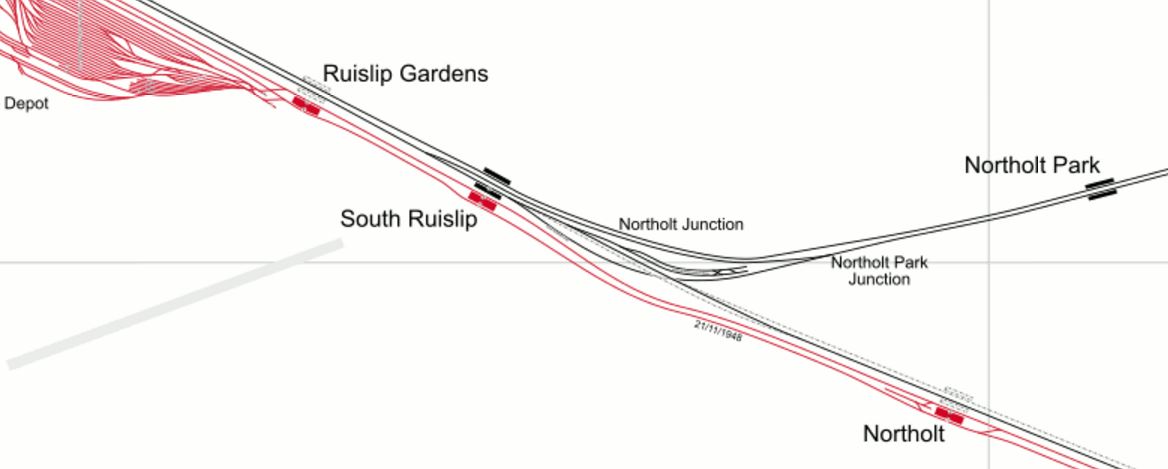
Northolt Junction
Note the large Ruislip Depot for the Central Line.
These are pictures, I took from the Chiltern train.
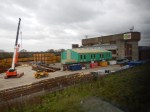

It’s certainly all rather cramped in the middle of the junction.
South Ruislip Station
South Ruislip Station is an interchange with the Central Line, located to the West of Northolt Junction.
I only managed one quick picture as my train rushed past.
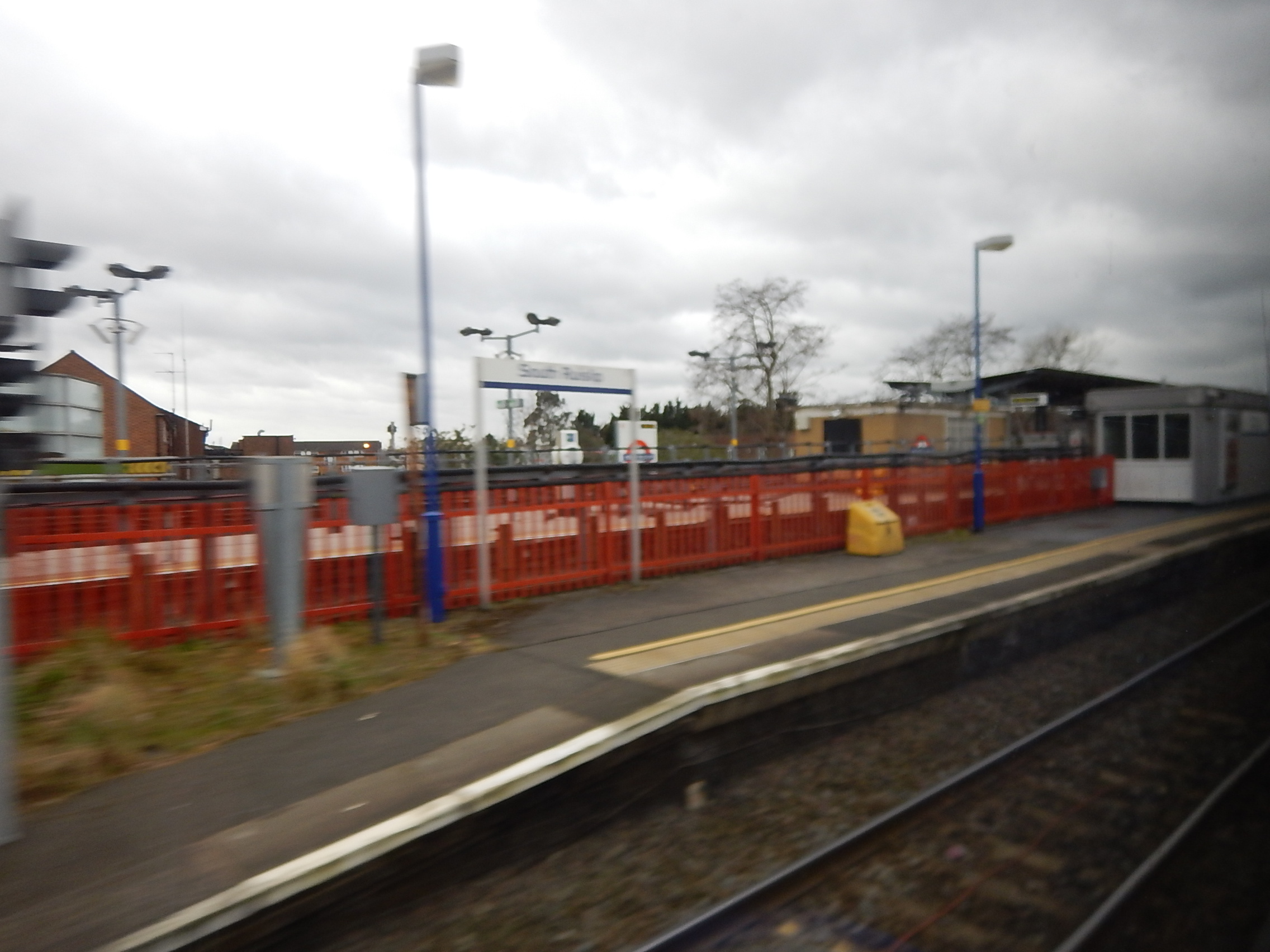
South Ruislip Station
This Google Map shows the station and the surrounding area.
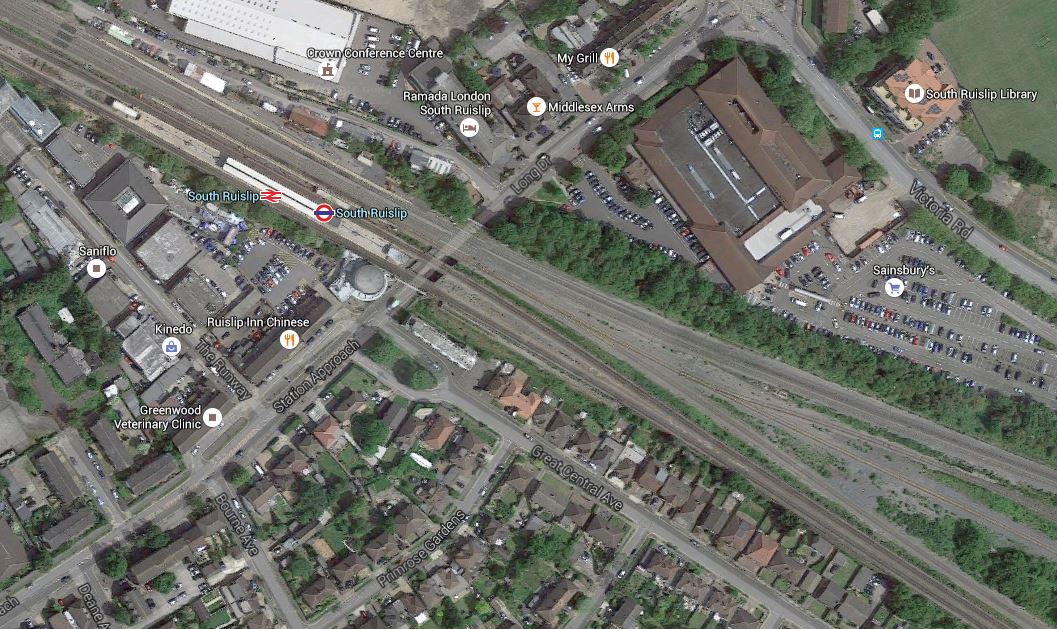
South Ruislip Station
Note.
- Going East the lines divide here, with the Northern tracks going to Marylebone and the Southern ones going to Paddington, alongside the Central Line.
- The platforms at South Ruislip station will be lengthened for the Chiltern Metro.
- The heavy rail lines through here will be four-tracked and there is certainly space for that.
Given that the Acton-Northolt Line leads from here to an electrified Paddington and Old Oak Common, there could be pressure to fully electrify through South Ruislip. If that were to be decided, I can’t see that being a difficult task compared to some in the UK.
West Ruislip Station
West Ruislip Station has been proposed as the outer terminus of the Chiltern Metro.
This Google Map shows the station and the surrounding area.
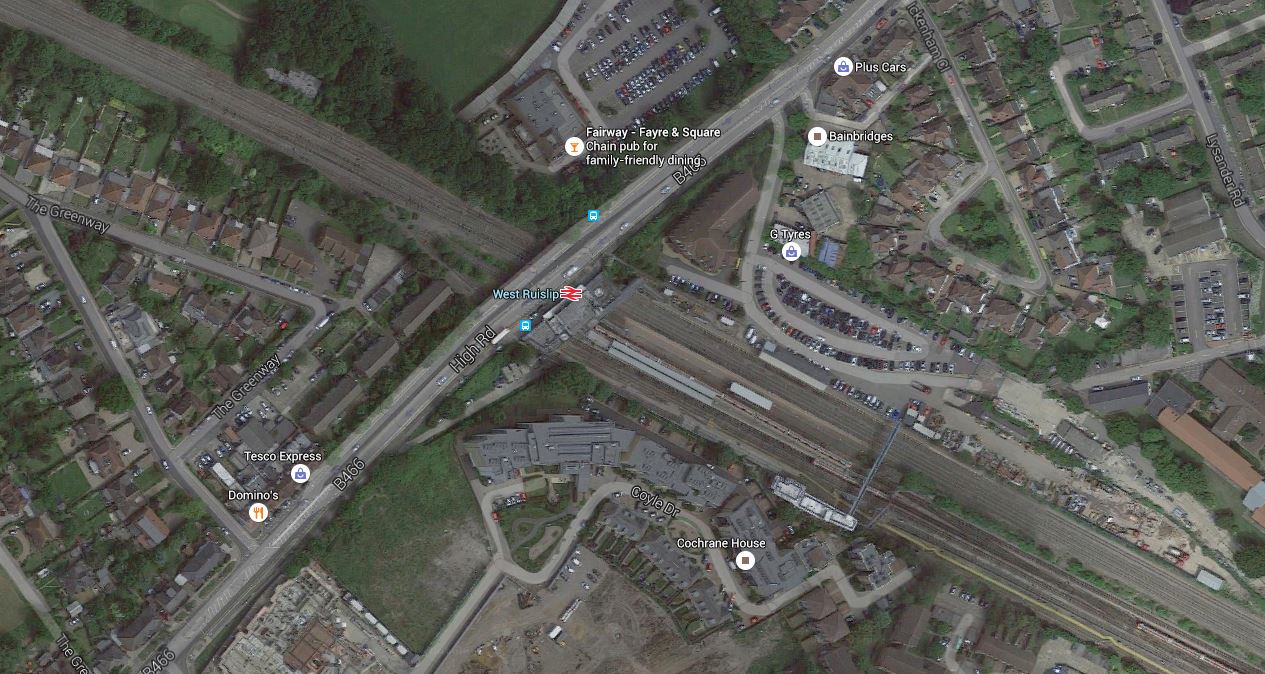
West Ruislip Station
These are pictures I took of the station.
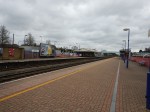
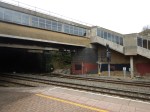
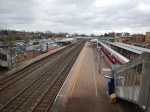
Note.
- A turnback facility is needed and this would probably be a siding on the West side of the station. It should be no problem to install.
- Platforms need to be lengthened for eight-car trains.
- There is plenty of space for two fast tracks through the centre of the station.
- Electrification if required wouldn’t be a problem.
I changed trains from the Chiltern service to a Central Line train.
Sorting Out Lines At West Ruislip
Before I went to West Ruislip station, I hadn’t realised how many lines pass through the area.
This Google Map shows a wider view of West Ruislip station.
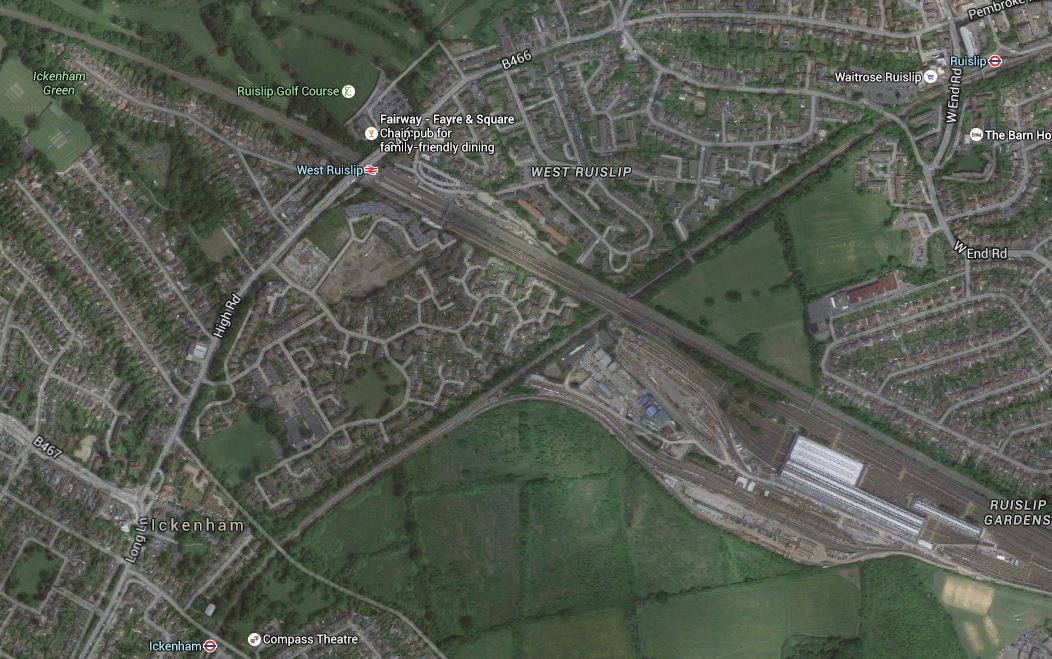
Lines Through West Ruislip
These lines are shown on the map, or connect to these lines within a few stations.
- The Chiltern Main Line opened in 1906 as the Great Western and Great Central Joint Railway.
- The Great Western and Great Central Railway used to run passenger trains to Paddington along the Acton-Northolt Line.
- The Central Line opened in 1948 to Central London.
- The Piccadilly Line crosses to the East of West Ruislip station opened in 1933.
- The Metropolitan Line shares tracks with the Piccadilly Line opened in 1910.
- The Greenford Branch of the Great Western Main Line opened in 1903, joins the Central Line, four stations from West Ruislip station.
It shows how the various private companies went their own way. I’m sure if Borken had been in charge of London all of those years ago, we’d have a better pattern of rail lines in the area.
But some dreamers have plans. I discuss them in the next three sections.
Central Line To Uxbridge
In the Wikipedia entry for West Ruislip station, this is said.
The London Borough of Hillingdon announced in June 2011 that it would be lobbying Transport for London to have the Central line extended from West Ruislip to Uxbridge tube station. Such a project would require a business case approved by TfL and the completion of signal upgrade work on the Metropolitan line.
It is probably a valid aspiration, but could similar connectivity be created by perhaps adding platforms on the Metropolitan/Piccadilly Line, where it passes under the Chiltern Main Line and Central Line to the East of West Ruislip station and connecting everything together with a moving walkway?
If this were to be combined with the desired lengthening of the Chiltern platforms, this could be a worthwhile project, if the numbers add up.
Denham To Uxbridge
In the Wikipedia entry for Chiltern Railways under Active Plans, this is said.
Re-opening the former Great Western Railway branch line to Uxbridge High Street, continuing the route to Heathrow Airport. This would give Birmingham a direct rail link with Britain’s largest airport.
Uxbridge High Street station closed completely in 1964.
I would assume, that this would use the route of the Uxbridge (Vine Street) Branch to get to the Great Western Main Line at West Drayton station, from where it could use either of these routes to get to the Airport.
- Crossrail
- An extension of the Staines and West Drayton Railway
This could be the sort of ambitious plan that appeals to Chiltern.
This is a Google Map of Uxbridge Town Centre.
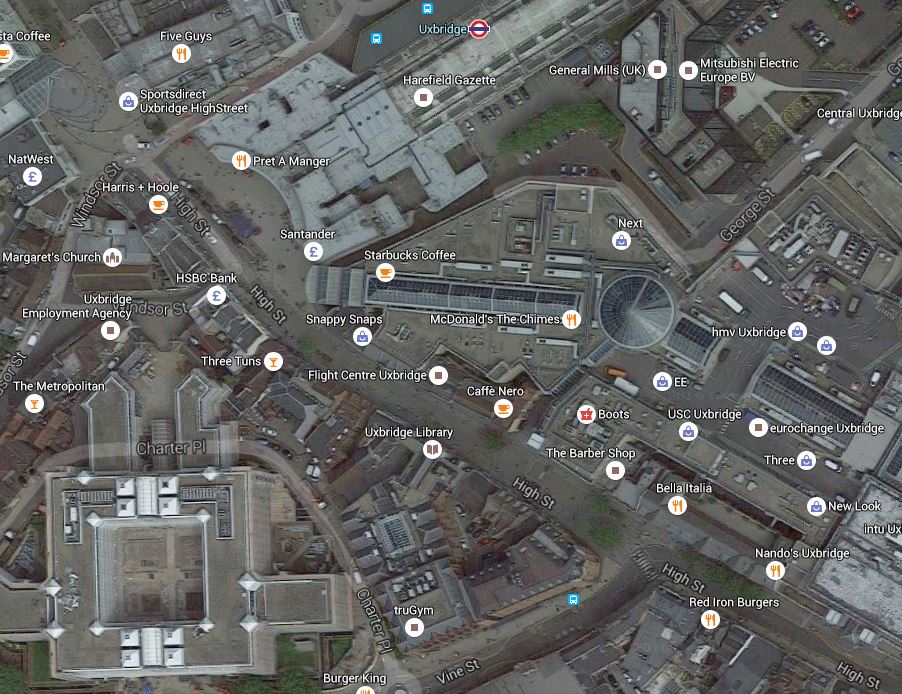
Uxbridge Town Centre
Note Uxbridge Underground station, High Street and Vine Street are all close together.
In Germany, they wouldn’t mess about, but would use a tram-train on the route.
- West Ruislip to Uxbridge as a train on a rebuilt rail line.
- Through Uxbridge Town Centre as a tram.
- Uxbridge to West Drayton and Heathrow as a train on a rebuilt rail line.
Obviously, the route could be adjusted to serve property, leisure and employment hotspots.
Greenford Branch Line
The Greenford Branch Line is like an elderly aunt, who gets forgotten to be asked to family parties, but when she does come, is extremely useful and entertaining, because she can do things, that others can’t.
The Wikipedia entry under Future says this.
In 2017 Crossrail is due to begin using two of the four tracks of the Great Western Main Line and the Greenford service will terminate at West Ealing, rather than continue to Paddington, to obviate interference with Crossrail, and to create track capacity for increased services to Heathrow. In compensation the branch line service will increase from two to four trains per hour. Ealing Council desires to have the line connected to the south west to Clapham Junction via the West London Line, and to the north west to West Ruislip.
I think Ealing Council’s plan is a non-starter, if it envisages trains travelling along the Great Western Main Line.
But look at this map of the rail lines from carto.metro.free.fr.
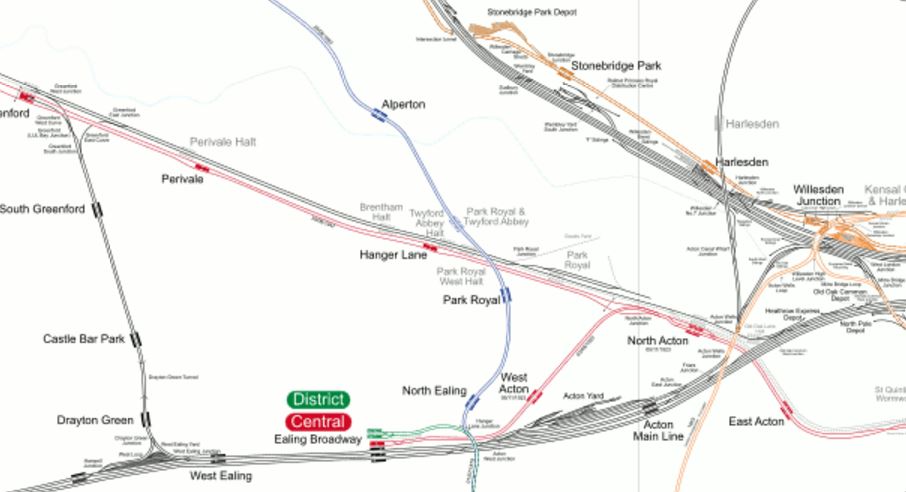
Lines In West London
Note that it would appear that the track layout at Greenford could allow trains to go from the Greenford Branch towards West Ruislip and South Ruislip in the West or North Acton and Old Oak Common in the East.
These are pictures I took of the lines and the junction at Greenford station.


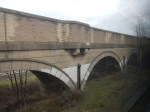
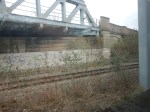
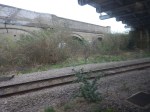
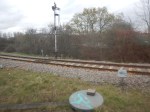
The current Greenford Branch platform would probably be augmented or replaced by platforms on the Acton-Northolt Line.
This Google Map shows the area around Greenford station.
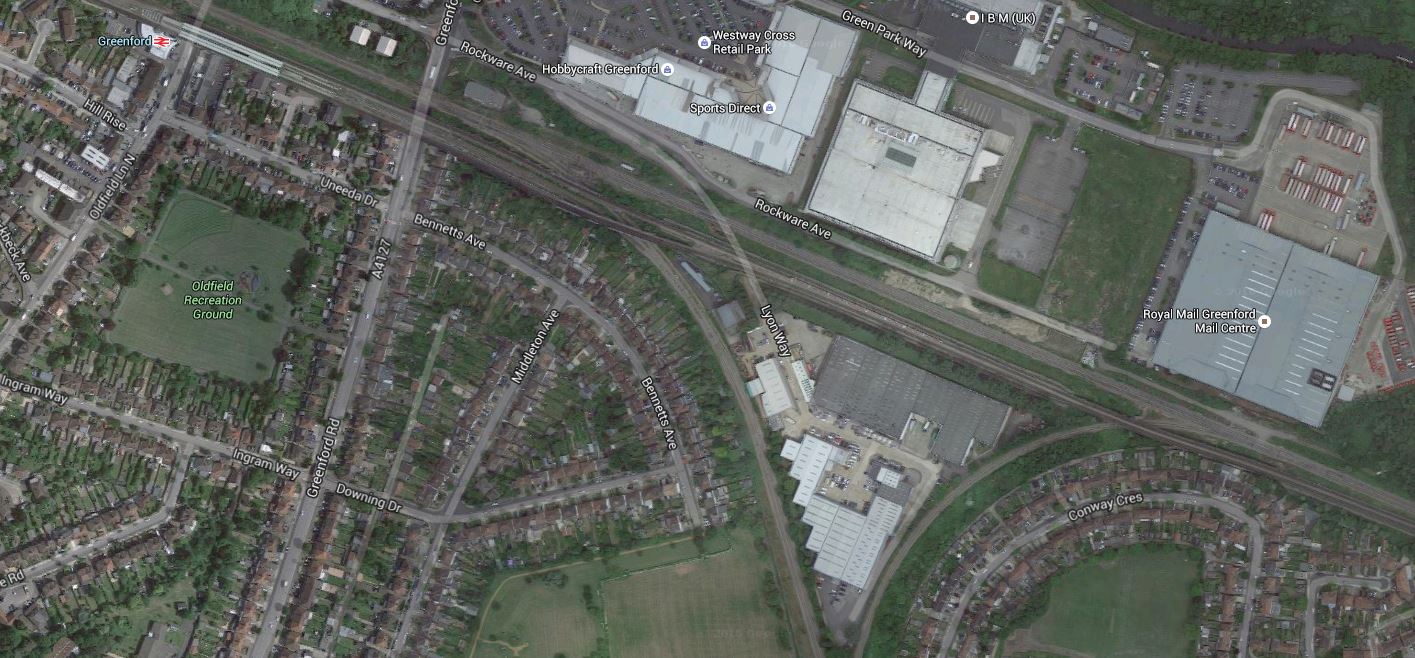
Greenford Station And The Junction To The East
It would appear that parts of the junction have been built on, but it looks like it could easily be made possible for trains to pass in all directions, between the Acton-Northolt Line and the Greenford Branch.
The Greenford Branch is under three miles long and appears to be mainly double-track, but it does have a level crossing close to the Southern end.
I also took some pictures of the bay platform at West Ealing station, that is currently under construction.



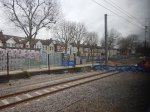

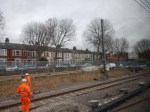

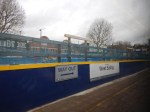

I can’t be sure yet, but it does appear that the platform will be electrified.
So what does this say about how the rumoured four trains per hour that work the branch will be powered?
I think there are two possibilities.
- Diesel power as now.
- IPEMUs charged in the bay platform.
Given that one of London Overground’s Class 710 trains with an IPEMU capability and one of Great Western Railway’s Class 165 trains, that currently work the line, could use the same infrastructure, the choice of train would be up to the operator.
One problem that would have to be addressed is the short platforms at Drayton Green, Castle Bar Park and South Greenford.
At least if the branch was not electrified, there would be no wires to get in the way.
Look at this Google Map.
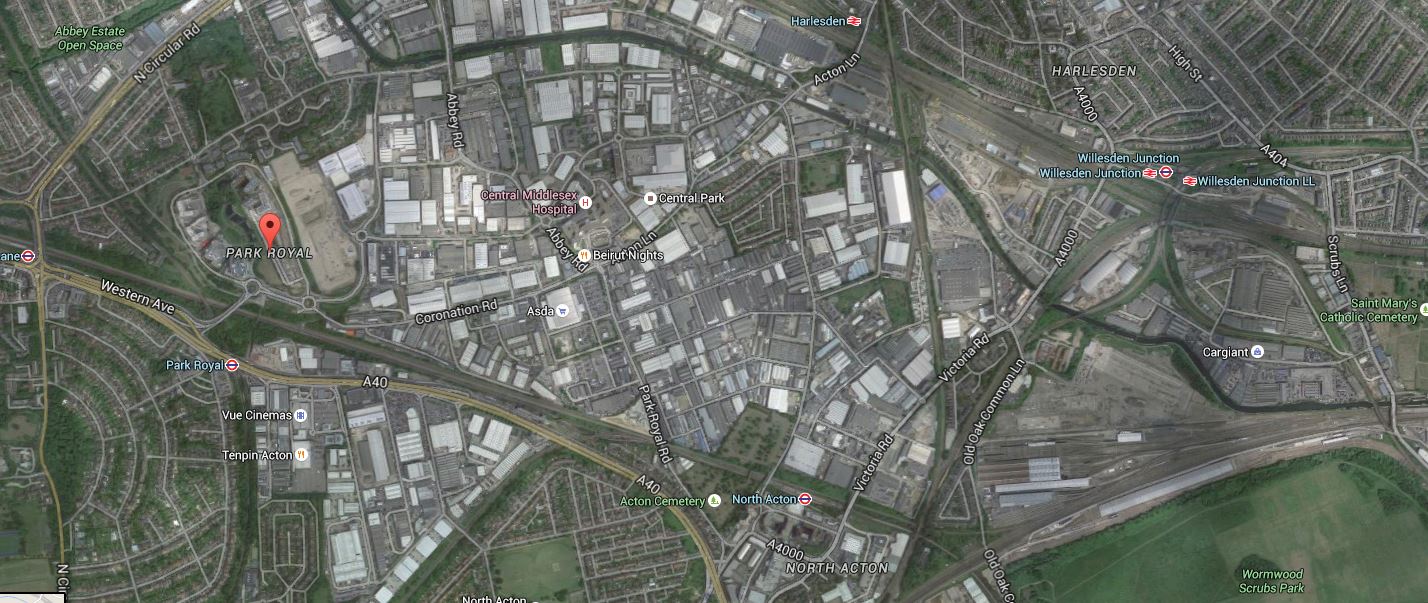
Park Royal To Old Oak Common And Wormwood Scrubs
Note.
- The red arrow points at Park Royal, which at 500 hectares, is the largest business park in London.
- The green area in the East is Wormwood Scrubs, which is one of the largest areas of common land in London.
- North of Wormwood Scrubs is Old Oak Common, which is mainly old railway land, that is being regenerated.
- Old Oak Common station, with connections to HS2, the West Coast Main Line, the Great Western Main Line, North London Line, West London Line, Crossrail and other lines is being created to serve the developments in the area.
Across the South of Park Royal and connecting to Old Oak Common station, runs the Acton-Northolt Line.
If transport planners and railway designers, can’t make a feast of these tasty ingredients, I’d be very surprised.
I said that the choice of rolling stock would be down to the operator.
As Ealing Council would like to see the Greenford Branch go to Clapham Junction, the obvious route is to go via the Acton-Northolt and West London Lines, stopping at appropriate stations en route, like Old Oak Common and possible new ones; South of Park Royal.
This would be a good fit with London Overground services and their four-car Class 710 trains would be ideal for the route.
With the full development of Old Oak Common station, this would not only give access to West Coast Main Line and HS2 services, but also direct access to the North London Line from West Ealing and West Ruislip.
The latter connection would make so many of those journeys across the North of the capital, so much easier and avoid going by the centre.
I think Chiltern too, will make a bid to get into running services on the Greenford Branch and the Acton-Northolt Line, as it would give them a very useful destination in London of Old Oak Common.
These services would also be a good fit with Chiltern’s services and trains.
Conclusion
The Chiltern Metro is certainly possible from an infrastructure point of view.
I also believe that with selective and appropriate electrification, that a 100 mph version of Bombardier’s new Aventra train with an on-board energy storage or IPEMU capability could handle all their services.
My project management and engineering knowledge (Note! Not experience!), also leads me to believe that most of the upgrade to electric trains could be done without too many blockades and disturbance, as much of the line is already to a very high standard with sufficient loading gauge to accept Aventras, when running on the on-board power source.
Just because you want to swap your diesel Mercedes for an electric Tesla of vaguely the same size, it doesn’t mean you have to move house or even build a new garage, as both cars run on the same roads. You just make sure the battery gets charged, rather than fill it up with fossil fuel.
It’s the same if you replace your diesel train with an Aventra IPEMU. Except that in places, you can charge your train as you’re running on any traditionally-electrified line.
The only problem, is to make sure, your trains get enough chances to charge their on-board energy storage devices. But railways have had the organisation of trains to various places down to a fine art for well over a hundred years.
It’s called timetabling!
A Trip To Aylesbury Vale Parkway Station
Aylesbury Vale Parkway station is one of Chiltern Railway’s termini in Buckinghamshire.
It is on the London to Aylesbury Line with services to Marylebone via Amersham, with a journey time of five minutes over the hour.
Plans also exist for the station to be calling point on the proposed service between Marylebone and Milton Keynes. The plans for the station in Wikipedia say this.
East West Rail plans to extend passenger services northwards to Bletchley and Milton Keynes by 2019 using parts of the former Varsity Line. The platform has been built to accommodate a second track if ever implemented, which would create an island platform. At present trains (currently run only as specials onBank Holidays) between Aylesbury and Quainton Road cannot serve Aylesbury Vale as there is no platform on the through route.
The track between Aylesbury and the new station was upgraded to continuous welded rail with a maximum line speed for DMU passenger trains of 60 mph (97 km/h). It is proposed that when services are extended to the north, trains will run via High Wycombe and not Amersham. Trains currently serving the station will thereafter terminate at Aylesbury.
These are some pictures I took of the station.


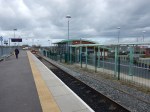
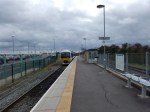


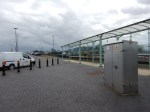
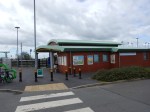
It is just a simple affair with a bus stand, car parks and the usual facilities, that appears will be soon surrounded by houses.
Chiltern Railways And Electrification
Before discussing how services will link up and down the London to Aylesbury Line, I will look at Chiltern Railways and electrification.
Under Developments and Announcements in the Wikipedia Entry for the East West Rail Link, this is said.
On 10 January 2013 Network Rail announced its intention to construct the western section between Bedford and Oxford, Aylesbury and Milton Keynes, as part of their five-year strategic business plan (2014–2019). The target date for train services to be operational on this section is December 2017. Electrification of the line between Oxford and Bedford was also included in the budget and target completion date was March 2017.
So electrification of the East West Rail Link is included in the project, even if the dates in the announcement are very much out of date now.
Given the following facts about the Chiltern Main Line, I believe it is likely that at some point, everybody will look seriously at providing electric trains from Marylebone to Birmingham Snow Hill station.
- The line has a close relationship with the East West Rail Link and other electrified or soon-to-be electrified lines.
- Chiltern finds it difficult to acquire more diesel-powered trains to fulfil their ambitions.
- Chiltern would like to run faster, larger, more efficient and greener electric multiple units.
Under Electrification in the Wikipedia entry for Chiltern Railways, this is said.
No section of the line is electrified, but in 2010 the chairman of Chiltern Railways, Adrian Shooter, indicated that electrification is being considered, though not in the immediate future. He added: “We could do some very interesting things with high-acceleration EMUs and possibly some further infrastructure work.
At some time in the next ten years, we’ll probably see electric trains between Marylebone and Birmingham Snow Hill.
But there will not necessarily be full electrification, as I believe IPEMU technology will change the way electrification is carried out.
Consider as well that the Chiltern Main Line is just one hundred and eighty kilometres long and the current maximum range of an IPEMU is being quoted as about sixty miles or just under a hundred kilometres, so with the following electrification.
- Marylebone and for perhaps twenty miles or so to handle local metro services.
- Birmingham Snow Hill, Birmingham Moor Street and the Snow Hill Lines, where there are local metro services.
- Banbury to Leamington Spa and other places, so that freight trains powered by bi-mode Class 88 locomotives, could use the line efficiently.
The Local lines from Marylebone and the Snow Hill Lines would be electrified using the techniques in A Modern Electrified Metro Network Using IPEMU Technology
IPEMUs would be able to run the full length of the line without the need for full electrification in an environmentally-sensitive area, inhabited by touchy people.
Northward To The East West Rail Link And Milton Keynes
Northward from Aylesbury Vale Parkway station, the Wikipedia entry for East West Rail Link, says that the line will be single track and allow 90 mph working. But as my pictures and a quick gander on Google Maps show, there is quite a bit of space available around the current single track. So as the East West Rail Link seems to be being designed as a double-track 100 mph railway, with full electrification, I think there are three possible options between the East West Rail Link and Aylesbury Vale Parkway and Aylesbury stations.
- Double-track 100 mph with electrification.
- Single-track 90 mph with electrification.
- Single-track 90 mph without electrification.
I think the line will be built with some form of electrification, so that electric trains can run from Aylesbury to Milton Keynes.
The line is also used by some freight trains, so double-track might be a good idea.
Aylesbury To London Via Amersham
Returning from Aylesbury today, I was surprised to see that the train ran from Amersham to Harrow-on-the-Hill on the same tracks as the Metropolitan Line. In fact for sixteen of the thirty-nine miles of the line from Marylebone to Aylesbury Vale Parkway, the line has full London Underground electrification.
Amersham to Aylesbury is about fifteen miles, with the distance between the two Aylesbury station being four miles, which means that Harrow-on-the-Hill to Marylebone is just a few miles.
So if an IPEMU could use the London Underground’s rail-based electrification, starting at Milton Keynes the train would easily arrive at Harrow-on-the-Hill with a full battery, that would take the train to Marylebone and back.
I don’t believe that the technical problems of an IPEMU starting at any station between Aylesbury and Milton Keynes and going to Marylebone and back are insurmountable.
Aylesbury To London Via High Wycombe
This uses the single-track Aylesbury to Princes Risborough Line, which is about a dozen miles long, before running to Marylebone along the Chiltern Main Line, which is another forty miles or so.
So some electrification will be needed.
According to Wikipedia, Chiltern have various plans to improve their network.
- The restoration of the quadruple track between South Ruislip (Northolt Junction) and West Ruislip, allowing trains to call at both stations without blocking the line. Triple track currently exists at West Ruislip, with the up platform loop still in situ, and at South Ruislip, with the Down Main through line also in situ. This would involve the reconstruction of the new down platform at West Ruislip, and the reconstruction of the up platform at South Ruislip. This ‘Chiltern Metro’ service was not programmed into the last round of franchising agreements.
- Restoration of fast through lines at Beaconsfield as part of a longer-term aspiration for a 90-minute journey time between London and Birmingham
- Double-track the line from Princes Risborough to Aylesbury.
- New Chiltern Metro Service that would operate 4+tph for Wembley Stadium, Sudbury & Harrow Road, Sudbury Hill Harrow, Northolt Park, South Ruislip and West Ruislip. This would require a reversing facility at West Ruislip, passing loops at Sudbury Hill Harrow, and a passing loop at Wembley Stadium (part of the old down fast line is in use as a central reversing siding, for stock movements and additionally for 8-car football shuttles to convey passengers to the stadium for events)
Some would also fit well with adding electrification, so I think that enough electrification can be added to allow an IPEMU to go from Aylesbury to Marylebone.
Oxford To London
Given that there will be electrification between Oxford and Bicester Village stations courtesy of the East West Rail Link, IPEMUs could start at Oxford and reach Princes Risborough, from where they used the same methods as Aylesbury and Birmingham services to get to London.
This article on the BBC, which is entitled Cowley line passenger train service planned for Oxford, says this.
Chiltern Railways has revealed plans for a passenger service to run on the Cowley branch in Oxfordshire.
The line, currently only used for freight, would see two new stations on the route at Oxford Science Park and Oxford Business Park.
So if this service goes to London, it would certainly be another job for an IPEMU.
Watford Junction To Amersham And Aylesbury
The Croxley Rail Link has been designed so it can have a link to Amersham. Wikipedia says this about the link.
A further proposal is to use the existing but seldom-used Metropolitan line chord which allows trains to run from Watford towards Amersham via Rickmansworth. In conjunction with the Croxley Rail Link, this route would allow direct services between Watford Junction and Amersham, thus improving local public transport in Hertfordshire and Buckinghamshire.
These are pictures I took, as the train passed the junction of the branch line to Watford.
It would certainly be a new use for a substantial piece of infrastructure, but would it do much more than link Amersham to Watford Junction.
Chiltern Trains could run an IPEMU from Watford Junction to Aylesbury Vale Parkway calling at all stations, but as passengers could also get to Aylesbury from Milton Keynes, I wonder if it would be well used.
How Would IPEMUs Fit With The East West Rail Link?
I feel very much, that IPEMUs or battery trains are very much going to be a part of the UK rail network in the next few years.
When I was writing Are The TOCs Arguing Over The Class 387 Trains?, I kept coming across the Oxford end of the East West Rail Link, so I got to thinking how IPEMUs would fit in with the line.
Will the Line Be Electrified?
The Government certainly thinks so, as Wikipedia reports.
The Secretary of State for Transport, the Rt. Hon Justine Greening MP, today announced that the Western section of East West Rail (EWR) will be part of the government’s strategy for rail transport, confirming not only funding for the project but also for electrification of the Oxford to Bedford part of the route. EWR will provide an electric link between the electrified Great Western, West Coast and Midland main lines. This further investment in the project upgrades it to form a key part of the new ‘Electric Spine’ passenger and freight route between the South Coast, the East Midlands and Yorkshire
But I’m not sure.
- Will freight operators pay out for new electric locomotives or will they stick with their old noisy and smelly Class 66 locomotives? I’m afraid most will stick with what they’ve got!
- The new Class 88 electro-diesel locomotive will be delivered this year and what effects will they have on locomotive procurement?
- One of the major intersecting lines is Chiltern, which is not electrified. Will the Chiltern Line be electrified to make things easier? It could be! But I doubt it!
- After the fuss about the aesthetics of the electrification on the Great Western Main Line, that I wrote about in Aesthetic Problems With Overhead Wires On The Great Western, I have a feeling the natives might object.
- When they see the total bill for the Great Western Electrification, will the Government have second thoughts about electrification?
I think the line will eventually be electrified, but it may not be built with electrification, just as the first section between Bicester Village and Oxford Parkway stations was.
It would be built however, so that it would be easy to electrify in future.
- All over-bridges would have sufficient clearance for overhead wires.
- Space would be left for overhead gantries and other essential electrification equipment.
- Piles for gantries might even be put in.
- Everything would be properly documented.
Too many railway lines in the past were just built and assumed no improvements would ever be made.
Connection To Existing Electification
One of the most expensive items in an electrification scheme can be connecting the new wires to a suitable electricity supply.
This is why Crossrail and the Great Western Electrification share a sub-station to the West of London.
The East West Rail Link crosses a succession of lines at its Western End from Oxford to Bedford. In order from the West they are.
Only the Chiltern Main Line will not be electrified, when the Oxford to Bedford part of the link opens.
The route from Bedford to Ipswich and Norwich is not fully defined yet, but it is likely it will cross these electrified lines.
So the link, isn’t short of connectivity to electrified lines, which will help with full electrification.
The Route
This map from the East West Rail Link web site shows the route.
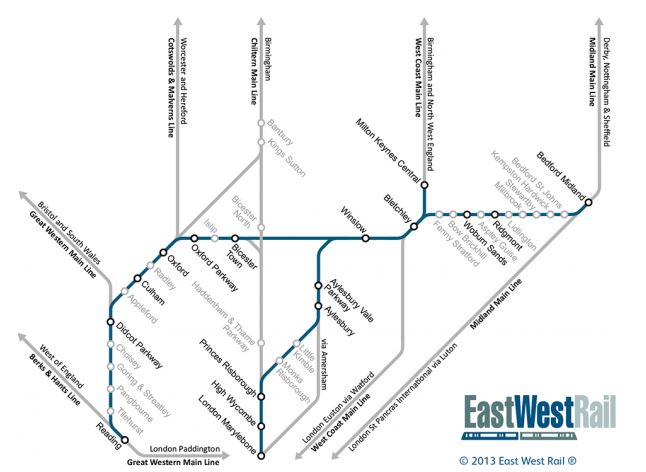
East West Rail Link
Starting from the West stations are.
- Reading on the Great Western
- Tilehurst on the Great Western
- Pangbourne on the Great Western
- Goring and Streatley on the Great Western
- Cholsey on the Great Western
- Didcot Parkway on the Great Western
- Appleford on the Cherwell Valley Line
- Culham on the Cherwell Valley Line
- Radley on the Cherwell Valley Line
- Oxford on the Cherwell Valley Line
- Oxford Parkway
- Islip
- Bicester Village
- Winslow
- Bletchley on the West Coast Main Line
- Milton Keynes Central on the West Coast Main Line
- Fenny Stratford on the Marston Vale Line
- Bow Brickhill on the Marston Vale Line
- Woburn Sands on the Marston Vale Line
- Apsley Guise on the Marston Vale Line
- Ridgmont on the Marston Vale Line
- Lidlington on the Marston Vale Line
- Millbrook on the Marston Vale Line
- Stewartby on the Marston Vale Line
- Kempston Hardwick on the Marston Vale Line
- Bedford St. Johns on the Marston Vale Line
- Bedford on the Midland Main Line
It’s quite a few stations, many of which are simple affairs in rural locations.
IPEMUs And The East West Rail Link
Proposed services when they start in 2019 will include.
- Bedford – Oxford – Reading
- Milton Keynes – Oxford – Reading
- Milton Keynes – Aylesbury – Marylebone
The first two services could be easily run by IPEMUs, but the third might need other arrangements.
According to the latest Great Western electrification schedule Oxford is not scheduled to be electrified until June 2019, so as I believe that Oxford will be reached by IPEMUs until that date, I suspect that we’ll see IPEMUs on the line, as they will be able to easily bridge the fifty mile electrification gap between Didcot on the Great Western and Bletchley on the West Coast Main Line, charging their batteries at both ends of the route.
The London to Aylesbury Line is thirty-nine miles of which sixteen miles are owned by the London Underground. Could it be if the line between Aylesbury and Winsford were to be electrified and some form of third-rail power was made available on the sixteen miles of the London Underground, that IPEMUs could work the services between Marylebone and Milton Keynes?
If they can’t, then it will be more diesels from Chiltern. But Chiltern’s ambitious nature, says they would prefer some form of electric train.
If the lines were eventually to be fully electrified, the IPEMUs would still have a valuable part to play as their self-contained regenerative braking would mean that the power supply wouldn’t have to be able to accept a return current, which lowers the cost of electrification.
Conclusions
IPEMUs will have to play some part in providing services on the East West Rail Link, because of the late running of the Great Western electrification.
Also with some selective electrification, Chiltern could use them for a service between Marylebone and Milton Keynes.
As these trains can provide a service on the whole line using existing electrification, the electrification of the East West Rail Link should be enabled but delayed to allow wires to be put up in more important places.
What Will Oxford Think Of This
Over the last couple of years, certain interest groups in Oxford have not been very pleased with the plans of Network Rail, Chiltern Rail and Great Western Railway to give the city an improved rail connection.
I wrote about this opposition in Network Rail’s Problem In Oxford.
So I was surprised to see this article on the BBC web site, which is entitled Oxford station design competition winners revealed. This is said.
Three competition ideas have been picked to help secure funding for a £125m revamp of Oxford railway station.
Six architects submitted designs to a contest launched in December by the city and county councils.
A proposal featuring a rooftop restaurant by firm AHR was chosen by a panel of judges and scored 70% in a public vote.
This is an image from the article of the winning design.

New Oxford Station Design
I agree with the panel and the general public.
But is it too good to be wasted on Oxford?
Capturing The Benefits Of HS2 On Existing Lines
This is the title of a report written in 2011 by Greengauge 21.
This is how the report starts.
When High Speed Two (HS2) is complete, the longer distance, non-stopping trains on the West Coast Main Line (WCML) will in the main transfer to the new, quicker, route, freeing up valuable capacity. However, until now plans for services on the WCML once HS2 is open have been broad brush assumptions made for the purposes of completeness in the economic appraisal. This report looks ahead in more detail to consider what services should operate on the existing rail network once HS2 is open. The aim is to help kick start the development of this wider strategy in which the benefits of HS2 are maximised, not just for those using the new line, but for travellers on the existing railway. The effective re-use of the capacity released by HS2 is a key project benefit. It will allow new local and regional passenger and new freight trains to operate: services that are and will continue to be prevented by network capacity constraints.
It is well worth reading the full document, even though it was written in 2011,, as I think it explains how HS2 could benefit those other than those, who want to get quickly between London and Birmingham.
Places With Better Services To And From London
The report singles out three areas, that could benefit from a freed-up West Coast Main Line between London and Birmingham.
It says that the following places.
- Walsall
- Shropshire
- Mid and North East Wales.
Could all gain new direct services to and from London.
Feeders To The West Coast Main Line
The report talks about how three new or improved lines and schemes will act as feeders to the services on a West Coast Main Line, that will have more capacity for semi-fast services, connecting London with Birmingham, Liverpool, Manchester and Scotland.
- The Croxley Rail Link will link Watford to a wide area of Hertfordshire and Buckinghamshire.
- The East-West Rail Link intersecting the WCML at Milton Keynes would improve services from a lot of the South Midlands and East Anglia.
- Improvements between Leamington and Nuneaton (Nuckle) would improve connections for Warwickshire.
These three schemes are now progressing and will be fully working by the time HS2 opens in 2026.
Chiltern Electrification
The three feeder schemes mentioned above all contain two ambitious words Chiltern Railways.
Consider the following.
- The Croxley Rail Link could and probably will be extended to Amersham via Rickmansworth.
- TheEast West Rail Link will deliver a Chiltern service from Marylebone to Milton Keynes via Aylesbury.
- The Greengauge 21 report talks of a Marylebone to Coventry service via Leamington and Kenilworth.
- Oxford to Milton Keynes will be electrified.
- Chiltern use some rather elderly but excellent diesel trains.
- Coventry, Milton Keynes and Watford are already electrified.
I can’t believe that there is not more talk about electrifying the Chiltern Railways network.
I don’t think that Chiltern Railways would need full electrification, if they were to use IPEMU technology in conjunction with some limited electrification.
- The Snow Hill Lines in Birmingham, perhaps as far south as Leamington.
- The southern section of the Chiltern Main Line, perhaps between Marylebone and High Wycombe.
Electrification is a future aspiration of Chiltern Railways and it could give a second 125 mph line between London and Birmingham.
This would mean that a much increased number of towns would have a high speed connection to both major cities and many places in between and North of Birmingham.
I think that enabling electric trains to use the Chiltern Main Line and the Snow Hill Lines, should be given a high priority.
Connecting To The Chiltern Main Line
I took these pictures as my train came back from Oxford Parkway station rejoined the Chiltern Main Line using the Bicester Chord.




I think that no-one could complain about the quality of all the work.
The New Service Between Oxford Parkway And Marylebone Starts Today
Chiltern are starting their new service to and from Oxford Parkway station today and this article in the Bucks Free Press entitled Commuters predict overcrowding when ‘major’ changes are made to train services has a distinct feel of gloom.
Here’s a flavour.
Some features of the new timetable include scrapping the 7.40 Gerrards Cross to Marylebone service, leaving passengers to catch the 7.49 to London, which will be formed of seven carriages instead of five.
But I liked this comment added to the article.
Is this the same part of South Bucks that has been campaigning vociferously against building new railways? That’s fine, but you can’t then complain when the existing ones run short of capacity which has to be redistributed occasionally.
My only worry about the service, is whether Marylebone is big enough to cope with all the new traffic.
Although, as someone who’s only ever commuted for perhaps a year in his life, I can’t understand why anybody would want to spend three hours or more of every working day on the train!
I do actually think, that when Crossrail has opened and Great Western Railway starts running electrified services to Paddington and effectively the West End, the City and Canary Wharf, there will be a swing back to the traditional route.
The Station With The Least Passengers In London
After my visit to the truly dreadful Angel Road station, which has the next-to-least number of passengers, I just had to go to the only station, which attracts even less.
I arrived at the station at 10:42 after a really tedious journey on the Victoria and Piccadilly Lines, which were both very crowded. To make matters worse, the train was held for several minutes at Acton Town station.
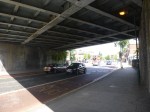


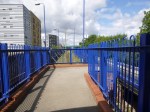
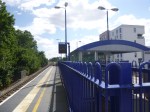
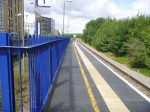
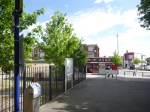
I think that the problems with Sudbury and Harrow Road station are not the normal ones of filth and squalor. In 2013-14 it had just 18,700 passengers.
Although I just missed the last morning train into London at 10:41, I don’t think you can blame neglect on the part of Chiltern Railways.
The main problem I could see was that there is no pedestrian crossing close to the station, as is normal for stations on a busy road. So those needing to get a bus to and from home might go to a station where the walking route is easier.
All the other problems were minor, like the fact that the station sign is not easily visible and there isn’t really a good drop off point for passengers.
Chiltern seem to have spent money here, but they haven’t drawn in the passengers. But then they haven’t done too well in the next station, Sudbury Hill Harrow.
West Hampstead Station: A Tangle Of Property Development And People To Solve
West Hampstead station is one of those North London Line stations, that has narrow platforms, which need lengthening and a cramped station building with no step-free access. The station also sits in the middle of a large property development. This Google Earth image shows the station.
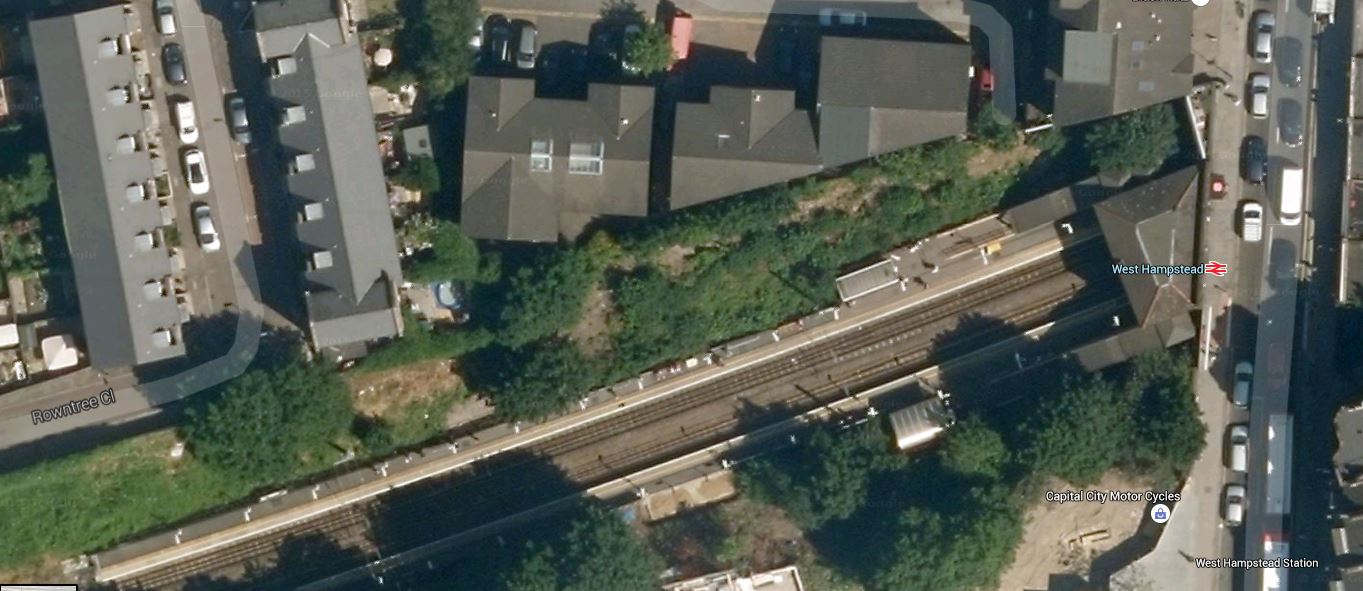
West Hampstead Station
This was obviously taken before the development started. There were plans for a grand West Hampstead Interchange, drawing the four rail line in the area; Underground, Overground, Thameslink and Chiltern together in modern stations linked by a boulevard.
This page on the London Borough of Camden web site, is a pointer to some documents. This Google Earth image shows the various rail lines.
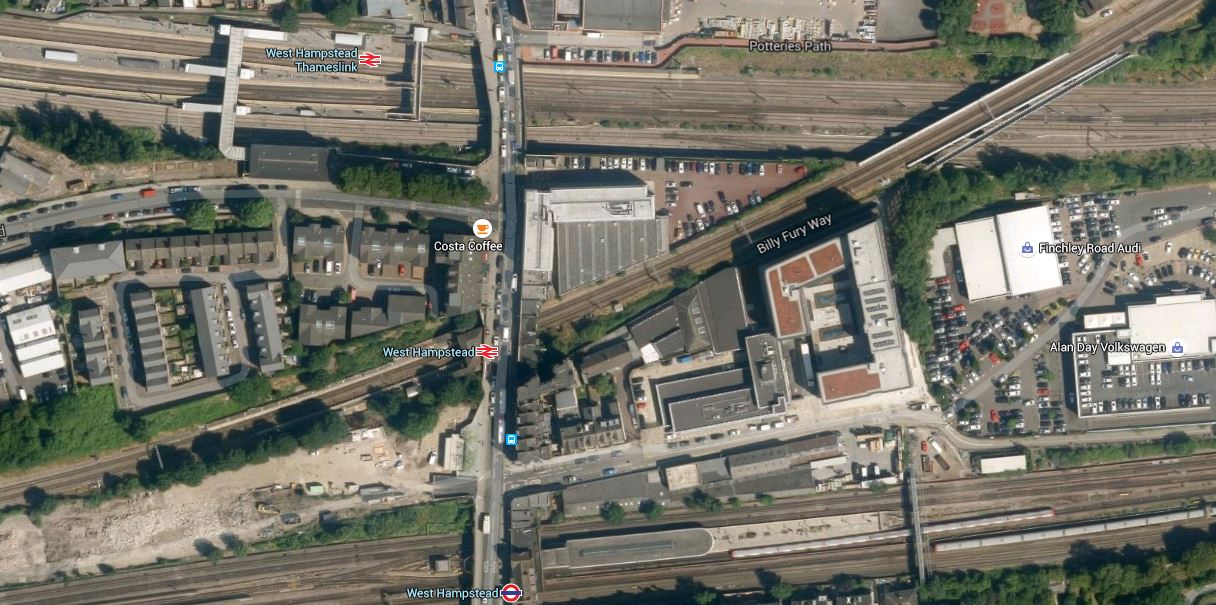
West Hampstead Lines
There is actually more lines than is obvious here. Starting from the top (north), the lines and stations are.
1. Thameslink passing through West Hampstead Thameslink station – From 2018 this will be a very much increased service.
2. Midland Main Line passing through West Hampstead Thameslink station – The number of services stopping here to places like Sheffield, Nottingham, Derby and Corby may well increase as the line to Sheffield is electrified.
3. North London Line passing through West Hampstead station – This is being upgraded to take five-car trains.
4. Jubilee Line passing through West Hampstead Tube station – A station not to the standard of the Jubilee Line Extension.
5. Metropolitan Line passing alongside West Hampstead Tube station, but without platforms.
6.Chiltern Main Line passing alongside West Hampstead Tube station, but without platforms.
This is Wikipedia’s schematic of the lines.
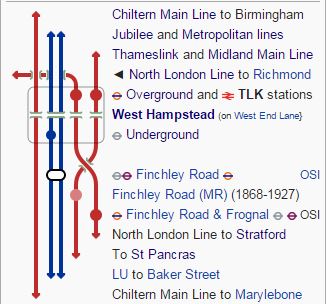
West Hampstead Lines
I would say that the best way to sum up the area is using that old estate agent’s phrase of development potential.
So how is West Hampstead station getting on?
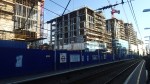
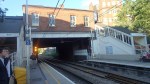
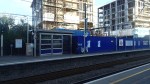
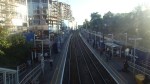

There certainly seems to be lots of flats growing up by the side of the railway and these seemed to have replaced the trees. There was a bit of fuss about the thirty-five trees being removed, which I can sympathise with, but surely a better plan would be to take away as much traffic as possible from West End Lane and make it a proper tree-lined boulevard. But any council that suggested that would be voted out by the 4×4 owners.
There’s a preview of the new West Hampstead station on West Hampstead Life.
I’m not impressed and it is rather a poor design compared to Hackney Wick.
Only time will tell, but rail developments will have a big effect on the number of people using the stations at West Hampstead.
1. The opening of the full Thameslink service in 2018.
2. More trains from West Hampstead Thameslink station to the North on full electrification to Sheffield.
3. The possible opening of Metropolitan and Chiltern Main Line platforms in a rebuilt Underground station.
4. Network Rail and Transport for London have stated that they will increase the capacity on the London Overground, by increasing the number of trains and running six-car trains. Certainly they will do this on the East London Line, which will get twenty-four trains an hour.
It is my view that all of this extra rail traffic, will necessitate the turning of West End Lane into a proper pedestrian boulevard with very much reduced traffic levels. The only alternative would be to create a pedestrian tunnel.

