Is It Bi-Modes And Battery Trains To The Rescue?
This article in Rail Technology Magazine is entitled Further delays to GWML electrification as schemes deferred indefinitely.
The delayed schemes include.
- Bristol Parkway to Bristol Temple Meads
- Bath Spa to Bristol Temple Meads
- Oxford to Didcot Parkway
- Henley Branch
- Windsor Branch
There is no mention of the Marlow Branch or the Greenford Branch.
The article also quotes the Rail Minister; Paul Maynard, as saying.
Introducing newer trains with more capacity in these areas could be done without costly and disruptive electrification,
Is this a meaningless platitude or is there substance behind it?
A mix of Class 801 electric trains and Class 800 bi-mode electro-diesel trains were originally ordered for GWR.
But this is said in the Wikipedia entry for the Class 800 train.
In July 2016, it was announced that GWR’s intended fleet of Class 801s were to be converted from pure EMUs to bi-mode units. Subsequently these were reclassified as Class 800s.
So will we see bi-mode trains working the Bristol Temple Meads routes, which are numbered 1 and 2 above?
That would certainly allow the Minister to bathe in the glory of a run to Bristol via Bath and back via Bristol Parkway.
Five-car Class 800 trains could also work route 3, thus giving Oxford trains, that would increase capacity and run on electric power between Didcot and Paddington.
But what about the four branch lines; Greenford, Henley, Marlow and Windsor?
Note.
- The Minister used the word newer not new.
- He also said capacity would be greater.
- When I passed the Marlow branch a few weeks ago, it appeared electrification had started.
- All branches are short, with the Marlow Branch the longest at 7.25 miles.
- The Henley Branch has a 50 mph speed limit.
It should also be noted that the Mayflower Line, where the battery train trial was conducted in 2015 is just over eleven miles long.
So would it be possible to fit batteries to the Class 387 trains to fulfil the Minister’s statement?
- The Class 387 trains are very similar to the Class 379 trains used in the trial on the Mayflower Line.
- They are newer with greater capacity, than the current trains on the branch lines.
The answer could be yes! I reported on Rumours Of Battery-Powered Trains in August 2015. At that time Network Rail were calling the trains Independently Powered Electric Multiple Units or IPEMUs.
The possibility also exists that Class 387 trains with batteries could also work the lines between Didcot Parkway and Oxford, Reading and Basingstoke and Reading and Bedwyn.
Network Rail needs to convert a serious loss of face into at least a score-draw!
If the Great Western does use this approach, they’ll only be taking a similar route to the Germans, as I wrote about in German Trains With Batteries.
c2c’s Class 387/3 Trains On Test At Crewe
I took these pictures of two Class 387 trains destined for c2c at Crrwe, as my train passed through on the way to Liverpool.
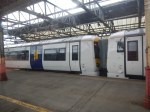
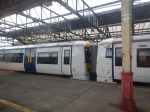
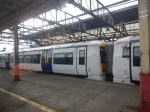
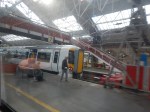
They were numbered 387301 and 387302 and their destination boards said they were going to Wembley Central.
Now that would make an interesting route for c2c!
Why Number The Trains As Class 387/3?
Seriously, though, I’m curious why the c2c trains are numbered as Class 387/3 trains, whereas the trains for Great Western Railway are all numbered as Class 387/1 trains.
This is said in Wikipedia about these trains.
In April 2016, c2c announced that it would operate six of the 20 additional units ordered by Porterbrook until a fleet of 68 new carriages are delivered in 2019.
So as they are a short term fleet, that will do the rounds of various operators, who are short of trains, perhaps starting a new group of numbers is good for housekeeping purposes at Bombardier?
On the other hand if c2c and its customers and staff like the new trains and c2c see that an all-Electrostar fleet has advantages for operational reasons, perhaps the extra 68 new carriages will be Class 387/3 trains.
After all, the highest number for a Class 387/1 is 387174, which only allows for another 25 trains in the sequence, before the numbers interfere with the Class 387/2 numbers.
Which all points to sensible housekeeping, as there is nothing on the Internet, to say there is any differences between the Class 387/1 and Class 387/3 trains.
Could The Class 387/3 Trains Have Batteries?
There are several well-publicised reasons for adding batteries to an electric multiple unit.
- Handling regenerative braking.
- Depots and stabling sidings without overhead wires.
- Train recovery in case of overhead power failure.
- Remote train start-up, ready for the driver.
- Extending routes over lines without electrification.
Note.
- The current Class 357 trains and all Class 387 trains have regenerative braking, so c2c routes can obviously handle it.
- c2c’s depot at Barking is crowded, but would they want the expense of building a second depot anyway.
- Train recovery could be very valuable, especially if a whole fleet was fitted.
- Remote train start-up is available for Aventras and I’ve met a couple of drivers, who would love it!
c2c likes to take a strong green stand as this page on their web site shows.
So the main serious reason we have left is route development.
Slow Line Traffic Into Paddington
I was thinking today, as I came back from my trip from Paddington, that I described in A Low Key Launch Of New Electric Trains, that when all of the new trains are running on Crossrail and the GWR, the slow lines will be very busy.
According to Wikipedia, Crossrail will be running.
- 4tph Abbey Wood – Heathrow Terminal 4
- 2tph Abbey Wood – West Drayton – Peak Hours Only
- 2tph Shenfield – Reading
- 2tph Shenfield – Maidenhead
In addition there will be non Crossrail services on the line.
- 4 tph Heathrow Express
- 2 tph Paddington Main Line – Bedwyn
- 2 tph Paddington Main Line – Oxford
- 2 tph Paddington Main Line – Hayes and Harlington
So that gives eighteen services an hour, with probably all except the Heathrow Express on the slow lines.
As the Shenfield Branch of Crossrail is going to handle 16 tph, 14 tph would seem to be within the capacity of the slow lines to Reading, even leaving some space for freight.
I do wonder that as GWR has ordered forty-five Class 387 trains, which in view of today will probably be run mainly as eight-car trains, for where they are going to add services to the network.
So how many trains will they need for current services?
- 2 tph to Hayes and Harlington – Under half an hour, so 2 trains, or 4 if running as a pair.
- 2 tph to Oxford (stopping) – Two hours, so 8 trains or 16 if running as a pair.
- 2 tph to Bedwyn – 90 minutes, so 6 trains or 12 if running as a pair.
Oxford and Bedwyn will also be served by fast Class 800 long distance trains.
This gives a total of 32 Class 387 trains.
So what happens to the other thirteen trains?
There has been talk of giving some of the trains an IPEMU-capability, which I reported in Rumours Of Battery Powered Trains to run the branch lines to Henley, Marlow and Windsor and the Reading to Gatwick service.
I just wonder, if the Electrostar might have made a good demonstrator for the IPEMU technology, but that an IPEMU based on an Aventra is so much better, that there is little point in creating an Electrostar IPEMU.
Or are Bombardier wanting to get the Aventra fully designed in all its variants before they tackle creating an Electrostar IPEMU?
So how many trains with an IPEMU-capability would be needed for the branch lines and Reading to Gatwick?
- Gatwick to Reading takes 90 minutes, so 6 trains could provide 2 tph.
- 4 tph on the Greenford Branch, would need 2 trains charging at West Ealing.
- 2 tph on the Henley Branch, would need 1 train charging at Twyford.
- 2 tph on the Marlow Branch would need 2 trains charging at Maidenhead. – By a bit of fiddling, the trains might pass at Bourne End or there could be a passing loop.
- 2 tph on the Windsor Branch, would need 1 train charging at Slough.
This adds up to the missing thirteen trains, if you add in a spare. In Modern Railways for June 2016, one paragraph in a larger article gives some news about the progress of Bombardier’s IPEMU technology. This is said.
Industry sources confirm that options for some of the GWR order to be produced as independently powered EMU (IPEMU) variants fitted with batteries for operation away from electrified routes are still being explored. This would enable GWR services to Gatwick Airport and on some of the Thames Valley branches to be worked by ‘387s’ prior to electrification. Any decision to look seriously at this proposal will depend on final electrification timescales being confirmed by Network Rail.
Ordering the number of trains they have means that GWR can offer a workable solution on all routes in the Thames Valley, depending on what Network Rail deign to deliver and if Bombardier come up with an affordable IPEMU solution.
- No electrification, no IPEMU – Use refurbished diesel multiple units.
- Electrification – Use Class 387 trains as electric multiple units.
- No electrification, IPEMU – Use Classs 387 trains in IPEMU mode.
Obviously, if Network Rail decide to electrify any part of the network later, the trains can be driven and controlled accordingly.
I’m also sure, there will be routes in the Bristol area, where a Class 387 train with an IPEMU-capability could be very useful.
A Low Key Launch Of New Electric Trains
This morning at 07:15, I was on the first Class 387 train out of Paddington for Hayes and Hsrlington.
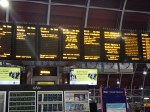
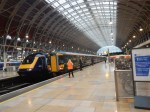

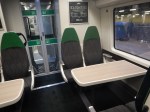


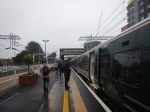

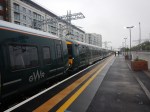


It was a new train of eight coaches, complete with that smell that all new vehicles have for a few weeks.
At the moment GWR only have four Class 387 trains in service, which should be enough for a two trains per hour (tph) shuttle with eight coaches in each service.
But because the new bay platform for the Greenford Branch has not been completed yet at West Ealing station, there are only a few services a day.
This page on the GWR web site gives more details and says this about services in 2017.
From January, all Greenford trains will terminate at West Ealing; as we increase our electric service between Hayes & Harlington and London Paddington to every 30 minutes.
From May, these trains will start running to and from Maidenhead, as we replace our existing diesel fleet.
Does this mean that from January 2017, the Greenford branch will be served by a four tph shuttle? Or will that be later?
The New Trains Arriving In East Anglia
This article in the Derby Telegraph is entitled Derby workers on tenterhooks over contract worth BILLIONS. (Note the newspaper’s capitals!)
It states that the new East Anglian Franchise could be announced tomorrow, as it is supposed to be settled in June, and that the order for new trains is between Bombardier and Siemens.
I can’t believe that given the current Euro-turmoil in the country, that Siemens will be given this order.
I think that we can assume that based on London Overgroun’s contract for Class 710 trains, where this is said.
In July 2015 TfL announced that it had placed a £260m order for 45 4-car Bombardier Aventra EMUs
That a new four-car Aventra train will cost around £6million. I would suspect that Siemens Desiro City would probably be around the same price.
So for a billion pounds, you would get around a hundred and thirty trains.
As I said in Could Class 387 Trains Do Norwich In Ninety And Ipswich In Sixty?, one twelve-car Class 387 train, could fulfil the franchise requirement of two fast trains a day on the Great Eastern Main Line in both directions. It might even be possible to deliver it, early in 2017, now that it appears production of Class 387 trains might be able to continue.
The Derby Telegragh article talks about Aventra trains, but unlike Class 387 trains, these would not be available until probably 2019, at the earliest.
But Aventras for the flagship London-Ipswich-Norwich route could be delivered with all or part of this specification.
- Up to twelve-cars.
- Walk-through capability. Thameslink’s Bedford to Brighton serrvice will be like this, so why not?
- A specially-design business- and commuter-friendly interior.
- 125 mph capability to give all services Norwich in Ninety and Ipswich in Sixty.
- A buffet car could be provided.
- An IPEMU capability, so a direct Yarmouth service could be introduced.
Some might mourn the passing of the much-loved and well-used Mark 3 coaches, but the Great Eastern Main Line would have one of the best commuting trains in Europe.
I estimate that six sets would be needed to provide two trains per hour in 90 minutes between Norwich and London.
Currently, they have sixteen sets with eight coaches.
If the trains had an IPEMU-capability, which is possible, but of course hasn’t been announced, these trains could also work Norwich to London via the Breckland Line and the West Anglia Main Line, serving Thetford, Ely, the new Cambridge North, Cambridge and Tottenham Hale. Currently, this route would take just under three hours with a change at Cambridge. What time a 125 mph electric train could manage, is pure speculation, but a time of two and a half is probably possible, with some track improvements on the route.
So could we see the current hourly, Norwich to Cambridge service on this route, serving Cambridge North and extended to London? It would give advantages to passengers, the operator and Network Rail.
- The improved connectivity between Cambridge and Norwich would spread the benefits of the Fenland Powerhouse to Norwich and Norfolk.
- Norfolk would get a third direct route to the capital, after the Great Eastern Main Line and the Fen Line.
- Norwich services would have a same platform interchange to Thameslink at one or possibly both Cambridge stations.
- One of the Northern bay platforms at Cambridge would be used more efficiently, as most Norwich services would be through trains.
- The trains could be identical or very similar to those serving the Great Eastern Main Line.
- The route would be available as a diversionary route between Norwich and London, should the |Great Eastern Main Line be closed.
- There would be no major electrification needed.
To provide an hourly service, I think that three trains will be needed.
The Great Eastern Main Line to Ipswich and the western route to Ely, have platforms long enough for twelve-car trains. North from Ipswich, they can certainly take ten-car trains, as that is the effective length of the current stock.
So will the stock be eight- or twelve-car trains? It could be either, with perhaps some platform lengthening on the western route.
The minimum number of trains would be six for the Great Eastern Main Line and three for the western route. It would probably be prudent to call it ten trains.
I think adding in a bit extra for 125 mph and IPEMU-capabilities and a custom interior, that prices could be of the order of.
- £20million for an eight-car train or £200million for ten.
- £30million for a twelve-car train or £300million for ten.
That’s not billions!
Shorter units of perhaps four-car or eight-car formations with an IPEMU-capability, could run the following routes.
- Ipswich to Cambridge
- Ipswich to Ely and Peterborough.
- Ipswich to Lowestoft, if some form of charging could be provided at Lowestoft.
Four trains of eight-cars for these Ipswich-based routes, would be another £80million.
Still not billions!
This leads me to the conclusion, that a large number of other electric trains in the franchise will be replaced.
- I believe for Norwich in Ninety, all trains north of Colchester need to have a 110 mph-capability or better.
- Some trains are very tired, dated and lack capacity.
- Some could have an IPEMU-capability for working the branch lines that don’t have electrification.
In the present franchise there are the following trains working the Great Eastern Main Line and the West Anglia Main Line
All are of four cars.
If all except the nearly-new Class 379 trains, were replaced with Aventras, that would cost about £950million including the IPEMUs for the branch lines.
I think that if they can develop a sensible way of charging trains at Lowestoft, Sherringham and Yarmouth, this would give the following advantages.
- Every train would be a new or nearly-new electric multiple unit.
- Some trains would have an IPEMU capability to handle lines without electrification.
- Every train would be able to use regenerative braking to save energy.
- There would be a large increase in capacity.
- Most services would be faster and not just Norwich and Ipswich to London.
- New trains into Southend to compete with c2c.
- Trains would be available to serve the new Cambridge North station.
- A possible London to Lowestoft service could be run.
- .Services between Cambridge, Ipswich, Norwich and Peterborough could be increased.
- March to Wisbech could be added to the network.
- Diversionary routes from Ipswich, Norwich and Peterborough to London have been created.
- No new electrification of a substantial nature.
- Some quality diesel trains would be released to other operators.
As I indicated earlier, if it was decided to fulfil the requirements of Norwich in Ninety and Ipswich in Sixty, early in the franchise, this could be done with some Class 387 trains.
If this happens, it will be a substantial improvement on the current service.
East Anglia will have been totally-electrified for passenger services, with all the electrification being done in a new, modern factory in Derby.
I don’t know what will happen, but unless something like this does, I can’t see how Bombardier will get the order for billions of pounds of new trains, as reported in the Derby Telegraph.
Engineering is the science of the possible!
Could Class 387 Trains Do Norwich In Ninety And Ipswich In Sixty?
In Are More Class 387 Trains On The Way?, I postulated that Bombardier may have the capability to build more Class 387 trains, and that they could be used on services between Liverpool Street, Ipswich and Norwich.
Currently, the route is worked by Class 90 locomotives pulling and pushing eight Mark 3 coaches, with the help of a driving van trailer.
There are several problems and possible problems with the current trains.
- The Class 90s are approaching thirty years old.
- The Class 90s have had maintenance issues in the past.
- The Class 90s don’t have regenerative braking.
- The sewage discharge from the toilets in the Mark 3 coaches, doesn’t meet the latest regulations.
- The doors on the Mark 3 coaches, don’t meet the latest regulations or the expectation of passengers.
- The doors must lengthen stops at stations. I wonder what is the difference between these trains and say a Class 390 train!
- Entrance and exit from the Mark 3 coaches is not step-free.
- Ride in the Mark 3 coaches is good, but the quality of the seating and number of tables in standard class, leaves a lot to be desired.
- Wi-fi is not to the standard passengers expect these days.
- Effectively you get eight coaches of passengers in a train the length of ten cars, that is running on a line with 12-car platforms.
- The trains can’t serve Great Yarmouth.
Refurbishment is being applied to the train sets, but will that be good enough?
Updating the line’s, sixteen rakes of eight carriages would be a totally different matter to Chiltern’s creation of their superb sets of six carriages.
- Would fixing the doors and the toilets on a hundred and thirty carriages be economic?
- Is there the capacity to do the rebuild?
- Fifteen trains are probably needed to run the service, so how long would it take to upgrade sixteen trains one after the other?
- New carriages from the only source I know; CAF would mean waiting a few years.
In addition, this is said under proposed developments of the Great Eastern Main Line in Wikipedia.
In November 2013 an upgrade of the GEML to enable London-Norwich express services to achieve an improved journey time of 90 minutes was announced, this indicated that a raised line speed of 110 mph would be required and the replacement of the existing Mark 3 rolling stock with new inter-city rolling stock.
So it looks like Norwich in Ninrty isn’t on with the current trains. Could this be the reason, why the specification for the new franchise specifies just two fast trains per day in each direction?
The East Anglian Express
The starting point for this would be three Gatwick Express-style Class 387 trains working as a 12-car unit.
- Twelve cars would be able to run on the line’s long platforms.
- The Gatwick-style interior, without the extra luggage capacity, would be a good starting point for what is needed.
- It would certainly be able to maintain 110 mph for large parts of the route from London to Norwich.
- An IPEMU version would be available.
- Delivery could be as early as 2018.
What would be the issues raised by replacing the current trains with twelve-car Class 387 trains?
Capacity
Capacity is a problem on the services between London and Norwich.
It is a problem, despite passengers being squeezed in tightly.
At present the current trains have eight carriages, but Class 387 trains on Gatwick Express regularly run with twelve carriages.
I think that we can assume that, twelve-car electric multiple units are possible from London to Norwich, perhaps after some platform lengthening.
I can’t find any reliable figures on the Internet as to capacity, so I’ll have to resort to riding on the trains and counting seats.
Certainly, the Class 387 trains have more tables.
Acceleration
I don’t know if the acceleration of the Class 387 trains or the current trains is better.
But the Class 387 train has a power of 2,250 HP or 750 HP per carriage, whereas the current train has an installed power of just 1,250 HP or 156 HP per carriage.
I know it’s a bit of a comparison between apples and oranges, but it would appear that the Class 387 train has more power per carriage and might accelerate faster.
Braking
It may surprise some people, but if you want a train to run fast over a route with stops, you need efficient and high quality braking systems. The Class 387 train has the latest regenerative braking, whereas the current train has technology from thirty years ago.
As the Class 360 trains, that share the line to Ipswich have regenerative braking, I suspect that some parts of the line is built to accept returned energy, but is all of it?
With Class 387 trains, there is always the option to make them IPEMUs, so that braking energy is stored on the train and used to give extra acceleration on pulling away from the station.
Line Speed
Obviously, the faster the line speed, the quicker the journey time. At present it is 100 mph and the current trains are 110 mph capable as are the Class 387 trains.
So it looks like a bigger increase in performance can come by giving as much of the track as possible a 110 mph line speed.
Remember too, that between Haughley Junction and Norwich, the only significant feature of the line is the stop at Diss, so I would suspect it would almost be 110 mph all the way. As you’re looking for savings of thirty minutes or so between London and Norwich, I wonder if this section of line could be even faster.
Stops
Several factors determine the speed of calling at a station in a train.
- How fast the train can brake from line speed and stop in the station.
- How long it takes the passengers to get off and on the train.
- Good design of the train-platform interface, with wide doors, large lobbies and just a step across all helping.
- How fast the train can accelerate back up to line speed.
- Well-trained staff.
There are obviously other factors like waiting for other trains to connect or clear signals, but these will effect all trains.
Because of their better design, faster acceleration and regenerative braking, I think that the Class 387 trains will save something at every stop over the current trains.
I also think we’ll see stops reduced to an absolute minimum on the fastest trains, which might only stop at Ipswich and Colchester.
Interaction With Stopping Trains
I will make an assumption that London to Norwich trains will never run more frequently than four trains per hour. As it is currently two trains per hour, I think that is a reasonable assumption.
From Liverpool Street to Shenfield, there will be occasional trains stopping at perhaps, Stratford, Ilford and Romford, but with a fifteen minute window between fast expresses, I suspect everything could be fitted in, especially as local trains and passengers will use the frequent Crossrail.
Shenfield to Colchester is the difficult bit, as there are trains to Colchester Town, Clacton, Frinton and Walton to accommodate on the double-track main line.
North of Colchester it gets easier, with the only section with serious levels of traffic being the stretch between Ipswich and Haughley Junction, where freight trains to and from Felixstowe run along the double-track main line.
One way of easing the problem would be to make as many trains as possible on the line capable of running at line speed. The thirteen-year-old Class 360 trains are only capable of 100 mph.
Perhaps the expensive part of Norwich in Ninety is replacing the Class 360 trains with more Class 387 trains or some other 110 mph train?
The Digital Railway
Network Rail’s Digital Railway must surely help in running trains at up to 110 mph on some of the busier parts of the line.
Crossrail
Crossrail is going to have effects on the Great Eastern Main Line.
- Crossrail will mean that between Liverpool Street and Shenfield, a lot fewer trains will stop on the fast lines.
- Would it be possible to have 110 mph running between Liverpool Street and Shenfield?
- Journeys like Diss to Goodmayes and Ipswich to Ilford should be quicker and easier.
- If Norwich services stop at Shenfield and/or Stratford, how many passengers will transfer to Crossrail?
But we will have to wait until Crossrail opens to see how it changes travel patterns.
Stopping At Shenfield
One consequence of swifter stops is that an extra stop at Shenfield might be possible. This would connect to Crossrail, Southend and Southend Airport.
If you stop at Shenfield, there might be less need to stop at Stratford.
But passenger statistics will decide what is best.
Buffet Car
The current service has a buffet car. The Henry Blofelds of this world like to enjoy their train travel, so something better than a trolley service must be provided.
But that is a design issue, not one to do with the actual trains!
If the trains were fixed twelve-car formations, First Class might be in cars 1-3, with a buffet/shop in car 4. Car 1 would be the London end of the train.
Extra Services
There are several services in East Anglia, that could benefit from the intreoduction of new modern electric trains of at least four-cars.
- London to Norwich via Cambridge, Cambridge North and Ely.
- London to Great Yarmouth via Norwich.
- Ipswich to Cambridge and Peterborough
All routes are electrified and would be possible with a Class 387 train with an IPEMU capability.
Delivery And Introduction Into Service
If we assume that the two Norwich in Ninety and Ipswich in Sixty are to start as soon as possible, then it will be a challenging condition to meet.
Suppose, that delivery of just one twelve-car train is possible at an early date, how could it be used?
Currently, the first three trains out of Norwich leave at 05:00, 05:30 and 06:00 taking a few minutes under two hours to Liverpool Street.
Let’s suppose that after running into London in ninety minutes non-stop or with just a stop at Ipswich, it arrives back in Norwich perhaps three hours and twenty minutes later.
The train that left at 05:00 could now form the 08:30 to London and do the trip in ninety minutes, provided it could thread its way through the traffic between Colchester and Shenfield.
Obviously, the 05:30 and 06:00 trains could form the 09:00 and 09:30 trains to London respectively.
But Norwich has got two ninety minute high-capacity East Anglian Express services to London with the delivery of just one 12-car train.
Obviously, in the evening the reverse would happen.
In fact, they might get more than two Norwich in Ninety services, as I doubt the train would sit around all day in a siding. If the pattern of a Norwich in Ninety service every three and a half hours through the day, there would be at least five services possible.
Two new trains would mean that say all on the hour departures from Norwich were Norwich in Ninety, with the existing stock performing as now on the half hour.
Alternative Strategies
As only one train is needed to meet the franchise requirement, are there alternative trains that could be used? The train would need.
- 110 mph or greater top speed.
- Preferably electric power, as diesel-powered would be a backward step.
- At least eight carriages.
- A quality interior.
I don’t think a second-hand train would be good enough, as East Anglia has had enough of hand-me-downs!
The only suitable train, that the new East Anglian Franchise could obtain, would be a twelve-car Class 379 train, which is a close relation of the Class 387 train.
- The Class 379 trains are in service with Abellio Greater Anglia on Stanstead Express and Cambridge services.
- They are only a 100 mph train, but probably could be uprated to 110 mph.
But that would ask the question of what would fill in on the West Anglia Main Line.
The Final Solution
I feel that by using every trick in the book, that a suitable train can be found, that could do Norwich in Ninety and Ipswich in Sixty at least twice a day.
I suspect it would only need one train to meet the franchise requirement.
But two trains a day from Norwich in Ninety and Ipswich in Sixty will not satisfy the passengers for long.
Given that all the 100 mph Class 360 and Class 321 trains on the line, slow everything down, I can see these trains being updated or replaced with 110 mph units.
In addition to the services I mentioned under Extra Services, there are several lines that could benefit from trains fitted with IPEMU technology.
Could we be seeing a large order for Aventra trains or something similar soon after the franchise is awarded. Some trains would need a 125 mph capability for Norwich services and some would have an IPEMU capability for the lines without electrification.
Conclusions
I have come to the conclusion that Class 387 trains can probably do Norwich in Ninety and Ipswich in Sixty from London.
I think though to achieve this, the following must happen.
- Line speed is raised to 110 mph in all places possible.
- Bottlenecks like the Trowse Bridge are minimised.
- Stops will be cut to an absolute minimum on the fastest trains.
- The Class 360 and Class 321 trains must also be replaced with 110 mph trains.
- The Digital Railway will play its part.
I do think though that to get all London to Norwich trains to ninety minutes, that it might need a faster train with a speed of 125 mph on the line north of Haughley Junction, which would be upgraded for perhaps 120 mph.
But I don’t know how much good engineers can squeeze out of the current 100 mph line on the long straights North of Haughley.
Are More Class 387 Trains On The Way?
In Sorting Out The Great Western Electrification, I said this, based on what I had read in the June 2016 Edition of Modern Railways, in an article entitled GWR To Order More ‘387s’.
So GWR have snapped up the other fourteen ordered by Porterbrook and supplemented this with an order for fifteen new build units.
This means they have got their required 29 trains to go with the eight they ordered some time ago.
Unfortunately, building more Class 387 trains, which would probably help the rolling stock shortage caused by the non-working Class 700 trains, especially as it appears Bombardier has spare capacity, is not on, as changes to crashworthiness regulations mean that these trains can’t be produced after September 2016.
So it’s probably very lucky, that the Great Western doesn’t have much working electrification.
In the July 2016 Edition of Modern Railways there is an article entitled GWR Confirms Order For More ‘387s’.
This confirms that GWR are taking Porterbrook’s fourteen trains and another twenty-three not fifteen trains.
Fleet Details in the Wikipedia entry for Class 387 trains confirms these numbers.
But the July 2016 article in Modern Railways also has this sentence.;
Previous concerns that the ‘387’ design could not be produced after September this year have proved to be unfounded, so Bombardier is not required to cease manufacturing the units after that time.
So does this mean we will be seeing more Class 387 trains coming off the production line at Derby?
Consider.
- Bombardier are building the new Aventras on a new production line at Derby.
- An airport version of the Class 387 train is available.
- The trains can run in four-, eight- and twelve-car formations.
- An IPEMU version of the train should be possible.
- How would the price on a Class 387 train compare to other trains of a similar capacity?
- Over fifty trains are in service on both lines with overhead or third-rail electrification.
- Many of the trains run under DOO rules.
So how could various operators use Class 387 trains.
GWR already have forty-five Class 387 trains on order for suburban services out of Paddington.
- If Bombardier get IPEMU technology to work, there are several places around the GWR network, where it might be possible to be used.
- GWR are thinking of obtaining more AT300 trains for Oxford services, but if wires could be erected or the IPEMU version could be used on battery power from Didcot, Class 387 trains could handle the route. Surely, more Class 387 trains would be preferable, as this would give a one-class suburban fleet.
- An airport version of a Class 387 train fitted with an IPEMU capability could handle the Reading to Gatwick route.
- The Marlow Branch and other routes away from the main line, could be handled by a Class 387 train with an IPEMU capability.
- Are there any other services in Wales and the West for which Class 387 trains would be ideal, once electrification gets to Bristol, Cardiff and Swansea.
c2c are an operator of seventy-four Class 357 trains, which are Electrostars like the Class 387s.
- c2c are taking six Class 387 trains before placing an order for sixty-eight new carriages to be delivered in 2019.
The new East Anglia Franchise will be awarded this month and requires a lot of changes to the rolling stock. Some are urgent.
- Three Class 387 trains running as a twelve-car unit with a high-class interior would probably be faster, more comfortable and spacious with an increased capacity compared to the ageing Class 90 locomotives and rakes of Mark 3 coaches. Would the Class 90/Mk 3 trains, be able to do Norwich in 90?
- Class 387 trains with an IPEMU capability could work various routes around East Anglia connecting Cambridge, Colchester, Ely, Great Yarmouth, Ipswich, Lowestoft, Norwich and Peterborough.
- There are several branch lines in East Anglia without electrification,which could be worked by Class 387 trains with an IPEMU capability.
- The Class 379 fleet working to Cambridge and Stansted Airport, may need expansion, due to the opening of Cambridge North station.
- According to Wikipedia, the invitation to tender for the france include this ” extra points will be awarded to bidders who include plans to trial new technologies in rolling stock”
Although some of the uses of Class 387 trains could obviously be filled by Aventras and other trains, as there is little development involved to build more Class 387 trains, I wouldn’t be surprised if more of these trains were built.
After all, if you are the CEO of a train operating company, currently running Electrostars, at speeds of up to 110 mph and you are offered the latest Class 387 train to your specification, with a sensible delivery date and at a price that is affordable, you must seriously consider signing the order.
You also have the example of the Class 387/2 trains that were built to an airport specification for Gatwick Express.
I wouldn’t underestimate the involvement of Porterbrook-Rent-A-Train in all this. Some of the franchises will need more rolling stock, as soon as possible.
Sorting Out The Late Great Western Electrification
I could have added something like And Other Issues to the title of this post.
An article in the June 2016 Edition of Modern Railways entitled GWR To Order More ‘387s’ starts with the statement.
Govia Thameslink Railway’s fleet of 29 Class 387/1 EMUs is to be retained by the operator and will not be transferred to Great Western Railway, according to industry sources.
It seems that not only do GTR have trouble with their staff and the new Class 700 trains, but also with other train operators too.
So GWR have snapped up the other fourteen ordered by Porterbrook and supplemented this with an order for fifteen new build units.
This means they have got their required 29 trains to go with the eight they ordered some time ago.
Unfortunately, building more Class 387 trains, which would probably help the rolling stock shortage caused by the non-working Class 700 trains, especially as it appears Bombardier has spare capacity, is not on, as changes to crashworthiness regulations mean that these trains can’t be produced after September 2016.
So it’s probably very lucky, that the Great Western doesn’t have much working electrification.
One paragraph in the article gives some news about the progress of Bombardier’s IPEMU technology. Thios is said.
Industry sources confirm that options for some of the GWR order to be produced as independently powered EMU (IPEMU) variants fitted with batteries for operation away from electrified routes are still being explored. This would enable GWR services to Gatwick Airport and on some of the Thames Valley branches to be worked by ‘387s’ prior to electrification. Any decision to look seriously at this proposal will depend on final electrification timescales being confirmed by Network Rail.
Using IPEMUs on the routes mentioned would be a sensible move.
It would also appear from the article that GWR is going to order more Class 800 bi-mode trains from Hitachi.
There is also this article in Rail Technology Magazine entitled Perry Confirms New GWR Class 801 Will Be Bi-Mode.
As the Class 801 electric train and the Class 800 bi-mode train are more of less identical except for the diesel engines, conversion between the two types is possible.
A First Glimpse Of A Great Western Railway Class 387 Train
This article on the Rail Journal web site is entitled Bombardier Opens Derby Train Testing Facility.
There is a picture of a Great Western Railway Class 387 train in the new dark green livery.
Intriguingly, the train does not have a number, so is it one of those that have served on Thameslink or a new build after the Gatwick Express order has been completed?
Hayes Shuttles To Start
This is the headline on an article in the May 2016 Edition of Modern Railways about the May 15th timetable changes. This is said.
Great Western Railway had planned a launch of electric services using Class 387/1 EMUs transferred from Govia Thameslink Railway with the start of the new timetable on 15 May. The operator was to use the ‘387s’ on a series of peak hour shuttles between Paddington and Hayes and Harlington, but delays to the introduction of Class 700s on Thameslink services mean the cascade of ‘387s ‘ has also been delayed.
I have searched the Oracle (National Rail’s Journey Planner) and can find just one extra train from Paddington, which is a new service at 07:15 going to Hayes and Harlington.
The Oracle also shows that the first two services of the day on the Greenford Branch only go as far as West Ealing after May the 15th.
How many people from the Greenford branch will be complaining about the loss of their early morning trains to Paddington?
The Modern Railways article also suggests, that as Bombardier have been making good progress on the building of the eight extra Class 387 trains, that these might be delivered in the summer, to enable GWR to run more services. As some of the Porterbrook trains have been promised to c2c before the end of the year, that means that GWR’s extra trains will be delivered before December 2016, as they are first in the queue.
The article says that a full service can’t be run until infrastructure works at the East of Hayes and Harlington station is completed.
I think we’ll see a gradual improvement of electric services between Paddington and Hates and Harlington over the rest of this year.
These questions will certainly be answered.
- When will the bay platform at West Ealing station for Greenford Branch Line trains be opened?
- Will the bay platform at West Ealing station be electrified?
- Will the eight extra Class 387 trains have an IPEMU-capability, as had been rumoured in Modern Railways?
- How much acrimony is being heaped on Siemens about the non-delivery of the Class 700 trains?
- Are the bosses of Great Western Railway and Govia Thameslink Railway still talking?
- Will Porterbrook add to their order of twenty extra Class 387 trains?
It does seem to me, that the big winners out of this mess, could well be Bombardier and Porterbrook.
I also feel that there will be some surprises between now and the end of the year.
I will keep most of my predictions to myself!
However, it would appear that if there was a plan to create an IPEMU variant of the Class 387 trains, the non-delivery of the Class 700 trains, has effectively made this plan difficult and late.
 The Anonymous Widower