Progress On The Sheffield-Rotherham Tram-Train
I took these pictures in Sheffield and Rotherham, whilst trying to take pictures of Class 399 tram-trains.
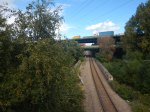
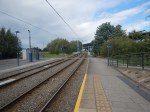
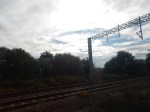


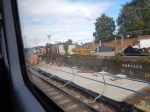
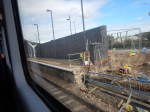
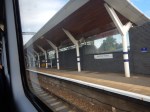
Note.
- The heavy-weight gantries for the electrification, which I suspect would support 25 KVAC electrification.
- It appears simple bi-level platforms are being built at Rotherham Central station.
- Could a stop being put at the New York stadium?
It certainly doesn’t seem to be an expensive system.
Single Or Double Track Electrified At 25 KVAC
The heavy rail route which is both single and double-track is electrified using standard 25 KVAC electrification.
Simple Voltage Changeover
In Karlsruhe, a ceramic rod is used to connect the overhead wires of different voltages. The pantograph of the tram-train runs on this rod, as the vehicle passes between the two voltages.
The different voltages would be handled automatically on the tram-train.
Kinetic energy or a battery will take the tram-train over the very short dead section.
I didn’t see it, but I suspect a similar system is used on the Tinsley Chord in Sheffield, where the two voltage systems meet.
The advantage of this simple system, is that voltage changeover can be completely automatic, with the driver only monitoring the changeover.
Simple Bi-Level Platform Extensions
This technique is used in Karlsruhe, where they have myriad problems due to various classes of tram-trains and conventional trains.
Modern construction methods will certainly help here.
How Did Network Rail Manage To Spend So Much Money?
The only feasible positive explanation is that this tram-train trial is being very comprehensive and covers all possible UK operations.
- The tram-trains are tested on 25 KVAC at Rotherham.
- Single and double-track.
- The tram-trains are tested on 750 VDC all over Sheffield.
- The tram-trains are tested on sharp curves and climbing hills on the Sheffield Supertram network.
- The voltage changeover is thoroughly tested on the Tinsley Chord.
- Platform designs get a rigorous test.
If the tram-train passes these tests and the regulators and operators like it, it’ll be passed for the UK network.
Is The Rotherham Trial A Tram-Train Or A Train-Tram?
When going from Sheffield to Rotherham, the Class 399 train, starts as a tram and changes to a train on the Tinsley Chord.
But when going from Rotherham to Sheffield, the vehicle starts as a train and changes to a tram.
So I suppose it’s both and it changes over where the voltage changes on the Tinsley Chord.
But just as in the Rotherham trial, provided there is an overhead wire with an acceptable voltage, the Class 399 tram-trains can run on any track, be it for trams or trains.
On What Routes Could A Class 399 Train Run?
There are several possibilities.
Extending An Existing Tram Network On A Heavy Rail Line
The tram-train runs normally on a standard tram line and then the route is extended on a heavy rail line, which is electrified with 25 KVAC overhead wires.
This is what is being done at Rotherham.
More possibilities exist in Sheffield and probably on other systems like Birmingham, Blackpool, Edinburgh, Manchester and Nottingham.
Creating A Tram Link Across A Town Or City
Suppose a town or city has two electrified stations on opposite sides. Perhaps one handles trains from the West and the other handles trains from the East.
If a tram route can be created between the two stations, which is connected to the lines at the station, then tram-trains can run across the town or city.
This has been done in Karlsruhe and other European cities, but I doubt we’ll see a cross-city link like this in the UK for a decade or two.
Creating A Tram Link Between Two Electrified Lines
This is similar to the previous application, except that the tram route might be in a rural area.
One possibility might be from Cambridge to Marks Tey along a rebuilt Stour Valley Railway.
Running A Branch On A Heavy Rail Line As A Tram
Creating a branch line to tram standards should be cheaper than creating it to heavy rail standards.
The proposed Glasgow Airport Tram-Train could be built this way, by building a tram track from the Inverclyde Line to the Airport.
The branch would have the following characteristics.
- Segregated single-track from the Inverclyde Line
- 750 VDC overhead electrification.
- Low floor tram-trains.
- Simple stations.
The tram-trains could run as normal electric trains from Glasgow Central station to West of Paisley St. James station, where they would take to the branch line and run as trams to the Airport.
As the performance of a Class 399 tram-train is not much slower than the current Class 314 trains that work some services on the Inverclyde Line, I feel that fitting the tram-train service into the service pattern on the line would be possible.
I estimate that a round trip from Glasgow Central to the Airport could be done within an hour, which would mean that to provide an adequate four tram-trains per hour, would require four vehicles.
Two other airports could be served in this way; Leeds and Liverpool
- Leeds Airport would require electrifying as far as Horsforth station, where a tram track would lead to the Airport.
- I suspect that the tram-trains could not only connect Leeds to the Airport, but Bradford as well.
- Liverpool Airport from Liverpool Lime Street services would change to a tram at Liverpool South Parkway station.
I think we’ll be seeing tram-trains used for services like these.
Consider these points.
- A suitable station on the electrified network is needed as a terminus.
- A suitable junction must be possible between the branch and the electrified network.
- Any number of stops could be built on the branch.
- Simple tram-style 750 VDC overhead wires can be used, which would be less visually intrusive.
Some schemes will be simple like perhaps the Slough to Windsor and Eton Line and others would be more complicated.
Conclusion
In a year or so’s time, we’ll know if tram-trains are another method of expanding and improving the UK’s rail network.
A Branch To Penicuik From The Borders Railway
I started this post as part of Extending The Borders Railway To Carlisle, but as I research it more and talk to my correspondent in the Borders, I feel it needs to be a separate post.
There is an article in the Scotsman from 2013, which is entitled Borders rail link: £150m plan for Penicuik spur. This is the first paragraph.
A vital £150 million rail line connecting Penicuik to central Edinburgh could be reopened for the first time in half a century.
The article then gives a lot of favourable comments about the possibility of the link. My correspondent, grew up in the town and feels that a rail link is needed, especially, as when he was a boy, the town had three rail lines.
In the Wikipedia entry for the Borders Railway, this is a paragraph about a future branch to Penicuik.
In May 2013, it was reported that Heriot-Watt University had been asked by Midlothian Council to carry out a feasibility study on a 10-mile (16 km) rail link connecting Penicuik with the Borders Railway. At least 6 miles (9.7 km) of the new line would follow the Edinburgh, Loanhead and Roslin Railway, the alignment of which is generally intact between Millerhill and Straiton.
This proposal is not mentioned in the recent CBR report, which is entitled A Summary Case For A New Cross-Border Rail Link, that can be downloaded in PDF form from this location.
Newcraighall Station And Park-And-Ride
Newcraighall station will be North of where the proposed branch to Penicuik joins the Borders Railway.
This Google Map shows the station and the surrounding area.
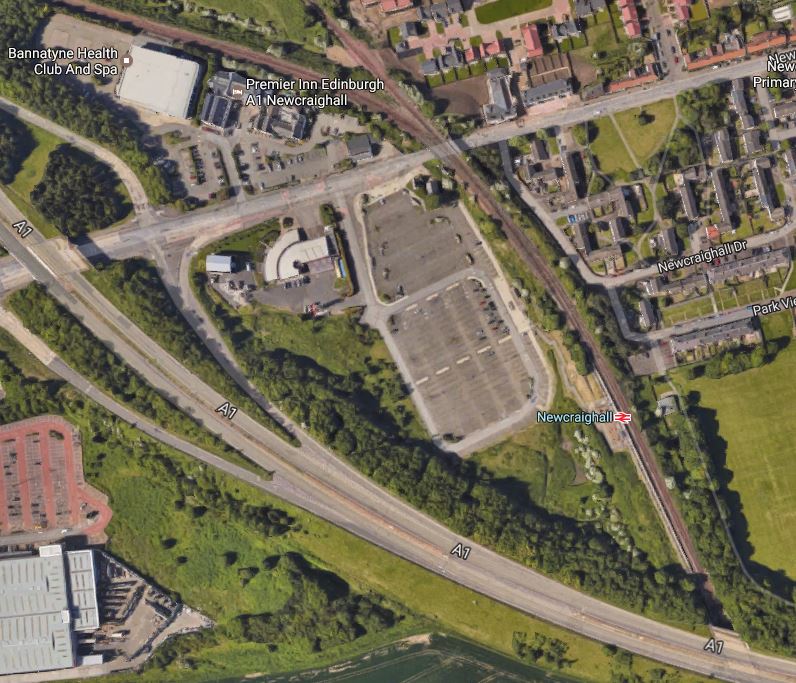
Note the A1 and the convenient Park-and-Ride.
Wikipedia says this about Services from Newcraighall station.
Monday to Saturday daytimes there is a half-hourly service to Edinburgh and to Tweedbank, and an hourly evening and Sunday service. Four weekday morning peak services run beyond Edinburgh to Glenrothes with Thornton via Kirkcaldy and a similar number run in the opposite direction in the evening. When the station was a terminus, many services ran through to/from the Fife Circle Line but this practice ended prior to the reopening of the full route to Tweedbank.
I believe that a Park-and-Ride of this size, location and probable importance needs at least four trains per hour (tph) all day.
Currently, two tph between Edinburgh and Tweedbank call at Newcraighall. As it takes two hours for a train to do the round trip, this means that four trains are needed to provide a two tph service.
Four tph all the way to Tweedbank would need eight trains, but due to limitations in the design of the Borders Railway would probably be very difficult to operate.
Terminating them at Newcraighall and perhaps running beyond Edinburgh to Fife is obviously a possibility, but Newcraighall station only has one bi-directional platform.
Two Trains Per Hour To Penicuik
Opening a branch to Penicuik and running two tph would give Newcraighall station and the Park-and-Ride the four tph train service it needs, when combined with the two tph along the Borders Railway.
The Edinburgh, Loanhead and Roslin Railway
Wikipedia says the route would probably follow the route of the Edinburgh, Loanhead and Roslin Railway.
- Much of the route is visible on Google Maps.
- The original line closed in the 1960s.
- There were stations at Gilmerton, Loanhead, Roslin and Glencourse.
- The major engineering feature of the line was a visduct over Bilston Glen.
Penicuik was served by a freight-only line.
Shawfair Station
It would appear that the Northbound and Southbound trains on the Borders Railway seem to call at Shawfair station around the same time.
This must make operation of the line much simpler and it probably meant that Newcraighall station only needed one platform.
This Google Map shows the Borders Railway passing through Shawfair station.
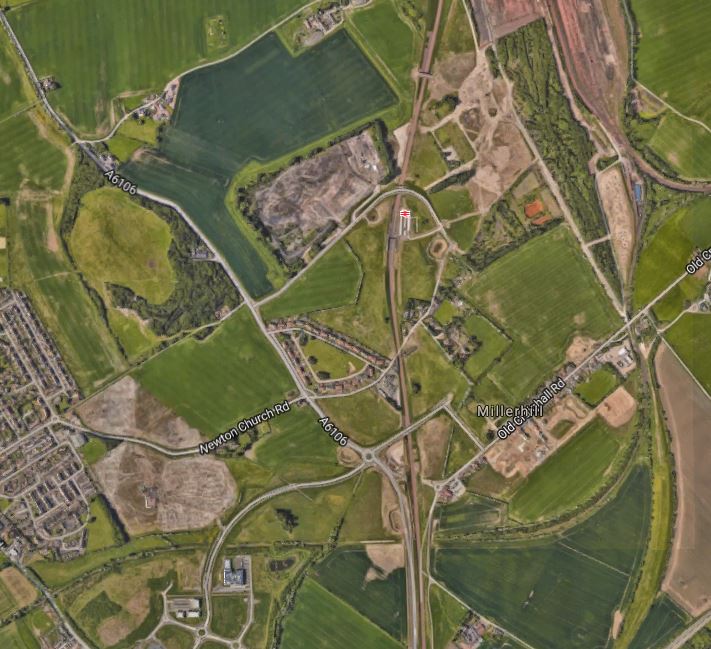
Note the disused track of the Edinburgh, Loanhead and Roslin Railway crossing the Borders Railway at right-angles and then curving Northwards to the freight yard at Millerhill.
Trains could go via Millerhill, to join the Borders Railway South of Newcraighall station, but surely, it would be better if the branch to Penicuik, joined the Borders Railway South of Shawfair station.
This would allow trains to and from Penicuik to pass at Shawfair station.
As trains to and from Tweedbank station seem to call between
- XX:08 to XX:10
- and XX 38 to XX:40
So Penicuik trains could use times of perhaps .
- XX:23 to XX:25
- and XX 53 to XX:55
Which would mean a train would have thirty minutes to go from Shawfair to and from Penicuik.
The way Shawfair station is used also means the following for the Borders Railway.
- A convenient spacing is imposed for trains to call at the single platform at Newcraighall station, as that is just four minutes towards Edinburgh.
- Effectively, the Borders Railway to Tweedbank station runs a two tph service with two widely-seperated trains South of Shawfair station at any one time.
- Two widely-separated trains, South of Shawfair station enables the use of single-platform stations at all stations except Stow and Tweedbank.
- Shawfair station is the only station with an expensive footbridge.
I also suspect that four tph is possible, with trains passing at Shawfair and Stow stations, perhaps with faster trains and improvements to the signalling.
By clever design and selective use of two-platform stations and double-track, it would appear that the engineers have designed an efficient affordable railway, that is mainly single track and has only one footbridge.
The Junction Of The Borders Railway And The Penicuik Branch
This Google Map shows where the track-bed of the Edinburgh, Loanhead and Roslin Railway passes under the Borders Railway to the South of Shawfair station.
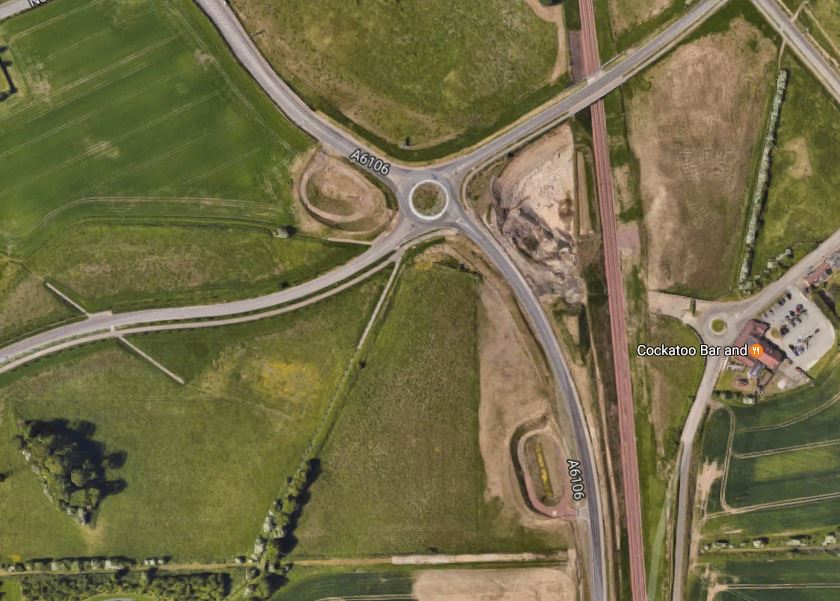
Note the old track-bed of the Edinburgh, Loanhead and Roslin Railway running East-West across the bottom of the map.
The roads in the area don’t appear to have been built with a suitable space for a chord to connect.
But even so, I suspect it would be a practical proposition for a single-track chord to be built between the Borders Railway and the Edinburgh, Loanhead and Roslin Railway.
The only difficult construction would be crossing the A6106 road to the South-East of the roundabout.
A cross-over would be needed South of Shawfair station to allow Southbound trains to access the branch to Penicuik. But as there would only be no more than four tph South of Shawfair station, this wouldn’t be a large operational problem.
Single-Track To Penicuik
Wikipedia says that the proposed Penicuik branch is ten miles in length.
Surely, if it were a single-track branch, trains could go from Shawfair to Penicuik station and return within thirty minutes.
Consider.
- It would take five minutes for the driver to change ends at Penicuik
- Two stops each way with a modern train could take a total of just five minutes.
- The train would be the only one on the branch.
- A well-designed line could have an operating speed of at least 75 mph and possibly 90 mph.
All this would mean that there would be ten minutes for each leg of the journey between Shawfair and Penicuik.
Should A Future Penicuik Branch Be Electrified?
Electrification of a future Penicuik Branch would not be difficult.
- Electrification would need to be extended from Newcraighall station.
- Electrification would be easier, if the branch were single-track with single-platform stations.
- Electrification of a new railway must be easier than electrifying an existing line.
Electrifying between Newcraighall and Penicuik may give advantages.
- There will be a fairly plentiful supply of cascaded electric trains, that could be suitable for the route.
- Electrifying may allow electric trains to access the Millerhill TMD.
- Electrifying would help in running bi-mode trains on the Borders Railway, if that were thought necessary.
- Electrifying may save a few minutes between Shawfair and Penicuik.
Obviously, electrification would allow politicians to boast about their green credentials.
The only disadvantage of electrification is that some bridges may need to be raised.
Surely, if the ten-mile branch was well-designed as mostly single-track, perhaps with electrification, and run by modern trains, two tph would be possible, even with one or more intermediate stops.
Could A Future Penicuik Branch Be Worked By Bi-Mode Trains?
A bi-mode train like a Class 319 Flex train could certainly work the route and as they have lots of power, they could probably achieve the Shawfair to Penicuik and return time of thirty minutes.
Could A Future Penicuik Branch Be Worked By Battery Trains?
As it is only ten miles between Shawfair and Penicuik, I suspect that in the future,, trains with onboard energy storage will be able to work the branch.
Single-Platform Stations
If the future Penicuik Branch could be a single-track railway, where only one train was on the branch at any one time, all stations could be built with a single-platform and no expensive footbridge, as most stations were built on the existing Borders Railway.
As five-cars seems to be becoming the new standard train length, I would build all platforms to accept five-car trains.,
A North-South Service Across Edinbugh
Peak Hour services link Tweedbank and Newcraighall beyond Edinburgh to Glenrothes with Thornton via Kirkcaldy.
There is obviously a need for a service in the Peak, but if there was a second Southern terminus at Penicuik would it be sensible that if a total of four tph were running from Newcraighall to Edinburgh, that a proportion cross the Forth.
Note that Cross-Forth services.
- Call at both Edinburgh and Haymarket stations in the City Centre.
- Have an easy interchange with the Edinburgh trams at Haymarket and Edinburgh Gatway station.
- Probably have an easier route to Edinburgh Airport.
There are certainly lots of possibilities.
Could A Future Penicuik Branch Be Worked By Tram-Trains?
The Germans would probably use tram-trains in a city the size of Edinburgh.
Compared to the tram networks in Nottingham and Birmingham, Edinburgh trams always strike me that it was a network designed without ambition and that doesn’t provide the maximum benefit to the largest number of residents and visitors.
If you look at Edinburgh Gateway station, it could have been modified to allow tram-trains like the Class 399 tram-train to come from the Airport and then go straight onto the Fife Circle Line to South Gyle, Haymarket and Edinburgh stations.
At present this line is not electrified, but doing that is probably in Scotrail’s wish-list.
Once at Edinburgh station, the tram-trains could take any of the electrified routes to North Berwick, Dunbar or perhaps Penicuik.
Passengers would finally get a proper interchange between trains on the East Coast Main Line and the Edinburgh tram.
I also think that the Germans would run tram-trains on the Fife Circle Line and its proposed extension to Leven.
Currently, the frequency of trains on the Fife Circle Line is low and tram-trains could probably give a four tph service to all stations, if electrification was put in place.
Conclusion
I believe that it would be possible to open a single-track branch to Penicuik with single-platform stations and these objectives.
- Provide a two tph service between Penicuik and Edinburgh.
- Boost the service between the Park-and-Ride at Newcraighall and Edinburgh to four tph.
- Provide an alternative Southern terminal for a North-South service across Edinburgh.
Electrification of the line might give operational advantages to Millerhill TMD, the Borders Railway and the branch itself.
The Third-Rail Tram-Train
I’ve never seen anybody propose a third-rail powered tram-train, but that is probably because everybody has assumed quite rightly, that you couldn’t power a tram by using third-rail electrification. It’s just too dangerous! But is it so dangerous on a segregated track?
In February 2016 I wrote Brummies Go For Battery Trams and it is now ienvisaged that Midland Metro‘s trams will be running services under battery power in 2019.
Battery power is used for trams in several places around Europe and the rest of the World and is becoming a proven technology. Is there any reason why a battery tram-train, can’t be powered by third-rail electrification, when it is running as a train?
The Class 399 Tram-Train
The Class 399 tram-train is under test in Sheffield, to prove that it can run passenger services in the UK.
These tram-trains can handle either 25 KVAC or 750 VDC from overhead wiring. I also think, they are also clever enough to work out what voltage they are getting and configure themselves accordingly.
Since, I originally wrote this post, KeolisAmey Wales have ordered thirty-six tram-trains from the same Citylink family as the Class 399 trains.
Stadler, whose Valemcia factory built the Class 399 tram-trains, will also be building trains for Merseyrail’s network, which will run using 750 VDC third-rail electrification.
Would it be reasonable to assume, that Stadler will be able to design an appropriate pick-up shoe for the Class 399 tram-train, so that it can run on a 750 VDC third-rail network?
Batteries
A battery system would also be needed, but I believe that this will be generally offered by all tram and tram-train manufacturers, as trams and tram-trains will be running increasingly in heritage or sensitive areas.
Charging The Batteries
Batteries would normally be charged, when the tram-train is running on an electrified line, under power from the third-rail system.
The MetroCentro in Seville, works without catenary and has a fast charging system at the two end stops.
There is no reason to believe that a Class 399 tram-train with batteries, couldn’t work with a fast charging station like a Railbaar.
Tram-Trains For The South Wales Metro
Since, I originally wrote this post, KeolisAmey Wales have ordered thirty-six tram-trains from the same Citylink family as the Class 399 trains, for running on the South Wales Metro.
These tram-trains will be fitted with batteries.
Would A Third-Rail Tram-Train Have A Pantograph?
This would be a matter for the operator.
But there is one UK tram network; the London Tramlink in Croydon, which is surrounded by an extensive third-rail electrified network.
The ability to run on both types of 750 VDC systems might be an asset and enable new services to be created without any extra electrification, by using a small amount of battery power to change from one system to another.
Changing Between Third-Rail And Overhead Electrification
This map from carto.metro.free.fr shows the track layout at Mitcham Junction station.
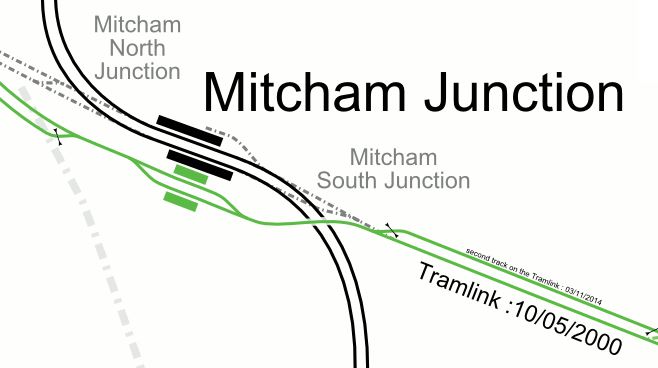
Suppose a link were to be provided, so that tram-trains could come from the South, pass through Mitcham Junction station and then cross over to the tram tracks for Wimbledon.
These pictures show the area.
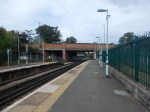
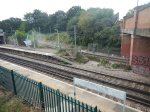


As the link would have no electrification, the power changeover would be as follows.
- Arrive in Mitcham Junction station, using third-rail power.
- Raise and isolate the third-rail shoe.
- Switch to battery power.
- Proceed using the link to Mitcham tram stop.
- Raise the pantograph and switch to overhead power.
A reversed procedure would be used in the opposite direction.
Range On Third-Rail Power
The range of a Class 399 tram-train running on third-rail power, would be more limited by the train-tram’s speed of 100 kph and interaction with other services, rather than any electrification issues.
The range will probably be the same as the German cousins of the Class 399 tram-trains on the Karlsruhe Stadtbahn. These trams run on both 750 VDC and 15 KVAC, to places up to fifty kilometres from the Centre of Karlsruhe.
As a simple example, a third-rail tram-train running on the London Tramlink, could certainly use third-rail lines to access Gatwick Airport.
Range On Battery Power
In Out Of The Mouths Of Brummies, which describes an interview with those involved in the Midland Metro battery train project, I published this quote about battery trams.
Since then there has been lots of work and we’re now comfortable that battery technology has advanced sufficiently for it to be viable.
Under test conditions with plain straight track a tram could travel 20 km catenary-free. In practice, this would be rather less for a fully laden tram ascending the 9% gradient on Penfold Street. The longest catenary-free run we’ve envisaged is around 2 km, and we’re comfortable we can achieve that.
I think until Birmingham proves otherwise, 2 km. would be a sensible range for a tram or tram-train running on a full battery.
Compatibility Issues With Other Rail Vehicles And Platforms
This to me is a matter of design, but after the Sheffield tram-train trial and the analysis of platform solutions in Europe, I suspect that we’ll come up with a solution that works.
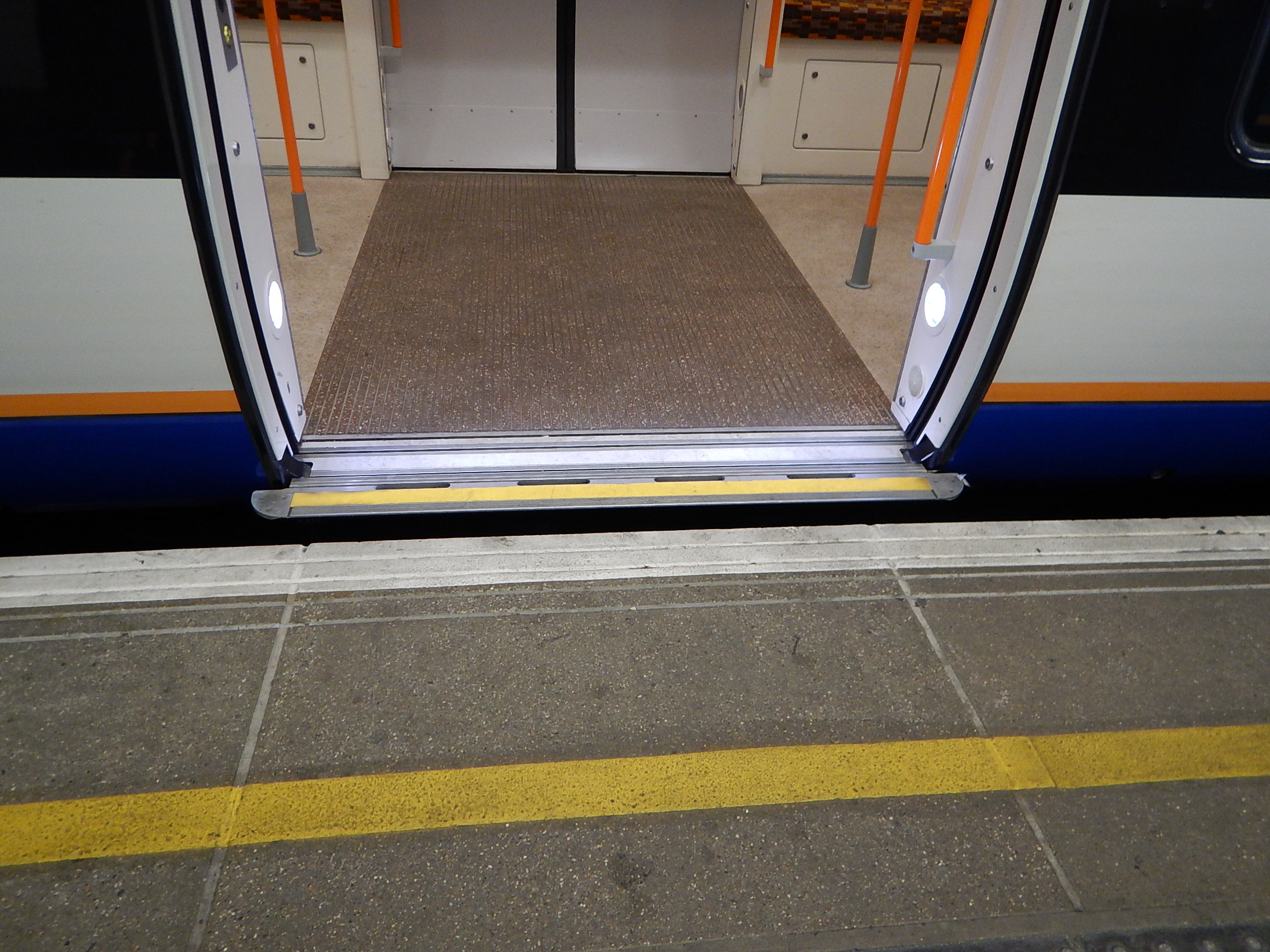
I think it is true to say, that many of our trains are badly matched to the platforms, but as this picture of a Class 378 train on the London Overground shows, the gap is becoming easier to mind.
I think too, we have an advantage over Europe, in that our loading gauge is smaller and our trains are closer in size to a modern tram or tram-train.
We are also good at innovative access solutions, as this picture from Canonbury station shows.
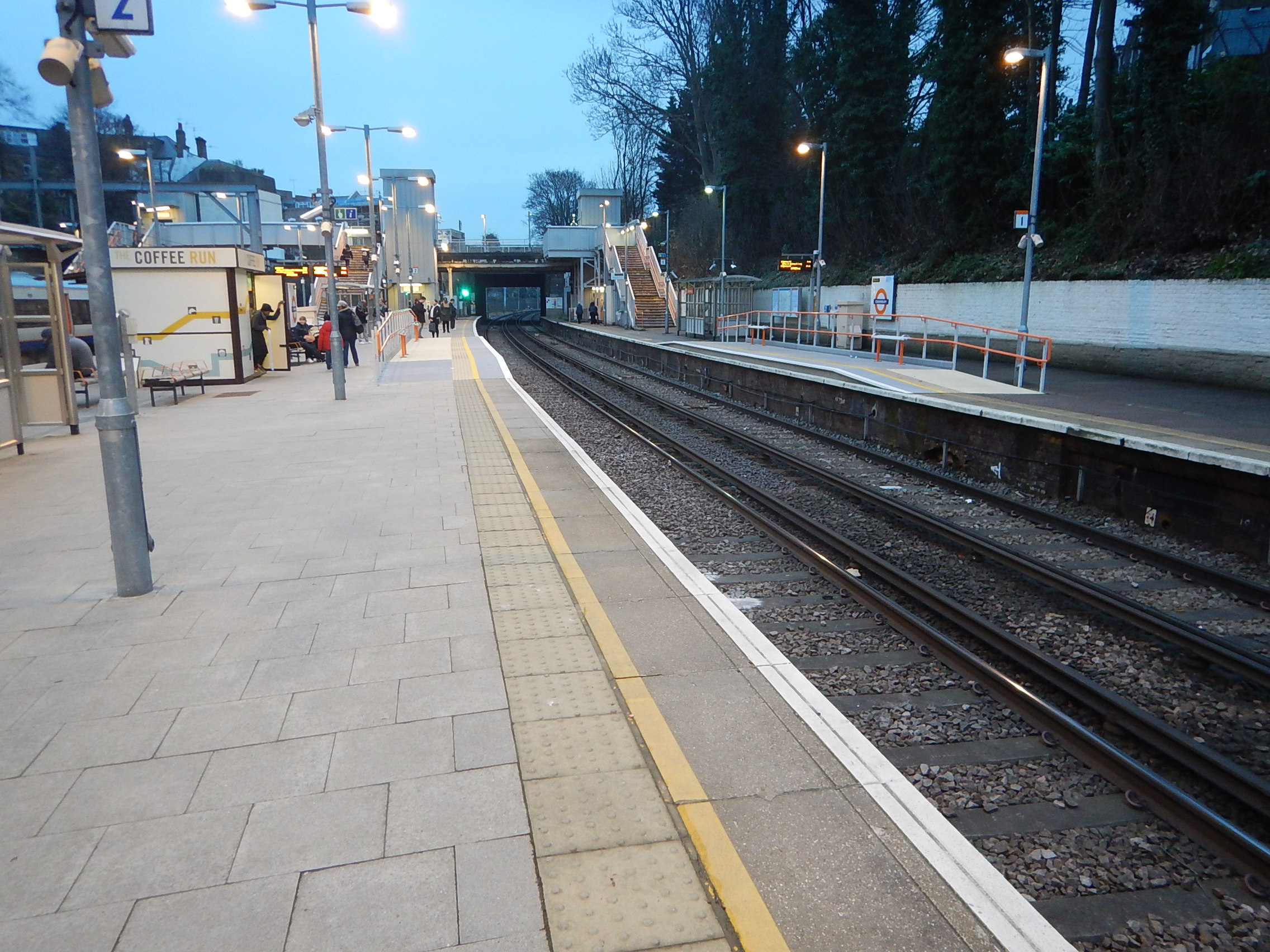
We may have a problem with using double-deck trains, but I believe that good design can minimise the problems of good access to both trains and tram-trains at the same platform.
Applications
The applications will be limited by battery range and by the gradients of the line.
In Southampton – A City Built For Cars, I describe how if they built their proposed Solent Metro around third-rail tram-train technology, they could transform the city.
In Could Beckenham Junction To Birkbeck Be Run Using Third-Rail Tram-Trains?, I show how third-rail tram train-technology , could be used to create more capacity at Beckenham Junction station.
In Could Third-Rail Tram-Trains Be Used To Increase Services In South London?, I show how third-rail tram-train technology, could be used to expand the London Tramlink.
In Could Third-Rail Tram-Trains Work The Epsom Downs Branch?, I show how third-rail tram-train technology, could serve the Royal Marsden Hospital.
In The Cranleigh Line, I suggest that third-rail tram-train technology could be used on this route.
Conclusion
Technically, I feel that a Class 399 tram-train capable of running on third-rail electrified lines is possible.
But it would have to run on battery power or 750 VDC overhead, when running as a tram.
Southampton – A City Built For Cars
These pictures show Southampton as I walked between Southampton Central station and the Town Quay for the ferry to Hythe.



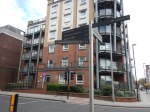
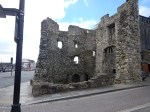
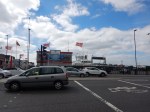




The last few pictures are when I walked back.
This Google Map shows the layout of Southampton
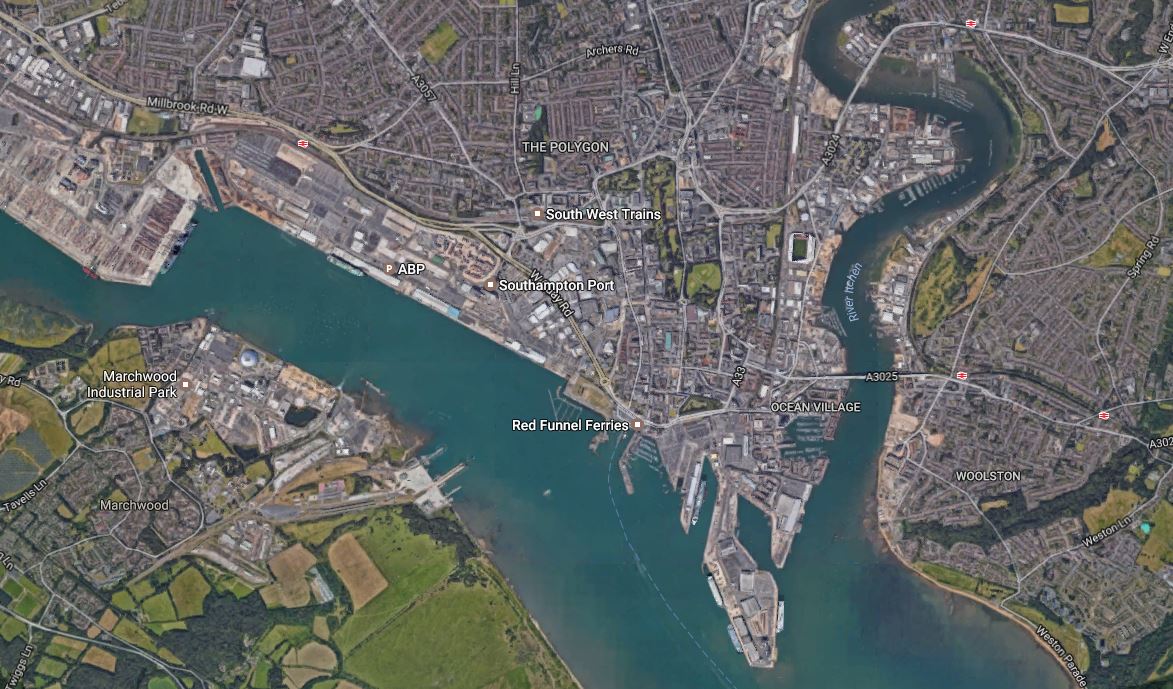
Note how the city sits between the two rivers; the Itchen in the East and the Test going to the West.
Crossing the Itchen is a modern Itchen Bridge, which was built in 1977, that takes the A3025 into and out of the City.
, To the East of the bridge two stations; Woolston and Sholing on the West Coastway Line can be seen.
From Woolston station, the West Coastway Line, curves Northwards and follows the East bank of the River Itchen through Bitterne station, which can be picked out at the top of the map, East of the River Itchen.
The West Coastway Line then joins the South Western Main Line at St. Denys station.
This Google Map shows Bitterne and St. Denys stations.
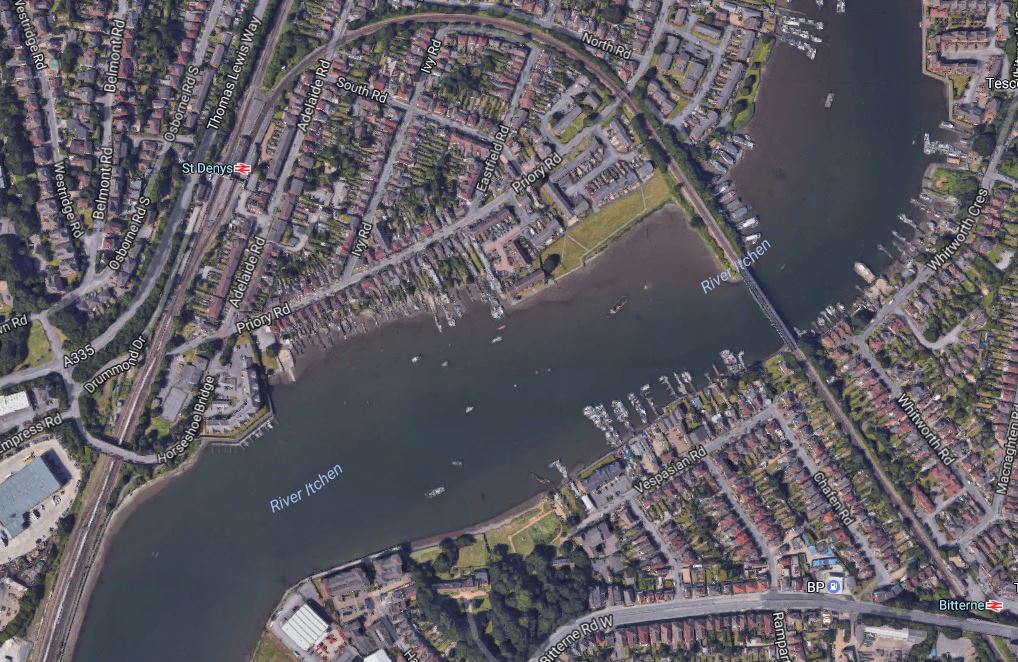
After going along the river for a short distance and passing Northam Depot, the line splits, as this Google Map shows.
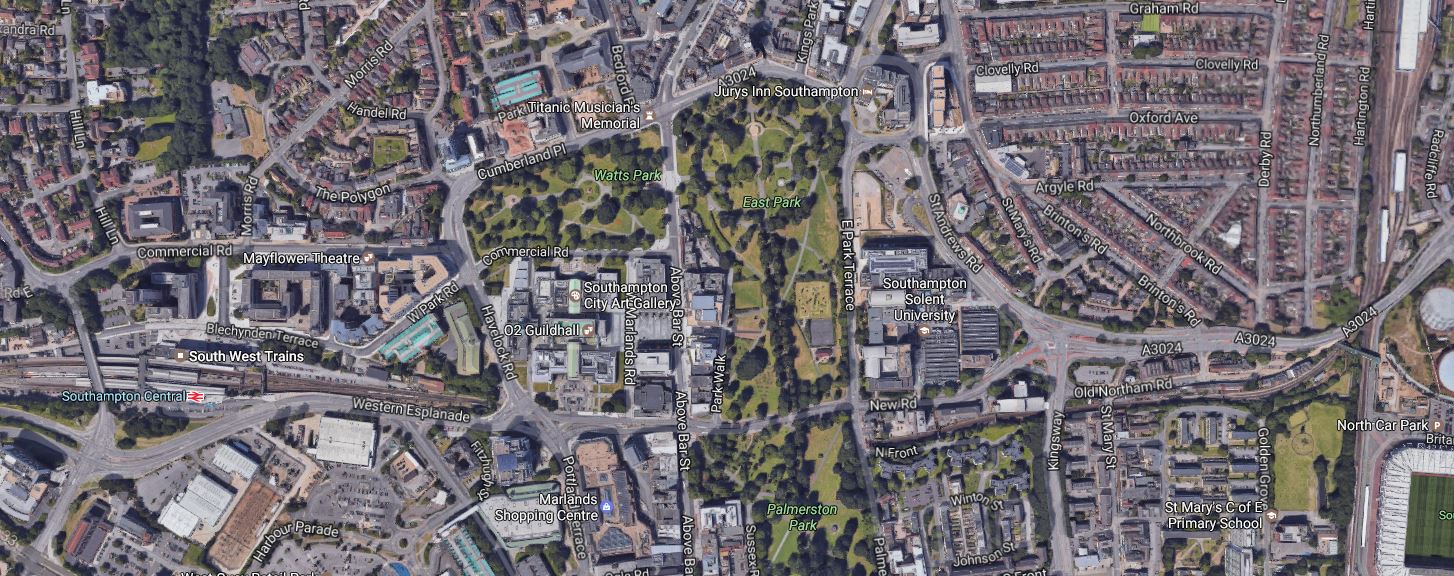
One branch goes South past St. Mary’s stadium and the other turns West and takes Southampton Tunnel to Southampton Central station.
I wrote about the upgrading of Southampton Tunnel in Boxing Clever, where I said this about how the project was performed.
I particularly liked the way that the 1847 Southampton Tunnel was made larger. Rather than use the traditional approach and closing the tunnel for two to three months, as they did when they upgraded Ipswich Tunnel, they did it a track at a time closing for only three weekends and over Christmas 2009, saving a year on the project.
It is my belief that we can save a lot of money on infrastructure projects, like roads, railways, hospitals ands schools by thinking things through with a great deal more innovation, enterprise and by borrowing good and proven ideas and methods from other countries and industries.
The Wikipedia entry for Southampton Tunnel, has a section called Tunnel Development, which says this about those works.
During the period Sunday 27 December 2009 to Sunday 3 January 2010, the tunnel closed for the track to be lowered to achieve W10 (freight container) route clearance. Previously, Hi Cube intermodal container traffic had to be carried on special low wagons with areas which could not be loaded, resulting in both traffic planning issues and lower train capacity. Additionally, all container trains were restricted to 20 mph when passing through the tunnel because of the limited clearances at the top edges of the loaded containers. Since rebuilding no speed or loading restrictions apply to the tunnel and container trains can travel at up to the line speed of 40 mph, the limit for the tunnel. The work meant containers could be transported more easily by rail from the Port of Southampton.
In some ways the Southampton Tunnel sums up the problems with the UK’s railways. The Victorian layout doesn’t really support the needs of modern transport. And especially freight transport!
The railways will have to live with the updated Southampton Tunnel, as I doubt there is an alternative route to get intermodal container traffic between Southampton Container Terminal and the rest of the UK.
I will finish my East-West journey across Southampton by showing this Google Map, which shows Southampton Central station and the Docks that lie to its West.
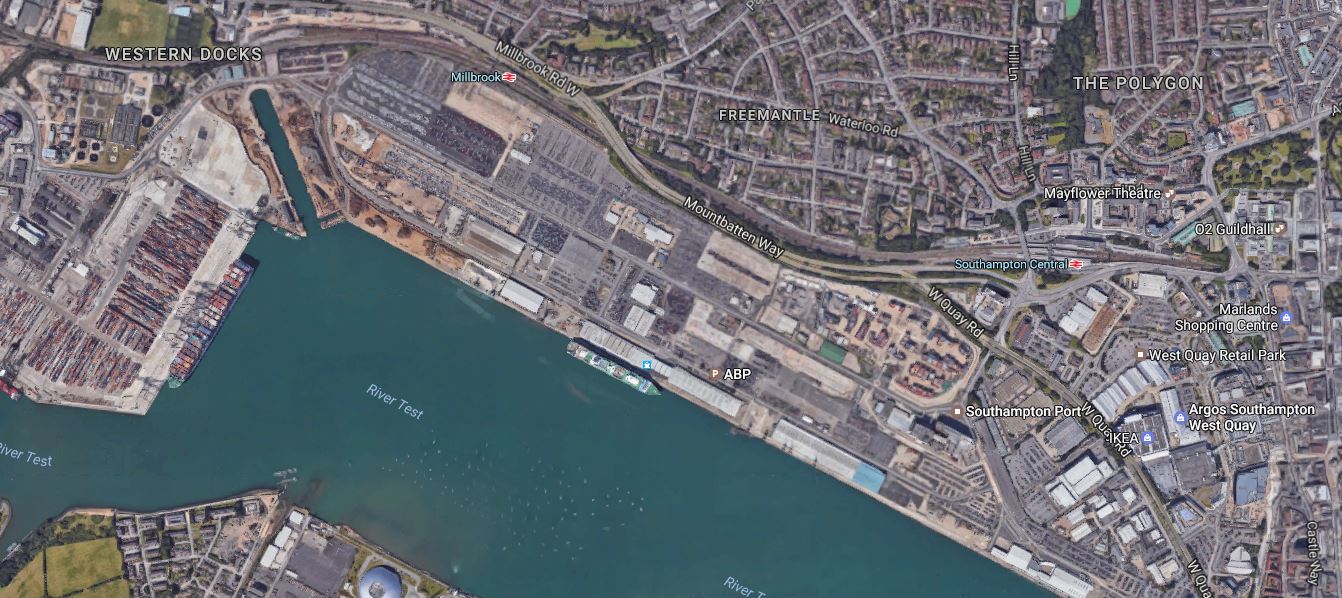
Note Millbrook station to the North of the Docks. It doesn’t appear to be a very busy station.
I shall now return to the Itchen Bridge along the Waterfront.
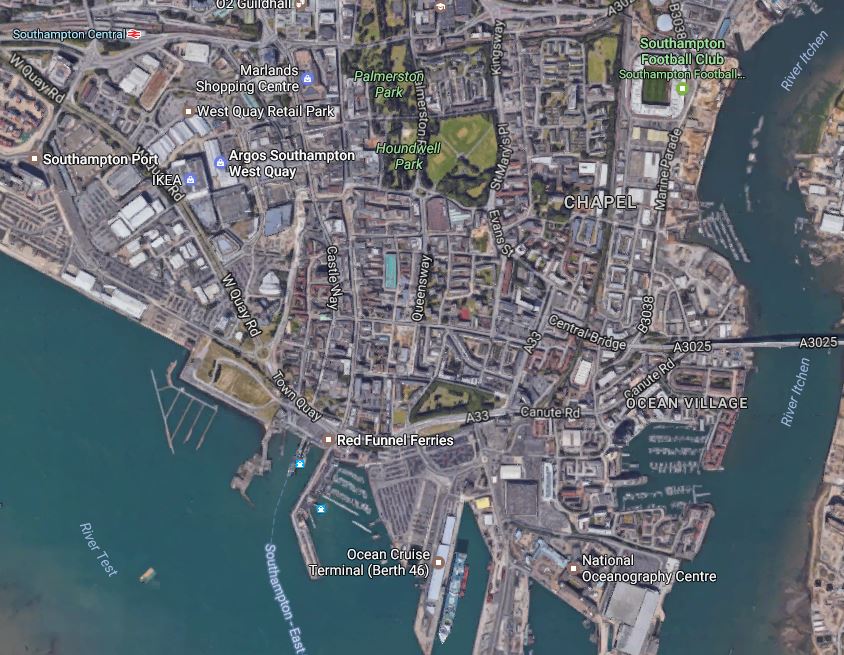
Note the following can be seen on this map.
- The Itchen Bridge
- St. Mary’s Stadium
- Southampton Central station.
- Red Funnel Ferries on Town Quay
- The Ocean Terminal.
- The West Quay Shopping Centre
There are also vast areas of surface car parks.
A Metro For Southampton
Southampton is a city, where I believe that too much emphasis has been placed on access to the City by car.
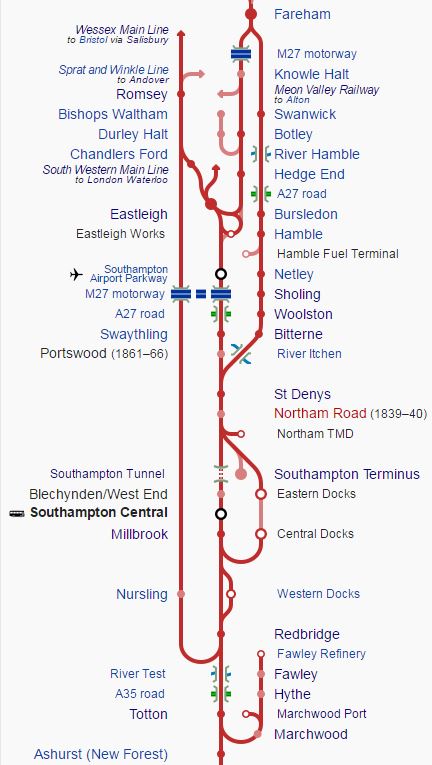
But the skeleton of an urban railway is still there, as this map of the railway lines through Southampton shows.
To be fair, the chance may have been missed when the Itchen Bridge was built in 1977. I suspect that at that time in Germany for example, the bridge would have been future proofed for trams to be added at a later date.
But the thoughts at the time in the UK, were that trams were of the Past and not of the Present.
This Google Map, which shows the Itchen Bridge, with St. Mary’s Stadium on the West Bank and Woolston station on the East.
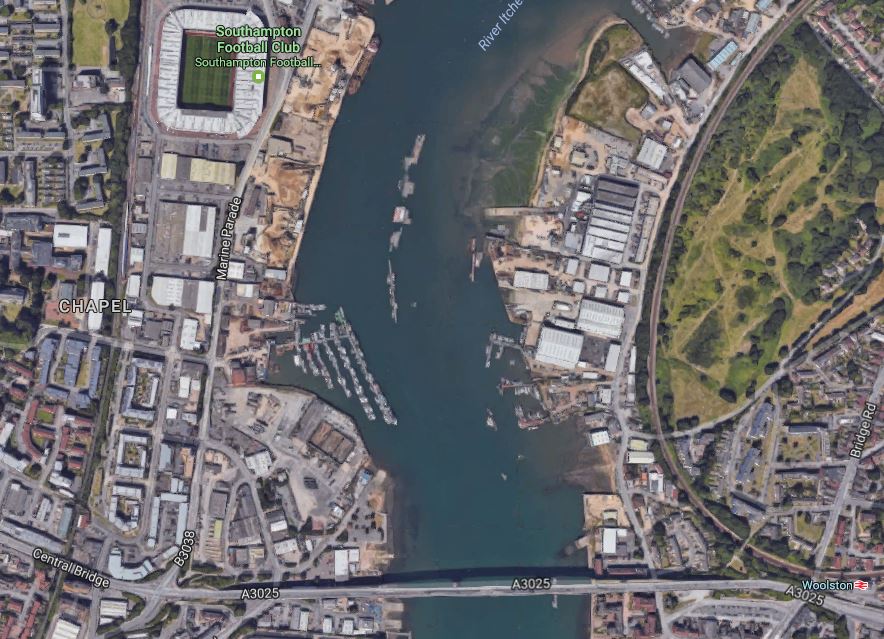
If you look at this map carefully, the rail corridor to the old Southampton Terminus station is still there and about two hundred metres North of the station, a train in South West trains livery can be seen. The line is obviously used for some purpose by Northam Depot.
If I look at various rail systems, I’ve seen all over the UK, it would appear that the following could be done.
Reopen The Rail Line To Southampton Terminus
The line from St. Denys station to Southampton Terminus station could be reopened with possible stations at Northam and St. Mary’s Stadium.
St. Denys is a four-platform station and it could act as a cross-platform interchange between services going to and from Southampton Terminus and Central.
Run West Coastway Services To Southampton Terminus And London Waterloo Services To Southampton Central
Consider.
- The South Western Main Line is at capacity with freight and passenger services.
- The West Coastway Line is less busy.
So why not run West Coastway services to Southampton Terminus?
Remodel St. Denys Station
St. Denys is a four-platform station and it could act as a efficient cross-platform interchange .
- Platform 1 – Services from Southampton Central to London
- Platform 2 – Services to Southampton Central
- Platform 3 – All services between the West Coastway and Southampton Terminus
Note.
- By making Platform 3 bi-directional, this means that trains using the West Coastway Line don’t have to cross the main line if they terminate at Southampton Terminus.
- Travellers going West would just walk across the platform, whereas those going East would use the bridge.
- Provision would be made to allow services to go between the West Coastway Line and Southampton Central.
- Provision would be made to allow trains to access Northam Depot.
There is probably a better layout, but by careful design and the opening up of Southampton Terminus, Southampton would be given extra capacity.
A Cross-City Tram
Every time, I’ve gone to Soiuthampton, I’ve always seemed to walk halfway across the City.
Looking at the map, there must be scope for a tram route.
This article in the Romsey Advertiser is entitled Plans for multi-million pound tram project in Romsey are being investigated.
This is said about the route.
Phase one of the “Solent Metro” network would see trams run from Eastleigh past the airport, down to a new station at Southampton St Mary’s, on to an interchange at Royal Pier, then back up to Westquay and Southampton Central railway station.
The plan also envisages the network – which could be trams or a light railway – being extended west to Romsey and from there back to Eastleigh, and eastwards to Segensworth.
Southampton certainly needs something that connects the Waterfront to the West Quay Shopping Centre and Central station, hopefully with a good connection to St. Mary’s Stadium.
Tram-Trains
My preference would be for a tram-train system, where tram-trains started at places like Bournemouth, Eastleigh, Fareham, Fawley, Lymington, Portsmouth and Romsey as trains and then went walkabout as trams in the City Centre.
At the East, the tram trains would change mode in the vicinity of the old Southampton Terminus station and proceed to St. Mary’s and St. Denys stations as third-rail electrified trains
This Google Map shows the old Southampton Terminus station, which is now a casino.
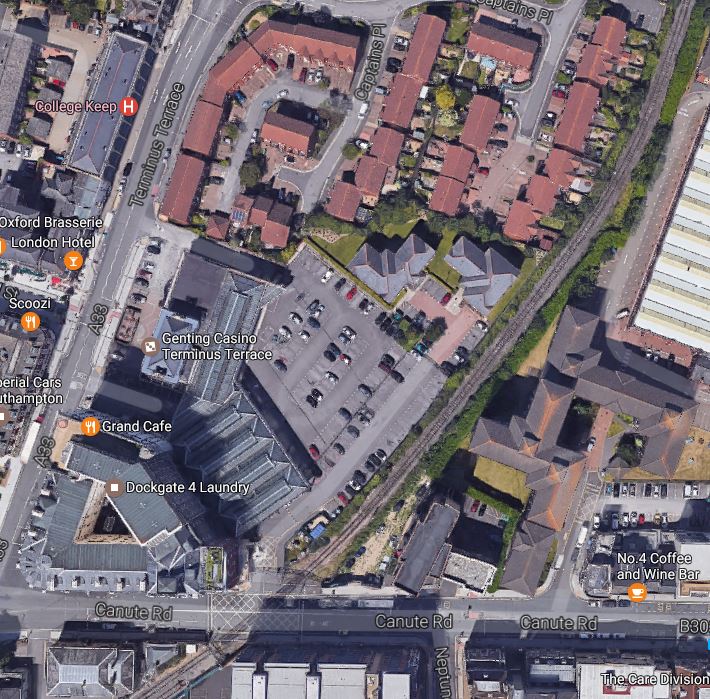
The rail line goes North to St. Mary’s Stadium, Northam Depot and St. Denys station. To the South it goes as far as the Waterfront, where it finishes just to the East of the Ocean Terminal.
In the West they would need to join the South Western Main Line in the area of Southampton Central station.
The Google Map shows the area.
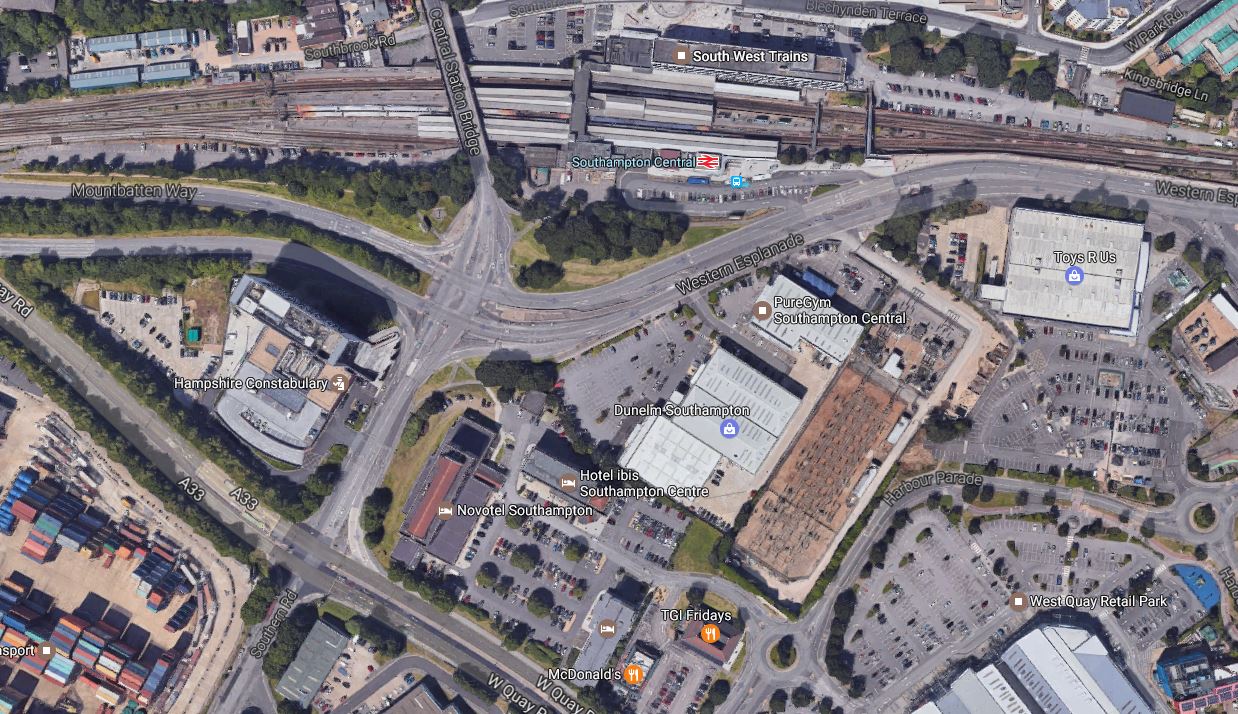
I’m sure that a more than adequate connection could be arranged after what I have seen in places like Karlsruhe.
There would of course be only one way for the the tram-trains to cross between Southampton Terminal and Southampton Central stations and that would be on battery power. I’m certain if Birmingham do it across a City with much more of a gradient, as they intend, then Southampton could do it across the Waterfront.
Serving The Cruise Ships
The plan from the Solent Local Enterprise Partnership detailed in the Romsey Advertiser mentions running the trams or light rail service to the Royal Pier, where they would reverse.
This Google Map shows the Ocean Terminal, with a handy cruise ship alongside.
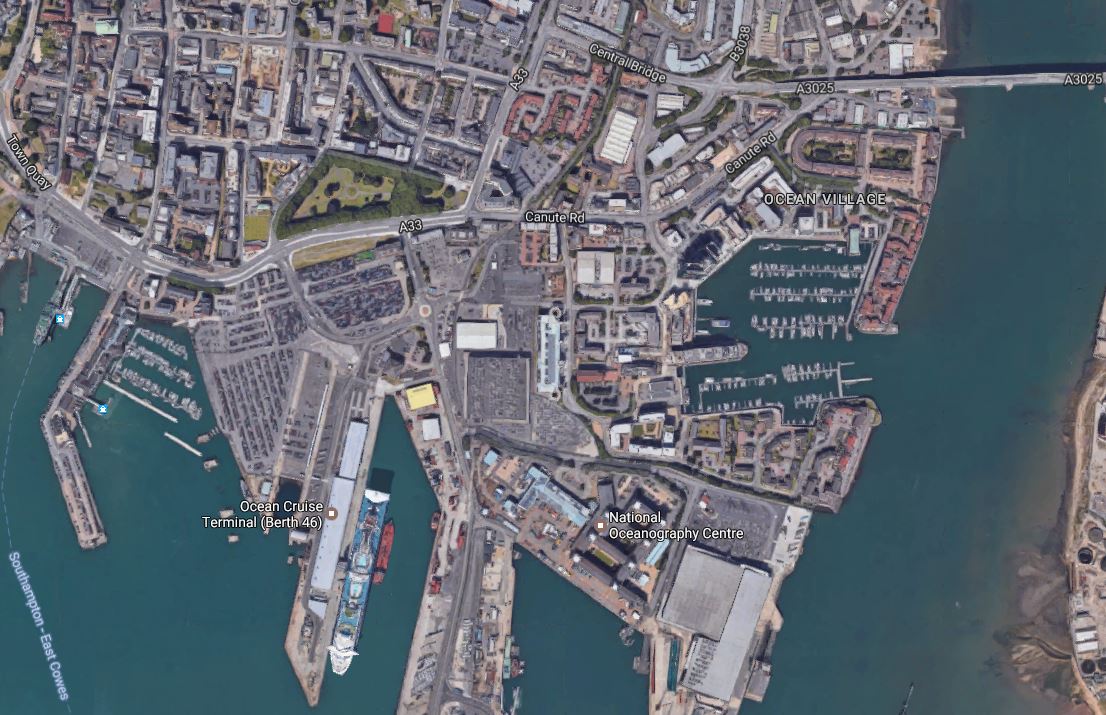
Note how the rail line that runs down behind St. Mary’s stadium continues to the dockside, just to the East of the Ocean Terminal.
If tram-trains were working the routes around Southampton, they could all terminate by the Ocean Terminal and thus give cruise passengers access to tourist attractions like Bournemouth, The New Forest and Portsmouth, in addition to the whole of Southampton City Centre.
I’m sure those clever engineers from Stadler can come up with a third-rail version of a Class 399 tram-train, that had enough battery power to traverse across Southampton. Especially, if a charge station like a Railbaar was installed at the Ocean Terminal to charge waiting tram-trains.
Conclusion
The possibilities at Southampton to improve public transport in the City are endless.
Is There Progress At Last On The Sheffield Tram-Train?
Coming through Sheffield, I took these pictures of the Tram-Train Project.

Some of the chord to connect the trams to the freight line is visible and the Class 399 tram-trains are all lined up ready to go.
Class 230 Train Is Delayed
This article from Rail Technology Magazine is entitled Vivarail trial start date delayed from October to February.
The article goes on to say there are problems with the approval process.
There are now three new types of trains, that appear to be late in appearing in public service.
- Vivarail’s Class 230 train.
- The Class 399 tram/train in Sheffield.
- Bombardier’s first production train with on-board energy storage.
The delays may all be for different reasons, but could a problem like a shortage of properly qualified approval staff be a common cause.
The Great Sheffield Tram-Train Mystery
An article on the BBC web site is entitled Sheffield to Rotherham tram-train pilot delayed further.
The article says that a full review is taking place and a new start date will be announced in the summer.
On my recent trip to Karlsruhe, I rode the German version of the Class 399 tram-train and wrote The Latest Citylink Tram-Trains In Karlsruhe. I said this.
Note that the trams I photographed are only some of the latest batch of twenty-five tram-trains of this type in Karlsruhe. So the basis of the Class 399 tram-train, must surely be well-proven on the streets of a city about the same size as Sheffield.
Incidentally, all of the new tram-trains that I saw, were running on tram routes, just as the first Class 399 tram-trains will in Sheffield, when they start running in a few months.
If the second paragraph is right and all the Sheffield-style trams in Karlsruhe are running as trams, could there be a problem with operating them as trains?
I have no idea and this is just pure speculation.
However this page on a German web-site has pictures of the tram-trains of Karlsruhe. There are twenty-five of the latest Sheffield-style tram-trains delivered from 2014-2016.
But according to this article in Global Rail News, Karlsruhe has just ordered twelve additional Flexity tram-trains from Bombardier.
Is this that some routes can’t be worked by the Citylink and need the other type? Or is it because of a problem with the Citylink?
I don’t know!
But somebody, somewhere must know the truth!
As an engineer, it all puzzles me.
Karlsruhe have been running tram-trains for some years now and surely, the track design rules are pretty well-established. They’ve also been running the Sheffield-style trams for at least several months.
Surely, Network Rail’s engineers must have been to Karlsruhe and just copied, what the Germans are doing.
So why haven’t they got it right first time?
- Not Invented Here?
- Someone in the Department for Transport giving a new twist to EU regulations?
- Refusal to talk to the Germans?
It could of course be sheer incompetence!
Another related mystery, is why are there no reports of the lone Class 399 tram-train in Sheffield testing on the existing track as a tram?
At great expense, all track in Sheffield has been changed to accept the wheel profile of a tram-train, so surely this new tram could at least be testing in the middle of the night!
Could it be that the tram-spotters of Sheffield, are lazy and don’t like getting up in the middle of the night to photograph tram movements? But then there were pictures of night-time tram testing in Birmingham and Nottingham, so I have to conclude testing is not happening.
The Latest Citylink Tram-Trains In Karlsruhe
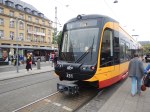
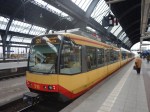
These pictures show some of the latest batch of NET2012 Citylink Tram-Trains in dervice In Karlsruhe.

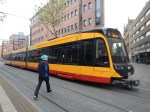
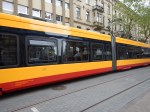
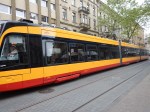
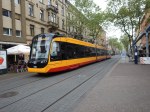

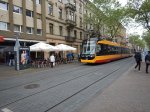

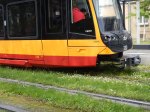
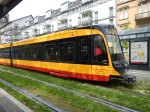
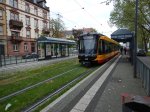
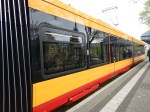
They are closely related to the Class 399 tram-trains for Sheffield, that I wrote about in My First Pictures Of A Class 399 tram-train.
They were good trams and rode well on the streets of Karlsruhe.
Note that the trams I photographed are only some of the latest batch of twenty-five tram-trains of this type in Karlsruhe. So the basis of the Class 399 tram-train, must surely be well-proven on the streets of a city about the same size as Sheffield.
Incidentally, all of the new tram-trains were running on tram routes, just as the first Class 399 tram-trains will in Sheffield, when they start running in a few months.
But their profile and nose section is slightly different between the two variants. Compare the pictures from Karlsruhe, with this visualisation of a Class 399 tram/train from the Stadler data sheet.
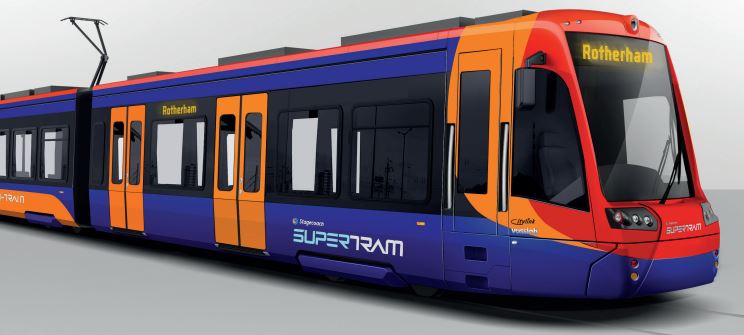
Class 399 Tram/Train Visualisation
Note the lack of a coupling, as I don’t think Sheffield’s trams will work in pairs.
This second gallery was taken as I rode another of the new trams back to Karlsruhe station?


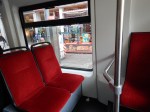
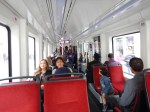
Note that the non-driving end of the tram converts into four seats with panoramic views to the rear of the tram.
Will we be seeing this feature in Sheffield?
I think it is too radical and although the design is common in Germany, I can’t see the Department of Transport allowing this passenger friendly feature.
But if it is possible and built into the tram-trains delivered to Sheffield, why shouldn’t it be used? Surely, as the tram-trains go there merry way around Sheffield and Rotherham, there must be some entertaining things to look at, out of the back of a tram!
Overall, I can see the Class 399 tram-train becoming a very popular vehicle in the UK.
- It is a modern, low-floor tram.
- It is a capable, electric multiple unit.
- It has a comfortable, if rather crowded at times, ride.
- The newer tram-trains are wheelchair-accessible.
- The passengers I spoke too, seemed to like the tram-trains.
- Longer trains can be created, by coupling units together.
- It is not an unproven concept on the streets and tracks of several German cities.
- Seventy-five tram-trains of this type and earlier variants, run in Karlsruhe alone.
- The major difference is that the Germans use 15 kVAC overhead wires for their trains and we use a more-standard 25 kVAC.
- Karlsruhe seems to have developed extensive solutions to make the train-platform transition an easy one for all passengers.
All it needs is for a successful trial between Sheffield and Rotherham.
My First Pictures Of A Class 399 Tram-Train
In Sheffield, I took these pictures of a Class 399 tram-train in the depot on the way to Meadowhall.
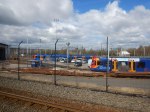
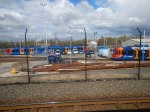
In two picture theres is also one of the current Supertrams.
The difference between the two trams, is that the current ones have full length windows in the doors, whereas the tram-trains have shorter windows.
Although, work appears to be continuing at South Meadowhall to connect the tram and heavy rail networks, nothing much was worth photographing.
 The Anonymous Widower