The Four-Car Bi-Mode Train
The Class 319 Flex train is an affordable four-car bi-mode or electro-diesel train, promoted by Porterbrook and to be used by Northern.
- The train is affordable, as it is based on a refurbished Class 319 train, which was built thirty years ago.
- The train is a dual-voltage unit and can be powered by either 25 KVAC overhead or 750 VDC third-rail electrification.
- Each unit also has two rail-proven MAN diesel engines, for powering the train on lines without electrification.
If there is a drawback, it is that with their interiors so far, Northern have opted for a no-frills interior with no wi-fi.
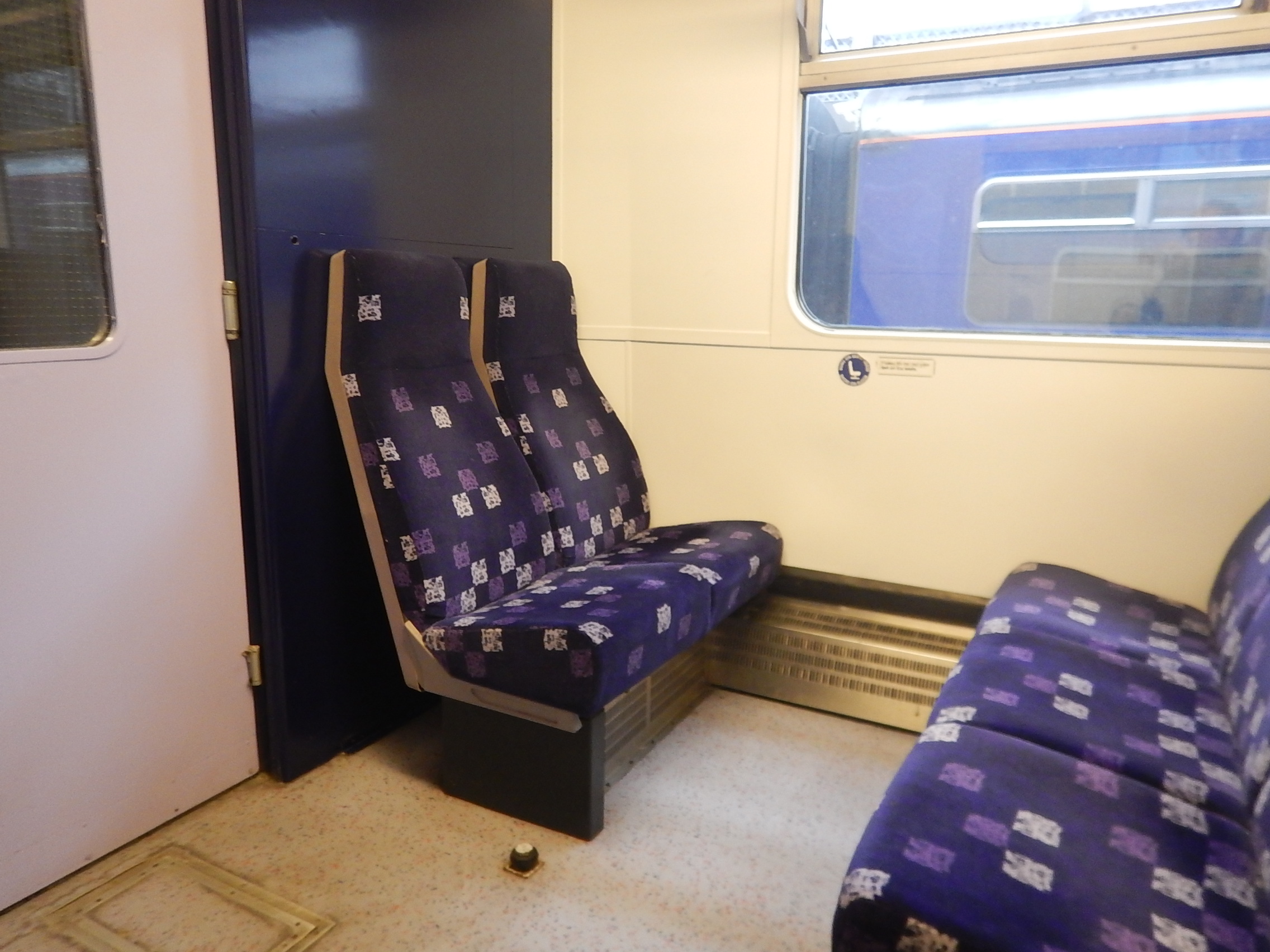
Compare this with the interior of a Class 455 train.
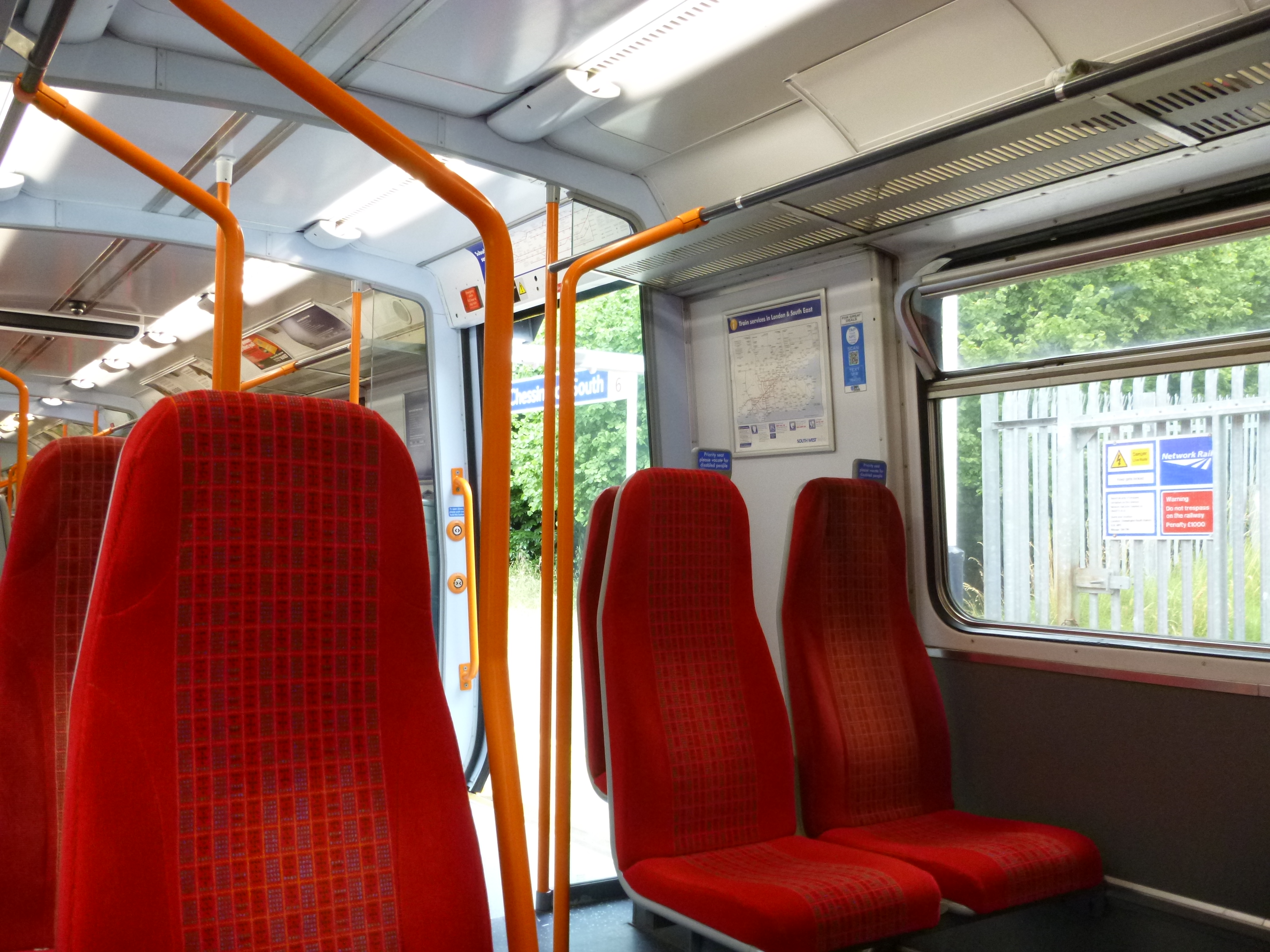
The trains were originally built within a couple of years, but the updated interior specified by South West Trains is much more impressive and passenger-friendly than that used by Northern.
Both trains are four-car units and are based on the Mark 3 coach, so underneath the skin, they probably have a lot in common.
There are a large number of four-car trains on UK railways so it must be a train length that is convenient for operators.
But strangely until now there has not been a four-car bi-mode train.
But then bi-mode trains are not that common, with the only UK train of that type; the Class 800 train, yet to enter service.
But the Class 800 train is for the long distance market and is a five-car or nine-car 125 mph train.
I do wonder, if the reason we have no four-car bi-mode trains, is that no-one has bothered to design one so no-one has wanted one.
But Porterbrook own 86 of these Class 319 trains, which are reliable 100 mph trains, that drivers tell me they like, because of their performance and excellent brakes.
Because of their age, they’re probably not worth a great deal more than scrap value, but because of the depth of knowledge of what can be done with Mark 3 coaches, they can be turned into a useful train by quality engineering.
Porterbrook have seen a gap in the market with Northern for a train specifically designed to be able to handle their toughest route, which is Manchester Piccadilly to Buxtonup the very steep Buxton Line. But the train is no one-trick pony and can run on virtually any of Northern’s routes, whether they are electrified or not.
So Northern can use the train for a variety of purposes.
- Running services on routes, that are not fully electrified.
- New route development.
- Extension of existing electrified routes.
- Replacement of a failed unit, which could be electric or diesel
Northern will have two versions of the Class 319 train; electric and bi-mode, just like other train operating companies will have electric and bi-mode versions of the Class 800 train.
I suspect that to passengers and all train staff except the driver, there will not be many obvious differences between the two versions.
Some routes will probably be able to be served by both versions.
The Bombardier Aventra
I feel very much that the Aventra will have one or more independently-powered versions.
The Aventra has a slightly unusual and innovative electrical layout.
This article in Global Rail News from 2011, which is entitled Bombardier’s AVENTRA – A new era in train performance, gives some details of the Aventra’s electrical systems. This is said.
AVENTRA can run on both 25kV AC and 750V DC power – the high-efficiency transformers being another area where a heavier component was chosen because, in the long term, it’s cheaper to run. Pairs of cars will run off a common power bus with a converter on one car powering both. The other car can be fitted with power storage devices such as super-capacitors or Lithium-Iron batteries if required.
This was published six years ago, so I suspect Bombardier have improved the concept.
Perhaps instead of a power storage device, they could squeeze in a small diesel engine and an alternator.
I’ve believed for a long time, that the Class 710 train being built by Bombardier for the London Overground, has onboard energy storage and that I wouldn’t be surprised if it used the storage to capture energy from regenerative braking, just as a lot of hybrid vehicles, like a London Routemaster and a Toyota Prius.
It won’t be a high-power bi-mode like the Class 319 Flex train, but it could have a useful range on the stored energy.
But it will be an all-electric train and probably more energy-efficient.
Other Four-Car Bi-Modes
I can’t believe that other train manufacturers are not looking at various forms of bi-mode trains.
Hitachi make the Class 800 trains at Newton Aycliffe, where they also make the four-car Class 385 train for ScotRail.
And what about Alstom, CAF, Siemens and Stadler?
What About Five Cars?
Four-car trains mean that operators can run eight and twelve car trains, when they are convenient. But other companies prefer five-car and ten-car trains.
We have the Class 800 trains, which are a 125 mph bi-mode, but we don’t have a five-car bi-mode suburban trundler. A few would surely be useful for Southern to handle Uckfield and the Marshlink Line.
I also believe that Greater Anglia’s five-car Aventras could have the limited independent capacity given by onboard energy storage.
I suspect that what the train operators need, the train operators will get!
Conclusion
We will see a complete spectrum of bi-mode four-car trains. And a few fuve-cars too!
, o
The South London Workhorse
The 137 sets of Class 455 trains are the workhorses of the electric routes South of the Thames. These are some pictures of those run by South West Trains.


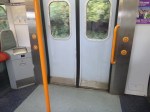


They may have been built in the 1980s, but they scrub up well. They are also built to withstand the heaviest accidents. Is there any other train in the world that can protect the occupants, if an idiot drops a twenty-four tonne cement mixer on top? The Class 455 and their sisters the Class 317 can, as this actually happened at Oxshott to a Class 455. No-one was killed and the train later returned to service a couple of years later.
Perhaps the greatest complement to these trains, is that South West Tains are fitting them with new traction motors, as is detailed in Wikipedia. Would you put a new engine in your 1980s-built car?
There’s an old phrase about horses – Handsome Is As Handsome Does
These Class 455 trains may not look the most beautiful and sexy trains from the outside, but they are the living proof of the phrase.
It is interesting to note, that South West Trains converted their Class 455 trains from 2+3 to 2+2 seating, as happened to many of the Class 317s in North London. However, Southern have kept the cramped 3+2 seating, as have Northern with their Class 319 trains.
Although, I’m only slim and don’t occupy much seat space, I do feel we should endeavour to make 2+2 seating the rule for Standard Class.
It’s Not A New Train
This may look like a new train, but it’s just a well refurbished one!
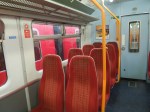


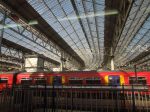
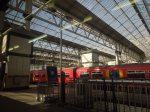
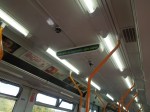

The story of the refurbishment of these Class 455 trains is detailed here in Wikipedia. It includes this comment.
This refurbishment was so comprehensive that many passengers thought the refurbished units were new trains.
But refurbishment of trains is something we do well in this country. And there are lots of similar trains built like these Class 455, running all over the UK. Some like the Class 317 are already being earmarked for full refurbishment and upgrading.
So don’t despair that the old rattletraps on your line are beyond improvement. Some designer or engineer has ideas for your trains. Whether they will get done is up to the Treasury, which is not a real bastion of hard core engineering and design.
 The Anonymous Widower