The Design Of The Class 378 Trains Keeps The Gospel Oak To Barking Line Running
In some ways, London Overground’s Class 378 trains are the ultimate Electrostars.
These ten-year-old trains are no high-performance trains, but they are people carriers par excellence.
Wikipedia describes their interiors like this.
The design is similar to the Class 376 trains used by Southeastern, featuring the same wider metro-style sliding pocket doors for more efficient boarding and alighting. However, it also has significant differences from the Class 376, such as fully longitudinal seating similar to that used on London Underground rolling stock to give more standing and less seating capacity and reduce overcrowding, suitable for the high-volume metro-style services on London Overground.
This picture shows a view through the five cars of a standard-length train.
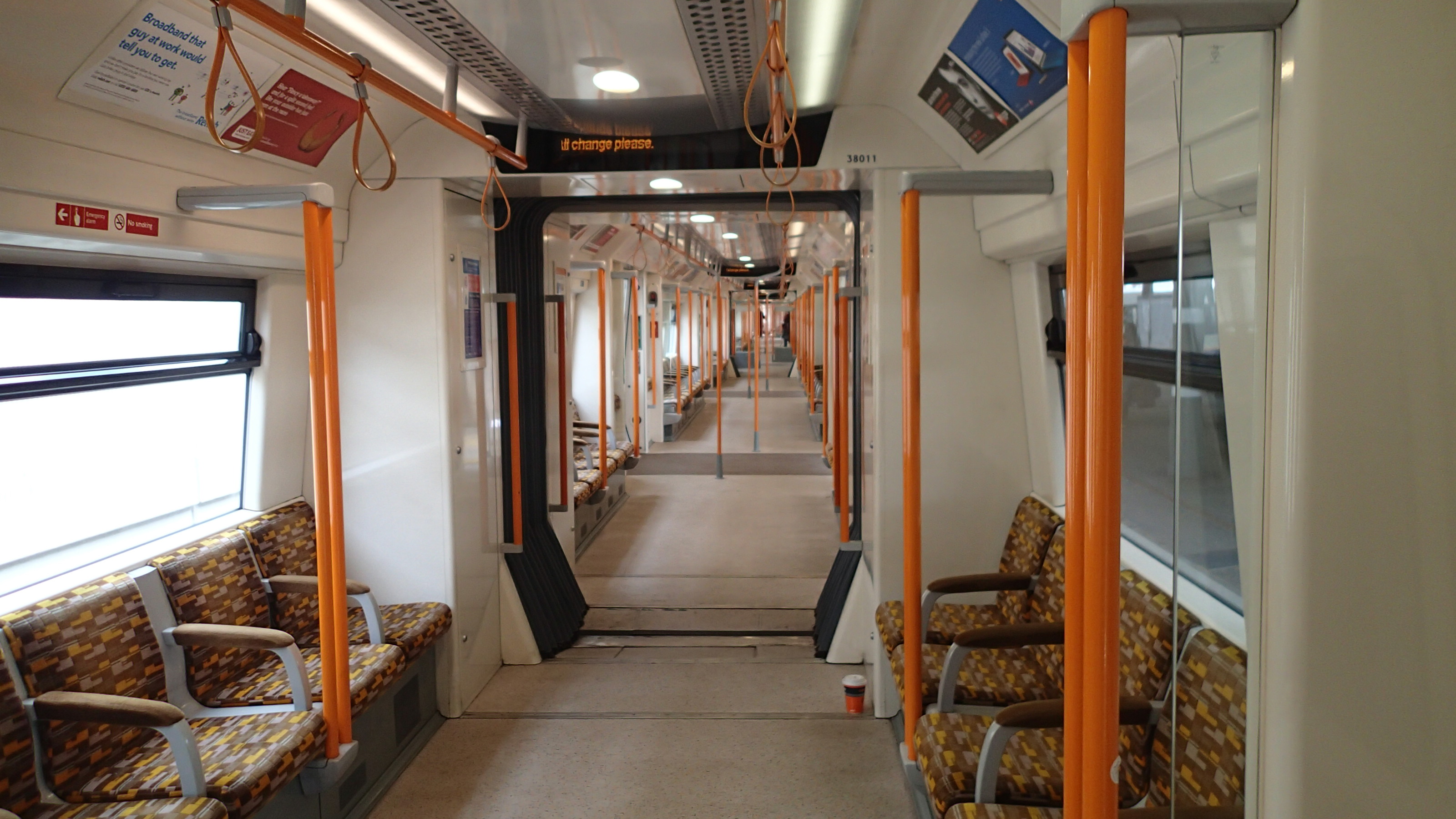
At the present time they are the only heavy rail train with this seating layout. Although London Overground will soon be running some Class 710 trains with a similar layout.
- The seats are reasonably comfortable.
- All passengers get at least one arm-rest.
- Passengers can walk between cars to find a seat or more space.
- The aisle between the seats is wide enough for passengers to stretch their legs and others to walk through, when all seats are taken.
- There’s plenty of space for standees and lots of handholds.
- In less busy times, everybody gets at least one seat.
There are also wide lobbies and doors for easy embarking and alighting.
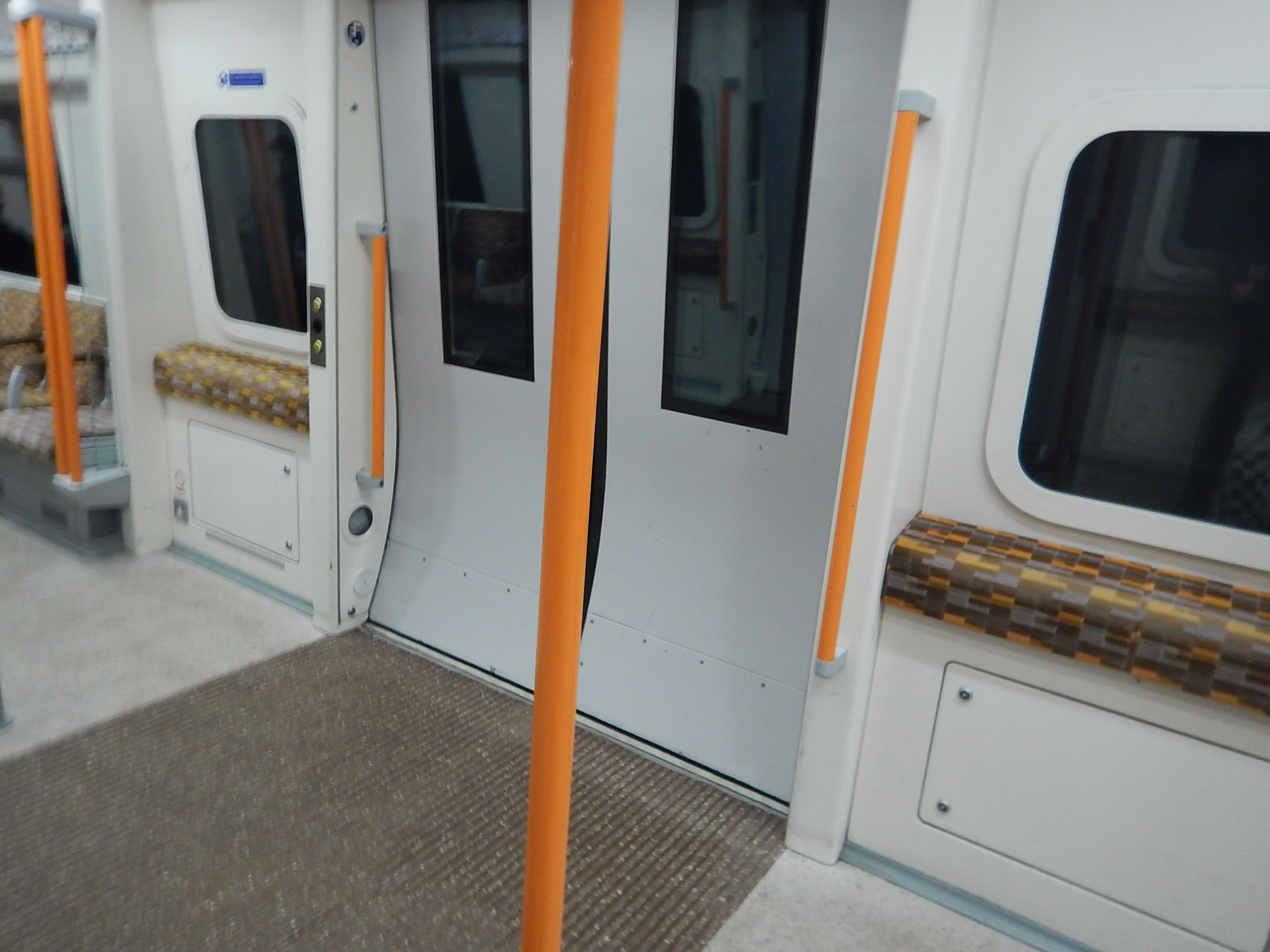
Note the perches either side of the door and the numerous handholds.
In my travels across Europe, I’ve never found a better inner-city commuter train.
To run a four trains per hour (tph) service on the Gospel Oak to Barking Line, ideally eight trains are needed; six to run the service, one in maintenance and a spare.
But all London Overground can scrape together is three Class 378 trains shortened to four-cars.
- This limited number of trains can only run a two tph service.
- The four-car Class 378 trains have 152 seats (including tip-up seats) and thirty-two double perch seats.
- The two-car Class 172 trains have 124 seats.
This gives these seats per hour for the two services.
- Class 172 trains – four tph – 496
- Class 378 trains – two tph – 432
The Class 378 trains may offer less seats, but each four-car train can hold a lot of standees.
This article on Railway Gazette is entitled London Overground Class 378 Ready To Enter Service, says that four-car versions of Class 378 trains can hold up to 700 passengers.
If you’ve ever travelled on the East and North London Lines around Dalston in the Peak, you’ll know how many people these trains can hold at a push!
Since the two tph service started yesterday I’ve done several trips on the Gospel Oak to Baring Line over two days.
- 09:20 – Gospel Oak to Barking
- 10:33 – Barking to Blackhorse Road
- 14:27 – Harringay Green Lanes to Gospel Oak
- 14:50 – Gospel Oak to Barking
- 15:33 – Barking to Gospel Oak
- 07:33 – Barking to Gospel Oak
Only the last trip can really be considered to be in the Peak.
I have the following observations on the Off Peak trips.
- There were typically at least twenty per cent of seats available.
- No-one was ever forced to stand, although some were.
- A proportion of passengers were doing short trips of one or two stops.
- Some stops like Crouch Hill, Blackhorse Road and Leyton Midland Road seemed to have more passenger traffic than others.
- The trains had more passengers towards the Barking end of the route.
- I asked a few passengers, if they’d had to wait long and all said, they’d read the timetable and arrived accordingly.
- The usual accessories like dogs, buggies and baggage were carried by a proportion of passengers.
- Two station staff said passengers were only complaining about the frequency.
It appears to me, that Off Peak journeys on the route will be adequate if not as frequent as passengers want.
I have the following observations for the single Peak journey at 07:33 this morning.
- Nearly all seats were taken for the whole route.
- Dwell times were slowed at certain stations, due to the numbers wanting to enter and alight.
- All standees had a decent hand-hold.
- Some passengers were still doing short trips of one or two stops.
- Blackhorse Road with its connection to the Victoria Line was busy.
- A staff member told me, that it all gets less busy after eight o’clock.
I should also say, that one passenger was complaining hard, as he had to stand for his short journey from Crouch Hill to Gospel Oak. But then he was dressed like he would pay for a First Class seat.
On arrival at Gospel Oak, I took a North London Line train to Hampstead Heath and that was carrying more passengers per car.. This added a perspective to the trip.
But then, in my part of London, at times, there are more overcrowded trains that I use regularly.
- The Central, Victoria and Northern Lines on the Underground.
- The North and East London Lines of the Overground.
- The Northern City Line into Moorgate station.
Today’s Peak trip was no worse, than some I’ve experienced in the North of England.
Conclusion
The three gallant Class 378 trains are coping well and if they don’t suffer any failures, I suspect they can hold the line, until reinforcements arrive.
My trip today, illustrated the strengths of the train design as a large number of passengers were transported in a half-hour journey across North London.
Bombardier must also be pleased that it is three of their ten year-old-trains, that have been quickly reconfigured and have made up for their software shortcomings, that are causing late delivery of the Class 710 trains.
Sunday On The Gospel Oak To Barking Line With Three Trains
I went to have a look this morning to see how many passengers were braving the cold and limited service on the Gospel Oak to Barking Line.
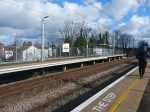
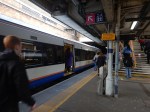
The pictures show, that there weren’t too many punters about.
I used the train all the way from Gospel Oak to Barking and by the time it reached the destination, there was perhaps a dozen empty seats.
Incidentally, there were few long faces and no-one seemed to be complaining about the lack of trains.
It will probably be different in tomorrow’s Peak.
Is this good news, that I have clipped from the on-line timetable?
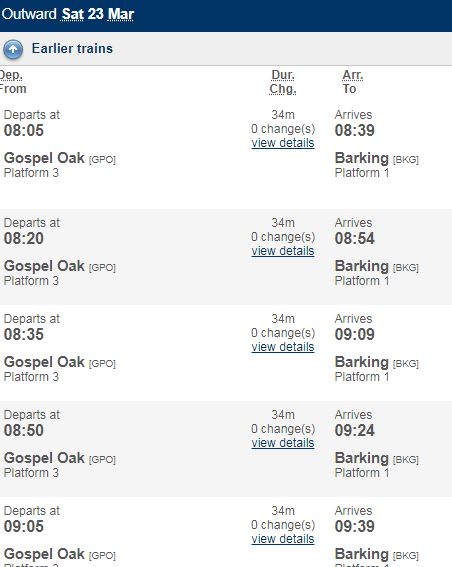
Let’s hope so!
Roaming Around East Anglia – London Overground’s Luxurious Metro Trains
I spent Friday and Saturday roaming around East Anglia, ending up at the football at Portman Road.
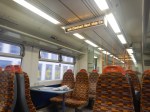
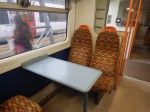
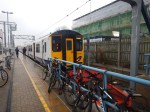
These pictures show one of London Overground’s Class 317 trains, which I used to start my journey between Hackney Downs and Cheshunt stations.

Some questions?
- Are then any other inner-city metro trains, where there are comfortable seats and tables for four?
- How are passengers going to react, when it is replaced with a high-capacity Class 710 train, with longitudinal seating?
- Will the wi-fi and charging points of the new trains compensate.
One factor that will help the changeover, is that most on the line are Class 315 trains, which need to be delivered to the scrapyard.
The Class 317 trains will surely find a good home.
Will The Gospel Oak To Barking Line Have Long Term Capacity Problems?
There are certainly, short term capacity problems on the Gospel Oak to Barking Line, (GOBlin) due to the non-delivery of the new Class 710 trains.
Comparison With The North London Line
There are a lot of similarities between the Gospel Oak to Barking Line and the North London Line (NLL).
- Both run roughly East-West across North London.
- Both have interchanges with the Underground, Crossrail and National Rail.
- Both run electric trains.
- Both have several freight trains per day.
In addition, the Eastern end of the NLL and the GOBlin, run through areas of East London, where a lot of regeneration and housing development is ongoing.
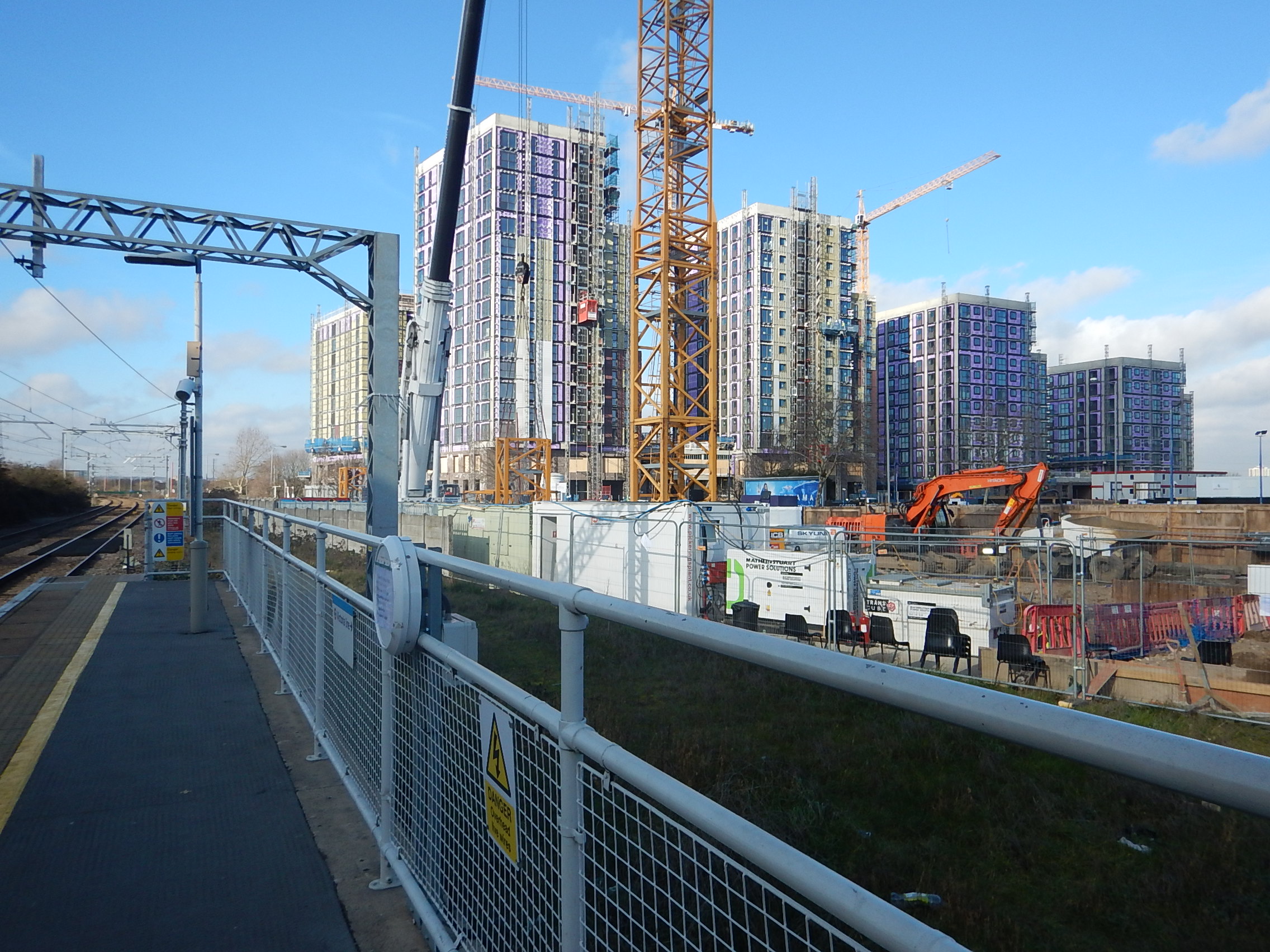
This picture was taken at Blackhorse Road station. The station is being surrounded, by a large amount of housing.
Capacity On The North London Line
When I moved to Dalston in 2010, the frequency of trains between Stratford and Willesden Junction stations was around six trains per hour (tph). The trains were three-car Class 378 trains, giving a capacity of 18 carriages per hour (cph).
Now in early 2019, the frequency on the same section of the NLL is eight tph and the trains are five-cars, giving a capacity of 40 cph.
This large increase of 120 percent, has not been enough to prevent trains on the NLL from being very full at times. But then there have been large housing and commercial developments at Stratford, Hackney Wick, Hackney Central, Dalston Junction and West Hampstead stations.
Future Capacity On The Gospel Oak to Barking Line
Until a few months ago, the GOBlin had a frequency of four tph. The trains were two-car Class 172 trains, giving a capacity of 8 cph.
The service from today is two four-car Class 378 and two two-car Class 172 trains per hour, giving a capacity of 12 cph.
Hopefully, when the Class 710 trains are working, we’ll be seeing four four-car Class 710 trains per hour, giving a capacity of 16 cph.
It is not the 120 percent increase that the NLL has already seen, but surely a 100 percent increase is better than nothing.
My Observations On The Gospel Oak To Goblin Line
For the last three of four years, Highbury & Islington station has been a station to avoid.
- There have been continuous roadworks in the area of the station.
- There have also been several water-main bursts.
- The bus service between the station and my house has been halved in frequency.
Consequently, if I’m coming East to my home, I find it a lot easier, but slightly slower to change to the GOBlin at Gospel Oak station and then get a bus home from Harringay Green Lanes station.
So if a GOBlin train is waiting at Gospel Oak station, I take that route.
Helpfully, Transport for London have improved the cross-platform interchange.
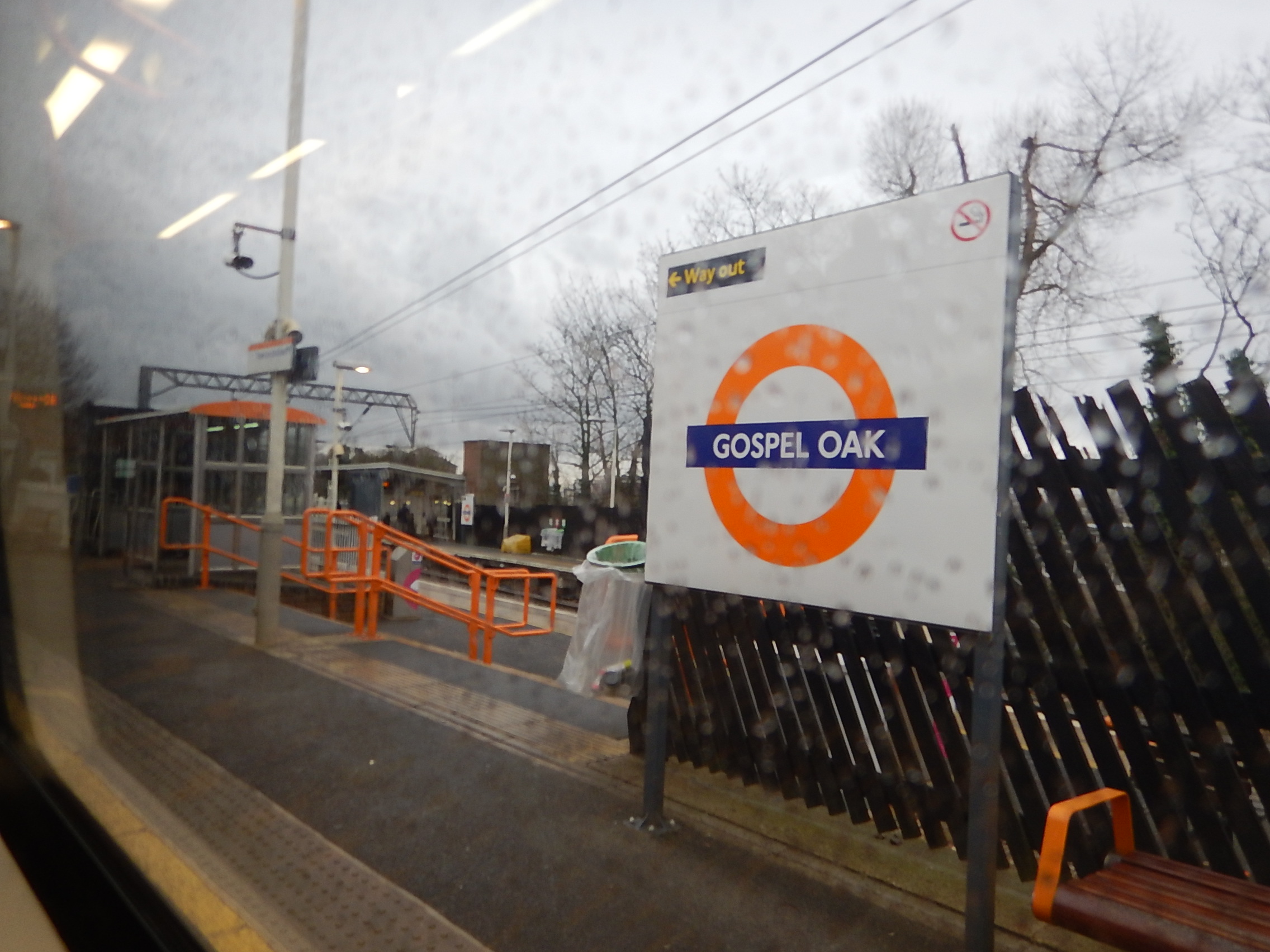
They’ve also added more stairs to the right of these.
I actually, think, that passengers wanting to go to areas between the two lines are starting to use the GOBlin, as often by Harringay Green Lanes station, a lot of passengers have left the train.
Londoners are just practising their ducking and diving!
I’ve also left Barking a couple of times in a very full train in the Off Peak.
- Passengers for whatever reason, seem to be using the GOBlin more!
- Do clean electric trains attract passengers more than less friendly diesels?
- Does the occasional four-car journey impress passengers with more space?
- Is it since the Class 378 trains took over some duties, that the service is more reliable?
Or perversely could it be, that all the bad publicity about the GOBlin has reminded people that it is still there and might be worth a second chance?
Will The Proposed Gospel Oak To Barking Line Be Enough In The Long Term?
I am rapidly coming to the conclusion, that although capacity on the GOBlin is going to be doubled, when the new Class 710 trains arrive, this may not be a large enough increase for the long-term.
What Measures Can Be Taken To Increase Capacity?
There are some simple measures that can be taken.
Higher Frequencies
Transport for London are planning to run five tph in the Peak this year.
If it happens, this will increase capacity by a small amount, where it is needed.
But it probably can’t be a general increase, as that would probably restrict the number of freight trains.
Trains With A Higher Performance
The electric Class 710 trains probably have a higher performance than the diesel Class 172 trains.
This will help with running higher frequencies and faster services, but on its own, it won’t increase capacity.
Longer Trains
The Class 710 trains are Aventras, and these trains have been ordered up to ten cars by other operators.
So five- or six-car trains would certainly be possible.
But the problem is that some platforms would need to be lengthened.
- Barking already handles longer trains.
- Upper Holloway, Crouch Hill, Harrigay Green Lanes, Walthamstow Queens Road, Leyton Midland Road, Leytonstone High Road, Wanstead Park and Woodgrange Park used to have longer platforms, which might be possible to reinstate.
- Blackhorse Road, South Tottenham and Gospel Oak would be major undertakings.
Five-car trains might be possible, if selective door opening was used at the last three stations.
Five-car trains would increase the capacity to 50 cph or an increase of twenty-five percent on the capacity after the Class 710 trains are successfully introduced.
Conclusion
I am very sure, that the only way to increase the capacity of the Gospel Oak to Barking Line, would be to run longer trains.
But they would need to use selective door opening at Blackhorse Road, South Tottenham and Gospel Oak stations.
After the problems of platform lengthening on the East and North London Lines, why weren’t platforms at least prepared for five- or even six-car trains, when the GOBlin was rebuilt and electrified?
And Now There Are Two!
The second Class 378 train; 378206 is now in service on the Gospel Oak to Barking Line.
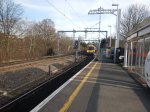


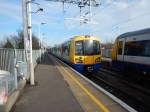
I have had a thought about these trains and also the Class 710 trains, which will have a similar interior.
At two in the afternoon on the short trip between Gospel Oak and Harringay Green Lanes stations about three-quarters of the seats were occupied.
I would estimate that there were perhaps 160 passengers on board.
As the Class 172 trains have only 124 seats, I feel that the electric trains and all the publicity are attracting passengers.
 The Anonymous Widower