Electrification Delays On The Great Western Railway Must Be Serious
This article in Rail Magazine is entitled GWR and DfT discuss ‘revised plan’ after electrification delays and it talks about what is to be done to get a decent passenger service running on the Great Western Railway, despite all of the delays to the electrification program.
If you want to know more of the problem this article on the BBC web site from July 2015 is an excellent summary.
- The under-performance of the High Output Plant System, a factory train made up of 23 vehicles, has, according to rail observers, made a big contribution to Network Rail falling at least a year behind schedule.
- The whole electrification project for the Great Western line was really based on the High Output train because of the amount of work it could do so much more quickly,
- Engineering insiders told the BBC that a newly designed wiring system did not match the specification of the holes the Hops train was designed to dig and that a new design of pile-tubes hammered into the ground to house the thousands of electrification masts – went in too deep after ground surveys were missed.
- Even where the Hops train has managed to dig holes, it has damaged existing signalling cables.
- Network Rail is short on experienced engineers and experienced operators – people who know how to run a railway.
- It was decided by the Department for Transport that the new trains will be 26m long per vehicle and our railways are built for 23m long,
I don’t think I’ve ever seen such a badly-designed and executed project in my long years on the dark fringes of project management.
So now it is sucking engineers and resources out of every other electrification project in the UK!
For instance, on my local electrification of the Gospel Oak to Barking Line, nothing much seems to have happened for the last few weeks.
I had to have a quiet chuckle, when I read this last paragraph in the Rail Magazine article.
GWR has tested short-formation High Speed Trains, and these could potentially be used on longer-distance services currently operated by multiple units, such as Cardiff-Portsmouth and Exeter-Penzance. They could also be used on some of the longer branch lines in the South West, such as Par-Newquay and Exeter-Barnstaple, although neither GWR nor the DfT would confirm this. A potential additional order for bi-mode AT300 hybrid trains could also be under consideration.
Terry Miller’s wonderful stop-gap design of the 1970s; the High Speed Train, is coming to the rescue again.
But then very serious problems, need the most serious of solutions!
I’m not running Network Rail and I’m not the Transport Minister, but in my view, it is now time to think extremely radically.
- Electrify as far as possible from London and run Class 387 trains or dependable-but-ugly Class 319 trains where you can.
- Run services to Bedwyn, Newbury, Oxford and the various branches East of Didcot using IPEMU variants of Class 387 trains.
- Replace as many HSTs on the East Coast Main Line as possible with new Class 800/801 trains and deploy Miller’s Masterpieces to the Great Western.
- Build new Class 800 electro diesel trains, instead of Class 801 electric trains and use them on the routes of TransPennine and Hull Trains.
We have been lucky with our train purchases and development.
- Class 800 and Class 801 are identical except for the diesel engines.
- Class 700 trains are being delivered to release Thameslink’s Class 387 and Class 319 trains.
- There are fifty or so Class 387 trains, that could be converted into IPEMUs, which would have a sixty mile range on batteries.
- Bombardier could probably build a few more Class 387 trains, alongside the Aventras.
I think that many places will get different and probably better and bigger trains, but not everyone will get the expected new electric trains.
New Trains For The North
That is the headline on a two page article in Modern Railways magazine.
It is an article that is strong on promises, in what it says that First TransPennine and Arriva Northern Trains will do.
Under a sub-heading of Bi-Modes for TransPennine, this is said.
FirstGroup is to invest over £400 million in a fleet of 44 new five-car 125 mph trains, which are expected to be based on the Hitachi AT300 design already being procured by sister operator Great Western Railway.
It also states that twelve will be electric only and the rest will be bi-modes.
The timetables state that the first bi-mode will enter service in December 2017.
Under a sub-heading of New and Upgraded Fleet for Northern, this is said.
Arriva is to invest £400 in 98 new air-conditioned 100 mph trains comprising 281 carriages, of which 43 will be three- and four-car EMUs and 55 two- and three-car DMUs. The latter will enable the withdrawal of all Pacers by the end of 2019.
The delivery schedule for the new trains stretches to 2020.
All these promises are all well and good, but I do wonder if they are deliverable with new trains.
AT300
Hitachi have been clever and have bought AnsaldoBreda, so they can build AT300 trains in Italy. This is said in the Wikipedia entry for the AT300, which is based on the Class 800 train, they are building in Newton Aycliffe.
In mid 2015 Eversholt Rail, a rolling stock operating company signed a £361m contract with FGW to purchase 173 new AT300 carriages, consisting of 22 five-car and seven nine-car trains. The AT300 trains are to be built at Hitachi Rail Italy’s Pistoia plant.
The trains are expected to enter service with Great Western Railway from December 2018. and are also expected to reduce journey times from London to Exeter by up to 5min, to Plymouth by up to 6min, and to Penzance by up to 14min.
It puzzles me how First TransPennine will be able to introduce the first bi-mode into service in December 2017, as where will the train be built?
It can’t be built in Italy, as Hitachi won’t have even delivered their first train until December 2017.
The only possibility will be to take trains from Newton Aycliffe and delay deliveries to Great Western Railway and Virgin Trains East Coast. Wikipedia and other sources is rather short on dates for the delivery of the Class 800 and Class 801 trains.
Hitachi in Newton Aycliffe are also involved in the building of AT200 trains for Abellio ScotRail. This is said in Wikipedia.
Abellio ScotRail will introduce a fleet of 46 three car and 24 four car Hitachi AT200 electric trains from December 2017, to operate services on the lines being electrified as part of the Edinburgh to Glasgow Improvement Programme, if it granted a three-year optional franchise extension, it will order a further 10 three car units
I doubt that we’ll see more than a token AT300 running on First TransPennine before the end of 2017.
Class 185 Trains
The Modern Railways article says this about TransPennine’s Class 185 trains
First is expected to retain 28 of the current 51×3 car fleet of Class 185s; the units to be retained will be refurbished.
This means that twenty-three of the Class 185 trains will be available for cascade.
Modern Railways says the two franchises will be jointly managed from Leeds, so would it be sensible to perhaps keep the current fleet together for refurbishment and maintenance?
So perhaps if the answer is yes, then common sense would dictate that the cascaded twenty-three trains would go to Arriva Northern.
Class 319 Trains
Handsome is as handsome does, goes the old horseman’s phrase and you couldn’t call a Class 319 train beautiful.
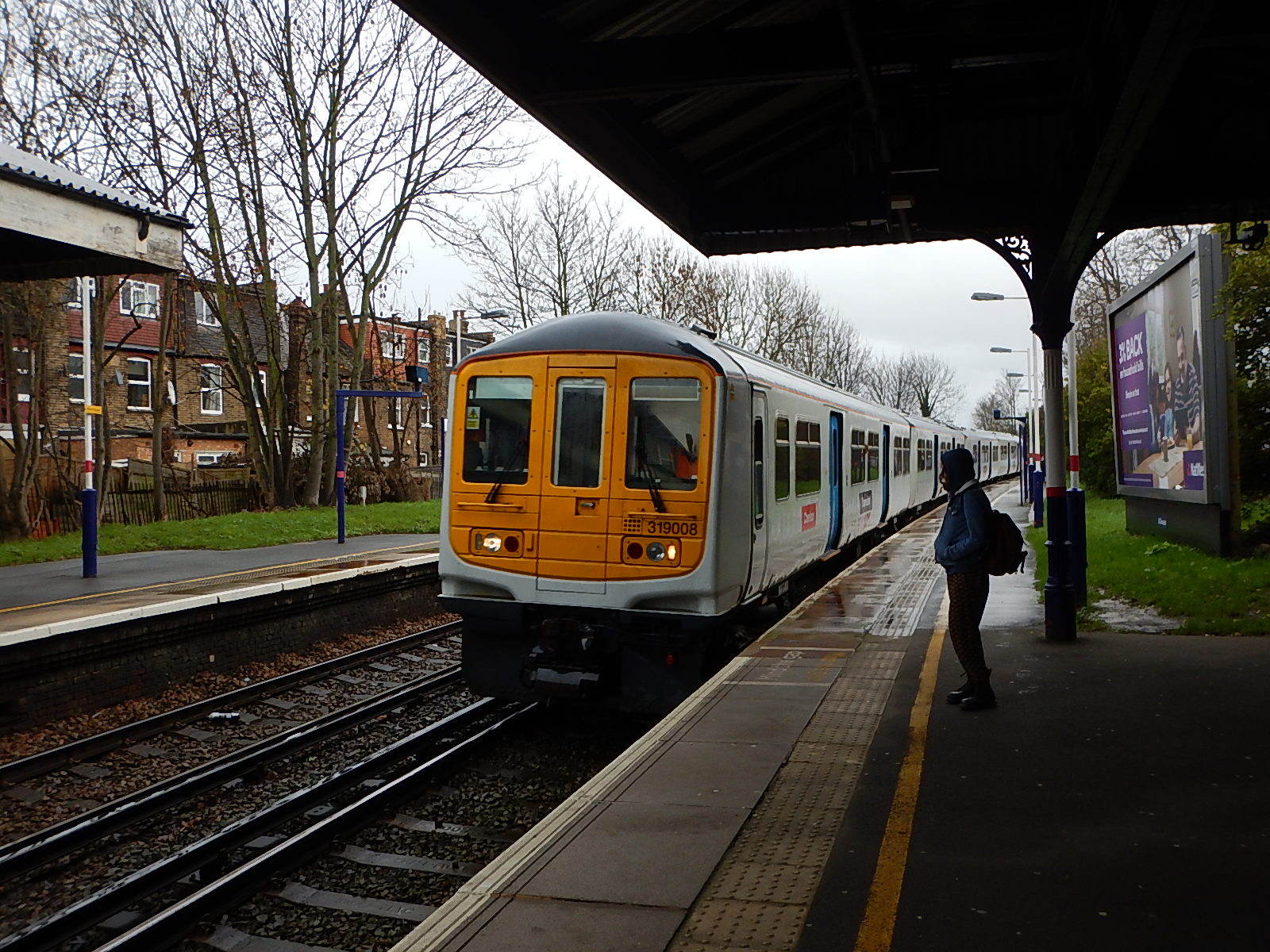
But for some of the electric routes in the North, they’re all we’ve got! And like some elderly actresses, they scrub up well.
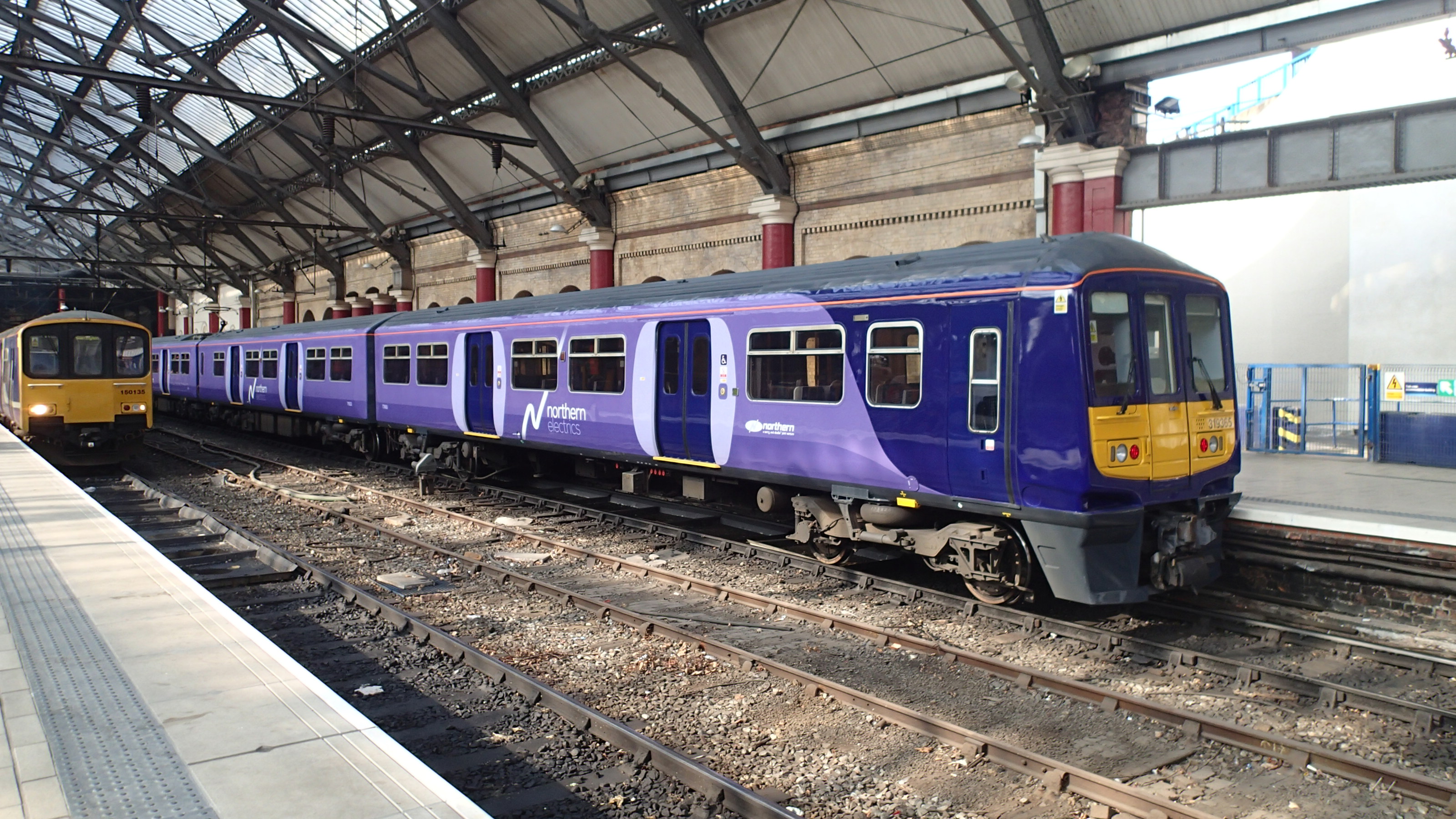
The Modern Railways article says this about Northern’s use of the Class 319.
It is understood that refurbished Class 319s will be used on these services on an interim basis until new build units arrive.
I suspect that these will soldier on for a few years yet!
At least there are eighty-six of these 100 mph four-car trains.
There must be a lot of laughter at reunions of engineers from BREL York, when they see how far their Bedpan Special has gone. after being built especially for the Bedford-Brighton route through the tunnels under London via St. Pancras in the 1980s.
He who laughs last, laughs longest!
Class 442 Trains
This is said in the Modern Railways article about Class 442 trains.
First says it did evaluate the use of Class 442 EMUs displaced from Gatwick Express workings hauled by diesel locomotives.
But they found it was too challenging and have discounted them.
So it looks like the Class 442s won’t be going anywhere in the North and probably have no worthwhile future.
Class 390 Trains And The West Coast Main Line
Virgin Trains have aspirations to run their Class 390 trains that work the West Coast Main Line, at their design speed of 140 mph in as many places on the route as possible. This section in Wikipedia gives more details.
At present because of signalling and regulations, trains are limited to 125 mph, but it is likely that once ERTMS is fully implemented, that pressure will increase to allow 140 mph in places on the West Coast Main Line.
TransPennine’s Scottish Services
TransPennine are increasing their Scottish services and this timetable is given.
- December 2018 – Liverpool-Glasgow service launched
- December 2019 – 12 new electric trains introduced on Anglo-Scottish services.
- December 2019 – Liverpool-Newcastle services extended to Edinburgh
This is said about the Class 350 trains currently running their Scottish services.
The 10 four-car Class 350/4 EMUs currently used on Manchester-Scotland services are expected to be phased out over the first three years and offered to other franchises. First say these trains are too small to run on many diagrams as single units.
So it looks like trains with this specification will be needed.
- Electric power only
- 140 mph top speed, as parts of the West Coast Main Line, will probably get upgraded to this speed, within the service lifetime of the trains.
- Five cars or longer.
- The ability to work in pairs. As all Glasgow trains will probably call at Preston, it might be sensible to join and split Liverpool and Manchester trains there to save train paths on the West Coast Main Line.
- Full on-board customer service.
The specification fits the Hitachi AT300 well, as these trains are available in five car sets and can be upgraded with minor modification for 140 mph running.
But will the timetable of 2019 for twelve new trains, fit the production capabilities?
As delivery into service by December 2019, to give TransPennine their promised service might be exceedingly challenging, could we be seeing something from another manufacturer?
After all, there are several around the world, who could create five-car 140 mph electric express trains?
- Some open-access operators like Alliance Rail are talking about using Pendolinos on Scottish routes, so Class 390 trains or an updated design of Italian-built Pendolino train must be a very real possibility.
- Siemens must also have a suitable train perhaps based on a German ICE design.
- The Chinese, Koreans, Spanish and Swiss shouldn’t be discounted.
If Hitachi can’t deliver, I’d put my money on a five-car Pendolino. After all, it is proven on the West Coast Main Line.
EMUs For Northern
Arriva have said, they will be buying forty-three 100 mph air-conditioned electric multiple units (EMUs), in a mixture of three- and four-car units.
These are probably the easiest trains to source and they might even already have been ordered or even built, in the shape of Class 387 trains. These have the following specification.
- Modern air-conditioned four car electric train.
- 110 mph capability
- Proven performance and certification.
- Bombardier can probably build them alongside all their Aventras at Derby.
But there are few electrified routes in the North, where they can be run.
However on the other hand!
I’ve believed ever since I rode the Class 379 BEMU or IPEMU demonstrator, that battery-powered trains based on this technology, are ideal for some of Northern’s routes.
Partially electrified routes or ones that run between electrified hub stations at Carlisle, Doncaster, Leeds, Liverpool, Manchester, Newcastle and York, could have virtually brand-new four-car electric trains, as soon as Bombardier can add IPEMU systems to Class 387 trains, currently in service or on order and staff can be trained.
A few months ago, I wrote Rumours Of Battery Powered Trains, where I said there were rumours of some of Great Western Railway’s order for Class 387 trains would be delivered as IPEMUs to help solve the shambles of the Great Western Main Line electrification.
Using an IPEMU is an attractive approach for several reasons.
- IPEMUs have a range of around sixty miles on the battery, if it is fully charged.
- IPEMUs have regenerative braking at all times, whether there is an electric supply or not! This improves efficiency and increased on-battery range!
- Bombardier feel that all trains should have energy storage for myriad operational reasons and the upcoming Aventra will be designed to accept an energy storage device as standard.
- Passengers will have the same experience on overhead line or battery power.
- On many routes, IPEMUs need no modifications to be able to run, except perhaps lengthening platforms for four-cars.
- On a scenic line or one in the middle of nowhere, the problems of electrification and its maintenance can be avoided, if services can be run by IPEMUs.
- Electrified hubs can be upgraded or created to charge the trains. In the North, Carlisle is being upgraded and Hull and Middlesbrough could be electrified.
- Some lines are currently run by some of the better diesel multiple units (DMUs) like Class 158 trains. Releasing these would probably eliminate a few of the dreaded Pacers on other lines.
All stakeholders will like these trains.
- Operators know that new four-car trains will attract more fare-paying customers.
- Network Rail will save money on electrification and can skip difficult bits.
- On many routes, opening up bridges and tunnels for the overhead wires is difficult, very disruptive and a time- and money-consuming process.
- Passengers and staff like new trains.
- More places can be served by electric trains.
- New four-car trains replacing ageing diesels will improve the prosperity of an area.
Routes that could be easily converted include.
- Barrow to Manchester Airport
- Chester to Manchester Victoria
- Windermere to Manchester Airport
- Blackpool North to Manchester Airport
- Liverpool to Manchester Airport via Warrington
Add in some electrified hubs and short lengths of tactical electrification to charge the trains and other lines like the scenic Tyne Valley Line between Newcastle and Carlisle could be run using new four-car electric trains.
I believe that these trains have enough energy storage to actually bridge the notorious forty mile gap in the electrification between Manchester Victoria and Leeds, thus creating an electric train service from Liverpool to Edinburgh via Manchester, Leeds, York and Newcastle
Note that news on development of IPEMU trains has been very quiet for several months and the only report is this article in the Derby Telegraph, which is entitled Battery-powered trains win award for Bombardier.
So someone other than I do, think the technology works and deserves its place on the railways of the UK.
Class 323 Trains
Before leaving Northern’s EMUs something must be said about the seventeen three-car Class 323 trains, that run services out of Manchester.
As they are being transferred to London Midland, they will need to be replaced.
Also, according to Wikipedia at times, some of the Class 323s are currently replaced by a pair of Pacers. So perhaps they need a bigger fleet anyway!
So until new units are ordered, will we see Class 319s working these routes? Or could they be a home for some of Porterbrook’s Class 387s?
It’ll all come out in time and in the contracts?
DMUs For Northern
Arriva have said, they will buy fifty-five two- and three-car DMUs.
Two factors could decrease this number.
- If Arriva go down the Class 387 IPEMU route, more routes will be running electric trains.
- The twenty-three Class 185 trains cascaded from TransPennine should they end up with Arriva.
- It seems likely that other companies including Great Western Railway could use the IPEMU route, thus making some high-quality DMUs available.
I won’t speculate on how many new DMUs will be actually ordered and built. If any!
Northern Connect
Northern Connect will be a sub-brand comprising a dozen long distance routes across the North.
Modern Railways publishes a table of the routes and indicates eight routes will be run by new DMUs, two by refurbished trains and two by new EMUs.
Obviously, Northern have a plan to create five of these routes by the end of 2018 and the rest by the end of 2019.
Where will the various classes of train fit?
- Some routes could be run by EMUs, with Class 319s providing an interim service until the new build arrive.
- Some routes could be run by Class 387 IPEMUs, once they are delivered.
- Some of the longer routes around Sheffield and Hull would be ideal for Class 185s.
If the long-rumoured Class 387 IPEMUs do appear, Barrow and Windermere to Manchester Airport, would be ideal routes on which to trial and showcase the technology.
Northern’s Train Philosophy
The Modern Railways article also says this.
Arriva says that it is still in negotiations with the supply chain but expects to sign a contract by April. It also says that the new fleet ‘has the capacity to grow’ with the trains ‘ordered as a family that are expandable’. The first 92 carriages will enter service by the end of 2018, with a further 163 by the end of 2019 to ensure all Pacers are replaced and the final 26 in 2020.
That is a very sound train procurement philosophy, which has a fairly relaxed delivery schedule, given the shortage of train building capacity in the UK and Europe. I suspect the Chinese could build them, but would that be politically acceptable?
I would not be surprised if Arriva went for a purchase of Class 387 trains, of which a proportion were IPEMU variants and some tactical electrification to produce electrified hubs in places like Huddersfield, Hull, Scarborough and Sheffield. It would be an afordable way of getting the benefits of new electric trains at an affordable price.
They would still need a few diesel multiple units, over and above the good ones they replaced with electric trains. But London Overground and hopefully Great Western Railway should be releasing some that are suitable.
Only as a last resort, would any new ones be ordered.
Class 387 Trains
I believe that the Class 387 Trains will play a large part in Northern’s plans.
They are a 110 mph four-car modern unit and currently there are twenty-nine units in service and another twenty-eight on order, if you ignore the separate order of twenty-seven trains for the Gatwick Express.
Thirty seven units are destined for the Great Western Railway and in Rumours Of Battery Powered Trains, I wrote about unconfirmed reports that some of these trains for the GWR would be IPEMU variants. I suspect that this will be confirmed, as it will enable electric services to be started on the shambles that is the Great Western.
The Gatwick Express variant of the Class 387 is going to be a train, worth looking at, as it will be the first Airport train we’ve ordered since the Heathrow Express.
There are to be twenty-seven four car trains replacing twenty-four five-car Class 442 trains.
There may be a few less carriages, but they are designed for the route.
They are also built as dual-voltage trains. Is that just so they can be tested on the West Coast Main Line, as was reported in this article in Rail Magazine, or because they think the type will have other Airport applications, like possibly Manchester, Cardiff, Glasgow, Luton, East Midlands and Stansted.
I can’t wait to ride one in the near future, as I think it might offer, a whole new experience of getting to an airport by train.
A lot of the services in the North West go via Manchester Airport. So would a follow-on order of this variant be ideal to get passengers to the fast growing airport?
Some questions have to be asked.
- As some of these services go all the way to Scotland, could the train be certified to the 125 mph of the West Coast Main Line?
- Could an IPEMU variant be created to bridge the gap between Manchester and Leeds?
- Could an IPEMU variant link Manchester Airport to Barrow, Blackpool North, Liverpool and Windermere?
- Can Class 387 trains be built in five-car formations?
If the answer to all or some of these questions is in the affirmative, Manchester Airport and the Nortrh might receive some interesting trains from Derby to create a 125 mph network of five-car Airport trains all across the North.
I suspect that Bombardier are working hard to see if they can fulfil that dream, as if they can, the rewards to the company, Arriva Northern, First TransPennine, Network Rail and the North in general, could be substantial!
There would be no waiting until 2018 for true bi-mode trains.
Could the silence on the IPEMUs be just because all parties don’t want to show their hands until all of the tiniest details are totally settled?
Political And Commercial Considerations
I mentioned in the section on the Class 387 trains, how important to get any trains, that can improve services in the North is to the companies involved and Bombardier in particular.
Bombardier have been going through a rough patch and were bailed out by the Quebecois. They seem to be sorted with large orders, but creating some more Class 387 trains, must be good cash-flow and profitable.
Network Rail are in a deep mess over electrification everywhere and desperately need some help in creating lines for electric trains. Peter Hendy is trying to sort out the shambles and there is a report in Modern Railways this month with a headline of Hendy Finds £2.5 Billion To Save Enhancements. The article says assets will be sold and there will be more money from the Government.
Arriva and FirstGroup have spent a lot of time and effort to create plans to give the North a modern world-class railway system. It is unlikely, that the train manufacturers will fail to deliver to agreed contracts, as all trains proposed for the North or either in service or at the certification and trial stage. The problem is the tracks. They will not be pleased if Network Rail fail to deliver, the electrification they have promised on time, as pictures of new trains stored in sidings are not good publicity.
Read a lot of the stories about new trains to run on newly electrified lines and dates have a vague air about them.
I suspect all will become a lot clearer, when Peter Hendry fills out his plan for Network Rail in the Spring. All we are getting at the moment are worthwhile aspirations.
And then there is the small matter of the local elections in May!
If the shambles is still persisting before the election, Corbyn and the Labour Party will have a field day, when they say they will nationalise the railways.
This would be a disaster for Arriva, FirstGroup and probably Peter Hendy. The companies would probably lose millions and Peter Hendy would have totally failed.
With my engineering hard-hat on, I’m getting more and more convinced that those clever engineers in Derby will pull the IPEMU rabbit out of the hat.
They have form for this, as in the 1970s, they created the peerless InterCity 125, after the wreckage of the APT.
Conclusion
Wait for April and hopefully before then a lot more will be revealed!
Why We Should Use Independently-Powered Electric Trains
I was looking for something else and found this article in the Henley Standard entitled Goring rail line work ‘will ruin countryside’. This is said.
THE electrification of the railway line through Goring will ruin the surrounding countryside, say residents.
Network Rail is installing overhead power cables as part of the scheme, which covers the route between Reading and Oxford and is expected to be finished next year.
Last week contractors began felling trees and putting up steel lattice gantries which will span the track at regular intervals to hold the wires in place.
You can argue that on a major line like the Great Western Main Line, we need robust overhead wire systems, as many of us have suffered serious delays on lines like the East Coast Main Line and the Great Eastern Main Line because of the flimsy overhead wire design.
But still the residents have a point and I think there must be a better design that mitigates the visual intrusion. Would Jasper Maskelyne and others skilled in the art of camouflage have ideas to assist Network Rail?
Network Rail can get it right, as is shown at the Grade 1 Listed Wharncliffe Viaduct, where the overhead wires are arranged to reduce the visual impact.
Are they usually as measured about where they place a gantry, as they have been on the viaduct?
Away from main lines, there will be lines like the Settle and Carlisle and the Hope Valley Line, where visual intrusion will be very important and activists will attempt to stop the installation.
It is for places like this where we must have independently-powered trains to service the route. There are two available technologies.
Electro-Diesel Trains
At the present time, there is only one electro-diesel train planned in this country and that is the Hitachi Class 800 train, which soon be seen on the Great Western Main Line and the East Coast Main Line.
They are a solution to the problem and can switch between propulsion modes at line speed, but they require diesel engines to be lugged around the country for where they are needed, so they may not be as efficient as a purely electric train.
There seems to be a few ideas for electro-diesel trains, but none appear to be comng to fruition.
Electric Trains With On-Board Energy Storage (IPEMU)
I rode the Class 379 train, that had been converted to act as a demonstrator for this technology.
It was impressive, as we trundled through the Essex countryside powered by energy stored in batteries, that had been charged from the overhead wires.
The fact that the technology works is all down to the physics of steel wheels on steel rails, which make train travel efficient in the first place.
As an electrical engineer, I know that this is technology, that can only get better.
- Electricity storage, whether based on batteries, flywheels, capacitors or some other method, will only get better.
- Trains will roll better through improvements in design.
- Energy harvesting from sources like regenerative braking will be more comprehensive.
- Secondary electrical systems on trains like air-conditioning, toilets and the provision of wi-fi will use less electricity.
- Automatic control systems will control the train tightly according to schedule, terrain and signals to minimise electricity use.
- Pantograph deployment will be automatic, when overhead wires are available.
But using the on-board storage to power the train on its route, is only one of the reasons it will be installed.
- If a train has on-board storage and regenerative braking, it will be more efficient.
- When the overhead line gets damaged or the power supply is cut, an electric train with on-board storage might still get through.
- Depots can have simplified electrification, which is safer for staff.
Bombardier must be impressed with the concept, as all Aventra trains will be wired so that on-board energy storage can be fitted.
Conclusion
Both technologies for independently powered trains are proven, but you wouldn’t want to use on-board energy storage over more than a limited distance, beyond which the diesel would be ideal.
By using independently powered trains, you can balance electrification cost, installation disruption and visual intrusion against the extra cost of a train with on-board storage or diesel engines.
Provided of course, the independently powered train can handle the route to the satisfaction of passengers and rail companies!
On the Great Western Main Line because of the distances involved and the reliability required, electric trains using overhead power on robust supports are probably the best method we have at present.
Although, Great Western Railway have been reported as saying they might use Class 387 trains with an IPEMU capability to destinations a few miles off the Great Western Main Line, like possibly Bedwyn and Oxford.
Is TransPennine Going For A One-Class Fleet?
This report on Rail News announces the awards of the two rail franchises in the North.
It says that First TransPennine will be committed to acquiring forty-four new trains comprising 220 vehicles. The article also says this about increasing services.
The frequency on many routes will be increased, so that there will be six trains an hour between Manchester and Leeds, and 35 a day between Manchester and Scotland — twice as many as now. A new route between Liverpool and Scotland will be introduced in 2019.
The numbers say they are five-car trains, which will certainly sort out some of their capacity problems.
At present First Transpennine has the following fleet.
- Class 156 DMU – 6 of two cars
- Class 170 DMU – 4 of two cars
- Class 185 DMU – 51 x 3 cars
- Class 350 EMU – 10 x 4 cars
All except the Class 350 are diesel-powered.
Add up the current carriages and you get two hundred and three.
So if some of diesel multiple units were retained, there would be a useful increase in fleet size.
But surely from the train maintenance and staff points of view, it would be better if there was one fleet of all the same type of train.
There may also be a slight problem with Scottish services, especially as the number of them is more than doubled.
This will mean that between Preston and Glasgow, they will need extra paths on the overcrowded West Coast Main Line.
I think we’ll see trains between Manchester Airport and Liverpool, and Glasgow, joining and splitting at Preston, as this will mean that Liverpool to Scotland services will not need any extra paths on the West Coast Main Line. Some could also split at Carstairs, with one train going to Glasgow and the other to Edinburgh.
I’ve used the Class 350 trains from Glasgow to Preston and despite being too small, they are also only 110 mph trains, whereas the Class 390 Pendelinos used by Virgin, usually run at 125 mph.
Simple common sense says, that if all trains cruised up the West Coast Main Line at the same speed, this maximises capacity. Also as parts of the TransPennine network in the East are also 125 mph lines, this might be desireable design speed. The government press release about the franchise award also talks about 125 mph trains.
But the biggest problem as is pointed out in the press release is that full electrification is not expected to be complete until 2022.
So trains will need some form of independent power source to bridge the gaps in the electrification.
- Five carriages
- The ability to run in pairs.
- 125 mph cruising speed.
- Some form of independent power.
Logic says that this means they will be Hitachi Class 800 trains, which would use their on-board diesel engines as required.
Currently, the factory at Newton Aycliffe is busy with Class 800/801 trains for Great Western Railway and Virgin Trains East Coast and EMUs for Scotland, so like the extra Class 800s for the South Western routes, they would probably have to be built in Japan.
Would this mean that early introduction into service would be very difficult?
The only alternative would be to stretch the current four car Class 387 trains to five cars and make them IPEMU variants, which would then use their on-board energy storage to bridge gaps in the electrification. If the technology can be proven for a route like Leeds to Manchester, then they could probably start to be delivered next year.
These are some points and questions about Class 387 trains and Bombardier’s IPEMU technology.
- Class 387 trains are built in Derby by Bombardier.
- There are currently a total of fifty seven four-car Class 387 trains either built or on order.
- There must be some standard Class 387 trains sitting in sidings, as they are destined for routes on the Great Western Railway, where there are no overhead wires.
- I doubt it would be difficult to lengthen the trains to five cars, as the closely-related Class 378 trains have received an extra car twice.
- This report in the Derby Telgraph, says that Bombardier have recently received an award for their IPEMU technology.
- This article in Rail Technology Magazine, states that Bombardier are doing extensive testing of the batteries at Mannheim
- IPEMU trains could be more efficient, as regenerative braking is used to recover energy instead of always recharging from external sources.
- As IPEMU technology improves, the range will get longer making it possible for electric trains to serve more destinations in the TransPennine network.
- Bombardier’s next generation train, called the Aventra, will all be wired for the fitting of on-board energy storage,
- The new franchise for First TransPennine has effectively started, as it just a continuation of more of the same. So early train delivery would show they meant business and it wasn’t just jam tomorrow.
- The standard Class 387 trains could be introduced on Scottish services as soon as trains were delivered.
If the IPEMU technology can be proven to be viable on First TransPennine, a lot of companies and groups will benefit.
- Network Rail will be able to avoid a lot of difficult, sensitive or expensive electrification.
- Bombardier could sell a few more trains.
- Passengers will get new electric trains in many places, as fast as they can be built.
- Some politicians and others could get a lot of credit.
It’ll be interesting to see what First TransPennine have decided to do!
Hull Trains Take The Pragmatic Decision
The September edition of Modern Railways has an article entitled Hull Trains Plans Bi-Mode Fleet.
Like First Great Western, First Hull Trains seem to have lost patience with Network Rail and the article said they were thinking about ordering bi-mode or electro-diesel trains.
They have now ordered five Class 800 trains from Hitachi, as is reported here on the BBC. This is the start of the article.
A rail company is investing £68m in a fleet of faster trains to ensure shorter journey times to London.
Hull Trains said it was buying five trains capable of running on either electricity-powered routes or with diesel fuel.
The firm said the trains had been bought because of delays in country-wide electrification of the rail network.
So it looks like the non-electrification of Selby to Hull has caused the company to take this pragmatic decision. In the last few months, they’ve even looked at electrifying that line themselves.
At least they will not be left with a fleet of incompatible trains, as when the electrification finally happens on all their routes to Hull and Beverly, the trains can be converted to all-electric Class 801 trains.
I do wonder if the delayed electrification across the UK, will cause a few more companies to take pragmatic decisions!
I think we might see.
- First TransPennine ordering Class 800 Trains for Liverpool to Hull and Newcastle.
- Virgin ordering Class 800 Trains for London to Chester, North Wales and Holyhead.
To get around the problems of non-electrified lines.
First Great Western’s Pragmatic Large And Little Solution To The Problems Of Great Western Electrification
The electrification of the Great Western Main Line from West of Airport Junction to Bristol, Cardiff and Swansea is proving to be a difficult project to deliver.
This article on the BBC web site talks about the problems and starts with these paragraphs.
Electrifying the Great Western line is “a top priority”, the transport secretary has said, as he announces a rethink of a £38bn programme to overhaul Britain’s railways.
Patrick McLoughlin said Network Rail’s five-year plan was being “reset” as it was “costing more and taking longer”.
In an ideal world, the whole of the Great Western Main Line and its branches to places like Worcester, Gloucester, Cheltenham, Exeter,Plymouth and Penzance would be electrified.
But it was never intended to electrify the major branches and for a time InterCity 125 diesel trains will be used on these lines.
Then in February 2014, the sea wall at Dalwish was breached in a storm and much of the track and Dawlish station was washed away. Although the line was rebuilt in a few months, it is only recently that the sea wall and the walk alongside the railway has been reinstated.
The force of the storm probably put an end to thoughts for many years of fully electrifying the line from Exeter to Plymouth and Penzance
The Large Class 800 Electro-Diesel Train
The trains that will work the Great Western Main Line to Bristol and Cardiff are the Hitachi Super Express, which comes in two variants.
The two trains are very similar, but the Class 800 has on-board diesel engines to generate electricity. Wikipedia says this.
The Class 800 units will be electro-diesel multiple units, able to draw power from electrified overhead lines where available and power themselves via underfloor diesel generators outside of the electrified network. The train specification requires that this changeover can occur at line speed. The trains are able to be converted to electric only operation by removal of the diesel engines
Current plans are for 21 9-car Class 801 and 36 5-car Class 800 to replace 60 InterCity 125.
With no prospect of electrification to Devon and Cornwall and because of the nature of the line with gradients, First Great Western have taken the pragmatic decision to order twenty-nine more trains, which will effectively be a variant of the Class 800, but with uprated diesel-engines and larger fuel tanks. It’s reported in this article in the Railway Gazette International.
So the total fleet will eventually be 47 9-car trains and 39 5-car trains of all new variants to replace 60 2+7 InterCity 125 and 5 5 car Class 180 trains.
So it would appear that about 490 x 23 metre cars will be replaced by 618 x 26 metre cars. On a crude calculation that is just over a forty percent increase in capacity, with a sixteen percent increase in the number of trains.
When everything is delivered towards the end of this decade, First Great Western would seem to have available a substantial increase in capacity, with a large proportion of the fleet having a go-anywhere capability because they are electro-diesel trains.
So it looks like some of these trains will be used to extend the network, as well as increase the frequency to Devon and Cornwall.
But there will be no need to need for any extra electrification. Although of course if there were, this would only be to the advantage of the electro-diesel trains, which would run on electric power for longer.
The Little Class 387 IPEMU
If the rumours about the Class 387 trains for First Great Western in this month’s Modern Railways are true, then some or all of the eight trains on order will be IPEMUs, with an on-board battery to power the train for up to sixty miles.
Modern Railways said this about their use.
Delivery as IPEMUs would allow EMUs to make use of as much wiring as is available (and batteries beyond) while electrification pushes ahead under the delayed scheme, and in the longer term would allow units to run on sections not yet authorised for electrification, such as Newbury to Bedwyn. The use of IPEMUs might also hasten the cascade of Class 16x units to the west of the franchise.
As Newbury to Bedwyn is probably less than twenty miles, a Class 387 IPEMU could easily do the trip out and back on a battery, charged whilst running from Paddington.
There is also a small problem highlighted in a section entitled Review after May 2015 general election in an article on Wikipedia describing the Great Western electrification.
This has led to speculation that the GW electrification scheme (although it remains “top priority”) could be cut back. On 27 May 2015, the website of Theresa May, MP for Maidenhead, contained the following: “… a recent report stated that it would not be ‘technically feasible’ for electrification to go ahead on the Marlow branch, raising questions about the future of the Henley branch as well”
The Marlow and Henley branches are 7.25 and 4.5 miles long respectively and mainly run a shuttle service to the main line with occasional services to Paddington.
So would it be more cost-effective to use a Class 387 IPEMU on these branches, as there would be no need to electrify the lines?
If a Class 387 IPEMU was good enough for these branches, what about the other branches on the Great Western Main Line to Greenford and Windsor and Eton Central?
The only work that would need to be done on these branches to accept the 4-car Class 387 IPEMU would be some platform lengthening and electrifying any bay platforms they use on the main line.
There may be other places on the Great Western Main Line, where electrification can be omitted by the use of the Class 387 IPEMU.
Class 387 IPEMU Or Aventra IPEMU?
This question has to be asked.
The Class 387 train on which the Class 387 IPEMU will be based is a member of the Electrostar family of trains, that have been produced by Bombardier since 1999,
The Electrostar is being superseded by the new Aventra family and the first orders have been placed for Crossrail and the London Overground.
The improvements in the Aventra design are summed up here in Wikipedia. This is said.
The multiple units have been designed to be lighter, more efficient, and have increased reliability. They will have lightweight all-welded bodies, wide gangways and doors to shorten boarding times in stations, and ERTMS. The design incorporates FlexxEco bogies which have been used in service on Voyagers, Meridians and newerTurbostars.
The design features a gangway design that allows maximum use of the interior space and ease of movement throughout the train.
As the Aventra is a new train, that has been designed since the successful IPEMU trial with a Class 379 in 2014, I do wonder if it has been designed with the ability to be fitted with an on-board battery to make it an Aventra IPEMU! In this article on Global Rail News this is said.
AVENTRA can run on both 25kV AC and 750V DC power – the high-efficiency transformers being another area where a heavier component was chosen because, in the long term, it’s cheaper to run. Pairs of cars will run off a common power bus with a converter on one car powering both. The other car can be fitted with power storage devices such as super-capacitors or Lithium-Iron batteries if required. The intention is that every car will be powered although trailer cars will be available.
So every Aventra can be converted to an Aventra IPEMU! And as that article was written in 2011, it increasingly looks like the IPEMU trial was a test of one of the new systems for an Aventra.
It would surely be a big advantage to a train operator running a fleet of Aventras, if they could add and remove battery packs as their schedules required.
But surely, because of the fact that an Aventra is lighter and more efficient than a Class 387, I wouldn’t be surprised that the range of an Aventra IPEMU is greater than the sixty miles quoted for the prototype.
Every extra mile, that the train can complete on batteries would open up new routes.
I suspect too that the Aventra IPEMU will have more customer appeal than a Class 387 IPEMU.
No-one will believe that a train running on batteries could possibly be a viable proposition, so at least if it looks like one of the new Crossrail Class 345 trains, passengers would at least think the train was modern.
So I wouldn’t be surprised if the order for Class 387 IPEMU was delivered as Aventra IPEMUs.
Oxford
To say that Oxford station has had planning problems in the last few years would be a massive understatement. I talked about them in Network Rail’s Problems In Oxford.
According to this article on the BBC, planning permission has at last been given to extend platforms at the station, so that Chiltern Trains can run services to the city.
But there is no mention of a new platform on the South side of the station, as is mentioned in Future Expansion in the station’s Wikipedia entry.
Or any mention of electrification either!
So will Network Rail postpone the new platform and the electrification to Oxford?
If they do, then First Great Western can serve the city by Class 800 trains going along the Cotswold Line to and from Evesham and Worcester.
First Great Western could also still use the current Class 165/6 trains, but they would like to cascade them to other places on their network.
Now here’s a thing!
Didcot to Oxford is probably less than thirty miles, so once Didcot is electrified, Oxford could be easily reached by an IPEMU.
If this happened Oxford would get new 110 mph 4-car electric trains to replace 90 mph 2-car and 3-car diesel trains.
The electrification needed for the East-West Rail Link would be done later, when Oxford decided to join the twentieth century.
Rolling Stock Cascade
At present First Great Western has a fleet of diesel multiple units that work the Thames Valley Services.
- Sixteen 3-car Class 165 trains
- Twenty 2-car Class 165 trains
- Twenty-one 3-car Class 166 trains
These will be replaced by twenty-one 4-car Class 365 trains from Great Northern and twenty-nine 4-car Class 387 trains cascaded from Thameslink as the new Class 700 trains arrive.
Another order for eight 4-car Class 387 trains has been placed and it is this order that Modern Railways said could be for IPEMUs.
In terms of carriages 151 diesel carriages are being replaced by 232 electric ones.
According to this document on the ATOC web site, this will happen to the Class 165 and Class 166 trains.
Some will be displaced by electrification (and the resulting cascade) on Great Western. One option is that they remain in service, to accommodate growth and to provide a cascade of Class 15x vehicles, subject to necessary modifications and PRM-TSI.
So it looks like they will be used to replace the outdated Class 15x trains.
Cardiff to Portsmouth
Cardiff to Portsmouth is a route run by First Great Western. When I went from East London To Yeovil By The Long Way, I used a First Great Western Class 158 train from Fratton to Salisbury. I said this in the related post about the journey.
I think this journey shows up our trains in a reasonable light. The journey times are slow not because of slow trains, but because of the frequent stops and complicated route. The journey took three hours seventeen minutes from Littlehampton to Yeovil, but there was only thirty-three minutes wasted in connections.
Although some trains date from the 1980s, there wasn’t anything as bad as the dreaded Pacers that inhabit the North. The services were pretty well-used and except for the short leg from Littlehampton to Fratton, there was a catering trolley on all trains.
I do think though, that perhaps this journey might be better done in something like a 4-car Class 800. Although, there isn’t much electrification to make use of until you get to Bristol, once you’ve left Southampton.
An IPEMU wouldn’t be much help, as it’s a long way between Cardiff and Portsmouth.
So is there a need for a 4-car Class 800 train, optimised for long cross-country routes, where there is not much electrification or high-speed running?
Conclusion
The Large and Little approach by First Great Western seems to be a pragmatic way around the problems of the Great Western electrification.
The new Class 800 trains and their closely-related siblings will enable services to be expanded at the extremities of their network, without any need for full electrification.
If all or some of that future order for eight Class 387 trains, was for the IPEMU variant or were even Aventras, so long as electrification reached Newbury and Didcot, new Class 387 IPEMUs could run to Marlow, Henley, Windsor, Oxford and Bedwyn.
One side effect would be the release of Class 165/6 trains, currently used on the routes out of Paddington and the branch lines, for other services on their network.
Rumours Of Battery Powered Trains
In the September edition of Modern Railways, there is an article entitled Class 387s Could Be Battery Powered.
The Class 387 train is an electric train, where the first twenty-nine members of the class are running on Thameslink between Bedford and Brighton. Built in Derby by Bombardier, they are possibly the last variant of the numerous Electrostar family. When the new Thameslink Class 700 trains are delivered, these units will be transferred to First Great Western to run services out of Paddington on the electrified Great Western Main Line.
At present Bombardier are building twenty-seven new Class 387 trains to run the Gatwick Express out of Victoria.
When this order is complete, they will build another eight units for services out of Paddington, for delivery in late 2016.
It is these eight trains that are rumoured to be capable of battery running, using technology I saw demonstrated and talked about in Is The Battery Electric Multiple Unit (BEMU) A Big Innovation In Train Design?
If you still think these trains aren’t practical, there is a BBC video on YouTube of the Class 379 IPEMU during its tests at Manningtree.
In their article, Modern Railways says the following.
Delivery as IPEMUs would allow EMUs to make use of as much wiring as is available (and batteries beyond) while electrification pushes ahead under the delayed scheme, and in the longer term would allow units to run on sections not yet authorised for electrification, such as Newbury to Bedwyn. The use of IPEMUs might also hasten the cascade of Class 16x units to the west of the franchise.
Note that these trains are now called IPEMUs or independently powered electric multiple units.
It looks to me, like the rolling stock engineers at Bombardier in Derby are getting their fellow engineers in electrification out of trouble.
Having a small number of IPEMUs could be very useful to train companies, as they could be used tactically to perhaps extend electric services, when the wires are being installed or onto a scenic branch line, where putting up overhead wires would be strongly opposed. They could also be used for blockade busting, say when a tunnel or bridge is being rebuilt.
It would be interesting to see the cost difference between a standard Class 387 and one with batteries, as this would determine, whether to electrify say a branch or use IPEMUs.
Other Places For An IPEMU
Also in Modern Railways are three articles, where an IPEMU could be the solution.
- Hull Trains are reported looking for a bi-mode fleet to run their Hull services, as they would bridge the unelectrified seventy miles of line between Selby and Hull. A Class 387 IPEMU probably doesn’t have enough performance, but it might be capable of running the route.
- Services to Blackpool have also been approved, which if the electrification is not ready in time, is a route that could be handled by a Class 387 IPEMU.
- Roger Ford is also talking about Open Access Hotting Up. Some of the routes would be ideal for a Class 387 IPEMU, as lots of places without a decent service to London, Birmingham, Manchester, Glasgow or other large cities, are thirty or so miles off a main electrified line. Places like Yarmouth, Lowestoft, Sudbury, Cromer, Lincoln, Skrgness, Wisbech, Windermere, Chester and Burnley come to mind.
I also think, that as the years pass, IPEMU technology will get better and much more efficient with a longer range when running on the batteries. Drivers will also learn how to coax the maximum range out of the trains.
This could enable services like.
- London to Norwich via Cambridge
- London to Salisbury
- Ipswich to Cambridge and Peterborough
- Manchester to Sheffield
- Newcastle to Carlisle
In my list, there would seem to be a large number of routes in East Anglia. But then Anglia Greater Anglia were part of the trials of the test train.
Visual Intrusion Of Electrification
I think too, we shouldn’t underestimate the lack of visual intrusion if say a picturesque branch line was to be served by an IPEMU rather than by a traditional electric train. The Windermere branch and some lines in South Wales may well be better served by a more visually acceptable IPEMU.
Affordable Electrification
I have listed that these IPEMU trains would be able to run between Carlisle to Newcastle.
I don’t know the Tyne Valley Line well, but it is about sixty miles long and has electrified lines at both ends. Traditional electrification may require a lot of bridge and station reconstruction to accommodate the overhead wires, whereas a Class 379 IPEMU could use the line without any modifications to infrastructure, as it can use any line that the current Class 156 trains on the line can. There would of course be a need to make sure that at both ends of the line, there was sufficient electrification to fully charge the train for its return journey.
So the cost of replacing diesel trains on this line with modern electric ones, would be solely the cost of the new trains, and perhaps the cost of a small amount of electrification in the stations and the stabling sidings at each end of the line.
In this case, I suspect Network Rail would breathe a big sigh of relief, if they didn’t have to electrify this line, with all its logistical and possibly environmental problems.
How many lines in the UK, could be electrified this way?
Route Proving For Electrification
The lines in East Anglia from Felixstowe and Ipswich to Cambridge and Peterborough are not electrified.
They carry a large amount of freight to and from the Port of Felixstowe, so if they were to be electrified the benefits of replacing Noisy and polluting diesel locomotives with environmentally-friendly electric ones is probably easily calculated.
But how do you calculate what will happen when two and three car diesel multiple units, albeit modern Class 170 trains, with new four-car electric ones?
In the case of these East Anglian lines, you could run a Class 379 IPEMU on the line.
The only problem after the test was completed, would the passengers allow their brand-new ekectric train to be moved elsewhere.
But you would get an accurate figure to put in your costings for electrification.
Electro-Diesel Freight Locomotives
Nobody except possibly the operators, love the Class 66 locomotive, which is extensively used for freight in the UK. It doesn’t meet the latest EU regulations and it’s noisy and unloved by the drivers to whom I’ve spoken.
Electrifying freight routes like Felixstowe to Nuneaton, would allow operators to send freight trains between Felixstowe and the Midlands, North and Scotland, using electric haulage all the way.
Next year, we’ll see the first of the new electro-diesel locomotives; the Class 88, which is an electric locomotive, that can use an on-board diesel engine, where there are no overhead wires.
How will these and other locomotives using similar technology affect the costs and need for electrification?
In the case of any electrified route to a port like Felixstowe or London Gateway, overhead wires in the port can present a problem, which an electro-diesel locomotive solves, as it uses the on-board diesel, anywhere near the sidings in the port.
Class 800 Trains
The Class 800 train being introduced in a few years is an electro-diesel train, which has been designed to run at 200 kph to the farthest corners or the UK, as a replacement for the diesel InterCity 125.
The specification of the train and what they’ve seen so far of the prototype must have impressed First Great Western as they’ve ordered extra trains as Wikipedia reports.
In March 2015 First Great Western agreed to acquire 29 bi-mode Hitachi AT300 (Class 800 variant) trains as HST replacements on services in and to the southwest of England. The order consisted of 22 five-car and 7 nine-car trainsets, with an option for 30 more sets. Differences with the original design included more powerful diesel engines more suited to steeper graded line in Devon and Cornwall, as well as larger fuel tanks. A £361 million contract between FGW and rolling stock leasing company Eversholt Rail was signed in July 2015. The expected introduction date of the new trains was summer 2018.
So where else could these trains appear to provide high speed services on routes with no or only partial electrification?
The Class 800 is closely related to the Class 395 train used on High Speed and third-rail routes South of the Thames. So could we see a third-rail version of the Class 800, or an electro-diesel Class 395 variant, which could run from St. Pancras to Hastings and Eastbourne and from Waterloo to Salisbury and Exeter? This would kill any thoughts of adding more third-rail electrification.
The Class 387 IPEMU and the Class 800 are a Little and Large combination to provide a cost-effective alternative to full electrification of some routes across the UK.
Conclusions
The Class 387 IPEMU, could be a component of a series of solutions, that bring high-quality new electric or electro-diesel trains to a large portion of the UK.
My only worry about them is the battery technology of the IPEMU, which has reportedly been troublesome in some applications on buses and aircraft.
History Repeats Itself
The BBC is today showing a clip on Breakfast Time, where their Transport Correspondent, gets a ride on the new Class 800 train from Hitachi, as it runs round the test track.
But it is already suffering from the same problems that dogged the British Rail trains of the 1970s and 1980s. According to this document on a web site about the Advanced Passenger Train, the drivers blacked the train for twelve months because it was single-crewed. The writer claims this was a factor in the abandoning of the project.
So what was last week’s strike on First Great Western about?
Crew levels on the new trains, as is reported in this article on the BBC.
We may be in the twenty-first century, but some people and their attitudes are still in the nineteenth.
Racing Trains To Scotland
As a child, I was never a great reader of books, except for encyclopaedias and other factual books. In an effort to get me to read more, my mother got me a book from the library about how the various train companies in the late 1800s tried to outperform each other to Edinburgh in 1888 and Aberdeen in 1895.
All of this has come back to me, as this month’s edition of Modern Railways is talking about developments in the services to Scotland, that could happen over the next few years.
The Press of the time, dubbed this Victorian rivalry as the Race To The North and in the section in the Wikipedia entry about the rivalry to Aberdeen in 1895, this is said.
In his 1958 book about the series of races, Oswald Nock wrote of the 22/23 August journey, “And at that astonishing average speed of 63.3 mph made sixty-three years ago the London–Aberdeen record still stands today”
The time was even more astounding, when you consider it wasn’t beaten until the 1970s by an InterCity125, which still work the route today.
The time on the night of the 22nd/23rd of August 1895 was eight hours forty-two minutes with Victorian steam locomotives and today the 200 kph diesel train takes just a few minutes over seven hours. But the modern train takes the shorter East Coast route!
The East and West Coast routes obviously don’t race each other these days, but according to Modern Railways, it looks like travel between London and Edinburgh is going to get faster and more interesting, as Virgin are aiming for quite a few four-hour trains throughout the day and two new companies are applying to run direct services between the two capitals.
If I understand the article correctly, by 2020 Virgin will be running three trains an hour between London and Edinburgh. The train from London on the hour will stop at Newcastle with York in alternate hours. The one stoppers will do the journey in four hours with the others just a few minutes slower.. Hopefully by 2020, the new Class 800 and Class 801 trains will be running the semi-fast services in four hours twenty-three minutes. The fastest trains now take four hours and twenty minutes.
Two new operators are applying to run trains on the route.
GNER which is ultimately a subsidiary of Deutsche Bahn is planning to use 12×9-car Pendelinos to provide an hourly ‘fast’ service in three hours forty-three minutes from December 2018. They have said, that they are aiming to tempt passengers to switch from plane to train.
The article quotes that rail has a 30% share of the London-Edinburgh market, where there are 42 flights a day. They want to push rail’s share up to 50%.
In Edinburgh – Train or Plane? I compared a journey up by easyJet from Stansted with a return in First on East Coast. Both journeys cost and took about the same time from Hackney to the centre of Edinburgh.
FirstGroup is aiming to run five trains each way between London and Edinburgh in four hours from December 2018, using new Hitachi AT300 electric trains with three stops en route at Morpeth, Newcastle and Stevenage. First has said it will be targeting passengers from the low-cost airlines.
I’ve only talked about Edinburgh in this piece, but a lot of the analysis will also apply to the West Coast Main Line, which has already hsad a dose of a competing service, in the share of First TransPennine to Manchester.
If these plans come to fruition, it would look like the slowest trains on the Edinburgh route will be the Virgin semi-fasts, which will take just a few minutes longer than the fastest trains today.
Out of curiosity, I looked at trains and flights for tomorrow (today is a Monday). I could get the 08:00 out of Kings Cross, which gets me into Edinburgh at 12:20, just in time for lunch, for a Second Class cost of £33.95 and a First Class cost of £65.95 (both costs third-off with Railcard), whereas the easyJet flight from Gatwick or Stansted costs around £60, but would probably mean leaving home well before five in the morning.
This leads me to think, that if all these train services to Edinburgh come to fruition, that the only losers will be the airlines, especially if the large increase in capacity on the route brings down train fares.
The Japanese Are Going To Invade Devon And Cornwall
This is not a troubling story, but First Great Western have been given an extension to their franchise between London and the West Country that now runs until 2019.
As part of the franchise agreement they are going to purchase 29 new bi-mode AT300 trains from Hitachi. These will be similar to the Class 800 trains, that will be introduced from 2017 on the Great Western Main Line, but with bigger fuel tanks and engines to better cope with the demands of the route. This article in the West Briton explains it all in detail. This is said about the overall service to Devon and Cornwall in a similar article in Modern Railways.
The agreement promises more direct trains into Devon and Cornwall, including two trains per hour to the south west, a doubling of the number of services into and out of Cornwall, an earlier arrival into Plymouth and journey time reductions between Paddington and Penzance of up to 14 minutes.
My only worry about the express service, is will First Great Western still be offering Pullman Dining? I certainly hope so.
The At-300 will have that advantage that as electrification creeps further towards the West, they will be able to run more and more from an electric supply, which should speed up the service.
In tandem with the improvements on the express services, Class 365 and Class 387 electric multiple units will take-over the services between Paddington and the Thames Valley, which will mean that some Class 165, Class 166 and Class 168 diesel multiple units will be available to run local services in the Far West.
Things are looking up for trains in Devon and Cornwall.
But as there are respectively 36, 21 and 15 in each of the Classes 165, 166 and 168, I suspect that there will be a at least a few of these 1990s-built Networker trains to consign a several Pacers to the scrapyard.
So in my view although this is a deal for the West, it will have positive effects all over the UK.
 The Anonymous Widower